
Reviewed · THAI COOKING CLASSES
We Cook Thai Home Garden Cooking School
Good food starts at the market. We Cook Thai Home Garden Cooking School makes Thai cuisine feel less like a restaurant mystery and more like something you can cook at home, beginning with a market visit and continuing in Mam’s garden kitchen. I especially like the one wok per person setup, which keeps you actively cooking, and the warm, patient teaching style that suits complete beginners as well as confident home cooks. The one thing to consider is the sheer amount of food: this is a very filling class, so arrive hungry and plan an easy afternoon afterward.
The experience lasts roughly four and a half to five hours and costs about $32 per person. That price includes transport within 3 kilometers of central Chiang Mai, a local market tour, ingredients, a welcome snack or seasonal fruit, a recipe book, and a certificate. It is a generous package, though group size can vary, so you may want to ask how many people are booked if a very small class matters to you.
In This Review
- Key points at a glance
- Why this Chiang Mai cooking class works so well
- The market visit: learning Thai ingredients before cooking
- Cooking at Mam’s garden home
- Choosing from six Thai food categories
- Eating the meal you cooked
- Morning or evening class?
- Is $32 good value?
- Who should book this experience?
- What to bring and how to prepare
- Cancellation and practical details
- FAQ
- How long does the cooking class last?
- Is transport included?
- Do I need cooking experience?
- Can I choose vegetarian dishes?
- Can children join the cooking class?
- Can I cancel for a refund?
- Should you book We Cook Thai Home Garden Cooking School?
Key points at a glance
- Mam leads the market visit and cooking class: Her friendly, patient teaching is the heart of the experience.
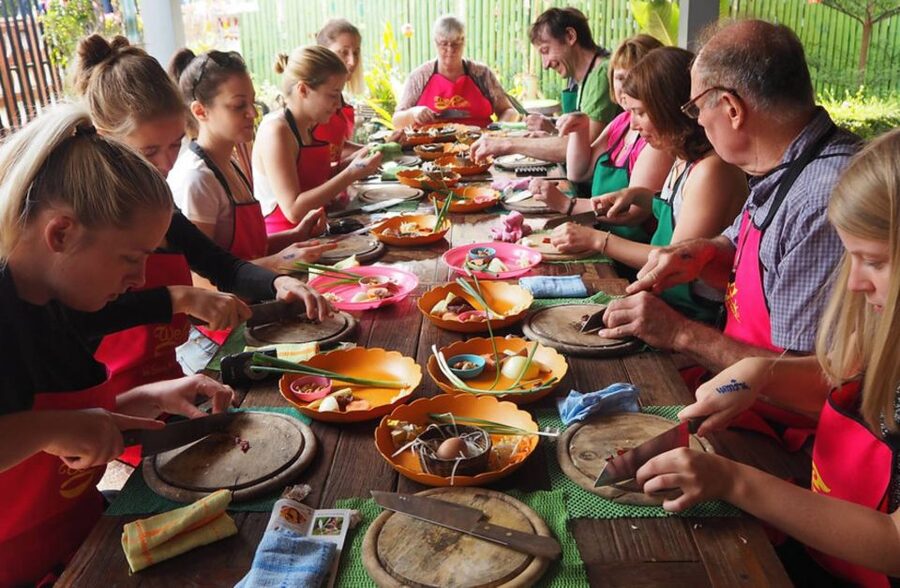
- You cook with your own wok: Each participant gets a wok and takes part in the actual cooking rather than simply watching a demonstration.
- The market visit adds real context: You learn to identify Thai herbs, vegetables, spices, fruits, and sauces before using them.
- You choose your dishes: The class offers six food categories, with one dish selected from each category, though the final number may be five or six depending on the menu.
- The garden setting feels personal: Cooking takes place at Mam’s home, followed by a sit-down meal in a separate dining area.
- It is excellent value for a hungry cook: Transport, ingredients, instruction, recipes, and a large meal are all included for $32.
Why this Chiang Mai cooking class works so well
Many cooking classes give you a recipe, a quick demonstration, and a plate of food. This one adds the missing first step: showing you where the ingredients come from and how to recognize them.
Mam, the owner and instructor, leads you through a local market before you cook. She explains the names, smells, uses, and flavors of Thai vegetables, herbs, spices, fruits, rice, and sauces. That matters because Thai cooking depends on balance. A curry is not just a list of ingredients. It is hot, sour, salty, sweet, creamy, fresh, and aromatic in careful proportion.
I like that the market visit is not treated as a rushed shopping stop. You have time to look closely, touch and smell produce, and ask questions. You may also see ingredients that are not part of your chosen dishes, which helps you understand the wider food culture of northern Thailand.
The home setting adds another layer. You are not cooking in a large commercial kitchen with a production-line feel. You work in a garden setting at Mam’s home, then sit down to eat in a separate dining area. That separation is useful: the cooking area stays active and practical, while the meal feels like a proper reward at the end.
More Thai Cooking Classes in Chiang Mai
- Half-Day Thai Cooking Class at Organic Farm in Chiang Mai
★ 5.0 · 19,087 reviews - Chiang Mai: Cooking Class, Market & Thai Herbs Garden Tour
★ 4.9 · 4,824 reviews - Chiang Mai: Authentic Cooking Class with Market & Farm Visit
★ 4.9 · 4,546 reviews
The market visit: learning Thai ingredients before cooking
The class begins with a visit to a local market. Depending on the class time and pickup arrangement, you may be collected from your accommodation in central Chiang Mai, with evening pickup listed between 4:00 and 4:30 p.m. Free transport applies within a 3-kilometer radius of Chiang Mai downtown.
At the market, Mam introduces you to the ingredients you will later use. This is particularly helpful if Thai food is new to you. Several types of eggplant and basil can look similar at first, while Thai herbs and curry ingredients may have no obvious Western substitute.
You learn by seeing and handling the produce rather than reading a list. That practical lesson stays with you when you return home and need to identify an ingredient in an Asian grocery store. Mam also explains flavor and growing conditions, giving you clues about why certain vegetables and herbs appear so often in Thai cooking.
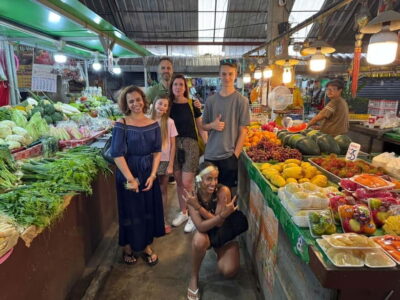
The market portion is also the most culturally useful part of the morning. You interact with local vendors and see everyday food shopping rather than a display arranged for tourists. It is still a guided visit, of course, but Mam’s explanations help you understand what you are looking at.
A small caution: markets can be busy and warm, and the class schedule is long. Wear comfortable shoes and clothing you do not mind cooking in. The information is worth your attention, so do not treat this first stop as something to rush through.
Cooking at Mam’s garden home
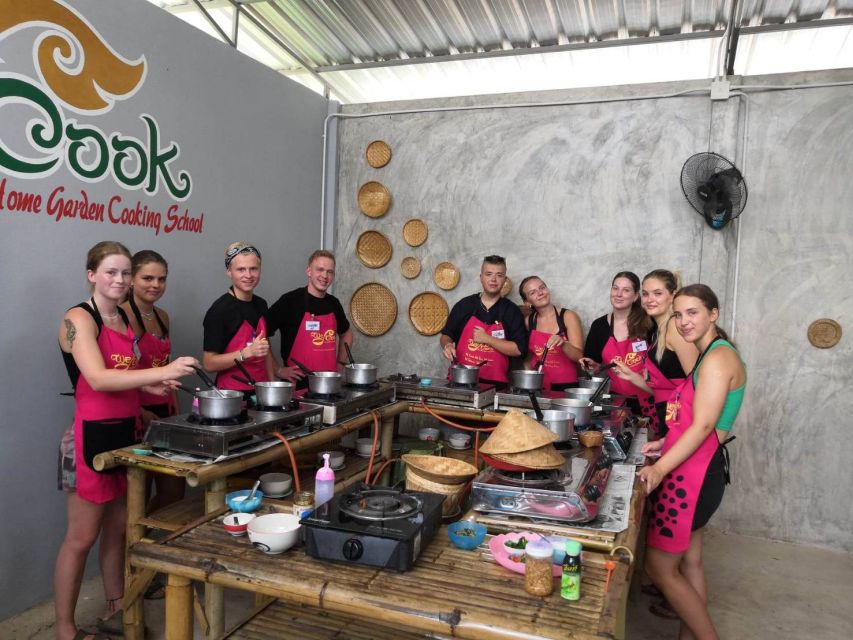
After the market, you head to the cooking school at Mam’s home. The garden kitchen has been praised for being clean, attractive, and well organized. An open-air layout and garden setting give the class a relaxed feel, with the cooking kept separate from the dining area.
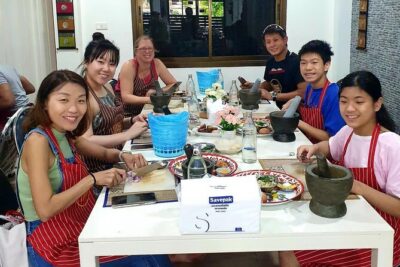
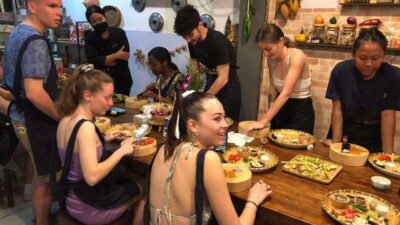
The cooking is hands-on. Each person receives a wok, ingredients, and space to work. This is one of the strongest features of the class because you are not standing behind someone else trying to see a pan. You chop, stir, season, and cook your own food while Mam guides you through the steps.
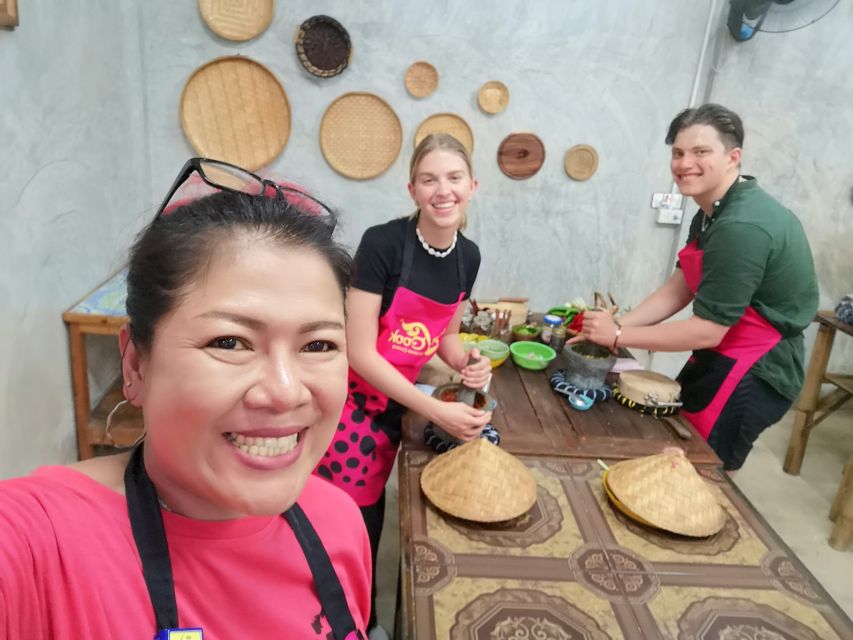
You do not need previous cooking experience. Mam is patient with beginners and helps people at different skill levels without making the class feel like a test. A complete novice can follow the process, while a more experienced cook can ask about technique, flavor balance, and how to repeat the dishes at home.
The teaching also goes beyond strict timings. Instead of relying only on a clock, Mam may point out visual or sensory signs that tell you when something is ready. That is a useful way to learn Thai cooking because ingredients, heat, and wok size can vary when you recreate the dish at home.
The class has been described as small on some dates, with groups of three, four, eight, or around ten people. The stated capacity may reach 12, and group size can change. A small group gives Mam more time to help each person, but you should not assume every session will be intimate.
Choosing from six Thai food categories
The class is built around six food categories. You select one dish from each category, giving you control over the meal and a chance to focus on foods you already enjoy in Thailand.
The exact choices can vary, but the dishes described across the available menus and experiences include familiar Thai favorites such as:
- Pad Thai
- Thai fried rice
- Tom Yum
- Khao Soi
- Massaman curry
- Papaya salad
- Vegetable spring rolls
- Thai noodle soup
- Mango sticky rice
The class descriptions refer to six categories, while several participants describe preparing five dishes. This may reflect menu changes, the selected format, or how the dishes are counted. If making exactly six dishes is important to you, confirm the current menu before booking.
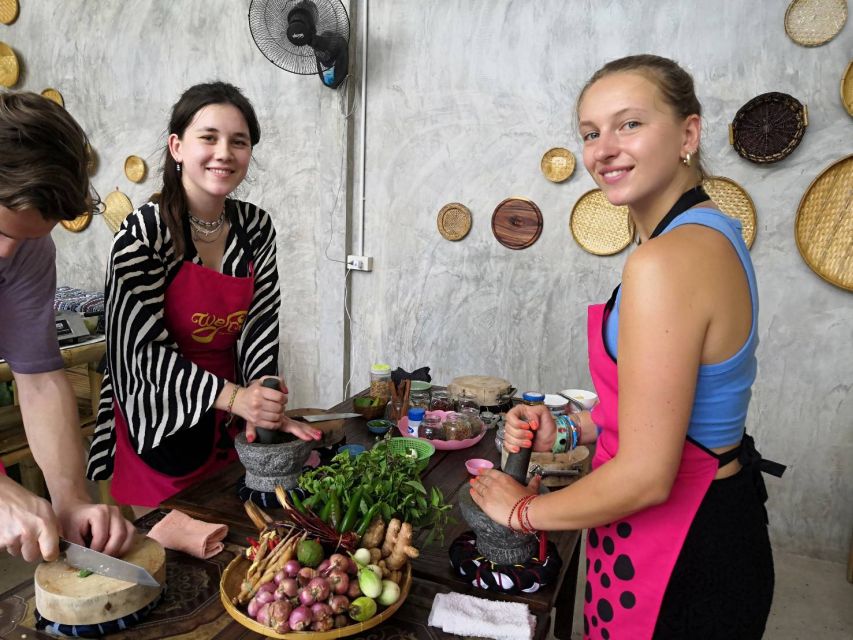
The range is impressive for a half-day class. You may prepare a starter, soup, curry, main dish, and dessert, with some combinations including a sixth selection. You are not limited to one curry and one stir-fry. The menu can introduce you to different methods, from pounding and mixing to frying, simmering, seasoning, and wok cooking.
Mango sticky rice is a particularly welcome finish, though it is also one of the dishes people often cannot finish after a large meal. Boxes are available for leftovers, so you do not need to force down every bite. That is good news, because the portions add up quickly.
A completely different kind of day out:
- Chiang Mai: Elephant Sanctuary, Waterfall & Bamboo Rafting
★ 4.9 · 9,160 reviews - Chiang Mai: Doi Inthanon National Park Eco-Friendly Tour
★ 4.6 · 6,667 reviews - Chiang Mai: Elephant Sanctuary & Waterfall Group Tour
★ 4.9 · 5,780 reviews - Chiang Mai: Chiang Rai Temples, Karen Tribe and Hot Springs
★ 4.7 · 5,401 reviews
Eating the meal you cooked
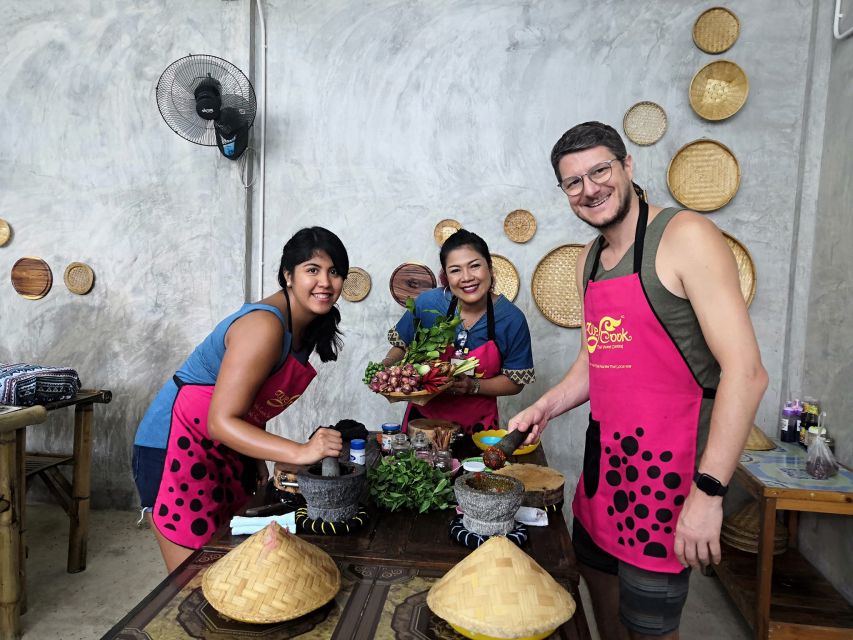
At the end, you sit down and eat what you have prepared. This sounds simple, but it changes the class from a cooking lesson into a full meal experience.
You can taste how your own choices affected each dish. Did you add enough lime? Is the curry sweet enough? Is the soup balanced? Those comparisons help you understand Thai flavor more clearly than a standard restaurant meal, where the kitchen has already made every decision for you.
The separate dining area is another thoughtful touch. You can leave the equipment behind, sit properly, and enjoy the food without continuing to work around hot woks and preparation bowls. The garden setting adds to the calm mood, and one distinctive detail from the class is Mam’s fishpond, where you may even get the chance to feed the fish.
Do not eat a large breakfast before the morning session. Several people found the quantity difficult to finish, especially when the class began at 9:00 a.m. A light breakfast, or no breakfast if that suits you, makes more sense. For the evening class, keep lunch modest.
Morning or evening class?
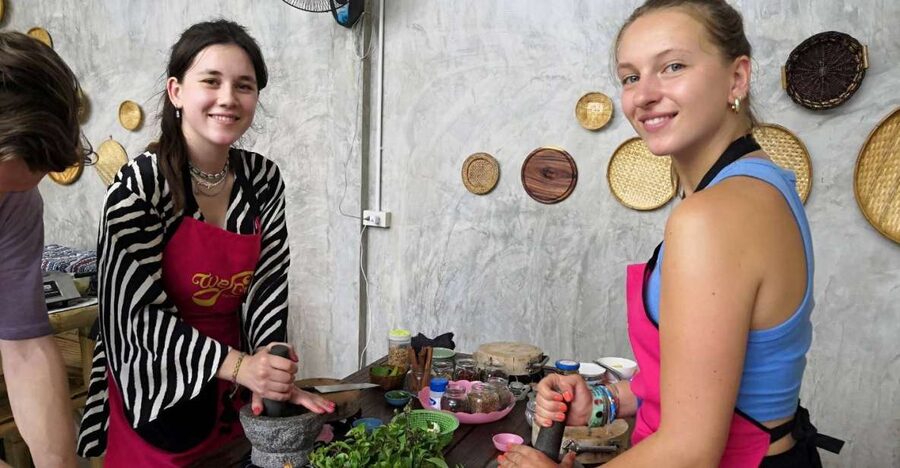
The morning class is a good fit if you want your main activity finished early and still have the afternoon free. Morning markets may also feel quieter, but the main tradeoff is eating a substantial multi-dish meal before the day is half over.
The evening course includes pickup, with collection listed from 4:00 to 4:30 p.m. This timing may suit you better if you prefer a slower morning or want the cooking class to become your main evening meal. You will still spend around five hours on the experience, so do not schedule another fixed activity immediately afterward.
Both options involve a market visit and cooking, but the best choice depends on your appetite and Chiang Mai plans. I would choose the morning class after a light start if I wanted maximum flexibility later. I would choose the evening class if I planned a relaxed night and did not want to spend the hottest part of the day cooking.
Is $32 good value?
At $32 per person, this is strong value for Chiang Mai. You receive an English-speaking guide, market tour, welcome snack or fruit, all cooking ingredients, your own wok, the meal, transport within the stated central pickup area, a cookbook, and a certificate.
The value is not just in the food. You are paying for several hours of personal instruction and for a useful lesson in identifying Thai ingredients. If you buy similar dishes at a restaurant, you may spend less than $32 on food alone, but you will not learn how to make them or understand the market ingredients behind them.
There are a few limits. Personal expenses are not included, and transport is only free within 3 kilometers of downtown. The package also does not promise a private class, so group size can affect how much individual help you receive.
Even with those limits, the combination of instruction, food, and take-home recipes makes the price fair. It is especially good value for people who plan to cook Thai food after returning home.
Who should book this experience?
I would recommend this class to first-time cooks, couples, solo visitors, families with older children, and anyone who wants more than a restaurant meal. The class welcomes different skill levels, and several people with little or no cooking experience found it easy to follow.
It also works well for people with a specific Thai dish in mind. You may be able to choose Pad Thai, Khao Soi, Massaman curry, papaya salad, Tom Yum, or other favorites, depending on the current menu.
Vegetarian options are available, and dietary issues can be accommodated. Tell Mam your needs in advance so she can prepare suitable alternatives. The experience is also wheelchair accessible, though the provided information does not explain the exact layout of the market or home, so confirm any specific mobility requirements before booking.
Children must be at least 120 centimeters tall to participate as cooks. That rule relates to the height of the wok and safety. A child or accompanying parent under that height can join as a visitor for THB300 per person and receive two dishes during the course.
The class may not suit you if you dislike long food sessions, prefer to watch rather than cook, or have a tight schedule. Five hours is a real half-day commitment, and the amount of food is not a minor detail.
What to bring and how to prepare
Wear comfortable clothes and shoes suitable for a market visit and kitchen work. You should also arrive ready to eat a substantial meal later.
Keep breakfast or lunch light, depending on your start time. The class produces enough food to leave you very full, and takeaway boxes may be provided for what you cannot finish.
Bring questions. The strongest part of the experience is the chance to ask about ingredients, substitutions, and cooking signs while Mam is beside you. The included cookbook helps, but the practical advice about smell, texture, and appearance may be even more useful when you cook at home.
The recipe book and certificate make nice keepsakes, and recipes may also be sent by email in some cases. Since those details can vary, ask at the end if you want digital copies as well.
Cancellation and practical details
You can cancel up to 24 hours before the activity for a full refund, and the reserve-now, pay-later option helps if your Chiang Mai plans are still moving around. The activity is conducted in English.
The duration is listed as 270 minutes to five hours. Check the available start time when selecting your date, especially if you need to arrange transport beyond the central pickup area.
FAQ
How long does the cooking class last?
The experience lasts approximately 270 minutes to five hours. The exact duration may depend on the selected class time and schedule.
Is transport included?
Free pickup and return transport are included for residences within a 3-kilometer radius of Chiang Mai downtown. The evening course lists pickup between 4:00 and 4:30 p.m.
Do I need cooking experience?
No. The class is designed for all skill levels, and Mam guides you through each step. Each person receives a wok and cooks their own dishes.
Can I choose vegetarian dishes?
Yes. Vegetarian options are available, and food issues can be accommodated. Share your requirements before the class so suitable alternatives can be arranged.
Can children join the cooking class?
Participants must be at least 120 centimeters tall because of the wok height and safety. Anyone under that height can join as a visitor for THB300 per person and receive two dishes during the course.
Can I cancel for a refund?
Yes. You can cancel up to 24 hours in advance for a full refund. A reserve-now, pay-later option is also available.
Should you book We Cook Thai Home Garden Cooking School?
I would book this class if you want a personal, practical introduction to Thai food rather than a quick demonstration. Mam’s patient instruction, the local market visit, one-wok-per-person format, and generous meal make the experience feel useful long after you leave Chiang Mai.
The main question is not value. At $32, the value is clear. The real question is appetite, time, and group size. If you can spare five hours, do not mind cooking several dishes, and arrive hungry, this is one of the better ways to connect Thai food with everyday life. If you prefer a short activity or a light meal, choose something smaller instead.
Just added in Chiang Mai
- Full Day Doi Saket Hiking Tour★ 5.0 · 14 reviews
- Pha Dok Siew Nature Trail & Doi Inthanon National Park From Chiang Mai★ 4.0 · 23 reviews
- One day Elephants in Nature Experience & Grand Canyon Jumping★ 5.0 · 31 reviews
- Chiang Mai to White & Blue Temple, Black Museum & Golden Triangle★ 4.0 · 52 reviews
- One day Doi Inthanon National Park & Trekking on Kew Mae Pan★ 5.0 · 12 reviews
- Private Tour 2 Difference Trails Trekking at Doi Inthanon National Park★ 5.0 · 19 reviews
- One Day Hiking and Elephant experience by Chiang Mai Elephant Home★ 5.0 · 75 reviews
- Half day Long Neck hill tribe and Hmong hill tribe village★ 5.0 · 21 reviews
Thai Cooking Classes, compared.
Half-Day Thai Cooking Class at Organic Farm in Chiang Mai
Read our review →
Cooking Class, Market & Thai Herbs Garden Tour
Read our review →Authentic Cooking Class with Market & Farm Visit
Read our review →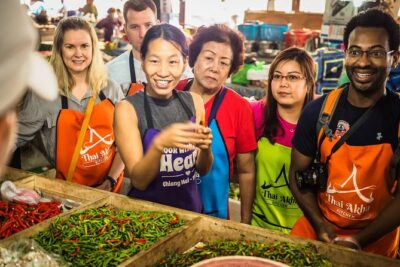
Phuket Thai Cooking Class with Market Tour Option
Read our review →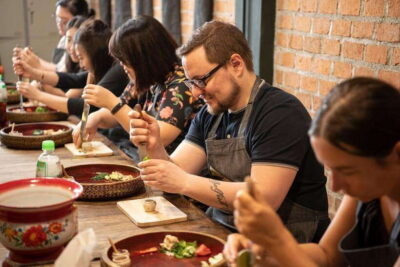
Tingly Thai Cooking School Half-Day Cooking Class
Read our review →Browse the lists this tour appears in