
Reviewed · SPA MASSAGE AND WELLNESS
Chiang Mai: Chiang Rai Temples, Karen Tribe and Hot Springs
The road north rewards patient sightseers. This 11-hour Chiang Rai day trip packs three remarkable temples, a hot spring, and a Karen long-neck village into one long but useful outing from Chiang Mai. I like the strong mix of art and local culture, and I like having a guide explain the temples instead of simply dropping you at the gates. The main drawback is the distance: expect about five hours on the road, with a potentially bumpy ride.
I also like the price. At $35 per person, transport, guiding, insurance, and three temple entrance fees make this a solid deal, though lunch and the 300 baht village fee cost extra. You need to arrive early and accept a full day of sitting, walking, heat, and carefully managed stop times.
In This Review
- Key points at a glance
- Why this Chiang Rai day trip works
- Mae Kachan Hot Spring starts the day gently
- The Karen long-neck village raises important questions
- White Temple brings contemporary art into Buddhism
- Blue Temple offers a calmer burst of color
- Huay Pla Kang finishes with scale and views
- The coach ride is the real tradeoff
- What the $35 price really covers
- Language, meeting point, and small preparations
- Who should book this day out?
- Final verdict: book it for the access, not the pace
- FAQ
- How long does the Chiang Rai tour from Chiang Mai last?
- Is lunch included in the $35 price?
- Is the long-neck village entrance fee included?
- Can I swim at Mae Kachan Hot Spring?
- What language does the guide speak?
- Where do I meet the tour?
- Is the tour suitable for someone with mobility impairments?
Key points at a glance
- Three very different temples: White Temple dazzles with white glasswork, Blue Temple glows with blue and gold, and Huay Pla Kang adds a huge Guan Yin statue and nine-tiered pagoda.
- The drive is part of the bargain: You spend roughly five hours in the vehicle, but that makes Chiang Rai possible as a day trip from Chiang Mai.
- Mae Kachan is a leg-stretching stop: You can soak your feet in the hot spring, browse nearby stalls, and take a break, but swimming is not allowed.
- The Karen village visit needs thought: The brass neck-ring tradition is visually striking, yet the stop can feel uncomfortable if treated only as a photo opportunity.
- Guides are a major strength: Guides such as Benz, Kwan, Ruby, Ann, Dee, and Alex are praised for clear explanations, humor, timing help, photos, and personal care.
- Bring your own earphones: The guide speaks English only, while the QR audio guide offers 41 languages.
Why this Chiang Rai day trip works
Chiang Rai is far enough from Chiang Mai that visiting independently in one day takes planning. This tour removes the need to arrange a bus, hire a driver, find each temple, and calculate return connections. You sit back in an air-conditioned coach and let someone else handle the long route.
That convenience has a cost: time. The outward journey includes about 1.5 hours to Mae Kachan, then a 15-minute ride to the village, followed by roughly 2.25 hours to the White Temple. The return leg from Huay Pla Kang takes around three hours. This is not a relaxed village tour with long lunches. It is a greatest-hits day with wheels under you for much of the time.
Still, the schedule makes sense. The morning stops break up the drive, and the temples become the main event later in the day. Guides keep announcing meeting times and explaining how to use each stop, which matters when a group must get back to Chiang Mai on schedule.
The experience receives a 4.7 rating from more than 5,000 bookings, and the praise is especially strong for the guides. Benz is repeatedly described as warm, funny, and good at taking photos. Kwan receives credit for caring for an unwell passenger, suggesting a vegetarian lunch, helping with an electric vehicle at the final temple, and even singing with the group on the ride home. Ruby, Ann, Dee, Mon, and Alex are also praised for energy, clear information, and keeping a long day enjoyable.
That does not guarantee your guide will have the same personality. It does show how much the human side of this tour affects the experience.
More Spa and Massage in Chiang Mai
- Chiangmai to Chiangrai: 3 Temples, Hot Springs& Lalitta Cafe
★ 4.5 · 659 reviews - Red, Blue, White Temples & Hot Spring Trip from Chiang Mai
★ 4.4 · 143 reviews - Chiang Mai: Chiang Rai Famous Temples & Hot Springs Day Trip
★ 4.0 · 129 reviews
Mae Kachan Hot Spring starts the day gently
After the first long ride, Mae Kachan Hot Spring gives you a chance to stretch your legs. The warm mineral water is used for soaking feet, not swimming, so set your expectations correctly. This is a brief rest stop rather than a spa visit.
You might find small cafés, Thai tea, snacks, coffee, and jewelry stalls around the area. Some people enjoy buying a snack or dipping their feet into the water. Others simply walk around, take pictures, and use the toilets before the next leg.
I like this stop because it gives the day a softer beginning. You are not thrown straight from a Chiang Mai pickup into a busy temple. On the other hand, the hot spring itself is not worth the entire journey. Think of it as a pleasant pause that makes the long drive easier.
Bring sandals if you have them, though comfortable walking shoes remain the better choice for the full day. The supplied guidance recommends sunscreen, a hat, sunglasses, insect repellent, and light comfortable clothing. Northern Thailand can be hot, and the open temple grounds offer little relief.
The Karen long-neck village raises important questions
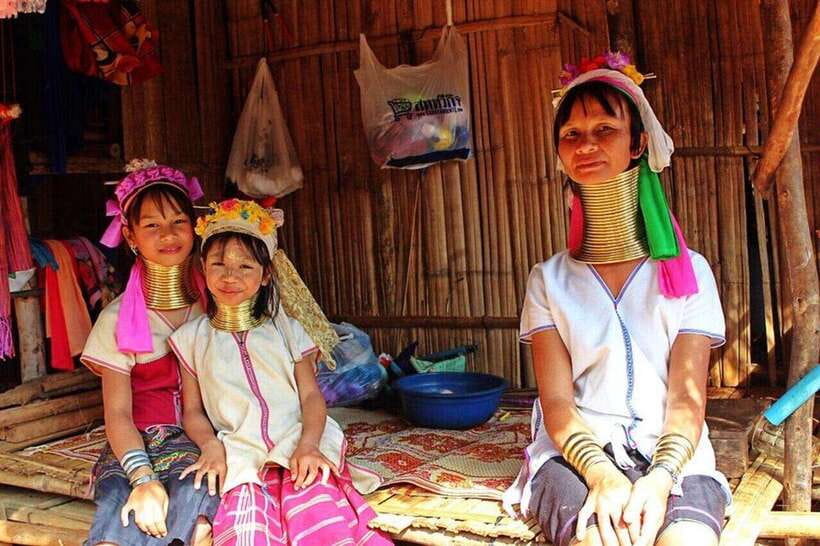
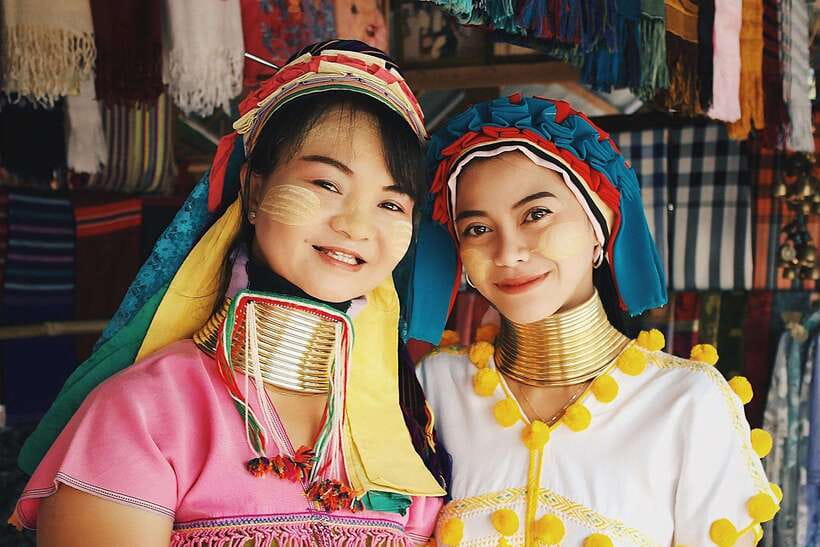
Only about 15 minutes after the hot spring, you reach the Mae Kachan Karen long-neck village. The visit introduces you to women who wear brass neck rings, a custom associated with the Kayan community. You can see handmade crafts, woven goods, and other items offered for sale.
The stop can be interesting, especially if you want to learn about traditions and support local makers. Some people buy scarves and woven crafts at fair prices. The visit also gives you a view of a community experience that is very different from the temples and city streets.
But this is the part of the tour I would approach with care. The village charges an additional 300 baht, and the setup may feel designed for viewing and shopping rather than open cultural exchange. Seeing young girls continue the neck-ring tradition can also prompt difficult questions about choice, beauty, tourism, and the way ethnic communities are presented.
Go with respect. Ask permission before taking close-up photographs, listen to the guide, and buy only what you genuinely want. If you are uneasy about this kind of cultural display, research the visit before booking. It is not a compulsory-feeling attraction for everyone, even though it is included in the route.
White Temple brings contemporary art into Buddhism
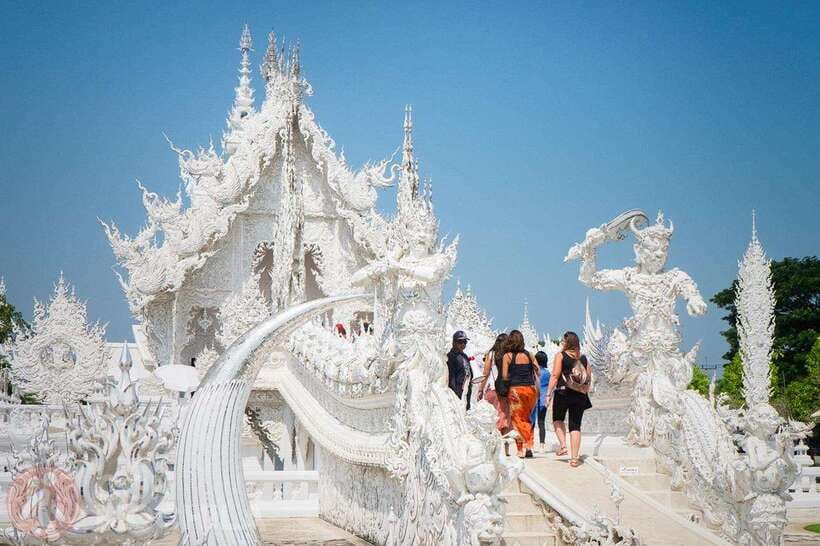
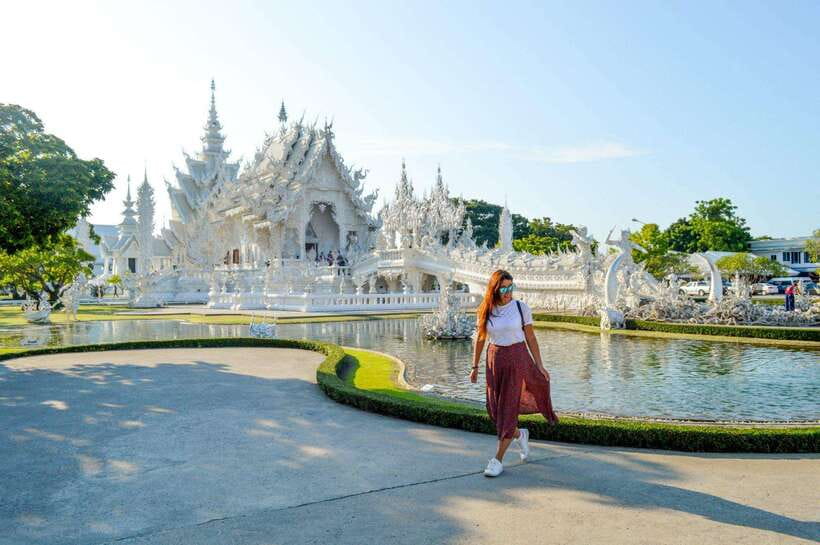
Wat Rong Khun, usually called the White Temple, is the visual star of the day. Artist Chalermchai Kositpipat created its striking white design, using the color to represent purity. Glass details catch the light and suggest Buddhist wisdom.
The temple is not a quiet, ancient ruin. It is a contemporary work of religious art, and that difference matters. Alongside familiar Buddhist ideas, you encounter surprising modern images and unusual visual details. The result feels part sacred site, part bold art installation.
Your entrance fee is included, and the guide helps explain what you are seeing. That context is useful because the design can seem strange at first glance. Take time to study the details rather than rushing straight to the best photo.
The stop also includes lunch in Chiang Rai, but lunch is not included in the tour price. You choose and pay for your own meal. Vegetarian options are possible, and guides may suggest places to eat, as Kwan did for one couple. Carry small Thai banknotes because some vendors have trouble changing 500 or 1,000 baht notes.
This is also the point when the day begins to feel full. The White Temple deserves time, but the schedule still has two more major temple visits. Enjoy the details, then listen carefully to the return time.
More Temple Tours in Chiang Mai
- Chiang Rai White Temple and Blue Temple Day Tour
★ 4.6 · 3,366 reviews - Chiang Mai: White, Red/Black & Blue Temples Tour with Lunch
★ 4.2 · 2,017 reviews - Chiang Mai: Doi Suthep and Wat Umong Enchanting Evening Tour
★ 4.6 · 1,811 reviews - Chiang Mai: 3 Hour Old City and Temples Guided Walking Tour
★ 4.6 · 1,568 reviews
Blue Temple offers a calmer burst of color
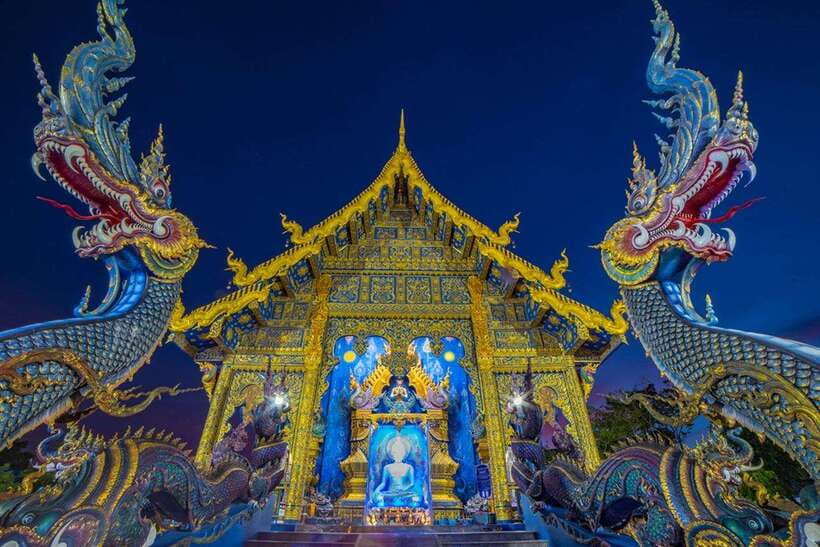
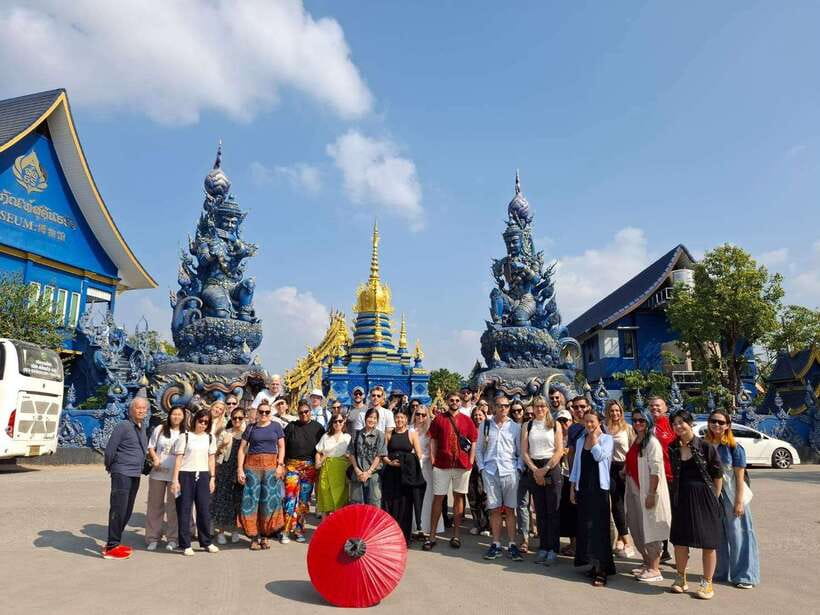
Wat Rong Suea Ten, known as the Blue Temple, is very different from its white neighbor. Deep blue interiors, gold decoration, and large dragon figures at the entrance create a strong, theatrical first impression.
Inside, a bright Buddha image gives the room a calmer center. The design combines traditional Buddhist forms with newer artistic choices, so the temple feels polished and modern without losing its religious purpose.
Many people prefer this stop because it feels more peaceful and manageable than the White Temple. You have time to look at the interior, take photographs, and appreciate the contrast between blue walls and gold details.
The Blue Temple is also a good place for a cool treat. Several tour members enjoyed blue coconut ice cream nearby. That is a small detail, but on a hot day it can feel like excellent planning.
Dress modestly at both temples. Cover shoulders and knees, remove shoes where requested, and keep your voice low inside worship spaces. You are visiting an active religious site, not only a backdrop for photographs.
Huay Pla Kang finishes with scale and views
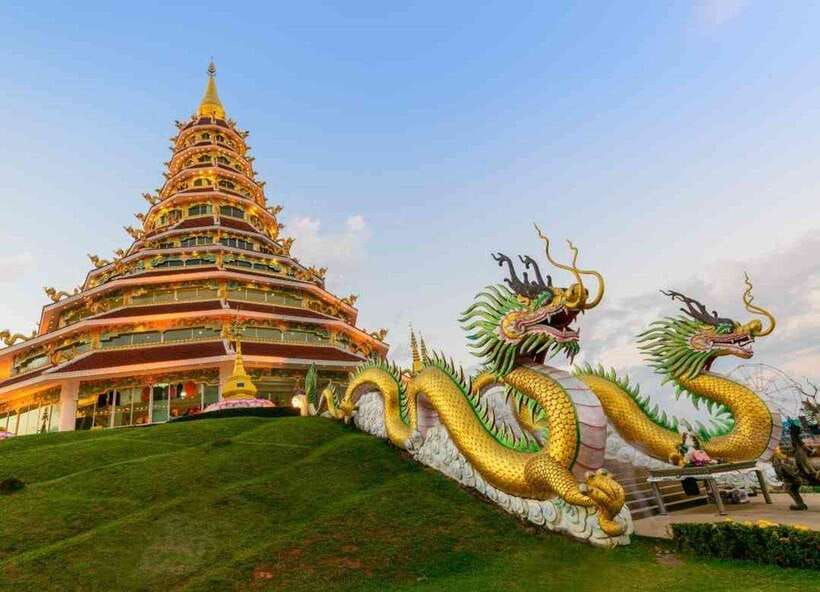
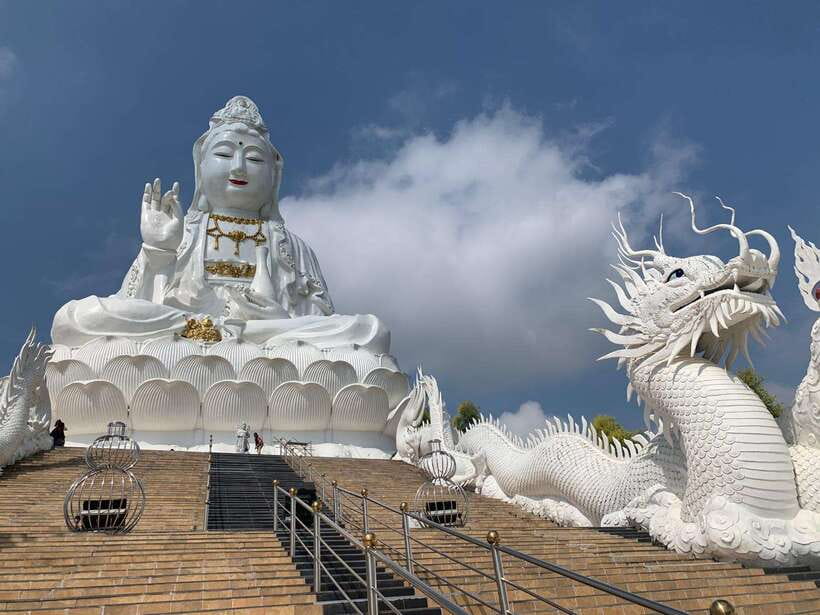
The final major stop is Huay Pla Kang Temple, sometimes described in tour shorthand as the Red Temple. Its huge Guan Yin statue, the Goddess of Mercy, is hard to miss. The temple complex also features a nine-level pagoda with carved figures and decorative details.
The pagoda gives you a reason to keep climbing. From higher levels, you can look across the surrounding area, and the interior contains statues and ornate decoration. The large Guan Yin figure provides the broad visual moment, while the pagoda rewards closer inspection.
This stop can feel rushed. The stairs take time, the site may be crowded, and food stalls or snacks compete with the desire to see everything. One useful accessibility detail came up repeatedly: an electric vehicle helped one passenger reach the temple area. The tour is not recommended for people with mobility impairments, however, so do not assume the vehicle solves every access issue.
There may be inexpensive food here, including pad Thai for around 20 baht, along with snacks and drinks. Bring small notes and watch the clock. You do not want to spend the last minutes eating while the group waits.
The coach ride is the real tradeoff
The air-conditioned vehicle is central to the tour. You leave Chiang Mai, cover the long route to Chiang Rai, move between scattered sights, and return to the city without arranging separate transport. Some vehicles have USB ports, so pack your own charging cable if your phone will be busy taking pictures all day.
The road can be bumpy, particularly where roadwork is underway. A large coach also means someone may be slow getting back on board, though the guide normally manages the group firmly. You should still be ready at every meeting time. Late arrivals can be left behind, with no refund or rescheduled trip.
Free water may be provided, and there are restroom, coffee, and snack breaks along the way. Even so, I would pack only a small day bag. Large luggage is not allowed, and you should not book this tour on a day when you have a flight.
The drive back takes about three hours after the final temple. That is a good time to rest, listen to the audio guide, or chat with the group. Some guides use the ride for stories, basic Thai phrases, local customs, or even songs about the lantern festival. The quality of that ride depends heavily on the guide and on how tired everyone feels.
What the $35 price really covers
The $35 price is strong for a full-day trip from Chiang Mai. Your fee includes round-trip transport, an official guide, mandatory insurance, and admission to the White Temple, Blue Temple, and Huay Pla Kang Temple. Buying separate transport and entry tickets could easily cost more, while also requiring far more effort.
You still need money for lunch, drinks, snacks, souvenirs, and the 300 baht long-neck village fee. These extras are not unusual, but they do change the final cost. Bring Thai cash in small denominations.
The value is highest if you want a simple way to see Chiang Rai’s main sights and do not mind a packed schedule. The value is lower if you prefer slow meals, long temple visits, or independent wandering. A private group option is available if you want a more personal setup, but the standard format is the practical budget choice.
Language, meeting point, and small preparations
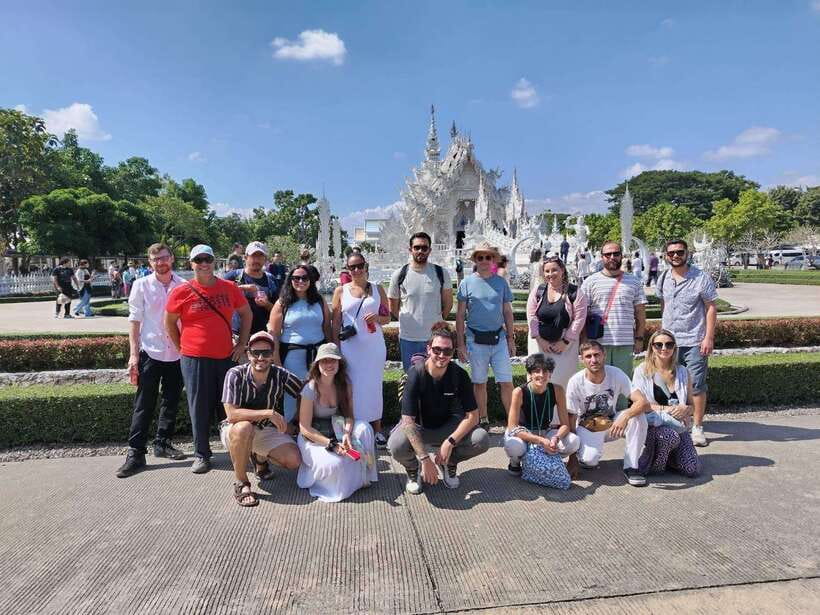
The official guide speaks English only. A QR audio guide is available in 41 languages, including Spanish, French, German, Italian, Japanese, Korean, Chinese, Thai, Arabic, Hindi, Vietnamese, and Portuguese. You must bring your own earphones, since earphones are not included.
The usual meeting point is Burger King at Thapae in Hotel M Chiangmai. Arrive 15 minutes before departure, and allow extra time to cross Chiang Mai because traffic can be heavy. If hotel pickup is selected, wait in the lobby 10 minutes before the scheduled pickup time.
The tour offers free cancellation up to 24 hours before departure and allows you to reserve now and pay later. Those are useful safety nets, but the strict departure rule remains important. The coach will not wait for late arrivals.
Wear clothing suitable for temple visits, comfortable shoes, and sun protection. Leave alcohol, drugs, large bags, and unnecessary valuables behind. A passport or ID card may be required, so carry the requested identification safely.
Who should book this day out?
I would choose this tour if you have one spare day in Chiang Mai and want the major Chiang Rai sights without arranging transport. It suits first-time visitors, photographers, temple fans, and people who enjoy a guide adding context and humor to a busy route.
It also works well for people who like variety. In one day, you get hot water, mountain roads, a hill tribe village, modern religious art, a giant Guan Yin statue, food stops, and three very different temple styles.
I would skip it if long coach rides make you miserable, if you need a slow pace, or if you have mobility limitations. I would also think carefully about the Karen village stop and decide if its presentation fits your travel values.
Final verdict: book it for the access, not the pace
This is a high-value Chiang Rai introduction. The White Temple, Blue Temple, and Huay Pla Kang Temple justify the effort, while the hot spring and village add variety. The guides are the tour’s most praised feature, with names such as Benz, Kwan, Ruby, Ann, Dee, and Alex associated with humor, care, clear timing, good explanations, and helpful photo tips.
Book it when you want to see a lot in one day and accept the long road as part of the deal. Do not book it expecting a restful excursion. Pack earphones, small cash, water-friendly footwear, sun protection, and patience. If you can handle the 11-hour schedule, this tour offers one of the easiest ways to sample northern Thailand beyond Chiang Mai.
FAQ
How long does the Chiang Rai tour from Chiang Mai last?
The tour lasts about 11 hours, or 810 minutes. The schedule includes roughly five hours of driving, with stops at the hot spring, Karen village, White Temple, Blue Temple, and Huay Pla Kang Temple.
Is lunch included in the $35 price?
No. Lunch is not included, so you should bring money to buy your own meal in Chiang Rai. Snacks, drinks, and ice cream are also extra.
Is the long-neck village entrance fee included?
No. The entrance fee is 300 baht per person. Handmade crafts and other purchases at the village also cost extra.
Can I swim at Mae Kachan Hot Spring?
No. Swimming is not allowed at the hot spring. You can soak your feet, enjoy the surroundings, buy refreshments, and take a short break.
What language does the guide speak?
The official guide speaks English only. An audio guide is available through a QR code in 41 languages, but you need to bring your own earphones.
Where do I meet the tour?
The meeting point is Burger King at Thapae in Hotel M Chiangmai. You should arrive 15 minutes before departure and allow extra time because Chiang Mai traffic can be heavy.
Is the tour suitable for someone with mobility impairments?
The tour is not recommended for people with mobility impairments. Huay Pla Kang includes stairs, although an electric vehicle may assist with part of the visit.
Just added in Chiang Mai
- Full Day Doi Saket Hiking Tour★ 5.0 · 14 reviews
- Pha Dok Siew Nature Trail & Doi Inthanon National Park From Chiang Mai★ 4.0 · 23 reviews
- One day Elephants in Nature Experience & Grand Canyon Jumping★ 5.0 · 31 reviews
- Chiang Mai to White & Blue Temple, Black Museum & Golden Triangle★ 4.0 · 52 reviews
- One day Doi Inthanon National Park & Trekking on Kew Mae Pan★ 5.0 · 12 reviews
- Private Tour 2 Difference Trails Trekking at Doi Inthanon National Park★ 5.0 · 19 reviews
- One Day Hiking and Elephant experience by Chiang Mai Elephant Home★ 5.0 · 75 reviews
- Half day Long Neck hill tribe and Hmong hill tribe village★ 5.0 · 21 reviews
Spa Massage and Wellness, compared.
Tiger Cave Temple, Emerald Pool and Hot Springs Tour
Read our review →
Tiger Cave, Hot Springs and Emerald Pool Jungle Tour
Read our review →
Chiangmai to Chiangrai: 3 Temples, Hot Springs& Lalitta Cafe
Read our review →
Hot Spring, Emerald Pool & Tiger Cave Temple Tour
Read our review →
All day Krabi Jungle Tour (Hot Spring Water, Emerald Pool, Tiger Cave Temple)
Read our review →
Discover Krabi – Emerald Pool, Hot Springs & Tiger Cave Temple
Read our review →
Tiger Temple, Hot Springs & Crystal Pool Jungle Tour
Read our review →Browse the lists this tour appears in