
Reviewed · THAI COOKING CLASSES
Thai and Akha Cooking Class in Chiang Mai
Come hungry, leave with recipes. This six-hour Chiang Mai cooking class combines Thai favorites with lesser-known Akha dishes, giving you more than a quick lesson in pad Thai. I especially like the morning market visit and the individual cooking station, while the main thing to consider is the length: several hours of cooking and eating may feel long if you want a light activity.
The class costs $42 per person and includes central hotel pickup and drop-off, coffee, ingredients, and a full-color cookbook. I also like the way the menu builds from appetizers and curry paste to soup, main dishes, and desserts. The afternoon option skips the market, so choose your start time with care.
In This Review
- Key points at a glance
- Why this class is more than a pad Thai lesson
- Choosing between the morning and afternoon sessions
- Inside the Thai Akha Cooking School
- The menu: Thai basics with Akha character
- What you actually learn at the stove
- A meal that doubles as your final lesson
- The cookbook makes the class useful after Chiang Mai
- Price, pickup, and the practical details
- Who will enjoy this most
- Should you book the Thai and Akha Cooking Class?
- FAQ
- How long does the cooking class last?
- Is hotel pickup included?
- Does every session include a market visit?
- How many people can join the class?
- Does each person get an individual cooking station?
- What dishes will I prepare?
- Is coffee included?
- Do I receive recipes after the class?
Key points at a glance
- Morning market first: See and handle the herbs, vegetables, spices, and other ingredients used later in class.
- Thai and Akha cooking together: Prepare familiar Thai dishes alongside Akha specialties such as Akha salad, Akha soup, and sapi thuong, a tomato dipping sauce.
- Small-group teaching: The class has a maximum of 12 people, with an individual cooking station for each participant.
- A serious amount of food: The menu includes two appetizers, soup, curry paste, curry, two desserts, and several Akha dishes.
- Useful take-home materials: You receive a full-color cookbook and, according to several participants, sometimes a spice packet as well.
- Good central-city value: The $42 price includes transport within 3 kilometers of the city area, food, coffee, and the class itself.
Why this class is more than a pad Thai lesson
Chiang Mai has no shortage of cooking schools, but this one takes a broader view of northern Thai food. You are not limited to one famous stir-fry and a rushed curry demonstration. You work through several parts of a Thai meal and also learn about Akha food and culture from an Akha instructor.
That difference matters. Akha cooking is tied to the food traditions of the Akha people, one of the hill-tribe communities of northern Thailand. The class introduces ingredients and dishes that you are less likely to encounter in a standard tourist cooking lesson. The result is a better sense of how local food can vary within the same region.
The experience is highly rated, with a 5 out of 5 score from more than 4,000 ratings and a 100 percent recommendation figure. That does not mean every person will love a six-hour food class, but it does point to a very consistent level of organization, teaching, and meal quality.
More Thai Cooking Classes in Chiang Mai
- Half-Day Thai Cooking Class at Organic Farm in Chiang Mai
★ 5.0 · 19,087 reviews - Chiang Mai: Cooking Class, Market & Thai Herbs Garden Tour
★ 4.9 · 4,824 reviews - Chiang Mai: Authentic Cooking Class with Market & Farm Visit
★ 4.9 · 4,546 reviews
Choosing between the morning and afternoon sessions
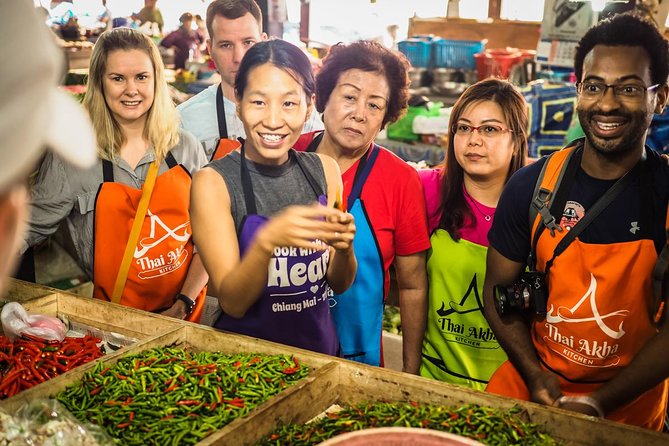
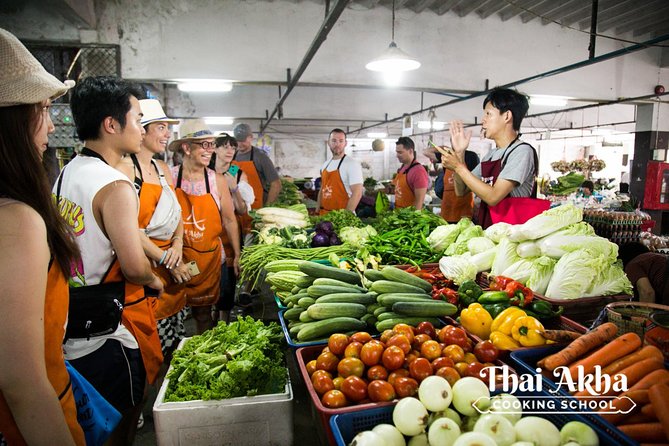
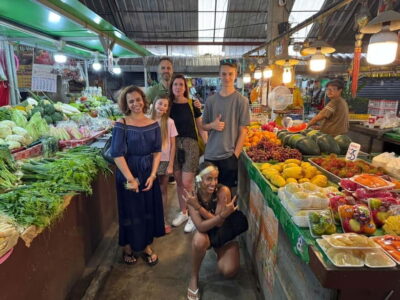
The morning session is the fuller experience. After pickup from your central Chiang Mai hotel, you go to a local morning market with your instructor and shop for fresh ingredients. This is not just a practical grocery stop. It gives you a chance to see the raw materials before they are chopped, pounded, and cooked.
You might handle herbs, vegetables, curry ingredients, and unfamiliar produce while learning what they are used for. A market also helps you understand the difference between ingredients that look similar but behave very differently in a Thai dish. The food makes more sense once you have seen it in its everyday setting.
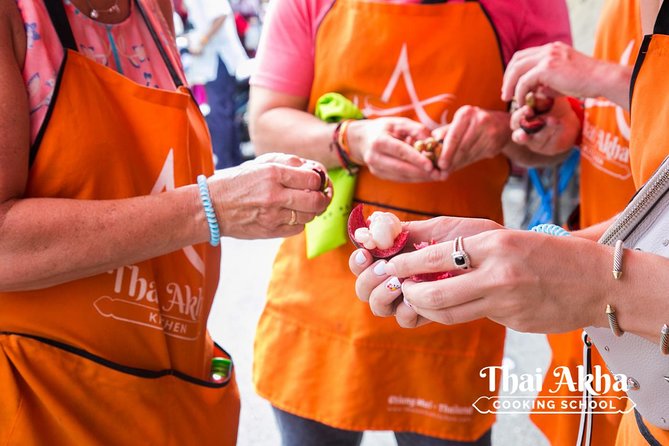
Some past classes have included chances to taste local foods during the market visit. The supplied details specifically confirm the market tour and ingredient shopping, so the exact tasting selection may vary. Go with an open mind, but do not treat the market visit as a full breakfast.
The afternoon session goes directly to the cooking school. That makes it a better fit if you prefer a slower morning, have already visited Chiang Mai markets, or want to avoid the heat and activity of an early market trip. You still get the full cooking program, but you miss the useful connection between the market ingredients and the recipes.
If you want the most complete version, I would choose the morning class. If your schedule is tight or you are not a morning person, the afternoon class still preserves the central part of the experience.
Inside the Thai Akha Cooking School
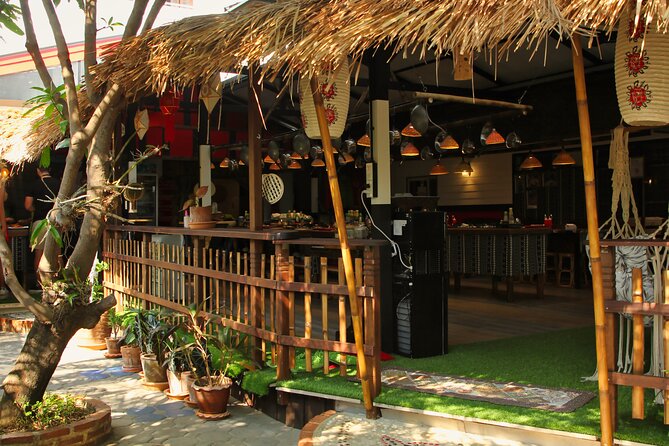
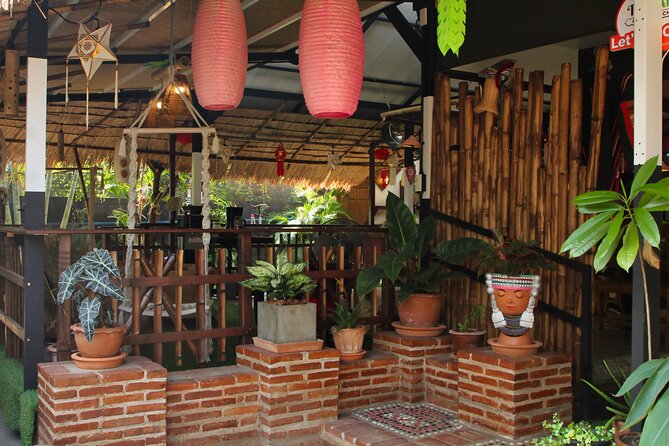
The meeting point is at 14/10 Soi Rat Chiang Saen 2, in Hai Ya, Chiang Mai. The school is described as bright, clean, and well arranged, with spotless workstations and good supplies without a crowded feel.
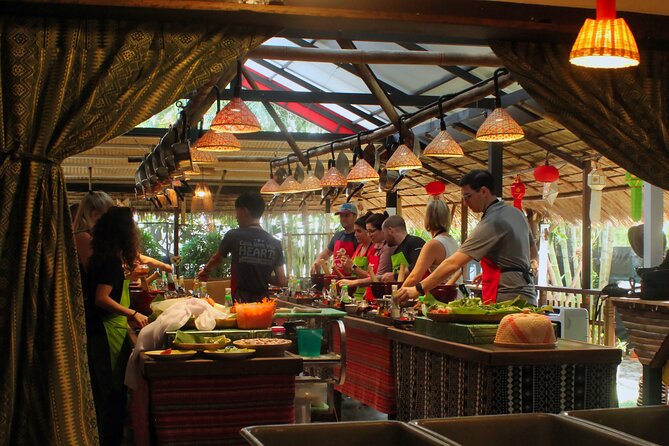
Each person gets an individual cooking station. That is a practical advantage over classes where two or three people share one burner and one cutting board. You get to do the important work yourself, including preparation, stirring, seasoning, and serving.
The class size is capped at 12 people. That is small enough for an instructor to watch what you are doing, but it is not necessarily a private lesson. Some sessions may have only a few participants, while others may be close to the maximum.
Several instructors have received particularly warm praise, including On, Niti, Rita, Jasmine, and Ano. The recurring strengths are clear English, good humor, simple explanations, and close attention to each cooking station. If you are nervous about handling unfamiliar ingredients, the teaching style should help.
The school also places a strong emphasis on cleanliness. That matters in a hands-on cooking class, especially when you are preparing many dishes in the same session. The combination of tidy work areas, clear instructions, and assistants keeping track of different recipes helps the class avoid the usual group-cooking chaos.
The menu: Thai basics with Akha character
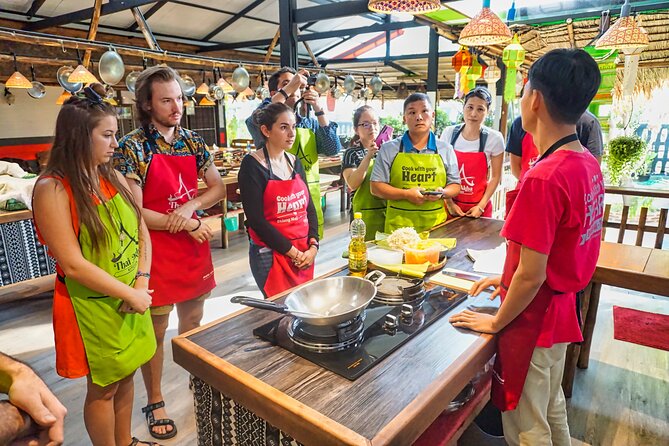
The menu is one of the strongest reasons to book this class. You prepare two appetizers, a soup, curry paste, a curry, and two desserts, along with several Akha-style dishes.
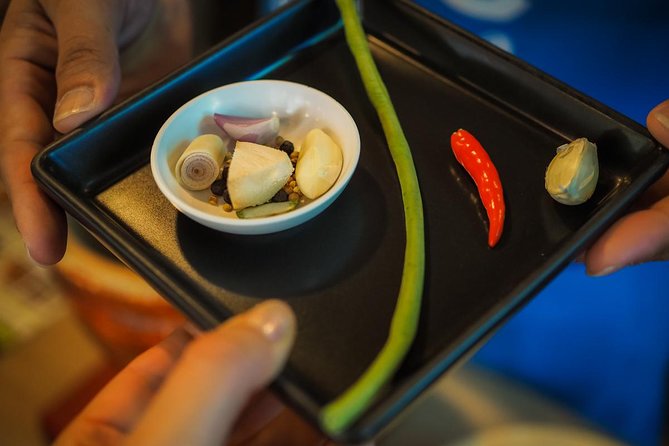
The Thai portion gives you a useful set of home-cooking skills. Making curry paste from scratch shows you how the flavors are built before coconut milk or other liquid is added. Preparing soup and a stir-fry helps you work on timing, heat, and seasoning.
You also learn dishes such as Akha salad, Akha soup, and sapi thuong. The tomato dipping sauce is especially useful for home cooks because it shows how a simple fresh mixture can bring a meal together without relying on a bottled sauce.
The precise dish selection can vary because participants often choose from options for the curry, soup, and stir-fry. That is a smart format. You can focus on food you already enjoy, or use the opportunity to try something unfamiliar.
Past participants have described making around nine to eleven dishes in total, depending on the menu choices and how the dishes are counted. The official menu is enough to confirm that you will cook a substantial meal rather than one or two sample recipes.
The class is designed so you eat as you go or finish with a large shared meal. The advice to arrive with an empty stomach is not polite filler. You will prepare a lot of food, and the final meal can be surprisingly large.
A completely different kind of day out:
- Chiang Mai: Elephant Sanctuary, Waterfall & Bamboo Rafting
★ 4.9 · 9,160 reviews - Chiang Mai: Doi Inthanon National Park Eco-Friendly Tour
★ 4.6 · 6,667 reviews - Chiang Mai: Elephant Sanctuary & Waterfall Group Tour
★ 4.9 · 5,780 reviews - Chiang Mai: Chiang Rai Temples, Karen Tribe and Hot Springs
★ 4.7 · 5,401 reviews
What you actually learn at the stove
A good cooking class should give you techniques you can repeat at home, not just a pleasant lunch. This one focuses on practical methods such as balancing flavors, working with curry paste, and finding substitutions when an ingredient is not easy to buy outside Thailand.
One useful example is the suggestion to use cucumber in place of green papaya when making a papaya-style salad at home. That kind of advice makes the recipes more realistic for cooks living far from an Asian market.
You also learn about Akha ingredients and the role they play in the dishes. The point is not to memorize a list of exotic names. It is to understand how fresh ingredients, herbs, vegetables, and spice mixtures create the flavor of northern Thai food.
The instructors use demonstrations and step-by-step directions, then let you carry out the work. If you make a mistake, the small class format gives the teacher a chance to correct it before the dish reaches the table.
The menu also teaches sequence. You start with simpler preparations, then work toward dishes that require more attention to heat and timing. By the end, you have practiced enough separate tasks to understand the basic rhythm of a Thai kitchen.
A meal that doubles as your final lesson
At the end, you sit down and eat the dishes you have made. This is more satisfying than receiving a plate prepared entirely by someone else, since you can judge the seasoning and texture of your own work.
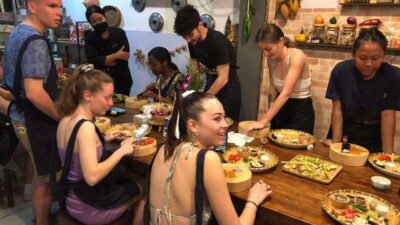
The shared meal also gives the class a social side. People come from different countries, and the meal creates a natural chance to compare dishes and talk about the food. You should expect a friendly group setting rather than a quiet private dining experience.
Coffee is included, specifically Akha hill-tribe coffee. Alcoholic drinks can be purchased separately, but they are not part of the $42 price.
The amount of food is both a benefit and a possible drawback. If you love eating and want to sample many recipes, the generous menu is excellent value. If you prefer a short lesson or a small meal, six hours and multiple courses may test your appetite.
The cookbook makes the class useful after Chiang Mai
The full-color cookbook is not just a souvenir to pack at the bottom of your suitcase. It gives you a way to repeat the dishes at home, where the memory of the class can otherwise fade quickly.
The recipes cover the Thai and Akha dishes prepared during your session. Several participants also received a spice packet, though the confirmed included item is the cookbook, so I would not book the class solely expecting extra spices.
The best way to use the book is to mark the recipes you liked most during the meal. Make notes about ingredient substitutions while the instructions are still fresh in your mind. The teacher’s practical suggestions, such as using cucumber when green papaya is unavailable, are often as useful as the printed recipe itself.
Price, pickup, and the practical details
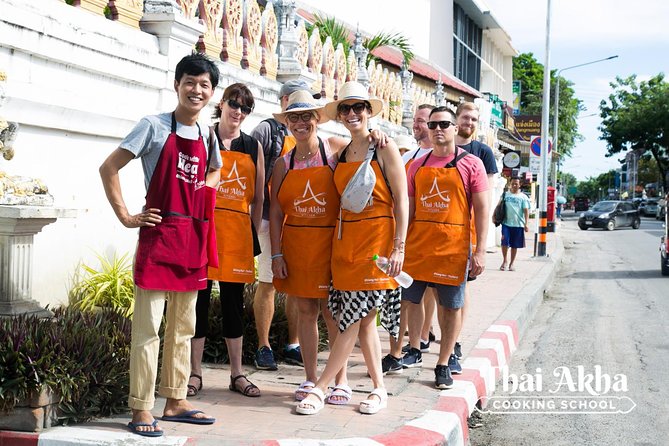
At $42 per person, this is good value for a six-hour activity. You are paying for transportation within the covered central area, a market tour if you choose the morning session, instruction, a private work area, ingredients, a full meal, coffee, and the cookbook.
Hotel pickup and drop-off apply only within 3 kilometers of the city area. If your hotel is farther away, you may need to arrange your own way to the meeting point. The activity ends back at the meeting point, so confirm the transport details before you book.
Mobile tickets are offered, and confirmation is received at booking. The school is near public transportation, which gives you another option if pickup does not cover your accommodation.
Wear something comfortable for several hours of cooking and expect to spend much of the session standing. The supplied information does not give specific details about dietary restrictions, so contact the provider before booking if you have allergies or strict food requirements.
Free cancellation is available if you cancel at least 24 hours before the local start time. Cancellations or changes made later are not refunded or accepted.
Who will enjoy this most
I would recommend this class to anyone who plans meals around food, wants more than a standard Thai restaurant experience, or enjoys meeting other people while on holiday. It is also a strong choice for families. Past sessions have worked well for groups with children and teenagers, with ages ranging from about 12 to adults.
You do not need to be a skilled cook. The class is built around clear directions and guided practice, not advanced kitchen technique. It suits beginners who want to learn without feeling judged.
It is also a good fit for repeat visitors to Thailand. The Akha dishes add something different from the usual green curry and pad Thai program, and the cultural explanation gives the meal more context.
I would think twice if you dislike group activities, have a very limited appetite, or want a quick two-hour demonstration. The class can feel long for some people, especially because you cook and eat many dishes over a full half day.
Should you book the Thai and Akha Cooking Class?
Yes, if you want a hands-on food experience with real value and a strong northern Thai focus. Choose the morning session if the market visit sounds appealing, and arrive genuinely hungry.
The main reasons to book are the individual station, small group, clean facilities, skilled instructors, generous menu, and the chance to learn Akha recipes that are not always part of standard Chiang Mai cooking classes. The cookbook gives the experience a useful afterlife at home.
Choose the afternoon class if your schedule or sleep habits make the market visit inconvenient. Either way, this is not a token tourist activity. It is a long, busy, very filling lesson that gives you skills, stories, and a meal you made yourself.
FAQ
How long does the cooking class last?
The experience lasts approximately six hours, including transportation and the cooking session.
Is hotel pickup included?
Yes, pickup and drop-off are included for hotels within 3 kilometers of the Chiang Mai city area.
Does every session include a market visit?
No. The local market tour is included only with the morning class. The afternoon class goes directly to the cooking school.
How many people can join the class?
The activity has a maximum of 12 participants.
Does each person get an individual cooking station?
Yes. An individual cooking station is included.
What dishes will I prepare?
The menu includes two appetizers, a soup, curry paste, a curry, two desserts, and Akha dishes such as Akha salad, Akha soup, and sapi thuong tomato dipping sauce. Some dish choices can vary.
Is coffee included?
Yes. Akha hill-tribe coffee is included. Alcoholic drinks are available to buy separately.
Do I receive recipes after the class?
Yes. A full-color cookbook is included so you can recreate the dishes at home.
Just added in Chiang Mai
- Full Day Doi Saket Hiking Tour★ 5.0 · 14 reviews
- Pha Dok Siew Nature Trail & Doi Inthanon National Park From Chiang Mai★ 4.0 · 23 reviews
- One day Elephants in Nature Experience & Grand Canyon Jumping★ 5.0 · 31 reviews
- Chiang Mai to White & Blue Temple, Black Museum & Golden Triangle★ 4.0 · 52 reviews
- One day Doi Inthanon National Park & Trekking on Kew Mae Pan★ 5.0 · 12 reviews
- Private Tour 2 Difference Trails Trekking at Doi Inthanon National Park★ 5.0 · 19 reviews
- One Day Tour Chiang Rai(White Temple , Blue Temple, Black House) Private Tour★ 5.0 · 63 reviews
- One Day Hiking and Elephant experience by Chiang Mai Elephant Home★ 5.0 · 75 reviews
Thai Cooking Classes, compared.
Half-Day Thai Cooking Class at Organic Farm in Chiang Mai
Read our review →
Cooking Class, Market & Thai Herbs Garden Tour
Read our review →Authentic Cooking Class with Market & Farm Visit
Read our review →
Phuket Thai Cooking Class with Market Tour Option
Read our review →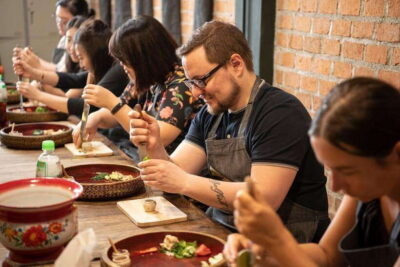
Tingly Thai Cooking School Half-Day Cooking Class
Read our review →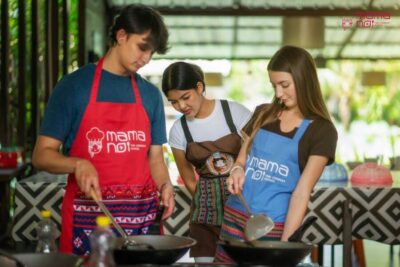
Browse the lists this tour appears in