
Reviewed · THAI COOKING CLASSES
Half-Day Thai Cooking Class at Organic Farm in Chiang Mai
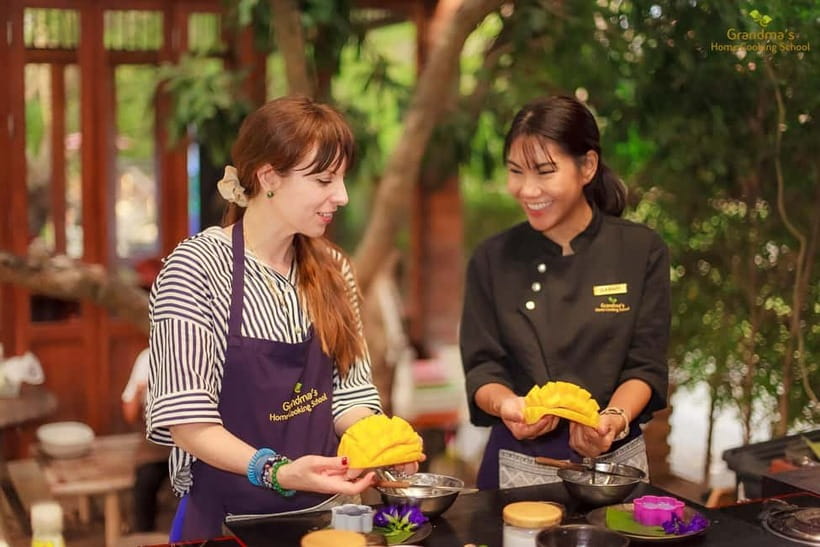
Thai food tastes better when you make it yourself. This Chiang Mai cooking class combines a local market visit, an organic farm, and hands-on lessons in five Thai cooking categories. I like the personal cooking stations and the freedom to choose your own dishes, including vegan and vegetarian versions. I also like the easy hotel pickup and the chance to see herbs growing before they land in your wok.
The main thing to consider is the amount of food. You may prepare curry paste, curry, stir-fry, soup, and spring rolls, then eat what you make. That is a generous meal, but the half-day class does not include dessert, and some people find the market stop brief or less useful than the farm visit.
In This Review
- Key points to know before booking
- From Chiang Mai hotel pickup to the local market
- The drive to Smile Organic Farm
- Picking your menu before the pans heat up
- Five cooking categories, not just one quick recipe
- Curry paste: the flavor foundation
- Curry: building a full dish
- Stir-fry: fast cooking with clear results
- Soup: bright, aromatic, and filling
- Spring rolls: a hands-on opening course
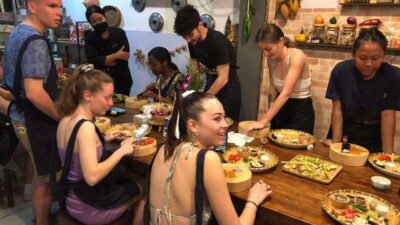
- Personal stations and a well-organized group
- Eating what you cooked
- Is the $29.35 price good value?
- Who should book this Chiang Mai cooking class?
- Booking advice and cancellation
- Should you book it?
- FAQ
- How long does the Thai cooking class last?
- Is hotel pickup included?
- What cooking categories are included?
- Can I choose which dishes to cook?
- Are vegetarian and vegan dishes available?
- Can I choose the spice level?
- How many people can join the class?
- Can children take part?
- What is the cancellation policy?
Key points to know before booking
- Start with a Chiang Mai market visit: You get an introduction to Thai spices, vegetables, and cooking ingredients before reaching the farm.
- Choose your own menu: You select dishes from each cooking category instead of following one fixed menu.
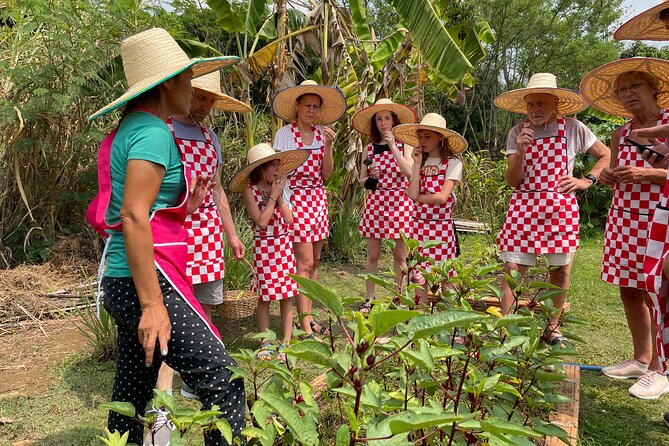
- Cook in an organic garden setting: The herb and vegetable garden helps connect Thai flavors with the plants behind them.
- Make food from scratch: You chop, grind curry paste, and stir-fry your own dishes with guidance from a chef.
- Vegetarian and vegan options are available: You can also request mild or spicy flavors.
- Small-group format: The class accepts a maximum of 12 people, with pickup and drop-off in Chiang Mai city.
From Chiang Mai hotel pickup to the local market
The experience begins with pickup at your hotel or accommodation in Chiang Mai city. That matters because the farm is outside the central city, and round-trip transport removes the need to arrange a taxi or work out a rural transfer on your own.
The first stop is a local market. This is a short visit rather than a full market tour. Your guide explains the spices, vegetables, herbs, and other ingredients used later in the class. It gives you a quick introduction to the building blocks of Thai food before you start cooking.
I would treat this stop as useful preparation, not the main event. If you already know Thai produce well, you may find it a little basic. If names such as galangal, Thai basil, curry paste ingredients, and unfamiliar vegetables are new to you, the explanation helps you understand what you will be eating and why the flavors taste so different from standard restaurant food.
Guides have included Lily, Love, K, Luna, Cici, Lizzy, Piano, Natty, and Natalie. The teaching style can vary slightly by guide, but the strongest pattern is clear instruction, quick ingredient setup, and plenty of help at the cooking stations. Lily is described as energetic and committed, while Love is praised for keeping the group engaged. K is noted for explaining spices and dishes carefully.
More Thai Cooking Classes in Chiang Mai
- Chiang Mai: Cooking Class, Market & Thai Herbs Garden Tour
★ 4.9 · 4,824 reviews - Chiang Mai: Authentic Cooking Class with Market & Farm Visit
★ 4.9 · 4,546 reviews - Thai and Akha Cooking Class in Chiang Mai
★ 5.0 · 4,358 reviews
The drive to Smile Organic Farm
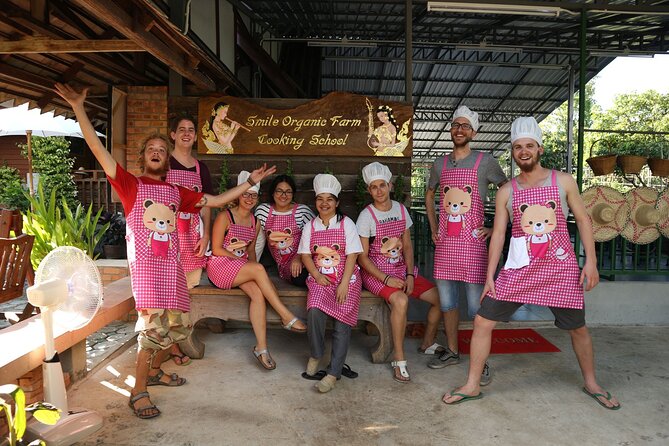
From the market, the group continues to Smile Organic Farm Cooking School. One detailed account describes the drive as more than 30 minutes, so allow room in your day for transport as well as cooking.
The countryside setting gives the class a different feel from an indoor cooking studio in the city. Before you begin, you learn about herbs and vegetables in the organic kitchen garden. This is a small but valuable part of the program. You can connect the plant in front of you with the ingredient you will cut, pound, or cook minutes later.
The farm is also part of the atmosphere. The cooking area is outdoors and relaxed, with a garden close by. Some classes have included a tortoise and two French bulldogs, though animal encounters should be viewed as a pleasant extra rather than a promised part of the program.
The organic label does not turn this into a farming course. You get an introduction to how herbs and vegetables are grown and used, then move on to cooking. For most people, that is the right balance. You get context without spending half the day listening to a lecture.
Picking your menu before the pans heat up
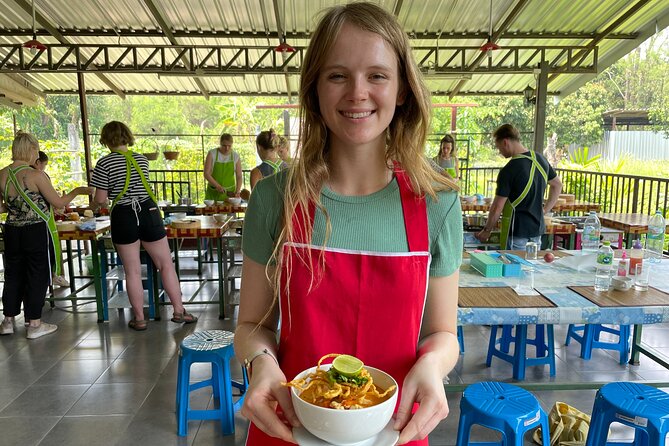
One of the best features is menu choice. After arriving, you are shown the available dishes and choose what to make in each category. This is more personal than a class where everyone cooks the same curry and stir-fry.
The five categories are:
- Curry paste
- Curry
- Stir-fried dish
- Soup
- Spring roll
You may make dishes such as cashew nut chicken, Khao soi, coconut soup with chicken, or other choices offered that day. The exact selection can vary, so do not book with one particular dish guaranteed unless the provider confirms it.
You also decide how spicy your food should be. That is important for anyone who loves Thai flavors but does not handle much heat. You can ask for mild food, while spice fans can choose a hotter version.
Every menu can be prepared as vegetarian or vegan. This is a strong point for mixed groups. You do not need one person to sit out while everyone else cooks meat or seafood. Be clear about your dietary preference when choosing the dishes so the guide can organize the ingredients correctly.
Five cooking categories, not just one quick recipe
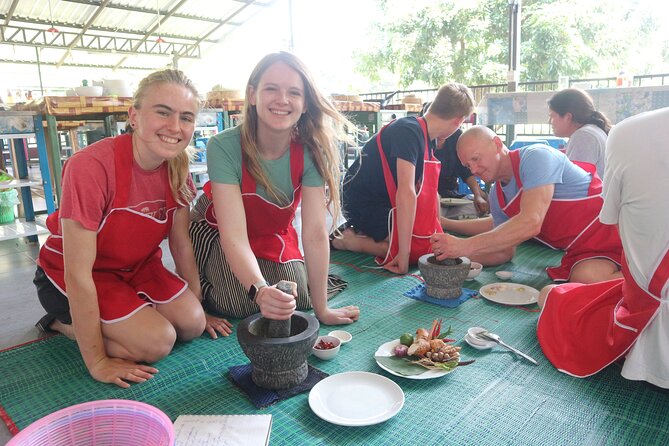
The class is designed to teach basic Thai cooking through several different methods. You are not simply handed a finished plate and told to copy it.
A completely different kind of day out:
- Chiang Mai: Elephant Sanctuary, Waterfall & Bamboo Rafting
★ 4.9 · 9,160 reviews - Chiang Mai: Doi Inthanon National Park Eco-Friendly Tour
★ 4.6 · 6,667 reviews - Chiang Mai: Elephant Sanctuary & Waterfall Group Tour
★ 4.9 · 5,780 reviews - Chiang Mai: Chiang Rai Temples, Karen Tribe and Hot Springs
★ 4.7 · 5,401 reviews
Curry paste: the flavor foundation
Making curry paste is one of the most hands-on parts. You work with aromatics and spices, then grind them into a paste. This shows you where the depth of Thai curry comes from. It also explains why freshly prepared paste tastes fuller than a quick spoonful from a jar.
The process involves chopping and grinding, so expect active work rather than a demonstration only. Your chef or guide helps with the order and technique, especially if you are unfamiliar with the ingredients.
Curry: building a full dish
Once the paste is ready, you use it in a curry. This lets you see how the paste changes when combined with the rest of the ingredients. You can control the heat level, which is helpful if your group has different spice preferences.
Khao soi is one example chosen by a participant. This northern Thai specialty is especially fitting for Chiang Mai, though the available menu depends on the class options that day. If it is offered and you enjoy noodles with curry flavors, it is a worthwhile choice.
Stir-fry: fast cooking with clear results
The stir-fried dish gives you a chance to work at speed. Ingredients are prepared in advance, but you still do the chopping and cooking yourself. Cashew nut chicken is one possible choice, though vegetarian or vegan alternatives are available.
This category is likely to feel familiar if you have cooked at home, yet Thai sauces and seasonings make it different. The guides organize ingredients efficiently, which matters in a group setting where several people may be making different dishes at once.
Soup: bright, aromatic, and filling
Soup is included as one of the main cooking categories. A coconut soup with chicken is one dish selected during a class, with plant-based adjustments possible.
Soup may sound like the simplest course, but it adds another flavor style to the meal. It also contributes to the overall quantity of food. If you choose soup, curry, and stir-fry, you are preparing a serious lunch or dinner, not a small tasting menu.
Spring rolls: a hands-on opening course
Spring rolls are another category, and they give the class a different kind of task. You assemble and prepare them before cooking and eating them with the rest of your meal.
The spring rolls also provide a useful first dish while the more involved curry and soup work continues. They are approachable for children and first-time cooks, although children between 4 and 8 are listed as visitors rather than full participants with their own stations.
Personal stations and a well-organized group
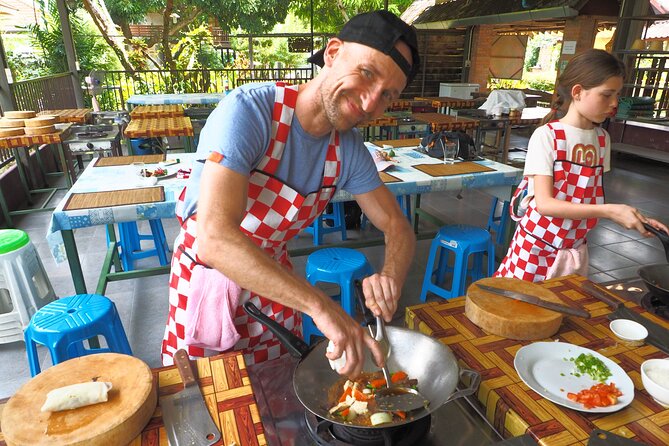
The class has a maximum of 12 participants. That is small enough to keep the group manageable, though 12 people can still feel busy when everyone is chopping and cooking different dishes.
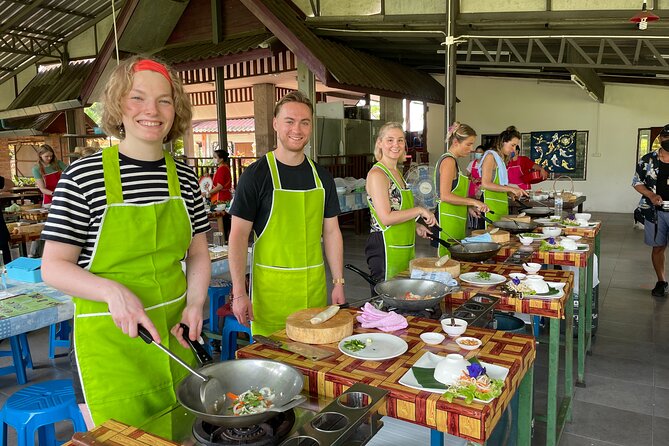
A key practical advantage is the personal cooking station for each participant. Children over 9 can have their own station as participants. This gives you more control over the cooking and means you are not merely watching a chef prepare the meal for you.
The kitchen team appears to handle the organization well. Ingredients are set out quickly, each person receives the items needed for their chosen dishes, and the guide moves around to help. A group of 12 still requires patience, but the setup is built for several people cooking at once.
The chef is central to the experience. Guides such as Lily, Love, Luna, K, Cici, and Natty have been praised for clear instructions, humor, energy, and personal help. That mix matters. A cooking class can become stiff if the teacher talks too much, or chaotic if instructions are unclear. Here, the repeated strength is a friendly teaching style with enough structure to keep things moving.
Eating what you cooked
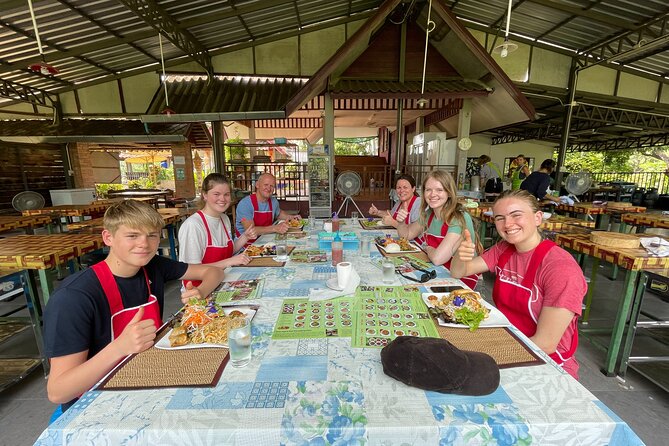
After the cooking, you sit down and eat the food you prepared. This is the payoff, but it is also part of the lesson. You learn how the curry paste, herbs, vegetables, and sauces work together because you taste the final result immediately.
Expect a lot of food. If you choose three main dishes, plus curry paste work and spring rolls, you may not finish everything. Several people advise arriving hungry and pacing yourself through the first course.
There is no Thai dessert in the half-day menu described here. That is the clearest food-related drawback. A dessert would make the meal feel more complete, especially for anyone comparing this with a full-day Thai cooking course. On the other hand, the existing menu already produces a filling three-course meal, so you are unlikely to leave hungry.
The shared meal also makes this a social experience. You can compare dishes, see what others selected, and enjoy a relaxed setting after the active cooking. If you prefer a quiet private lesson, the group format may feel less personal, but the social side suits couples, families, solo participants, and groups of friends.
Is the $29.35 price good value?
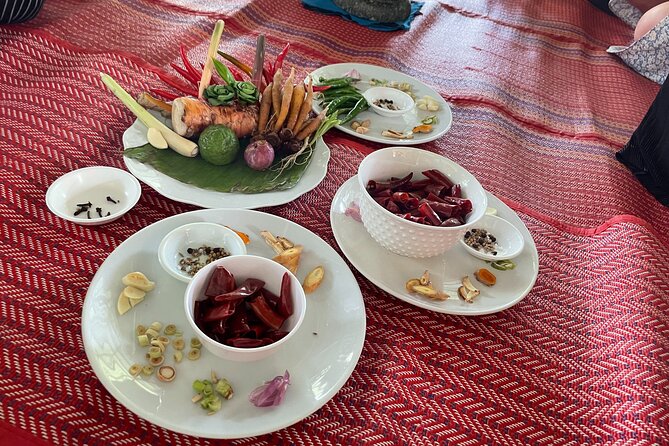
At $29.35 per person, the price is strong for a roughly six-hour experience that includes hotel pickup and return, a market visit, an organic farm setting, instruction, ingredients, and a substantial meal.
The value is not just the number of dishes. You also receive transport to a rural cooking school, a guide who explains the ingredients, access to the garden, and the chance to prepare food yourself. A city restaurant meal would cost less in some cases, but it would not teach you how to recreate the flavors at home.
The price works especially well for couples and families because the menu choice lets each person select something appealing. It also suits food-focused visitors who want a practical activity rather than another sightseeing stop.
The main value limitation is the half-day format. You cover five cooking categories, but the teaching stays at a basic level. If you want a slow, detailed study of Thai regional cuisine, advanced knife skills, or a long session on sauces, you may want a longer course. For a first introduction, the pace is more useful than restrictive.
Who should book this Chiang Mai cooking class?
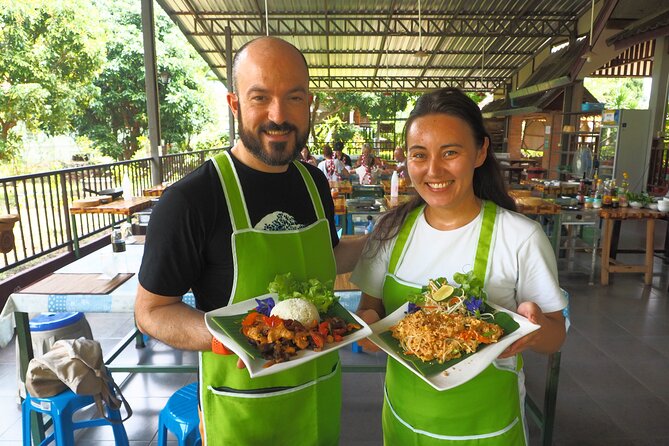
I would recommend it to you if you want to do more than eat Thai food. You will get the most from the experience if you enjoy hands-on work, trying unfamiliar ingredients, and eating a large meal afterward.
It is a good fit for:
- Couples who want a shared activity with plenty to eat
- Families with children aged 4 and above
- Solo participants who enjoy a social group setting
- Friends who want to choose different dishes
- Vegetarians and vegans
- First-time cooks who want clear instruction
- Food lovers interested in northern Thai flavors such as Khao soi
Children from 0 to 3 are free, while children from 4 to 8 are priced as visitors. Children over 9 can cook at their own stations. That makes the age policy fairly clear for families, though very young children may not take part in the cooking itself.
The class is less suitable if you dislike group activities, cannot eat a large meal, or want a dessert-focused course. The market stop may also feel too short if your main goal is shopping or learning about Chiang Mai markets.
Booking advice and cancellation
Pickup is offered from accommodation in Chiang Mai city, and the experience includes a mobile ticket. The maximum group size is 12 people, so the class is not private, but it is smaller than a large bus-style activity.
Free cancellation is available if you cancel at least 24 hours before the start time. Cancellations or changes made less than 24 hours ahead are not accepted for a refund. Keep that deadline in mind when planning around flights, trains, or other fixed activities.
Should you book it?
Book this class if you want a practical, affordable introduction to Thai cooking with transport included. The strongest reasons are the personal stations, menu choice, organic garden, helpful guides, and the chance to make curry paste and several dishes from scratch.
Go in expecting a busy half-day and a very full meal. The market visit is brief, the group can reach 12 people, and dessert is not included. Those are fair trade-offs at this price, especially if you want to return home able to make Thai food instead of only remembering what you ordered at a restaurant.
FAQ
How long does the Thai cooking class last?
The experience lasts approximately 6 hours, including pickup, the market visit, the drive to the farm, cooking, eating, and return transport.
Is hotel pickup included?
Yes. Pickup and return transport are included for hotels or accommodations in Chiang Mai city.
What cooking categories are included?
You learn five categories: curry paste, curry, stir-fried dishes, soup, and spring rolls.
Can I choose which dishes to cook?
Yes. After arriving, you can choose your own menu from the dishes offered in each category.
Are vegetarian and vegan dishes available?
Yes. Every menu can be prepared as vegetarian or vegan.
Can I choose the spice level?
Yes. You can request food that is spicy or mild.
How many people can join the class?
The maximum group size is 12 participants.
Can children take part?
Children aged 9 and above can have their own cooking stations as participants. Children aged 4 to 8 are priced as visitors, and children aged 0 to 3 are free of charge.
What is the cancellation policy?
You can cancel for a full refund up to 24 hours before the experience start time. Cancellations or changes made less than 24 hours before the start are not accepted for a refund.
Just added in Chiang Mai
- Full Day Doi Saket Hiking Tour★ 5.0 · 14 reviews
- Pha Dok Siew Nature Trail & Doi Inthanon National Park From Chiang Mai★ 4.0 · 23 reviews
- One day Elephants in Nature Experience & Grand Canyon Jumping★ 5.0 · 31 reviews
- Chiang Mai to White & Blue Temple, Black Museum & Golden Triangle★ 4.0 · 52 reviews
- One day Doi Inthanon National Park & Trekking on Kew Mae Pan★ 5.0 · 12 reviews
- Private Tour 2 Difference Trails Trekking at Doi Inthanon National Park★ 5.0 · 19 reviews
- Half day Long Neck hill tribe and Hmong hill tribe village★ 5.0 · 21 reviews
- One Day Tour Chiang Rai(White Temple , Blue Temple, Black House) Private Tour★ 5.0 · 63 reviews
Thai Cooking Classes, compared.
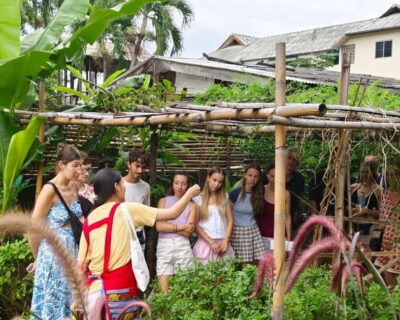
Cooking Class, Market & Thai Herbs Garden Tour
Read our review →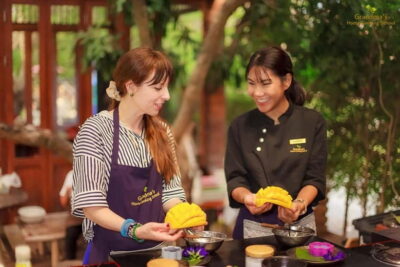
Authentic Cooking Class with Market & Farm Visit
Read our review →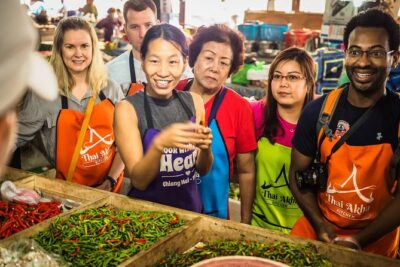
Phuket Thai Cooking Class with Market Tour Option
Read our review →
Tingly Thai Cooking School Half-Day Cooking Class
Read our review →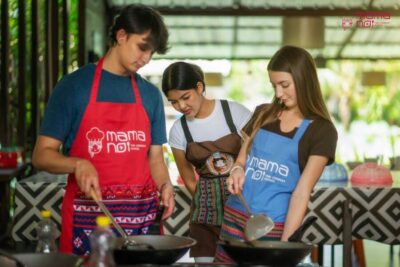
Browse the lists this tour appears in