
Reviewed · THAI COOKING CLASSES
Morning Thai cooking class
Thai food starts with fresh ingredients. This morning class combines a short visit to Kad Kom Market with hands-on cooking, giving you a useful look at Thai herbs, spices, vegetables, and everyday dishes. I like the choice of five dishes, and I also like the eight-person maximum, which leaves room for personal help. The main drawback is practical: the kitchen and dining room have fans but no air-conditioning.
You begin at 9:00 a.m. and spend about 15 to 20 minutes at the market before cooking for roughly four and a half hours. I like that the menu covers two regional styles, including Chiang Mai khao soi, but you should arrive ready for a full morning of food, heat, and standing. Transport is included only for locations within 3 kilometers of the school.
In This Review
- Key points to know before booking
- Starting at Kad Kom Market at 9:00 a.m.
- Choosing five dishes from the menu
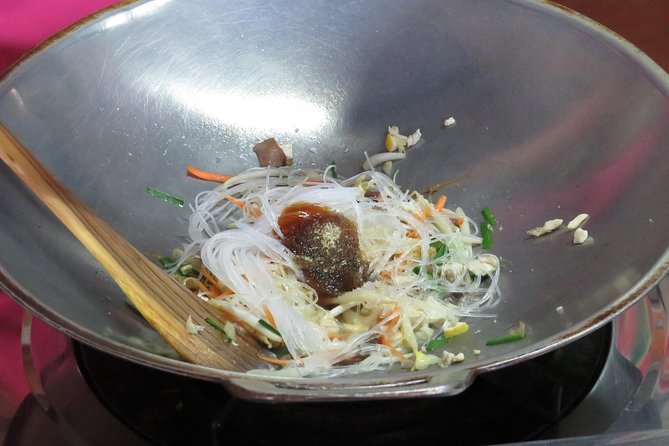
- Cooking the stir-fried dish first
- Soup and appetizer with clear Thai flavors
- Making curry paste from scratch
- Dessert and the meal you have made
- What the eight-person limit means
- Heat, seasons, and what to wear
- Is $27.70 a fair price?
- Who should book this Chiang Mai class?
- Should you book Aromdii Cooking School?
- FAQ
- Where does the cooking class start?
- What time does the class begin?
- How long does the experience last?
- Is pickup included?
- How many people can join the class?
- Do I choose the dishes?
- Are vegetarian and vegan options available?
- Is the kitchen air-conditioned?
- What is included in the price?
Key points to know before booking
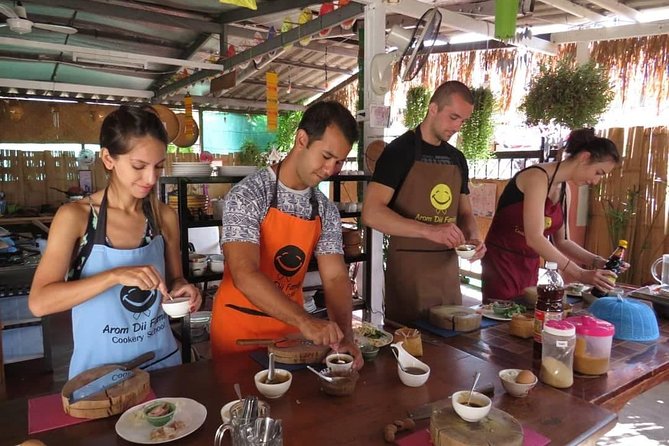
- Five dishes from one large menu: Choose a stir-fry, appetizer, soup, curry, and dessert, with vegetarian and vegan choices available.
- Curry paste made from scratch: The curry course is not just a reheating exercise. You prepare the paste yourself.
- Kad Kom Market comes first: Spend about 15 to 20 minutes seeing Thai produce, herbs, and spices before heading to the kitchen.
- Only eight people per class: The small group makes it easier to get individual comments and cooking help.
- No air-conditioning: Fans are provided, but Chiang Mai’s March through June heat can make the kitchen feel warm.
- Good value at $27.70: The price includes the class, market visit, bottled water, seasonal fruit, recipes, and nearby transportation.
Starting at Kad Kom Market at 9:00 a.m.
The morning begins at Kad Kom Market, the stated meeting point at 19 Wiang Thong 1, Tambon Chang Khlan, Chiang Mai. You can also request pickup if you are staying within 3 kilometers of the cooking school. If you are farther away, plan to reach the meeting point yourself.
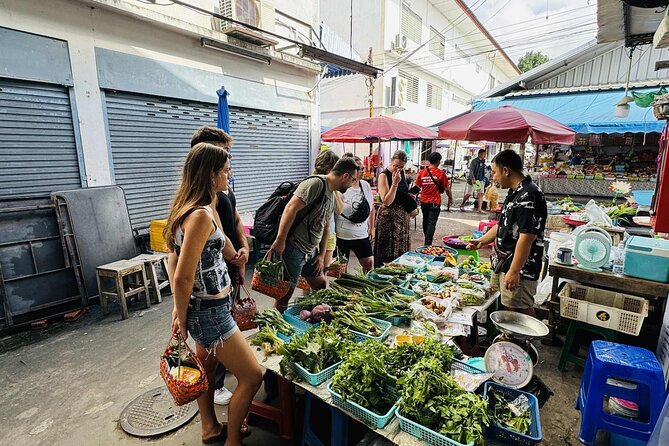
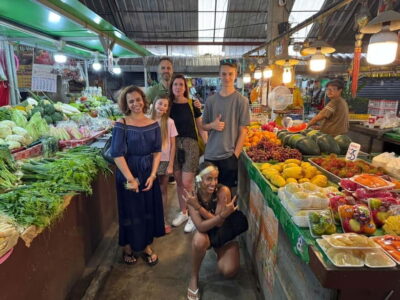
The market visit lasts about 15 to 20 minutes. That sounds brief, but it is enough time to connect the dishes on your menu with the ingredients used to make them. You choose your dishes before the class begins, then collect the vegetables, herbs, spices, and other produce needed for those recipes.
I like this order. Instead of arriving at a kitchen with ingredients already measured and anonymous, you get a quick look at the raw materials first. The class also explains Thai vegetables, spices, and herbs, which helps you understand why Thai food depends so much on fresh aromatics and sharp contrasts.
You can walk around, take photos, or buy spices to take home. The market is not presented as a long sightseeing stop, so you should not expect a guided market tour lasting an hour. Think of it as a practical introduction before the cooking starts.
Because the market portion is short, listen carefully when the ingredients are explained. If you want photos or spices, leave enough time to keep up with the group. The class is limited to eight people, but the morning still follows a schedule.
More Thai Cooking Classes in Chiang Mai
- Half-Day Thai Cooking Class at Organic Farm in Chiang Mai
★ 5.0 · 19,087 reviews - Chiang Mai: Cooking Class, Market & Thai Herbs Garden Tour
★ 4.9 · 4,824 reviews - Chiang Mai: Authentic Cooking Class with Market & Farm Visit
★ 4.9 · 4,546 reviews
Choosing five dishes from the menu
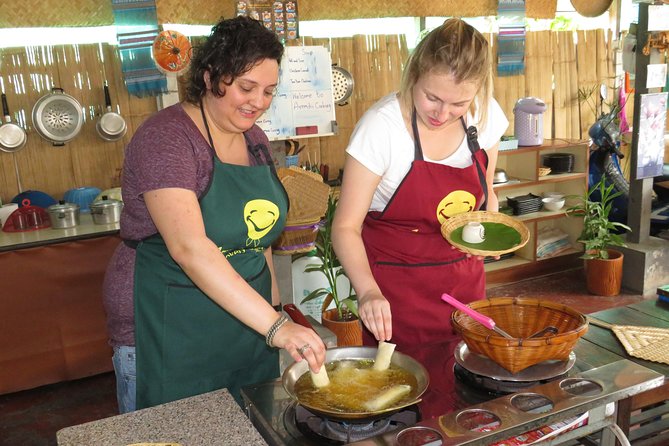
Before cooking starts, you select one dish from each of five sections. This gives you far more control than a class with one fixed menu. It also makes the experience easier to fit around your diet and food preferences.
Your choices are:
Stir-fried dish
- Pad Thai
- Fried drunken noodles
- Pad see ew
- Fried cashew nut
Appetizer
- Papaya salad
- Fresh spring rolls
- Fried spring rolls
- Mixed fruit salad
Soup
- Hot and sour prawns thick soup
- Coconut chicken
- Tom yum chicken
- Hot and sour prawns clear soup
Curry
- Khao soi, Chiang Mai noodles
- Green curry
- Massaman curry
- Red curry
Dessert
- Mango sticky rice
- Pumpkin in coconut milk
This menu is one of the class’s strongest features. You can choose familiar favorites such as pad Thai and mango sticky rice, or use the chance to try khao soi, the northern Thai noodle dish that gives Chiang Mai its own place on the Thai food map.
The menu also includes chicken, prawns, fruit, vegetables, noodles, and several curry styles. Vegan and vegetarian options are available, though you should make your needs clear when choosing. The supplied information does not specify every substitution, so ask the instructor before class if you need a strict dietary adjustment.
Cooking the stir-fried dish first
The cooking sequence begins with the stir-fried dish. This is a sensible first step because it gets you working with the heat, ingredients, and basic rhythm of Thai cooking before the more involved curry course.
Pad Thai is the familiar choice, but pad see ew gives you a different noodle style, while drunken noodles bring a stronger, spicier profile. Fried cashew nut is the non-noodle option. I would choose based on what you want to learn, not just what you already know from Thai restaurants at home.
You can expect to prepare your dish from scratch rather than simply watch a demonstration. The small group matters here. With no more than eight people, you have a better chance of getting a correction if your noodles, sauce, or vegetables need attention.
The class is not described as a professional chef course, and that is part of its appeal. You are learning practical dishes you can attempt again with the recipe provided afterward. If you want advanced knife work or restaurant-level technique, this may feel basic. If you want to cook recognizable Thai food at home, it is a better match.
Soup and appetizer with clear Thai flavors
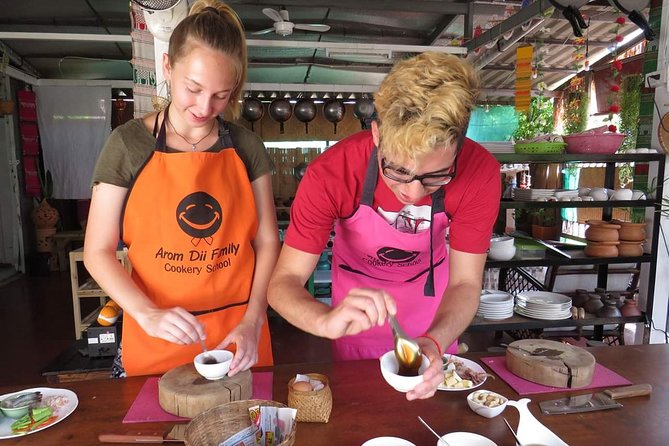
After the stir-fry, the class moves to soup and appetizer. The soup menu lets you choose between creamy coconut chicken, tom yum chicken, and two hot and sour prawn soups. The prawn choices differ in texture, with one thick version and one clear version.
That distinction is useful because it shows that Thai hot and sour soup is not one single recipe. A clear broth and a thicker soup can deliver a different balance even when the sour and spicy character remains.
For the appetizer, you can prepare papaya salad, fresh spring rolls, fried spring rolls, or mixed fruit salad. Papaya salad gives you a classic Thai flavor combination, while spring rolls offer a more hands-on assembly task. Mixed fruit salad is the lightest choice, and it may suit you if you prefer to keep the morning meal fresh and simple.
I appreciate the range here. You are not pushed into one level of spice or one type of cooking. You can pick a raw or fresh preparation, a fried dish, or a fruit-based option. If you are sensitive to heat, ask about spice levels before the cooking begins.
A completely different kind of day out:
- Chiang Mai: Elephant Sanctuary, Waterfall & Bamboo Rafting
★ 4.9 · 9,160 reviews - Chiang Mai: Doi Inthanon National Park Eco-Friendly Tour
★ 4.6 · 6,667 reviews - Chiang Mai: Elephant Sanctuary & Waterfall Group Tour
★ 4.9 · 5,780 reviews - Chiang Mai: Chiang Rai Temples, Karen Tribe and Hot Springs
★ 4.7 · 5,401 reviews
Making curry paste from scratch
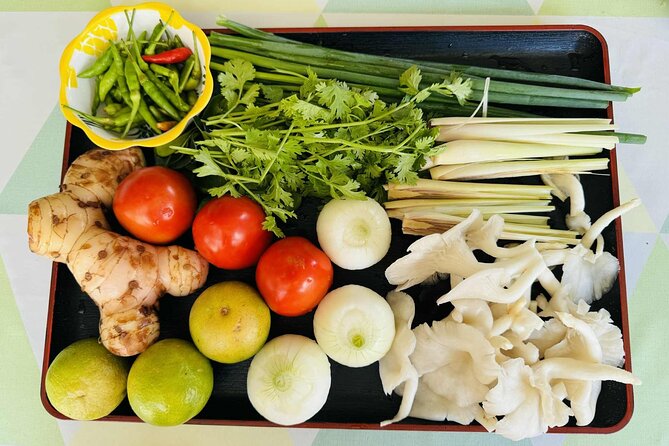
The curry course is likely the most useful part for anyone who wants to understand Thai cooking rather than only copy a recipe. You make the curry paste from scratch, then use it in your chosen curry.
The choices cover both northern and central Thai styles. Khao soi is the Chiang Mai specialty, served with noodles, while green, Massaman, and red curry give you better-known Thai curry paths.
Khao soi is the most location-specific option. Choosing it connects the class to Chiang Mai rather than making this a generic Thai cooking lesson that could take place anywhere. The other curries provide a broader look at Thai food and may be easier to recreate depending on the ingredients available at home.
Making paste yourself also shows you how much flavor comes from combining herbs and spices before the curry reaches the pot. This is more valuable than receiving a prepared paste and being told to stir it in. You may not reproduce every ingredient at home, but the recipe download gives you a starting point for another attempt.
The curry portion comes later in the class, after you have already cooked several dishes. By then, you may be ready for a slower, more involved preparation. The tradeoff is that a four-and-a-half-hour class can feel long if you mainly want to eat rather than learn.
Dessert and the meal you have made
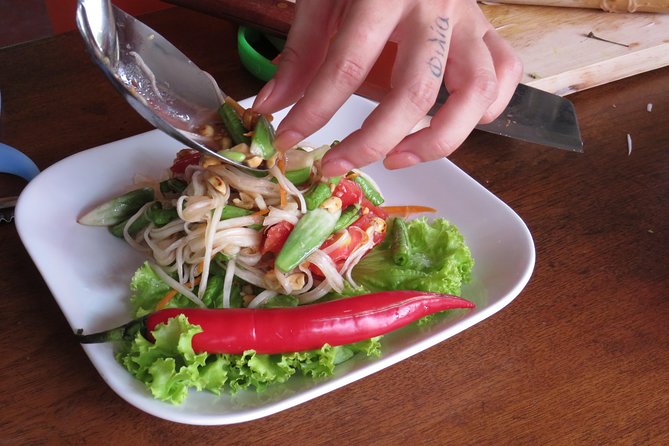
The final cooking section covers dessert. You can choose mango sticky rice or pumpkin in coconut milk.
Mango sticky rice is the obvious first choice for many people, especially if they have eaten it in Thailand and want to understand how it is prepared. Pumpkin in coconut milk gives you a less familiar alternative and keeps the menu tied to simple Thai home-style sweets.
The school provides bottled water and seasonal fruit. The fruit is a useful extra during a warm morning, particularly because the kitchen has fans but no air-conditioning. You should wear light clothing and bring water even though a bottle is included.
By the end, you have prepared five dishes: one stir-fry, one appetizer, one soup, one curry, and one dessert. The structure gives you a full meal, not just a single signature dish. It also means you should pace yourself. Eating every course can be substantial, especially in the heat.
What the eight-person limit means
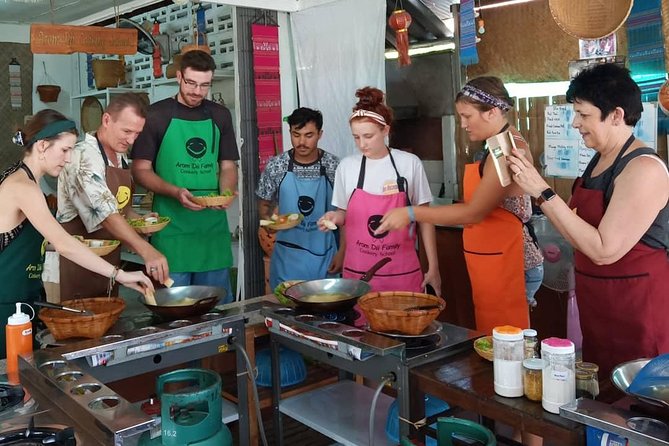
The maximum group size is eight people. That is small enough to keep the class personal without making it a private lesson.
A previous French-language assessment praised the organization, friendly atmosphere, and the chance for personal comments in a group of eight. That detail matters more than a generic promise of a small class. You can reasonably expect the instructor to have time to look at your work and answer questions, though the exact level of attention will depend on the group and the pace of the morning.
The class reserves space for booked participants only, with no visitors. That keeps the kitchen focused and avoids extra people moving around the work area. It also means companions who are not enrolled should not plan to sit in or join the meal.
You should book ahead if your Chiang Mai dates are fixed. The experience is booked an average of 21 days in advance, and the eight-person limit can matter during busy periods. Confirmation is provided when you book.
Heat, seasons, and what to wear
The school clearly warns that there is no air-conditioning in either the kitchen or the eating room. Fans are available, but they do not remove the heat from a working kitchen.
Chiang Mai’s seasons are listed as summer from March through June, rainy season from July through October, and winter from November through February. The word winter can sound cooler than it feels, so do not assume the kitchen will be chilly. The exact temperature will depend on the day.
I would wear comfortable, breathable clothing and shoes suitable for standing. The provided information does not specify a dress code or seating arrangement, so practical clothes are the safest choice. If heat affects you strongly, the cooler months may be more comfortable.
Rain can also affect the activity. The class requires good weather, and cancellation for poor conditions brings the choice of another date or a full refund.
Is $27.70 a fair price?
At $27.70 per person, this is a strong value if you want instruction rather than only a meal. You receive a market visit, roughly four and a half hours of cooking, five dishes, bottled water, seasonal fruit, recipe access, and transportation within 3 kilometers.
The real value comes from the variety. A short class focused on one dish might cost less, but this experience gives you a full set of techniques and recipes. You also learn about ingredients at the market and make curry paste from scratch, two details that add more substance than a simple cooking demonstration.
The price is less attractive if you dislike long classes, warm kitchens, or group activities. You are paying for participation, so the experience works best when you want to chop, mix, cook, and eat. It is not the right choice if you only want a quick tasting.
Free cancellation is available up to 24 hours before the 9:00 a.m. start time. Cancellations made later are not refunded, and changes inside that period are not accepted. If the minimum number of participants is not reached, the school offers another date or experience, or a full refund.
Who should book this Chiang Mai class?
I would recommend it to you if you want a practical introduction to Thai cooking and like having choices. The menu works for first-time cooks, food-focused visitors, vegetarians, vegans, and anyone eager to learn khao soi or homemade curry paste.
It also suits you if you are staying near the school or within the 3-kilometer pickup area. The included transport is convenient, but it is not citywide pickup, so check your location before booking.
Families and couples may enjoy the activity, but the provided information does not set a child age range. If you are booking for children, confirm suitability with the provider first.
You may want to skip it if air-conditioning is essential, if you do not want to cook for several hours, or if you need a fully private class. The group is small, not private, and no visitors are allowed.
Should you book Aromdii Cooking School?
Book this class if you want to spend a full morning learning dishes you can try again at home. The combination of Kad Kom Market, five menu choices, homemade curry paste, and an eight-person limit gives you more substance than a basic cooking lesson.
I would make khao soi the centerpiece if you want a Chiang Mai-specific skill. Choose mango sticky rice for a familiar Thai dessert, and ask about spice levels and dietary substitutions before the class begins.
The decision comes down to comfort. If you can handle fans instead of air-conditioning and enjoy hands-on cooking, $27.70 is a very reasonable way to spend a morning. If you want cool rooms, quick pacing, or a sightseeing tour with only a little cooking, choose another activity.
FAQ
Where does the cooking class start?
The class starts at Kad Kom Market, at 19 Wiang Thong 1, Tambon Chang Khlan, Chiang Mai, Thailand.
What time does the class begin?
The stated start time is 9:00 a.m.
How long does the experience last?
The experience lasts approximately 4 hours and 30 minutes, including the market visit and cooking class.
Is pickup included?
Pickup is included for nearby locations within 3 kilometers of the cooking school. The meeting point is Kad Kom Market.
How many people can join the class?
The class has a maximum of eight participants.
Do I choose the dishes?
Yes. You choose one dish from each category before cooking begins: stir-fried dish, appetizer, soup, curry, and dessert.
Are vegetarian and vegan options available?
Yes. The class offers vegetarian and vegan options within its menu selection. Ask about your specific needs when choosing dishes.
Is the kitchen air-conditioned?
No. The kitchen and eating room have fans only, with no air-conditioning.
What is included in the price?
The price includes the cooking class, market visit, bottled water, seasonal fruit, recipe access through the school website, and transportation within 3 kilometers when applicable.
Just added in Chiang Mai
- Full Day Doi Saket Hiking Tour★ 5.0 · 14 reviews
- Pha Dok Siew Nature Trail & Doi Inthanon National Park From Chiang Mai★ 4.0 · 23 reviews
- One day Elephants in Nature Experience & Grand Canyon Jumping★ 5.0 · 31 reviews
- Chiang Mai to White & Blue Temple, Black Museum & Golden Triangle★ 4.0 · 52 reviews
- One day Doi Inthanon National Park & Trekking on Kew Mae Pan★ 5.0 · 12 reviews
- Private Tour 2 Difference Trails Trekking at Doi Inthanon National Park★ 5.0 · 19 reviews
- One Day Hiking and Elephant experience by Chiang Mai Elephant Home★ 5.0 · 75 reviews
- Half day Long Neck hill tribe and Hmong hill tribe village★ 5.0 · 21 reviews
Thai Cooking Classes, compared.
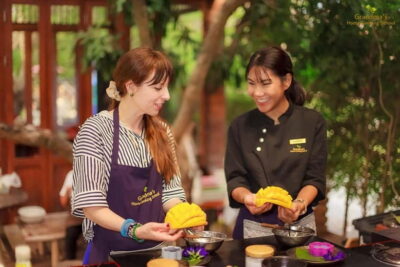
Half-Day Thai Cooking Class at Organic Farm in Chiang Mai
Read our review →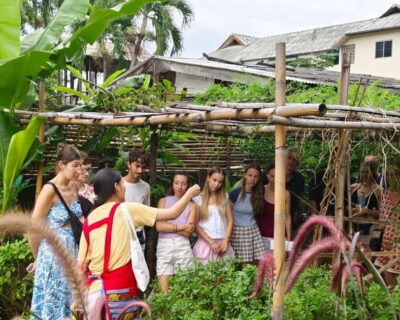
Cooking Class, Market & Thai Herbs Garden Tour
Read our review →Authentic Cooking Class with Market & Farm Visit
Read our review →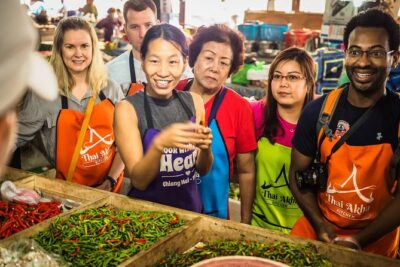
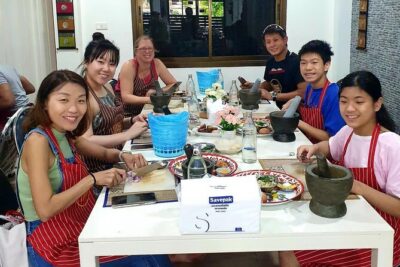
Phuket Thai Cooking Class with Market Tour Option
Read our review →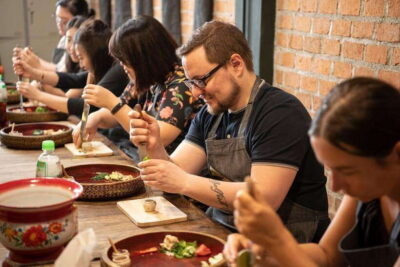
Tingly Thai Cooking School Half-Day Cooking Class
Read our review →Browse the lists this tour appears in