
Reviewed · ELEPHANT SANCTUARY TOURS
Elephant care program at CHIANGMAI ELEPHANT CARE
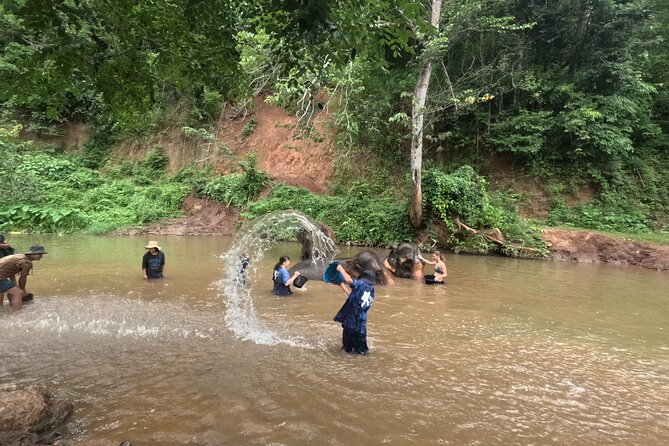
Elephants are best seen on their terms. This six-hour Chiang Mai outing keeps the focus where it belongs: rescued Asian elephants, open space, and care rather than tricks or riding. I like the small-group limit of 12 and the chance to feed the elephants, help prepare herbal supplements, and watch them walk and socialize at their own pace.
I also like the practical setup. Hotel pickup, an air-conditioned vehicle, a local lunch, bottled water, and a uniform are included for $52 per person. The main thing to consider is that activities can vary. Some visits include water time or washing, while others involve watching and feeding only, so do not book this expecting a guaranteed bathing session.
In This Review
- Key points at a glance
- The $52 question: what you are really paying for
- The morning pickup and the road north
- Changing into a mahout-style uniform
- Learning how elephant care works
- Meeting the rescued elephants
- Feeding, walking, and possible water time
- Lunch in the countryside
- What the ethical claim means in practice
- Who will enjoy this six-hour outing
- Practical packing advice for Chiang Mai
- Booking, weather, and cancellation details
- Should you book Chiang Mai Elephant Care?
- FAQ
- How long does the elephant care experience last?
- Is hotel pickup included?
- How far is the care facility from Chiang Mai?
- Are elephants ridden during the program?
- Can I feed the elephants?
- Will I bathe or swim with the elephants?
- Is lunch included?
- What should I bring?
- Can children join the program?
- What is the cancellation policy?
Key points at a glance
- No elephant riding: The program is built around observation, feeding, walking, and care.
- Small groups: A maximum of 12 people can make the visit calmer and more personal.
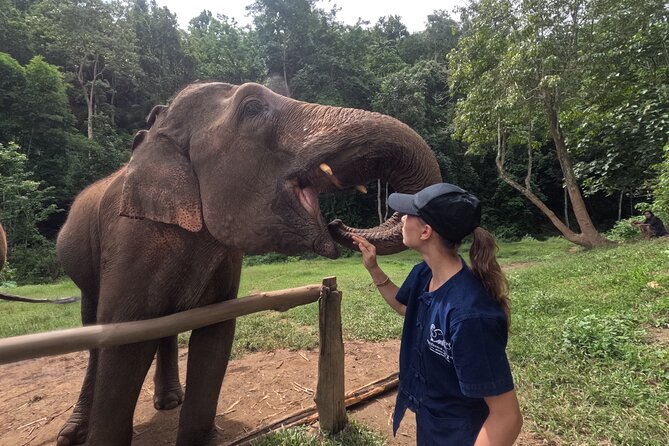
- Hands-on care: You may prepare organic herbal dietary supplements and feed the elephants.
- Guides with strong praise: Tom, Ford, Todd, and Tong are noted for their friendly manner and clear explanations.
- A real half-day outing: Pickup begins around 8:00 to 8:30 a.m., with return to Chiang Mai at about 2:00 p.m.
- Water activities are not fixed: Bring a swimsuit, sandals, and towel, but confirm the day’s plan before you go.
The $52 question: what you are really paying for
At $52, this is a good-value half-day outing if you want transport and a guided animal-care visit in one package. The price covers hotel pickup and drop-off in Chiang Mai, the drive, entrance fees, insurance, lunch, bottled water, and an air-conditioned vehicle.
That matters in Chiang Mai. The care facility is about a 1.5-hour drive through agricultural areas, so arranging your own transport would add time and cost. You also avoid having to negotiate a local taxi or organize a private driver for a rural destination.
The value is strongest for first-time visitors who want a simple plan. You are collected from your hotel, taken to the facility, given a uniform, shown how to approach the elephants, fed lunch, and returned to town. It is not a luxury outing, and the facility is described as cozy and simple rather than polished or large. But the money goes toward a structured care visit instead of a short photo stop.
The group size is another plus. With no more than 12 people, you have a better chance to hear the guide and take part in the activities without a large crowd pressing around the elephants. Some groups have been much smaller, even consisting of only one booking, but that cannot be promised.
More Elephant Sanctuary Tours in Chiang Mai
- Chiang Mai: Elephant Sanctuary, Waterfall & Bamboo Rafting
★ 4.9 · 9,160 reviews - Chiang Mai: Elephant Sanctuary & Waterfall Group Tour
★ 4.9 · 5,780 reviews - Chiang Mai: Elephant Sanctuary Feeding Program Half-Day Tour
★ 4.8 · 4,527 reviews
The morning pickup and the road north
Pickup takes place in your Chiang Mai hotel lobby between about 8:00 and 8:30 a.m. The exact timing depends on your location and the day’s schedule, so keep your morning open rather than planning a tight breakfast reservation.
The ride to the care facility takes roughly 1.5 hours. This is not just dead time. You pass through northern Thailand’s agricultural countryside, and the guide may use the journey to explain local traditions and elephant care. Todd received special praise for making the drive enjoyable and sharing information about Chiang Mai.
The air-conditioned vehicle is welcome in the warm weather. If you are prone to motion sickness, the rural road and longer drive are worth keeping in mind. This is a six-hour day, but much of that includes transportation, so the elephant time is meaningful rather than endless.
Pickup is included from Chiang Mai city hotels. The supplied information does not promise pickup from every area outside the city, so check your accommodation details before booking.
Changing into a mahout-style uniform
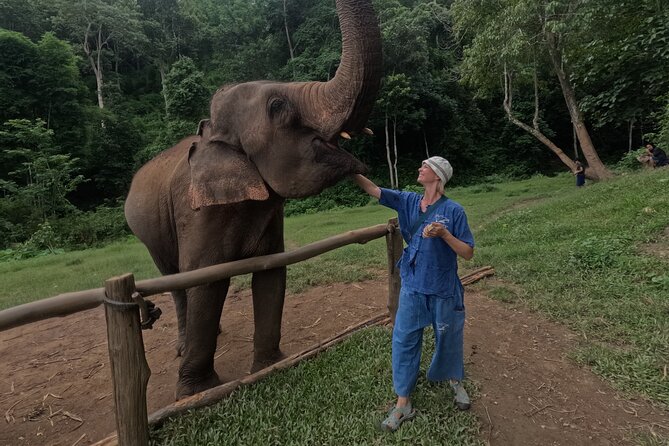
At the facility, you change into a mahout-style uniform. This serves two useful purposes: it helps protect your own clothes from mud, food, and water, and it gives the group a shared working outfit for the care activities.
The uniform is practical, not a costume performance. You are there to learn simple ways of helping with the elephants and to move around the facility without worrying about your best holiday clothes.
Wear something that can handle dirt underneath or bring clothes you do not mind getting wet. Several activities involve food preparation, walking near the animals, or possible water and mud. Rubber boots have been provided on some visits, which is useful because the ground can become muddy, but sensible footwear and a change of clothes are still wise.
Pack sunscreen and insect repellent. The care facility is in a rural setting, and you will spend time outside. Bring a swimsuit, sandals, and towel if you want to be ready for possible water activities. Those items are listed as things to bring, not as proof that every group will bathe with the elephants.
Learning how elephant care works
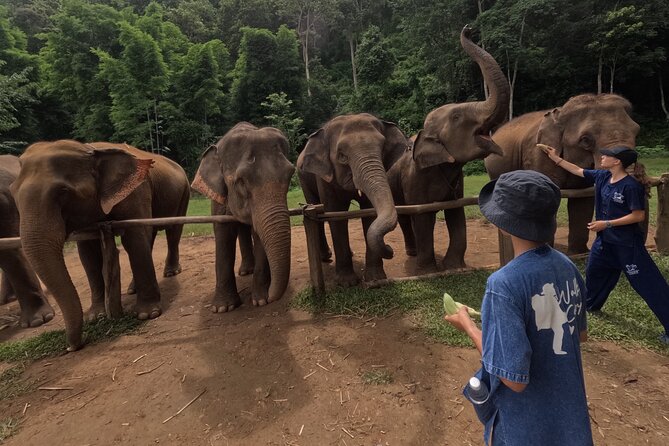
Before meeting the elephants, you receive an introduction to their behavior and care. The program also includes information about traditional organic herbal dietary supplements.
The hands-on part can include making protein supplements or medicine balls for the elephants. This gives you something more useful than simply posing beside an animal. You see how food and care are prepared, and you begin to understand that elephant welfare involves routine attention rather than constant entertainment.
Guides are a major part of the experience. Tom is praised for his humor, care, and strong English. Ford is described as passionate about elephant welfare and patient when explaining the animals. Todd has been praised both for his driving and for taking photographs, while Tong, also spelled Thong in some accounts, is described as friendly and clear in his instructions.
Guide quality can shape the whole day. A good guide tells you when to move closer, when to give an elephant space, and what behavior means. The strongest part of this program is not just being near a large animal. It is having someone explain how to be near one responsibly.
A completely different kind of day out:
- Half-Day Thai Cooking Class at Organic Farm in Chiang Mai
★ 5.0 · 19,087 reviews - Chiang Mai: Doi Inthanon National Park Eco-Friendly Tour
★ 4.6 · 6,667 reviews - Chiang Mai: Chiang Rai Temples, Karen Tribe and Hot Springs
★ 4.7 · 5,401 reviews - Chiang Mai: Cooking Class, Market & Thai Herbs Garden Tour
★ 4.9 · 4,824 reviews
Meeting the rescued elephants
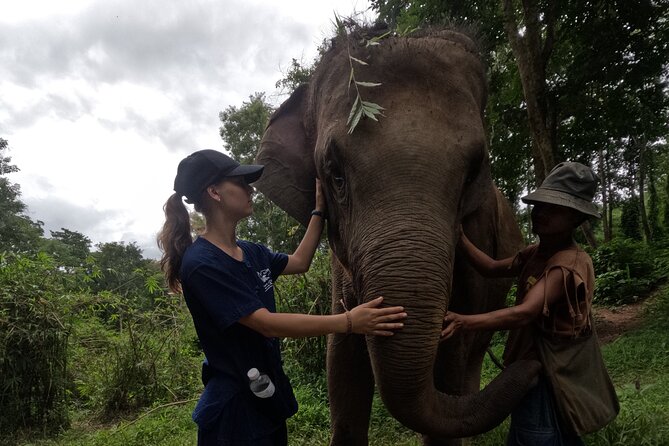
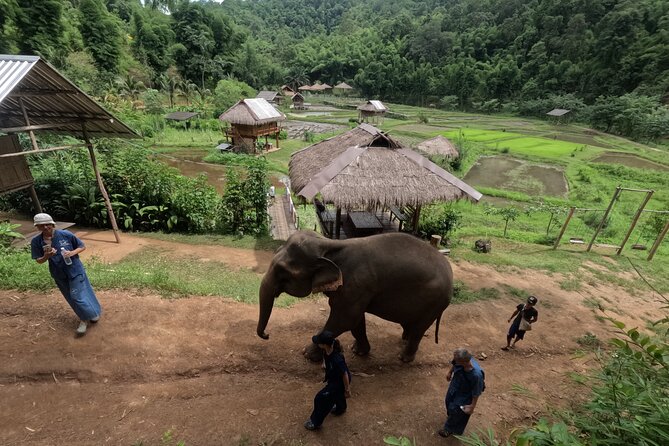
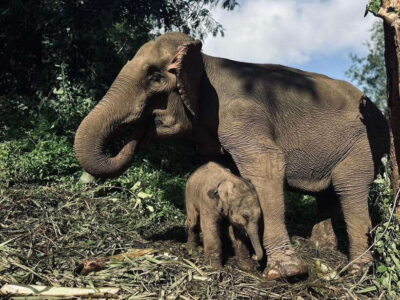
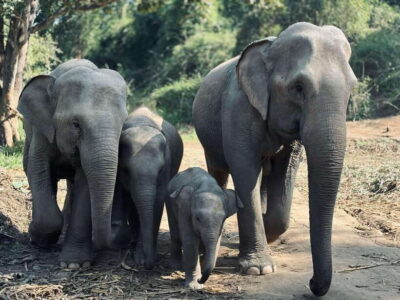
The facility has been described as small, scenic, and simple. The number of elephants can vary, with some visits involving two or three adult elephants and a baby. The animals may walk around, feed, socialize, and rest rather than gather in one fixed display area.
That is the point of the program. You are encouraged to observe the elephants as they move through their surroundings instead of expecting a staged show. You may feed them, walk near them, and touch them when the guide allows it. Several accounts describe the animals as calm, friendly, and well cared for.
The baby elephant can be a highlight, especially for families. It is energetic and fun to watch, but a young elephant is still an animal, not a toy. Follow the guide’s instructions and do not assume that every elephant wants contact at every moment.
The no-riding rule is important. Riding elephants has long been promoted as a classic Thai activity, but it raises serious welfare concerns. This program rejects that model and does not ask the elephants to perform for you. You watch them live their daily routine, which can feel quieter but also more respectful.
Feeding, walking, and possible water time
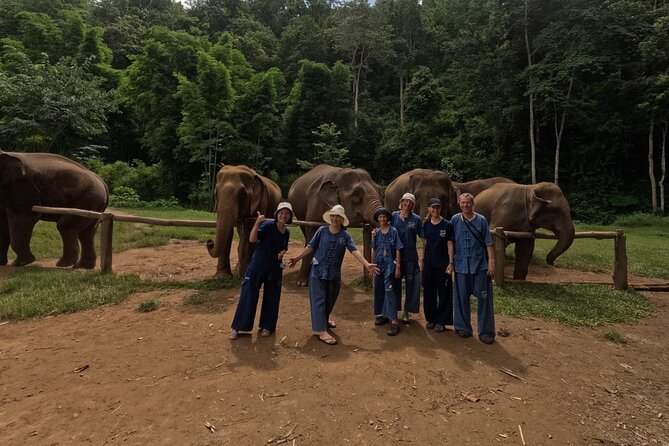
Feeding is one of the most reliable parts of the visit. You get close enough to offer food and watch the elephants use their trunks with surprising care and speed. They are described as very fond of food, so keep hold of your portion until the guide shows you how to offer it.
Walking and observation are also central. You may follow the elephants as they move around and socialize, but you should not expect them to march in a neat line for photographs. The best moments can be the unscripted ones: an elephant choosing where to stand, turning toward food, or simply ignoring the group to continue its own routine.
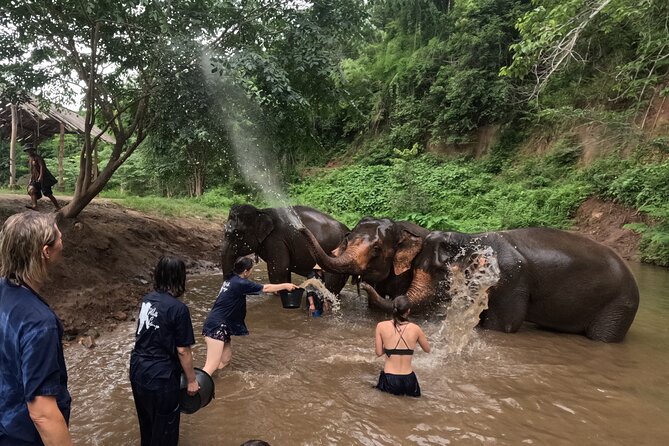
Water activities need a little caution. Some accounts describe feeding and washing, and one visit included time in the water with the elephants. Other accounts specifically note that there was no bathing or water interaction. The program’s description emphasizes care and observation, so the safest assumption is that water time depends on conditions, elephant behavior, and the day’s plan.
This variation is not necessarily a flaw. If the elephants are not forced into a bath for the sake of a tourist schedule, that is the better choice. Still, if washing an elephant is the main reason you are booking, contact the operator first and ask what is planned for your date.
Lunch in the countryside
Lunch is included and has been praised as good and filling. Pad Thai is specifically mentioned, along with fruit on one visit. It is a local meal rather than a formal restaurant experience, which fits the simple setting.
The meal breaks up the outdoor activities and saves you from carrying a full lunch. Bottled water is included too, though you should still bring sunscreen and insect repellent for the rest of the day.
Do not expect a long food tour or a menu of several courses. Think of lunch as a welcome, practical meal in the middle of a rural care visit. For most people, that is exactly what a half-day outing needs.
What the ethical claim means in practice
The word ethical can be used loosely in the elephant tourism industry, so it is worth looking at the actual structure of this visit. Here, the advertised model is no riding, no forced performances, and observation in a natural setting. The animals are allowed to roam and socialize, and the activities center on food and care.
That does not mean you should switch off your judgment. No short tour can explain every part of an elephant’s background or long-term welfare. The supplied information identifies the animals as rescued and describes the facility as a care center, but it does not provide detailed histories for each elephant or explain its veterinary program.
What you can assess during the visit is how the staff behave around the animals. The strongest accounts describe elephants being left alone when they choose, with no pressure to entertain people. That is the standard you should look for. If an elephant walks away, the right response is to let it go.
This approach may feel different from a traditional elephant camp. You may have fewer guaranteed photo moments, no riding, and no promise of a bath. In exchange, you get an activity that places animal choice ahead of a fixed show schedule.
Who will enjoy this six-hour outing
I would recommend this program to families, couples, solo visitors, and small groups who want close contact without riding. Children around school age can enjoy feeding, preparing the supplements, and watching the baby elephant, provided they can follow safety instructions and handle a moderate level of walking.
It is also a good choice if you want a half-day activity rather than a full-day commitment. You leave Chiang Mai in the morning and return around 2:00 p.m., leaving the late afternoon open.
You should think twice if you want a large, elaborate sanctuary with many elephants. The facility is small, and some visits involve only a few animals. That can mean more personal time, but it also means less variety.
You should also reconsider if you need guaranteed bathing or swimming. Water contact is inconsistent. Book this for the care program, feeding, and observation first. Treat water time as a possible extra.
A moderate level of physical fitness is requested. You will ride in a vehicle for a significant part of the day and spend time walking outdoors. The information provided does not describe wheelchair access or detailed mobility arrangements, so ask the operator directly if that affects your plans.
Practical packing advice for Chiang Mai
Bring sunscreen and insect repellent. These are not decorative extras when you are spending time outdoors in a rural area.
Pack a swimsuit, sandals, and towel because water activities may be available. Wear clothes that can get dirty, and bring a dry change if you plan to enter water or if rain is possible.
The center provides a uniform, and rubber boots have been available on some visits. Even so, do not arrive in delicate shoes or expensive clothing. Elephant food, mud, and water are part of the setting.
Keep your phone or camera protected from moisture. Guides such as Todd have helped take photographs for visitors, but you remain responsible for your own device. Always listen before approaching an elephant for a picture.
Booking, weather, and cancellation details
The price is $52 per person, and mobile tickets are offered. Confirmation is received at booking. The group limit is 12 people, which helps keep the visit from feeling like a large animal show.
Free cancellation is available if you cancel at least 24 hours before the experience starts. Changes or cancellations inside that period are not accepted for a refund.
The outing needs good weather. If poor weather cancels it, you are offered another date or a full refund. The same choice applies if the minimum number of people is not reached and the activity is canceled.
Should you book Chiang Mai Elephant Care?
Book it if you want a small, caring, no-riding elephant experience with hotel transport and lunch included. The best parts are the calm setting, direct feeding and care activities, strong guides such as Ford, Tom, Todd, and Tong, and the chance to watch elephants behave without a performance schedule.
Go in with realistic expectations. The facility is small, elephant numbers can vary, and bathing is not guaranteed. If you value animal welfare more than a packed list of staged activities, the $52 price is fair. If you mainly want a guaranteed elephant swim, ask about the day’s program before paying.
FAQ
How long does the elephant care experience last?
The experience lasts about six hours. Pickup is scheduled around 8:00 to 8:30 a.m., and drop-off in Chiang Mai is expected at about 2:00 p.m.
Is hotel pickup included?
Yes. Pickup and drop-off from hotels in Chiang Mai city are included.
How far is the care facility from Chiang Mai?
The drive takes approximately 1.5 hours through northern Thailand’s agricultural countryside.
Are elephants ridden during the program?
No. The program does not include elephant riding.
Can I feed the elephants?
Yes. Feeding the rescued elephants is part of the experience, and you may also help prepare organic herbal dietary supplements or protein supplements.
Will I bathe or swim with the elephants?
Water activities are not guaranteed. Some visits include washing or time in the water, while others focus on feeding and observation. Bring a swimsuit, sandals, and towel, and confirm the plan if bathing is important to you.
Is lunch included?
Yes. Lunch, bottled water, fees, taxes, insurance, and transport in an air-conditioned vehicle are included. Pad Thai and fruit have been served on visits.
What should I bring?
Bring sunscreen and insect repellent. A swimsuit, sandals, and towel are also advised because water activities may be offered. Wear clothing that can get muddy or wet.
Can children join the program?
The supplied information does not state a minimum age. Children should be able to manage a moderate level of physical activity and follow the guide’s instructions around elephants.
What is the cancellation policy?
You can cancel at least 24 hours before the start time for a full refund. Cancellations or changes made less than 24 hours before the start time are not refunded. Poor weather or failure to meet the minimum number of participants may result in a different date or a full refund.
Just added in Chiang Mai
- One day Elephants in Nature Experience & Grand Canyon Jumping★ 5.0 · 31 reviews
- Full Day Doi Saket Hiking Tour★ 5.0 · 14 reviews
- Pha Dok Siew Nature Trail & Doi Inthanon National Park From Chiang Mai★ 4.0 · 23 reviews
- Chiang Mai to White & Blue Temple, Black Museum & Golden Triangle★ 4.0 · 52 reviews
- One day Doi Inthanon National Park & Trekking on Kew Mae Pan★ 5.0 · 12 reviews
- Private Tour 2 Difference Trails Trekking at Doi Inthanon National Park★ 5.0 · 19 reviews
- Half day Long Neck hill tribe and Hmong hill tribe village★ 5.0 · 21 reviews
- One Day Tour Chiang Rai(White Temple , Blue Temple, Black House) Private Tour★ 5.0 · 63 reviews
Elephant Sanctuary Tours, compared.
Elephant Sanctuary, Waterfall & Bamboo Rafting
Read our review →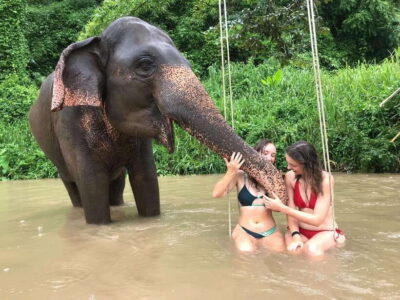
Elephant Sanctuary Feeding Program Half-Day Tour
Read our review →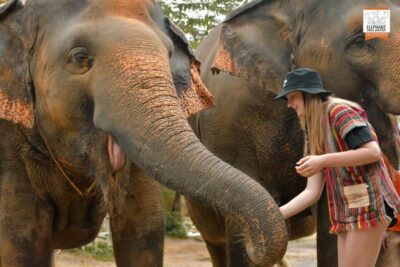
Elephant Jungle Sanctuary Ethical Feeding Experience
Read our review →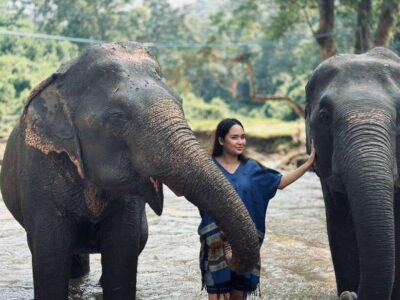
Elephant Sanctuary, Long Neck & Sticky Waterfall
Read our review →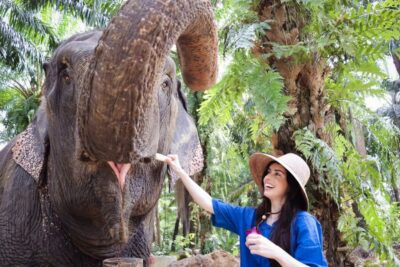
Elephant Bathing Session at Krabi Elephant Shelter
Read our review →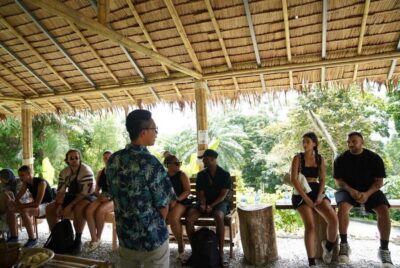
Elephant Sanctuary Guided Tour with Hotel Transfers
Read our review →
Browse the lists this tour appears in