
Reviewed · THAI COOKING CLASSES
Chiang Mai: Local Northern Thai Cooking Class at Grandma’s
Come hungry, leave with recipes. This six-hour Chiang Mai cooking day combines a local market visit, an organic farm tour, and hands-on Northern Thai food preparation in a setting that feels personal rather than factory-sized. I especially like the chance to pick herbs and vegetables from the farm and learn old kitchen skills such as grinding flour and grating coconut by hand. The main consideration is time: six hours is a full morning and afternoon, and the cooking includes several practical tasks rather than quick demonstrations.
The small groups make a real difference. Recent sessions have had only five or eight people, and instructor Best is praised for being warm, funny, and attentive. I also like that you prepare your own portions, can request dietary adjustments, and may take uneaten food home. The pickup window is around 8:30 to 9:00am, so you need to be ready in your hotel lobby by 8:30.
In This Review
- What makes this Chiang Mai cooking class special
- A six-hour taste of Northern Thailand
- Starting with the Chiang Mai market
- From the organic farm to the chicken coop
- Preparing five Northern Thai dishes
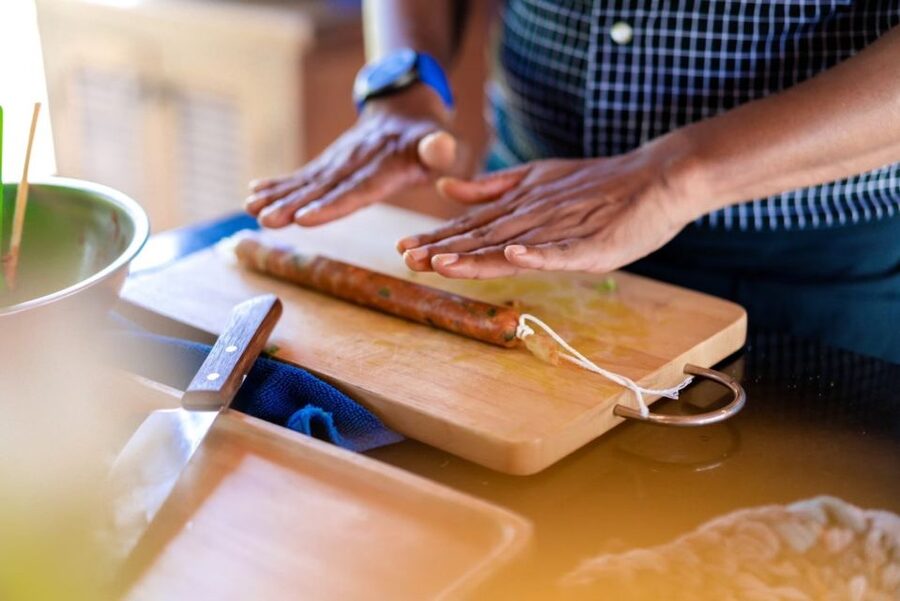
- Northern Thai sausage
- Nam Prik Ong or Nam Prik Num
- Hang Lay pork belly curry
- Young jackfruit curry
- Stuffed dough pyramid and coconut pancakes
- Charcoal, banana leaves, and hands-on work
- Lunch, desserts, and a clean kitchen
- Group size and the role of the instructor
- Is $48 good value?
- Practical advice before you book
- Who should book Grandma’s Home Cooking School?
- FAQ
- How long does the cooking class last?
- What time does hotel pickup begin?
- Is hotel transportation included?
- How many dishes will I learn to cook?
- Is the menu vegetarian or adaptable for dietary requirements?
- Is the class taught in English?
- Does the experience include a market visit?
- Does the experience include a farm visit?
- Are children allowed to attend?
- What should I bring?
What makes this Chiang Mai cooking class special
- Northern Thai recipes instead of only tourist staples: Prepare dishes such as sai ua sausage, Nam Prik Ong or Nam Prik Num, Hang Lay pork belly curry, and young jackfruit curry.
- A market visit with a purpose: Learn how local ingredients and seasonings are used before you start cooking.
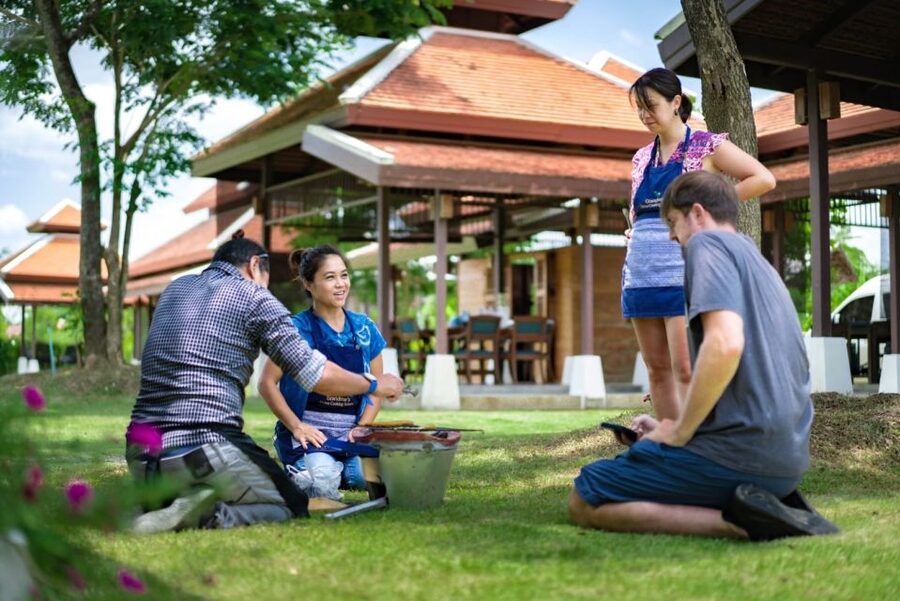
- Farm-to-table preparation: Walk through the organic farm, identify herbs and vegetables, pick what you need, and visit the chicken coop to collect eggs.
- Old-fashioned kitchen work: Light a charcoal grill, wash vegetables, mill flour with a traditional millstone, and grate coconut meat by hand.
- A proper meal at the end: Sit down for lunch and taste the dishes you helped prepare, followed by Thai desserts and refreshments.
- Small-group attention: Groups of five to eight people allow the English-speaking instructor to watch your work and guide each step.
A six-hour taste of Northern Thailand
Grandma’s Home Cooking School offers more than a recipe lesson. It gives you a look at how ingredients move from market stall and garden to kitchen table.
That matters in Northern Thailand, where food is often built around fresh herbs, chilli pastes, pork, vegetables, coconut, and careful seasoning. You are not simply handed a premeasured bowl and told to stir. You see ingredients in their local setting, learn what they are used for, and then work with them yourself.
The course price is $48 per person. For six hours, round-trip hotel transfers, market and farm visits, lunch, dessert, instruction, refreshments, and a downloadable recipe book are included. That is good value if you want a full cultural activity rather than a short cooking demonstration. It is less appealing if your only goal is to learn one or two fast recipes.
The school also welcomes different dietary requirements. Tell the provider what you need when booking so the kitchen can prepare properly.
More Thai Cooking Classes in Chiang Mai
- Half-Day Thai Cooking Class at Organic Farm in Chiang Mai
★ 5.0 · 19,087 reviews - Chiang Mai: Cooking Class, Market & Thai Herbs Garden Tour
★ 4.9 · 4,824 reviews - Chiang Mai: Authentic Cooking Class with Market & Farm Visit
★ 4.9 · 4,546 reviews
Starting with the Chiang Mai market
The day begins with hotel pickup, generally between 8:30 and 9:00am. Be ready in the lobby at 8:30, since the schedule may vary by pickup location.
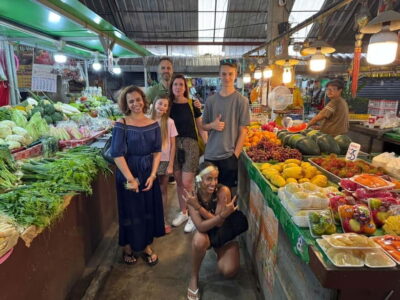
The local market visit sets up the rest of the day. Instead of meeting ingredients only after they have been chopped and placed in front of you, you learn about the seasonings and produce first. This is useful when cooking Northern Thai food because many ingredients can look unfamiliar if you have only seen them in a finished curry or dip.
The market portion is also a good chance to ask questions. Your English-speaking instructor can explain how ingredients fit into the recipes and help you connect what you see at the stalls with what you will use later.
You should expect a working visit, not a long shopping break. The point is to understand the ingredients and seasonings used in the class. Wear comfortable shoes, especially since the day continues with a farm walk and practical kitchen work.
From the organic farm to the chicken coop
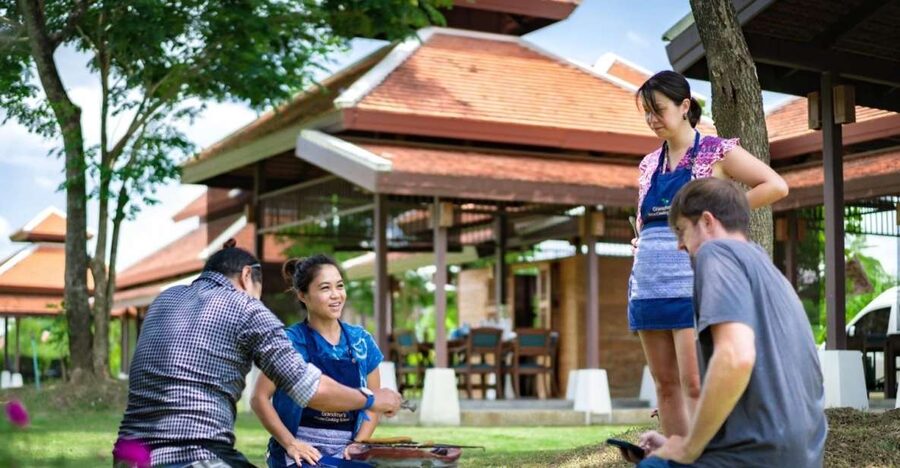
After the market, you tour the organic farm. The instructor explains the Thai herbs and vegetables used in the dishes, and you help pick ingredients for your meal.
This is one of the most appealing parts of the experience because it gives the recipes a clear sense of place. A chilli dip or curry is easier to understand when you have seen the herbs growing and handled the vegetables before cooking them.
You also visit the chicken coop to collect eggs. That small task adds a hands-on farm element to the day and connects with the grilled egg in banana leaf included in the wider class description.
The farm walk may be less exciting for someone who wants nonstop cooking, but I think it earns its place. Northern Thai food is not just about a list of ingredients. It is also about how those ingredients are found, prepared, and combined.
Preparing five Northern Thai dishes
The core lesson covers five traditional dishes, with a choice between two chilli preparations:
- Northern Thai sausage
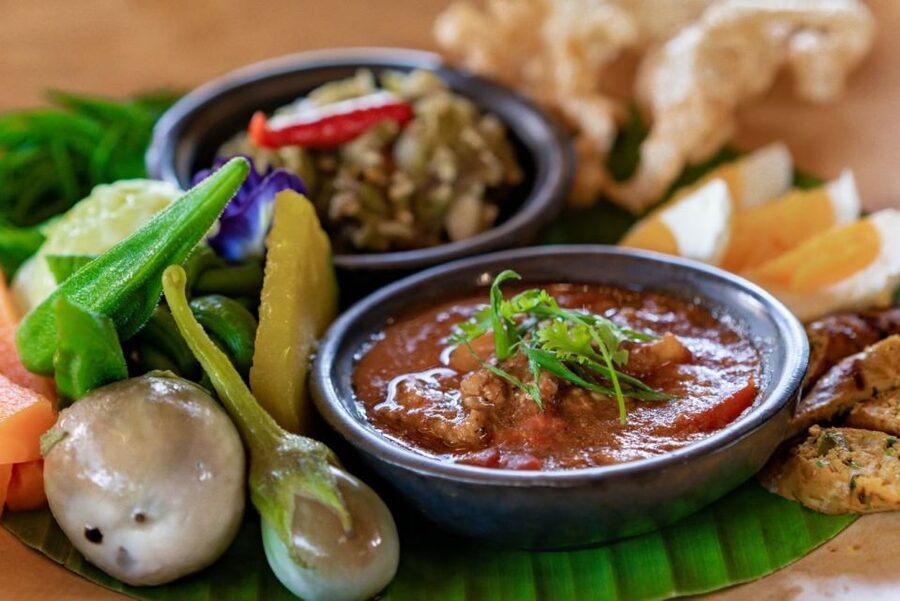
- Nam Prik Ong, a spicy Northern Thai pork and tomato dip, or Nam Prik Num, a Northern Thai green chilli dip
- Northern pork belly curry, also called Hang Lay curry
- Young jackfruit curry
- Stuffed dough pyramid, known as Ka Nhom Tian or Kanomjok
The course description also includes grilled egg in banana leaf and Thai coconut pancakes as part of the day’s cooking and dessert work. The exact balance between the five main dishes, the egg preparation, and the sweet session may depend on the class plan, so ask the school if you need a precise menu before booking.
A completely different kind of day out:
- Chiang Mai: Elephant Sanctuary, Waterfall & Bamboo Rafting
★ 4.9 · 9,160 reviews - Chiang Mai: Doi Inthanon National Park Eco-Friendly Tour
★ 4.6 · 6,667 reviews - Chiang Mai: Elephant Sanctuary & Waterfall Group Tour
★ 4.9 · 5,780 reviews - Chiang Mai: Chiang Rai Temples, Karen Tribe and Hot Springs
★ 4.7 · 5,401 reviews
Northern Thai sausage
Northern Thai sausage is a useful introduction to the region’s preference for bold seasoning. You learn how the sausage is prepared rather than simply sampling it at lunch.
This dish is especially good for people who want a recipe they can recreate at home, though sausage preparation is more involved than stirring together a dip. Your instructor guides the group through the process, and you work with your own portion.
Nam Prik Ong or Nam Prik Num
The choice of chilli dip lets you select between two different Northern Thai flavour profiles. Nam Prik Ong uses pork and tomato, while Nam Prik Num is a green chilli dip.
This is a practical part of the class because dips can be served with many simple meals at home. If you are sensitive to chilli, tell the instructor before cooking. The school says it can accommodate special dietary requirements, but the spice level should still be discussed clearly.
Hang Lay pork belly curry
Northern pork belly curry is one of the more substantial dishes on the menu. It gives you a chance to work through the steps of making a regional curry rather than relying on a ready-made sauce.
Because the dish uses pork belly, it may not suit every diet. The school can adjust for dietary needs, but confirm the replacement ingredients in advance if you do not eat pork.
Young jackfruit curry
Young jackfruit curry brings a vegetable-based dish into the meal. Jackfruit has a texture that can surprise first-time cooks, and preparing it in a curry shows how Northern Thai cooking uses vegetables as more than side dishes.
This is a valuable recipe for anyone looking to add Thai food to a mostly plant-based kitchen. Again, ask ahead about the exact adaptation if you follow a strict diet.
Stuffed dough pyramid and coconut pancakes
The stuffed dough pyramid, called Ka Nhom Tian or Kanomjok, adds a different kind of kitchen work. The recipe book should be especially useful here because shaping and filling dough can be hard to remember after one lesson.
The dessert session includes traditional Thai sweets and refreshments. You also learn to make Thai coconut pancakes in the traditional way, including the less familiar work of milling flour with a traditional millstone and grating coconut meat with a coconut grater.
These old tools are not just decoration. They slow the process down and show you how much work once went into ingredients that now come ready-made. You may not use a millstone at home, but the technique helps you understand the texture and taste of freshly prepared flour and coconut.
Charcoal, banana leaves, and hands-on work
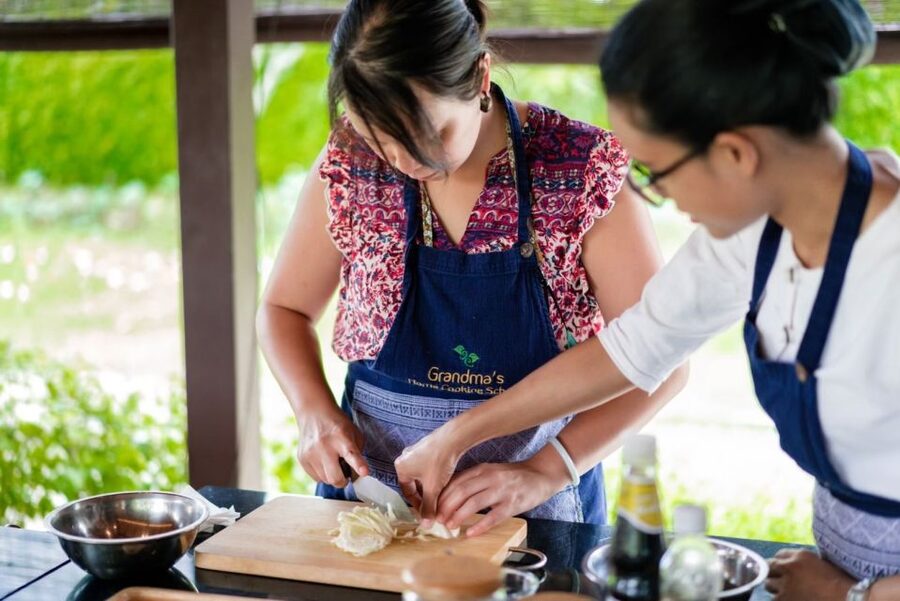
One of the class highlights is learning to light a charcoal grill. This is a small skill, but it changes the feel of the course. You are learning cooking methods, not only recipes.
The grilled egg in banana leaf brings together the farm egg, traditional wrapping, and charcoal cooking. It also gives you a chance to see how banana leaves can be used in Thai food preparation.
You will wash vegetables, prepare ingredients, and help other people in the group. The instructors guide everyone in English, and the small class size means you are less likely to disappear at the back of a demonstration.
The work is shared, but you can expect to receive your own prepared portions. This is important if you have dietary restrictions or simply want to taste the results of your own cooking. The kitchen also provides disposable containers if you cannot finish everything.
Lunch, desserts, and a clean kitchen
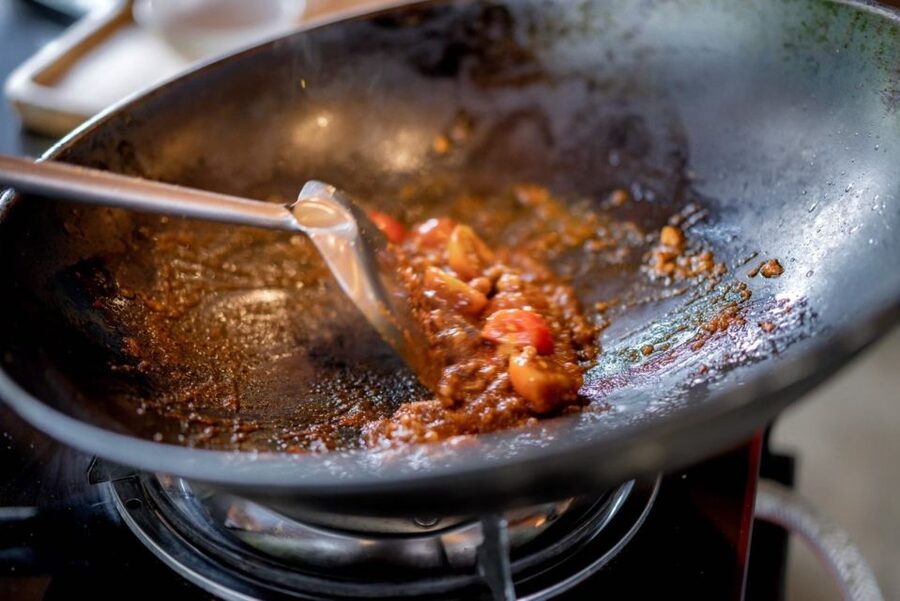
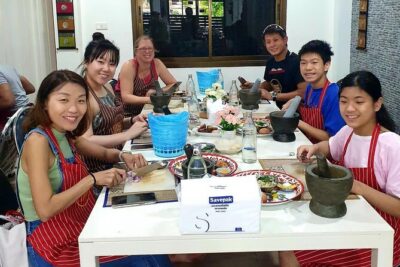
Lunch is the reward for the morning’s work. You sit down to taste the dishes you have prepared, rather than being served a separate meal with no connection to the lesson.
The dessert and refreshment session gives the day a pleasant change of pace. You taste traditional Thai desserts and drinks, then have time to appreciate the coconut pancake process and other sweet preparations.
Cleanliness is a real practical concern in a cooking class. The available feedback specifically praises the school’s cleanliness, including the toilets. That may sound like a minor detail, but it matters during a six-hour activity with food preparation and several hours on site.
You should not expect a polished restaurant kitchen or a quick, scripted class. The appeal is the working setting and personal instruction. That also means the pace can feel slow if you prefer a short activity with little participation.
Group size and the role of the instructor
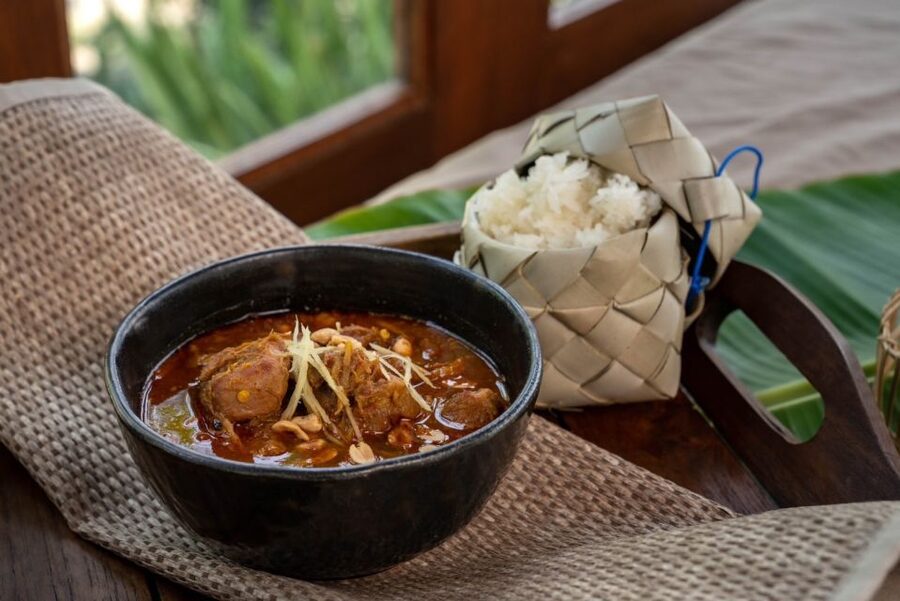
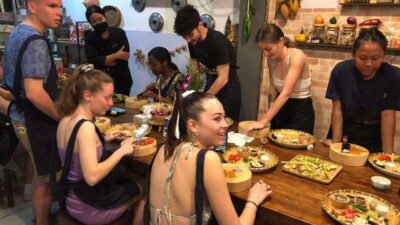
The strongest reason to choose this class is the attention you receive. Groups have been as small as five people, with other sessions around eight. That is a comfortable size for cooking because the instructor can check your ingredients, answer questions, and help when a step goes wrong.
Instructor Best receives especially warm praise for being friendly, humorous, and helpful. A good cooking teacher does more than translate a recipe. Best keeps an eye on each person and helps the group work together.
You are not left to cook in isolation. Participants help one another, which makes the class suitable for couples, families, and solo visitors who enjoy meeting people through a shared task.
Children aged 0 to 10 may join as observers. That makes the experience more flexible for families, although young children may not take part in every cooking task. The activity is wheelchair accessible, but confirm your pickup and movement needs with the provider before the day.
Is $48 good value?
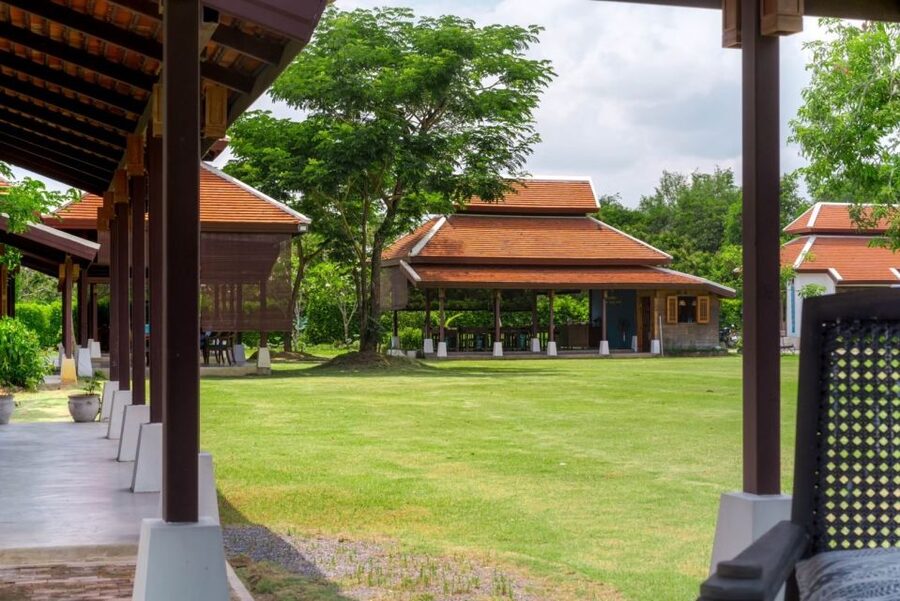
At $48, this is not the cheapest way to eat in Chiang Mai. You can buy a meal for far less. The price makes sense because you are paying for a full six-hour program with transport, instruction, ingredients, several dishes, market and farm visits, lunch, dessert, refreshments, and recipes to take home digitally.
The farm and market visits are important to the value. Without them, this would be a standard cooking lesson. With them, you spend the day learning about the food before you prepare it.
The recipe book adds lasting value. You can download it and practice the dishes at home, although ingredients may need to be substituted depending on where you live.
I would call the price fair for people who enjoy active cultural activities. If you dislike cooking, dislike chilli, or want a quick introduction, the cost may feel high for an experience built around several hours of kitchen work.
Practical advice before you book
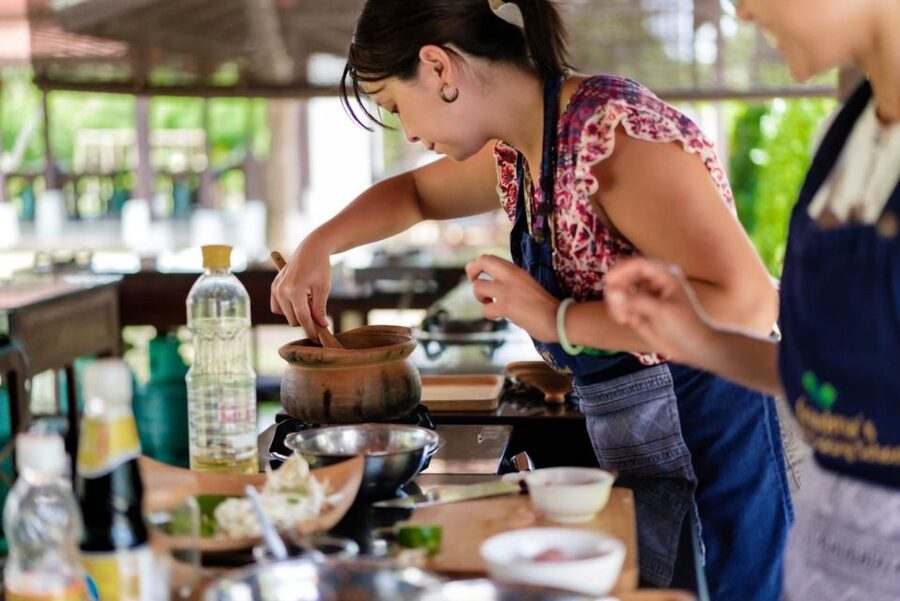
Wear comfortable shoes because you will walk through the market and organic farm, then remain active in the cooking area. Sunglasses are recommended, particularly for the outdoor portions.
Leave valuables at your hotel. The activity specifically advises against bringing them.
Arrive ready at your hotel lobby by 8:30am, even though pickup may occur as late as 9:00am. Round-trip transfers are included, which removes the need to arrange separate transport to the school.
Tell the provider about dietary requirements before the class. The school says it can accommodate special diets, but clear communication is essential when several dishes include pork, chilli, or other specific ingredients.
Finally, keep the full six hours free. The class is not something to squeeze between two tightly timed sightseeing stops.
Who should book Grandma’s Home Cooking School?
I would recommend this experience if you want to do more than eat Northern Thai food. It suits people who enjoy learning by doing, families with children who can observe, couples looking for a shared activity, and solo visitors who like small-group classes.
It is especially good for anyone curious about traditional tools and farm ingredients. Milling flour, grating coconut, lighting charcoal, collecting eggs, and picking herbs give the day a strong local character.
I would hesitate if you want a polished demonstration, a short lesson, or a fixed menu with no choices. The day involves preparation, cooperation, and several stages. That is the charm, but it also requires patience.
For most food-focused visitors to Chiang Mai, I think the balance is right. You learn five substantial Northern Thai dishes, taste desserts, visit a market and farm, and return home with recipes and possibly leftovers. Book it if you want your Chiang Mai food experience to include a little work, a little mess, and a much better understanding of what is on your plate.
FAQ
How long does the cooking class last?
The activity lasts six hours.
What time does hotel pickup begin?
Pickup is around 8:30 to 9:00am. You should be ready in your hotel lobby at 8:30am.
Is hotel transportation included?
Yes. Round-trip transfers to and from your hotel are included.
How many dishes will I learn to cook?
The core course includes five traditional Northern Thai dishes. The listed dishes include Northern Thai sausage, a choice of Nam Prik Ong or Nam Prik Num, Hang Lay curry, young jackfruit curry, and stuffed dough pyramid.
Is the menu vegetarian or adaptable for dietary requirements?
The school states that it can accommodate special dietary requirements. Contact the provider with your needs before the class.
Is the class taught in English?
Yes. The instructors provide instruction in English.
Does the experience include a market visit?
Yes. You visit a local market and learn about the ingredients and seasonings used in Northern Thai cooking.
Does the experience include a farm visit?
Yes. You tour an organic farm, learn about Thai herbs and vegetables, and pick ingredients for the dishes.
Are children allowed to attend?
Visitors aged 0 to 10 are welcome to join as observers.
What should I bring?
Bring comfortable shoes and sunglasses. The activity advises you not to bring valuables.
Just added in Chiang Mai
- Full Day Doi Saket Hiking Tour★ 5.0 · 14 reviews
- Pha Dok Siew Nature Trail & Doi Inthanon National Park From Chiang Mai★ 4.0 · 23 reviews
- One day Elephants in Nature Experience & Grand Canyon Jumping★ 5.0 · 31 reviews
- Chiang Mai to White & Blue Temple, Black Museum & Golden Triangle★ 4.0 · 52 reviews
- One day Doi Inthanon National Park & Trekking on Kew Mae Pan★ 5.0 · 12 reviews
- Private Tour 2 Difference Trails Trekking at Doi Inthanon National Park★ 5.0 · 19 reviews
- Half day Long Neck hill tribe and Hmong hill tribe village★ 5.0 · 21 reviews
- One Day Tour Chiang Rai(White Temple , Blue Temple, Black House) Private Tour★ 5.0 · 63 reviews
Thai Cooking Classes, compared.
Half-Day Thai Cooking Class at Organic Farm in Chiang Mai
Read our review →
Cooking Class, Market & Thai Herbs Garden Tour
Read our review →Authentic Cooking Class with Market & Farm Visit
Read our review →
Phuket Thai Cooking Class with Market Tour Option
Read our review →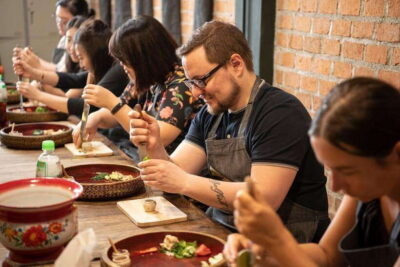
Tingly Thai Cooking School Half-Day Cooking Class
Read our review →Browse the lists this tour appears in