
Reviewed · ELEPHANT SANCTUARY TOURS
Chiang Mai: Ethical Half Day Elephant Sanctuary & Waterfall
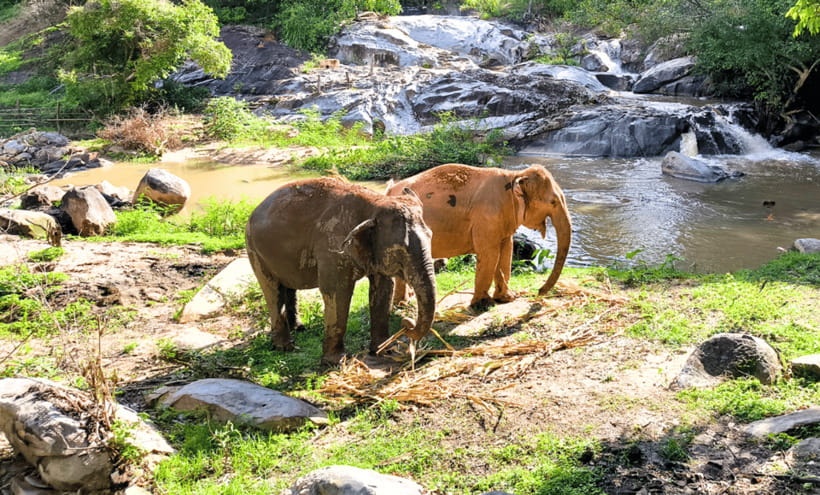
Start with elephants behaving like elephants. This seven-hour trip from Chiang Mai takes you to Joy Elephant Sanctuary in Mae Wang, where the animals are fed, watched, and followed through the forest without riding, bathing, or forced performances. I like the clear respect for the elephants, and I like that the day includes more than a quick photo stop: you also get a jungle walk, waterfall time, lunch, herbal tea, and a handmade Thai souvenir.
The main consideration is the journey. The sanctuary is about 1.5 hours from Chiang Mai each way, and the final roads can be rough. I also recommend eating something before pickup, since lunch may come later in the day than you expect. Still, at $54 per person, the combination of round-trip transport, a guide, food, elephant feed, insurance, and a full day outside the city is strong value.
In This Review
- Key points to know before booking
- Why the elephant program feels genuinely respectful
- The 1.5-hour ride from Chiang Mai to Mae Wang
- Feeding the elephants and learning the ground rules
- Walking through the jungle at elephant speed
- A waterfall break, without elephant bathing
- Pad Thai, fruit, tea, and a homemade Ya Dom
- What the $54 price really covers
- Who will enjoy this day most
- Should you book Joy Elephant Sanctuary?
- FAQ
- How long does the Chiang Mai elephant sanctuary experience last?
- Is hotel pickup included?
- Can I ride or bathe with the elephants?
- Can I swim at the waterfall?
- Is lunch included?
- What should I bring?
- Is the tour suitable for wheelchair users?
Key points to know before booking
- No elephant riding, bathing, or touching: You observe the animals, feed them, and walk near them while keeping a respectful distance.
- The elephants set the pace: You follow as they forage, graze, pull at roots, and move through the jungle with their herd.
- Mae Wang is a long way from Chiang Mai: Plan on roughly three hours total in the van, with some bumpy sections.
- The waterfall is for people: You can swim or relax near the water, but this is not an elephant-bathing session.
- Lunch comes with a Thai craft: Pad Thai, fruit, tea, and a homemade Ya Dom herbal inhaler make the day feel complete.
- Pickup is limited to central Chiang Mai: Round-trip van service covers hotels within 5 kilometers of the Old City.
Why the elephant program feels genuinely respectful
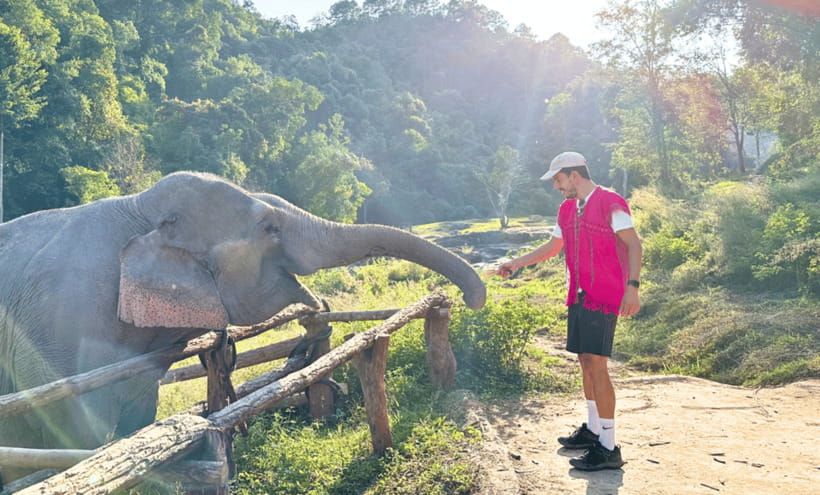
The most important part of this experience is what you do not do. There is no riding, no elephant show, no bathing with the animals, and no expectation that you touch them for a better photograph.
Instead, you help prepare food, feed the elephants, and learn about their care and past treatment. After that, the animals move into the jungle, and you walk alongside them while allowing them to choose where and how quickly to go. That difference matters. An elephant that can stop to eat, wander, or ignore the group is being treated more like an animal and less like a prop.
The guides explain the rules before you approach. You are expected to keep your distance and avoid crowding the elephants. At first, that may sound restrictive if you have pictured hugging or bathing one. In practice, it gives the encounter a calmer feel. You can watch the animals pull at vegetation, search for food, and move with the herd without turning their daily routine into a performance.
Several parts of the day are designed around observation rather than contact. You may get very close, but you should not assume that close means hands-on. Feeding is allowed, touching is not. That is a useful line for anyone who wants an elephant experience that places animal welfare ahead of a staged holiday photograph.
The sanctuary describes its elephants as rescued animals being cared for in a more natural setting. The supplied information does not provide individual elephant histories, so you should not expect a detailed biography of every animal. You will, however, hear about elephant behavior, care, and the harm caused by older tourist practices.
More Elephant Sanctuary Tours in Chiang Mai
- Chiang Mai: Elephant Sanctuary, Waterfall & Bamboo Rafting
★ 4.9 · 9,160 reviews - Chiang Mai: Elephant Sanctuary & Waterfall Group Tour
★ 4.9 · 5,780 reviews - Chiang Mai: Elephant Sanctuary Feeding Program Half-Day Tour
★ 4.8 · 4,527 reviews
The 1.5-hour ride from Chiang Mai to Mae Wang
Your day begins with pickup in the Mueang Chiang Mai area. The included minivan service is available from accommodations within 5 kilometers of Chiang Mai’s Old City, which is convenient if you are staying in or close to the central historic area.
The drive to Mae Wang takes about 1.5 hours. That is not a minor transfer, so put it in your calculations before booking. You are giving up most of a day, and the return drive adds another 1.5 hours. The payoff is a rural setting away from the city, but this is not a quick half-day outing in the ordinary sense.
The roads become less smooth as you get closer to the sanctuary. One account describes shaking in the van and four-wheel-drive vehicle, while also saying the journey became part of the adventure. That is a fair warning. If you get carsick or dislike rough roads, sit where the ride is most comfortable, bring water, and consider taking your usual motion-sickness precautions.
Some departures may include a short stop at a 7-Eleven for coffee or croissants, but do not rely on that as breakfast. A more useful plan is to eat before pickup. One person expected a conventional midday lunch but found that food arrived after the main excursion, close to dinner time. The included meal is welcome, but the timing can leave you hungry if you start the day without food.
The ride also gives you views of the countryside around Chiang Mai. This is not a sightseeing drive with planned viewpoints, but it helps the journey feel less like a transfer and more like a gradual move from city to forest.
Feeding the elephants and learning the ground rules
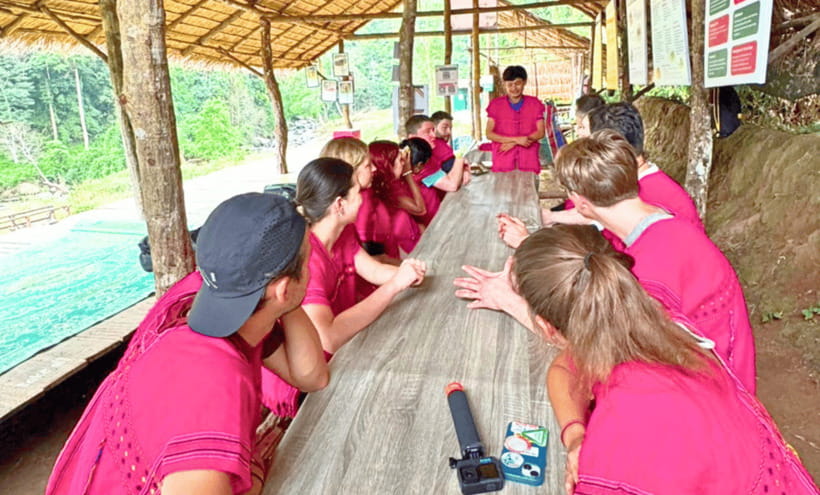
At the sanctuary, the team begins with an introduction to the elephants and the rules for interacting with them. Pay attention here. The instructions are not empty formalities, since large animals can move suddenly and their comfort depends on people behaving predictably.
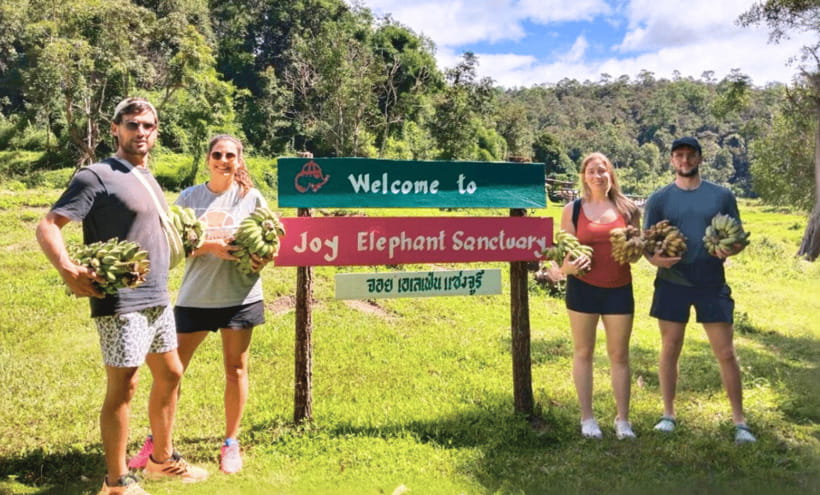
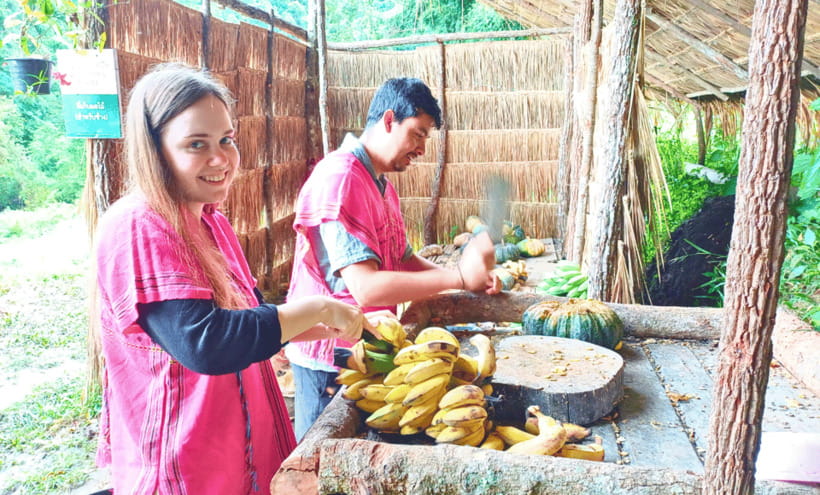
You will receive elephant food and take part in feeding. Bananas are specifically mentioned, and the food preparation gives you a simple way to participate without asking the elephants to perform. The guides explain their behavior and care as you watch the animals eat.
This is one of the strongest parts of the experience for families and first-time elephant visitors. You get a close view of the animals, but the activity remains easy to understand. There is no complicated technique. You listen, follow directions, offer food, and watch how the elephants respond.
The English-speaking guide is also central to the day. The team is described as friendly, helpful, and willing to answer questions. Their tone matters because ethical animal tourism depends partly on how firmly the rules are enforced. Here, the distance requirement is treated as part of the experience, not as an inconvenience.
You should expect the animals to receive priority. An elephant may wander away, pause for food, or decline to approach. That is a success of the format, not a failure. If you want a guaranteed interaction on a fixed schedule, this may feel less predictable. If you want to see natural behavior, the uncertainty is exactly the point.
Walking through the jungle at elephant speed
After feeding, you follow the elephants into the forest. The walk is not described as a long trek. One account calls it a short route that still allows time to watch the animals graze slowly through the trees. The ground can be uneven, and one person needed extra help walking in the jungle, so comfortable shoes are important.
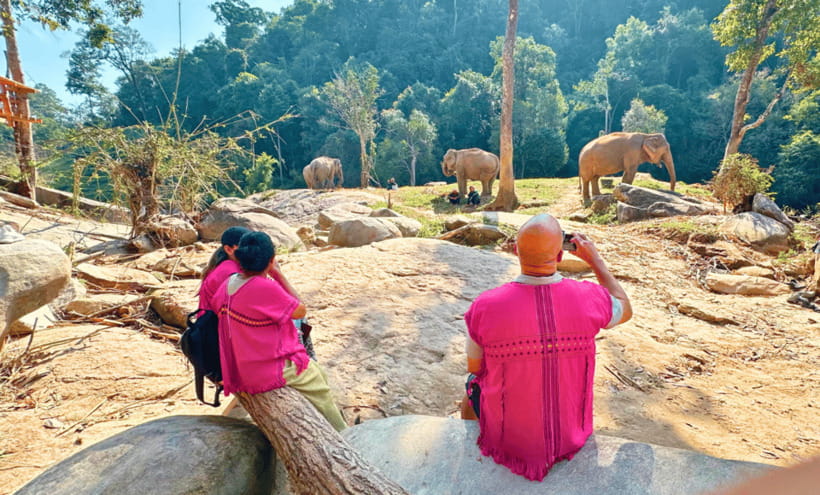
The best approach is to forget your own timetable for a while. Elephants do not hurry because a tour group has a lunch reservation. You may stop while they forage, watch them pull at plants, or wait for them to move on. A particularly striking example involved the oldest elephant pulling an entire tree from the ground, a reminder of the animals’ strength that a staged activity cannot match.
Walking beside the herd also gives you a better sense of scale. From a distance, an elephant can seem almost still. In the forest, you notice the steady movement of the trunk, the search for food, and the way each animal occupies space. The guides help explain what you are seeing, but the quiet moments are just as valuable.
You should not expect to pet the elephants. Some people consider that a drawback, especially if they have paid for a hands-on encounter. I see it as one of the clearest reasons to choose this program. The animals are not required to tolerate constant human contact, and you learn to appreciate them through attention rather than touch.
Wear shoes that can handle dirt and damp ground. Bring insect repellent, sunscreen, and a change of clothes. Sandals can be useful later, but they are not the best choice for the jungle walk.
A completely different kind of day out:
- Half-Day Thai Cooking Class at Organic Farm in Chiang Mai
★ 5.0 · 19,087 reviews - Chiang Mai: Doi Inthanon National Park Eco-Friendly Tour
★ 4.6 · 6,667 reviews - Chiang Mai: Chiang Rai Temples, Karen Tribe and Hot Springs
★ 4.7 · 5,401 reviews - Chiang Mai: Cooking Class, Market & Thai Herbs Garden Tour
★ 4.9 · 4,824 reviews
A waterfall break, without elephant bathing
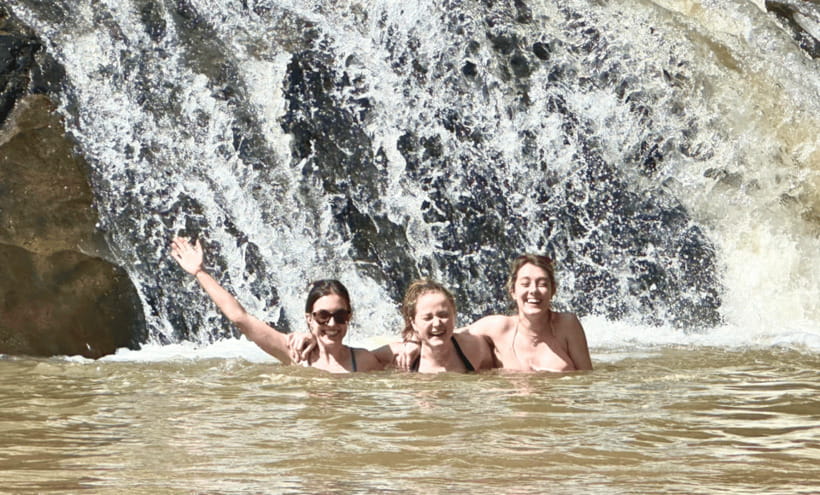
The waterfall stop gives the day a change of rhythm. After the walk, you can cool off, swim, or sit near the water while the elephants remain at a respectful distance. The key detail is that this is not an elephant-bathing activity.
That distinction is worth making plain. Some elephant programs advertise bathing as a special encounter, but this experience keeps people and elephants from being pushed into the same water activity. You may still see the animals near the river or waterfall area, depending on their movement, but you do not bathe with them or make them swim for you.
The waterfall is described as beautiful and pleasant for a swim, though one person found it smaller than expected. Keep your expectations modest. This is a refreshing natural stop, not a grand waterfall spectacle. Water levels and the feel of the site can also change with the season.
Bring swimwear and a towel. A towel is included, but a dry change of clothes is still useful for the return trip. If you do not want to swim, you can use this time to relax, take tea, and watch the elephants from a distance.
The setting adds value because it gives you time to pause. The day is not only feeding and walking. You can cool down, take in the forest sounds, and let the experience settle before lunch and the craft activity.
Pad Thai, fruit, tea, and a homemade Ya Dom
Food is served in Mae Wang, with Pad Thai and fresh fruit repeatedly singled out as satisfying parts of the day. Vegetarian Pad Thai is available, and water is included. Herbal tea or green tea is served during the break, giving you a simple taste of local hospitality without turning the meal into a formal restaurant stop.
The meal is practical rather than elaborate. You are eating after a jungle walk and time by the water, so a warm plate of noodles and fresh fruit should hit the spot. Timing is the one issue to watch. Because the schedule can place lunch late, eat a small breakfast or carry a permitted snack if you need regular meals.
The final activity is making a Thai cultural souvenir. The craft is described as a homemade Ya Dom, a small herbal inhaler made with local herbs and spices. This is a more memorable takeaway than a standard gift-shop trinket, and the activity gives you something quiet and hands-on after the outdoor portion.
You may also have tea during this part of the day. The craft does not take the place of the elephants, but it helps the program feel connected to Thai daily culture. You return with an object you made yourself, along with a clearer sense of the care behind the sanctuary.
What the $54 price really covers
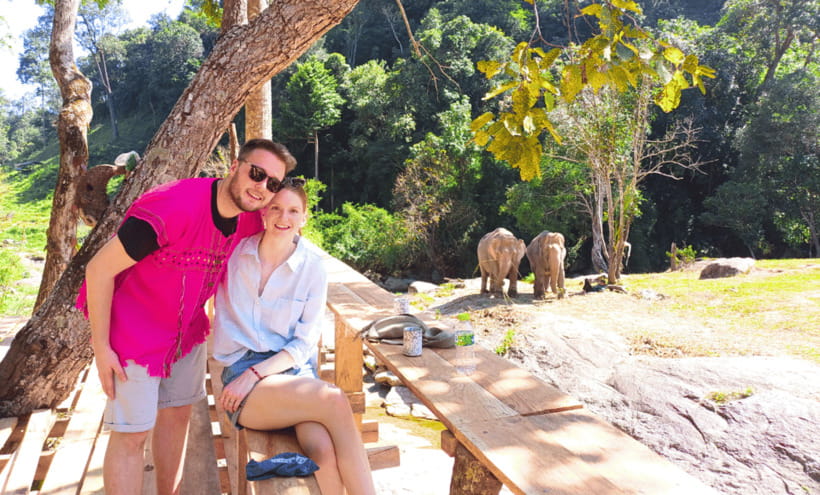
At $54, this is not the cheapest way to see elephants around Chiang Mai. The price makes more sense when you count the full package: hotel pickup and drop-off, approximately three hours of transport, an English-speaking guide, elephant food, lunch, water, insurance, and a towel.
You are also paying for a program built around observation rather than high-volume activities. No riding or bathing means fewer obvious photo moments, but it also means the animals are not being asked to repeat tourist-friendly behavior. For me, that makes the cost easier to defend.
The value is strongest if you want a full day outside Chiang Mai and do not have your own transport. Hiring a private vehicle to Mae Wang would add cost and planning, while this option bundles the transfer and guide. It also suits you if animal welfare is a major part of your decision.
The value is weaker if you want a short outing, a luxury vehicle, or a large waterfall. The long drive takes real time, and the road can be rough. You should book this for the elephant care model and the forest setting, not because you expect a polished resort day.
Free cancellation up to 24 hours before the start and the option to reserve now and pay later make planning easier. The experience is not suitable for wheelchair users, and the provider advises you to bring your own allergy medication if needed.
Who will enjoy this day most
I would choose this for you if you want:
- A quiet elephant encounter with no riding, bathing, or touching
- Time to observe elephants feeding and moving through the jungle
- A guide who can explain behavior and care in English
- A countryside outing that includes food and transport
- A swim or rest stop by a waterfall
- A small Thai craft to take home
It is especially well suited to first-time visitors who want clear rules and a structured introduction. Families may appreciate the mix of animals, outdoor activity, lunch, and craft work, although the jungle path and rough transport require some physical comfort.
You may want another option if you need step-free access, dislike long van rides, or want a highly active swim-and-adventure day. The walk is not presented as a strenuous hike, but it is still a jungle path. The program also depends on observing animals on their own terms, so the schedule may feel slower than a standard attraction.
Should you book Joy Elephant Sanctuary?
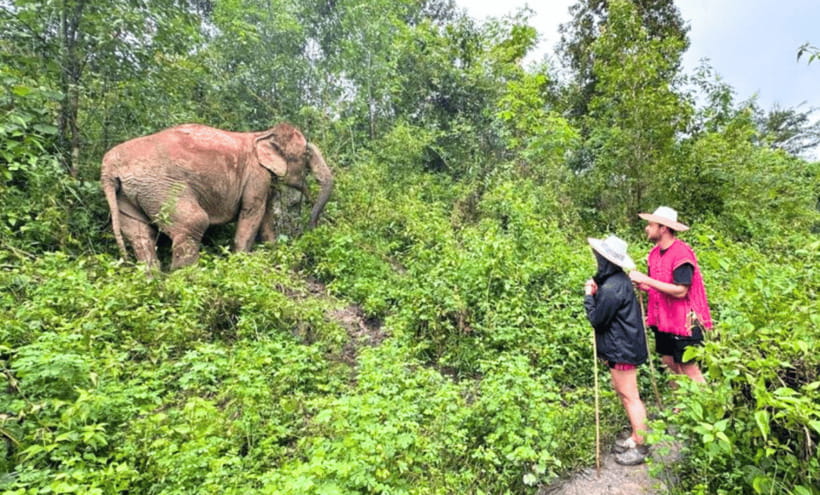
Yes, if your priority is a responsible elephant encounter near Chiang Mai. The strongest reasons are simple: you feed the elephants, watch them forage, and walk near them without riding, bathing, or touching. The guides explain why those limits matter, and the day adds a waterfall break, Pad Thai, fresh fruit, tea, and a homemade Ya Dom.
Before booking, accept the trade-offs. Mae Wang is far from Chiang Mai, the ride can be bumpy, the waterfall may be smaller than you picture, and lunch may come late. Eat before pickup, wear sturdy shoes, bring insect repellent and swimwear, and treat the elephants as the hosts of the day.
For $54, I think this is a thoughtful choice for anyone who wants to see elephants without turning them into entertainment machines. It offers a close view, but not a forced encounter, and that is precisely its worth.
FAQ
How long does the Chiang Mai elephant sanctuary experience last?
The experience lasts seven hours, including approximately 1.5 hours of transport each way between Chiang Mai and Mae Wang.
Is hotel pickup included?
Yes. Round-trip minivan pickup and drop-off are included for accommodations within a 5-kilometer radius of Chiang Mai’s Old City.
Can I ride or bathe with the elephants?
No. The program does not include elephant riding, elephant bathing, or touching. You feed the elephants, observe them, and walk alongside them while keeping a respectful distance.
Can I swim at the waterfall?
Yes. You can swim or relax near the waterfall. The waterfall stop is separate from the elephants, and you do not bathe with them.
Is lunch included?
Yes. Lunch, water, and elephant food are included. Pad Thai and fresh fruit are part of the meal, and vegetarian Pad Thai is available.
What should I bring?
Bring comfortable shoes, swimwear, sandals, sunscreen, insect repellent, and a change of clothes. A towel is included.
Is the tour suitable for wheelchair users?
No. The activity is not suitable for wheelchair users. You should also bring your own allergy medication if you need it.
Just added in Chiang Mai
- Full Day Doi Saket Hiking Tour★ 5.0 · 14 reviews
- Pha Dok Siew Nature Trail & Doi Inthanon National Park From Chiang Mai★ 4.0 · 23 reviews
- One day Elephants in Nature Experience & Grand Canyon Jumping★ 5.0 · 31 reviews
- Chiang Mai to White & Blue Temple, Black Museum & Golden Triangle★ 4.0 · 52 reviews
- One day Doi Inthanon National Park & Trekking on Kew Mae Pan★ 5.0 · 12 reviews
- Private Tour 2 Difference Trails Trekking at Doi Inthanon National Park★ 5.0 · 19 reviews
- Half day Long Neck hill tribe and Hmong hill tribe village★ 5.0 · 21 reviews
- One Day Tour Chiang Rai(White Temple , Blue Temple, Black House) Private Tour★ 5.0 · 63 reviews
Elephant Sanctuary Tours, compared.
Elephant Sanctuary, Waterfall & Bamboo Rafting
Read our review →
Elephant Sanctuary Feeding Program Half-Day Tour
Read our review →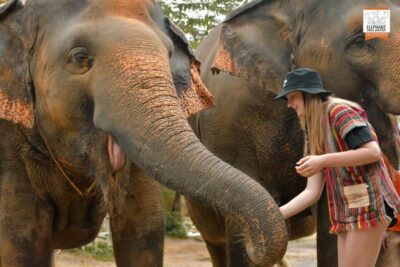
Elephant Jungle Sanctuary Ethical Feeding Experience
Read our review →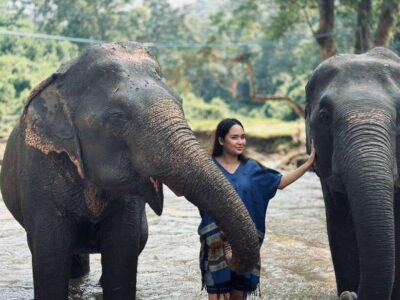
Elephant Sanctuary, Long Neck & Sticky Waterfall
Read our review →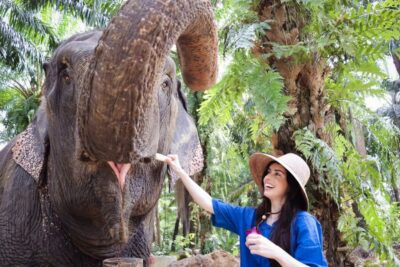
Elephant Bathing Session at Krabi Elephant Shelter
Read our review →
Elephant Sanctuary Guided Tour with Hotel Transfers
Read our review →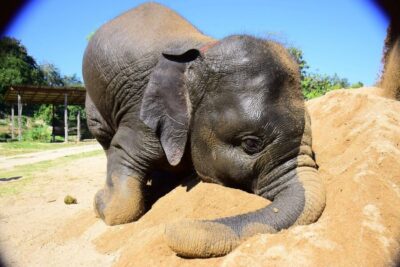
Browse the lists this tour appears in