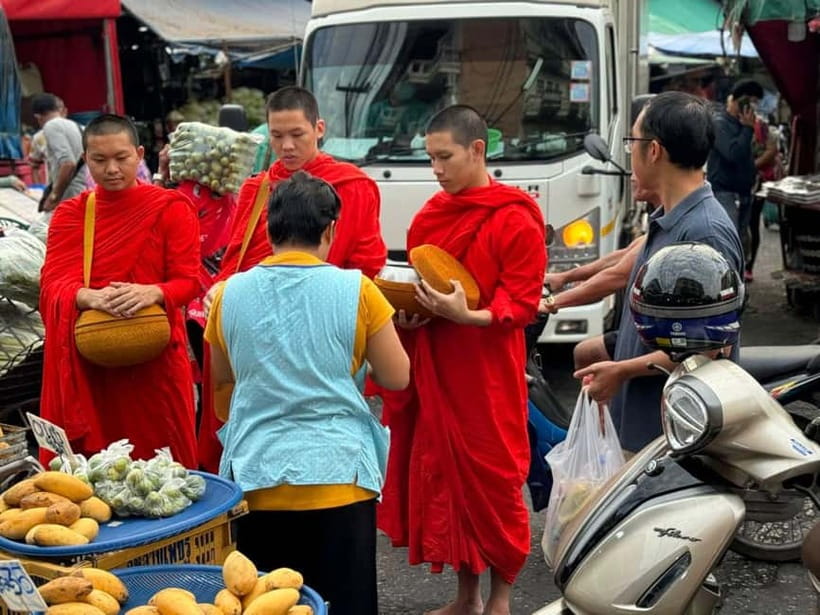
Reviewed · CHIANG MAI TOURS
Walk With Monks Collecting Alms(meeting point maybe change)
Wake before sunrise for a rare look at daily Buddhist life. This small-group walk in Chiang Mai takes you from Wat Chai Sri Phum to Mueang Mai Market, where monks collect food from local devotees. I like the chance to speak with an ex-monk guide about Buddhism and monkhood, and I like that the route leads into a real local market rather than stopping at a temple gate. The early start is the main drawback, and the stated policy says the trip accepts only men, so confirm that point before booking.
At $20 per person, the experience offers good value if you want cultural context instead of another quick temple visit. Guide Son, also called Sun in one account, spent 13 years as a junior monk and has answered questions about alms giving, temple etiquette, Thai culture, and daily monastic life. The meeting point may change, so check the final instructions carefully.
In This Review
- Key points at a glance
- Why this dawn walk feels different
- Starting at Wat Chai Sri Phum at 5:45 AM
- Walking beside the monks at 6 AM
- Mueang Mai Market, the most unexpected stop
- Returning to the temple for Buddhist discussion
- What the $20 price covers
- Who should book this experience
- Practical advice before you go
- Should you book the monk alms walk?
- FAQ
- Where does the experience begin?
- What time should I arrive?
- How long does the experience last?
- What market does the walk visit?
- What languages are available?
- How large is the group?
- Is food included?
- Is a temple donation included?
- What should I bring?
- Can women join the activity?
Key points at a glance
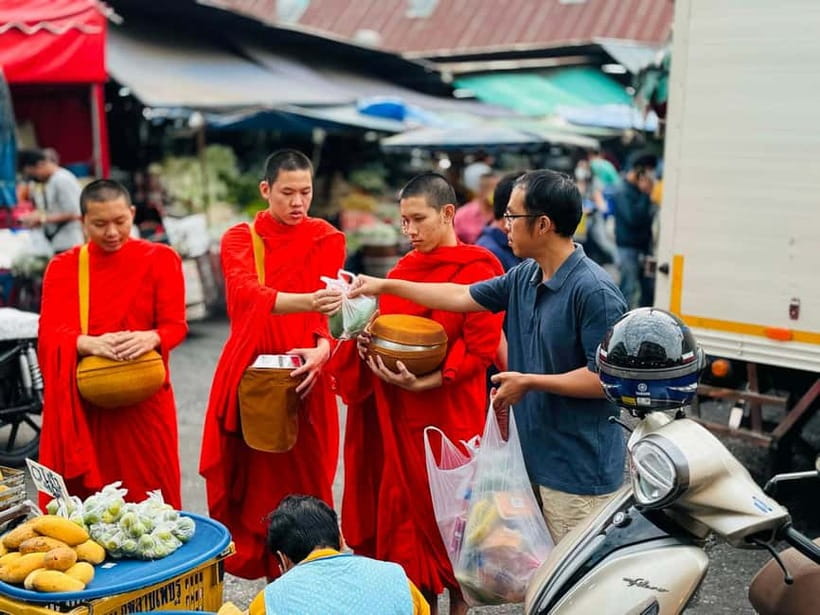
- 05:45 AM at Wat Chai Sri Phum: Meet at the front of the chanting hall, where the guide waits.
- Walk beside the monks: Watch the morning alms round and help with food collection in a respectful way.
- Mueang Mai Market: Visit Chiang Mai’s largest market on this route, with fresh produce and local food stalls.
- Conversation with a former monk: Ask direct questions about Buddhism, monkhood, and Thai customs.
- Small group of up to six: The limited size gives you more room to ask questions.
- Bring a change of clothes: Temple and alms-giving customs call for modest, respectful dress.
Why this dawn walk feels different
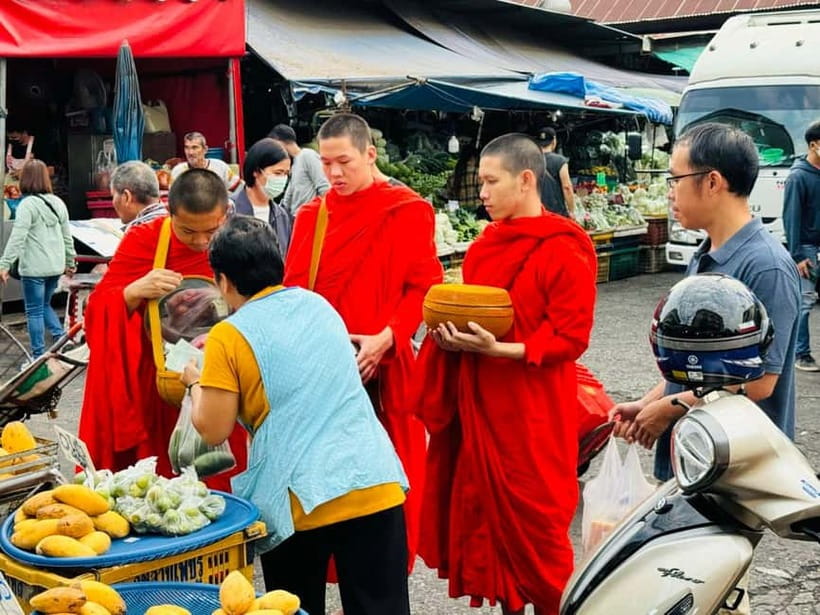
Chiang Mai has no shortage of temple tours. This one shifts your attention from carved walls and golden images to a living morning practice. At dawn, monks walk through the community to receive food offered by Buddhist devotees. You are not simply looking at a religious site. You are observing how a temple and its surrounding neighborhood connect.
I especially like the combination of movement and conversation. The walk gives you something to see, while the discussion gives meaning to what you are seeing. You can ask why people offer food, how monks live, and what role the temple plays in Thai society.
The experience also takes you into Mueang Mai Market. That matters because the market is not presented as a separate sightseeing stop with a polished visitor route. It is part of the morning routine. You might see locals buying and preparing food for offerings, along with fresh produce and ordinary market activity.
The tradeoff is simple: you must be ready before 6 AM. This is not a lazy holiday morning. Also, the information supplied for the activity says only men are accepted, while one published account describes a woman who joined after confirming with the company. Since those details conflict, I would contact Journey D Travel before paying if this affects your plans.
A few more options to weigh up in Chiang Mai
- Half-Day Thai Cooking Class at Organic Farm in Chiang Mai
★ 5.0 · 19,087 reviews - Chiang Mai: Elephant Sanctuary, Waterfall & Bamboo Rafting
★ 4.9 · 9,160 reviews - Chiang Mai: Doi Inthanon National Park Eco-Friendly Tour
★ 4.6 · 6,667 reviews
Starting at Wat Chai Sri Phum at 5:45 AM
The meeting point is at Wat Chai Sri Phum, also written as Chai Srippom Temple in the schedule. You gather at the front of the chanting hall, where the tourist guide is expected to meet you. Because the meeting location may change, do not rely only on an older map pin or a saved message.
The early arrival gives the guide time to explain the alms walk and basic Buddhist culture before the group sets off. This short briefing is useful. Alms giving has its own customs, and a little preparation helps you watch without getting in the way or treating the ritual like a staged photo opportunity.
You should wear modest clothing suitable for a temple setting. The activity specifically asks you to bring a change of clothes. It does not provide a detailed clothing list, but a respectful approach is sensible, especially if you plan to take part in giving food or sit for a conversation at the temple later.
The group is limited to six people. That is a real advantage here. A large crowd would make a quiet morning walk feel awkward, while a small group lets you stay close enough to hear the guide and ask questions without holding up a long line.
Walking beside the monks at 6 AM
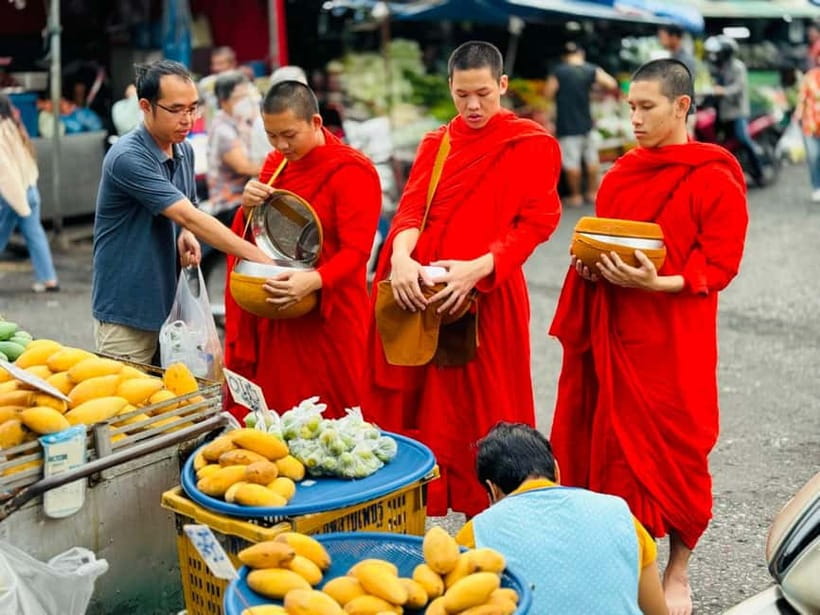
At about 6 AM, you begin walking with the monks as they collect food. The key point is that you are accompanying the morning alms round, not replacing it. Buddhist devotees provide the offerings, and you have the chance to help with food collection in a respectful manner.
The route passes through the local community toward Mueang Mai Market. This is where the activity feels most connected to everyday Chiang Mai. The monks move through a setting where people are already buying food and preparing for the day, and the offerings form part of that normal morning rhythm.
Your guide can explain what you are seeing as it happens. Son, who spent 13 years as a junior monk, has been praised for explaining the life of a monk in practical terms. That background gives him a useful point of view: he can talk about both Buddhist ideas and the routine behind the ritual.
You should keep your camera ready if photography matters to you, but let the situation guide your behavior. The supplied information does not promise a formal photography session, and the purpose of the walk is cultural understanding. Watch first, photograph second, and follow the guide’s instructions around devotees and monks.
One account describes an opportunity to give alms at the end back at the temple. Since the official schedule does not define exactly when or how this happens, treat it as a possible part of the experience rather than a guaranteed set activity. Donations to the temple are not included in the $20 price.
Mueang Mai Market, the most unexpected stop
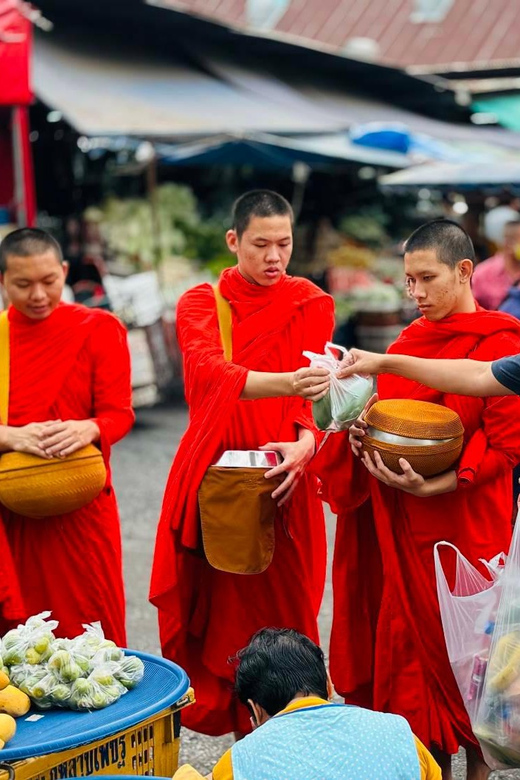
Mueang Mai Market is a strong reason to choose this walk. Several comments single out the market as a place people might not visit on their own, and one description calls it the biggest market in Chiang Mai. The activity details describe a guided visit lasting around two hours across the market and class portions, though the full experience is listed as 147 minutes.
The market adds texture to the religious part of the morning. You can see where food comes from before it reaches an offering bowl, and you can connect the alms round with the work of local sellers and shoppers. Fresh produce and local foods give you a more grounded view of Chiang Mai than a quick stop at a famous temple.
The guide may also help you understand how market food relates to the morning offerings. One account mentions trying local foods from the market, but food and drinks are not included in the price. Plan to pay for anything you choose to buy yourself.
The market can also be the least predictable section of the tour. It is a working place, not a quiet museum. Your time there may feel more observational than carefully scripted. I see that as part of the appeal, but it may not suit you if you want a highly organized sightseeing route with fixed stops and long explanations at each one.
A completely different kind of day out:
- Chiang Mai: Elephant Sanctuary & Waterfall Group Tour
★ 4.9 · 5,780 reviews - Chiang Mai: Chiang Rai Temples, Karen Tribe and Hot Springs
★ 4.7 · 5,401 reviews - Chiang Mai: Cooking Class, Market & Thai Herbs Garden Tour
★ 4.9 · 4,824 reviews - Chiang Mai: Authentic Cooking Class with Market & Farm Visit
★ 4.9 · 4,546 reviews
Returning to the temple for Buddhist discussion
The group returns to the temple at about 7:30 AM. The final part is a meeting and dialogue with monks, with the former monk guide helping you understand the discussion. This is the point where the activity moves beyond watching.
You can ask about Buddhist teachings, alms giving, monk life, temple etiquette, Thai culture, and history. The guide has been praised for taking time with questions rather than giving a short prepared speech. That makes a difference for first-time visitors, since Buddhism can otherwise be reduced to a few easy phrases about meditation and good behavior.
The conversation is also valuable if you have already visited several Chiang Mai temples. Sightseeing can show you architecture and ritual objects, but it does not always explain how people practice Buddhism day by day. This discussion helps connect the physical temple to the lives of monks and local devotees.
Keep your questions polite and open. This is a religious setting, not a debate session. Ask what you genuinely want to understand, and allow time for the monks to answer. The small group should make this easier, though the precise format of the meeting is not fully described.
What the $20 price covers
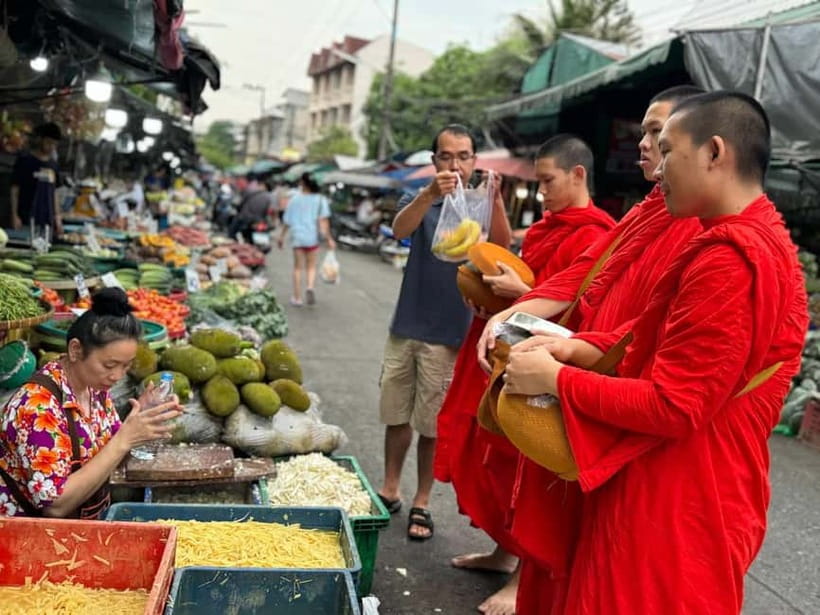
At $20, this is a modestly priced cultural activity. You are paying for a guide, a small group, access to a guided market walk, and a conversation shaped by a former monk’s experience. If those are the parts you value, the cost is fair.
The price does not include temple donations, food, or drinks. You should carry money if you want to buy something at Mueang Mai Market or make a donation. The activity also asks you not to bring drinks, so follow the stated rules rather than assuming you can carry a bottle along.
The strongest value comes from the guide. A standard walk past monks might leave you with photographs but few answers. Son’s 13 years as a junior monk, along with the other guide name Katoon mentioned in the activity feedback, suggests that the quality of the discussion can depend on who leads your departure. The official language options are English and Chinese.
Free cancellation is available up to 24 hours before the start for a full refund, and you can reserve now and pay later. Those terms help if your Chiang Mai schedule is still changing. The practical issue is the early start, so do not book it on a morning after a late arrival unless you know you can manage the alarm.
Who should book this experience
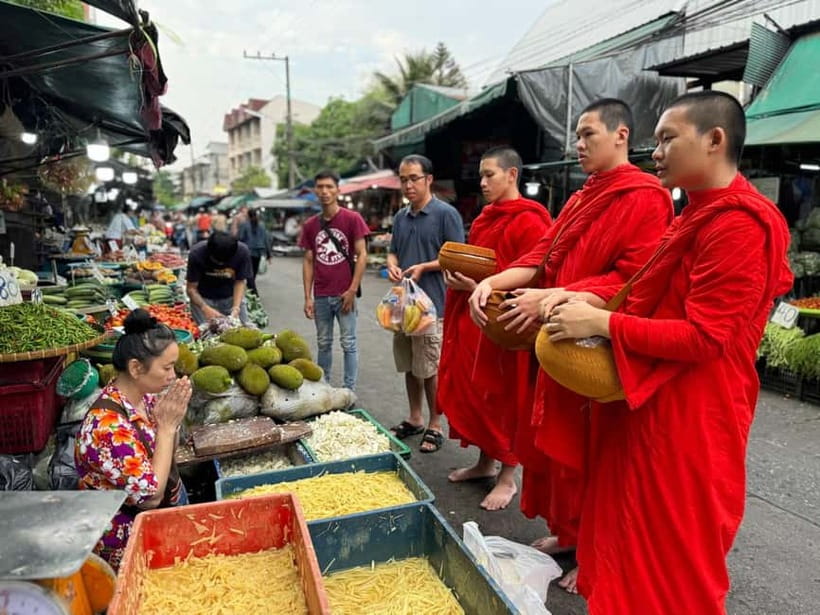
I would choose this walk if you want to understand Buddhist practice in daily life, not just visit another photogenic temple. It suits adults who enjoy asking questions, walking through a local market, and paying attention to small details.
It is also a good choice if you are curious about monkhood. The former monk guide can explain the subject from personal experience, which gives the discussion a more direct feel than a general city guide may offer.
The experience is less suitable for anyone who wants a late start, a private tour, or a fully flexible morning. It is also not suitable for wheelchair users according to the supplied information. The activity lists several age restrictions, including children under five, babies, and people over 95, with some repeated age categories. It also lists children under 2, 3, and 4, so families should confirm the exact policy before booking.
The stated rules prohibit weapons, sharp objects, alcohol, drugs, explosives, costumes, headphones, drinks, baby strollers, baby carriages, and electric wheelchairs. Some of those restrictions are unusual for a short cultural walk, but they are part of the supplied conditions.
Practical advice before you go
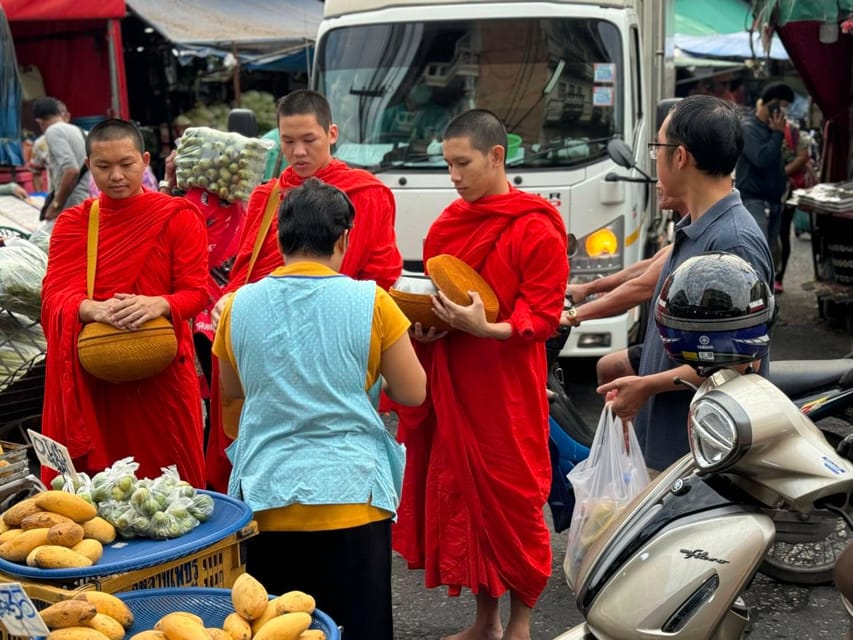
Set two alarms. The meeting time is 5:45 AM, and missing the short briefing could make the rest of the walk harder to follow.
Check the meeting point shortly before departure. The gathering place is normally the front of the chanting hall at Wat Chai Sri Phum, but the location may change.
Bring a change of clothes, as requested. Wear respectful clothing and shoes that are comfortable for walking. The exact walking distance is not provided, so I would avoid anything that makes a morning walk uncomfortable.
Carry money for food and temple donations. Neither is included. Do not assume drinks are allowed, since the activity rules specifically list drinks among the prohibited items.
Ask your questions during the walk and at the temple discussion. The small group is one of the best features, so use the chance to ask about the specific acts you have just seen.
Finally, confirm the gender policy. The written conditions say the trip accepts only men, yet a verified account describes a woman who joined after receiving a positive reply to an inquiry. That is too important to leave unclear.
Should you book the monk alms walk?
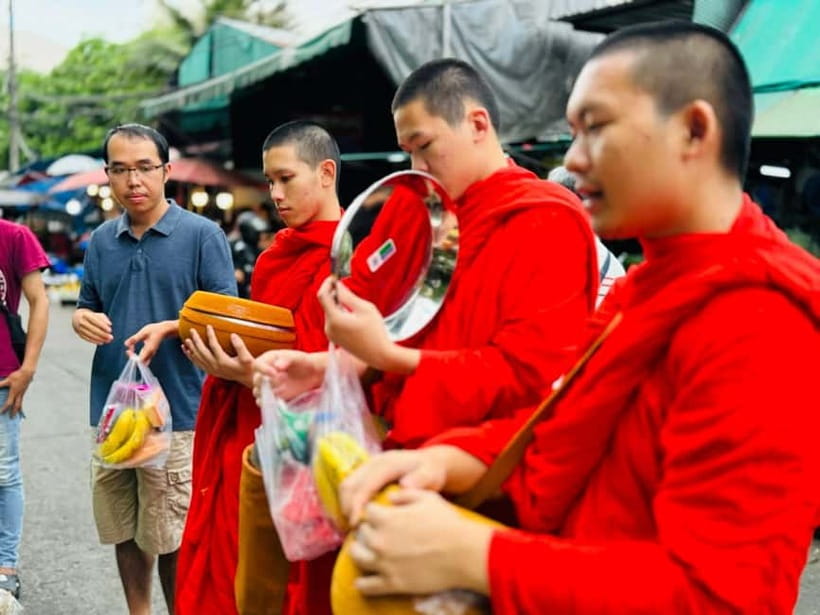
Book it if you can handle the early hour and want a close look at Buddhist customs, local food culture, and monk life. The combination of the alms round, Mueang Mai Market, and a discussion with a former monk gives you more substance than a quick temple visit.
Skip it if you need wheelchair access, prefer a relaxed morning, or do not want to follow temple rules. Also confirm the current meeting point and gender policy before booking.
For the right person, $20 is a fair price for a small, thoughtful experience with strong local context. The wake-up call is the fee you pay in energy. The reward is a better understanding of what you are seeing.
FAQ
Where does the experience begin?
It begins at Wat Chai Sri Phum, also called Chai Srippom Temple in the schedule. The meeting area is at the front of the chanting hall.
What time should I arrive?
You should arrive at 5:45 AM. The monk alms walk begins at about 6 AM.
How long does the experience last?
The stated duration is 147 minutes. The schedule has you returning to the temple at about 7:30 AM, followed by a meeting and discussion with monks.
What market does the walk visit?
The route visits Mueang Mai Market in Chiang Mai. The visit includes a guided walk and time to learn about the market and local food.
What languages are available?
The live guide is available in English and Chinese.
How large is the group?
The activity is limited to six participants.
Is food included?
No. Food and drinks are not included in the price. You may need separate money if you want to buy local food at the market.
Is a temple donation included?
No. Any donation to the temple is separate from the tour price.
What should I bring?
You should bring a change of clothes. The activity also requires respectful conduct and lists drinks, headphones, weapons, sharp objects, alcohol, drugs, and several other items as prohibited.
Can women join the activity?
The supplied conditions say the activity accepts only men. However, one account describes a woman who joined after contacting the company and receiving confirmation. Contact Journey D Travel before booking to verify the current policy.
Just added in Chiang Mai
- Wat Phra That Doi Suthep & Wat Pha lat Evening Tour & Guide★ 4.5 · 89 reviews
- Chiang Mai: Doi Inthanon Park Day Trip with Kiw Mae Pan Hike★ 4.6 · 75 reviews
- Chiang Mai Airport Private Transfer – Hotel or Airport★ 4.5 · 51 reviews
- Trek to a Jungle Waterfall★ 5.0 · 14 reviews
- Zipline+Sticky waterfall+Long Neck Village Private Tour★ 5.0 · 22 reviews
- Chiang Mai Zipline White Water Rafting and Elephant Sanctuary★ 4.0 · 11 reviews
- Team Aim Thai Cooking School (#1 Cooking Class in Chiang Mai)★ 5.0 · 36 reviews
- Zipline Adventure at Skyline Jungle Luge Chiang Mai★ 5.0 · 102 reviews
Chiang Mai Tours, compared.
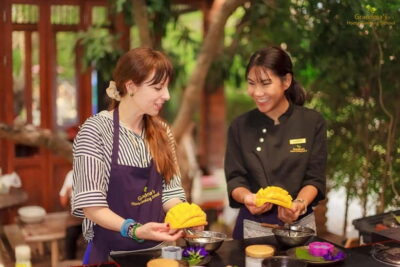
Half-Day Thai Cooking Class at Organic Farm in Chiang Mai
Read our review →
Elephant Sanctuary, Waterfall & Bamboo Rafting
Read our review →
Chiang Rai Temples, Karen Tribe and Hot Springs
Read our review →
Cooking Class, Market & Thai Herbs Garden Tour
Read our review →Authentic Cooking Class with Market & Farm Visit
Read our review →