
Reviewed · TEMPLE TOURS
Spiritual Sunrise Wat Doi Suthep, Pha Lat, Alms & Meditation
Dawn turns Chiang Mai into a quiet sanctuary. This early-morning outing combines monk-led Buddhist insight with sunrise views from Wat Phra That Doi Suthep, and I like that your guide is a former monk who can explain customs from personal experience. I also like the thoughtful route through three old temples, though the 5:00 am start and $59 price will not suit every budget or sleeping schedule.
You ride into the hills before the heat and crowds arrive, then take part in chanting, a short meditation, alms giving, and a local breakfast. The strongest guides, including James, Non, Tu, Blue, and others named in guest feedback, are praised for warmth, humor, clear explanations, and taking excellent photos. The main compromise is time: meditation may be brief, and the final two temples receive less attention than Doi Suthep.
In This Review
- Key moments that make this morning special
- Why the 5:00 am start is worth considering
- Climbing the 306 steps at Doi Suthep
- Chanting, meditation, and the quiet before sunrise
- Sunrise views over Chiang Mai
- Taking part in alms giving
- Khao soi and a real breakfast stop
- Wat Pha Lat, the forest temple
- Wat Umong and its underground tunnels
- What the former monk guide adds
- Is $59 good value?
- Who should book, and who should skip it?
- Should you book this sunrise temple tour?
- FAQ
- What time does the tour start and finish?
- Where can I be picked up?
- Are temple entrance fees and breakfast included?
- Do I have to climb the 306 steps at Doi Suthep?
- What should I wear?
- Is the tour suitable for everyone?
Key moments that make this morning special
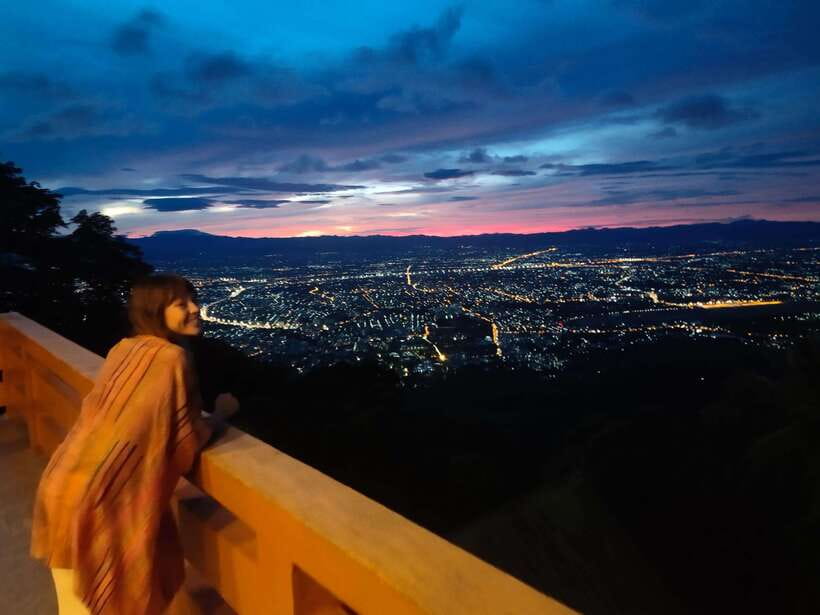
- Sunrise above Chiang Mai: Watch the city brighten from Doi Suthep while the golden pagoda catches the first light.
- Former monks as guides: Your English-speaking guide has spent years as a monk and can explain Buddhist practice, temple etiquette, and monastic life.
- Alms giving with a blessing: Receive instructions before offering food to monks in a respectful Thai tradition.
- Three very different temples: Compare the grand mountaintop shrine, forested Wat Pha Lat, and tunnel-filled Wat Umong.
- Local food before 10:30 am: A Chiang Mai dish such as khao soi is included after the early temple visit.
- Small-group transport: The group is limited to nine people, with an air-conditioned SUV or a larger van for bigger bookings.
Why the 5:00 am start is worth considering
This is not a casual temple-hopping trip. You meet at one of three points, Hotel M near Tha Phae Gate, the main entrance of Wat Chedi Luang, or Chang Phueak Gate, at about 5:00 am. The exact pickup time is confirmed after booking, so I would keep your phone or WhatsApp active the evening before.
The early hour is the whole point. Doi Suthep is one of Chiang Mai’s most visited sights, but at dawn it can feel calm and purposeful rather than crowded and hurried. You may hear temple bells, see monks beginning their morning routine, and watch the city below wake slowly.
I would bring a jacket in December through February. Several people found the mountain air surprisingly cold, especially before sunrise. During the July to October rainy season, pack an umbrella as well.
The drive toward Doi Suthep takes about 45 minutes in a Jeep or SUV. The road climbs into the mountains, and an air-conditioned vehicle is welcome after an early start. The group is small, limited to nine people, which matters here because the guide needs to explain rituals and keep everyone together around uneven temple grounds.
More Temple Tours in Chiang Mai
- Chiang Mai: Chiang Rai Temples, Karen Tribe and Hot Springs
★ 4.7 · 5,401 reviews - Chiang Rai White Temple and Blue Temple Day Tour
★ 4.6 · 3,366 reviews - Chiang Mai: White, Red/Black & Blue Temples Tour with Lunch
★ 4.2 · 2,017 reviews
Climbing the 306 steps at Doi Suthep
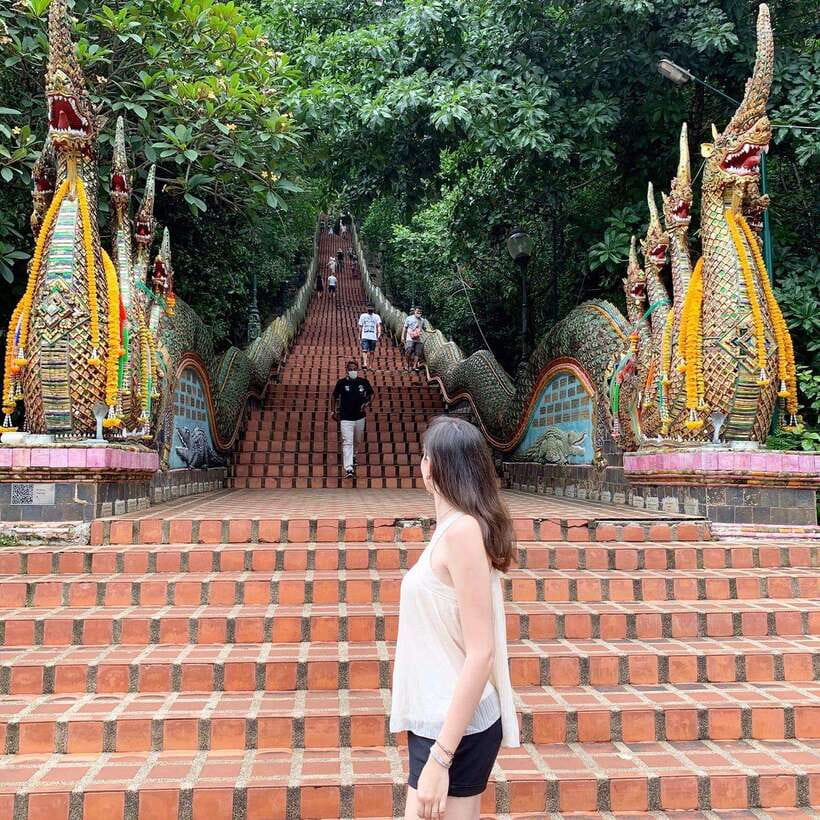
Wat Phra That Doi Suthep is the morning’s main event. The temple sits high on Doi Suthep Mountain and is Chiang Mai’s most famous religious landmark. Its gleaming golden chedi, reached after a long naga-lined staircase, gives the visit its visual drama.
You have two ways to reach the temple area: walk up the 306 steps or take the tram. The stairs are manageable for many people, but you should not feel that taking the tram is a failure. You have already been awake since before sunrise, and saving your legs can make the rest of the morning more enjoyable.
Once inside, the guide explains the temple’s religious meaning, architecture, and customs. This is where a former monk adds real value. Guides such as James and Non are praised for explaining Buddhist ideas in plain English, while Tu and Blue are noted for answering questions about everyday monastic life.
The visit is not just a photo stop. You may light candles, make a flower offering, sit during chanting, and learn how to behave inside the sacred areas. Your guide should explain each step before you take part, which helps prevent the awkwardness that can come from copying other people without knowing what a ritual means.
Chanting, meditation, and the quiet before sunrise
The chanting is one of the most meaningful parts of the outing. You listen as monks perform their morning prayers, then have an opportunity to sit quietly and practice basic meditation.
Set your expectations correctly. The meditation can be short, sometimes around five minutes, rather than a long retreat-style session. The schedule may also change on a monk’s holy day or because of temple activity. One group missed meditation because of a religious observance, but the guide adjusted the plan and kept the morning worthwhile.
I like this flexibility. Buddhist practice is not a stage show that runs on a fixed timetable for visitors. If the temple’s own schedule changes, the tour may need to change with it. That is worth accepting if you want to see real morning activity rather than a performance arranged solely for a tour group.
You do not need previous meditation experience. The guide introduces simple ways to sit, settle your attention, and follow the moment. If you are hoping for a long period of silence, though, this may feel too brief. The broader experience is about learning, observing, and joining in respectfully.
Sunrise views over Chiang Mai
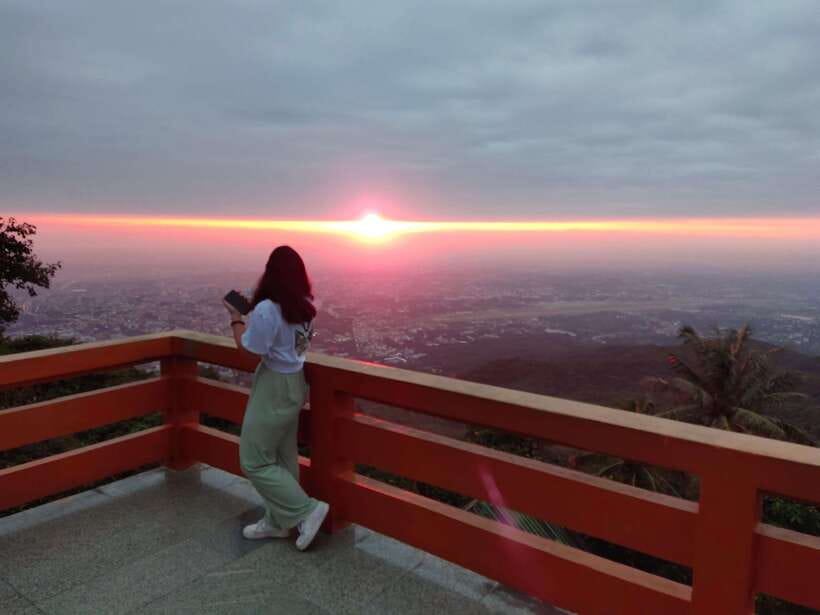
After the chanting and meditation, you wait for sunrise from the temple’s viewing area. The view reaches across Chiang Mai and the surrounding hills, with the city appearing below as the light changes.
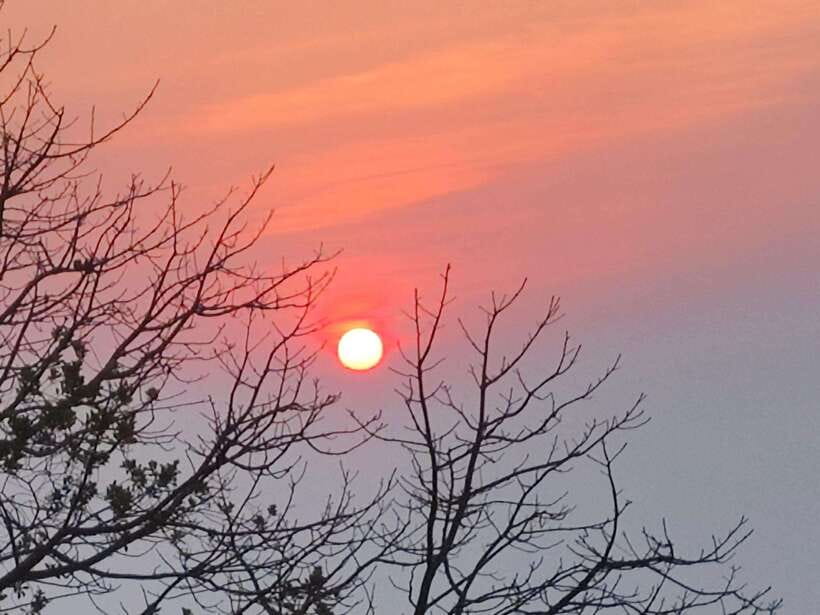
Sunrise is never guaranteed to be dramatic. Clouds, haze, and rain can soften the view. Still, the timing gives you the best chance of enjoying Doi Suthep before the day becomes hot and busy. Guides are also praised for choosing good photo spots and taking pictures, a useful service when you want to take part in the ceremony instead of holding your phone the entire time.
I would not treat the sunrise as the only reason to book. The strongest morning combines the view with the bells, chanting, gold chedi, and quiet atmosphere. If clouds cover the horizon, the temple visit still has plenty to offer.
A completely different kind of day out:
- Half-Day Thai Cooking Class at Organic Farm in Chiang Mai
★ 5.0 · 19,087 reviews - Chiang Mai: Elephant Sanctuary, Waterfall & Bamboo Rafting
★ 4.9 · 9,160 reviews - Chiang Mai: Doi Inthanon National Park Eco-Friendly Tour
★ 4.6 · 6,667 reviews - Chiang Mai: Elephant Sanctuary & Waterfall Group Tour
★ 4.9 · 5,780 reviews
Taking part in alms giving
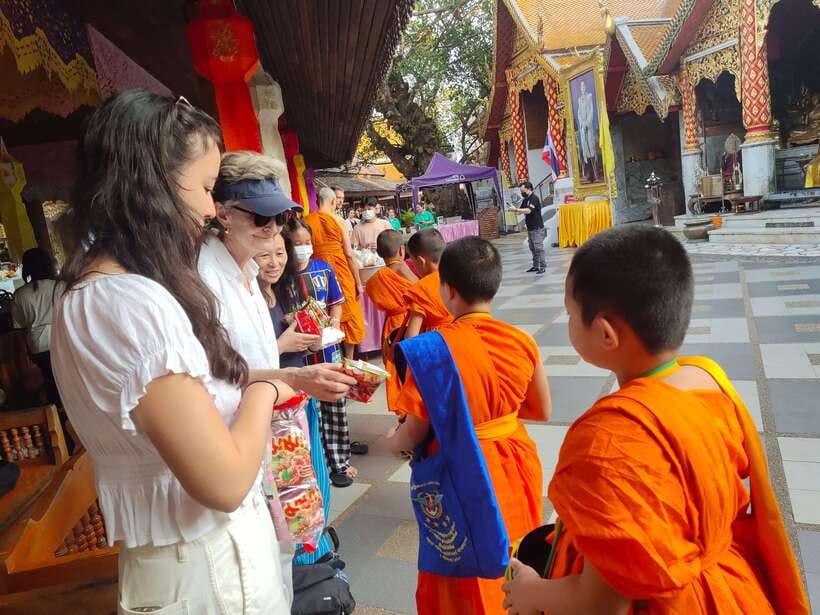
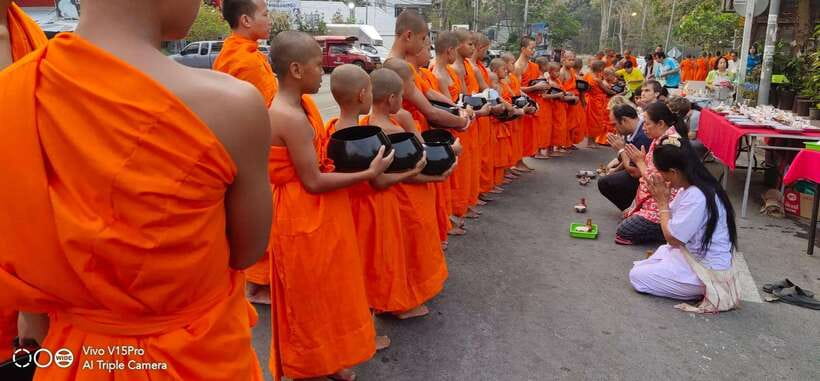
Alms giving connects the morning’s sightseeing with an ordinary Buddhist practice. Monks receive food from laypeople, and you are provided with food for the offering. Your guide explains how to participate in the Thai way, so you are not left guessing where to stand or what to do.
This is also the point where cultural respect matters most. Dress properly, listen to the guide, and follow the instructions rather than treating the ceremony as a quick photo opportunity. The offering is followed by a blessing for good fortune, safety, and prosperity.
I appreciate that the food is included. It removes the need to shop before dawn and gives the activity a practical purpose. You are not simply watching monks walk past. You have a structured chance to take part, with guidance about the meaning behind it.
The experience may feel spiritual, reflective, or mainly cultural, depending on your outlook. One honest description is useful here: you should not expect a life-changing meditation retreat. The value is in the quiet setting, the personal explanations, and the chance to approach a living tradition with care.
Khao soi and a real breakfast stop
After Doi Suthep, the group stops for a local breakfast. Khao soi, the northern Thai curry noodle dish, is one possible choice, along with other local Thai food.
This meal comes at a sensible moment. By then, you have been awake for several hours, walked around the temple, and spent time in the cool mountain air. A proper local dish feels much better than a packaged snack at that point.
Food preferences are not fully detailed, so I would contact the operator in advance if you have dietary restrictions. Soft drinks and alcohol are not included, while drinking water is supplied in the vehicle. The breakfast is part of the $59 package, along with temple admission, transport, and the alms offering.
Wat Pha Lat, the forest temple
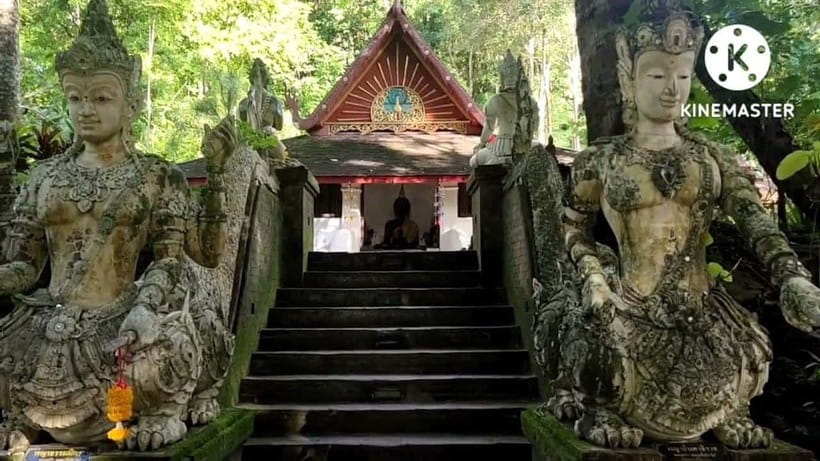
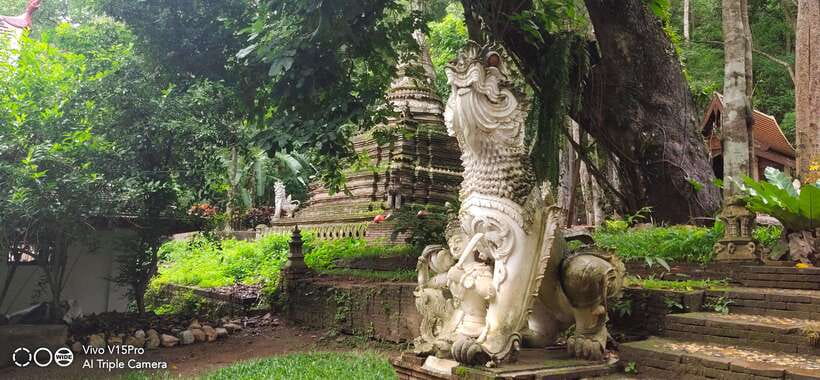
Wat Pha Lat is reached after the main Doi Suthep visit, and its mood is completely different. Often described as a jungle temple, it sits among trees and old stone features on the mountain. The setting is quieter, less formal, and more connected to the forest.
The architecture brings together Lanna and Myanmar influences. You may see ancient structures, a pagoda, waterfalls, and the remains of the old monk trail. The combination makes Wat Pha Lat especially rewarding for people who want more than one polished temple courtyard.
I would give this stop your full attention. One practical weakness is that the schedule may feel short here, with about an hour allocated to the guided visit and less time than some people want for walking or photography. If you fall in love with the trail, you may wish you had a separate visit to explore it at a slower pace.
The ground can be uneven, and temple dogs, cats, chickens, and other free-roaming animals may be around. That adds to the lived-in feeling, but it also means you should watch your footing and move calmly.
Wat Umong and its underground tunnels
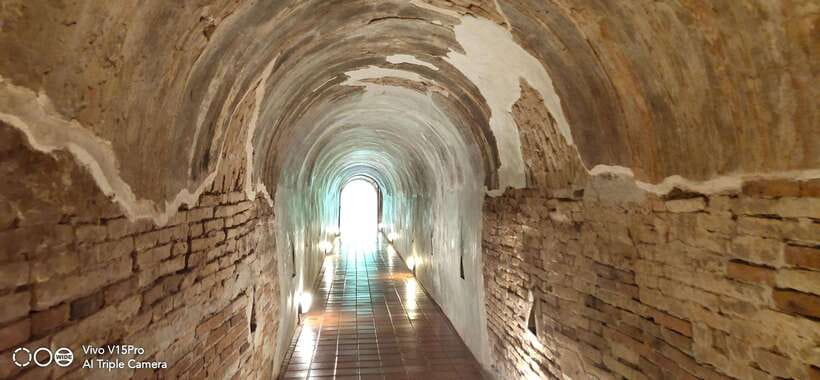
The last temple is Wat Umong, often called the underground temple. Its tunnels are the main feature, along with the peaceful setting around the temple grounds.
The tunnels give this stop a different character from Doi Suthep’s bright gold and Wat Pha Lat’s forest ruins. They are linked with monks who used the area for quiet practice and shelter during the rainy season. The guide explains how the site fits into the region’s Buddhist traditions and why it feels so secluded.
The visit lasts about 40 minutes. That is enough to understand the layout and see the main features, but not enough for a slow wander through every corner. I see this as a useful final stop rather than the main reason to book. By this stage, you may also be feeling the early start.
The route works because each temple offers a clear contrast: grand and elevated at Doi Suthep, wooded and old at Wat Pha Lat, then quiet and tunnel-filled at Wat Umong.
What the former monk guide adds
The guide is the biggest reason to choose this tour instead of visiting the temples independently. The guides are former monks who have been ordained for roughly 8 to 20 years, according to the experience details. That background gives them more to share than dates, architectural labels, and directions to the next staircase.
James is repeatedly praised for humor, energy, and explanations of Buddhist customs. Non is described as friendly, careful, and good at taking photographs. Tu receives praise for his warmth and clear answers about monk life, while Blue is noted for his kindness and personal insight.
The quality of English can vary by guide. One group found Blue’s accent difficult at times and needed some explanations repeated. That is a fair consideration, especially if you want dense historical commentary. The guides’ warmth and personal experience are strong points, but communication may not be identical on every departure.
I also like the practical care described by several people: guides helping with uneven steps, providing flowers and candles, taking group photos, answering questions, and adjusting plans when temple schedules change. Those small actions can make an early morning feel organized rather than tiring.
Is $59 good value?
At $59 per person, this is not the cheapest way to see Chiang Mai temples. You could visit some temples on your own for much less. The price makes more sense when you count what is bundled together: round-trip transport, an English-speaking former monk guide, admission fees, alms food, local breakfast, drinking water, and a small group.
The real question is how much guidance you want. If you simply want photos of Doi Suthep, independent travel costs less. If you want to understand the alms ceremony, join chanting, try meditation, visit three very different temples, and avoid arranging transport before dawn, the package is easier to justify.
The experience lasts about 330 minutes, or five and a half hours. Pickup is around 5:00 am and the planned finish is about 10:30 am, though timing can shift. Transport normally uses an air-conditioned SUV for five to seven people, or a VIP van for groups of 10 to 14, while the activity itself is limited to nine participants.
Free cancellation up to 24 hours before departure and the option to reserve without paying immediately reduce the risk when your schedule is still changing. Those policies are helpful, but the bigger value comes from the guide and the careful timing.
Who should book, and who should skip it?
I would recommend this to you if you want culture explained from the inside, enjoy early mornings, and are willing to follow temple etiquette. It suits first-time visitors to Chiang Mai particularly well because you see the city’s signature shrine and two less conventional temples in one morning.
It is also a good choice if you want photographs but do not want to spend the whole tour taking them. The guides are often happy to take pictures, allowing you to watch the monks, sunrise, and ceremonies directly.
I would think twice if you need a slow pace, dislike group schedules, or want extended meditation. The steps, uneven paths, and early departure also make this unsuitable for wheelchair users. The operator lists the experience as unsuitable for babies under one year and people with diabetes.
Wear long pants and a long-sleeved shirt. Shorts are not allowed, and modest clothing is essential at temples. Bring cash for personal expenses, a camera, and a jacket in the cool season. Carry an umbrella from July through October.
Should you book this sunrise temple tour?
Book it if you want a meaningful introduction to Chiang Mai’s Buddhist life, not just a checklist of temples. The sunrise at Doi Suthep is beautiful, but the stronger memory is likely to be the combination of chanting, alms giving, a former monk’s stories, and the very different settings of Wat Pha Lat and Wat Umong.
Skip it if $59 feels high for a half-day outing or if waking before dawn will ruin the rest of your day. For the right person, though, this is a well-planned and unusually personal morning, with guides such as James, Non, Tu, and Blue adding the kind of insight you cannot get from a map or a quick taxi ride.
FAQ
What time does the tour start and finish?
Pickup is around 5:00 am, and the experience finishes at approximately 10:30 am. The total duration is about 330 minutes, or five and a half hours.
Where can I be picked up?
The listed meeting points are Hotel M near Tha Phae Gate, the main entrance of Wat Chedi Luang opposite 7-Eleven, and Chang Phueak Gate on the north side of Chiang Mai’s Old City.
Are temple entrance fees and breakfast included?
Yes. Temple admission fees, food for the alms offering, a local dish breakfast, transport, an English-speaking guide, and drinking water are included. Soft drinks, alcohol, and personal expenses are not included.
Do I have to climb the 306 steps at Doi Suthep?
No. You can walk up the 306 steps or take the tram. The tour provides both options.
What should I wear?
Wear long pants and a long-sleeved shirt. Shorts are not allowed. Bring a jacket from December through February, and an umbrella during the July to October rainy season.
Is the tour suitable for everyone?
The tour is not suitable for wheelchair users, people with diabetes, or babies under one year. Uneven temple paths and stairs may also be tiring, so consider your mobility and comfort before booking.
Just added in Chiang Mai
- Full Day Doi Saket Hiking Tour★ 5.0 · 14 reviews
- Pha Dok Siew Nature Trail & Doi Inthanon National Park From Chiang Mai★ 4.0 · 23 reviews
- One day Elephants in Nature Experience & Grand Canyon Jumping★ 5.0 · 31 reviews
- Chiang Mai to White & Blue Temple, Black Museum & Golden Triangle★ 4.0 · 52 reviews
- One day Doi Inthanon National Park & Trekking on Kew Mae Pan★ 5.0 · 12 reviews
- Private Tour 2 Difference Trails Trekking at Doi Inthanon National Park★ 5.0 · 19 reviews
- One Day Tour Chiang Rai(White Temple , Blue Temple, Black House) Private Tour★ 5.0 · 63 reviews
- One Day Hiking and Elephant experience by Chiang Mai Elephant Home★ 5.0 · 75 reviews
Temple Tours, compared.
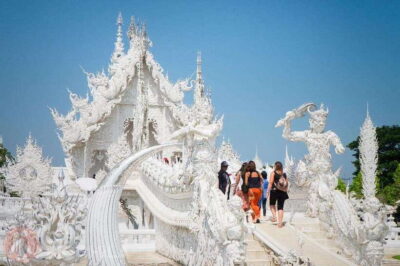
Chiang Rai Temples, Karen Tribe and Hot Springs
Read our review →
City Highlights Temple and Market Walking Tour
Read our review →
Bangkok by Night: Temples, Markets and Food Tuk-Tuk Tour
Read our review →
Grand Palace, Wat Pho, and Wat Arun Guided Tour
Read our review →
Tiger Cave Temple, Emerald Pool and Hot Springs Tour
Read our review →
Chiang Rai White Temple and Blue Temple Day Tour
Read our review →Browse the lists this tour appears in