
Reviewed · ELEPHANT SANCTUARY TOURS
Phuket: Freedom Elephant Reserve – Ethereal Nature Walk
Mud, sand, water, then bananas. Freedom Elephant Reserve gives you a close look at elephants following much of their own daily routine, from foraging in the trees to coating themselves in mud and cooling off in a pool. I especially like the observation-first approach and the chance to hear each elephant’s story from an English-speaking guide.
The best moments are simple: watching an elephant disappear underwater, seeing two animals rub against each other in the sand, and offering fruit under careful instructions. The main thing to consider is that this is not pure, hands-off observation. Some parts are guided and structured, and one account found the elephants were sometimes directed to perform certain actions for the group.
In This Review
- Key details at a glance
- Meeting elephants on their own terms
- The mud spa and the surprising sand pile
- Watching the elephants vanish underwater
- Feeding time, with bananas and sugar cane
- What the 90-minute visit feels like
- A new reserve with a careful approach
- What the $51 price includes
- Clothing, comfort, and practical limits
- Who will like this elephant experience
- Should you book Freedom Elephant Reserve?
- FAQ
- How long does the Freedom Elephant Reserve experience last?
- Can I touch or hug the elephants?
- Is feeding the elephants included?
- Is hotel pickup included?
- What languages do the guides speak?
- What should I bring?
Key details at a glance
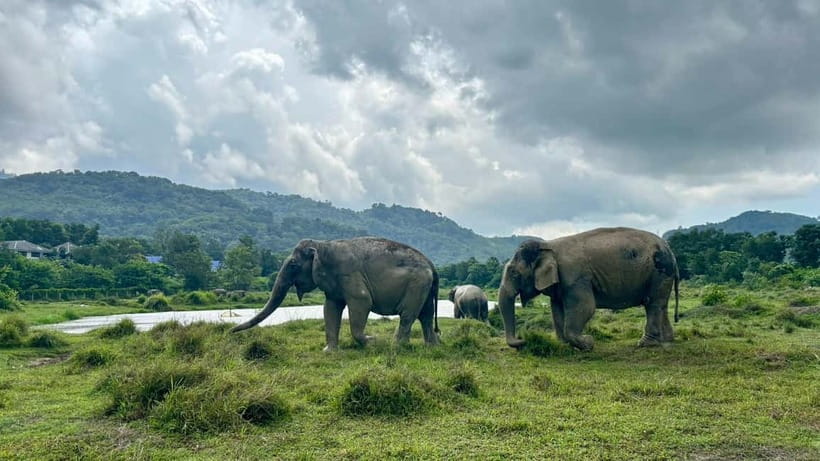
- Twenty to twenty-five acres to roam: The elephants have room to walk, forage, rest, and choose what to do next.
- A mud spa followed by a swim: You may watch the elephants mix mud, spray it over their bodies, roll in sand, and cool off in deep water.
- Feeding comes near the end: Bananas and sugar cane give you a supervised close encounter without turning the whole visit into a petting session.
- Small-group feel: One recent visit had only six people, which made feeding and asking questions easier.
- Ninety minutes with the herd: Add about 45 minutes each way by van from Phuket, depending on your pickup point.
- Transport needs checking: Transfers cover two or more people, with extra charges from several northern resort areas. Solo participants arrange their own transport.
Meeting elephants on their own terms
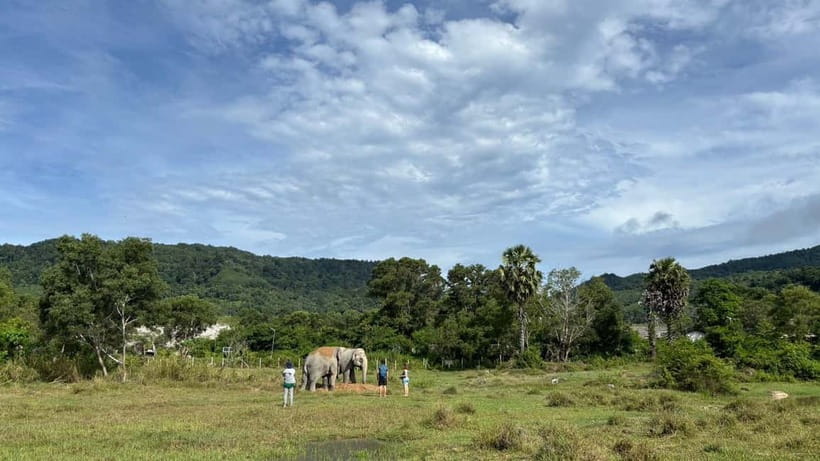
The experience begins with a walk into the reserve, not a staged show. The guide calls for the elephants while they may be somewhere in the trees, eating grass and young leaves. If they are nearby, you might see them come forward at their own pace, which is far more interesting than having an elephant led straight into a photo line.
Your guide introduces the herd and explains the background of each elephant. You also get help reading their behavior. A trunk reaching toward you, a change in posture, or a slow turn away all mean something, and the guide explains where you should stand and when to give an animal more room.
That instruction matters. You are not meant to hug a trunk or hold onto a leg. You should not touch or feed an elephant unless the guide tells you it is appropriate. The experience allows contact in controlled moments, but the animal’s comfort sets the limit.
I like this balance. You are close enough to see the texture of the skin, the movement of the trunk, and the way the ears work in the heat. At the same time, the elephant is not treated like a prop. The keepers remain within sight, but the visit is built around watching behavior rather than making the animals perform constantly.
More Elephant Sanctuary Tours in Thailand:
- Chiang Mai: Elephant Sanctuary, Waterfall & Bamboo Rafting
★ 4.9 · 9,160 reviews - Chiang Mai: Elephant Sanctuary & Waterfall Group Tour
★ 4.9 · 5,780 reviews - Chiang Mai: Elephant Sanctuary Feeding Program Half-Day Tour
★ 4.8 · 4,527 reviews
The mud spa and the surprising sand pile
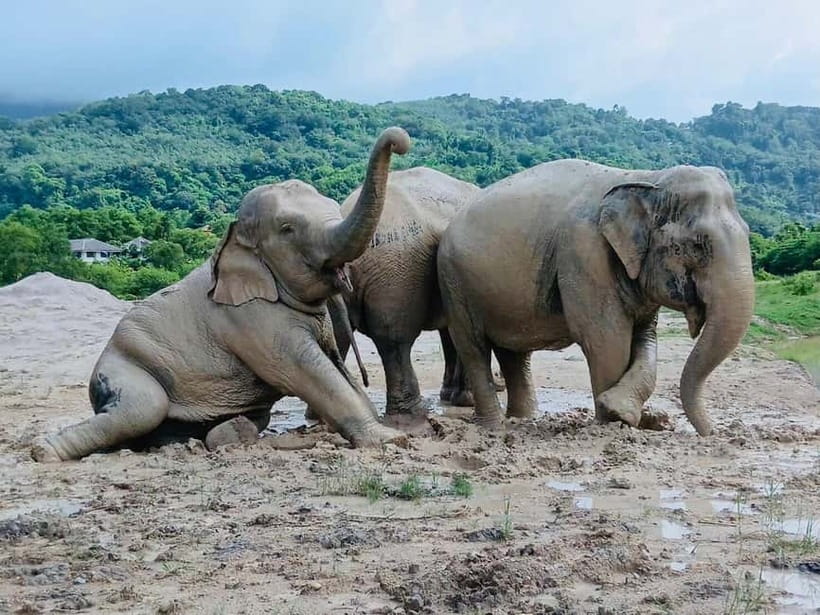
Elephants often head first toward the mud area. Using their feet, they stir water and earth into a thick slush. Then they draw the mixture into their trunks and spray it over their backs, sides, and heads.
It is messy, practical, and oddly graceful. The mud helps protect the skin, and the animals seem to enjoy the process. You will want to keep your camera ready, but do not crowd the edge of the action. Mud can travel farther than you expect.
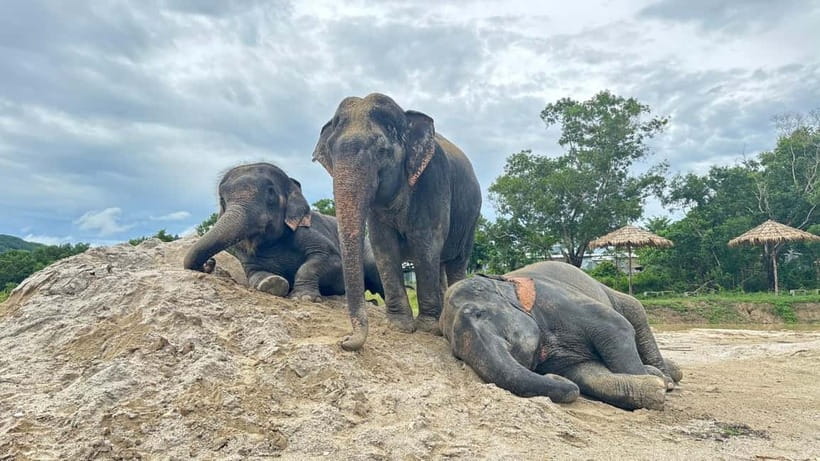
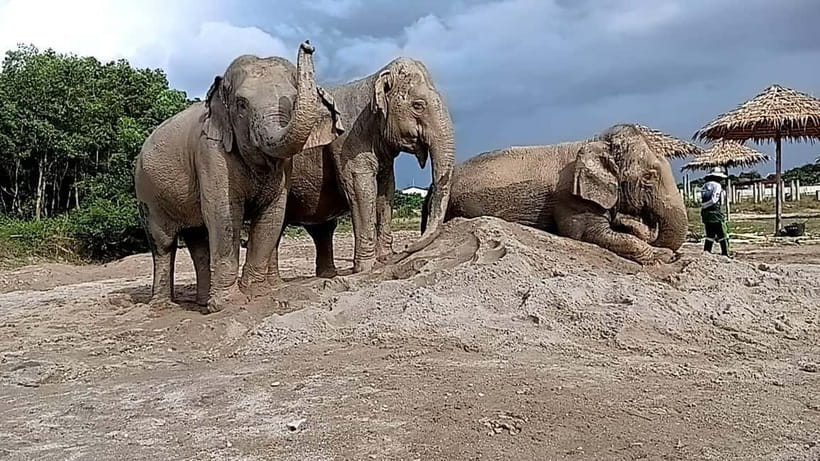
After the mud comes the sand pile. This is one of the more unusual parts of the visit. The sand shifts under the elephants’ weight, giving them a softer place to lie down. It also helps rub and exfoliate the skin.
You might see the elephants lean into the sand, roll, or rub against one another. That kind of behavior is useful to watch because it shows the animals doing something for their own comfort, not for a command. The sand session can also be a calmer photo opportunity than the feeding area, since the elephants may pause and settle.
The sequence is not guaranteed. The reserve describes what the elephants typically do, but the animals decide the pace. If they choose to forage longer or spend less time at the sand pile, that is part of the point.
Watching the elephants vanish underwater
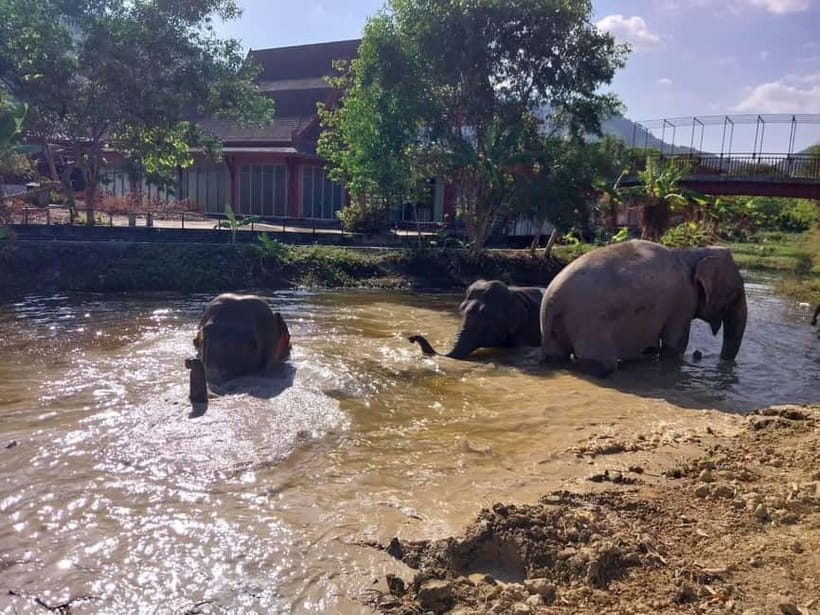
The reserve has a large pool deep enough for an elephant to submerge completely. This is often the most memorable part of the visit. One moment you can see a broad back and waving trunk, and the next the elephant has disappeared below the surface.
The swim helps the elephants cool down after spending the day in the tropical heat. It also gives you a glimpse of play and relaxation. You may see them spray water, paddle, or simply stand below the surface for a while.
This section is mainly observation. You are not taking the elephants into the water or scrubbing them yourself. That is worth knowing if you are looking for a bathing activity where people actively wash an elephant. Here, the value is seeing the animals choose the water and use it in their own way.
Bring a camera, but keep your distance and follow directions. The best pictures may come from waiting rather than chasing the perfect shot. The pool is also a reminder that elephant welfare is not just about space. Shade, water, mud, food, and the ability to choose where to go all matter.
Feeding time, with bananas and sugar cane
After cooling off, the elephants usually head toward the feeding area. You receive a fruit basket and have the chance to offer food under supervision.
Feeding is the most direct interaction on the tour. You can see how quickly a trunk works, how carefully an elephant takes food, and how much it can eat. The reserve says elephants need to consume around 5 to 10 percent of their body weight each day, so feeding is not a small side detail. Eating is a major part of an elephant’s routine.
The food provided includes bananas and sugar cane. Listen closely to the guide before you reach out. The instructions help you avoid placing your hands in the wrong position or encouraging the elephants to push toward you.
Several parts of the visit are more passive, so feeding can feel like the payoff. Still, I would not book this experience if your main goal is unlimited touching. The reserve’s rules are clear: no trunk or leg hugging, and no touching or feeding without guidance.
That restraint is a good sign for anyone trying to choose a more responsible elephant experience. You get a personal moment, but the elephants are not expected to tolerate constant handling from every person in the group.
A completely different kind of day out:
- Bangkok: Damnoen Saduak Market and Maeklong Railway Market
★ 4.5 · 26,723 reviews - Half-Day Thai Cooking Class at Organic Farm in Chiang Mai
★ 5.0 · 19,087 reviews - The Old Siam: Damnoen Saduak and Maeklong Railway Market
★ 4.5 · 10,992 reviews - From Bangkok: Ayutthaya Temples Guided Tour with Lunch
★ 4.7 · 10,535 reviews
What the 90-minute visit feels like
The core visit lasts about 90 minutes. That is enough time to see several parts of the routine, but it is not a full-day sanctuary program.
The opening walk gives you time to meet the herd and hear the individual stories. The mud, sand, and pool provide changing scenes, and feeding closes the visit with a clear final activity. You then take a few last photos before leaving the elephants and returning to Phuket.
The rhythm may vary. The elephants can be scattered in the reserve, and their routine is not a clockwork show. That makes the visit more genuine, but it also means you should not expect every animal to spend equal time in every area.
Transportation adds roughly 45 minutes each way by van. For a short animal encounter, that transfer is a meaningful part of the day. If you are staying in Phuket, check your pickup window and plan around the road time, not just the advertised 90 minutes.
Pickup is available for two or more people. A lone participant must arrange transportation independently. Extra round-trip charges apply from Kamala, Surin, Bang Tao, Layan, Mai Khao, Nai Yang, and Nai Thon. Pickup from Ao Por Pier is listed at 1,400 baht for a private van.
The operator asks for your hotel name, address, and room number after booking. Be in the hotel lobby five minutes before the stated pickup time. Private villas and houses are not included in the pickup service.
Transport appears to be a point worth monitoring. One person had a pickup nearly an hour late and missed the first half hour, although the reserve allowed extra time to watch the elephants eat and wander. That kind of flexibility helps, but I would still call the office if the driver has not arrived within the allotted window.
A new reserve with a careful approach
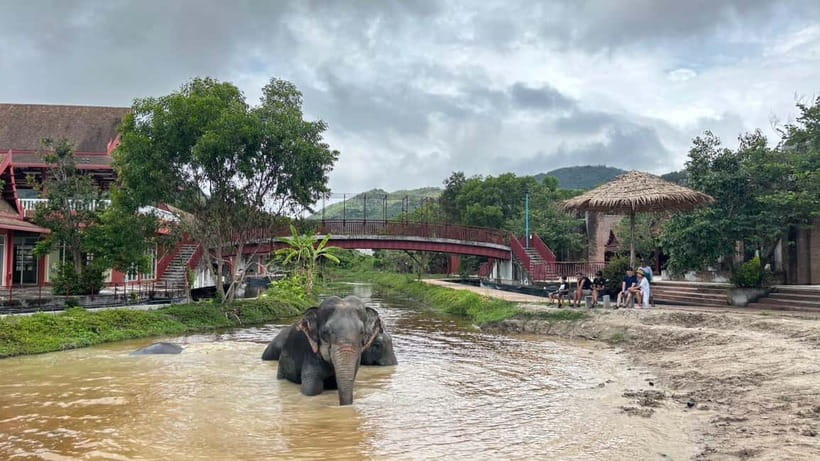
Freedom Elephant Reserve Phuket is a fairly new operation. At different points in the first year, the team described the reserve as only a few months old, which helps explain why some facilities and procedures may still be developing.
That newness is not necessarily a problem. The staff are described as professional and friendly, and Matthew is specifically praised as part of a team that explained the trainers’ roles, elephant facts, and visitor rules clearly. Guides speak English and Thai.
The elephants are said to roam freely across about 20 acres in one account and more than 25 acres in another. Since the supplied information gives both figures, treat the exact size as approximate. The important point is that the animals have a sizable area rather than being confined to a tiny display pen.
The reserve also appears to keep the elephant keepers nearby without having them constantly interrupt the animals. That gives you a better chance to watch normal movement, feeding, resting, and bathing.
Still, use the word sanctuary with care. The experience is welfare-minded in its rules and setup, but at least one account felt the elephants followed commands at times. If you want an entirely unstructured sighting, you may find this too organized. If you want safe access, clear teaching, and a chance to feed the elephants, the structure is useful.
What the $51 price includes
At $51 per person, the price is fair if you value a guided, close-range encounter with transport support and several different elephant activities.
Your fee covers the guided nature walk, the fruit basket, bottled water, mud-spa observation, pool or river observation, and hotel pickup and drop-off where the service applies. You do not receive a meal, fizzy drinks, or personal extras.
The value comes from variety. For one moderate fee, you get the walk, the behavior briefing, mud, sand, water, and feeding. A cheaper experience that offers only a quick photo and a few minutes of feeding may not give you the same view of the elephants’ daily routine.
The price becomes less attractive if you are a solo participant and need to arrange your own transport. It can also rise with the regional pickup fees. Before paying, enter your hotel location and check the transfer charge, especially if you are based north of Kamala.
Free cancellation is available up to 24 hours before the activity for a full refund. You can also reserve now and pay later, which helps if your Phuket plans are still shifting.
Clothing, comfort, and practical limits
Wear comfortable walking shoes and clothes that can handle heat, dust, and possible splashes. A hat and sunscreen are essential, and insect repellent is a smart addition for time near vegetation and water.
Bottled water is provided, but keep drinking it. Phuket heat can catch you out, especially while walking and standing near open areas. Bring a camera, but use it with restraint. The animals’ space comes before your picture.
The experience is not suitable for pregnant women, people with mobility impairments, or people with animal allergies. The visit includes walking and outdoor viewing, so anyone with limited mobility should not assume the reserve can adapt the route.
There are no meals included. Eat before or after the activity if you need something substantial, and do not count on fizzy drinks being available.
Who will like this elephant experience
I would recommend it to you if you want close contact without a full bathing or riding program. The strongest parts are the explanations of individual elephants, the chance to watch mud and water behavior, and the supervised feeding at the end.
It suits families and first-time elephant visitors who need clear rules. It also works well for anyone who wants photos, provided you are willing to wait for the animals instead of demanding a pose.
You may want another option if your priority is complete solitude, a long forest walk, or a full-day conservation visit. Ninety minutes passes quickly, and the transfer takes about as long as the animal encounter itself.
The small-group format can make a real difference. One person described a six-person group, which allowed plenty of room for questions and made feeding less hectic. Group size may vary, so do not assume every departure will be that small.
Should you book Freedom Elephant Reserve?
Book it if you want a compact Phuket activity that combines animal behavior, guided learning, and supervised contact. The mud spa, sand pile, and underwater swim offer more than a standard feed-and-photo stop, and the rules limit the rougher forms of elephant handling.
Go in expecting a structured visit, not a wild encounter with no human direction. The elephants appear well cared for and have substantial room, but the program still guides them through visitor-friendly areas. For most people, that is a reasonable trade: you get close, learn how to behave around the animals, and leave with a better sense of their daily needs.
Check your pickup fee carefully, especially from northern Phuket, and allow for the 45-minute van ride each way. If those details work for you, the $51 cost is a solid value for a short, thoughtful elephant experience.
FAQ
How long does the Freedom Elephant Reserve experience last?
The elephant visit lasts 90 minutes. The itinerary also includes about 45 minutes by van each way between Phuket and the reserve.
Can I touch or hug the elephants?
This is mainly an observation experience. You cannot hug trunks or legs, and you may only touch or feed the elephants when the guide gives permission and instructions.
Is feeding the elephants included?
Yes. A fruit basket is included, with bananas and sugar cane provided for supervised feeding near the end of the visit.
Is hotel pickup included?
Pickup and drop-off are included for two or more people in the service area, but extra charges apply from several locations. Solo participants must arrange their own transport, and private villas or houses are not included for pickup.
What languages do the guides speak?
The live guides speak English and Thai.
What should I bring?
Bring a hat, sunscreen, comfortable clothes, comfortable walking shoes, insect repellent, and a camera. Bottled water is provided, but you should still stay well hydrated.
Just added in Thailand
- Full Day Doi Saket Hiking Tour★ 5.0 · 14 reviews
- Pha Dok Siew Nature Trail & Doi Inthanon National Park From Chiang Mai★ 4.0 · 23 reviews
- One day Elephants in Nature Experience & Grand Canyon Jumping★ 5.0 · 31 reviews
- Chiang Mai to White & Blue Temple, Black Museum & Golden Triangle★ 4.0 · 52 reviews
- One day Doi Inthanon National Park & Trekking on Kew Mae Pan★ 5.0 · 12 reviews
- Private Tour 2 Difference Trails Trekking at Doi Inthanon National Park★ 5.0 · 19 reviews
- Half day Long Neck hill tribe and Hmong hill tribe village★ 5.0 · 21 reviews
- One Day Tour Chiang Rai(White Temple , Blue Temple, Black House) Private Tour★ 5.0 · 63 reviews
Elephant Sanctuary Tours, compared.
Elephant Sanctuary, Waterfall & Bamboo Rafting
Read our review →
Elephant Sanctuary Feeding Program Half-Day Tour
Read our review →
Elephant Jungle Sanctuary Ethical Feeding Experience
Read our review →
Elephant Sanctuary, Long Neck & Sticky Waterfall
Read our review →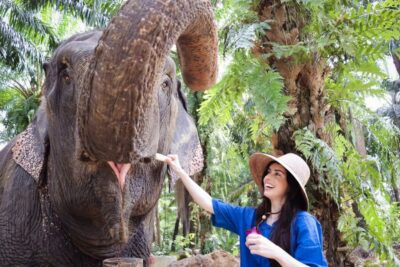
Elephant Bathing Session at Krabi Elephant Shelter
Read our review →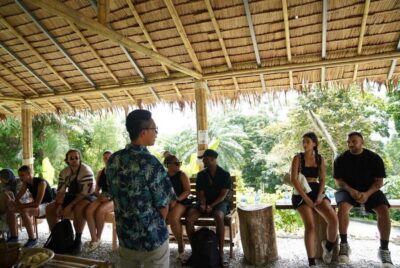
Elephant Sanctuary Guided Tour with Hotel Transfers
Read our review →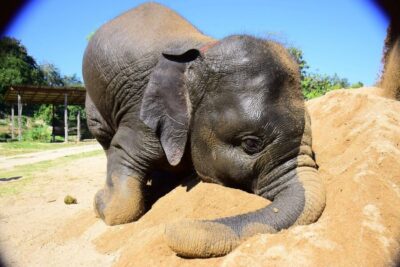
Browse the lists this tour appears in