

Reviewed · TEMPLE TOURS
Long Neck Village, Silver Temple & Chiang Mai Top Sites
Three temples, one village, four hours. This compact Chiang Mai outing gives you a useful first look at northern Thailand through traditional red songthaew transport and three very different temples. I like the mix: Wat Chedi Luang and Wat Phra Singh explain Chiang Mai’s spiritual heart, while Wat Sri Suphan adds remarkable silver craftsmanship. I also like that the tour ends with the Karen Padaung community, rather than keeping the day inside temple grounds.
The main consideration is cost clarity. The $22 price covers transport, an English-speaking guide, and admission to the Long Neck Village, but the temple entries may require about 50 baht per temple, according to recent tour information. Some temple interiors also have restrictions for women, including the Silver Temple. Guide quality appears to be a strength, with Mosquito and Margareth, also called Magie, receiving especially warm praise.
In This Review
- Key points to know before booking
- Why this four-hour route works for a first visit
- Wat Chedi Luang and the great stupa
- Wat Phra Singh, Chiang Mai’s sacred center
- Wat Sri Suphan and its silver-covered details
- Meeting the Karen Padaung community
- What the price includes, and what it does not
- Practical clothing, comfort and access notes
- Who should book this Chiang Mai tour?
- Should you book Long Neck Village, Silver Temple and Chiang Mai Top Sites?
- FAQ
- How long does the tour last?
- What transport is used?
- Where is pickup available?
- Are temple entrance fees included?
- What should I wear?
- Is the tour suitable for wheelchair users or people with back problems?
Key points to know before booking
- A red songthaew is your ride: You travel in Chiang Mai’s familiar shared taxi rather than a large coach.
- Three temples offer three different views: Wat Chedi Luang focuses on a huge old stupa, Wat Phra Singh on sacred images and murals, and Wat Sri Suphan on silverwork.
- The Long Neck Village is the cultural finale: You can learn about Karen Padaung traditions, watch weaving, and support local craftspeople.
- The tour fits a tight schedule: Four hours is enough for a broad introduction, but not for slow, detailed temple study.
- Bring temple-ready clothing and cash: Shoulders and knees must be covered, and small extra fees or purchases may need cash.
- Guide praise is a recurring strength: Mosquito was singled out for clear information, while Margareth, or Magie, was warmly thanked by name.
Why this four-hour route works for a first visit
Chiang Mai can feel scattered at first. Its old city contains several major temples, while cultural sites sit farther out. This tour groups three important temples with the Long Neck Village into a half-day route, making it useful if you have limited time or want a gentle introduction before exploring on your own.
I like the balance between formal Buddhist sites and a living cultural stop. The temples show you Lanna architecture, religious art, and northern Thai devotion. The village adds a different subject: Karen Padaung history, weaving, clothing, and local trade.
The pace is likely to be brisk. One recent comment praised having enough time to see a lot, but four hours does not allow long periods at each stop. You should think of this as a well-organized overview, not a scholarly temple tour.
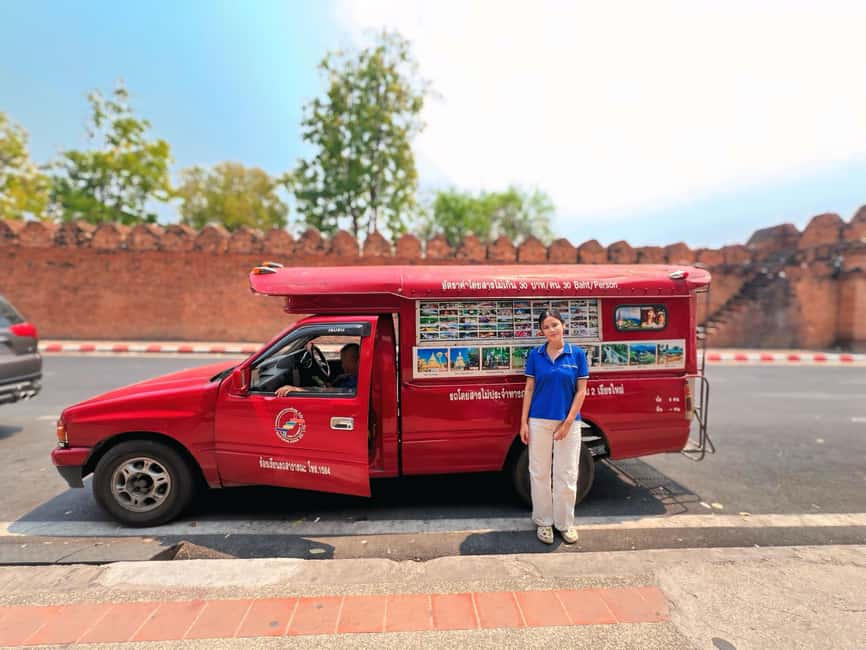
The red songthaew matters more than it may seem. These covered pickup trucks are part of everyday Chiang Mai transport, and they give the outing a local feel. The ride is less private and polished than a private car, but it suits the short route and helps keep the price at $22.
Pickup is available from hotels and accommodations in Chiang Mai’s old city or just outside the center. If you stay beyond that area, you meet the group in front of the Burger King at Thapae Gate. Check this point carefully before booking, especially if your hotel is outside the old city.
More Temple Tours in Chiang Mai
- Chiang Mai: Chiang Rai Temples, Karen Tribe and Hot Springs
★ 4.7 · 5,401 reviews - Chiang Rai White Temple and Blue Temple Day Tour
★ 4.6 · 3,366 reviews - Chiang Mai: White, Red/Black & Blue Temples Tour with Lunch
★ 4.2 · 2,017 reviews
Wat Chedi Luang and the great stupa
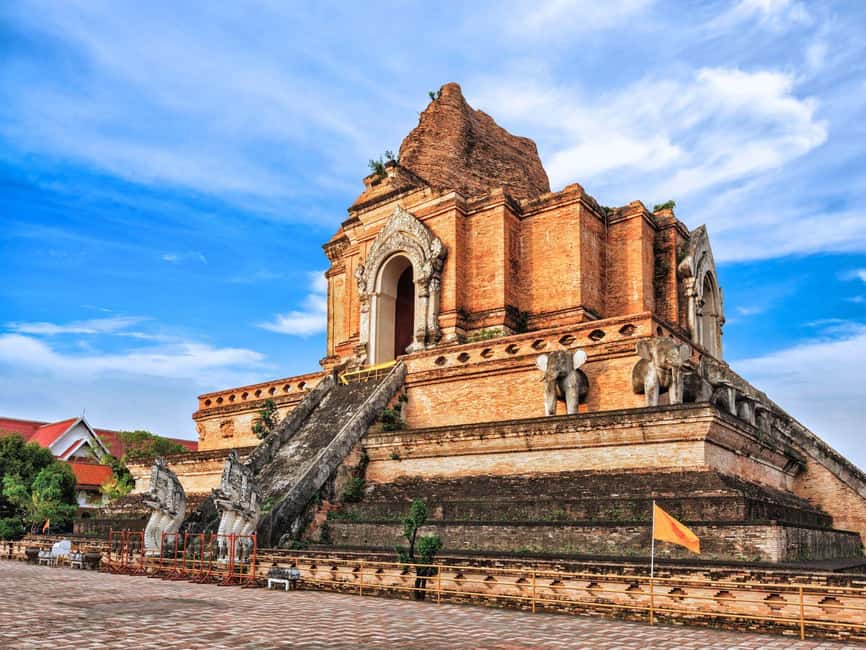
The first temple introduces you to one of Chiang Mai’s most important landmarks, Wat Chedi Luang. Its name means Temple of the Great Stupa, and the partially ruined chedi gives the site its force.
The stupa is large, weathered, and imposing. Its damaged condition is part of its appeal. Rather than seeing a perfectly restored monument, you see a structure marked by time, with its scale still clear despite the missing sections.
The guide can help you connect the architecture to Chiang Mai’s Lanna past and Buddhist traditions. The temple once housed the Emerald Buddha, one of Thailand’s most revered Buddhist images, before the statue was moved elsewhere. That detail gives the chedi added importance beyond its size.
I would pay attention to the contrast between the aged central structure and the active religious setting around it. Wat Chedi Luang is not simply a ruin for photographs. It remains a sacred place, so the atmosphere calls for modest behavior and suitable clothing.
You will probably have time to walk around, listen to an explanation, and take photographs. If you enjoy architectural details, you may want longer here than the schedule permits. The advantage of the short stop is that you still have two more temples and the village ahead.
Wat Phra Singh, Chiang Mai’s sacred center
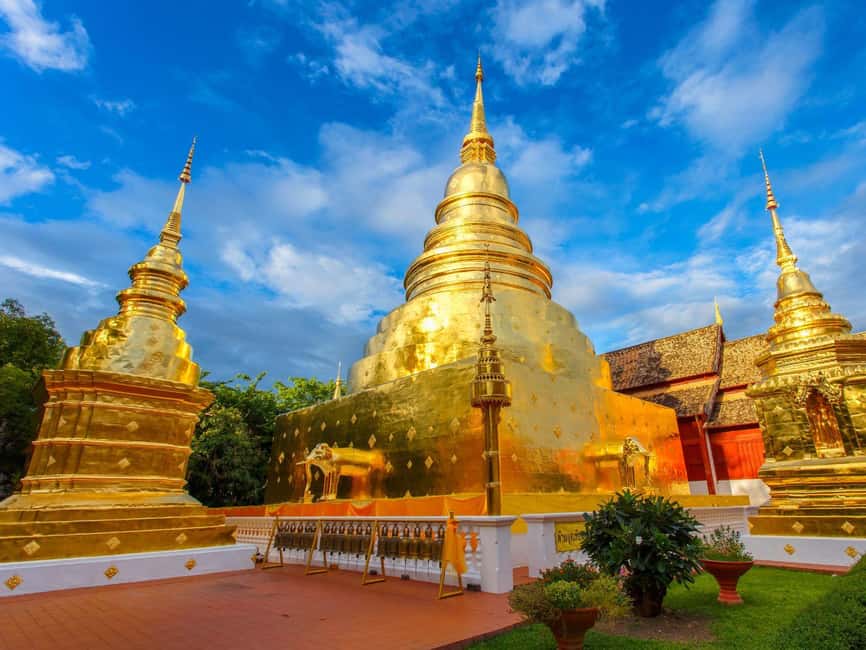
Wat Phra Singh offers a different mood. It is one of Chiang Mai’s most sacred temples and is known for golden pagodas, old murals, and the Phra Buddha Sihing image.
The temple’s importance comes from both its art and its place in northern Thai Buddhism. The Phra Buddha Sihing statue is especially revered, and your guide can explain why it matters to local worshippers.
Look closely at the murals if time allows. They provide a visual record of religious stories and Lanna artistic traditions. The golden elements and pagodas create a more polished impression than the worn chedi at Wat Chedi Luang, so the two stops work well together.
This is a place where your clothing matters. Shoulders and knees need to be covered at all temples on the route. Comfortable, modest clothing is the simplest choice, and it saves you from worrying about entry rules during a short tour.
The guide is important here. A quick glance at a gold-covered temple can blur into the next one without context. A strong explanation helps you understand which image is important, what the murals depict, and why the temple remains central to Chiang Mai’s religious life.
Recent praise for Mosquito focused on her clear temple information and friendly manner. Margareth, also called Magie, was also thanked warmly. Names are not a guarantee, of course, but they suggest that the guide can make a real difference to the visit.
Wat Sri Suphan and its silver-covered details
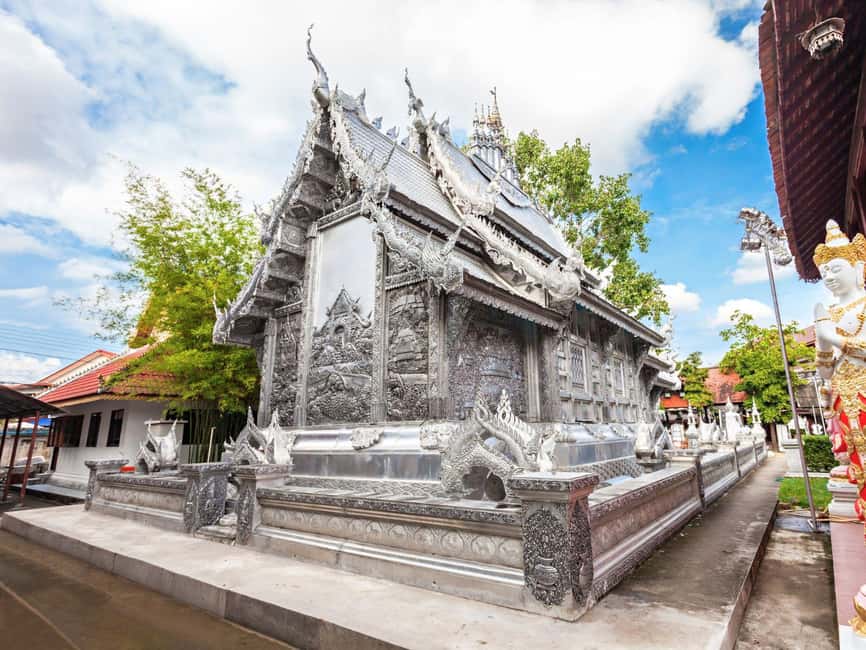
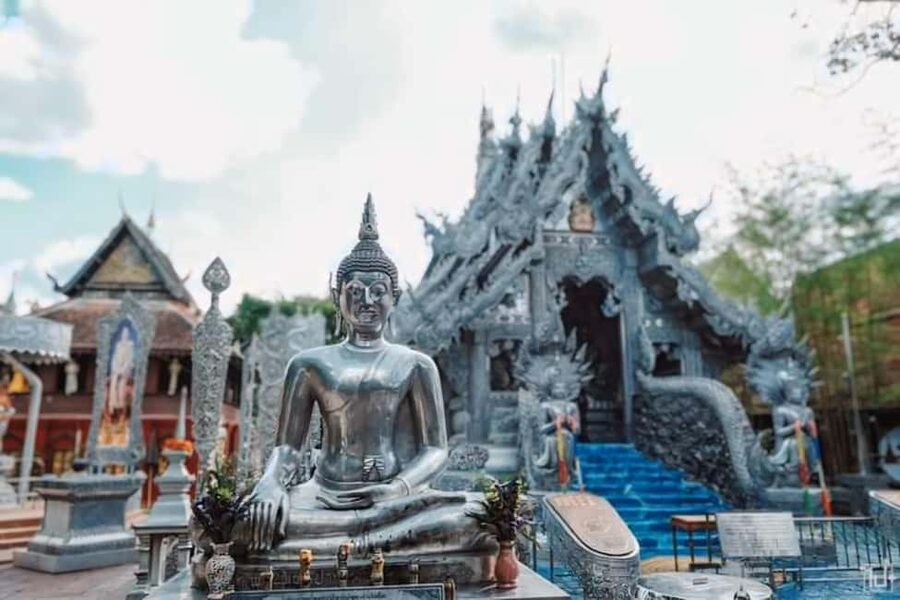
Wat Sri Suphan, often called the Silver Temple, is the most visually distinctive stop. Traditional silverwork decorates the temple, combining handcraft, Buddhist imagery, and Lanna design.
The metal surface catches light in a way that photographs cannot fully show. Look for the fine patterns and religious symbols rather than only the overall shine. The work reflects the skill of local artisans and gives this temple a character unlike the gold-focused sites elsewhere in Chiang Mai.
There is an important access point to understand before you go. Recent tour information notes that women may not be permitted inside certain temple areas, including the Silver Temple’s interior. You can still admire the exterior and its silver decoration, but this may feel disappointing if entering every building is a priority.
That restriction is worth treating with respect rather than as an inconvenience to argue around. Temple rules vary, and sacred spaces in Thailand can have customs that differ from what you encounter at tourist monuments elsewhere.
The stop is also a reminder that religious buildings are linked to working craft traditions. The silverwork is not just decoration for a sightseeing checklist. It points toward local making skills and gives you a reason to look beyond the most famous structures.
The $22 price deserves a careful read here. The tour includes Long Neck Village admission, but temple admission may be collected separately at around 50 baht per temple. That adds roughly 150 baht if all three fees apply. It is not a large amount, but you should carry cash and include it in your budget.
A completely different kind of day out:
- Half-Day Thai Cooking Class at Organic Farm in Chiang Mai
★ 5.0 · 19,087 reviews - Chiang Mai: Elephant Sanctuary, Waterfall & Bamboo Rafting
★ 4.9 · 9,160 reviews - Chiang Mai: Doi Inthanon National Park Eco-Friendly Tour
★ 4.6 · 6,667 reviews - Chiang Mai: Elephant Sanctuary & Waterfall Group Tour
★ 4.9 · 5,780 reviews
Meeting the Karen Padaung community

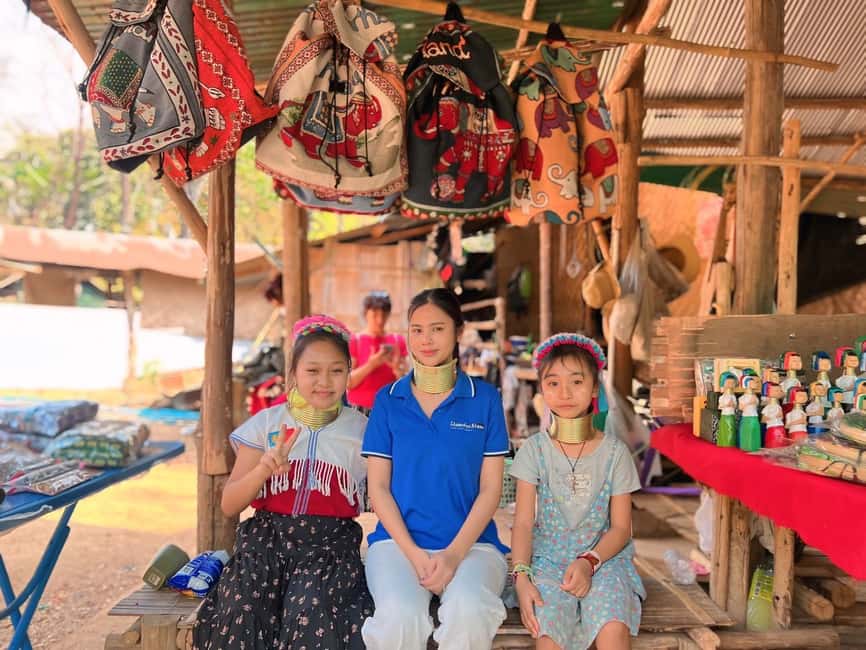
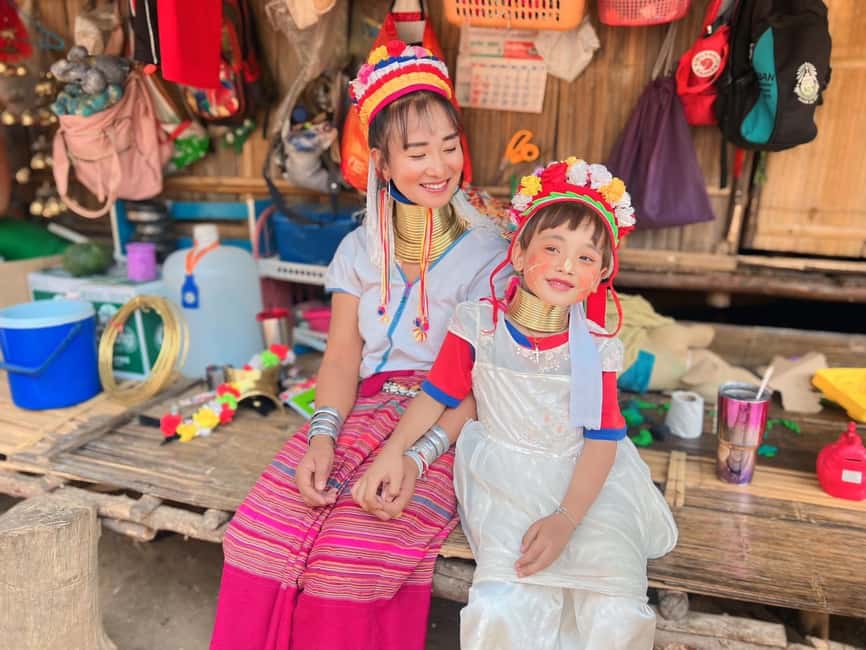
The final stop is the Long Neck Village, where you learn about the Karen Padaung people and their traditions. The visit includes the chance to hear about their history, see traditional weaving, and support local artisans through purchases.
This part of the tour needs a thoughtful approach. You are not simply arriving at a photo stop. The value comes from listening to the cultural explanation, noticing the textile work, and treating the people you meet with courtesy.
The chance to buy traditional clothing and souvenirs can support local makers. You should only purchase something if you genuinely want it, but the option gives your spending a direct connection to the craftwork on display. Cash is important because not every place accepts cards.
The village also changes the rhythm of the tour. After three formal temple visits, you shift from architecture and sacred images to clothing, weaving, and community traditions. That contrast is one of the strongest reasons to choose this outing instead of a tour that visits only temples.
At the same time, you may want more time here if cultural exchange is your main goal. Four hours must cover transportation, three temples, and the village, so the stop cannot provide an extended study of Karen history or weaving. See it as an introduction, then look for a more focused cultural visit if you want deeper context.
What the price includes, and what it does not
At $22 per person, this is a low-cost way to cover several Chiang Mai highlights in one morning or afternoon. Transport, an English-speaking guide, and Long Neck Village admission are included. For a visitor without local transport, that combination offers solid value.
The price is less attractive if you expect every entrance ticket to be covered. The available information says the Karen village fee is included, while recent booking information indicates that the three temples may cost 50 baht each. Confirm the current arrangement when booking and keep cash ready.
Meals and drinks are not included. Since the tour lasts four hours, you may not need a full meal during the outing, but bring water and plan food before or after. Personal purchases at the village are also extra.
The free cancellation policy gives you useful flexibility. You can cancel up to 24 hours in advance for a full refund, and the reserve-now, pay-later option means you do not need to pay immediately. Check the available starting times because the exact departure schedule can vary.
Practical clothing, comfort and access notes
Wear light, comfortable clothing that covers your shoulders and knees. This is both a matter of respect and a practical entry requirement at the temples. A loose shirt and longer trousers or a long skirt will keep things simple.
Bring cash. It may cover temple fees, drinks, small personal expenses, and crafts at the village. Cards are not accepted everywhere.
The red songthaew can make the ride feel more open and informal than an air-conditioned coach. That is part of its local character, but anyone with back problems should think carefully before booking. The activity is also not suitable for pregnant women or wheelchair users.
You will be walking around temple grounds and standing during explanations, although the supplied information does not give a precise walking distance. Comfortable footwear is a sensible choice.
The tour is conducted in English. If you need a different language, this is not the right option based on the available details.
Who should book this Chiang Mai tour?
I would choose this tour if you want a compact introduction to Chiang Mai’s temples and a cultural stop without arranging several taxis. It suits first-time visitors, short-stay visitors, and anyone who prefers a guide to explain what they are seeing.
It is also a good fit if you like variety. Wat Chedi Luang gives you a great old stupa, Wat Phra Singh provides sacred images and murals, Wat Sri Suphan brings in silver artistry, and the Long Neck Village shifts attention to weaving and community traditions.
I would be more cautious if you want long, quiet visits at each temple. The four-hour schedule covers a lot, but it will not let you linger everywhere. I would also check the extra temple fees and interior access rules if those details matter to you.
The guide can shape the whole outing. Mosquito received especially strong praise for her information and kind manner, while Margareth, known as Magie, was also thanked warmly. One low score came from a booking confusion in which the advertised activity was not completed, so confirm your pickup details and itinerary at the start.
Should you book Long Neck Village, Silver Temple and Chiang Mai Top Sites?
Book it if you want good coverage at a modest price and are happy with a brisk introduction. The red songthaew, three varied temples, and Karen cultural visit create a fuller picture of Chiang Mai than a temple-only route.
Before paying, confirm whether the 50-baht temple fees are extra, check the pickup area, and prepare temple-appropriate clothing. If you accept those conditions, this is a practical half-day choice with strong guide potential and a useful mix of architecture, religion, craft, and culture.
FAQ
How long does the tour last?
The tour lasts four hours.
What transport is used?
Transportation is provided by a traditional red songthaew, Chiang Mai’s shared taxi.
Where is pickup available?
Pickup is available from hotels and accommodations in Chiang Mai’s old city or just outside the city center. If your accommodation is outside the pickup area, the meeting point is in front of the Burger King at Thapae Gate.
Are temple entrance fees included?
The Long Neck Village entrance fee is included. The three temple entrances may require separate payment of about 50 baht per temple, so bring cash and confirm the current arrangement.
What should I wear?
You should wear clothing that covers your shoulders and knees because the temples are sacred places.
Is the tour suitable for wheelchair users or people with back problems?
No. The activity is not suitable for wheelchair users, pregnant women, or people with back problems.
Just added in Chiang Mai
- Full Day Doi Saket Hiking Tour★ 5.0 · 14 reviews
- Pha Dok Siew Nature Trail & Doi Inthanon National Park From Chiang Mai★ 4.0 · 23 reviews
- One day Elephants in Nature Experience & Grand Canyon Jumping★ 5.0 · 31 reviews
- Chiang Mai to White & Blue Temple, Black Museum & Golden Triangle★ 4.0 · 52 reviews
- One day Doi Inthanon National Park & Trekking on Kew Mae Pan★ 5.0 · 12 reviews
- Private Tour 2 Difference Trails Trekking at Doi Inthanon National Park★ 5.0 · 19 reviews
- One Day Hiking and Elephant experience by Chiang Mai Elephant Home★ 5.0 · 75 reviews
- Half day Long Neck hill tribe and Hmong hill tribe village★ 5.0 · 21 reviews
Temple Tours, compared.
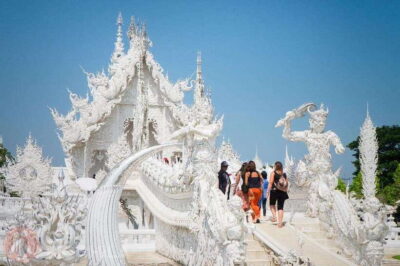
Chiang Rai Temples, Karen Tribe and Hot Springs
Read our review →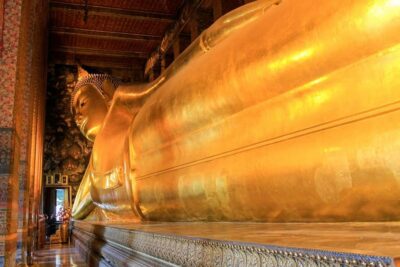
City Highlights Temple and Market Walking Tour
Read our review →
Bangkok by Night: Temples, Markets and Food Tuk-Tuk Tour
Read our review →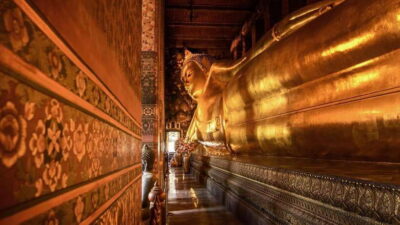
Grand Palace, Wat Pho, and Wat Arun Guided Tour
Read our review →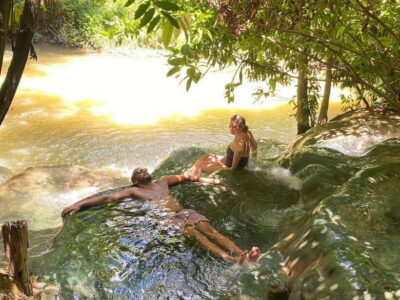
Tiger Cave Temple, Emerald Pool and Hot Springs Tour
Read our review →
Chiang Rai White Temple and Blue Temple Day Tour
Read our review →Browse the lists this tour appears in