Reviewed · CHIANG MAI TOURS
Chiang Mai: Thai Buffalo and Rice Planting Experience
Mud, buffalo, and lunch make a fine morning. This 150-minute visit to Hang Tueng farm gives you a hands-on look at rural life near Chiang Mai, far beyond the usual temple circuit. I like the chance to feed real Thai buffalo and learn how grass is cut and gathered for them. I also like that rice planting is not just a demonstration: you step into the nursery, handle the seedlings, and work the mud yourself.
The main drawback is price. At $57 per person, this costs more than a simple farm visit, and one important detail needs checking: pickup and drop-off are included, but the exact hotel transfer arrangement should be confirmed before booking. Still, the small group limit of 10, farmer instruction, clothing, boots, transport, and lunch make the cost easier to justify.
In This Review
- Quick points before you book
- What this Chiang Mai farm visit is really about
- Arriving at Hang Tueng farm by red taxi
- Cutting grass for the Thai buffalo
- Pulling rice seedlings from the nursery
- Planting rice in the mud
- Lunch of green curry, herbal drink, and mango sticky rice
- What makes the small group format useful
- Is $57 a fair price in Chiang Mai?
- What to wear and bring
- Who should book this experience?
- Final verdict: book it for the hands-on lesson
- FAQ
- Where does the experience start?
- How long does the activity last?
- How far is the farm from Chiang Mai?
- Is transportation included?
- What languages are available?
- How large is the group?
- Do I need to bring farmer clothes or boots?
- Will I get muddy?
- What food is included?
- Can I cancel the booking?
Quick points before you book
- The buffalo feeding begins with farm work: You cut and collect grass with a sickle before feeding the animals.
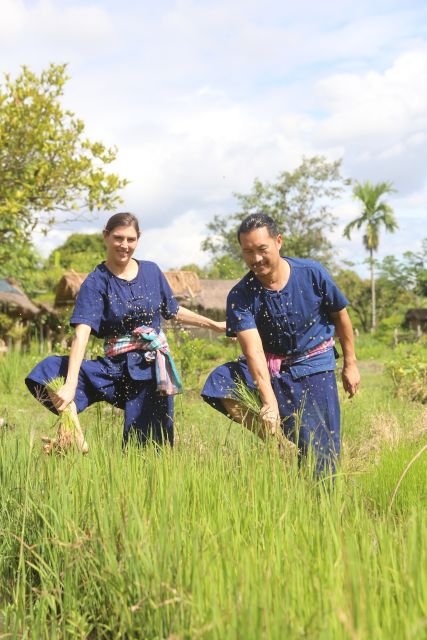
- Rice planting is hands-on: You learn to pull seedlings from a nursery and remove mud from their roots in the traditional way.
- A red taxi connects you with the farm: The activity begins at Hang Tueng farmstay and workshop, with transport included in the experience.
- Farmer clothes and boots are supplied: You can change at the farm, then wash mud from your lower legs afterward.
- Lunch is part of the cultural lesson: Expect rice, green chicken curry, a herbal drink, and mango sticky rice.
- The format suits families: The work is short enough for children, and a child-friendly alternative meal may be available on request.
What this Chiang Mai farm visit is really about
Hang Tueng farm is in Chiang Mai Province, about 20 minutes from the historic center according to the experience details. That short ride matters. You do not lose an entire day getting to a remote village, yet the farm gives you a clear change of pace from Chiang Mai’s old city, markets, and traffic.
This is not a polished show built around a quick photo stop. The farm is also used as an educational center, and the activities explain how people, animals, tools, and rice fit together. You meet a farmer, learn about caring for the buffalo, and then take part in the work.
The experience is offered in English and Thai. The group is limited to 10 people, though some sessions may feel almost private when bookings are light. That small scale is one of the strongest reasons to choose this over a large countryside excursion. You have more time to ask questions, and children can work at a manageable pace.
The schedule is described as 150 minutes, while the itinerary information also allows for a roughly three-hour visit. I would treat it as a compact half-day outing and leave room around it, especially if your transport involves a hotel pickup.
A few more options to weigh up in Chiang Mai
- Half-Day Thai Cooking Class at Organic Farm in Chiang Mai
★ 5.0 · 19,087 reviews - Chiang Mai: Elephant Sanctuary, Waterfall & Bamboo Rafting
★ 4.9 · 9,160 reviews - Chiang Mai: Doi Inthanon National Park Eco-Friendly Tour
★ 4.6 · 6,667 reviews
Arriving at Hang Tueng farm by red taxi
The meeting point is Hang Tueng farmstay and workshop Chiang Mai. Search that full name on Google Maps before you leave, since the farm name also appears in Thai as Hang Tueng Farmstay and Workshop Chiang Mai.
A red taxi service takes you to and from the traditional farm. These shared red pickup trucks are a familiar sight in Chiang Mai, so the ride fits the setting better than a sealed tour bus. Pickup and drop-off are listed as included, but I would confirm the exact meeting arrangement when booking. The information gives the farm as the starting point, while one price concern raised about hotel transport suggests that door-to-door service may need clarification.
Once you arrive, the farm setting becomes part of the lesson. You meet the farmer and see the buffalo in their normal surroundings before handling tools or food. This first pause is useful because it sets up the rest of the visit: the buffalo are not just an attraction, and the rice is not just a photo prop.
Cutting grass for the Thai buffalo
The buffalo portion starts with a practical job. You learn how to harvest grass with a sickle, gather it, and prepare it for the animals. This small task gives you a better sense of the daily work behind buffalo care than simply being handed a basket of feed.
Thai buffalo are powerful animals, but the activity is presented as supervised farm work. You learn what they eat and how to care for them from the instructor before feeding them. The food may include grass and fruit, giving you a chance to watch how the animals respond to different treats.
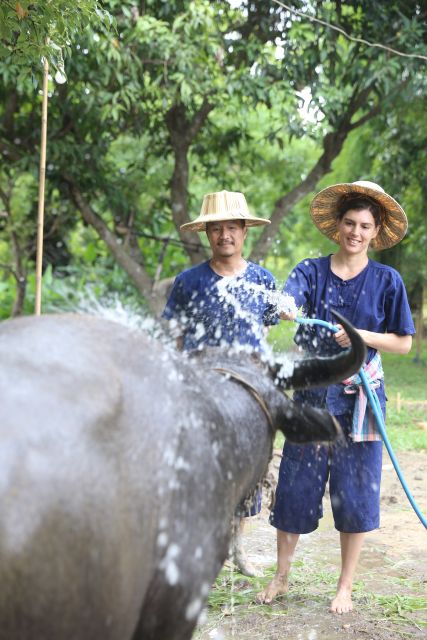
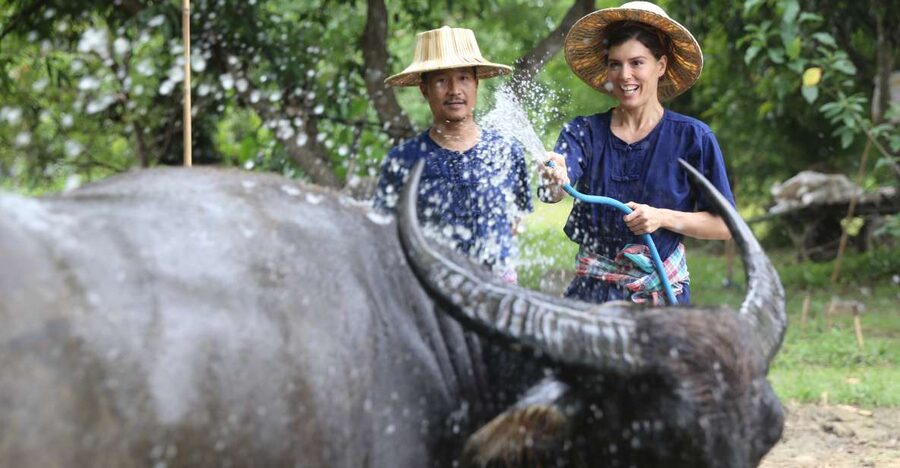
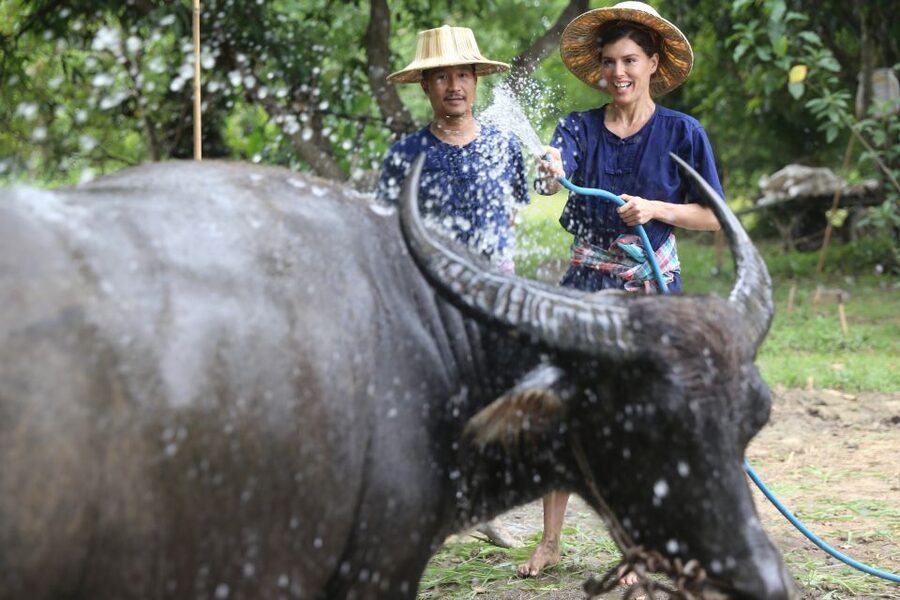
The most charming part may be the bath. You can give the buffalo water, and they may lie down contentedly as they cool off. That scene is easy for children to enjoy, but adults will likely appreciate it just as much. It shows the animals as working farm residents with needs of their own, not as background decoration.
The feeding work also offers a useful reality check. You are doing a small sample of farm labor, not taking on a full day in the fields. That is good for most people, especially families, but anyone hoping for a hard agricultural workday may find the session too brief.
Pulling rice seedlings from the nursery
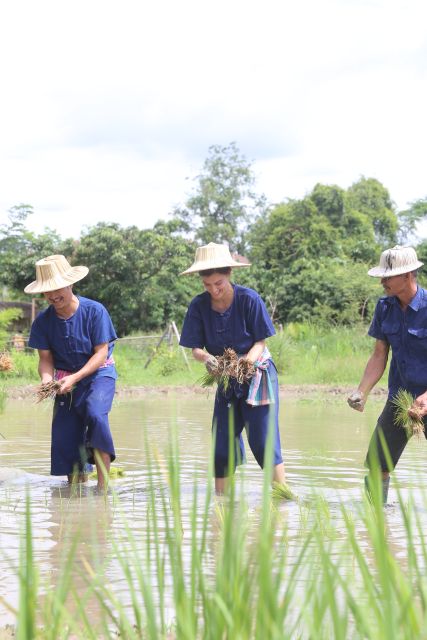
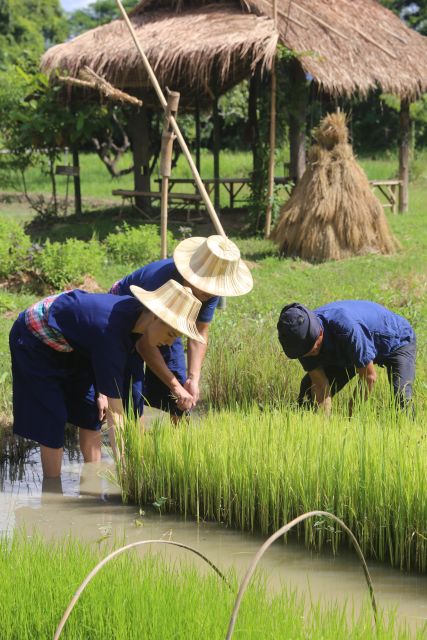
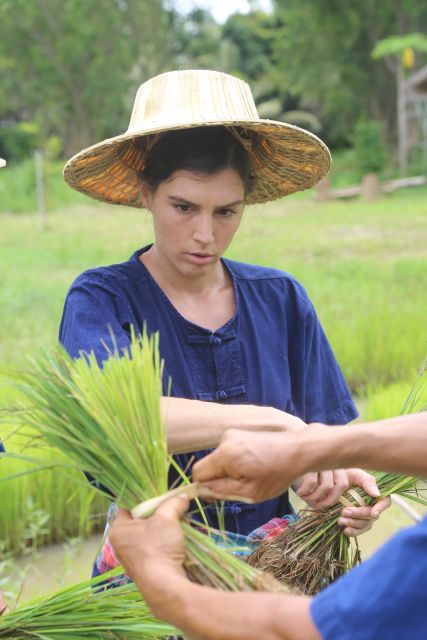
Next, the focus shifts from animals to rice. You learn how to uproot young plants from a rice nursery, where seedlings are prepared before planting. The instructor explains the rice-growing cycle and the traditional tools used in Thai farming.
This part is valuable because rice can seem like a simple crop from a distance. Handling the seedlings shows how much careful preparation happens before a full paddy is planted. You also learn to remove mud from the roots, a traditional step that turns a basic planting task into a lesson in technique.
The instruction matters here. Without it, pulling seedlings could feel like random muddy work. With an explanation of the process, you understand why the nursery exists and how the plants move from one stage to the next.
You are likely to get dirty from the knees down. The farm provides boots and traditional farmer costumes, and you can change there. When it is time to enter the paddy, you may work barefoot. A shower is available afterward, so pack or wear sandals that are easy to slip on and off.
A completely different kind of day out:
- Chiang Mai: Elephant Sanctuary & Waterfall Group Tour
★ 4.9 · 5,780 reviews - Chiang Mai: Chiang Rai Temples, Karen Tribe and Hot Springs
★ 4.7 · 5,401 reviews - Chiang Mai: Cooking Class, Market & Thai Herbs Garden Tour
★ 4.9 · 4,824 reviews - Chiang Mai: Authentic Cooking Class with Market & Farm Visit
★ 4.9 · 4,546 reviews
Planting rice in the mud
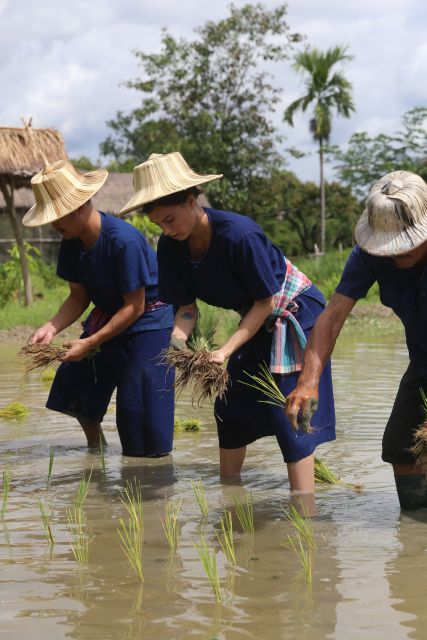
Rice planting is the part most people remember. You step into the paddy and place seedlings in the mud using the method shown by the farmer. The work is simple enough to learn quickly, yet physical enough to make you laugh when the mud grabs your feet.
The activity is kept to a reasonable length. That is especially helpful for younger children, who can enjoy the novelty without facing hours in the heat. One family-oriented detail is worth noting: a child may receive fried rice instead of the spicier adult meal, depending on the arrangements at the farm. If this matters to you, mention it when booking.
The clothing makes a real difference. You do not need to worry about ruining your sightseeing clothes, and you can get changed at the farm. Even so, wear something easy to remove and put back on. Sandals are useful for the washing area, while the supplied boots handle the earlier farm work.
This is not a place to arrive in white linen or your best walking shoes. Mud is the point, and a little preparation keeps it fun.
Lunch of green curry, herbal drink, and mango sticky rice
The meal is a welcome finish after the buffalo work and rice planting. The standard lunch includes rice with green chicken curry, a herbal drink, and mango sticky rice.
The green curry has received especially strong praise, and it gives the outing a proper local-food ending rather than a packaged snack. The herbal drink adds another taste of everyday Thai food culture. Mango sticky rice brings the meal to a sweet close.
Lunch also helps explain the value of the experience. You are not only paying for a short activity. The price covers instruction, equipment, transport, and a meal tied to the farm setting. At $57 per person, that is a fairer comparison than measuring the cost against a basic attraction ticket.
Still, value depends on your priorities. If you want a low-cost countryside outing or a long farm stay, this may feel expensive for two and a half hours. If you want a guided activity with food and equipment included, the package is more convincing.
What makes the small group format useful
A maximum of 10 participants keeps the work personal. You can hear the farming explanations, get help with the rice seedlings, and ask about the buffalo without fighting for the guide’s attention.
The experience may be particularly good for families. Children can cut and collect grass with supervision, feed the buffalo, handle the rice seedlings, and plant for a short period. The farm also appears to have an educational purpose, so the day is not built only around entertainment.
Couples and solo visitors can enjoy the smaller setting too. If your group is the only booking that morning, the activity may feel close to a private lesson. That gives you more freedom to ask about the tools, the rice cycle, and the animals.
The tradeoff is that the small group does not guarantee a private booking. A group of 10 could feel more active and less quiet, particularly around the buffalo or changing areas. The format is still more focused than a large coach tour.
Is $57 a fair price in Chiang Mai?
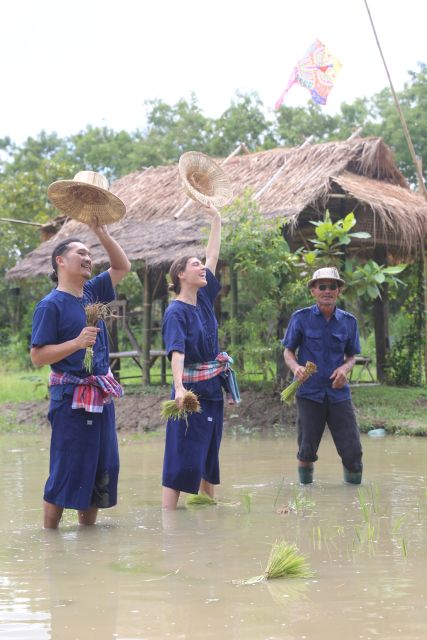
At $57 per person, this is not the cheapest way to see the countryside. You are paying for a guided farm activity rather than simply entering a public attraction.
The package includes:
- Rice planting
- Buffalo feeding and care instruction
- Traditional farmer clothing
- Boots
- Lunch
- Pickup and drop-off
- English or Thai instruction
- A small group of no more than 10 participants
That list makes the price reasonable for visitors who want a ready-to-go experience. You do not need to arrange transport, rent muddy clothes, find a farmer to explain the work, or search for lunch afterward.
The cost feels less favorable if you only want a quick photo with a buffalo. It also may not suit independent visitors who already have local transport and prefer to explore farms on their own. For families, the included clothing and short duration can save hassle, which adds real value.
I would compare the price with the rest of your Chiang Mai plans. If you have already booked several costly guided outings, this may seem like a luxury. If you want one meaningful rural activity with a meal, it can be a sensible use of half a day.
What to wear and bring
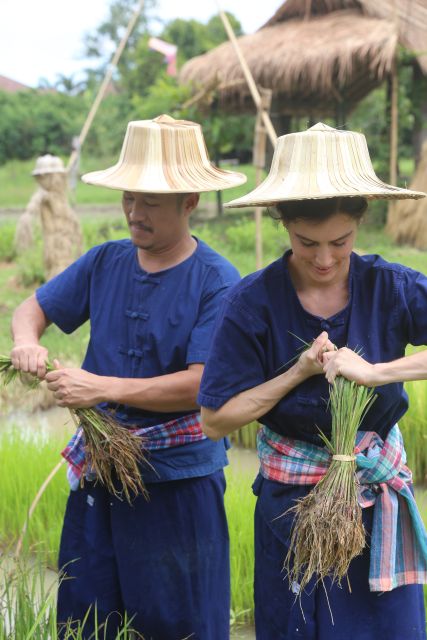
The farm supplies costumes and boots, but your clothing still matters. Choose items that are easy to change and that you will not mind wearing around mud and water.
Bring sandals for the shower area and the trip afterward. The paddy work may be barefoot, and mud can remain on your lower legs even after the main activity is finished.
A few practical choices will make the outing easier:
- Wear clothes that are simple to remove and put on again.
- Bring sandals rather than relying on muddy closed shoes.
- Keep valuables to a minimum during the rice planting.
- Allow extra time around the advertised 150 minutes if transport is involved.
- Confirm pickup details before departure.
These are small points, but farm activities reward simple planning. You want to think about buffalo and rice, not about protecting your favorite trousers.
Who should book this experience?
I would recommend it most strongly to families, first-time visitors who want contact with rural Thailand, and anyone who enjoys learning by doing.
Children get several different tasks instead of one long demonstration. Adults get context about buffalo care, traditional tools, and the rice-growing cycle. The lunch provides a pleasant social finish.
It is also a good choice if you want a short activity near Chiang Mai rather than a full-day trip. The farm is close enough to fit beside other plans, though I would not schedule a tight temple visit immediately afterward. Changing, washing, and transport can take longer than the activity itself.
You may want to skip it if you dislike mud, outdoor work, or close contact with farm animals. You should also think twice if $57 feels high for a 150-minute program. The experience is hands-on, but it is not a long agricultural placement or a remote village homestay.
Final verdict: book it for the hands-on lesson
I would book the Hang Tueng farm experience if you want something active, family-friendly, and connected to everyday Thai farming. The buffalo feeding, water bath, rice nursery, and muddy planting give the morning a clear sense of purpose. You are not just watching rural life from a vehicle.
The strongest parts are the patient explanations, the small group, and the chance to do several different jobs. The green chicken curry and mango sticky rice are useful bonuses, especially after working in the paddy.
The price is the one question mark. Confirm the pickup details and decide if transport, clothing, boots, instruction, and lunch are worth paying for. For most visitors looking for a well-organized rural outing, the answer will be yes. For budget travelers or independent explorers, the cost may feel steep.
FAQ
Where does the experience start?
It starts at Hang Tueng farmstay and workshop Chiang Mai, also shown in Thai as Hang Tueng Farmstay and Workshop Chiang Mai. You can search that name on Google Maps.
How long does the activity last?
The stated duration is 150 minutes. The itinerary information also describes a visit of about three hours, so allow some flexibility around the listed time.
How far is the farm from Chiang Mai?
The farm is described as about 20 minutes from Chiang Mai’s historic center.
Is transportation included?
Pickup and drop-off are included in the activity details, with a red taxi service used to travel to and from the farm. Confirm the exact pickup arrangement before booking.
What languages are available?
Instruction is available in English and Thai.
How large is the group?
The experience is limited to 10 participants.
Do I need to bring farmer clothes or boots?
No. Traditional farmer costumes and boots are included.
Will I get muddy?
Yes. Rice planting takes place in muddy fields, and you may work barefoot. A shower is available afterward.
What food is included?
Lunch includes rice with green chicken curry, a herbal drink, and mango sticky rice.
Can I cancel the booking?
You can cancel up to 24 hours in advance for a full refund. A reserve-now-and-pay-later option is also available.
Just added in Chiang Mai
- Full Day Doi Saket Hiking Tour★ 5.0 · 14 reviews
- Pha Dok Siew Nature Trail & Doi Inthanon National Park From Chiang Mai★ 4.0 · 23 reviews
- One day Elephants in Nature Experience & Grand Canyon Jumping★ 5.0 · 31 reviews
- Chiang Mai to White & Blue Temple, Black Museum & Golden Triangle★ 4.0 · 52 reviews
- One day Doi Inthanon National Park & Trekking on Kew Mae Pan★ 5.0 · 12 reviews
- Private Tour 2 Difference Trails Trekking at Doi Inthanon National Park★ 5.0 · 19 reviews
- Half day Long Neck hill tribe and Hmong hill tribe village★ 5.0 · 21 reviews
- One Day Tour Chiang Rai(White Temple , Blue Temple, Black House) Private Tour★ 5.0 · 63 reviews
Chiang Mai Tours, compared.
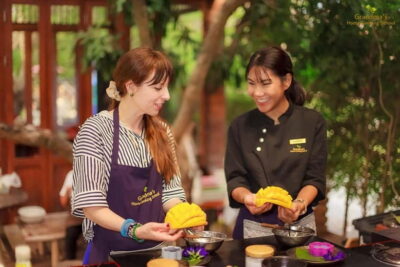
Half-Day Thai Cooking Class at Organic Farm in Chiang Mai
Read our review →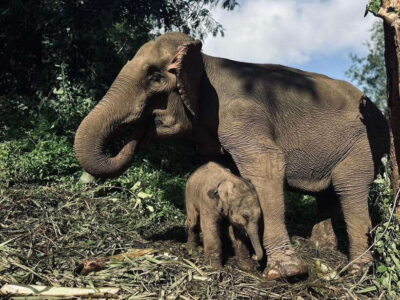
Elephant Sanctuary, Waterfall & Bamboo Rafting
Read our review →

Chiang Rai Temples, Karen Tribe and Hot Springs
Read our review →
Cooking Class, Market & Thai Herbs Garden Tour
Read our review →Authentic Cooking Class with Market & Farm Visit
Read our review →