Reviewed · ELEPHANT SANCTUARY TOURS
Chiang Mai: Elephants, Sticky Waterfalls, Market and Temple
Waterfalls, temples, markets, and elephants fill one long day. This Chiang Mai tour works because it joins real countryside stops with hands-on activities, rather than keeping you inside the city all day. I especially like the unusual chance to climb Bua Thong Sticky Waterfalls and the visit to Wat Ban Den, a colorful Lanna temple that many visitors miss. The main consideration is the pace: you spend roughly eight hours on the road and the elephant visit includes close contact, bathing, and posing, so you should think carefully about your comfort with that style of animal encounter.
The small group, limited to nine people, also makes a difference. Guides such as Blue, Non, Tu, Tom, James, and Pon are repeatedly praised for their history lessons, photos, snacks, and care throughout the day. Still, Sticky Waterfalls can become crowded in high season, and one visitor questioned the sanctuary’s animal training, so this is not a tour to book without considering its welfare standards.
In This Review
- Key points to know before booking
- A full day beyond Chiang Mai’s old city
- The local market and Northern Thai food culture
- Climbing Bua Thong Sticky Waterfalls
- Wat Ban Den and the Lanna countryside
- A local lunch after the morning activities
- Meeting the elephants in the afternoon
- The important elephant welfare question
- Why the guide can make or break the day
- Is the $70 price good value?
- Who should book this Chiang Mai day trip?
- Should you book it?
- FAQ
- What time does the Chiang Mai tour begin?
- How long does the experience last?
- Is hotel pickup included?
- What is included in the $70 price?
- What should I bring to Sticky Waterfalls?
- Who cannot take this tour?
Key points to know before booking
- Bua Thong Sticky Waterfalls: Mineral-coated rock lets you climb sections of the waterfall with surprisingly good grip, though the route is wet and takes effort.
- Wat Ban Den: A colorful temple complex with white, green, blue, and pink details, plus traditional Lanna design and quiet countryside views.
- Local market stop: ตลาดเจดีย์แม่ครัว gives you a look at rural food culture, including insects, worms, bugs, produce, and snacks.
- Hands-on elephant care: You prepare vitamin balls, feed bananas and sugarcane, walk beside elephants, and bathe them in the river.
- Small-group value: Nine people or fewer means more room in the van and better access to the guide.
- Practical packing: Bring a towel, dry clothes, sunscreen, insect repellent, comfortable shoes, and cash. Water shoes are especially useful at the waterfall.
A full day beyond Chiang Mai’s old city
The tour begins with pickup around 10:45 a.m. from your hotel lobby or one of the listed meeting points, including Wat Loi Kroh, Wat Lok Moli, Wat Santitham, and Chiang Mai Boxing Stadium. From there, you ride in a van toward the countryside.
The drive takes about an hour to the first stop. That may sound like a lot of sitting, but it is part of the point. You leave the dense city behind and pass villages, rice fields, orchards, and rural roads. The views are not a formal sightseeing stop, yet they help you understand how quickly Chiang Mai changes once you get beyond the old center.
The day runs for about 450 to 510 minutes, or roughly seven and a half to eight and a half hours. I would not schedule a flight, spa appointment, or important dinner immediately afterward. Traffic, road conditions, and the length of the elephant visit can all affect your return time.
More Elephant Sanctuary Tours in Chiang Mai
- Chiang Mai: Elephant Sanctuary, Waterfall & Bamboo Rafting
★ 4.9 · 9,160 reviews - Chiang Mai: Elephant Sanctuary & Waterfall Group Tour
★ 4.9 · 5,780 reviews - Chiang Mai: Elephant Sanctuary Feeding Program Half-Day Tour
★ 4.8 · 4,527 reviews
The local market and Northern Thai food culture
Your first formal stop is a local market known as ตลาดเจดีย์แม่ครัว. You have about 25 minutes with a guide, enough time to look around and learn how people in rural Northern Thailand shop and eat.
The market sells ordinary household food alongside more unusual items such as bugs, worms, and insects. You do not have to try anything. The value lies in seeing food as part of daily life, not as a staged cultural display prepared only for visitors.
Guides often add to this stop by explaining snacks and offering samples. Dianne described receiving Thai treats from the market, while other visitors appreciated being introduced to local foods they would not have selected on their own. This is where a good guide matters. Blue, Non, and others have been praised for explaining customs in clear English and answering questions rather than simply pointing at stalls.
Twenty-five minutes is short, so think of the market as a cultural introduction, not a full food tour. If you enjoy browsing every stall or want to buy produce and snacks, you may wish for more time. Still, the brief stop keeps the day moving and gives you context before the nature activities.
Climbing Bua Thong Sticky Waterfalls

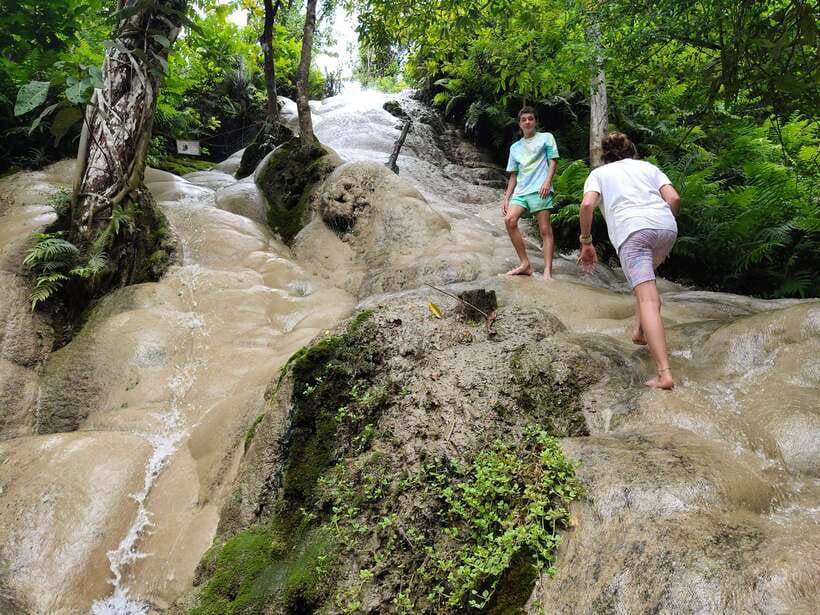
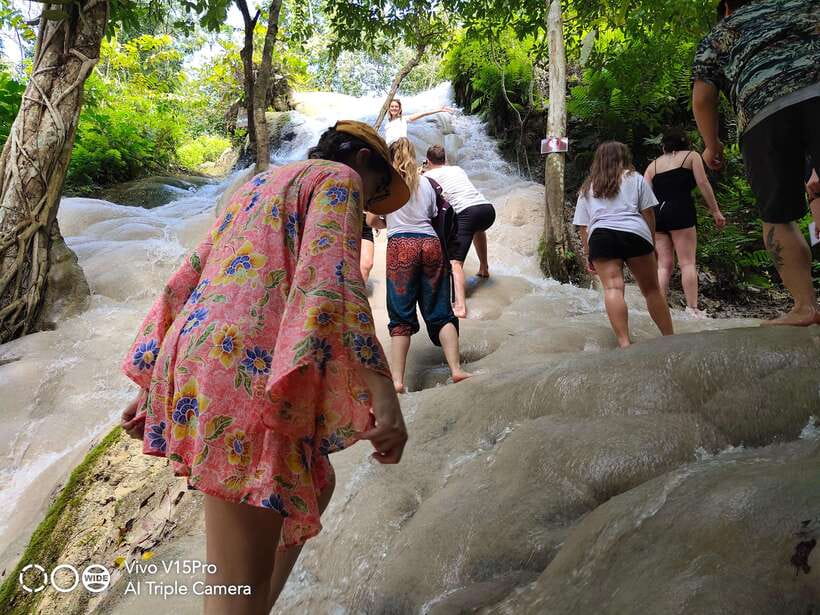
The waterfall is the day’s most unusual physical activity. Bua Thong is famous because mineral deposits on the rock create a rough, grippy surface. Instead of sliding immediately down smooth stone, you can use the natural texture to climb sections of the falls.
You change clothes after arriving, then follow a natural path down toward the water. The activity lasts about 100 minutes, which gives you time to walk around, climb, cool off, and take photos. Guides may climb with you and help you choose a safe route. Tom was specifically praised for taking care around tricky sections, and several people said the climb was more demanding than expected but worth the effort.
Do not confuse sticky with easy. The waterfall still involves wet rock, steps, uneven ground, and physical exertion. You need comfortable shoes, and water shoes are a smart extra. Bare feet may provide grip on some sections, but they can also be uncomfortable on rough surfaces. A towel and complete change of clothes are essential, not optional.
You can take part at your own level. Some people climb the falls, while older family members can sit and watch from comfortable areas, as one family noted. That makes the stop more flexible than a full adventure course, but you should still be able to walk on uneven ground and manage wet conditions.
The main drawback is crowding. Susan found Sticky Falls very busy during the high season and holiday period. Go in expecting a popular attraction, not a private jungle pool. The water is the star, but other groups may be climbing the same route and waiting at popular photo spots.
Wat Ban Den and the Lanna countryside
After the waterfall, the van follows rural roads toward Wat Ban Den. This is one of the strongest reasons to choose this particular day trip. The temple is colorful, peaceful, and set away from the most crowded tourist routes.
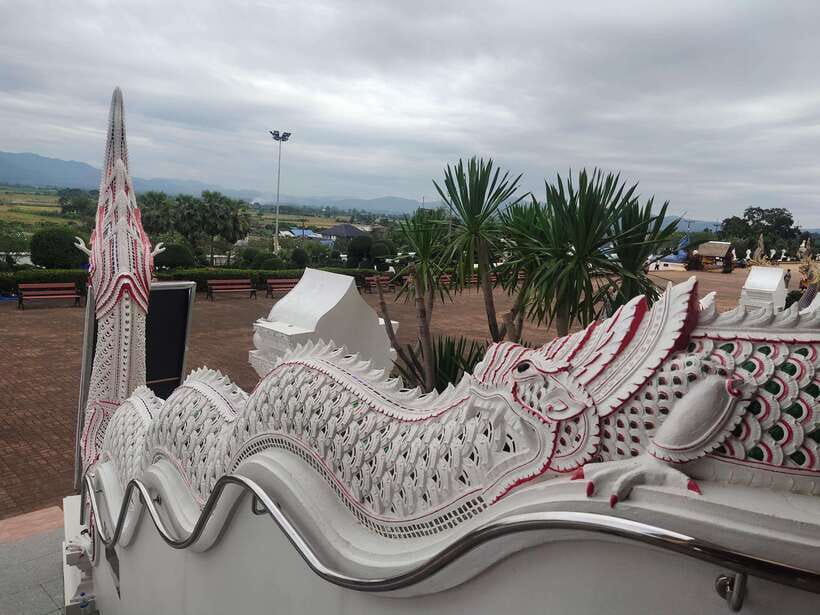
The complex uses white, green, blue, and pink tones, with ornate buildings and traditional Lanna features. The design gives you a different experience from Chiang Rai’s famous White Temple. Here, the colors and decorative details feel more connected to a working place of worship, rather than a single modern art project.
You have about 40 minutes at the temple. That is enough to walk through the grounds, admire the buildings, take photos, and enjoy views over the surrounding countryside. You may also have a quiet moment for prayer or meditation. One visitor specifically appreciated being able to sit and meditate there.
Remember that this is a sacred place. Dress respectfully and follow instructions about removing shoes or entering buildings. A useful tip from one visitor is to bring socks. Temple floors can become very hot under the afternoon sun, and socks make walking across them much easier.
Wat Ban Den suits people who want more than a quick photo stop. The temple is still photogenic, but it also functions as a place where local people come to worship. That gives the visit a calmer tone. The limited time is the only real weakness. The complex deserves a leisurely visit, yet the wider itinerary means you will see highlights rather than every corner.
More Markets and Floating Markets in Chiang Mai
- Chiang Mai: Cooking Class, Market & Thai Herbs Garden Tour
★ 4.9 · 4,824 reviews - Chiang Mai: Authentic Cooking Class with Market & Farm Visit
★ 4.9 · 4,546 reviews - Chiang Mai: Cooking Class with Market and Pickup
★ 4.9 · 1,365 reviews - Chiang Mai: Evening Cooking Class and Local Market Visit
★ 4.9 · 648 reviews
A local lunch after the morning activities
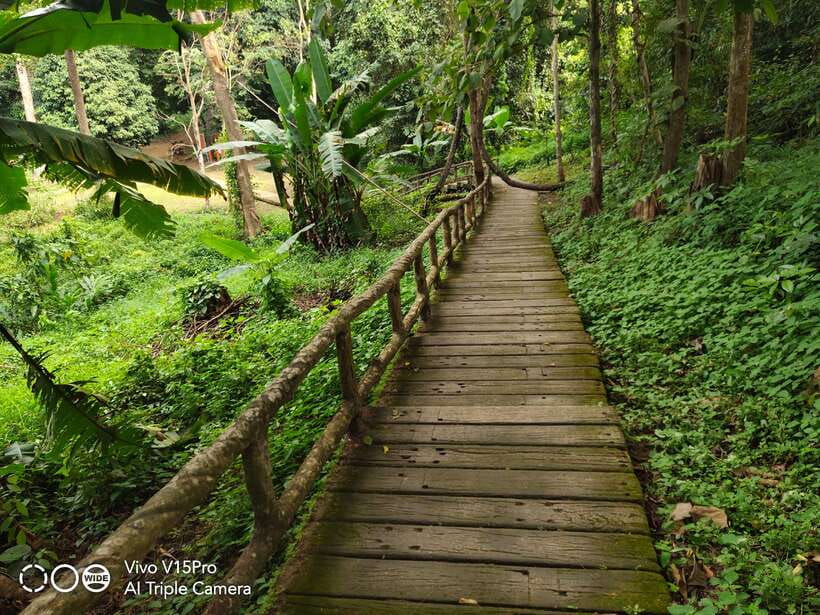
Lunch is served at a local restaurant in the area. The exact menu is not fixed in the information provided, but several people praised the meal, including one family who called it superb and another who enjoyed excellent Pad Thai.
The meal is included in the $70 price, along with drinking water, snacks, and some market treats. That is useful because the day has several active sections and you do not need to spend time searching for a restaurant between stops.
Expect a local meal rather than a polished hotel buffet. That is part of the appeal, especially if you want to eat in the same sort of setting used by local residents. If you have dietary restrictions, ask the tour operator ahead of time, since no special meal information is provided.
Meeting the elephants in the afternoon
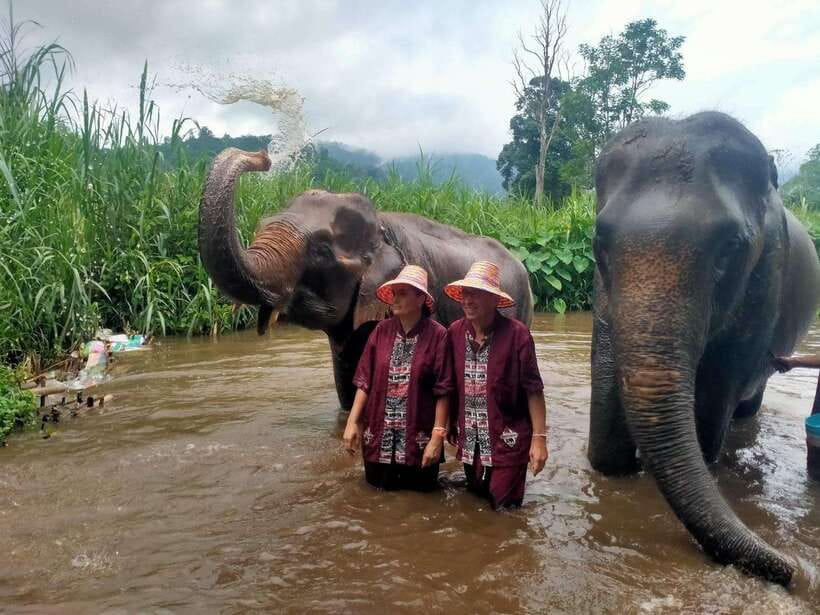
The elephant visit is the emotional center of the day. You change into a caretaker or mahout outfit, then learn several tasks connected with feeding and care.
The activities can include:
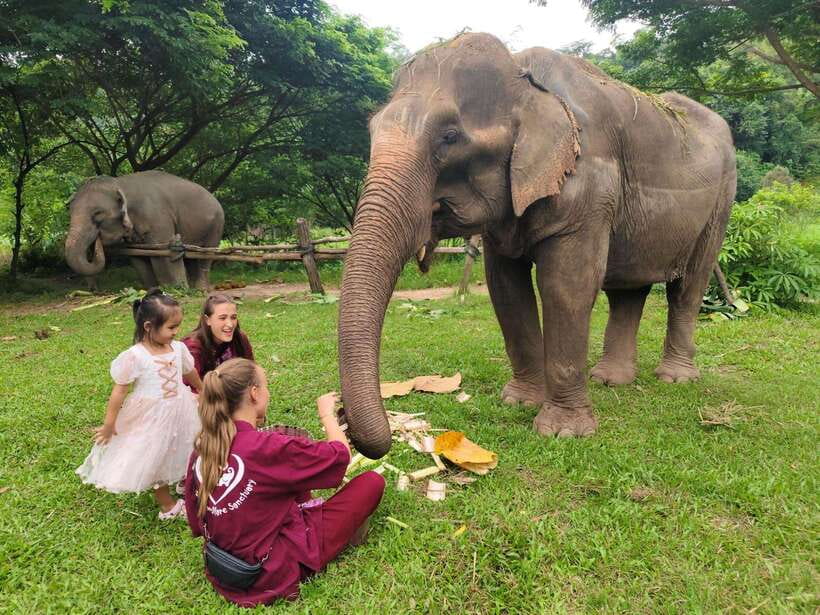
- Preparing herbal vitamin and medicine balls
- Feeding bananas and sugarcane
- Walking beside the elephants
- Watching their behavior
- Taking photos
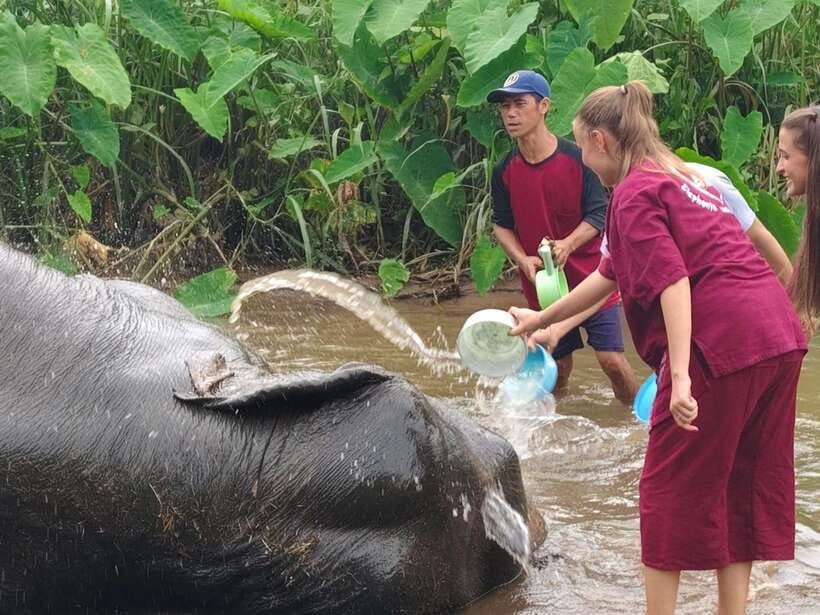
- Bathing them in the river
- Helping with food preparation
The vitamin balls are meant to support digestion, and the activity gives you something useful to do instead of simply standing beside an elephant for a photograph. Several people also described making food, preparing mosquito protection, and making paper from elephant waste, though those activities may vary by day.
The setting is described as a small rural sanctuary, sometimes with only a handful of people present. One couple had the elephant area almost to themselves, while another group crossed a river on a small bamboo raft. These details suggest that the experience can feel personal and informal rather than like a large animal show.
The elephants are the highlight for many people, and it is easy to understand why. Feeding and bathing such a large animal creates a memorable sense of scale. You also learn about their digestion and daily care, which is more meaningful than a quick ride or a performance.
The important elephant welfare question
I would not describe any elephant activity as automatically ethical simply because it is called a sanctuary. Here, the program emphasizes feeding, walking, bathing, and making food. Some people felt the animals were cared for in a natural setting, with no large groups and plenty of space. One visitor, however, felt the elephants appeared trained to perform certain behaviors for photos and questioned the level of direct contact.
That mixed picture matters. You should ask the operator how the elephants are managed, how much choice the animals have during bathing and touching, and whether any tricks or commands are used for photographs. If you are uncomfortable with close contact, you can ask whether observation without bathing or posing is possible.
The tour provides food for the elephants, caretaker uniforms, and vitamin balls. It does not include a detailed welfare policy in the information supplied. I would treat the encounter as a close-contact elephant experience, not as a strictly observation-only sanctuary visit.
Why the guide can make or break the day
The guide is more than a person who keeps the schedule. On a tour with four major stops, you need someone who can explain the culture, manage wet and uneven conditions, keep the group together, and help with translation.
Blue received especially warm praise for being attentive, clear, and generous with photos. Non was often described as upbeat and full of information, including stories from six years as a Buddhist monk. Tu was praised for patience, flexibility, and personal care, while Tom earned high marks for his history lessons and help at the waterfall.
Photography is an unexpected part of the service. Several guides take photos and videos throughout the day and share them afterward. Confirm that the photos will be sent before you pose repeatedly, since one person felt disappointed after many staged shots were taken but not delivered.
The guide quality also helps explain the strong 4.9 rating from 227 reviews and the 97 percent perfect transport score. Ratings are not a guarantee of your exact guide, but the repeated praise points to a consistent strength in the operation.
Is the $70 price good value?
At $70 per person, this is a strong value if you want a packed day and would otherwise pay separately for transport, admissions, lunch, snacks, and an elephant visit.
The price includes round-trip transport, an English-speaking TAT-licensed guide, all admission fees, lunch, drinking water, elephant food, vitamin balls, mahout clothing, snacks, and local accident insurance. You also avoid arranging several distant stops yourself, which can be difficult and costly from Chiang Mai.
The value drops if you dislike long drives or prefer spending a whole day at one site. You are paying for variety, not depth. The market is brief, the temple visit is brief, and the waterfall and elephant stop take most of the active time.
Soft drinks, alcohol, and personal expenses are extra. Bring cash for anything additional.
Who should book this Chiang Mai day trip?
I would recommend it to you if you want to see several sides of Chiang Mai in one day: rural food culture, nature, temple art, and elephant care. It suits first-time visitors, families with older children, couples, and anyone staying in Chiang Mai for a short time.
The small group is a major advantage. With a maximum of nine people, you get a better chance to ask questions and avoid the cramped feeling of a large coach tour. Families also benefit from the guide’s ability to adjust the pace, although children need to meet the age rules.
The tour is not suitable for children under two, pregnant women, wheelchair users, or people over 75. The supplied information also lists babies under one and people over 95, even though those categories overlap with the earlier age restrictions. If mobility is a concern, contact the operator before booking because the waterfall and river activities require walking on uneven, wet ground.
Pack light but carefully:
- Comfortable shoes or water shoes
- A towel and a full change of clothes
- Sun hat and sunscreen
- Insect repellent
- Comfortable clothing
- Camera
- Cash
Smoking indoors and food in the vehicle are not allowed. The van ride can last a substantial part of the day, so wear clothes that stay comfortable for long stretches.
Should you book it?
Book this tour if you want maximum variety, a small group, and a guide-led day that reaches beyond Chiang Mai’s city center. The waterfall is genuinely different, Wat Ban Den offers color and calm, and the elephant program provides much more than a brief feeding stop.
Think twice if you want a slow itinerary, dislike getting wet, or only support elephant programs that avoid touching, bathing, and posed photographs. In that case, ask detailed welfare questions first or choose an observation-focused alternative.
For most active visitors with limited time, the $70 price is fair because so much is bundled into one day. Pack dry clothes, wear proper footwear, and confirm how photos and elephant interactions are handled. With those points clear, this is one of the more useful ways to combine Chiang Mai’s countryside, culture, and outdoor fun.
FAQ
What time does the Chiang Mai tour begin?
Pickup is scheduled for around 10:45 a.m. from your hotel lobby or a selected meeting point in Chiang Mai.
How long does the experience last?
The tour lasts approximately 450 to 510 minutes, or about seven and a half to eight and a half hours.
Is hotel pickup included?
Yes. Round-trip transfer from hotels, Airbnbs, and guesthouses is included, but you need to provide your accommodation details after booking.
What is included in the $70 price?
The price includes transport, an English-speaking TAT-licensed guide, admission fees, lunch, snacks, drinking water, elephant food, vitamin balls, mahout clothing, and local accident insurance.
What should I bring to Sticky Waterfalls?
Bring comfortable shoes, a towel, a change of clothes, sunscreen, a sun hat, insect repellent, and a camera. Water shoes are also a useful choice.
Who cannot take this tour?
The activity is not suitable for children under two, pregnant women, wheelchair users, people over 75, babies under one, or people over 95.
More Temple Tours in Chiang Mai
- Chiang Mai: Chiang Rai Temples, Karen Tribe and Hot Springs
★ 4.7 · 5,401 reviews - Chiang Rai White Temple and Blue Temple Day Tour
★ 4.6 · 3,366 reviews - Chiang Mai: White, Red/Black & Blue Temples Tour with Lunch
★ 4.2 · 2,017 reviews - Chiang Mai: Doi Suthep and Wat Umong Enchanting Evening Tour
★ 4.6 · 1,811 reviews
Just added in Chiang Mai
- Full Day Doi Saket Hiking Tour★ 5.0 · 14 reviews
- Pha Dok Siew Nature Trail & Doi Inthanon National Park From Chiang Mai★ 4.0 · 23 reviews
- One day Elephants in Nature Experience & Grand Canyon Jumping★ 5.0 · 31 reviews
- Chiang Mai to White & Blue Temple, Black Museum & Golden Triangle★ 4.0 · 52 reviews
- One day Doi Inthanon National Park & Trekking on Kew Mae Pan★ 5.0 · 12 reviews
- Private Tour 2 Difference Trails Trekking at Doi Inthanon National Park★ 5.0 · 19 reviews
- Half day Long Neck hill tribe and Hmong hill tribe village★ 5.0 · 21 reviews
- One Day Tour Chiang Rai(White Temple , Blue Temple, Black House) Private Tour★ 5.0 · 63 reviews
Elephant Sanctuary Tours, compared.

Elephant Sanctuary, Waterfall & Bamboo Rafting
Read our review →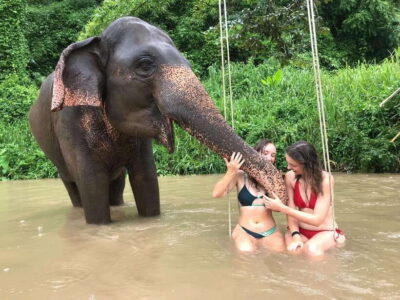

Elephant Sanctuary Feeding Program Half-Day Tour
Read our review →
Elephant Jungle Sanctuary Ethical Feeding Experience
Read our review →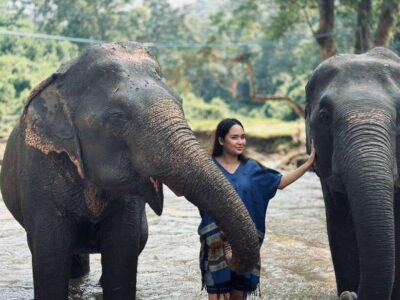
Elephant Sanctuary, Long Neck & Sticky Waterfall
Read our review →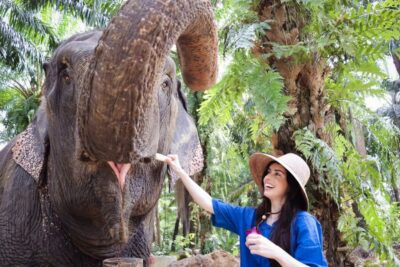
Elephant Bathing Session at Krabi Elephant Shelter
Read our review →
Elephant Sanctuary Guided Tour with Hotel Transfers
Read our review →