
Reviewed · TEMPLE TOURS
Chiang Mai: Doi Suthep, Wat Umong, and Pha Lat Sunrise Tour
Wake before dawn for Chiang Mai at its quietest. This four-hour outing links the city’s most famous hilltop shrine, a forest temple reached by foot, and an old tunnel temple in one well-planned morning. I especially like the chance to reach Doi Suthep before the crowds and the thoughtful mix of major sights with quieter places such as Wat Pha Lat and Wat Umong.
The guides also add real value. James, a former monk, has explained Buddhist teachings and monastic life in a way that made the temples easier to understand, while guides such as Matt, Nuttaya, Cookie, Leela, and Chatsuda have earned praise for warmth, clear English, and good timing. The main drawback is simple: the alarm comes very early, and the advertised four hours can stretch to five or five and a half hours depending on pickup and the day’s schedule.
In This Review
- Five things to know before you book
- Why the early start is worth it
- Climbing the 309 steps to Doi Suthep
- The Kruba Srivichai Monument and a useful piece of context
- Walking through the forest to Wat Pha Lat
- Wat Umong, tunnels, and a different kind of temple
- Guides make the difference
- Transport, timing, and group size
- Is $32 a fair price?
- What to wear and pack
- Who will enjoy this morning most?
- Should you book it?
- FAQ
- How long does the Chiang Mai temple tour last?
- What temples does the tour visit?
- How many steps are there at Doi Suthep?
- Is hotel pickup included?
- Where is the meeting point?
- What languages are available?
- Is a small group option available?
- What should I wear to the temples?
- Are food and drinks included?
Five things to know before you book
- Sunrise at Doi Suthep: Reach the golden pagoda while the mountain air is cool and the temple is relatively quiet.
- 309-step climb: The staircase is manageable for many people, but it is still a real climb before sunrise.
- Three very different temples: Doi Suthep is grand and ornate, Wat Pha Lat is peaceful and forested, and Wat Umong is atmospheric and old.
- Former monk guides may lead the tour: James, also known as James Bond, has used his experience living with monks to explain Buddhist practice.
- Good practical value at $32: Transport, hotel pickup in selected areas, guide, entry fees, water, and carbon offset credits are included.
- Dress carefully: Shorts, short skirts, sleeveless shirts, and clothing that exposes shoulders, backs, underarms, or knees are not suitable at some stops.
Why the early start is worth it
The tour begins in the dark, usually with pickup around 5:00 a.m. for hotel guests. If you meet at Tha Pae Gate, you should arrive 10 minutes early in front of McDonald’s and look for the guide holding a TripGuru sign.
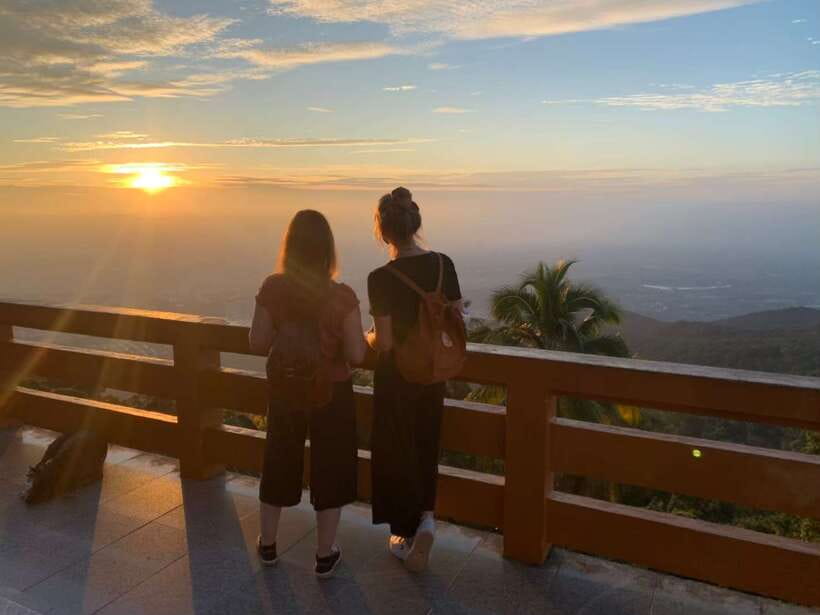
That early departure is not just a scheduling trick. Doi Suthep is one of Chiang Mai’s main sights, and arriving before the day gets busy changes the mood completely. You can climb the staircase without the usual daytime crush, hear the temple wake up, and take in the city view as the sky brightens.
You should still keep expectations sensible. Sunrise depends on clouds, haze, and rain. One morning was wet enough to hide the sunrise entirely, but the early visit still allowed time to see the temple in darkness and then watch it change in daylight.
The mountain can also feel chilly before sunrise. Bring a light jacket or sweatshirt, especially if you are visiting during the cooler season. Jade, who joined a January outing, specifically wished she had brought a thicker layer.
More Temple Tours in Chiang Mai
- Chiang Mai: Chiang Rai Temples, Karen Tribe and Hot Springs
★ 4.7 · 5,401 reviews - Chiang Rai White Temple and Blue Temple Day Tour
★ 4.6 · 3,366 reviews - Chiang Mai: White, Red/Black & Blue Temples Tour with Lunch
★ 4.2 · 2,017 reviews
Climbing the 309 steps to Doi Suthep
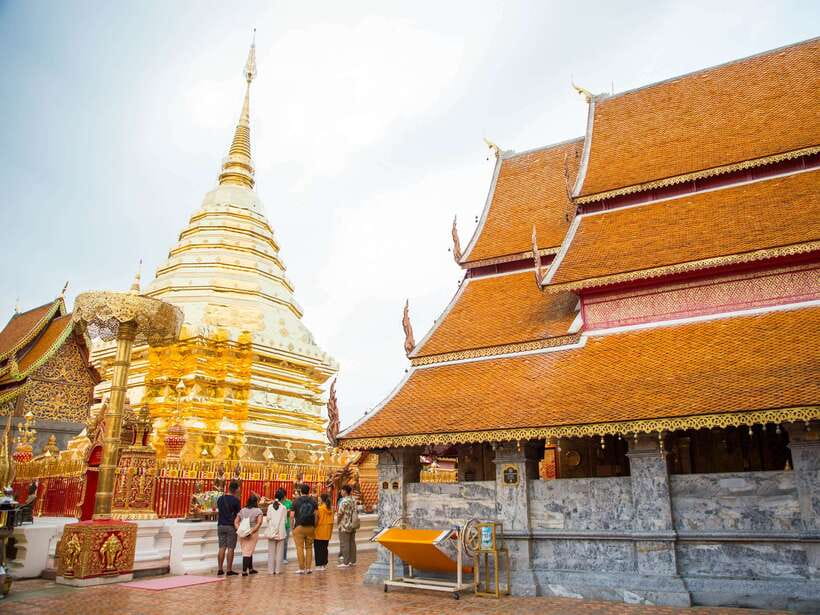
Your first major stop is Wat Phra That Doi Suthep, Chiang Mai’s famous mountaintop temple. The approach is via a staircase of 309 steps, marked by decorative naga serpents. You do not need to race upward. A steady pace and comfortable shoes will serve you better than enthusiasm during the first five minutes of the day.
At the top, the golden chedi catches the first light. The temple complex includes shrines, religious images, and open viewpoints over Chiang Mai. Your guide can explain the temple’s connection to the city and the religious meaning behind what you are seeing, rather than leaving you to treat the site as a quick photo stop.
The view is one of the strongest parts of the experience. From above, Chiang Mai spreads below the mountain, and the sunrise gives you a natural pause before the rest of the morning begins. The city may be partly veiled by haze, but that softens rather than ruins the scene.
The quiet is equally important. Several people found the temple nearly empty at that hour, which made it easier to observe respectfully. You may see monks beginning their morning routines, hear chanting, or watch visitors make offerings. These are working religious practices, not staged performances, so your guide’s advice on when to watch, where to stand, and how to behave matters.
Temple offerings are optional and not included. Some guides have helped the group stop at a 7-Eleven to buy suitable items before offering them to monks. That can be a meaningful addition, but you should only take part if you feel comfortable doing so. Ask your guide what is appropriate, and avoid treating the ritual as a photo opportunity.
The Kruba Srivichai Monument and a useful piece of context
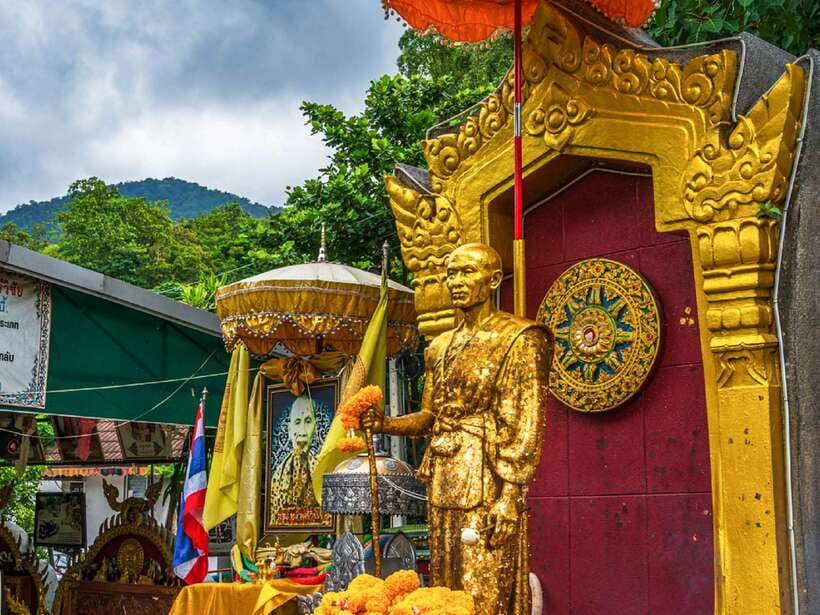
After Doi Suthep, the vehicle stops at the Kruba Srivichai Monument. Kruba Srivichai was an important monk associated with the road and pilgrimage route up to Doi Suthep, and the monument gives your guide a natural place to discuss his life and his role in local religious culture.
This is a shorter stop, about 30 minutes, but it helps connect the hilltop temple to the people who shaped access to it. You will stand near the monument, hear about the monk, and learn more about the relationship between religious figures, local communities, and Doi Suthep.
Do not expect a large museum or a long independent visit here. The value is in the explanation. A strong guide turns what might otherwise be a brief roadside pause into a useful piece of Chiang Mai’s story.
Walking through the forest to Wat Pha Lat
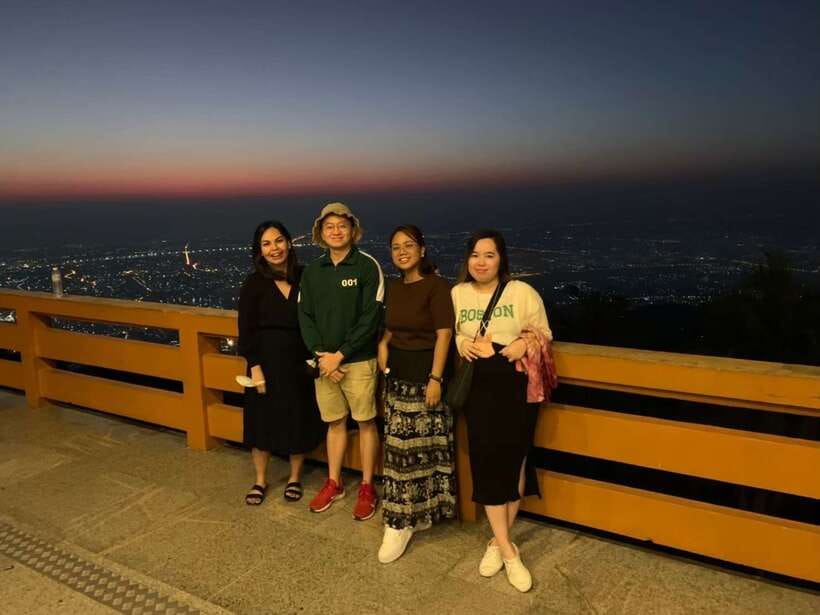
Wat Pha Lat is the tour’s most peaceful stop. Reached by a jungle path, it feels far removed from the traffic and city streets below. The walk adds a small physical challenge, but it is not the same kind of effort as climbing the Doi Suthep staircase.
The temple is surrounded by trees, stonework, shrines, and statues. Instead of the polished grandeur of Doi Suthep, you get a quieter setting where nature and old religious structures share the same space. The forest setting also makes this a good place to slow down and listen.
I would give Wat Pha Lat plenty of attention. It is easy to spend the first part of the morning waiting for the famous sunrise and then rush through this stop, but the contrast is the point. Doi Suthep shows Chiang Mai’s best-known ceremonial face. Wat Pha Lat offers a more subdued setting for reflection.
The route may not suit everyone. You should wear shoes with a secure grip and be ready for uneven ground. Wat Pha Lat can also occasionally be closed. On one private visit, the guide gave advance notice that the temple was unavailable, and the group continued with Doi Suthep and Wat Umong instead.
A completely different kind of day out:
- Half-Day Thai Cooking Class at Organic Farm in Chiang Mai
★ 5.0 · 19,087 reviews - Chiang Mai: Elephant Sanctuary, Waterfall & Bamboo Rafting
★ 4.9 · 9,160 reviews - Chiang Mai: Doi Inthanon National Park Eco-Friendly Tour
★ 4.6 · 6,667 reviews - Chiang Mai: Elephant Sanctuary & Waterfall Group Tour
★ 4.9 · 5,780 reviews
Wat Umong, tunnels, and a different kind of temple
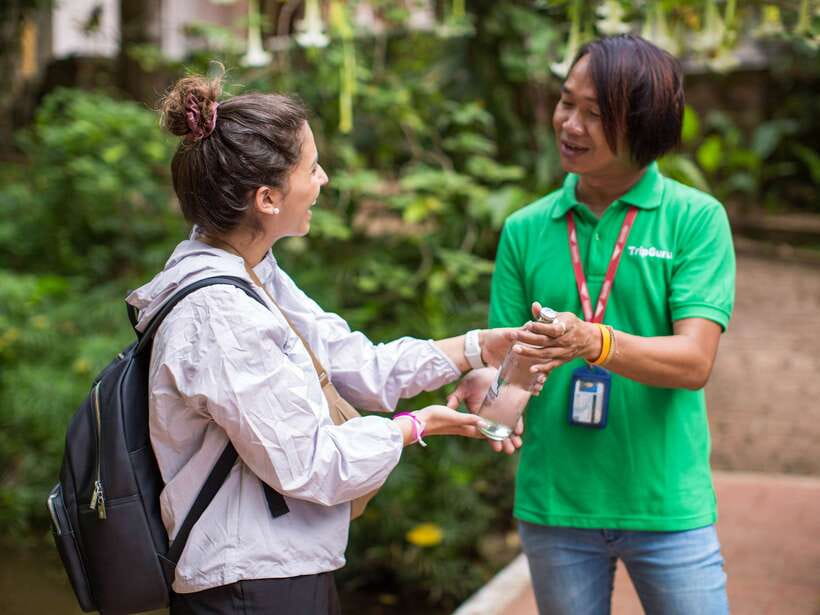
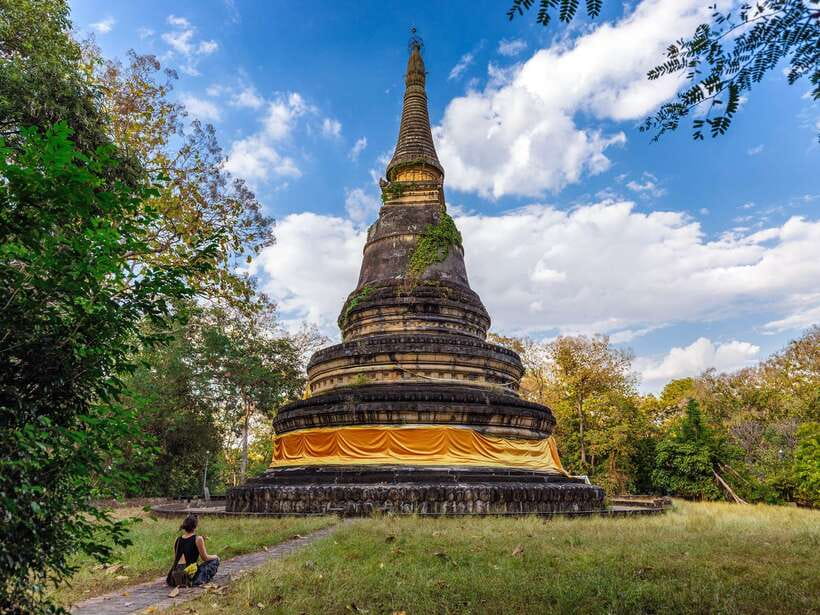
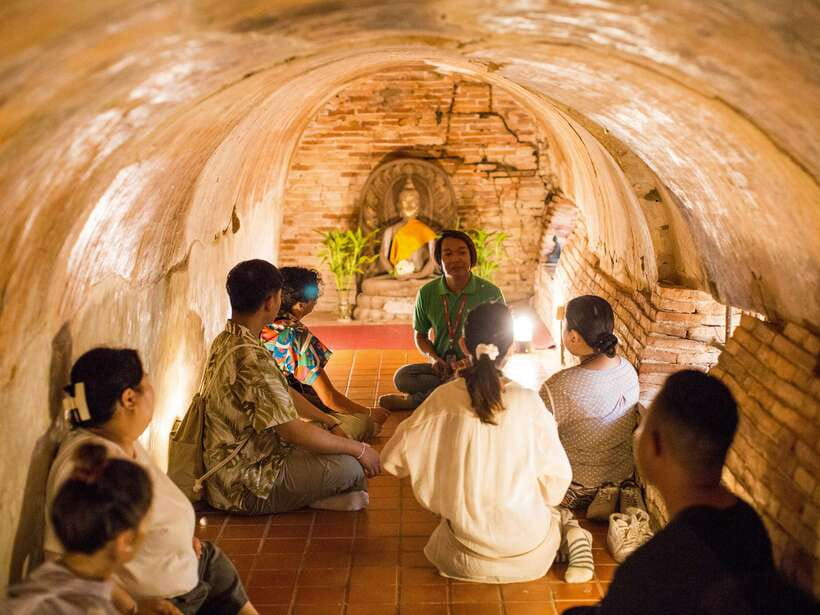
The final temple is Wat Umong, a 700-year-old site founded in 1297. It is very different from Doi Suthep. Here, the forest setting and underground tunnels create a quieter, more unusual visit.
You can explore the tunnels, see the chedi, and walk around the surrounding grounds. The site is less about a single grand view and more about atmosphere, age, and the way the buildings fit into the trees.
Wat Umong was a favorite stop for several people on the tour, particularly because it does not feel like a copy of the ornate temples in central Chiang Mai. If you have already spent time visiting Chiang Mai’s old-city temples, this stop adds variety.
The downside is fatigue. By the time you reach Wat Umong, you have already been awake for hours, climbed 309 steps, and visited two other religious sites. A parent traveling with a 10-year-old found that the child was too tired for the final temple. The driver allowed the child to rest in the air-conditioned vehicle with the door open while keeping watch, but this is still a demanding morning for young children.
Guides make the difference
The temples are worth seeing on their own, but the guide determines how much you take away. The strongest guides do more than name buildings. They explain Buddhist ideas, temple etiquette, the life of a monk, and the details behind offerings and chanting.
James received especially strong praise for his former monastic experience. He spent five years living with monks, and that background gave his explanations of Buddhist philosophy and daily practice unusual depth. He was also described as patient, funny, and easy to understand.
Matt was valued for his energy and thoughtful pacing. Nuttaya was praised for her clear explanations and friendly manner. Cookie was noted for communicating well before the tour and for her passion for Thai culture. Leela and Chatsuda were also singled out for making the history and customs easy to follow.
You cannot choose a particular guide in advance based on the information provided, so book this tour for the structure and subject matter rather than for one individual. Still, the repeated praise for the guiding team is a strong sign that the human side of the experience is one of its main strengths.
One small caution: if your guide explains Buddhism in detail at all three temples, some ideas may begin to repeat. That is not a serious flaw, especially if you are new to the subject, but visitors already familiar with Buddhist traditions may prefer more quiet time to explore independently.
Transport, timing, and group size
The tour uses an air-conditioned vehicle, with hotel pickup and drop-off available from major downtown areas within five kilometers of Tha Pae Gate and the Old City Wall. Eligible zones include Chang Klan Road, Thapae Road, Wualai Road, the night bazaar area, Ton Lam Yai Market, and Warorot Market.
Pickup is only provided from hotels or registered accommodations. You cannot arrange roadside or shopping mall pickup. If you choose the meeting point option, go to Tha Pae Gate, in front of McDonald’s, and wait for the guide with the TripGuru sign.
The evening before the tour, the operator sends your pickup time and meeting point. Check your email and be ready 10 minutes early. This matters at dawn, when a missed pickup can quickly ruin the schedule.
Small groups are available, and the smaller outings received particularly warm praise. A group of only three people allowed more conversation, easier photography, and a calmer pace. The transport also earned a 90 percent perfect score, and the vehicle was repeatedly described as comfortable, air-conditioned, and driven smoothly.
The stated duration is four hours, but you should leave extra time in your morning. One group returned after five hours, and another reported a five-and-a-half-hour outing. Hotel pickups, traffic, the number of people in the van, and time spent at the temples can all affect the end time.
Is $32 a fair price?
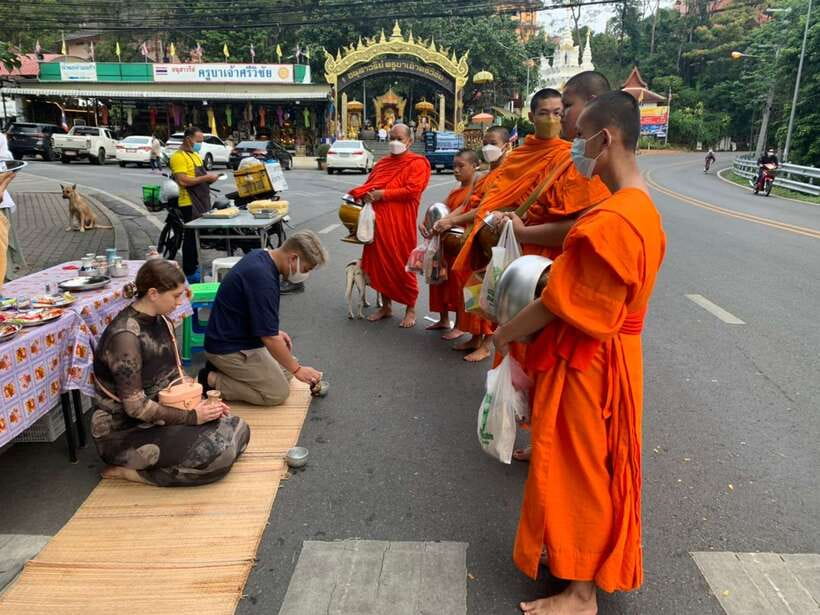
At $32 per person, the tour is good value if you want to visit all three temples without arranging separate transport. The price includes an air-conditioned vehicle, hotel pickup and drop-off where available, a guide, temple entry fees, a glass bottle of water, and carbon offset credits.
You are paying for more than a ride up the mountain. The tour handles the early transport, the route between scattered sites, entrance costs, and cultural explanation. A private car could offer more flexibility, but it would not necessarily provide the same level of Buddhist context.
The cost does not include breakfast, other drinks, or optional offerings. Bring cash, particularly if you want to purchase food or flowers for a temple ritual. Since the tour can finish in time for breakfast, you may prefer to eat afterward rather than carry a full meal at dawn.
The sustainability measures are modest but practical. Water is provided in a glass bottle, and carbon emissions are offset through credits. This does not erase the impact of driving up the mountain, but it gives you a lower-impact option than buying disposable bottles and arranging several separate rides.
What to wear and pack
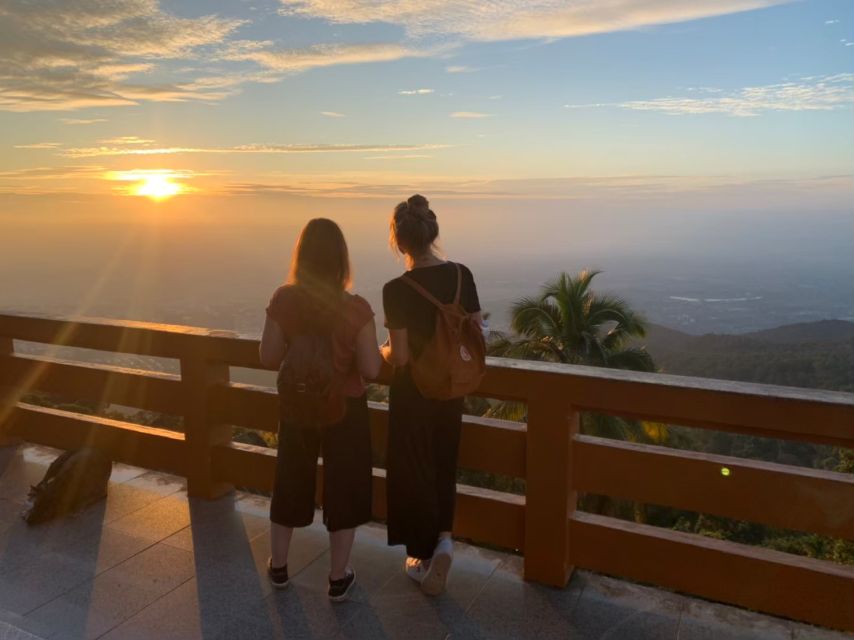
Temple dress rules are strict enough that you should plan ahead. Clothing that exposes the shoulders, underarms, back, or knees may not be accepted inside some locations.
Wear long, loose trousers or a long skirt and a shirt that covers your shoulders. Comfortable shoes are essential for the staircase and the forest path. Sunglasses, a hat, sunscreen, insect repellent, and a camera are useful once daylight arrives.
A light jacket is one of the smartest additions. Chiang Mai can feel cool at the start, particularly on the mountain, even when the later morning becomes warm.
Who will enjoy this morning most?
I would recommend this tour to first-time visitors who want a broad introduction to Chiang Mai’s religious culture. It suits you especially well if you want a guide to explain Buddhism, rather than simply driving you from one photogenic temple to the next.
It is also a strong choice for photographers, early risers, couples, and small groups looking for quiet temple time. The sunrise, chanting, city view, forest path, and tunnel complex give you plenty of visual variety.
You may want another plan if you dislike early mornings, have trouble with stairs or uneven paths, or want to linger at each site for hours. Families can enjoy it, but younger children may lose energy before Wat Umong. If sunrise is your only goal, the full three-temple route may feel long.
Free cancellation is available up to 24 hours before departure, and you can reserve now and pay later. That flexibility helps if your Chiang Mai schedule is still shifting.
Should you book it?
Book this tour if you can handle a pre-dawn start and want three distinct temple settings in one morning. The best parts are the quiet arrival at Doi Suthep, the forest walk to Wat Pha Lat, and the clear cultural explanations from guides such as James and Matt.
Skip it if you need a slow start, dislike group transport, or want guaranteed sunshine. For $32, though, the combination of transport, admissions, guiding, and a carefully ordered route makes this a strong Chiang Mai morning, with enough time left afterward for breakfast and the rest of your day.
FAQ
How long does the Chiang Mai temple tour last?
The stated duration is four hours. Some outings can take five to five and a half hours, so allow extra time after the scheduled return.
What temples does the tour visit?
The route includes Wat Phra That Doi Suthep, Wat Pha Lat, and Wat Umong. It also stops at the Kruba Srivichai Monument.
How many steps are there at Doi Suthep?
The staircase to Doi Suthep has 309 steps.
Is hotel pickup included?
Hotel pickup and drop-off are included for major downtown areas within five kilometers of Tha Pae Gate and the Old City Wall, including several central roads and market areas.
Where is the meeting point?
The meeting point is Tha Pae Gate, in front of McDonald’s. Your guide will hold a TripGuru sign.
What languages are available?
Live guiding is available in English and Spanish.
Is a small group option available?
Yes, a small-group option is available.
What should I wear to the temples?
Do not wear shorts, short skirts, or sleeveless shirts. Clothing exposing the shoulders, underarms, back, or knees may not be allowed at some locations.
Are food and drinks included?
A glass bottle of drinking water is included. Meals and other drinks are not included, and temple offerings are optional and paid separately.
Just added in Chiang Mai
- Full Day Doi Saket Hiking Tour★ 5.0 · 14 reviews
- Pha Dok Siew Nature Trail & Doi Inthanon National Park From Chiang Mai★ 4.0 · 23 reviews
- One day Elephants in Nature Experience & Grand Canyon Jumping★ 5.0 · 31 reviews
- Chiang Mai to White & Blue Temple, Black Museum & Golden Triangle★ 4.0 · 52 reviews
- One day Doi Inthanon National Park & Trekking on Kew Mae Pan★ 5.0 · 12 reviews
- Private Tour 2 Difference Trails Trekking at Doi Inthanon National Park★ 5.0 · 19 reviews
- One Day Hiking and Elephant experience by Chiang Mai Elephant Home★ 5.0 · 75 reviews
- Half day Long Neck hill tribe and Hmong hill tribe village★ 5.0 · 21 reviews
Temple Tours, compared.
Chiang Rai Temples, Karen Tribe and Hot Springs
Read our review →
City Highlights Temple and Market Walking Tour
Read our review →
Bangkok by Night: Temples, Markets and Food Tuk-Tuk Tour
Read our review →
Grand Palace, Wat Pho, and Wat Arun Guided Tour
Read our review →
Tiger Cave Temple, Emerald Pool and Hot Springs Tour
Read our review →
Chiang Rai White Temple and Blue Temple Day Tour
Read our review →Browse the lists this tour appears in