
Reviewed · HIKING AND TREKKING
Chiang Mai Authentic Trekking
Expect a proper workout in the hills. Chiang Mai Authentic Trekking takes you south of the city for a 12-kilometer mountain hike through Karen farmland, forest, rice terraces, and local villages rather than an easy walk made for casual sightseeing. I like the way the day supports local markets and mountain communities, and I like the chance to learn about edible plants, farming, and Karen life from a local guide. The main caution is simple: this is not a gentle stroll. Steep and slippery sections make it a poor fit if you dislike hard climbs or uneven ground.
I also like the small group, limited to eight people, and the time spent away from busy tourist routes. Guides such as Pan have been praised for strong English and a sharp eye for useful jungle plants, while the secluded waterfall gives your legs a welcome break. At $57 per person, the package offers strong value, but only if you are ready for four to five hours of serious walking and a long day out, roughly 7:45 AM to 5:00 or 6:00 PM.
In This Review
- Key points to know before booking
- Why this Chiang Mai trek feels different
- The morning drive and local market stop
- Viewpoints before Khun Poi Village
- Khun Poi Village and the Karen community
- Four to five hours on mountain trails
- Reaching Phalai Mountain Peak
- Forest lunch and farm paths
- The waterfall finale
- Is $57 good value?
- Best season and useful packing advice
- Should you book Chiang Mai Authentic Trekking?
- FAQ
- How long is the Chiang Mai Authentic Trekking experience?
- How far do you walk?
- Is lunch included?
- What language does the guide speak?
- Can you swim during the trek?
- How many people are in the group?
Key points to know before booking
- Two hours of uphill walking: The climb toward Phalai Mountain can be continuous and demanding.
- A genuine local route: Much of the trail is used by villagers, with few tourist groups on the path.
- Karen culture in daily life: You see farms, village work, a local school, and crops rather than a staged cultural show.
- Lunch starts at the market: You stop at a traditional Thai market to buy food and water before heading uphill.
- A waterfall finishes the hike: Swimming and cooling off make a useful ending after the mountain trail.
- Small-group, all-day value: Hotel transport, guide, assistant, lunch, water, and accident insurance are included.
Why this Chiang Mai trek feels different
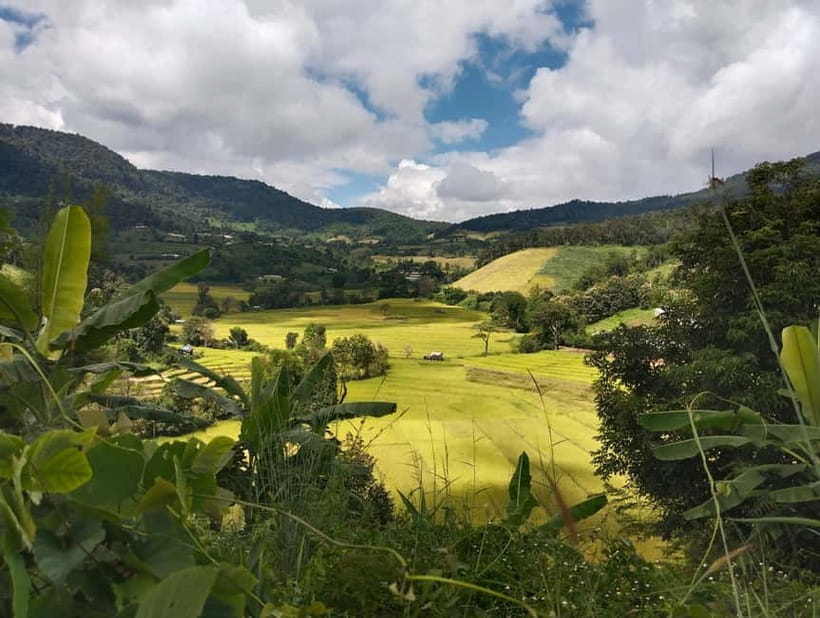
Many day trips from Chiang Mai package mountain scenery with a quick photo stop and a short village visit. This outing asks more from you, but gives you more time to see how people actually use the land. You walk through rice fields, forest, and working farms, with the guide explaining plants used for food, medicine, and everyday tasks.
The route reaches Khun Poi, a Karen hill tribe community in the Mae Wang area. The village sits among farmland and mountains, and the visit is tied to the start of the walk rather than treated as a stand-alone photo opportunity. You pass the village school and see children going about their day, then head onto trails connected to local farms and forest.
That difference matters. You are not simply looking at a mountain community from a van window. You are walking through places where people grow coffee, passion fruit, cape gooseberries, tomatoes, zucchini, taro, and other crops. The stated aim is responsible tourism, and the format supports that aim by using a local market, local assistants, and village-based knowledge.
The route is not untouched wilderness. It is a working mountain area shaped by farming and daily life. That makes the experience more grounded, though it also means conditions can vary. Mud, slippery slopes, and rough footing are part of the day.
More Hiking and Trekking in Chiang Mai
- 3-in-1: Doi Inthanon Tour, Elephant Sanctuary, and Trekking Trail
★ 5.0 · 1,087 reviews - Chiang Mai: Doi Inthanon Trip with Pha Dok Siew Guided Trek
★ 4.6 · 910 reviews - Chiang Mai: Doi Inthanon Park with Kew Mae Pan Hike Day Trip
★ 4.7 · 841 reviews
The morning drive and local market stop
Pickup takes place in Chiang Mai between 7:45 and 8:00 AM. You should wait in your hotel lobby 10 minutes early, since the van then spends about an hour heading south toward the Mae Wang area. Hotel pickup and drop-off around the city are included, along with transport and accident insurance.
The drive gives you time to leave the city behind. You pass into more rural surroundings before stopping at a traditional Thai market. This is one of the most useful parts of the schedule because you do not receive a generic packed lunch prepared far away. Instead, you help buy the meal and drinking water before the hike.
Your guide introduces local ingredients, snacks, and the way villagers shop. One account of the day describes buying Thai breakfast at the market, so you may want to bring some cash for your own extra snack or soft drink. Souvenirs, snacks, soft drinks, and other personal purchases are not included.
Lunch is later eaten in the forest, and the market stop gives it a local connection. You are eating food selected in the same region you are walking through, not just ticking off a meal included in the price.
Viewpoints before Khun Poi Village
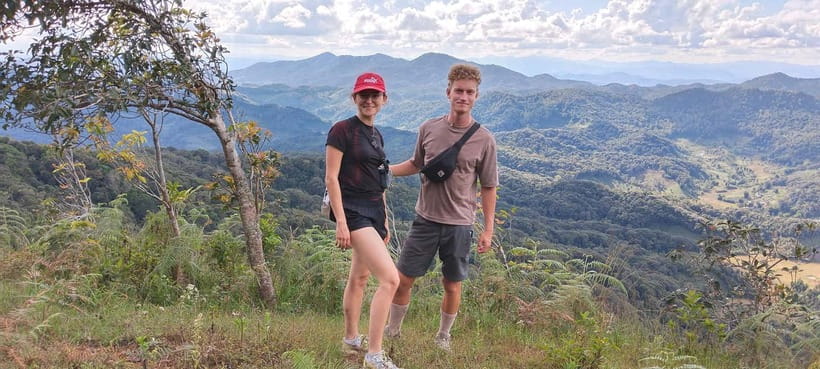
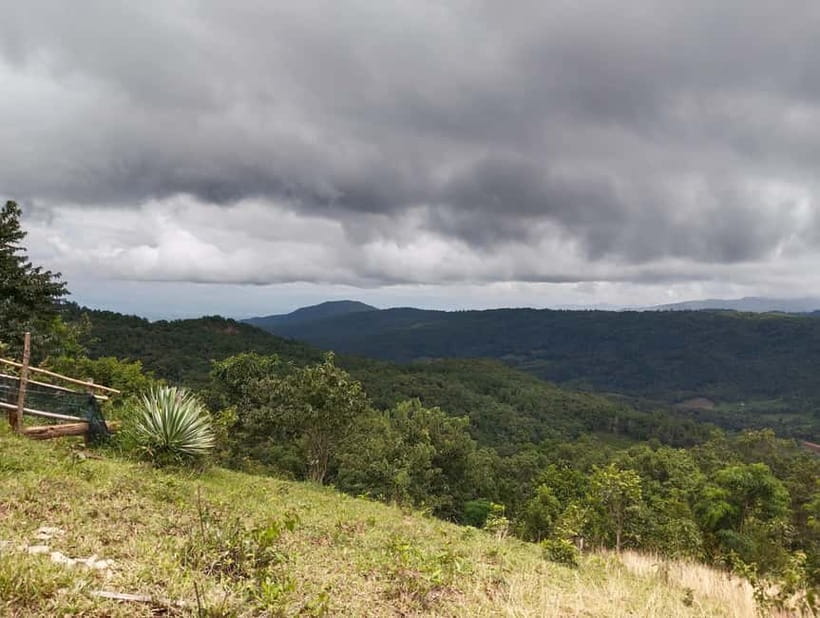
The route includes two short viewpoint stops, listed at about 20 minutes each. These breaks let you stretch your legs and take in the valley before the longer hike begins. The views include surrounding mountains and farmland, with rice terraces particularly attractive when the fields are green.
Do not mistake these stops for the main event. They are brief, and the day soon shifts from roadside scenery to walking. If you want photographs, have your camera or phone ready, but keep your daypack light. You still have a substantial climb ahead.
The drive continues toward Khun Poi Village, a Karen community surrounded by mountain farms. The visit gives context for the trail. You learn about agricultural routines and the way the community uses nearby land before setting off from the village school.
Khun Poi Village and the Karen community
The village stop is short, listed at around 30 minutes, but its value comes from its place in the larger day. You see the community before walking through its fields, so the crops and trails make more sense. The school visit adds a warm human detail, with children enjoying their day as you begin the trek.
The experience does not promise a formal performance or a museum-style presentation. Instead, you get a glimpse of a Karen community and its agricultural setting. That is a better fit for you if you want daily life and local work rather than a polished cultural display.
Keep your manners practical and respectful. This is a school and a living village, not a backdrop. Follow the guide’s direction about photographs and avoid treating people’s homes or routines as scenery.
A completely different kind of day out:
- Half-Day Thai Cooking Class at Organic Farm in Chiang Mai
★ 5.0 · 19,087 reviews - Chiang Mai: Elephant Sanctuary, Waterfall & Bamboo Rafting
★ 4.9 · 9,160 reviews - Chiang Mai: Doi Inthanon National Park Eco-Friendly Tour
★ 4.6 · 6,667 reviews - Chiang Mai: Elephant Sanctuary & Waterfall Group Tour
★ 4.9 · 5,780 reviews
Four to five hours on mountain trails
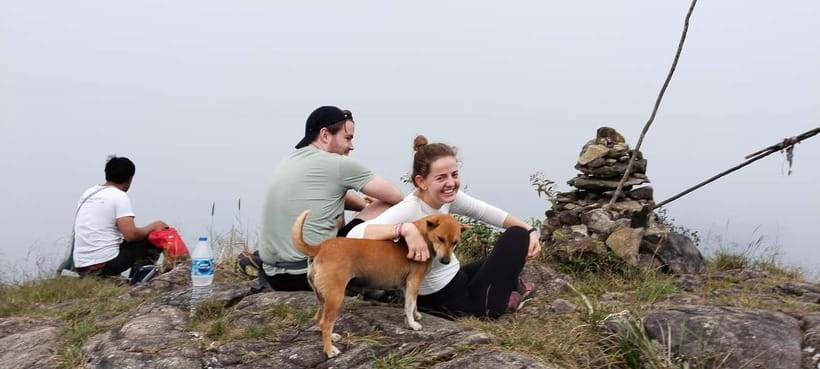
The trek covers about 10 to 12 kilometers, with the stated total at 12 kilometers. Expect four to five hours of walking over mountain terrain. The difficulty is rated medium, but that label needs some explanation: the distance and sustained uphill sections make this harder than many casual day hikes.
One particularly useful detail is the climb toward Phalai Mountain. A two-hour uphill stretch has been described, and some sections can be steep and slippery. You need comfortable clothes, proper hiking shoes, sun protection, insect repellent, and a daypack with personal medication and weather-ready clothing.
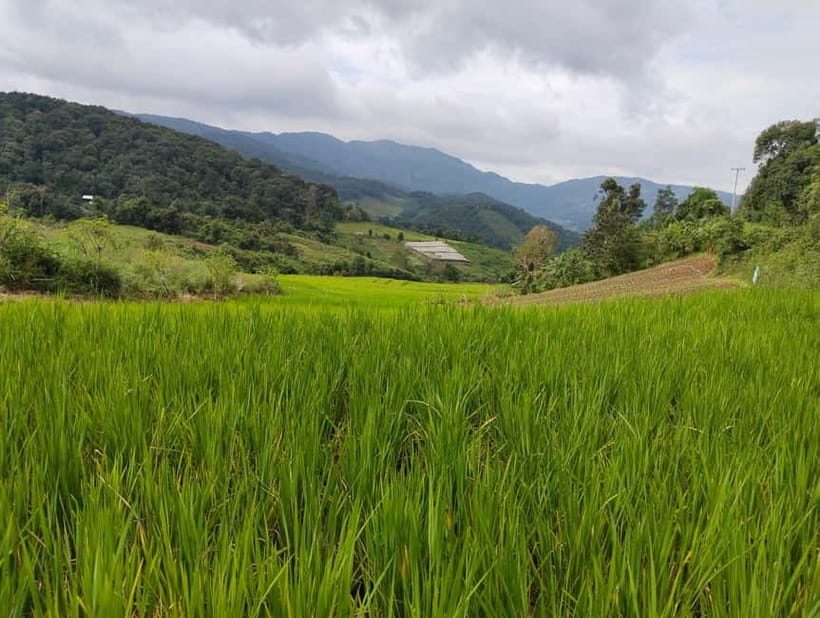
The path moves through rice fields, evergreen forest, and natural trails. Your guide may point out edible plants, herbs, and other vegetation, explaining how they are used for food, medicine, or daily life. This is where a strong guide makes a major difference. Pan, named in several accounts of the outing, has been praised for advanced English and his ability to explain jungle plants, including some that can be tasted.
Do not taste anything on your own. Let the guide identify it and tell you whether it is safe.
The trail is also valued for its quiet. The route is described as one used mainly by locals, with little connection to the busier tourist walks around Chiang Mai. You might walk with the guide, a local assistant, and perhaps village dogs, but you should not expect a large procession or constant company.
Reaching Phalai Mountain Peak
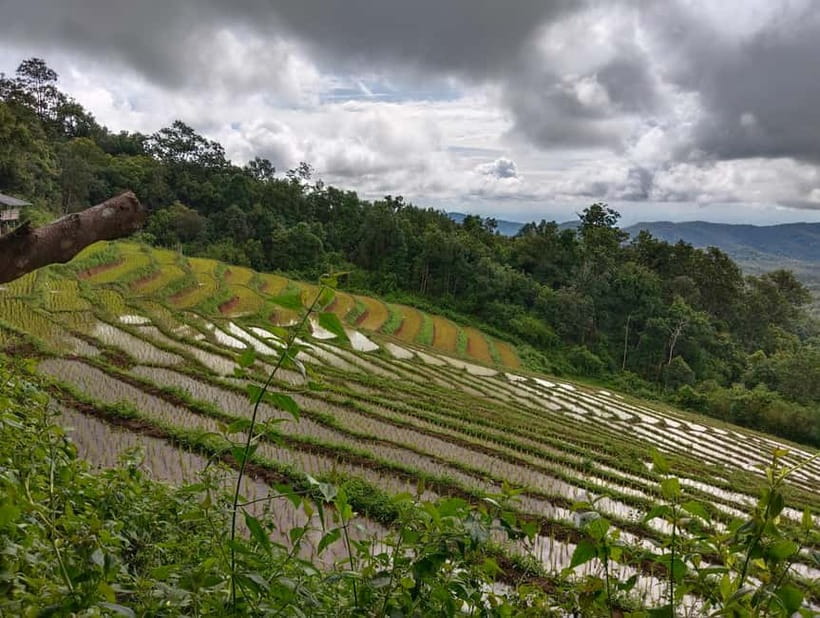
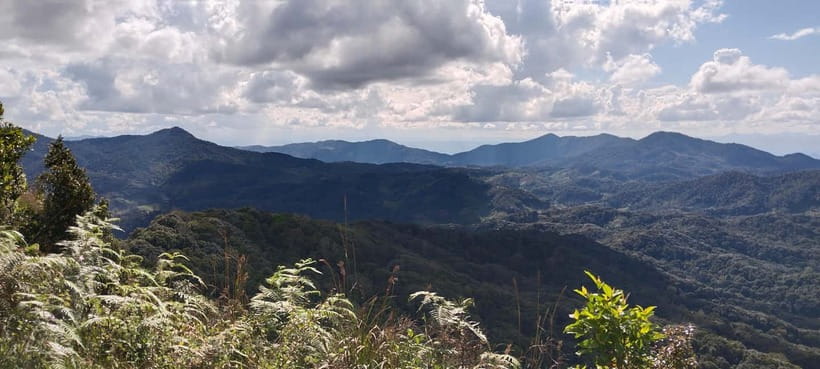
Phalai Mountain lies between Chom Thong and Mae Wang districts and connects with the Doi Inthanon National Park area. The top gives you wide views over the valley, village, rice terraces, and nearby mountains.
This is the payoff for the uphill effort. You get a sense of how the farms fit into the mountain terrain, and the view is more satisfying because you reached it on foot. Wildlife in the area may include wild boar, gibbons, barking deer, and many bird species, though sightings are never guaranteed. Treat wildlife claims as possibilities, not promises.
The summit is also the planned lunch setting. Eating in the forest with fresh air and quiet surroundings is a memorable part of the day, but it is not a restaurant lunch with menus or facilities. Food is bought at the market, and the guide may also bring or organize the meal for the group. If you need a special diet, confirm it before booking, since the supplied details do not state what dietary requests can be accommodated.
Forest lunch and farm paths
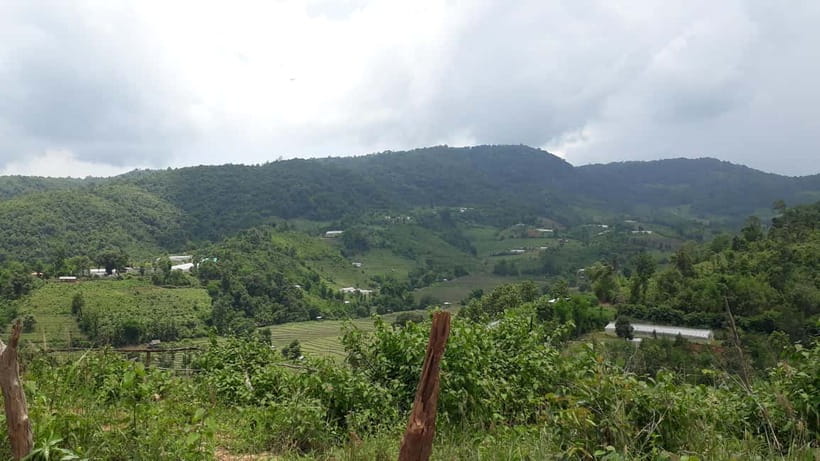
The forest lunch gives you a proper pause after the climb. You can eat, rest, and enjoy the mountain setting before continuing. Since the whole route lasts several hours, this break matters more than it would on a short walk.
After lunch, the trail passes through hill tribe farms. You may see coffee, passion fruit, cape gooseberry, tomatoes, zucchini, taro, and other crops. These details make the farming side of the outing practical and clear. You begin to see where food comes from and how mountain communities use small plots at different elevations.
A fresh coffee stop is possible in the village area. One account describes coffee made from beans handpicked nearby, a small detail that connects the drink to the farms you have just passed. It is not advertised as a guaranteed tasting, so treat it as a possible local touch rather than a fixed part of the schedule.
This section also puts the sustainable tourism promise into action. Your spending supports the market, guides, assistants, and local farming communities. The experience does not claim to be carbon-free or without impact, but choosing a small group and local services is a more responsible approach than sending a large bus through the hills.
The waterfall finale
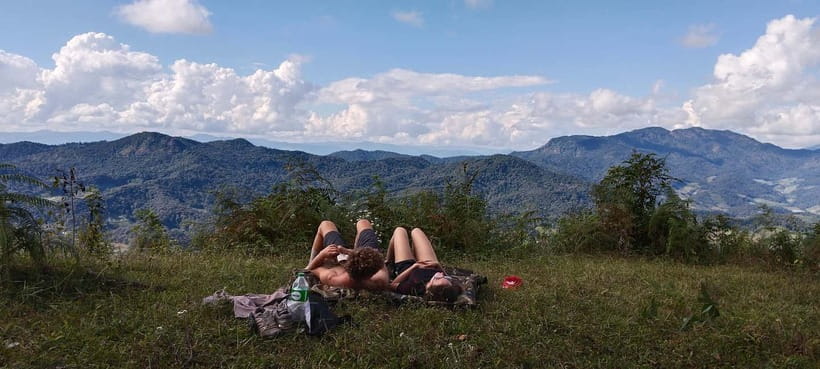
After the mountain and farm sections, you reach a secluded waterfall for about 30 minutes of swimming and rest. Bring swimwear, a towel, and a secure way to carry your phone if you want photographs. This stop can be the difference between ending the hike tired and ending it refreshed.
Thirty minutes is enough for a quick swim and a cool-down, but not a long picnic beside the water. Conditions may affect how comfortable the stop feels, especially during changing weather. Use care on wet rocks and listen to the guide.
The waterfall is a good design choice for this route. The hardest walking comes first, and the water gives you a natural reward before the drive back to Chiang Mai.
Is $57 good value?
At $57, I consider this a strong-value day trip if you want an active outing with local contact. The price includes hotel pickup and drop-off, transportation, an English-speaking guide, a local assistant, lunch, drinking water, and accident insurance. You are also getting a full day, not a two-hour activity padded with transfers.
The value depends on your expectations. If you want an easy scenic tour, the price will not save the experience from feeling too hard. If you want a real hike with village farms, plant explanations, market food, and a waterfall, the inclusions cover the expensive practical parts of the day.
A small group of no more than eight helps. You get more room to ask about plants or farming, and the guide can keep an eye on the pace. It also fits the quieter character of the route better than a large group would.
The published rating is 4.8 out of 5 from 18 reviews, with repeated praise for the route, the guides, the lack of crowds, and the demanding but rewarding climb. Those points match the activity’s strongest qualities.
Best season and useful packing advice
The winter season runs from mid-October to mid-February. Summer runs from mid-February to mid-May, and the rainy season from mid-May to mid-October. March has been a popular time for this outing, but each season changes trail conditions and comfort.
Rain can make steep ground slippery. Heat can make the uphill walk harder. Bring the full practical kit:
- Hiking or sturdy comfortable shoes
- Comfortable, weather-appropriate clothing
- Sun hat and sunscreen
- Insect repellent
- Swimwear and towel
- Daypack and camera
- Personal medication
- Cash and passport
Drinking water and lunch are included, but cash is useful for snacks, drinks, or souvenirs at your own expense. Wear clothing you can walk and swim in, and do not bring a heavy bag.
You should also know the health limits. The outing is not suitable for pregnant women, wheelchair users, people with mobility impairments or heart problems, babies under one year, or people over 70. The information also lists people over 95, but the over-70 restriction is the one to take seriously when deciding if the hike is suitable.
Should you book Chiang Mai Authentic Trekking?
Book it if you want a real mountain walk, quiet local trails, rice terraces, Karen farm life, and a guide who can explain the plants around you. It is especially suitable for fit hikers who prefer a small group and an active day over a quick photo tour.
Skip it if you want a relaxed countryside outing, dislike steep climbs, or need predictable, easy footing. The best reason to book is the combination of effort and access: you climb hard, but you also see farms, village life, forest plants, and valley views in one day. At $57, that is a fair deal for the right kind of visitor.
Flexible plans help too. You can cancel up to 24 hours ahead for a full refund, and reserve now while paying later. Just make sure you are choosing the trek for the hike itself, not only for the waterfall photograph at the end.
FAQ
How long is the Chiang Mai Authentic Trekking experience?
It is a one-day experience, with hotel pickup around 7:45 to 8:00 AM and a return to Chiang Mai around 5:00 to 6:00 PM. The trek itself lasts about four to five hours.
How far do you walk?
The total trekking distance is about 10 to 12 kilometers, with the stated distance at 12 kilometers. The route uses mountain terrain and includes uphill and slippery sections.
Is lunch included?
Yes. Lunch and drinking water are included. The group stops at a traditional Thai market to buy food, and lunch is eaten in the forest.
What language does the guide speak?
The tour includes a live English-speaking guide. A local assistant also joins the group.
Can you swim during the trek?
Yes. The route includes about 30 minutes at a secluded waterfall where you can swim and relax. Bring swimwear and a towel.
How many people are in the group?
The experience is limited to eight participants. Hotel pickup and drop-off around Chiang Mai are included.
Just added in Chiang Mai
- Full Day Doi Saket Hiking Tour★ 5.0 · 14 reviews
- Pha Dok Siew Nature Trail & Doi Inthanon National Park From Chiang Mai★ 4.0 · 23 reviews
- One day Elephants in Nature Experience & Grand Canyon Jumping★ 5.0 · 31 reviews
- Chiang Mai to White & Blue Temple, Black Museum & Golden Triangle★ 4.0 · 52 reviews
- One day Doi Inthanon National Park & Trekking on Kew Mae Pan★ 5.0 · 12 reviews
- Private Tour 2 Difference Trails Trekking at Doi Inthanon National Park★ 5.0 · 19 reviews
- One Day Hiking and Elephant experience by Chiang Mai Elephant Home★ 5.0 · 75 reviews
- Half day Long Neck hill tribe and Hmong hill tribe village★ 5.0 · 21 reviews
Hiking and Trekking, compared.
3-in-1: Doi Inthanon Tour, Elephant Sanctuary, and Trekking Trail
Read our review →
Doi Inthanon Trip with Pha Dok Siew Guided Trek
Read our review →Doi Inthanon Park with Kew Mae Pan Hike Day Trip
Read our review →
4-Hour Doi Suthep & Hmong Hill Tribe Village from Chiang Mai
Read our review →
Doi Inthanon Private Tour with Trek & Lunch from Chiang Mai
Read our review →Browse the lists this tour appears in