
Reviewed · HIKING AND TREKKING
Chiang Mai: Doi Inthanon Trip with Pha Dok Siew Guided Trek
Thailand’s highest mountain makes a full day worthwhile. This Chiang Mai excursion packs the best-known sights of Doi Inthanon National Park into one long day: waterfalls, twin pagodas, a Karen village, forest trails, rice fields, and the country’s highest point. I especially like the two-hour Pha Dok Siew walk, led with help from local Karen guides, and the chance to eat lunch in a mountain village rather than at a roadside restaurant.
I also like the easy all-in-one transport from Chiang Mai and the mix of nature and local culture. The main drawback is the distance: roughly two hours each way by van, with a 10 to 12-person group. Check the ticket carefully, too, because some bookings exclude the 400 THB national park fee.
In This Review
- Five things worth knowing before you book
- Why Doi Inthanon is different from Chiang Mai
- The long ride from Chiang Mai
- The pagodas: Thailand’s most polished mountain stop
- Thailand’s highest point is a modest stop
- Pha Dok Siew: the heart of the day
- Lunch in the Karen village
- Wachirathan Waterfall closes the sightseeing loop
- Guides make or break a group tour
- Is the $50 price good value?
- What to pack and how to prepare
- Who should book this Doi Inthanon tour?
- FAQ
- How long does the Doi Inthanon trip last?
- Where does pickup take place?
- How large is the tour group?
- Is the national park entrance fee included?
- How difficult is the Pha Dok Siew walk?
- Can I swim at the waterfalls?
- What is included with lunch?
- What should I wear to the pagodas?
- Is the tour available in English?
- Can I cancel the booking?
- Should You Book It?
Five things worth knowing before you book
- The Pha Dok Siew trail is mostly downhill, with forest paths, steps, bridges, waterfalls, rice fields, and coffee-growing areas.
- The Karen village lunch and coffee tasting add a human side to the park and are among the day’s most memorable moments.
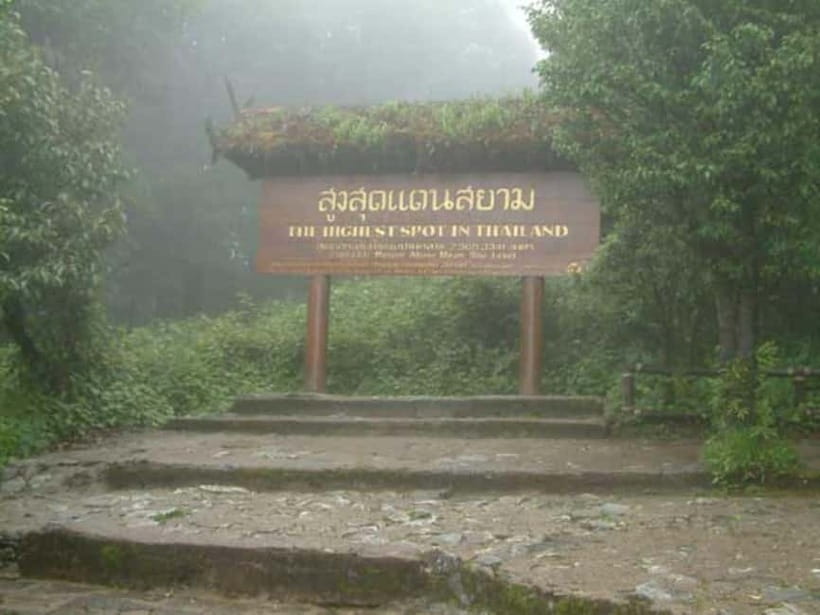
- The highest point of Thailand is not a grand summit view. It is a short stop in cool, mossy forest with a sign and surrounding trees.
- The twin pagodas can be foggy, especially during the wet season, but they offer the day’s best formal viewpoints when the weather clears.
- Bring a light jacket and rain protection. Doi Inthanon is cool at higher elevations and can be wet even when Chiang Mai is hot and dry.
- The tour is good value for active sightseers, but less appealing if you dislike long van rides, group travel, or uneven trails.
Why Doi Inthanon is different from Chiang Mai
Doi Inthanon National Park lies about 70 kilometers southwest of central Chiang Mai. At 2,565 meters above sea level, Doi Inthanon is Thailand’s highest mountain, earning the nickname the Roof of Thailand.
The change from city heat to mountain air is part of the appeal. The park is cooler and humid throughout the year, with moist evergreen forest, high-altitude bogs, pine, teak, and other forest types spread across different elevations. You are not simply visiting a viewpoint. You are moving through several climate zones in one day.
The mountain was named for King Inthawichayanon, one of Chiang Mai’s last kings. He cared deeply about protecting northern Thailand’s forests, and his remains were placed in the park after his death. That small piece of background gives the mountain more meaning than a simple highest-point photo stop.
The timing matters. November through February usually brings colder, drier weather, so mornings at the summit can feel surprisingly brisk. May through October is the rainy season, with the heaviest rain generally arriving from July to September. The trails become slippery, but waterfalls look powerful and the rice fields turn green from July through September.
More Hiking and Trekking in Chiang Mai
- 3-in-1: Doi Inthanon Tour, Elephant Sanctuary, and Trekking Trail
★ 5.0 · 1,087 reviews - Chiang Mai: Doi Inthanon Park with Kew Mae Pan Hike Day Trip
★ 4.7 · 841 reviews - Chiang Mai: Doi Inthanon Park and Pha Dok Siew Trail Trek
★ 4.6 · 752 reviews
The long ride from Chiang Mai
Pickup normally begins between 7:00 and 7:30 in Chiang Mai’s Old Town and around Burger King near Tha Phae. Pickup can also be arranged from the Nimman area if you choose that option. Be ready at least 15 minutes early, since the van waits only about 10 minutes.
The drive takes about two hours. That is a real part of the tour, not a minor transfer. The road climbs steadily toward the park, and the air grows cooler as the city fades away.
Transportation is by air-conditioned car or minivan. A 10 to 12-person group keeps the cost down and makes the day social, but it also means you do not control every stop. Some excursions include brief market stops, and one stop on the return can feel unnecessary when you are tired and ready for bed.
Give the operator your hotel name and a correct WhatsApp number. The meeting point near Imm Hotel Tha Pae can be affected by heavy morning traffic, so navigation apps may underestimate the pickup time. Large bags and luggage are not allowed.
The pagodas: Thailand’s most polished mountain stop
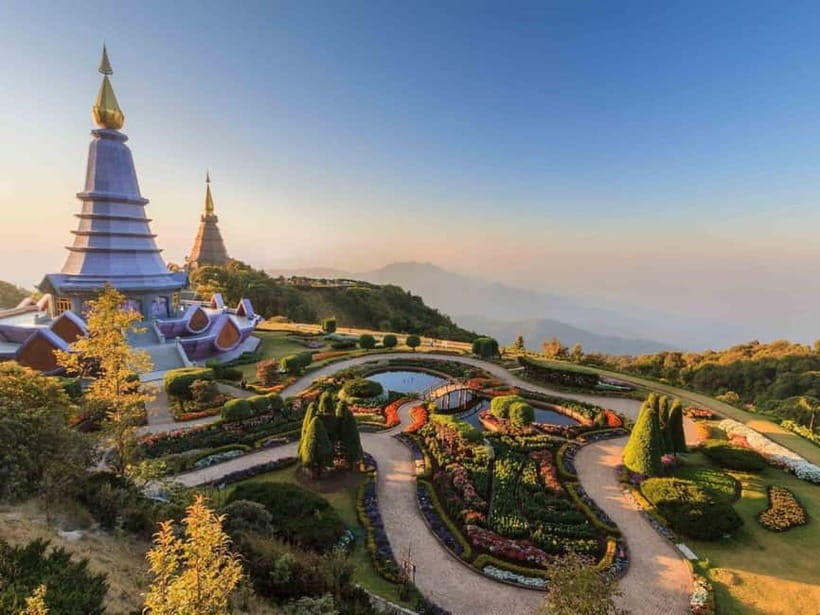
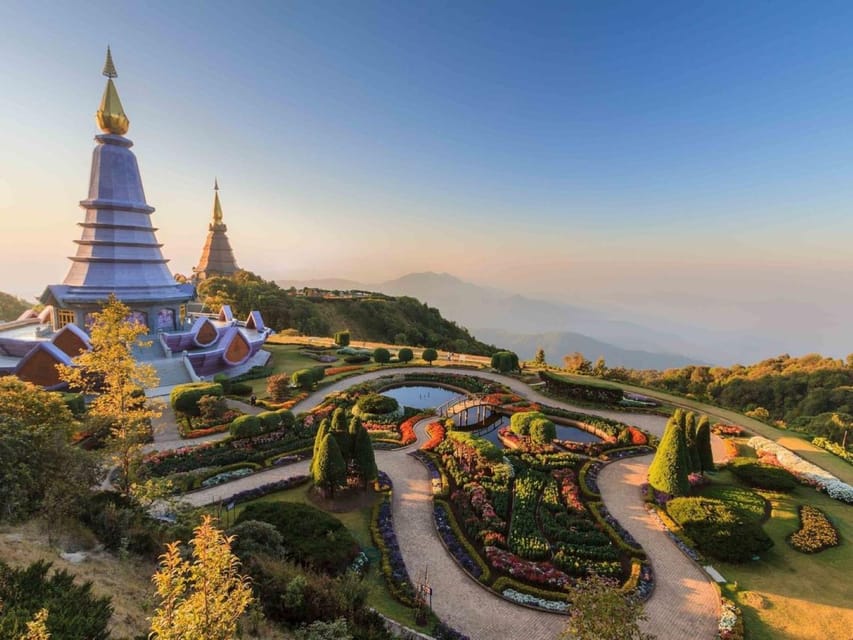
The King and Queen Pagodas, formally known as the Grand Pagoda Nabhapolbhumisiri and its companion pagoda, are among Doi Inthanon’s most recognizable sights. They sit high on the mountain, surrounded by carefully planted gardens and broad views when the clouds cooperate.
The stop is not rushed. You usually have about 30 minutes at the pagodas, enough time to walk around, take photos, and look out across the hills. The gardens provide color and order after the wilder forest stops.
Weather can change the experience completely. On a clear day, you get open views over the surrounding mountains. In fog or rain, the scenery may disappear, leaving the pagodas and gardens as the main attraction. That is not necessarily a failure, but you should keep expectations flexible.
Dress respectfully. Casual clothing or better is required, and tank tops are not suitable. Sneakers, sports shoes, or closed shoes are fine. Flip-flops are not allowed at the pagodas, and practical footwear is useful for the rest of the day anyway.
Thailand’s highest point is a modest stop
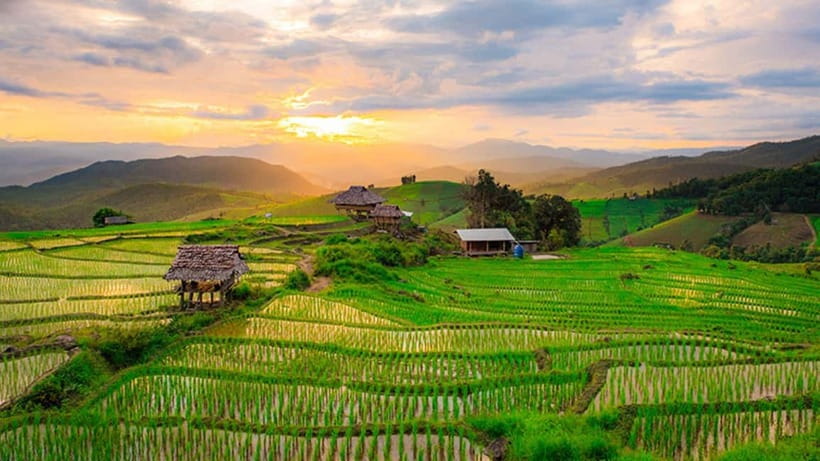
The highest point of Thailand is often imagined as a dramatic summit with a sweeping view. It is not. The marker sits in a forested area, so the stop is more about being at the country’s highest elevation than seeing a grand panorama.
You may spend around 15 minutes here. The air is cool, the forest feels quiet, and the short boardwalk-style walk gives you a chance to stretch after the van ride. The sign makes a good photo, but this is a quick landmark rather than a major sightseeing stop.
I would treat it as a geographical curiosity. If you need a big view, save your hopes for the pagodas or the open sections of the Pha Dok Siew route.
A completely different kind of day out:
- Half-Day Thai Cooking Class at Organic Farm in Chiang Mai
★ 5.0 · 19,087 reviews - Chiang Mai: Elephant Sanctuary, Waterfall & Bamboo Rafting
★ 4.9 · 9,160 reviews - Chiang Mai: Doi Inthanon National Park Eco-Friendly Tour
★ 4.6 · 6,667 reviews - Chiang Mai: Elephant Sanctuary & Waterfall Group Tour
★ 4.9 · 5,780 reviews
Pha Dok Siew: the heart of the day
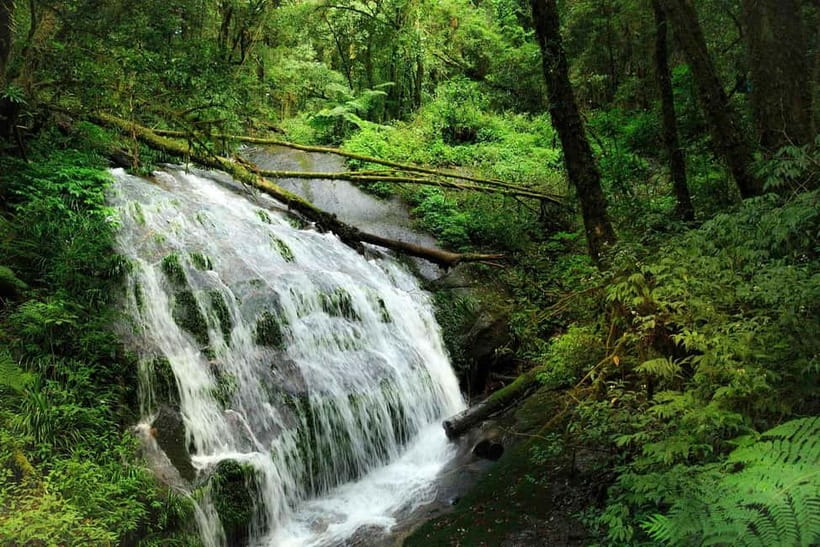
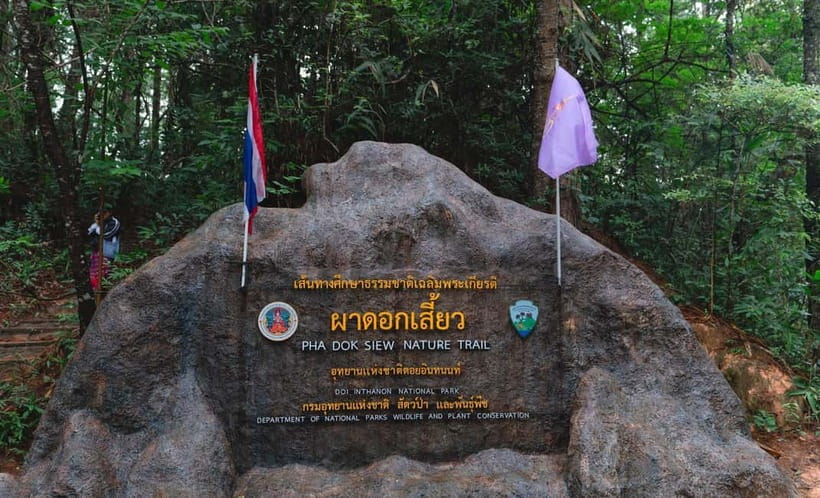
The two-hour Pha Dok Siew Nature Trail is the strongest reason to choose this particular trip. The route is managed by local Karen people, with wooden and bamboo bridges, stairs, railings, and educational signs explaining the plants and animals around you.
The walk is often described as easy, but easy does not mean effortless. Much of it runs downhill, with steps, uneven ground, bridges, and damp sections. In the heat, the descent can still tire your legs. During the rainy season, mud and slick surfaces add another layer of work.
Your guide points out forest plants, insects, wildlife, and local uses for what grows along the trail. The local trail guides have a close connection to the area and can identify details you would likely miss alone. Guides such as Toey, Mint, Bobo, Daniel, and Chan have been praised for keeping groups cheerful while explaining local nature and traditions.
The route follows streams and waterfalls, with several smaller cascades and larger falls along the way. You cannot swim at the waterfalls, so bring your camera rather than a swimsuit. The point is the walk itself: cool forest, running water, bridges, and changing views.
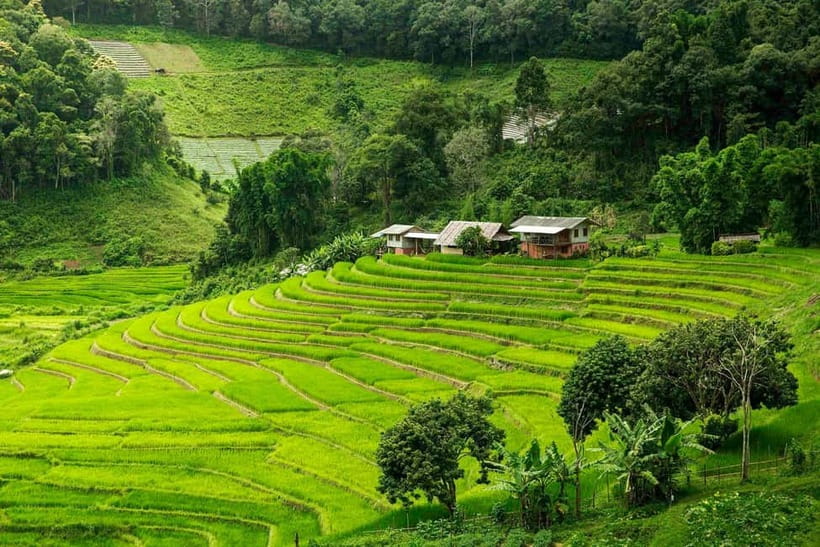
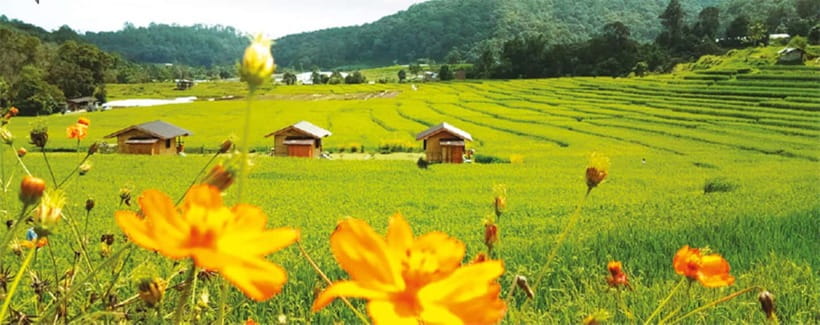
The trail may also pass rice terraces and coffee-growing areas around Ban Mae Klang Luang. During the green season, the rice fields are especially attractive. The mountain coffee is another small but worthwhile part of the visit, particularly if you enjoy seeing how local crops connect to village life.
This is not a hard mountain expedition. It is a guided nature walk with enough steps and uneven ground to require reasonable balance and comfortable shoes. Pregnant people, wheelchair users, people with altitude sickness, and anyone over 70 should note the stated restrictions. Babies under one year are also not considered suitable for the activity.
Lunch in the Karen village
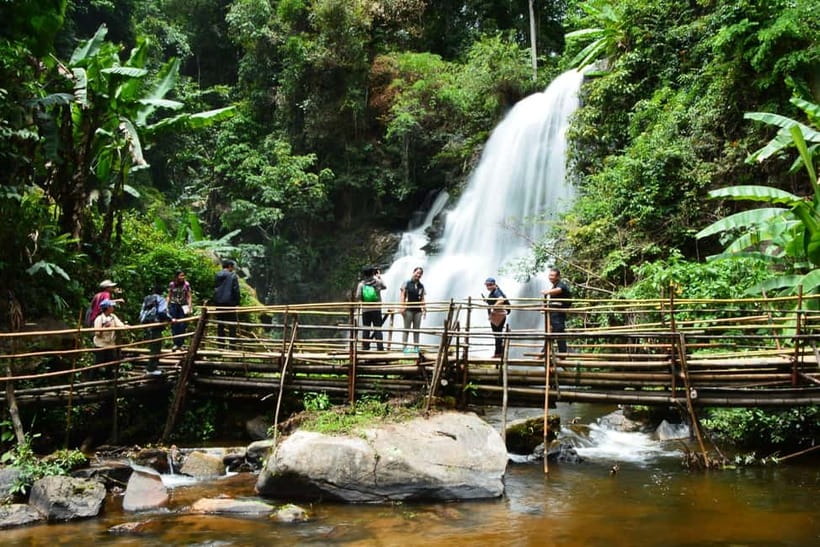
Lunch is served in the Doi Inthanon area, with the experience often centered on a Karen village. The meal is a set menu and is included in the booking, along with drinking water.
The food is generally simple, generous, and practical rather than fancy. That suits the setting. You are eating after a forest walk, and a hot Thai meal in the mountains can be more satisfying than a polished restaurant lunch.
Vegetarian and vegan needs have been accommodated on the tour, and one guide was praised for taking a peanut allergy seriously by warning the kitchen in advance. Still, tell the operator about dietary needs before the day begins. Do not rely on a last-minute request.
The village visit also includes tea and coffee tasting in some schedules. This is a useful cultural stop because it connects the forest, farms, and local economy. You may see how mountain coffee is produced and taste organic Arabica grown in the area.
You should approach the village visit with respect. It is not a staged theme park, but it is also part of a commercial tour. Buying coffee or local products is optional. The value is in the conversation, the food, and the chance to see a community linked to the land around the trail.
Wachirathan Waterfall closes the sightseeing loop
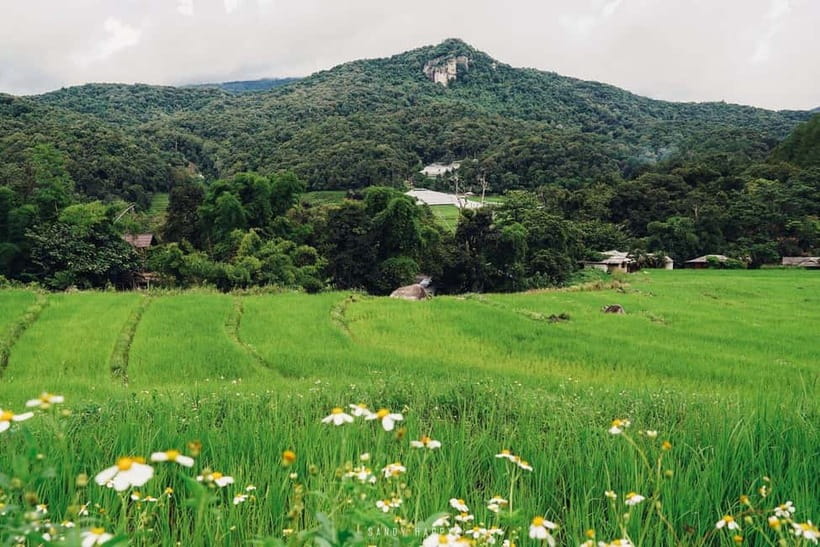
Wachirathan Waterfall is one of Doi Inthanon’s most impressive and accessible sights. The water drops through thick greenery, and the spray can be strong enough to soak you near the viewing areas.
The schedule allows about an hour for the waterfall, including photography and a short walk. This stop is easier than the forest trail and works well after lunch. It also provides a dramatic visual contrast to the pagodas and summit marker.
Again, swimming is not part of the day. Keep your footing near wet rocks and bring a rain jacket or poncho if the forecast is unsettled. During the rainy months, the waterfall can be especially powerful, but heavy rain may also reduce visibility and make the trail slippery.
Guides make or break a group tour
The strongest praise for this excursion goes to the guides. Names that appear repeatedly in positive experiences include Toey, Mr. Bobo, Daniel, Mint, Chan, Nena, Gohan, Maxi, and Ko Han. Their styles differ, but the pattern is clear: humor, warmth, local knowledge, and good group energy matter here.
A lively guide can make the long drive and shared van feel easy. Guides also help you notice wildlife, plants, local traditions, and practical survival skills in the forest. One group spotted a gibbon and a green snake, while other walks included close looks at insects and unusual plants.
The tour is conducted in English. Since the group may include 10 to 12 people, do not expect a private guide at your side every minute. The best guides give you information, keep the pace comfortable, and allow time to rest and enjoy the views.
Is the $50 price good value?
The advertised price is $50 per group up to one person, but you must check the exact booking option before paying. One version includes the national park entrance fee. The other excludes it, requiring 400 THB per person in cash on the day.
That fee difference is important. A cheap-looking fare can become less cheap once the park charge is added, especially for several people. Confirm the wording about the national park fee, your pickup area, and the number of people covered.
For the included package, you receive round-trip transport, a guide, lunch, drinking water, insurance, the trekking trail fee, and possibly the national park ticket. The day covers several major sights and a guided two-hour walk, so I consider it strong value for someone who wants variety without arranging separate transport.
The trade-off is time. You spend about four hours in the van, and the total day can feel long. A private car would offer more control, but this shared tour costs less and gives you a chance to meet other people. A rating of 4.6 from 910 reviews suggests the balance works well for most people.
What to pack and how to prepare
Wear sturdy walking shoes with a good grip. Flip-flops are unsuitable for both the pagodas and the trail.
Bring a hat, water-friendly layers, and a light jacket. The summit can be chilly, and the pagoda area may be cold in fog. During the rainy season, add a rain jacket or poncho and expect to get wet.
Keep your bag small. Big bags and luggage are not allowed. You do not need swimming gear because the waterfalls are for viewing only.
Plan for a full day with an early start. Avoid booking this trip on a day when you have an evening flight or a fixed dinner reservation. The roads, traffic, weather, and group schedule can all affect the return time.
Who should book this Doi Inthanon tour?
I would choose this trip if you want one organized day that combines scenery, light hiking, waterfalls, mountain culture, and Chiang Mai pickup. It suits active adults and older children who can manage a two-hour uneven walk.
It is especially good for first-time visitors who do not want to rent a car or work out the park’s spread-out sights. The local trail guides and village meal add more substance than a simple drive to a viewpoint.
I would skip it if you want a serious multi-hour trek, a private itinerary, or a relaxed day with little driving. The highest point is visually modest, the food is simple, and the wet season can bring heavy rain. Still, for a broad introduction to Doi Inthanon, the combination is hard to beat.
FAQ
How long does the Doi Inthanon trip last?
It is a one-day activity. The listed schedule includes roughly two hours by van from Chiang Mai to the park and about two hours back, plus the park visits, lunch, waterfall stop, and trek.
Where does pickup take place?
Pickup is available from Chiang Mai’s Old Town and the Nimman area if that option is selected. Pickup times in the Old Town and near Burger King are generally between 7:00 and 7:30 a.m.
How large is the tour group?
This is a shared tour with about 10 to 12 customers in a group.
Is the national park entrance fee included?
There are two booking options. One includes the national park fee. The other requires you to pay 400 THB per person in cash on the day, so check your selected option carefully.
How difficult is the Pha Dok Siew walk?
The guided walk lasts about two hours and is often mostly downhill. It includes steps, bridges, uneven paths, and potentially slippery ground, especially during the rainy season.
Can I swim at the waterfalls?
No. Swimming is not included or allowed as part of this experience. The waterfalls are visited for viewing and photography.
What is included with lunch?
Lunch is a set menu served in the Doi Inthanon area, with the experience often taking place near or in a Karen village. Drinking water is also included.
What should I wear to the pagodas?
Wear casual clothing or better. Tank tops and flip-flops are not allowed. Sneakers, sports shoes, or closed shoes are suitable.
Is the tour available in English?
Yes. The tour includes a live English-speaking guide.
Can I cancel the booking?
You can cancel up to 24 hours in advance for a full refund. Reserve-now, pay-later booking is also available.
Should You Book It?
Book this Doi Inthanon day trip if you want a full, active introduction to northern Thailand’s mountain country. The best parts are the Pha Dok Siew forest walk, the Karen village meal, fresh coffee, and the guide-led view of plants and local life.
Before paying, confirm the national park fee option, prepare for a long van day, and bring shoes and clothing suited to rain and cold. If you accept those conditions, this is a well-priced way to see far more than a waterfall and a summit sign.
Just added in Chiang Mai
- Pha Dok Siew Nature Trail & Doi Inthanon National Park From Chiang Mai★ 4.0 · 23 reviews
- One day Elephants in Nature Experience & Grand Canyon Jumping★ 5.0 · 31 reviews
- Full Day Doi Saket Hiking Tour★ 5.0 · 14 reviews
- Chiang Mai to White & Blue Temple, Black Museum & Golden Triangle★ 4.0 · 52 reviews
- One day Doi Inthanon National Park & Trekking on Kew Mae Pan★ 5.0 · 12 reviews
- Private Tour 2 Difference Trails Trekking at Doi Inthanon National Park★ 5.0 · 19 reviews
- Half day Long Neck hill tribe and Hmong hill tribe village★ 5.0 · 21 reviews
- One Day Tour Chiang Rai(White Temple , Blue Temple, Black House) Private Tour★ 5.0 · 63 reviews
Hiking and Trekking, compared.
3-in-1: Doi Inthanon Tour, Elephant Sanctuary, and Trekking Trail
Read our review →Doi Inthanon Park with Kew Mae Pan Hike Day Trip
Read our review →
4-Hour Doi Suthep & Hmong Hill Tribe Village from Chiang Mai
Read our review →
Doi Inthanon Private Tour with Trek & Lunch from Chiang Mai
Read our review →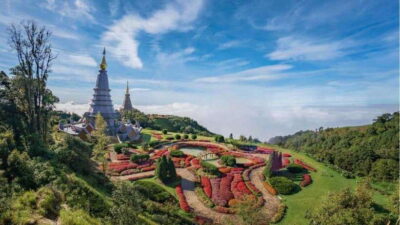
Doi Inthanon National Park and Pha Dok Siew Trek
Read our review →Browse the lists this tour appears in