
Reviewed · ELEPHANT SANCTUARY TOURS
Phuket: Elephant Nature Reserve Entry Ticket and Guided Tour
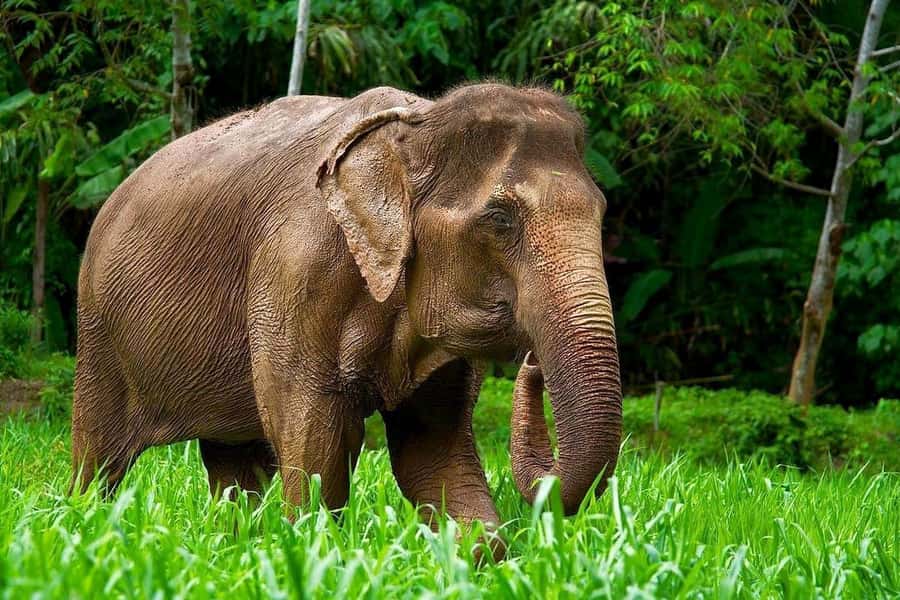
Ethical elephant encounters can feel surprisingly quiet. Phuket Elephant Nature Reserve focuses on rescued elephants living without rides, baths, or forced tricks, and I like the no-touch approach and the chance to prepare food before feeding. The English-speaking guides also add real value, explaining each elephant’s background and personality rather than rushing you from one photo stop to the next.
The main drawback is that this is a calm, observation-based visit, not a hands-on animal show. You cannot touch, bathe, or ride the elephants, and feeding follows the reserve’s rules. That may feel less exciting if you expect close contact, but it is exactly why this $37 experience feels worthwhile to me.
In This Review
- Key points to know before you go
- Why this Phuket elephant visit feels different
- Arriving next to Hug Me Cafe
- The briefing sets the rules
- Preparing food in the elephant kitchen
- Meeting the rescued elephants
- Watching natural routines in the jungle area
- What the 1.5-hour schedule includes
- The value of $37 per person
- Who will enjoy this visit most
- Small details that make the visit better
- Should you book Phuket Elephant Nature Reserve?
- FAQ
- Where does the elephant tour start?
- Where does the activity end?
- How long does the tour last?
- What is included in the ticket?
- Is transportation included?
- Are food and drinks included?
- Can I touch the elephants?
- Can I bathe or ride the elephants?
- What language does the guide speak?
- Is the activity suitable for wheelchair users?
Key points to know before you go
- The elephants set the pace: You observe them in a stress-free setting instead of asking them to perform.
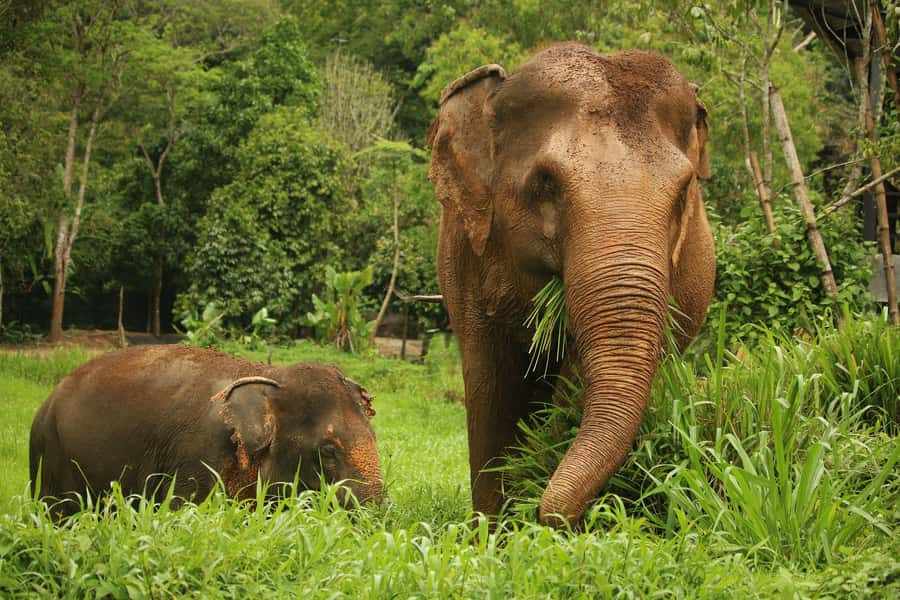
- Food preparation is part of the visit: You help chop and prepare fruit and vegetables, then feed the elephants according to staff instructions.
- No touching, bathing, or riding: The reserve keeps human contact limited to protect the animals.
- A 90-minute visit works well: You see several elephants, hear their rescue stories, and visit the jungle observation area without committing half a day.
- Guides make the difference: Guides such as Tom, Mike, and other English-speaking staff are praised for clear explanations, warmth, and humor.
- You arrange your own transport: The tour begins next to Hug Me Cafe at the reserve and ends there, with a cafe available on site.
Why this Phuket elephant visit feels different
Phuket has no shortage of elephant attractions, but the important question is not simply how close you get to an elephant. It is how that closeness is created.
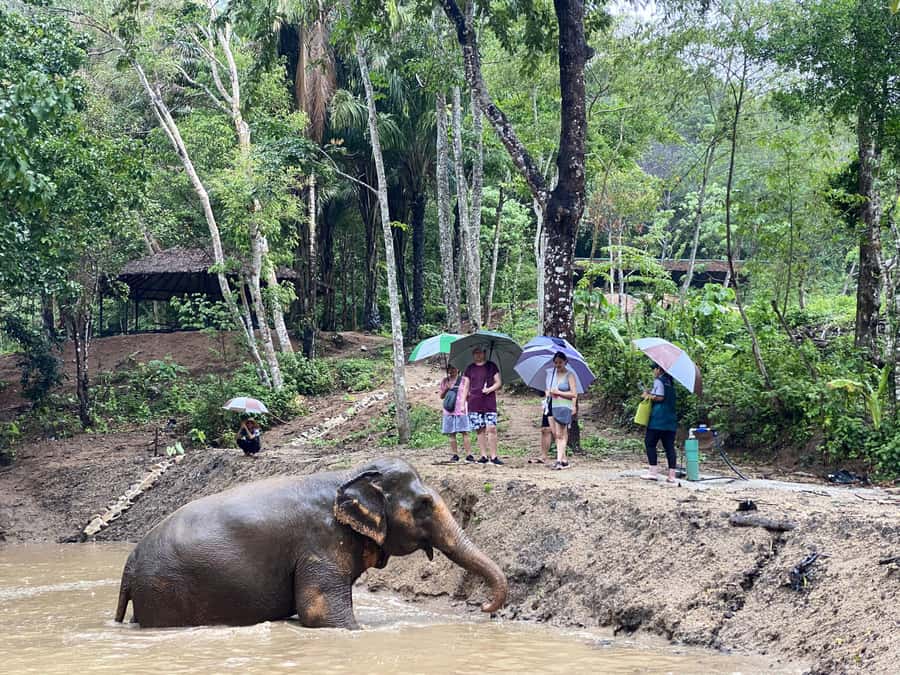
At Phuket Elephant Nature Reserve, the stated aim is to give rescued elephants care, space, and a more natural daily routine. The experience is built around watching, learning, preparing food, and feeding. You are not there to make an elephant dance, carry you, pose on command, or enter a bathing session for your camera.
That distinction matters. Elephants are powerful, sensitive animals, and a quiet encounter tells you more than a staged performance ever could. You might see one elephant move toward food while another hangs back. You may notice different eating habits between a young elephant and a larger adult. Those small details are part of the appeal.
I also like that the guides explain the individual animals. You may hear a short history of how an elephant was rescued and learn about its particular habits or personality. The experience becomes less like ticking off an animal sighting and more like meeting a group of living creatures with different needs.
The reserve is described as accredited, sustainable, and ethical. You should still judge any animal attraction with care, but the rules here are clear: no riding, no bathing, no touching, and no forced interaction. That makes the visit a better fit for anyone who wants their money to support care rather than entertainment built around control.
More Elephant Sanctuary Tours in Phuket
- Phuket: Elephant Jungle Sanctuary Ethical Feeding Experience
★ 4.8 · 4,359 reviews - Phuket: Elephant Sanctuary Guided Tour with Hotel Transfers
★ 4.8 · 2,020 reviews - A Morning with the Elephants at Phuket Elephant Sanctuary
★ 5.0 · 1,693 reviews
Arriving next to Hug Me Cafe
You make your own way to Phuket Elephant Nature Reserve. The meeting point is next to Hug Me Cafe, where you meet the English-speaking guide before the tour begins.
This self-arrival setup gives you control over your transport, but it also means the $37 price does not include a hotel pickup or drop-off. Check your route and allow enough time to arrive before the scheduled start. The precise starting times depend on availability, so confirm the time when you book.
The reserve has a cafe on site, and you may want to arrive early for a drink or snack. After the tour, it is also a pleasant place to cool down, with a view toward the elephants’ natural setting. Food and drinks are not included in the ticket, so bring money if you plan to use the cafe.
Wear comfortable shoes. You will be walking around the reserve and outdoor areas, and a hat and sunscreen are sensible in Phuket’s heat. The activity is not suitable for wheelchair users, so check the physical setup carefully before booking.
The briefing sets the rules
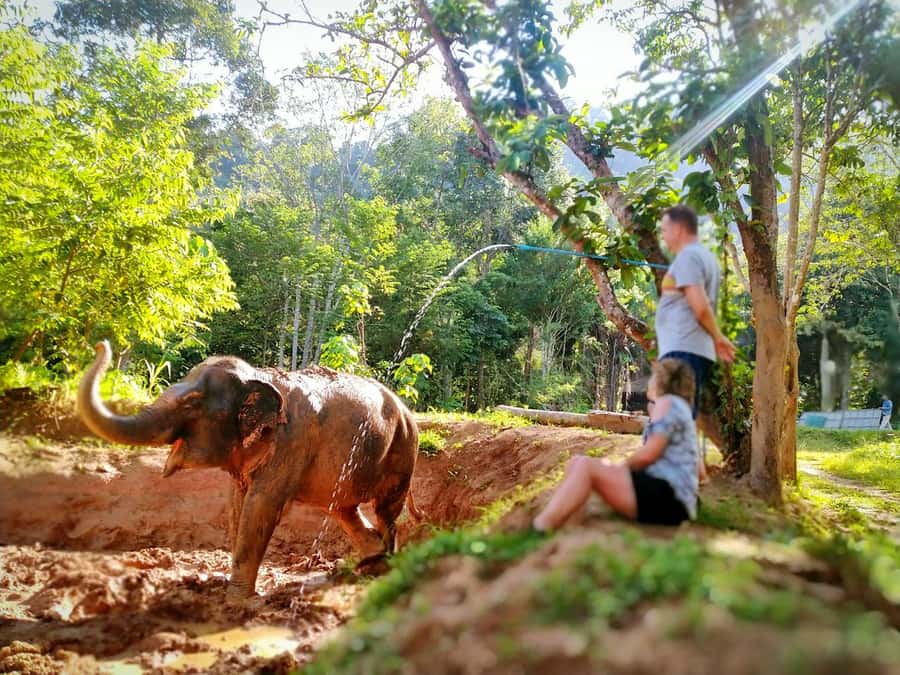
The tour starts with an introduction and safety briefing. This is not empty housekeeping. It explains how to behave near elephants and why the reserve avoids common tourist activities such as bathing and riding.
Pay attention here, because the rules shape the whole visit. You are not free to reach out whenever an elephant comes near. The animals are allowed to move according to their own choices, and staff help keep the distance safe and respectful.
That can take a little adjustment. Many people arrive expecting a classic elephant encounter, perhaps with a bath, a hug, or a close-up feeding picture. Instead, you need to watch body language, follow the guide, and accept that an elephant may not come as close as you hope.
I see that as a strength, not a flaw. The guide’s job is not to produce a perfect photograph at any cost. It is to help you understand what you are seeing while keeping the animals comfortable.
The introduction may also include information about elephant care and the reserve’s approach. One useful point is that even feeding is controlled. You prepare food and offer it in the approved way, rather than treating the elephant like a tame pet.
Preparing food in the elephant kitchen
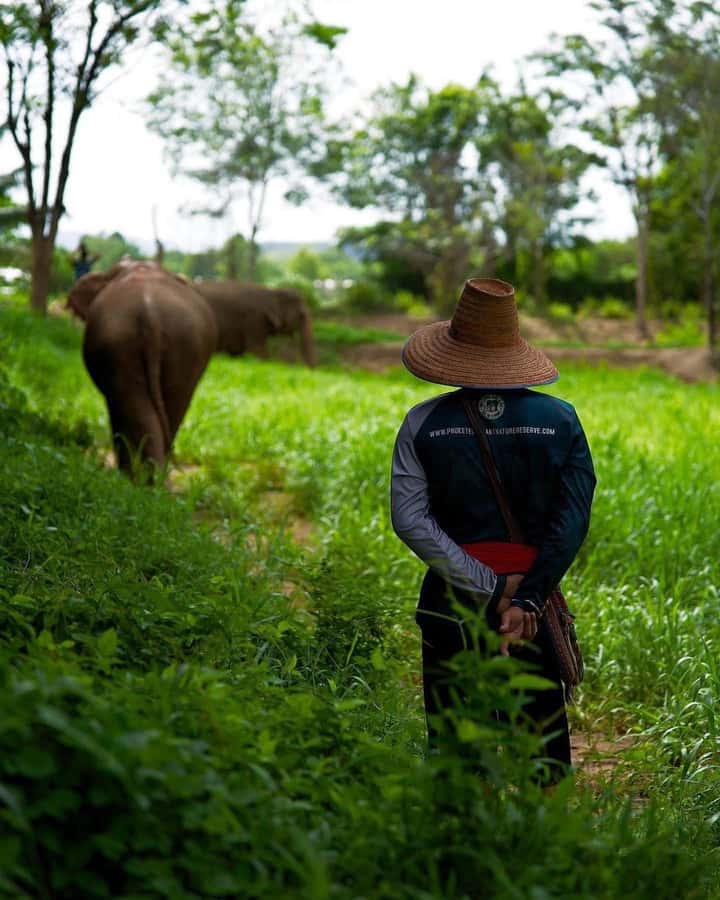
One of the most memorable parts is preparing food for the elephants. You may chop or arrange fruit and vegetables, then help get the meal ready before the animals eat.
This simple task gives you a better sense of the work behind a sanctuary. Caring for elephants is not only about watching them in a forest area. It involves food, safety, routine, staff time, and careful attention to each animal.
The food preparation also gives children something concrete to do. A family with children aged 10 and 12 found the 90-minute program held their attention well, with time to prepare food, learn, and watch the elephants. Younger children may need close supervision, especially because the animals are large and the activity is not a petting zoo.
Feeding follows the reserve’s welfare rules. Some descriptions refer to feeding the elephants, while detailed visitor accounts explain that food may be prepared and placed out rather than hand-fed directly. The practical point is this: you take part in feeding without forcing the elephant into physical contact.
That is a useful compromise. You still feel involved, but the elephant does not have to tolerate hands, hugs, or constant attention from a stream of people.
More Entry Tickets in Phuket
- Phuket: Simon Cabaret Show Admission Ticket
★ 4.5 · 570 reviews - Phuket: Simon Cabaret Show Entry Ticket
500 reviews - Phuket: Simon Cabaret Show Admission Ticket with Transfer
★ 4.3 · 162 reviews - Phuket: Rock Beach Swing Entry Ticket
★ 4.6 · 53 reviews
Meeting the rescued elephants
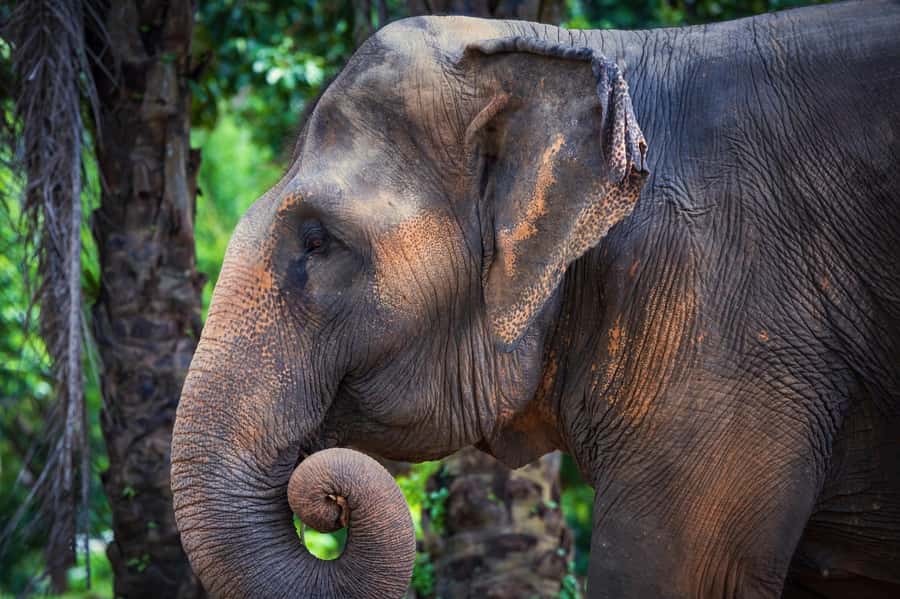
After the briefing and food preparation, you meet some of the rescued elephants. The exact animals can vary, but the visit may include several females and a young elephant.
This is where the no-touch policy becomes most noticeable. You can see the animals at relatively close range, take photographs, and watch them eat, but you remain at a respectful distance. The elephants are free to move away, and staff help prevent people from crowding them.
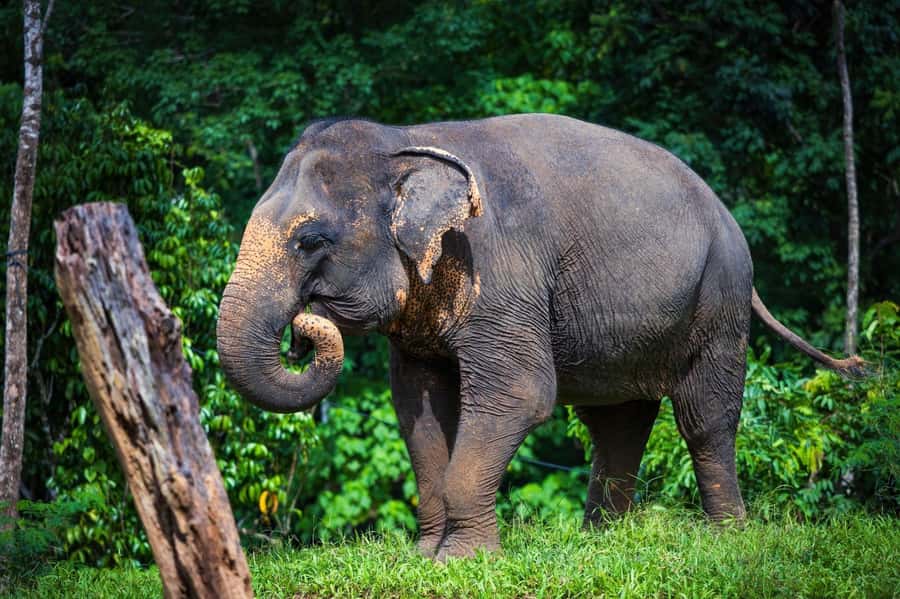
Do not expect a line of elephants waiting for photographs. The reserve’s appeal is that the animals are not presented as performers. One may be eating, another may be walking, and a third may show no interest in the group at all. That unscripted behavior is worth more than a forced pose.
The guides add context as you watch. They explain the history of the elephants and point out personality quirks. A guide named Mike has been praised for introducing the animals as individuals, while Tom has been singled out for a friendly and clear presentation. Other guides are also described as patient, funny, and easy to understand.
The commentary is especially useful if you know little about elephants. You are not just looking at size and appearance. You learn how their routines work and why certain forms of human contact can cause distress.
Watching natural routines in the jungle area
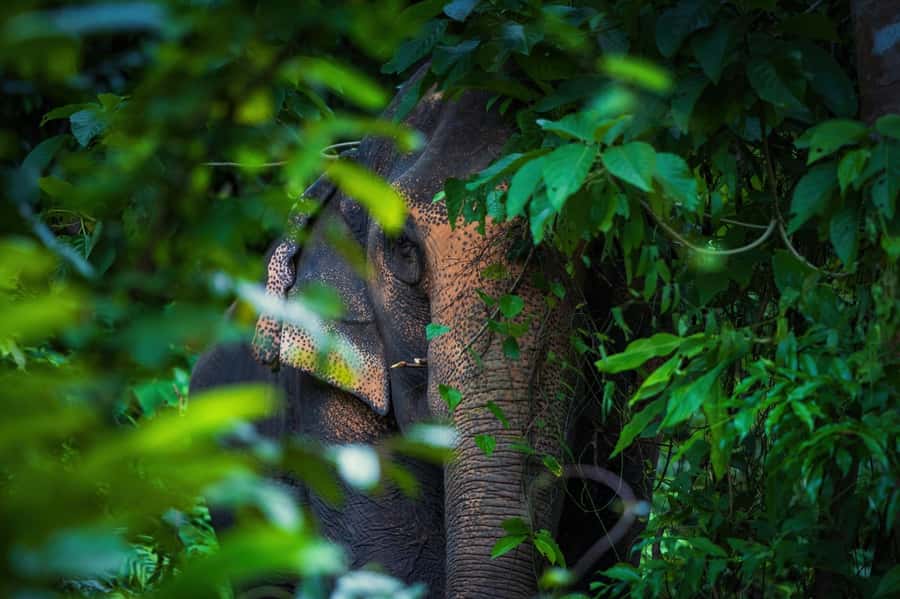
The tour continues to an elephant jungle observation area with natural water ponds and other features. This part slows the pace even more.
You may watch the elephants move through their surroundings, drink, eat, or simply stand and wander. The point is not to force an activity into every minute. You are given a chance to see the animals in a setting that aims to feel more natural than a performance arena.
For photographers, this is one of the best parts of the visit. You can take pictures without the visual clutter of chains, staged bathing, or circus-style props. Still, keep your expectations realistic. The elephants may not always face the camera, and the best photograph may be one that shows ordinary behavior rather than a dramatic pose.
The area also helps explain why the reserve does not need to offer constant action. Watching an elephant decide where to walk or how to approach food can be surprisingly engaging. It asks a little patience from you, but the reward is a calmer and more respectful encounter.
What the 1.5-hour schedule includes
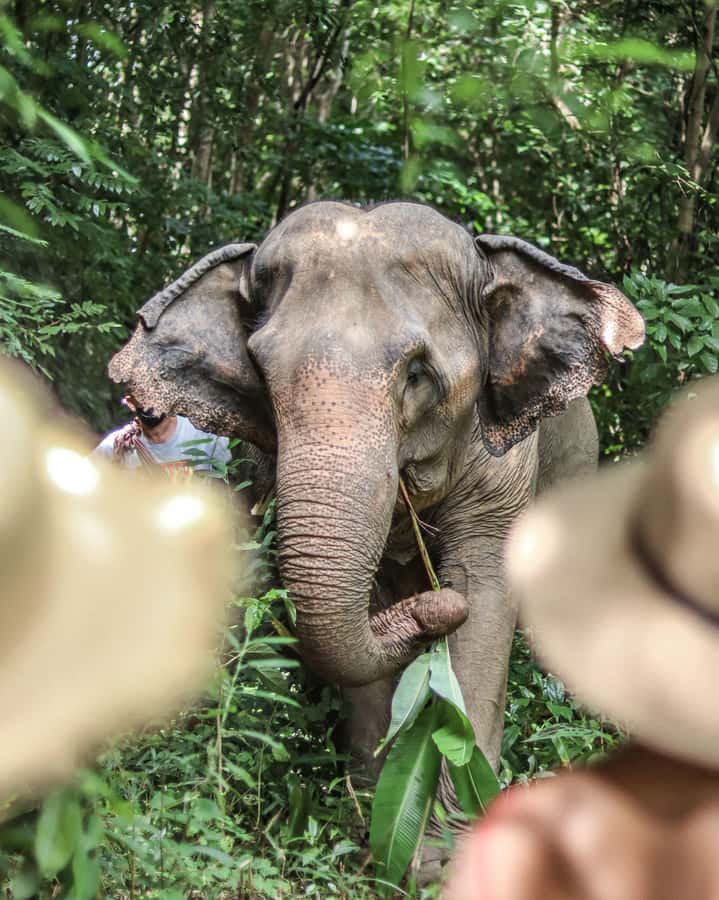
Ninety minutes is a sensible length for this activity. It gives you time for the introduction, food preparation, elephant meeting and feeding, guided commentary, and jungle observation without making the day feel overly long.
The visit is active enough to keep you occupied, but it is not packed with a dozen stops. That is important. A longer program is not automatically better if it means more repeated contact or more pressure on the animals.
The short format also fits neatly into a Phuket day. You can visit in the morning or afternoon, depending on available start times, then continue to another activity or return to your hotel area. Since transport is not included, the amount of time you need depends partly on your own journey to the reserve.
If you want a full-day conservation program, this may feel brief. You will not spend hours following the elephants or taking part in extensive care work. But for a first visit, 90 minutes gives you a clear introduction and enough time to understand the reserve’s approach.
The value of $37 per person
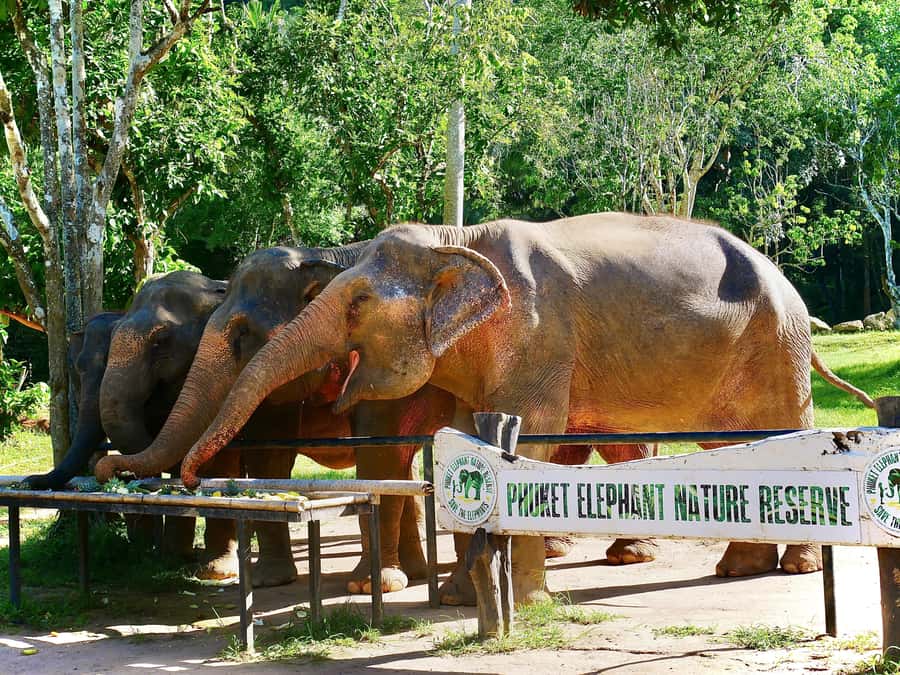
At $37 per person, this is not the cheapest possible elephant photo stop in Phuket. That is not really the right comparison.
The better question is what you are paying for. The ticket includes entry to the reserve, an English-speaking guide, the elephant meeting, and feeding. It also supports a place built around rescued elephants and a less intrusive form of tourism.
You are paying for staff time, safety arrangements, food preparation, education, and the chance to see elephants without riding or bathing them. If an attraction offers more physical contact for less money, that does not mean it offers better value. In this case, the ethical limits are part of the product.
I find the price fair for a focused experience, particularly if you care about animal welfare and want a guided visit rather than simply looking at elephants from outside. The value is weaker if you are mainly seeking a long, action-filled outing or a hands-on activity.
The on-site cafe helps round out the visit. Drinks and snacks cost extra, but having somewhere to sit before or after the tour is useful, especially in warm weather.
Who will enjoy this visit most
I would recommend the reserve to you if you want to:
- See rescued elephants in a calm setting
- Learn about individual animals and their rescue stories
- Support a sanctuary that rejects riding and bathing
- Prepare food and take part in feeding without touching
- Spend about 90 minutes on a focused Phuket activity
- Bring older children who can follow safety instructions
- Take photographs of elephants behaving naturally
This is a particularly good choice for families with school-age children. The food preparation gives them a job to do, while the guide’s explanations make the visit more meaningful than a quick animal photo stop.
It also suits first-time visitors to Thailand who are unsure how to judge elephant attractions. The reserve’s clear rules make the ethical position easy to understand.
You may want to choose another activity if your main goal is bathing, touching, riding, or hand-feeding elephants. Those activities are not offered here. You should also think twice if you dislike outdoor walking, need wheelchair access, or want transport included in the price.
Small details that make the visit better
Arrive prepared for sun and outdoor conditions. Comfortable shoes, a hat, and sunscreen are specifically recommended, and they will make the short walk around the reserve easier.
Bring a camera, but do not build the whole visit around getting a close-up portrait. The strongest moments may come when an elephant ignores the group, chooses its own path, or eats in its own distinctive way.
Listen carefully when the guide explains feeding procedures. The reserve’s approach depends on visitors not treating the elephants as domestic animals. Following instructions protects you and keeps the encounter respectful.
If you are visiting with children, explain the no-touch rule before arrival. That way, they understand that not petting an elephant is not a missed opportunity. It is one of the reasons the visit is designed to be kinder to the animals.
The guide can make a major difference. Tom and Mike have both been praised for warmth, humor, and clear explanations, though your guide may be someone else. English is the stated tour language.
Free cancellation is available up to 24 hours before the activity for a full refund, and you can reserve now and pay later. Those options are useful if your Phuket plans are still shifting.
Should you book Phuket Elephant Nature Reserve?
I would book this tour if you want an ethical elephant encounter with a clear educational purpose. The best parts are the rescued elephants, the personal stories, the food preparation, and the chance to watch animals that are not being pushed into tricks or tourist contact.
I would not book it expecting a petting zoo or a fast-moving adventure. The reserve asks you to slow down, keep your distance, and accept that the elephants are in charge of the encounter.
For $37, the 1.5-hour visit offers good value for a respectful introduction to elephant care in Phuket. Choose it for observation, learning, and support for a different model of animal tourism. If that sounds like the experience you want, this is an easy recommendation.
FAQ
Where does the elephant tour start?
The tour starts at Phuket Elephant Nature Reserve. Meet your guide next to Hug Me Cafe at the reserve.
Where does the activity end?
The activity ends back at the meeting point next to Hug Me Cafe.
How long does the tour last?
The tour lasts 1.5 hours. Starting times depend on availability.
What is included in the ticket?
The ticket includes entry to Phuket Elephant Nature Reserve, an English-speaking guide, and the elephant meeting and feeding activity.
Is transportation included?
No. You must make your own way to Phuket Elephant Nature Reserve.
Are food and drinks included?
No. Food and drinks are not included, though the reserve has an on-site cafe.
Can I touch the elephants?
No. The experience is designed around observation and feeding without touching the elephants.
Can I bathe or ride the elephants?
No. Bathing and riding are not part of this experience.
What language does the guide speak?
The live tour guide speaks English.
Is the activity suitable for wheelchair users?
No. The activity is not suitable for wheelchair users.
More National Parks in Phuket
- Khao Sok National Park & Samet Nangshe Private Tour from Phuket
★ 4.5 · 23 reviews - Chiang Mai: Doi Inthanon National Park Eco-Friendly Tour
★ 4.6 · 6,667 reviews - From Bangkok: Khao Yai National Park Small-Group Day Trip
★ 4.5 · 704 reviews - Chiang Mai: Doi Inthanon National Park and Pha Dok Siew Trek
★ 4.5 · 527 reviews
Just added in Phuket
- The Upside Down House: Phuket’s Must-See Attraction★ 4.7 · 13 reviews
- Simon Cabaret Phuket Show Included Tickets and Transfer★ 4.4 · 155 reviews
- Siam Niramit Phuket Admission Ticket with Transfer Option★ 4.6 · 49 reviews
- Phuket: White Water Rafting, ATV, and Zipline Adventure★ 3.1 · 35 reviews
- Phuket: Zipline Flying Higher than a Hawk with ATV Option★ 4.7 · 33 reviews
- Phuket:City Tour,Big Buddha, Forest Safari Tiger Park Canopy★ 3.6 · 15 reviews
- Phuket: Fully Customized Night Market Tour★ 4.2 · 18 reviews
- Phuket: Big Buddha View Wat Chalong, Old Town Guided Tour★ 3.6 · 38 reviews
Elephant Sanctuary Tours, compared.
Elephant Sanctuary, Waterfall & Bamboo Rafting
Read our review →
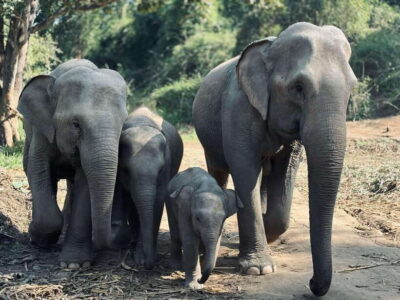
Elephant Sanctuary Feeding Program Half-Day Tour
Read our review →
Elephant Jungle Sanctuary Ethical Feeding Experience
Read our review →
Elephant Sanctuary, Long Neck & Sticky Waterfall
Read our review →
Elephant Bathing Session at Krabi Elephant Shelter
Read our review →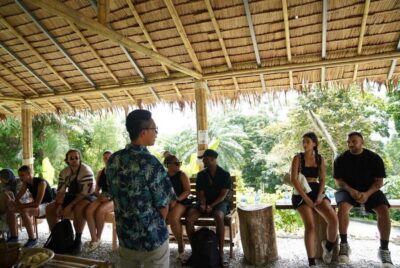
Elephant Sanctuary Guided Tour with Hotel Transfers
Read our review →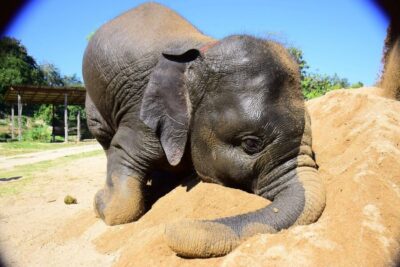
Browse the lists this tour appears in