
Reviewed · THAI COOKING CLASSES
Hands-on Thai Cooking Class & Market Tour in Sukhumvit
Come hungry, leave with recipes. This 3.5-hour Bangkok experience gives you a useful taste of Thai food culture, from choosing fresh ingredients at a local market to pounding curry paste and cooking four dishes with a professional chef. I especially like the individual cooking stations, which let you prepare the food you will actually eat, and the chance to make coconut milk and curry paste from scratch instead of relying on cans and jars. The main consideration is location: you may need a 10 to 15-minute walk from the BTS station, and finding the school inside the market area can take a little patience.
The class costs $45.66 per person, a fair price for a guided market visit, four cooked dishes, a sit-down meal, recipes, drinking water, and a personal locker. Morning and afternoon sessions are not identical: mornings include the market tour, while afternoon classes focus on fruit carving. If you want the market experience, check the session time carefully before booking.
In This Review
- Key points before you book
- Starting at House of Taste on Sukhumvit 4
- The morning market visit and the afternoon alternative
- Four dishes, cooked and eaten in stages
- The weekly menu: choose your cooking day carefully
- Monday: Som Tum, Pad Thai, and Green Curry
- Tuesday: Tom Kha Gai, Pad Krapow Gai, and Red Curry
- Wednesday: Tom Yum Goong, Pad See Ew, and Green Curry
- Thursday: Larb Gai, Pad Thai, and Panang Curry
- Friday: Som Tum, Pad Krapow Gai, and Red Curry
- Saturday: Tom Kha Gai, Pad Thai, and Green Curry
- Sunday: Tom Yum Goong, Pad See Ew, and Panang Curry
- Mango sticky rice and fruit carving
- Why the individual stations matter
- The instructors: April, Peach, and the teaching style
- Taste, technique, and what you take home
- Price and value at $45.66
- Who will enjoy this class most
- Should you book it?
- FAQ
- Where does the Thai cooking class begin?
- Where does the experience end?
- How long does the class last?
- How many dishes will I prepare?
- Does the menu change by day?
- Is a market tour included?
- Is drinking water included?
- Are vegetarian, halal, and kosher options available?
- Is hotel pickup included?
- Is the class suitable for children?
- How many people can join the class?
- What should I wear?
Key points before you book
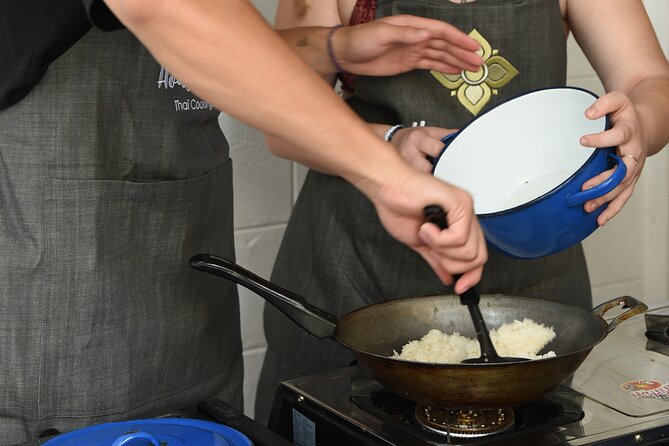
- Four dishes, one at a time: You cook and eat each dish while it is hot, rather than preparing everything and facing a cold mountain of food at the end.
- Curry paste made from scratch: The class shows you how Thai curry gets its flavor, using hands-on pounding and preparation instead of ready-made paste.
- A small local market visit: Morning participants shop for ingredients and begin learning about Thai produce before entering the cooking school.
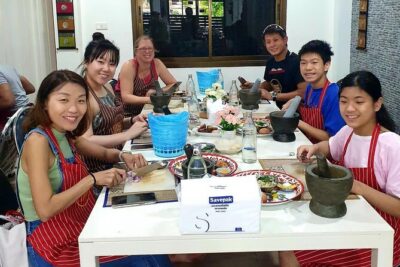
- Your own cooking station: You prepare your own portion, rather than sharing one stove with several people.
- A rotating weekly menu: The dishes change by day, so Som Tum fans and Pad See Ew fans need to select their class date with care.
- Friendly, well-rated instruction: Chef April and instructor Peach receive especially warm praise, with the class holding a 99 percent recommendation rate and a five-star rating from 571 reviews.
Starting at House of Taste on Sukhumvit 4
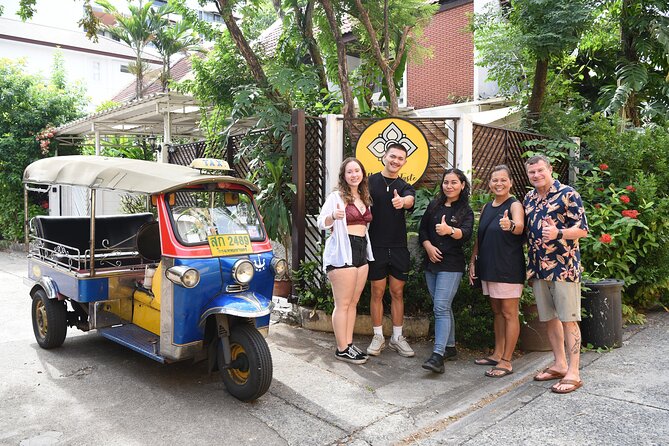
The class begins at House of Taste Thai Cooking School, at 4147/4 Sukhumvit 4 in Bangkok’s Khlong Toei district. The school is near public transportation, but the final approach is not completely obvious. GPS can bring you to the right street, yet you may need to walk through the market to find the house farther inside.
That detail matters. Give yourself extra time instead of arriving at the last minute with your apron already imagined and your phone running low on patience. One useful local touch is that the staff may help guide you from the street, including through WhatsApp, if you have trouble locating the entrance.
A small amount of walking is involved, so comfortable shoes make sense. The activity ends back at the school, and hotel pickup and drop-off are not included. You arrange your own way there and back.
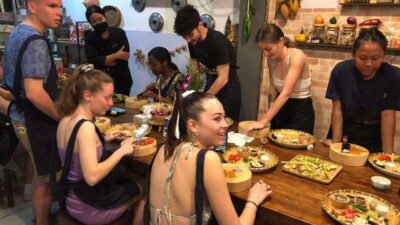
The class can include up to 18 people. That is large enough to meet people from several countries, but still small enough for the instructor to keep the session moving. A personal locker is included, which is handy when you arrive with a day bag.
More Markets and Floating Markets in Bangkok
- Bangkok: Damnoen Saduak Market and Maeklong Railway Market
★ 4.5 · 26,723 reviews - The Old Siam: Damnoen Saduak and Maeklong Railway Market
★ 4.5 · 10,992 reviews - Bangkok: Train Market & Floating Market with Boat Ride
★ 4.7 · 9,547 reviews
The morning market visit and the afternoon alternative
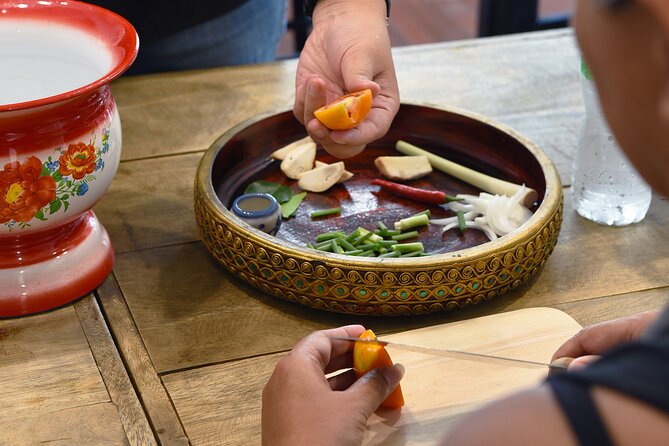
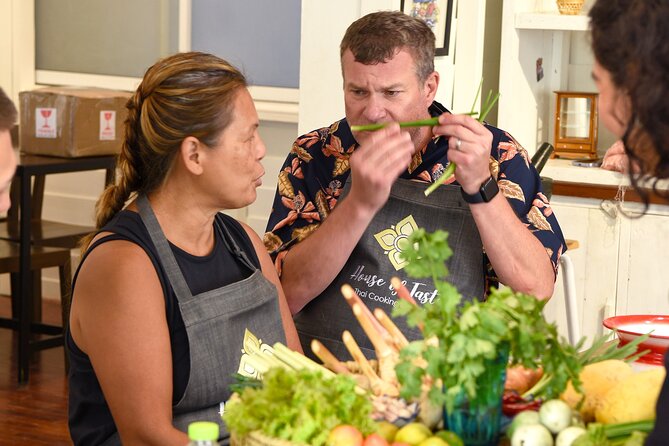
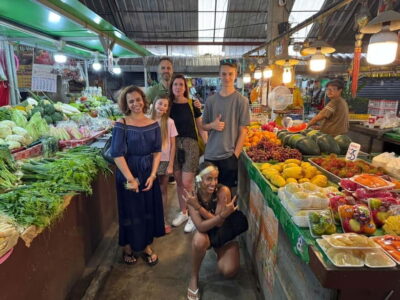
The morning class begins with a market tour. This is more than a quick photo stop. You shop for the fresh ingredients used later in class and learn to recognize the herbs, vegetables, spices, and other products that give Thai food its particular character.
For a first visit to Bangkok, this early market section adds useful context. Thai recipes often depend on ingredients that look unfamiliar or have names you may not remember once you return home. Seeing them in their everyday setting helps connect the finished dish with the raw materials.
The market is also the one part that can feel less polished than a purpose-built tourist activity. You are moving through a working market, then making your way to the cooking school. That is part of the appeal, but it also explains why the meeting point can be slightly confusing.
Afternoon classes replace the market tour with fruit carving. If you are most interested in ingredients and shopping, book a morning session. If you prefer a later start or want to learn a decorative skill, the afternoon option may suit you better.
Four dishes, cooked and eaten in stages
The class gives you about two hours of hands-on cooking within the 3.5-hour experience. The pace is one of its strongest features. You prepare one dish, cook it, and eat it before moving to the next. This keeps the meal fresh and gives you time to ask questions between recipes.
You are not simply watching a chef perform. You pound, chop, stir, and sizzle under supervision. The exact level of independence may depend on the group and the dish, but the setup is designed for you to take part in the work.
The cooking school also covers the preparation of coconut milk and curry paste from scratch. That is valuable because these are not minor details in Thai food. They shape the texture, aroma, and strength of many familiar dishes. Back home, you can use the supplied recipes to try the process again.
The school provides cold and hot drinking water. Alcoholic drinks are available to purchase, but they cost extra. Meals are included according to the itinerary, and you sit down with the group to eat what you have prepared.
The weekly menu: choose your cooking day carefully
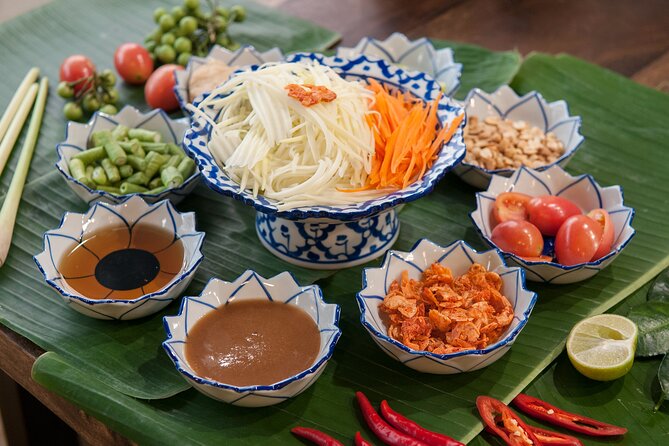
The menu rotates through the week. Mango sticky rice appears every day, while the other three dishes change.
More Thai Cooking Classes in Bangkok
- Bangkok: Hands-on Thai Cooking Class and Market Tour
★ 4.9 · 1,614 reviews - Bangkok: Tingly Thai Cooking School Half-Day Cooking Class
★ 4.9 · 1,191 reviews - Bangkok: Maliwan Thai Cooking Class with Market Tour
★ 4.9 · 1,133 reviews - Hands on Thai Cooking Class and Market Tour
★ 5.0 · 660 reviews
Monday: Som Tum, Pad Thai, and Green Curry
Monday gives you a broad introduction to Thai cooking. Som Tum brings raw papaya, pounding, and the sweet, sour, salty, and spicy balance associated with Thai flavors. Pad Thai offers a familiar street-food classic, while green curry gives you a chance to work with curry paste and coconut-based sauce.
Tuesday: Tom Kha Gai, Pad Krapow Gai, and Red Curry
Tuesday leans into aromatic soups, quick stir-frying, and curry. Tom Kha Gai offers a coconut-based preparation, while Pad Krapow Gai focuses on the savory, fragrant character of Thai basil-style cooking. Red curry rounds out the menu with another lesson in spice paste and coconut milk.
Wednesday: Tom Yum Goong, Pad See Ew, and Green Curry
Wednesday combines hot-and-sour soup, noodles, and curry. Tom Yum Goong uses shrimp, while Pad See Ew provides a milder, savory noodle dish. Green curry completes a menu with plenty of contrast in texture and flavor.
Thursday: Larb Gai, Pad Thai, and Panang Curry
Thursday includes Larb Gai, a seasoned minced chicken dish, alongside Pad Thai and Panang Curry. This is a good choice if you want a menu that moves between fresh, savory, noodle, and creamy curry flavors.
Friday: Som Tum, Pad Krapow Gai, and Red Curry
Friday returns to Som Tum and Red Curry, with Pad Krapow Gai in the middle. It is a strong day for classic Thai flavors, especially if you want a balance between a raw salad-style dish, a fast stir-fry, and curry.
Saturday: Tom Kha Gai, Pad Thai, and Green Curry
Saturday repeats Tuesday’s menu with Tom Kha Gai, Pad Thai, and Green Curry. It may suit first-time cooks who want several well-known Thai dishes in one sitting.
Sunday: Tom Yum Goong, Pad See Ew, and Panang Curry
Sunday repeats Wednesday’s menu. You get a hot-and-sour shrimp soup, savory noodles, and a rich curry, followed by the daily mango sticky rice.
Mango sticky rice and fruit carving
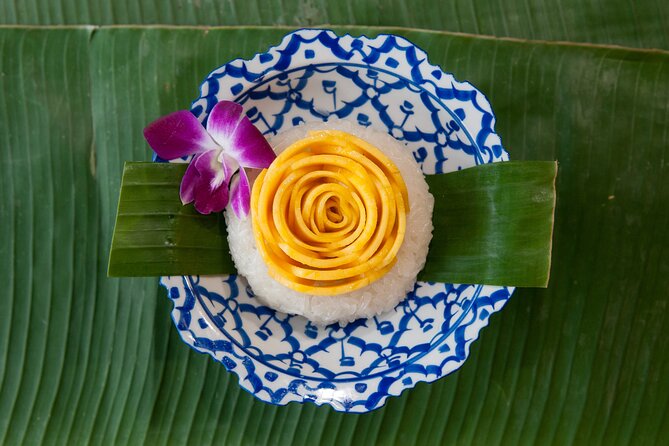
Mango sticky rice is included every day, making dessert a dependable part of the class. It also gives you a chance to work with the sweet side of Thai cuisine after the sharper flavors of curry, soup, and stir-fry.
Afternoon participants learn fruit carving instead of visiting the market. The experience can include shaping mango into a flower, a small but memorable presentation skill. It will not replace the market if your main goal is ingredient shopping, but it adds a visual element to the class and gives you something decorative to practice at home.
Why the individual stations matter
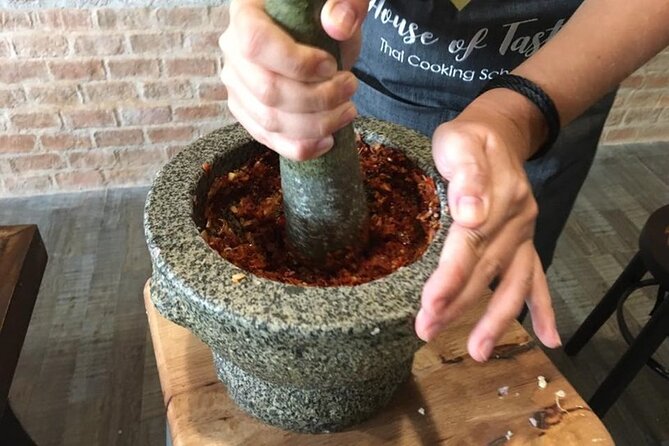
Many cooking classes ask two or three people to share a burner, cutting board, and ingredients. That arrangement can be social, but it also means you may spend part of the class watching someone else handle the pan.
Here, the individual-station format gives you more control. You prepare the portion you later eat, and you get direct practice with each recipe. I see this as one of the best reasons to choose the class, especially if you are booking it to learn rather than simply to enjoy a meal.
The air conditioning is another practical advantage in Bangkok’s heat. Cooking over a hot stove is more pleasant in a cooled room, and it helps you stay focused during the longer preparation steps.
The instructors: April, Peach, and the teaching style
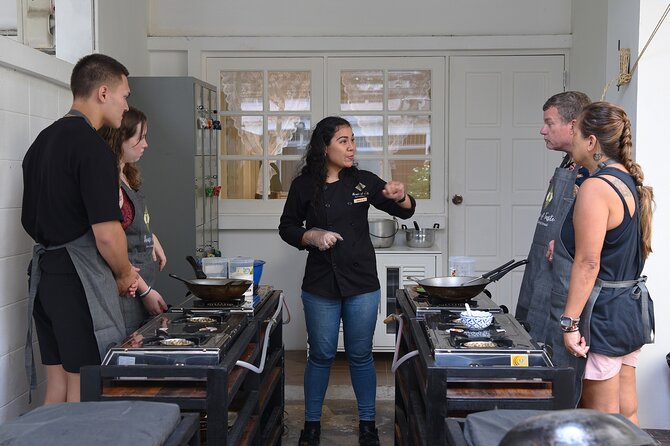
Chef April receives especially strong praise for making the class relaxed, clear, and fun. She also brings in stories about Thai ingredients and life in Bangkok, which gives the cooking more local context than a list of recipe instructions.
Peach is also singled out for patient teaching and useful techniques that you can repeat in your own kitchen. That matters because the best cooking class souvenir is not a certificate. It is the confidence to make the dish again without someone standing beside you.
The teaching style is generally described as easy to follow, with time for questions and a comfortable pace. You make a dish, eat it, and then move forward. That rhythm avoids the usual cooking-class problem of trying to remember five instructions while your curry is already bubbling over.
The experience is not flawless for every personality. One account describes a chef as curt and possibly annoyed during an afternoon class. That appears to be an isolated concern rather than the general pattern, but it is worth noting if warm, highly animated instruction is essential to you.
Taste, technique, and what you take home
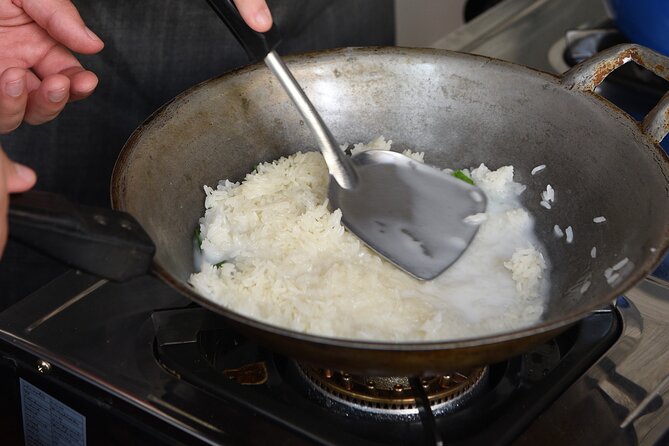
The class is useful because it explains the building blocks of Thai cooking rather than handing you four recipes without context. You learn about exotic ingredients, curry paste, coconut milk, chopping, pounding, and the order in which dishes come together.
You also receive a standard recipe set after the class. It will not reproduce every market condition or every chef’s instinct, but it gives you a practical starting point for cooking at home.
The four dishes are eaten individually while hot and fresh. This is better than a final group feast where dishes sit on the table for half an hour. You can notice how each recipe tastes at its proper temperature and ask about adjustments as you go.
If you dislike spicy food, do not assume every dish will be mild. The supplied information confirms vegetarian, halal, and kosher options, plus arrangements for allergies and other dietary needs, but you must request these when booking. Be specific. Dietary requests are not something to leave until you are already holding a mortar and pestle.
Price and value at $45.66
At $45.66 per person, this is priced above a basic meal in Bangkok but includes far more than lunch or dinner. You receive a market experience on morning departures, professional instruction, four dishes, drinking water, recipes, a locker, and the chance to prepare your own food.
The value is strongest if you care about learning technique. If you only want to eat Thai food, a restaurant will be cheaper and require less work. If you want a useful activity that connects ingredients, preparation, and eating, the price is reasonable.
The maximum group size of 18 keeps the cost lower than a private lesson while offering a social setting. You may meet people from different countries, and the meal gives the group an easy way to talk. The tradeoff is that attention is shared, even with individual stations.
Children under seven must be accompanied by an adult. A child rate is available only when sharing with two paying adults. This is worth checking before you book a family place, especially since the class involves knives, heat, and a few hours of focused preparation.
Who will enjoy this class most
I would recommend this experience to first-time visitors who want more than a sightseeing stop. It gives you a practical way to understand Thai flavors, and the recipes can extend the memory beyond your Bangkok stay.
It is also a good fit for couples and friends. You cook separately but eat together, and the market visit gives you a shared starting point. Solo participants can also fit in comfortably because the group meal creates natural conversation.
Home cooks will get the most from the class, especially those interested in curry paste and coconut milk from scratch. The individual station setup makes the instruction more useful than a demonstration-only format.
The class may be less suitable if you dislike group activities, have severe mobility limits, or want a private chef lesson. There is some walking, hotel transport is not included, and the location inside the market may require extra effort to find.
Should you book it?
Book this class if you want to make Thai food, not just watch someone else make it. The individual station, four-course format, recipes, fresh market component, and hands-on curry preparation make the $45.66 price sensible for a half-day Bangkok activity.
Choose your day based on the menu, and choose morning if the market matters more to you than fruit carving. Request vegetarian, halal, kosher, allergy, or other dietary arrangements at booking. I would also save the meeting point, allow extra time for the walk through the market, and wear comfortable shoes.
Skip it if you want a quick meal, a private class, or a completely effortless arrival. For most curious eaters, though, this is a practical and enjoyable way to take a little of Bangkok’s cooking culture home.
FAQ
Where does the Thai cooking class begin?
The class begins at House of Taste Thai Cooking School, 4147/4 Sukhumvit 4, Khlong Toei, Bangkok 10110, Thailand.
Where does the experience end?
The activity ends back at the cooking school meeting point.
How long does the class last?
The experience lasts approximately 3 hours and 30 minutes.
How many dishes will I prepare?
You will prepare four Thai dishes from scratch, including mango sticky rice every day.
Does the menu change by day?
Yes. The dishes vary from Monday through Sunday. Som Tum, Pad Thai, green curry, Tom Yum Goong, Pad See Ew, Panang curry, and other dishes appear on different days.
Is a market tour included?
A market tour is included with the morning class. Afternoon sessions feature fruit carving instead.
Is drinking water included?
Yes. Cold and hot drinking water are included. Alcoholic drinks are available to purchase separately.
Are vegetarian, halal, and kosher options available?
Yes. Vegetarian, halal, and kosher options are available, but you must request them when booking.
Is hotel pickup included?
No. Hotel pickup and drop-off are not included, so you must make your own way to the meeting point.
Is the class suitable for children?
Children under seven must be accompanied by an adult. The child rate applies only when sharing with two paying adults.
How many people can join the class?
The activity has a maximum of 18 participants.
What should I wear?
Comfortable shoes are recommended because a small amount of walking is involved.
Just added in Bangkok
- Wonderful Pearl Dinner Cruise★ 3.5 · 27 reviews
- re:leaf spa and massage★ 4.0 · 10 reviews
- White Orchid Sunset Dinner Cruise Calypso Ladyboy Cabaret Show★ 4.0 · 10 reviews
- Yoga in the Park Thailand★ 5.0 · 12 reviews
- Visit Wat Pho and Wat Arun with Local Expert★ 4.0 · 14 reviews
- Visit temples in and around Bangkok with a former monk of 10 years★ 5.0 · 30 reviews
- 3-Hour Bangkok Walking Tour: Wat Pho and Wat Arun★ 5.0 · 102 reviews
- Miracle Bangkok Airport Lounges – Relax Before You Fly★ 3.0 · 32 reviews
Thai Cooking Classes, compared.
Half-Day Thai Cooking Class at Organic Farm in Chiang Mai
Read our review →
Cooking Class, Market & Thai Herbs Garden Tour
Read our review →Authentic Cooking Class with Market & Farm Visit
Read our review →
Phuket Thai Cooking Class with Market Tour Option
Read our review →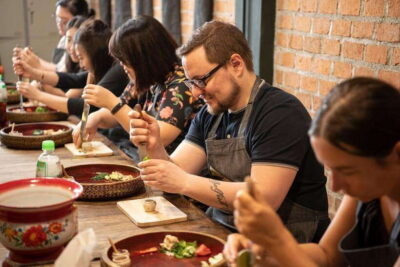
Tingly Thai Cooking School Half-Day Cooking Class
Read our review →Browse the lists this tour appears in