
Reviewed · SUNSET AND EVENING TOURS
Guided Chiang Mai City Night Tour by EV Tram
Chiang Mai after dark feels wonderfully different. This two-hour EV tram ride offers an easy introduction to the old city, with quiet electric transport, temple visits, and local market stops instead of a rushed list of photo stops. I like the low-noise tram and the way the guide connects each place to Chiang Mai’s beliefs, city planning, and daily routines. The small group, limited to 12 people, should also make it easier to hear explanations and ask questions.
I also like that the evening includes more than famous monuments. You visit local markets, see food areas used by residents, and sample snacks and drinks during the food stop. The main consideration is timing: two hours is enough for orientation, but not enough for a long meal, extended shopping, or a close look inside every temple.
In This Review
- What makes this night tour worth considering
- Why an EV tram is a good fit for Chiang Mai at night
- Starting at the Three Kings Monument at 6:00 pm
- Wat Chiang Man and the oldest Lanna setting
- Wat Lok Molee and a change in architectural mood
- Chang Puek Gate and the city’s evening food culture
- Wat Pa Pao and Wat Nong Kham’s Burmese-Shan connections
- Warorot Market and Tha Phae Gate
- Chiang Mai Gate Night Market and a short food tasting
- Wat Chedi Luang and Wat Phra Singh
- What the $27.43 price really covers
- Timing, clothing, and who will enjoy it most
- Booking details and cancellation flexibility
- Should you book the Chiang Mai EV tram tour?
- FAQ
- Where does the Chiang Mai EV tram tour begin?
- What time does the tour start?
- How long does the tour last?
- Where does the tour end?
- Is hotel pickup included?
- What food and drinks are included?
- Can I cancel for a refund?
What makes this night tour worth considering
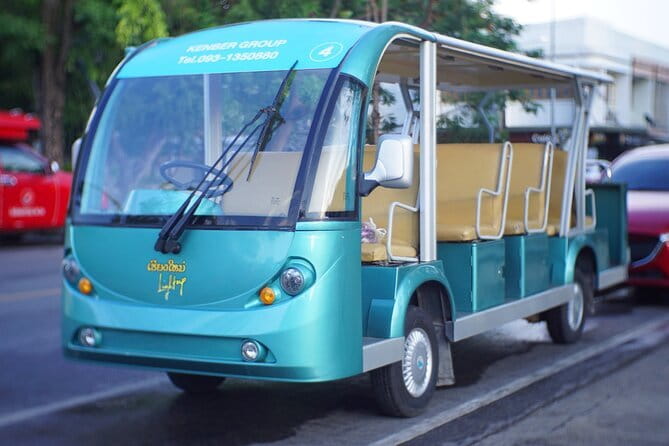
- Electric transport after sunset: The EV tram keeps the ride quiet and cuts down on fumes while moving between scattered sights.
- A useful first-night introduction: The route links temples, gates, markets, and public spaces so you can understand Chiang Mai’s old city more quickly.
- A small maximum group of 12: This is a more personal setup than a large sightseeing bus.
- Local food without a separate food tour: Chiang Mai Gate Night Market includes snacks and drinks, with extra food available at your own cost.
- Several cultural traditions in one route: Wat Chiang Man, Wat Pa Pao, Wat Nong Kham, and Wat Phra Singh reflect different strands of northern Thai and Burmese-Shan culture.
- Simple cancellation terms: You can cancel for a full refund up to 24 hours before the 6:00 pm start.
Why an EV tram is a good fit for Chiang Mai at night
Chiang Mai’s old city is compact, but the most useful sights are spread across several roads and gates. Walking the entire route would take more energy and time, while a conventional vehicle would make the evening feel more like a drive-by tour. The EV tram offers a middle ground. You ride between areas, then get out for short visits and explanations.
The electric vehicle also suits the tone of the evening. Temples and old gates are easier to appreciate without the constant rumble of a large engine. You still see the city’s traffic and street activity, but the ride is less intrusive.
The tour is designed for orientation rather than exhaustive sightseeing. That matters if you have just arrived in Chiang Mai and want to learn how the old city fits together. It is less suitable if your main goal is to spend half an hour photographing one temple from every angle.
The group limit of 12 is another plus. A guide can usually speak to the whole group without shouting, and you have a better chance of asking about a temple detail or a market food. The tour requires at least two adults per booking, and the child rate applies only when a child shares with two paying adults.
More Sunset Tours in Chiang Mai
- Chiang Mai: Doi Suthep and Wat Umong Enchanting Evening Tour
★ 4.6 · 1,811 reviews - Best seller!! Amazing Night tour, Doi Suthep + Wat umong – Top Must visit!
★ 4.5 · 451 reviews - Chiang Mai Temples and Market Tuk-Tuk Evening Night Tour
★ 4.5 · 201 reviews
Starting at the Three Kings Monument at 6:00 pm
The meeting point is the Three Kings Monument on Prapokklao Road. Arrive with enough time to find the monument and settle in before the 6:00 pm departure. The area provides a sensible starting point because it places you near Chiang Mai’s civic and historical center.
The first part includes a short walk to Wat Inthakin Sadeu Muang. This is linked with the Inthakin city pillar, said to have been established in 1296 under King Mangrai. Your guide uses this area to explain the beginnings of Chiang Mai and the importance of the city pillar in local belief.
This opening stop is brief, about 15 minutes, but it gives the rest of the ride a frame. You are not simply looking at old buildings. You begin to see the old city as a planned center shaped by royal power, religious practice, and protective walls.
After this introduction, you board the tram. Wear shoes you can walk in comfortably, even though the vehicle does much of the moving. Smart-casual clothing is requested, which is especially important because several stops are at Buddhist temples.
Wat Chiang Man and the oldest Lanna setting
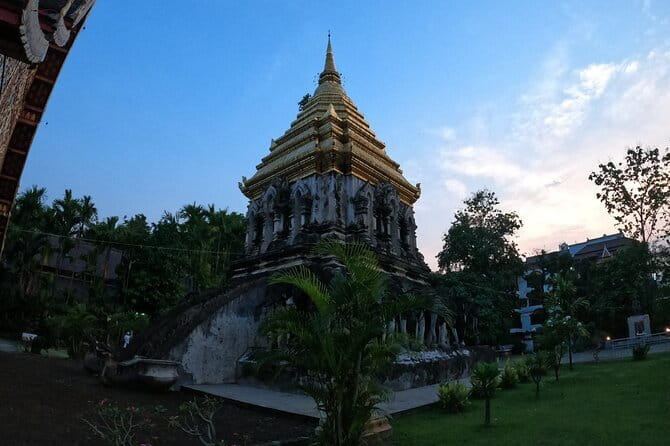
Wat Chiang Man is a short stop of about five minutes. That may sound brief, but it introduces one of the city’s earliest temple settings and a distinctive Lanna-style chedi supported by rows of elephant-shaped buttresses.
The elephant forms are the detail to watch for. They are not simply decorative figures added for charm. They give the structure a strong visual identity and reflect the way religious buildings in northern Thailand use animals, stories, and symbolic forms.
Five minutes will not allow a slow architectural study. I would treat this as a first look, then return independently if the temple interests you. The value here is the guide’s explanation and the chance to place Wat Chiang Man within the old city route.
Wat Lok Molee and a change in architectural mood
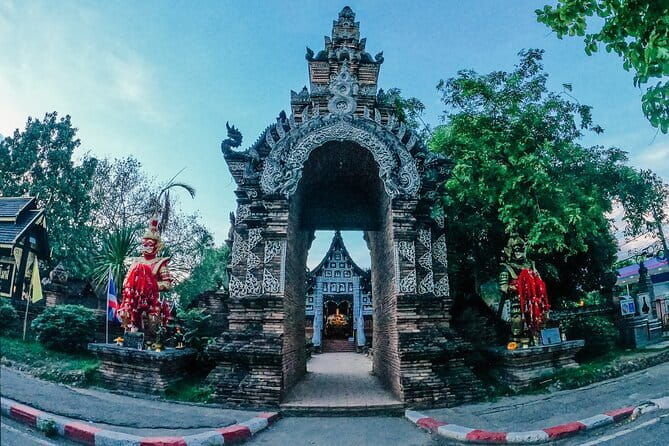
The stop at Wat Lok Molee lasts about 20 minutes, giving you more time to look around. The complex is known for a handsome wooden setting and terracotta sculptures, and it sits outside the old city walls. It is thought to have been founded in the 14th century for monks from Burma.
This is one of the stronger temple stops for people interested in northern architecture. The wooden buildings and earth-colored details create a different mood from the more formal masonry structures you may see elsewhere in Chiang Mai.
The guide’s local context is useful here. Wat Lok Molee helps show that Chiang Mai’s religious culture was never isolated from neighboring regions. Burmese influence is part of the city’s story, and this stop makes that connection visible without requiring you to study a long list of dates.
A completely different kind of day out:
- Half-Day Thai Cooking Class at Organic Farm in Chiang Mai
★ 5.0 · 19,087 reviews - Chiang Mai: Elephant Sanctuary, Waterfall & Bamboo Rafting
★ 4.9 · 9,160 reviews - Chiang Mai: Doi Inthanon National Park Eco-Friendly Tour
★ 4.6 · 6,667 reviews - Chiang Mai: Elephant Sanctuary & Waterfall Group Tour
★ 4.9 · 5,780 reviews
Chang Puek Gate and the city’s evening food culture
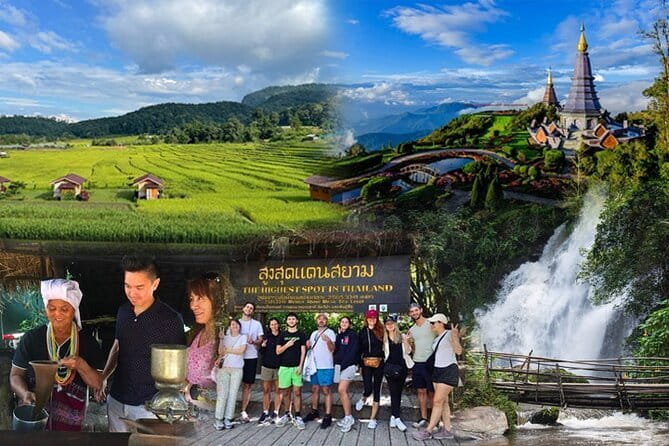
The tram continues toward Chang Puek Gate, the northern gate of the old city. Ruins of the city wall remain in the area, and the gate is also associated with a popular evening street-food and market zone.
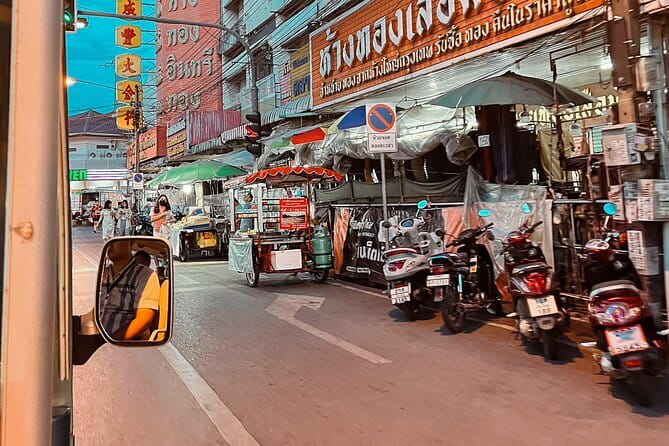
This is where the tour shifts from formal monuments to ordinary city life. The food area is intended for dinner, so you can see how the old city functions after the temple doors and museums have closed. The route does not treat Chiang Mai as a collection of preserved buildings. It shows the gates and roads as active parts of the modern city.
The itinerary does not give a fixed stop length here, so do not count on a long, unhurried meal at Chang Puek Gate. If you want to eat there, you may need to make choices quickly or return later on your own. That is a small limitation, but it is also typical of a short evening orientation tour.
Wat Pa Pao and Wat Nong Kham’s Burmese-Shan connections
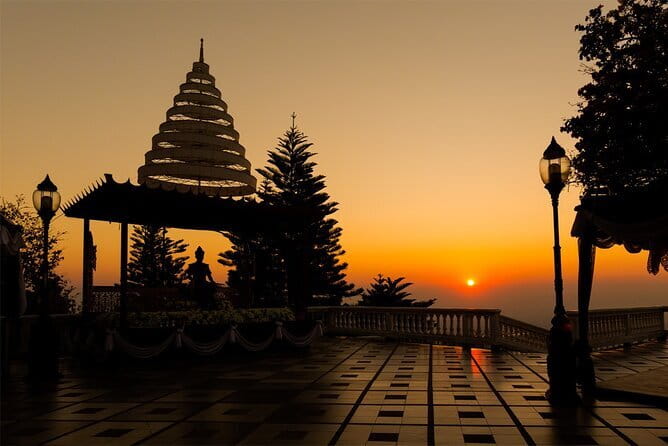
Wat Pa Pao is described as the first temple of the Ngiaw, or Tai Yai, community in Chiang Mai. The visit lasts about 15 minutes. This stop adds an important cultural layer because it points to the city’s Tai Yai connections rather than presenting northern Thai culture as one single tradition.
Wat Nong Kham continues that theme with Burmese-Shan temple styles. No fixed duration is provided for this stop, so the amount of time may depend on the evening route and the guide’s pacing. The important point is the pairing: you see more than the most famous royal or central temples.
For you, this can be one of the most valuable parts of the route. Popular sights often tell only the best-known version of a city. These temples show how different communities helped shape Chiang Mai’s religious and architectural character.
Warorot Market and Tha Phae Gate
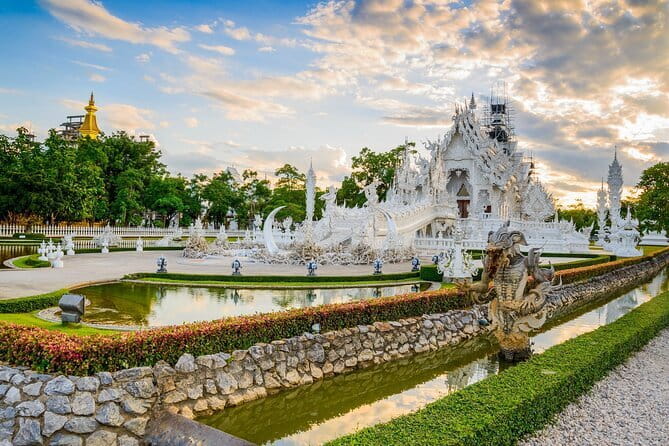
Warorot Market is Chiang Mai’s largest local fresh market, with produce and other goods sold to local people. The tour gives you a chance to look beyond souvenir shops and see a market tied to everyday shopping.
Market visits can be rewarding, but they work best when you know what to expect. This is not presented as a formal cooking class or a guided tasting session. You are there to observe the range of fresh products and goods, listen to the guide, and get a clearer sense of local commerce.
The route also passes Tha Phae Gate, a central place for public activities and festivals. Like Chang Puek Gate, Tha Phae is more than a surviving piece of old fortification. It remains a gathering point in the city, and the stop helps connect Chiang Mai’s historic boundaries with present-day public life.
Since the tour begins at the Three Kings Monument and returns there at the end, the tram route gives you a useful mental map: civic center, temples, city gates, markets, and the main gathering areas. That map can save you time during the rest of your stay.
Chiang Mai Gate Night Market and a short food tasting
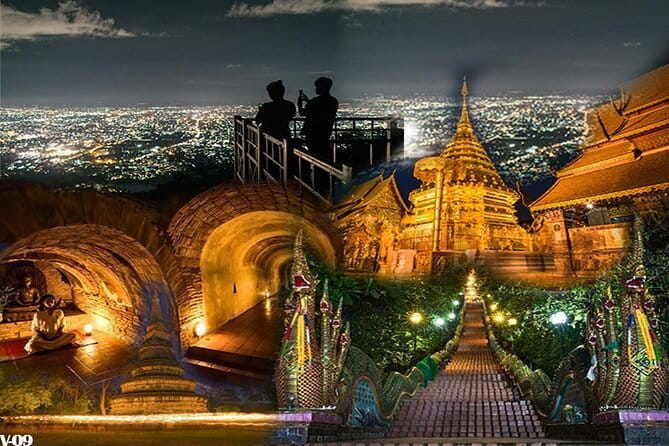
The Chiang Mai Gate Night Market receives about 25 minutes, the clearest food-focused portion of the evening. A local foodie accompanies the stop, and some snacks and drinks are included. Bottled water is also provided.
I like this setup because it adds food without turning the whole tour into a large meal. You get a taste of the street-food scene and can decide what you want to try next. Extra food and drinks cost more, and alcohol is not included.
Twenty-five minutes is enough for a sample and a look around, but it is not a leisurely dinner. If you have a long list of dishes to try, plan to return another evening. The tour is better understood as a guided introduction to local food culture, not a full tasting itinerary.
The evening atmosphere also changes the way you see the city. After sunset, temple courtyards, gateways, food stalls, and market streets take on a calmer but more social character. One account of the tour praised the peaceful air and said the photo opportunities were especially good at night. That matches the main appeal here: the darker setting gives familiar places a different visual feel.
Wat Chedi Luang and Wat Phra Singh
Wat Chedi Luang is the major final temple stop, with about 10 minutes scheduled. Its large stupa is the main draw, and the site is also associated with the city pillar and Buddhist scriptures. The remaining architecture shows the scale and craftsmanship of earlier Chiang Mai.
Ten minutes is enough to see the main form and listen to a short explanation, but not enough for a full examination of the grounds. If this is the temple you most want to explore, make room for a separate daytime visit.
Wat Phra Singh is also included in the route, with its northern-style chapel architecture highlighted. The itinerary does not provide a fixed duration for this stop, so expect a brief visit or an exterior explanation rather than an extended temple tour.
Together, these final stops give you a strong architectural finish. Wat Chedi Luang presents monumental scale, while Wat Phra Singh focuses more on the beauty of northern design. The contrast is useful, especially if you are new to Lanna art and temple architecture.
What the $27.43 price really covers
At $27.43 per person, the tour is priced as a moderate introduction rather than a luxury private outing. The fee includes the EV tram, an English-speaking professional guide, listed admission fees, bottled water, some snacks and drinks during the food stop, and travel accident insurance.
The value is strongest if you would otherwise spend an evening paying separate transport fares and trying to identify temples and markets on your own. You also receive a connected explanation of the city, which is harder to get from a simple map or self-guided walk.
The value is weaker if you want extensive time at each site or a large amount of food. Extra dishes, drinks, alcohol, souvenirs, and personal purchases are not included. Pickup and drop-off are also separate, costing THB 500 per way per group for locations within 5 kilometers of the city center.
Because pickup is optional, meeting at the Three Kings Monument is the better value. The endpoint is the same meeting point, so you should also plan your evening around returning there after the tour.
Timing, clothing, and who will enjoy it most
The advertised duration is about two hours, though the route can feel longer if stops and food time run over. One account described the visit as lasting about two and a half hours and passing very quickly. I would leave some flexibility after the scheduled finish rather than booking a tight dinner reservation.
This tour suits you best if:
- You have just arrived and want a city overview.
- You prefer a calm ride to a fast-paced bus circuit.
- You enjoy temples, local markets, and cultural explanations.
- You want a small group rather than a large coach.
- You like sampling food but do not need a full evening meal included.
- You want an evening activity with limited walking between sights.
It may not suit you if you want nightlife, extended market shopping, or a serious food tour. It also may disappoint photographers who need long, quiet periods at each temple. The route offers many subjects, but the schedule keeps moving.
Wear smart-casual clothing suitable for temple visits. Since the route includes some walking and several religious sites, respectful clothing and comfortable footwear are sensible choices.
Booking details and cancellation flexibility
Confirmation is provided at booking, and most people can participate. The tour has a maximum of 12 participants, with a minimum booking requirement of two adults.
You can cancel up to 24 hours before the local start time for a full refund. Cancellations or changes made less than 24 hours before departure are not refunded or accepted, so check your plans before the deadline.
Should you book the Chiang Mai EV tram tour?
I would book this tour for a first evening in Chiang Mai, especially if you want context before exploring on your own. The quiet EV tram, small group, temple variety, and market stops create a useful introduction at a reasonable price.
I would not choose it as my only temple tour. The short visits mean you will see many places without fully exploring them. Think of it as a well-planned orientation with food and evening atmosphere, then return independently to the temples or markets that catch your interest.
For a first look at Chiang Mai after sunset, this is a sensible and responsible choice. You get a calm ride, local explanation, and a practical sense of how the old city works beyond its postcard views.
FAQ
Where does the Chiang Mai EV tram tour begin?
The tour begins at the Three Kings Monument on Prapokklao Road in Chiang Mai.
What time does the tour start?
The scheduled start time is 6:00 pm.
How long does the tour last?
The tour lasts approximately two hours.
Where does the tour end?
The activity ends back at the Three Kings Monument meeting point.
Is hotel pickup included?
No. Pickup and drop-off are optional and cost THB 500 per way per group for locations within 5 kilometers of the city center.
What food and drinks are included?
Some snacks and drinks are included during the food stop, along with bottled water. Extra food and drinks cost more, and alcoholic beverages are not included.
Can I cancel for a refund?
Yes. You can cancel at least 24 hours before the local start time for a full refund. Changes or cancellations made less than 24 hours before the start are not accepted or refunded.
Just added in Chiang Mai
- Full Day Doi Saket Hiking Tour★ 5.0 · 14 reviews
- Pha Dok Siew Nature Trail & Doi Inthanon National Park From Chiang Mai★ 4.0 · 23 reviews
- One day Elephants in Nature Experience & Grand Canyon Jumping★ 5.0 · 31 reviews
- Chiang Mai to White & Blue Temple, Black Museum & Golden Triangle★ 4.0 · 52 reviews
- One day Doi Inthanon National Park & Trekking on Kew Mae Pan★ 5.0 · 12 reviews
- Private Tour 2 Difference Trails Trekking at Doi Inthanon National Park★ 5.0 · 19 reviews
- Half day Long Neck hill tribe and Hmong hill tribe village★ 5.0 · 21 reviews
- One Day Tour Chiang Rai(White Temple , Blue Temple, Black House) Private Tour★ 5.0 · 63 reviews
Sunset and Evening Tours, compared.
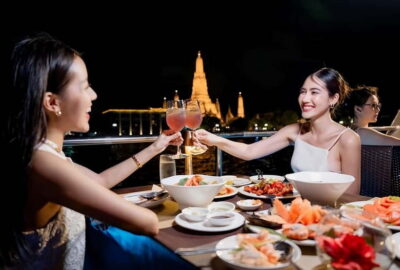
White Orchid Chao Phraya Dinner Cruise free Beer
Read our review →

7 Islands Sunset Tour with Buffet Dinner & Snorkeling
Read our review →The Newest Luxury 5-Star Bangkok Chao Phraya Cruise
Read our review →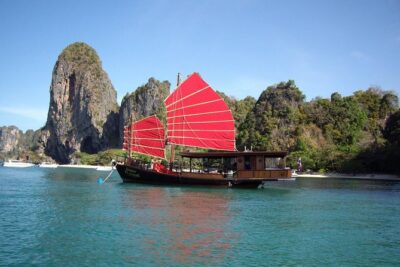
Krabi 4 Island Sunset Snorkeling Cruise + Bioluminescent Swim
Read our review →
Alangka Luxury Buffet Dinner Cruise With Live Music
Read our review →
Doi Suthep and Wat Umong Enchanting Evening Tour
Read our review →
River Dinner Cruise on the Chao Phraya Princess
Read our review →Browse the lists this tour appears in