
Reviewed · TEMPLE TOURS
From Chiang Rai: Famous Temples and Golden Triangle Day Tour
Chiang Rai packs a lot into one day. This tour links the city’s most striking temples with the Black House, the Golden Triangle, and the Hall of Opium, making it a useful choice when you have limited time in northern Thailand. I especially like the mix of sacred art and modern creativity, plus the hotel pickup, lunch, guide, and entrance arrangements on the private option.
I also like the freedom built into the day. Guides such as Bank, Mew, Mos Wat, Ra, and Day have been praised for explaining the sights, answering questions, and letting people explore at their own pace. The main drawback is simple: this is a very long day, and some stops, including border markets or the Long Neck Village, may not appeal to everyone.
In This Review
- Key points to know before booking
- Why this one-day route works in Chiang Rai
- Wat Huay Pla Kang and the Goddess of Mercy
- The White Temple, Chiang Rai’s most elaborate stop
- The Black House and its unsettling artistic mood
- The Blue Temple brings color and calm
- Lunch with Khao Soi and northern Thai flavors
- The Golden Triangle and the Hall of Opium
- Extra stops: Mae Sai, tea plantations, Chiang Saen, and the Long Neck Village
- Guides, transport, and the pace of the day
- Private or join-in: which option makes sense?
- Who should book this Chiang Rai tour?
- My verdict: good value for a packed first day
- FAQ
- What is included in the Chiang Rai day tour?
- Are entrance fees included on the join-in tour?
- Which temples does the tour visit?
- Does the tour visit the Golden Triangle?
- What food is served at lunch?
- How long does the tour last?
- Is hotel pickup provided?
Key points to know before booking
- Three very different art experiences: The White Temple is bright and detailed, the Blue Temple is richly colored, and the Black House is serious, strange, and often dark.
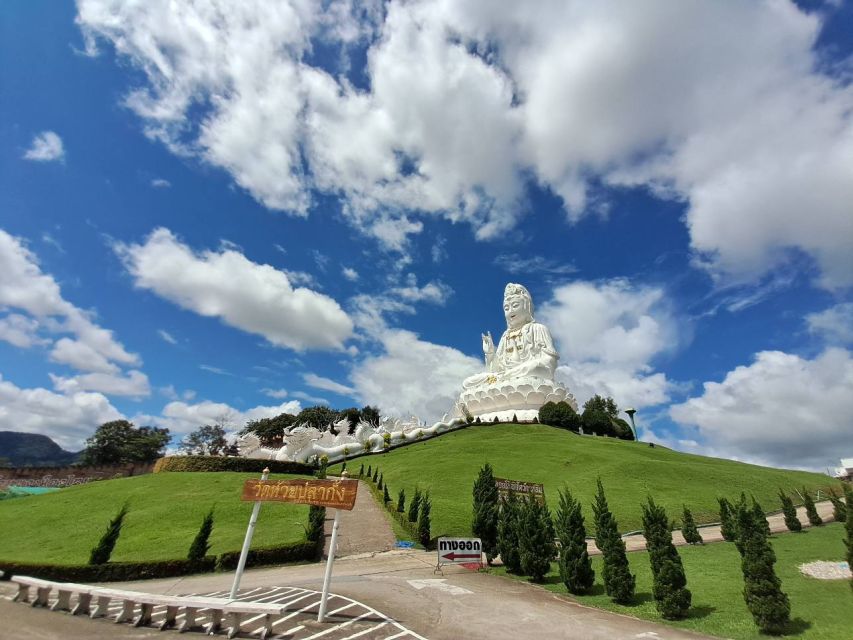
- Wat Huay Pla Kang brings the best high view: You can climb the tower and look across the area beside the large Goddess of Mercy.
- The Golden Triangle needs context: The Hall of Opium helps explain the area’s past rather than reducing it to a quick photo stop.
- The day may include extra stops: Some routes have included Mae Sai, a tea plantation, Chiang Saen, and the Long Neck Village, depending on the option and schedule.
- Lunch is a useful pause: Expect Khao Soi, Chiang Rai specialties, or other Thai food at a local restaurant.
- Private tours offer better control: The private option includes entrance fees for the White Temple, Black House, and Golden Triangle, while the join-in option does not.
Why this one-day route works in Chiang Rai
Chiang Rai’s sights are spread across the province, so arranging them independently can mean several taxi bookings, uncertain prices, and time spent working out transport. This tour solves that problem with hotel pickup and drop-off, an English-speaking guide, a driver, lunch, drinking water, and insurance.
At $57 per person, the value depends on the group option you choose. For a private or small group tour, that price is appealing because transport, guiding, lunch, and several entrance fees are covered on the private option. For a join-in tour, check the added admission costs carefully, since the listed entrance fees are not included there.
I would book this for a first visit to Chiang Rai, especially if you have only one full day. I would not choose it for a slow, temple-by-temple holiday. The route covers a great deal of ground, and the schedule can feel more like a highlights tour than a quiet cultural visit.
More Day Trips in Chiang Rai
- Chiang Rai: Half Day Tour – 3 Famous Temples & Lalita Cafe’
★ 5.0 · 79 reviews - From Chiangrai: Slow Baot to Loas (Luangprabang) 2-Day Tour
★ 4.4 · 56 reviews - Chiang Rai:Guided Highlights Full-Day Tour-FREE LUNCH BUFFET
★ 5.0 · 17 reviews
Wat Huay Pla Kang and the Goddess of Mercy
Wat Huay Pla Kang gives the day an early sense of scale. Its large Goddess of Mercy statue is the visual focus, and the tower offers a higher viewpoint across the surrounding area.
The tower is one of the most useful parts of this stop. You get a wider view than you would from the temple grounds, and the climb adds a little movement before the longer drives begin. If you have mobility limits, take this seriously. The activity is not recommended for people with mobility impairments, and the full day may be tiring for anyone who needs frequent rests.
The stop also gives your guide room to explain local religious art and the meaning behind the buildings. I would take a few minutes to look beyond the main statue. The appeal here is not only the photo, but also the contrast between the grand figure, the temple details, and the view from above.
The White Temple, Chiang Rai’s most elaborate stop
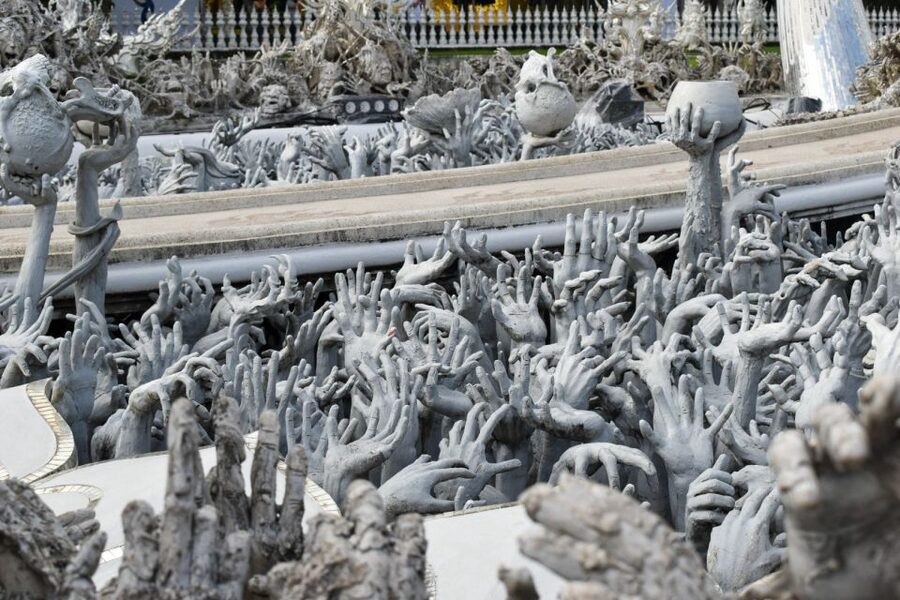
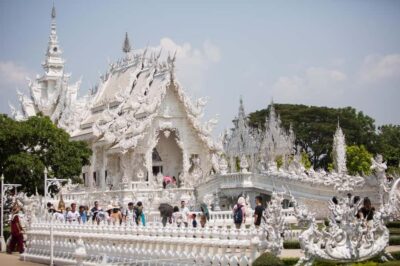
Wat Rong Khun, better known as the White Temple, is the visual star of the day. Its white surfaces, mirrored details, and intricate construction create a scene unlike a traditional old temple complex.
The design is highly theatrical. You will notice fine patterns, reflective pieces, and unusual decorative figures as you move through the site. It feels more like a modern work of religious art than an ancient monument, which is exactly why it can surprise you.
I recommend taking time to study the small details rather than rushing straight to the best photo position. The White Temple is often busy, and its bright finish looks different from every angle. Your guide can also help explain the ideas behind the design, which makes the visit more rewarding than a quick stop for pictures.
The practical catch is that this is a popular attraction, so the experience may feel crowded or hurried at peak times. Still, it is one of the stops I would not want to miss. It gives Chiang Rai a clear artistic identity and sets up a useful contrast with the darker Black House later in the day.
The Black House and its unsettling artistic mood
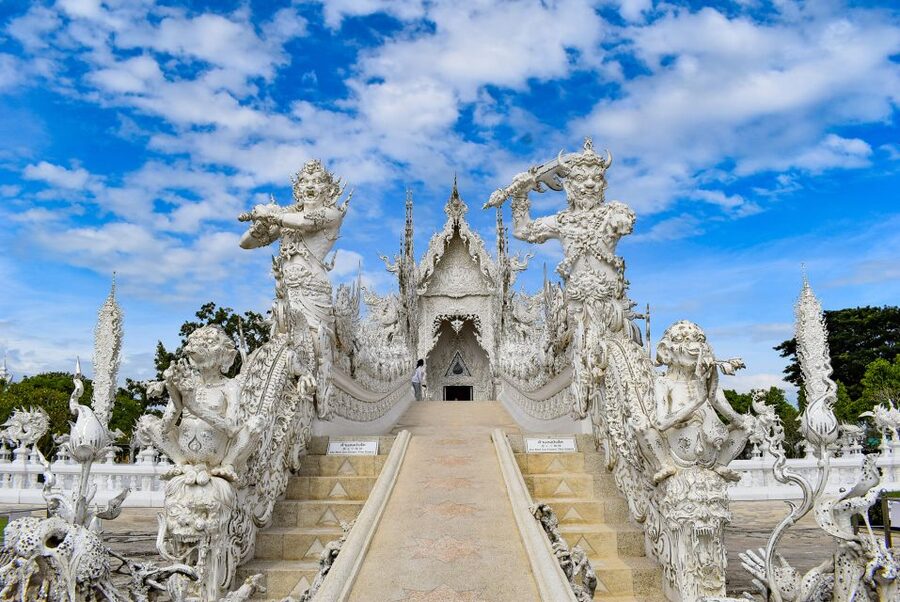
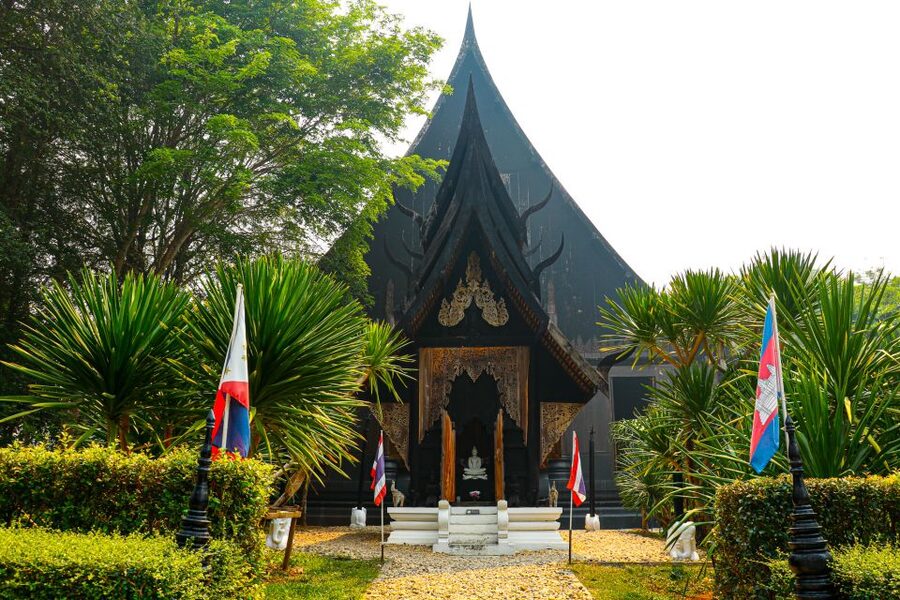
The Black House, or Baan Dam Museum, changes the tone completely. Instead of white surfaces and sparkling decoration, you get dark buildings, traditional forms, and modern art with a more serious edge.
This is not a typical temple visit. The collection and architecture can feel strange, unsettling, or even grim. That mood is deliberate. The site is known for its unusual artistic setting, and it asks you to look at northern Thai design through a less comfortable lens.
I like this stop because it prevents the day from becoming a simple parade of colorful temples. You see how different artists can use local forms, animals, wood, and shadow to create very different reactions. Give yourself time to move through the grounds at your own speed, and listen to the guide before deciding what you think of the place.
Some people may find the Black House less immediately enjoyable than the White or Blue Temple. If you prefer cheerful architecture and quick photo opportunities, this could be the stop that feels least rewarding. I would still keep it on the route because the contrast makes the whole day more interesting.
More Temple Tours in Chiang Rai
- Chiang Rai: Iconic Temples & 7 Major Sites—River View Buffet
★ 4.9 · 692 reviews - Chiang Rai: White, Blue, Red Temples, Long Neck Tour
★ 4.8 · 652 reviews - Chiang Rai: 3 Temples, Long Neck Village & Lalitta Café
★ 4.7 · 63 reviews - Chiang Mai to Chiang Rai: 3 Temples & Hot Springs & Pickup
★ 4.0 · 22 reviews
The Blue Temple brings color and calm
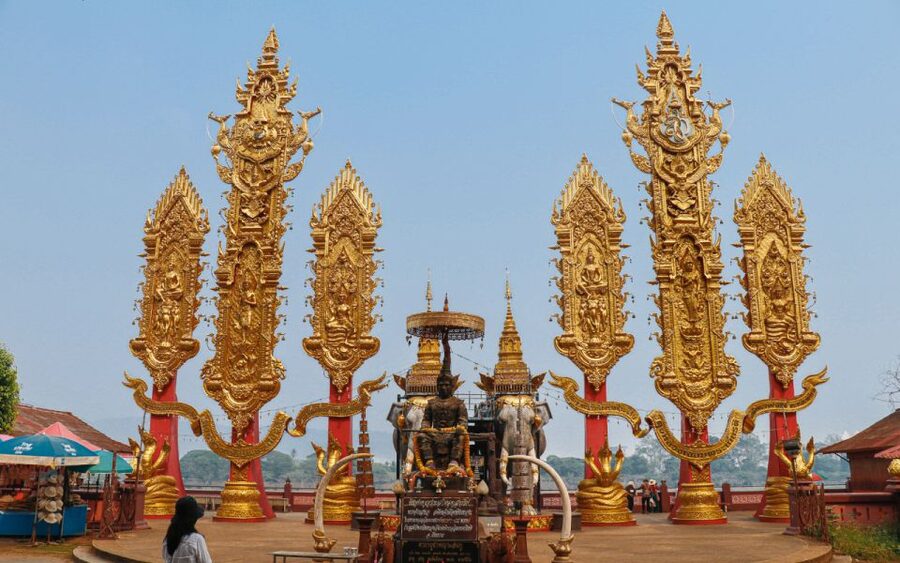
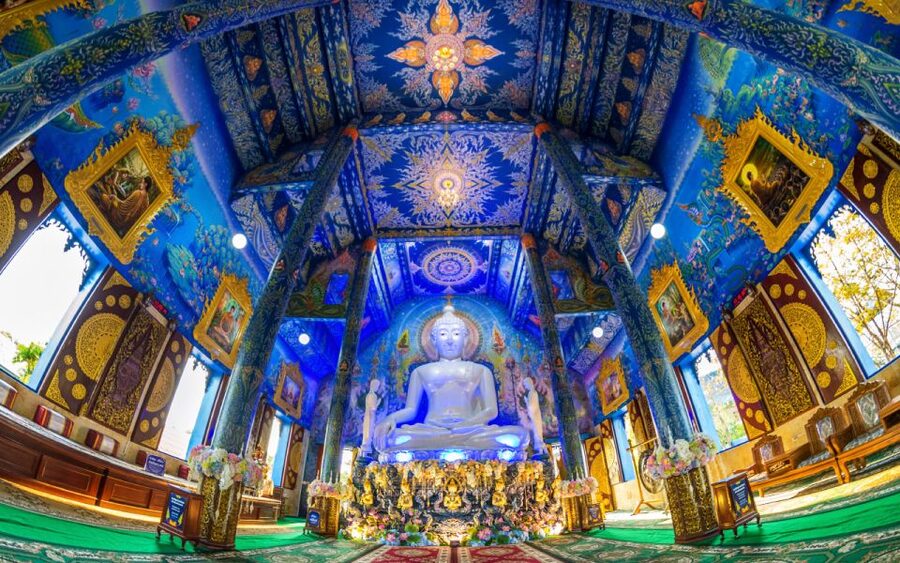
Wat Rong Suea Ten, called the Blue Temple, is another modern religious site, but its effect is different from the White Temple. Strong blue tones cover much of the building, creating a bold, unified look.
Inside, the artistic details continue, with color and decorative patterns drawing your eye toward the main image. The result is more focused and atmospheric than the White Temple’s bright, highly detailed exterior.
This is a good place to slow down for a few minutes. The Blue Temple does not need a long lecture to make an impression, but a guide can add useful context about the design and its place in Chiang Rai’s modern temple scene. I would also use this stop to compare the three artistic styles: the White Temple’s reflective complexity, the Black House’s dark character, and the Blue Temple’s strong color scheme.
Because the route includes several major stops, your time here may be limited. That is one reason the guide’s ability to explain the essentials and then let you look around matters.
Lunch with Khao Soi and northern Thai flavors
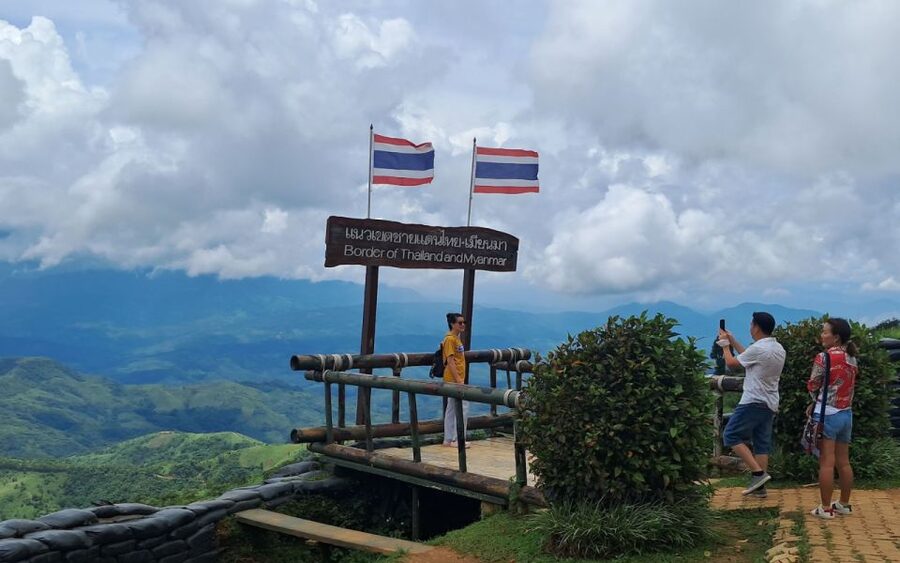
Lunch takes place at a local restaurant and may include Khao Soi, Chiang Rai’s signature food, or other Thai dishes. Khao Soi is a sensible choice for this region: a creamy, spiced noodle dish that offers a taste of northern cooking without requiring a formal dining experience.
A meal break matters on this route. The drives and sightseeing add up, and a proper stop gives you time to sit down, eat, and reset before the northern border area. Drinking water is included as well.
The meal is not presented as a luxury dining event, and I would not book the tour for food alone. Its value is practical and local. You get a regional dish in the middle of a demanding day, rather than losing more time searching for a restaurant.
The Golden Triangle and the Hall of Opium
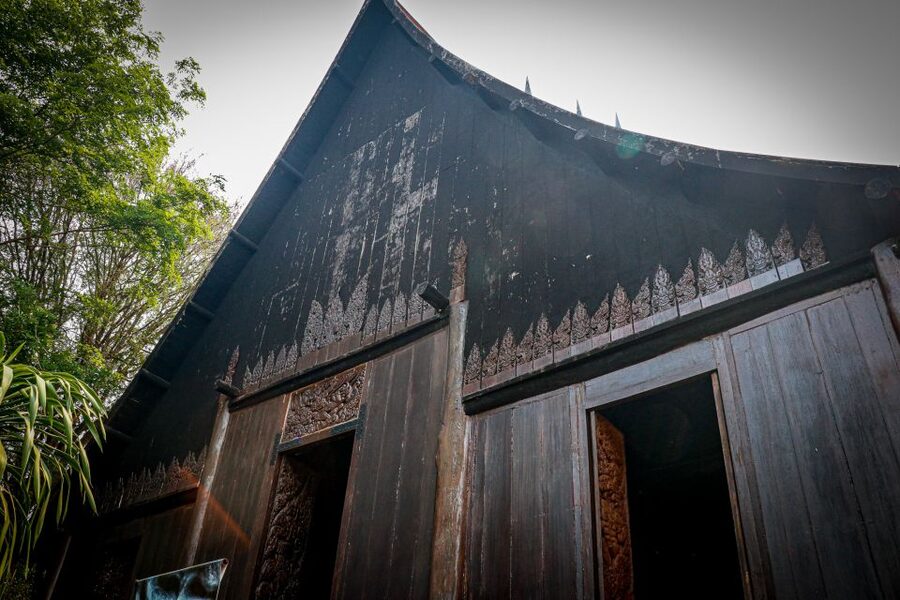
The Golden Triangle is where Thailand, Myanmar, and Laos meet, and the area carries a complicated story tied to opium production and trade. It is easy for a short visit here to become a viewpoint, a sign, and a few photographs. The Hall of Opium adds the background needed to understand why the region matters.
The museum uses multimedia displays and exhibitions to make the subject easier to follow. That format is useful after a morning of temples because it changes the pace and gives the day more substance. You are not simply looking at a border marker. You are learning about the social and historical effects connected with opium in the area.
I consider the Hall of Opium one of the most worthwhile parts of the route. It gives meaning to the Golden Triangle rather than treating it as a scenic label. The museum also suits you if you want more than architecture and photographs.
The Golden Triangle itself can feel less intimate than the temples. Border markets and viewpoint areas may seem commercial, and the stop can take longer than its visual appeal deserves. One visitor found the border section near Mae Sai the least interesting part of the day. I would keep your expectations realistic: this is a place for regional context, not a quiet natural viewpoint.
Extra stops: Mae Sai, tea plantations, Chiang Saen, and the Long Neck Village
The exact route can vary. Some full-day versions have included Mae Sai, a tea plantation, Chiang Saen Old City, and the Karen Long Neck Village in addition to the main temples and Golden Triangle.
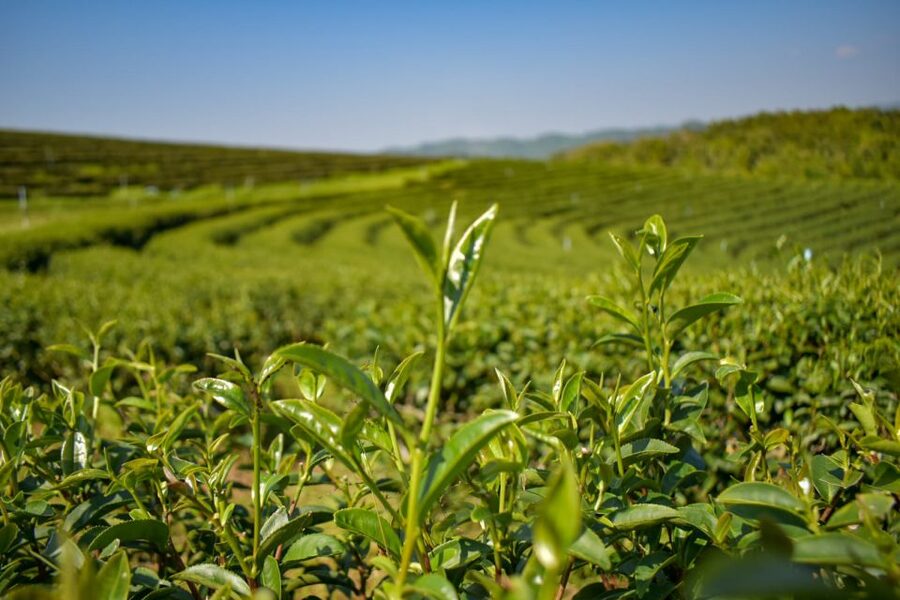
The tea plantation can be a pleasant change from the temples, with a more open setting and a chance to see another side of the province. It was an unexpected favorite for one visitor. Chiang Saen adds an older historical layer to the route, but it may be left out or added according to timing.
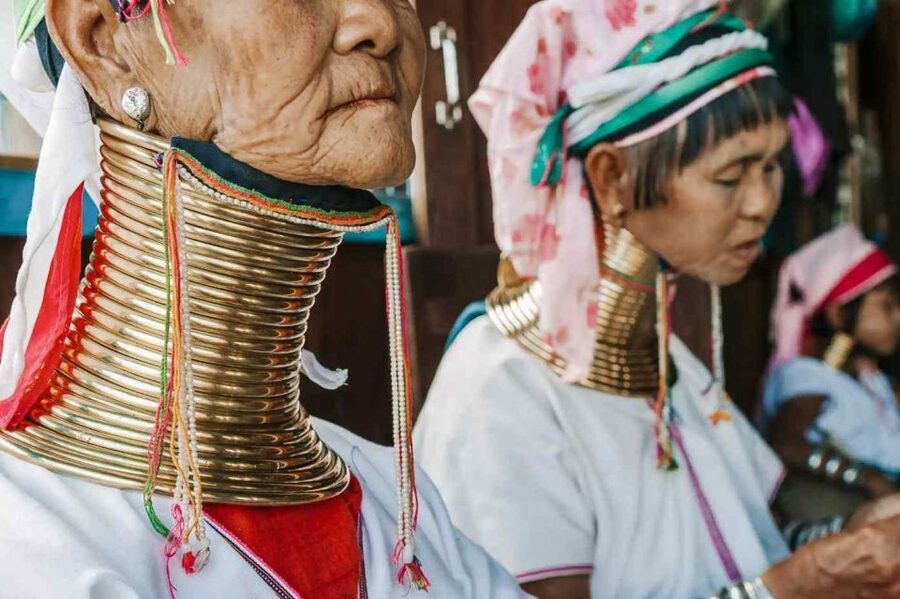
The Long Neck Village needs more careful thought. An extra entrance fee may apply on the join-in option, and the stop has raised ethical concerns about whether the arrangement benefits the people living there. I would ask the operator exactly what is included before departure and skip it if the stop does not sit comfortably with you.
Mae Sai, at the Thailand and Myanmar border, can be interesting if you want to see a busy frontier town and its markets. It is less essential if your priority is temple art or the Golden Triangle’s museum. Since the day is already long, an added stop can make the return journey feel even heavier.
Guides, transport, and the pace of the day
The guide is a major part of this experience. Bank received especially strong praise for his humor, energy, timing, and ability to answer questions. Mew was appreciated for giving clear information while allowing independent exploration, while Mos Wat was described as both driver and guide on a private trip. Guides named Ra, Day, and Lew were also praised for being attentive and engaging.
English ability may vary. One person found a guide friendly and funny but said communication could sometimes be difficult. That is worth remembering if you want detailed academic explanations at every stop. In practice, the strongest benefit seems to be a guide who keeps the day moving, explains the main points, and responds to the group.
Pickup is from your Chiang Rai hotel, and you should wait in the lobby 10 minutes before the scheduled time. The driver will wait no more than five minutes after pickup time, so do not treat the morning meeting casually.
Expect a full day, sometimes returning around 7 p.m. The distance between sights helps break up the sightseeing, but this remains a demanding schedule. I would wear comfortable shoes, bring sun protection, and keep water close, even though water is supplied.
Private or join-in: which option makes sense?
A private tour is the better choice if you want flexibility, have specific stops in mind, or are traveling as a small group. You are more likely to benefit from the guide’s ability to adjust the timing, and the private option includes entrance fees for the White Temple, Black House, and Golden Triangle.
The join-in option can cost less, but check the final total before booking. Entrance fees are not included, and the Long Neck Village fee is extra if that stop is part of your route. A shared schedule may also give you less control over how long you spend at each place.
For couples or families who value personal attention, private is the easy recommendation. For solo visitors or people watching their budget, join-in can still work well, provided you are comfortable with a long, fixed day.
Who should book this Chiang Rai tour?
I would choose this experience if you want to see the major northern sights in one organized outing. It suits first-time visitors, short-stay visitors, couples, families with good walking ability, and anyone who prefers a guide to handle the long-distance transport.
It is less suitable if you want a slow spiritual visit, dislike long drives, or have mobility concerns. Pregnant people and those with mobility impairments are specifically advised not to book.
The tour earns its strong reputation through the guides, the number of important sights covered, the tasty local lunch, and the sensible mix of temples, art, border culture, and museum learning. The main tradeoff is pace. You see a lot, but you do not get hours at any one place.
My verdict: good value for a packed first day
At $57 per person, this is a strong-value introduction to Chiang Rai, especially on the private or small-group option. I like that the day goes beyond the famous temples and includes the Hall of Opium, where the Golden Triangle gets useful context.
Book it if you want maximum coverage in one day, enjoy switching between temples and museums, and do not mind an early start and evening return. If you have several days in Chiang Rai, consider spreading these sights across separate outings instead. For a limited visit, though, this tour gives you a practical and memorable overview, with guides such as Bank and Mew adding the personal touch that can turn a packed schedule into a good day.
FAQ
What is included in the Chiang Rai day tour?
Hotel pickup and drop-off in Chiang Rai, lunch, drinking water, an English-speaking guide, and insurance are included. On the private option, entrance fees for the White Temple, Black House, and Golden Triangle are also included.
Are entrance fees included on the join-in tour?
No. Entrance fees are not included for the join-in option. The Long Neck Village entrance fee is also extra if that stop is included.
Which temples does the tour visit?
The route includes Wat Huay Pla Kang, the White Temple, and the Blue Temple. It also visits the Black House, which is an art site rather than a conventional temple.
Does the tour visit the Golden Triangle?
Yes. The tour visits the Golden Triangle area, where Thailand, Myanmar, and Laos meet, and includes the Hall of Opium Museum.
What food is served at lunch?
Lunch is at a local restaurant and may include Khao Soi, Chiang Rai’s signature food, or other Thai dishes.
How long does the tour last?
The activity lasts one full day. The schedule can run until around 7 p.m., so you should be prepared for a long outing.
Is hotel pickup provided?
Yes. Pickup and drop-off are provided from hotels in Chiang Rai. You should wait in the hotel lobby 10 minutes before the scheduled pickup, and the driver will wait no longer than five minutes after the scheduled time.
Just added in Chiang Rai
- From Chiang Mai : 3 Temples & Golden Triangle with Lunch★ 4.5 · 17 reviews
- Explore the Chiang Rai and the Golden Triangle★ 4.6 · 18 reviews
- Chiang Rai: Discover 7 Must-See Spots & Lunch Included★ 4.7 · 26 reviews
- Chiangrai Full day: Popular 7 Locations with Thai buffet★ 4.8 · 16 reviews
- Chiang Rai:Lanna Home Cooking Class at Give Green Farm House★ 5.0 · 61 reviews
- Chiang Rai: Top Temples & Signature Attractions ~Free Buffet★ 4.7 · 10 reviews
- Chiang Rai:3D2N Transfer to Luang Prabang by Slow Boat★ 3.4 · 15 reviews
- Chiang Rai: Private Tour with Driver and Custom Itinerary★ 4.9 · 208 reviews
Temple Tours, compared.
Chiang Rai Temples, Karen Tribe and Hot Springs
Read our review →
City Highlights Temple and Market Walking Tour
Read our review →
Bangkok by Night: Temples, Markets and Food Tuk-Tuk Tour
Read our review →
Grand Palace, Wat Pho, and Wat Arun Guided Tour
Read our review →
Tiger Cave Temple, Emerald Pool and Hot Springs Tour
Read our review →
Chiang Rai White Temple and Blue Temple Day Tour
Read our review →Browse the lists this tour appears in