
Reviewed · TEMPLE TOURS
Chiang Rai: Top Temples & Signature Attractions ~Free Buffet
One long day, many Chiang Rai highlights. This tour packs the White Temple, Blue Temple, Black House, tea plantation, Kayan Village, and Golden Triangle into one organized outing, making it a strong choice if you have limited time in northern Thailand. I especially like the small-group feel and the helpful guides, including Mai, Wii, Oui, and Wat, who have been praised for clear explanations and warm attention to the group.
I also like that a Thai buffet lunch and hotel transport are included in the $42 price. The main caution is simple: this is a full, busy day. Entry fees are extra, and the explanations at some stops may feel brief if you want detailed history at every temple.
In This Review
- Key points to know before booking
- Why this full-day Chiang Rai tour works
- White Temple: Chiang Rai’s unforgettable first impression
- Blue Temple: strong color and a calmer mood
- Black House Museum and Bunleua Sulilat’s art
- Tea plantation: a change of pace
- Kayan Village and the Long Neck Karen visit
- Golden Triangle: where three countries meet
- Lunch, transport, and the rhythm of the day
- What the $42 price really covers
- Who should book this Chiang Rai itinerary?
- Final decision: a strong one-day introduction
- FAQ
- How much does the Chiang Rai tour cost?
- What entrance fees are required?
- Is lunch included?
- Is hotel pick-up available?
- What type of transport is used?
- What language does the guide speak?
- Can I cancel the booking?
Key points to know before booking
- The White Temple is the visual star: Its dazzling white design and modern artwork make it one of Chiang Rai’s most memorable sights.
- You see six major stops in one day: Temples, museums, tea fields, a cultural village, and the Golden Triangle create a broad introduction to the region.
- The extra costs add up: The listed entrance fees total 530 Thai baht if you enter every paid attraction.
- Guides make a real difference: Mai, Wii, Oui, and Wat have been praised for explaining the sites, managing time well, and helping the group feel comfortable.
- Lunch is included: A Thai buffet at a local restaurant gives you a proper midday meal without another payment.
- Optional entry helps control the budget: You can skip a paid site and wait outside if it does not interest you.
Why this full-day Chiang Rai tour works
Chiang Rai’s main sights are spread across the province. Visiting them independently means arranging transport, checking opening details, and deciding how to connect temples with more distant stops such as the Golden Triangle. This tour handles the driving in an air-conditioned SUV or van, depending on group size.
That matters because the day is not built around one theme. You get modern religious art, traditional temple design, a private art collection, tea production, an ethnic village, and a border region with a complicated past. It is a lot, but it gives you a useful first look at Chiang Rai rather than leaving you with only one famous temple.
The tour includes pick-up and drop-off in the city center area. If your hotel sits outside that area, check the meeting arrangement before booking. The tour is offered in English, and travel insurance and drinking water are included.
The strongest part of the experience appears to be the guide service. Wii, for example, is praised for giving people enough time at each place without letting the day drag. That balance is important here. Too little time would make the tour feel like a photo stop marathon, while too much time at one museum could leave you rushing later.
More Temple Tours in Chiang Rai
- Chiang Rai: Iconic Temples & 7 Major Sites—River View Buffet
★ 4.9 · 692 reviews - Chiang Rai: White, Blue, Red Temples, Long Neck Tour
★ 4.8 · 652 reviews - From Chiang Rai: Famous Temples and Golden Triangle Day Tour
★ 4.7 · 115 reviews
White Temple: Chiang Rai’s unforgettable first impression
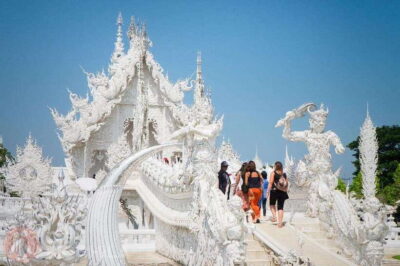
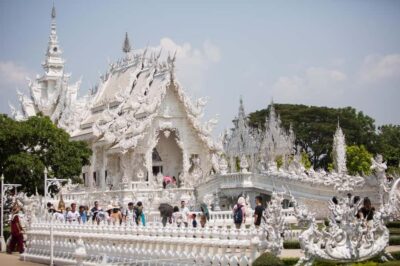
The White Temple, or Wat Rong Khun, is usually the image people carry home from Chiang Rai. Its pale exterior, glittering details, and elaborate forms look nothing like an old, weathered temple. The design combines Thai religious imagery with the work of a contemporary artist, so the site feels part temple, part art installation.
I like this stop because it challenges the usual idea of what a Buddhist temple should look like. You are not simply looking at a historic building. You are looking at an ongoing artistic vision, packed with symbolic details that reward close attention.
The listed admission fee is 100 baht per person. You can choose not to enter and wait outside, which is useful if you are watching your spending or prefer to view the exterior. Still, this is one place where paying the fee makes sense for most people, since the interior adds to the experience.
Allow yourself time to look beyond the main entrance. The white surfaces can be dazzling in strong daylight, and the finer details are easy to miss if you rush straight to a photograph. Your guide may offer context, but the amount of explanation can vary. One person who took the tour felt the temple commentary was too brief, so ask questions if you want more than a quick introduction.
Blue Temple: strong color and a calmer mood
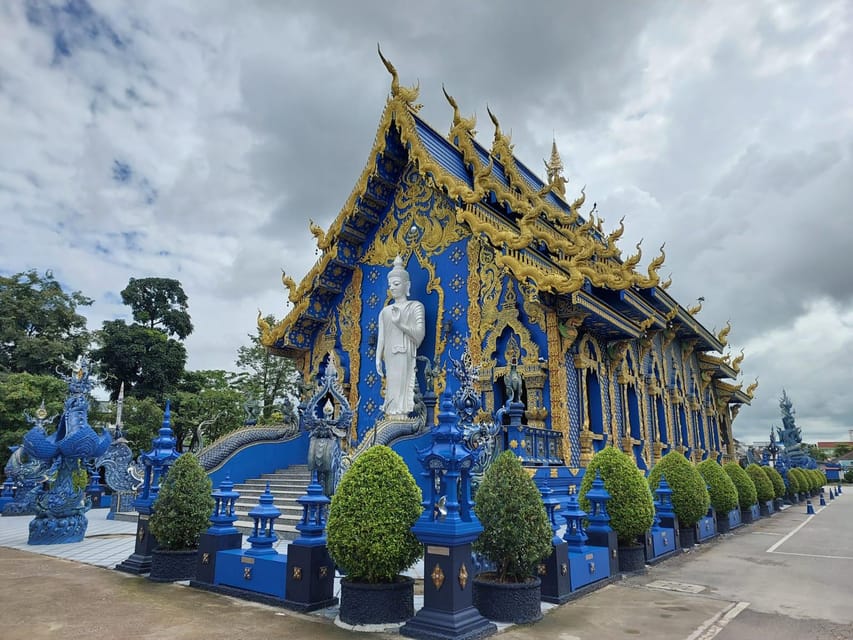
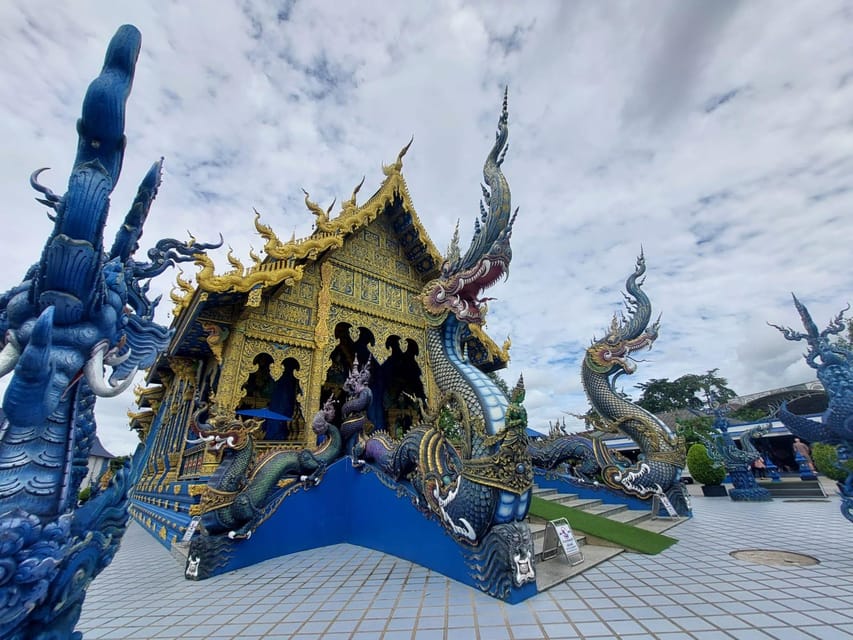
The Blue Temple, or Wat Rong Suea Ten, offers a sharp contrast to the White Temple. Here, deep blue tones and ornate decoration create a calmer, more enclosed feeling. The color scheme gives the building a distinct personality, and it makes a natural second temple stop after the bright White Temple.
This is a good place to slow down for a few minutes. The Blue Temple is not presented as a long historical lecture. Its appeal is visual and atmospheric, with rich blue surfaces and decorative details that make it easy to appreciate even if you are new to Thai religious art.
Your guide will provide an introduction, but do not expect a lengthy academic talk at every stop. The schedule covers a great deal of ground. If you want to understand a particular figure, mural, or design feature, ask directly. Guides such as Wat and Oui have been praised for answering questions and explaining the places in a way that keeps the group engaged.
Black House Museum and Bunleua Sulilat’s art
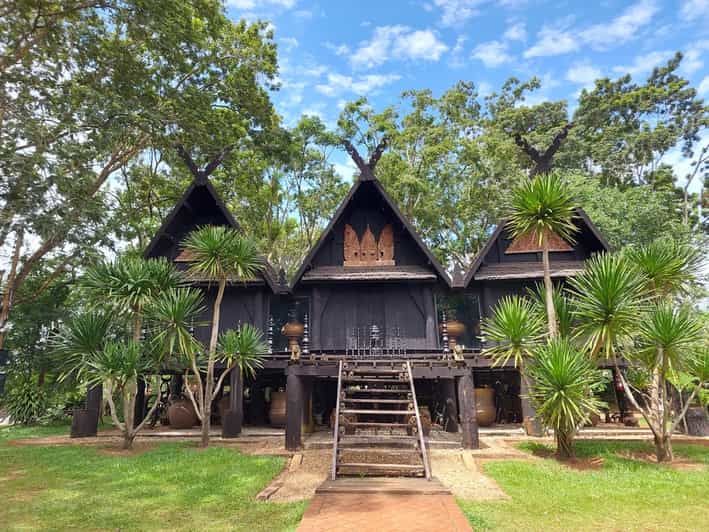
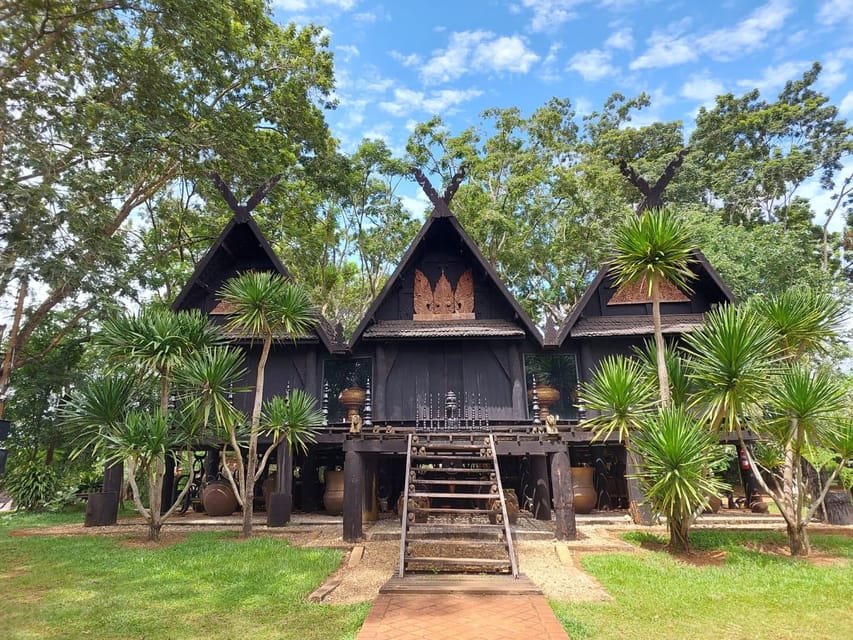
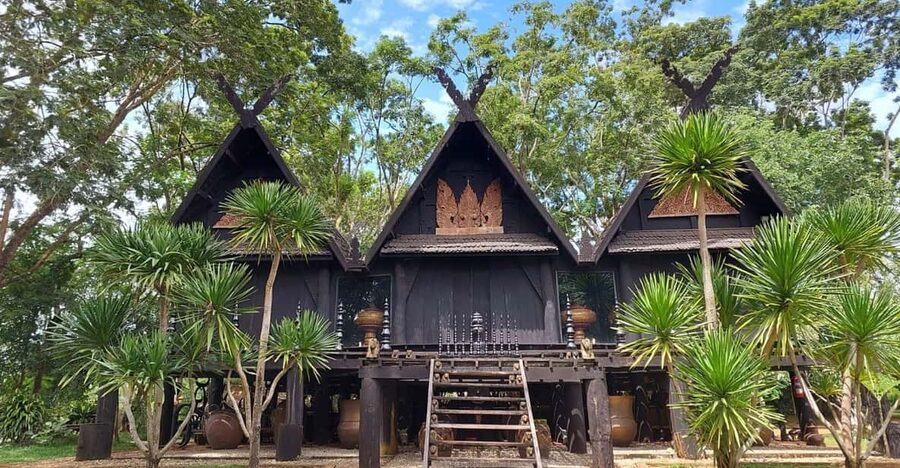
The Black House Museum, also called Baan Dam Museum, changes the mood again. Instead of the White Temple’s bright surfaces or the Blue Temple’s saturated color, this complex presents darker buildings, unusual forms, and an art collection associated with Thai artist Bunleua Sulilat.
The attraction is best approached as an art site rather than a conventional temple. You may find the work striking, puzzling, or unsettling. That is part of the point. The buildings and objects invite you to think about mortality, animals, belief, and the relationship between art and architecture.
Admission is 80 baht per person. If modern or symbolic art is not your interest, this is one of the easier paid stops to skip. You can wait outside rather than pay, and the tour continues either way. I would still recommend entering if you enjoy unusual museums, since this stop gives the day more variety than a simple temple circuit.
The guide’s role helps here. Without context, some pieces may seem random. With a good explanation, the museum becomes easier to read as the work of a distinctive artist with a particular vision. The tour may not provide a long guided lecture, so use your free time to look carefully and ask about the pieces that catch your attention.
A completely different kind of day out:
- Chiang Rai: Guided Highlights Guided Tour with Buffet Lunch
★ 4.9 · 1,532 reviews - Sightseeing Join Tour Chiang Rai / PICK UP ONLY IN CHIANG RAI
★ 4.5 · 398 reviews - Chiang Rai Must-See Tour – 7 Icons, Lunch & Small Group(9pp)
★ 4.7 · 395 reviews - Chiang Rai Guide: Popular 7places 3Colors ,Golden Triangle
★ 4.9 · 285 reviews
Tea plantation: a change of pace
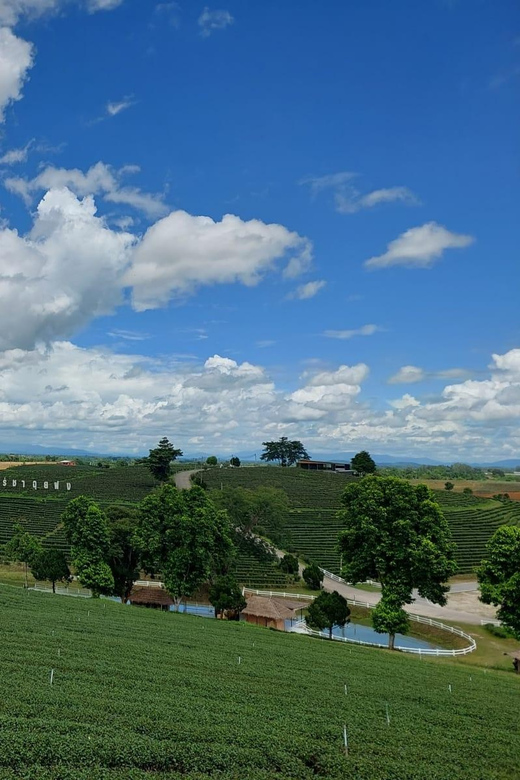
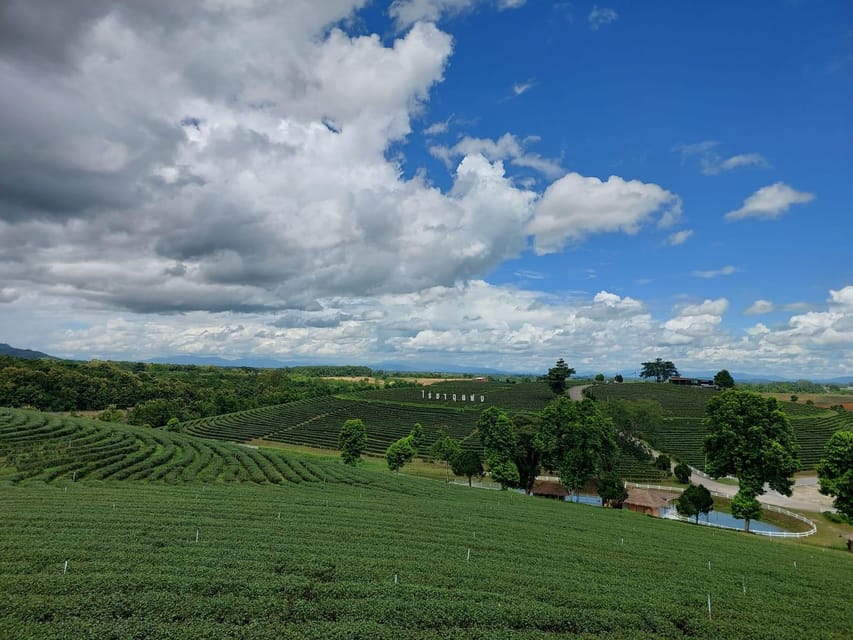
The tea plantation offers a welcome break from buildings and museum rooms. You learn about traditional tea cultivation and see the care involved in producing tea in the region. The stop is less about a major monument and more about local agriculture and the work behind a familiar drink.
I like this part because it gives the day a practical, everyday subject. Temples show belief and art museums show personal expression, while the plantation connects you with how people use the land for food and trade. The setting also provides fresh air and a change of pace after several cultural stops.
The exact length of the visit is not specified, so your time may depend on the day’s traffic and the group schedule. Think of it as a scenic educational stop rather than a long tasting experience. The supplied details do not promise a formal tea tasting or a purchase, so do not book this tour expecting a dedicated tea workshop.
Kayan Village and the Long Neck Karen visit
The Kayan Village, also described as a Long Neck Karen Village, is the most culturally sensitive stop on the route. You have the chance to learn about the community’s distinctive traditions and observe daily life. The stated emphasis is respectful observation and interaction with local residents.
The entrance fee is 300 baht per person, the highest single charge on the tour. Entry is optional, and you can wait outside if you decide the visit is not right for you. I recommend thinking about this choice before the day begins rather than treating it as an automatic photo opportunity.
Approach the village with respect. Listen first, ask before taking photographs, and remember that the people you meet are not scenery. A good guide can help explain the community and set a considerate tone. Oui’s warmth and attention to detail have been especially praised, qualities that matter at a stop where cultural understanding is more important than simply collecting pictures.
If you want a quick overview of Chiang Rai’s major sights, this visit adds a human and cultural dimension. If you prefer museums, architecture, or natural views, skipping the entrance may be a better fit. The optional policy gives you room to make that personal decision.
Golden Triangle: where three countries meet
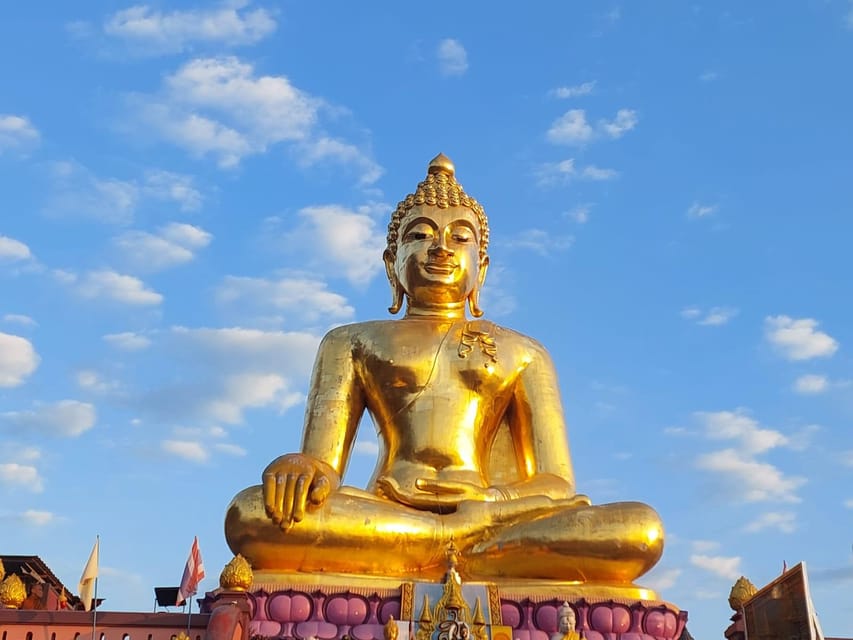
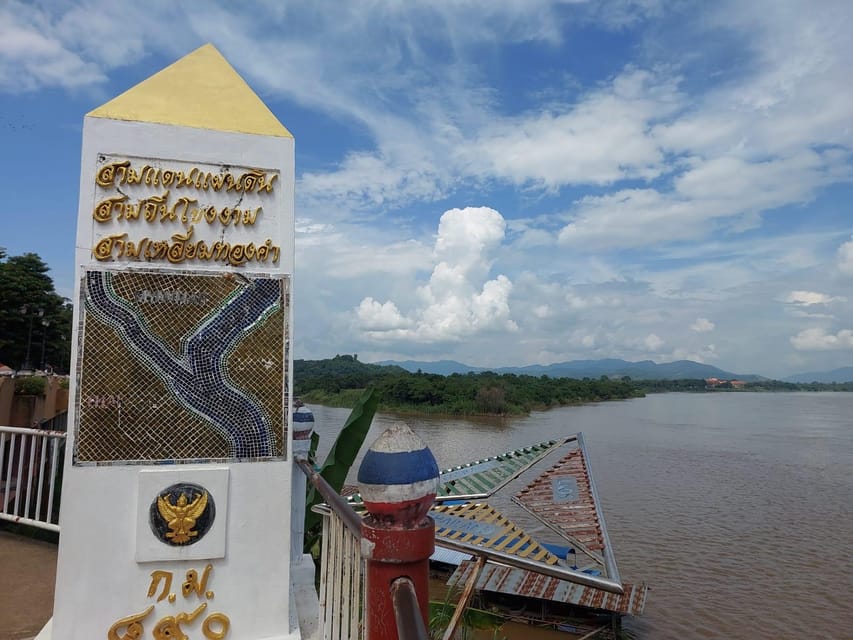
The Golden Triangle is the tour’s big regional viewpoint. Thailand, Myanmar, and Laos meet in this border area, giving you a chance to see how geography shaped trade, politics, and local life. The stop offers a broader perspective than the temples, which are focused on art and religion.
The tour also includes the Opium House as an optional paid attraction, with an entrance fee of 50 baht per person. This museum can add useful background about opium production and the border region, but the supplied details do not specify how long the visit lasts or the exact exhibits included. Ask your guide what the stop will cover that day.
The border area is not just a photo backdrop. It helps connect the sights you have seen with northern Thailand’s place in mainland Southeast Asia. You may also appreciate the open views and fresh air after a long day in the vehicle.
Lunch, transport, and the rhythm of the day
A complimentary Thai buffet lunch at a local restaurant is included. That is a real advantage on a full-day trip. You can eat without hunting for a restaurant or worrying about an extra meal bill, and a buffet usually gives you a chance to choose what suits you.
No detailed menu is provided, but the food has been praised as good and satisfying. If you have dietary restrictions, ask the provider before departure rather than assuming the buffet will meet your needs.
Transport is by air-conditioned SUV or van. The vehicle type depends on group size, and the ride has been described as comfortable. A skilled driver also matters on a long day. One guide and driver managed a particularly busy Songkran period and still returned the group quickly, which suggests that the driving team can handle difficult road conditions.
The small-group format is another plus. You are more likely to hear your guide, keep track of the group, and ask questions than you would on a large coach. The day still involves long stretches of driving and repeated stops, so wear comfortable shoes and bring sun protection. Drinking water is supplied, but sensible clothing and a small personal snack are useful for any long outing.
What the $42 price really covers
At $42 per person, this tour offers strong value if you plan to visit several of the included sights. You receive city-center pick-up and drop-off, an English-speaking guide, transport, drinking water, a Thai buffet lunch, and travel insurance.
The entrance charges are separate:
- White Temple: 100 baht
- Black House Museum: 80 baht
- Kayan Village: 300 baht
- Opium House: 50 baht
Entering all four adds 530 baht per person. The Blue Temple and tea plantation do not have an entrance charge listed in the supplied information. Since entry is optional, you can keep the total lower by choosing only the places that interest you most.
The real value is convenience. You could spend less by arranging some visits yourself, but you would need to solve the transport problem and fit distant stops together. For a first day in Chiang Rai, the included driving and guide service make the price reasonable, especially with lunch included.
The main trade-off is depth. You see many places, but you may not receive a long explanation at each one. If your priority is detailed art history or extended time at a single temple, a private or more specialized tour may suit you better.
Who should book this Chiang Rai itinerary?
I would choose this tour if you have one free day in Chiang Rai and want to cover the area’s best-known sights without planning every transfer. It suits first-time visitors, couples, families, and small groups who value convenience and variety.
It is also a good match for people who enjoy moving between different types of attractions. The day includes religion, contemporary art, local agriculture, cultural traditions, and regional geography. You will not spend all day looking at temples.
I would be more cautious if you dislike full schedules, long road journeys, or optional paid stops that can push up the final cost. The tour is described as full-on for good reason. Plan to stay flexible, and do not expect every stop to receive the same amount of guide commentary.
The guide can shape your day. If you are assigned Mai, Wii, Oui, or Wat, you may benefit from the qualities praised in their guiding: clear explanations, thoughtful timing, friendliness, and attention to the whole group. Guide assignment is not guaranteed, so book for the route and overall value rather than one specific person.
Final decision: a strong one-day introduction
I recommend this tour for anyone who wants a practical introduction to Chiang Rai’s signature sights. The White Temple, Blue Temple, and Black House provide the artistic core, while the tea plantation, Kayan Village, and Golden Triangle keep the day from feeling repetitive.
Go in knowing what you are buying: a wide-ranging day with comfortable transport, lunch, and helpful English guidance, not a slow specialist tour. Budget for the entry fees you want, ask questions when explanations feel short, and treat the Kayan visit with care.
At $42, it is a sensible choice for a first visit, particularly if your time is limited and you want the major highlights handled in one booking.
FAQ
How much does the Chiang Rai tour cost?
The tour costs $42 per person. Entrance fees are not included.
What entrance fees are required?
Entry is optional. The listed fees are 100 baht for the White Temple, 80 baht for the Black House Museum, 300 baht for Kayan Village, and 50 baht for the Opium House.
Is lunch included?
Yes. A Thai buffet lunch at a local restaurant is included in the tour price.
Is hotel pick-up available?
Pick-up and drop-off are included for hotels in the city center area.
What type of transport is used?
Transport is provided in an air-conditioned SUV or van, depending on the group size.
What language does the guide speak?
The tour is offered with an English-speaking guide.
Can I cancel the booking?
Yes. You can cancel up to 24 hours in advance for a full refund. You can also reserve now and pay later.
Just added in Chiang Rai
- From Chiang Mai : 3 Temples & Golden Triangle with Lunch★ 4.5 · 17 reviews
- Explore the Chiang Rai and the Golden Triangle★ 4.6 · 18 reviews
- Chiang Rai: Discover 7 Must-See Spots & Lunch Included★ 4.7 · 26 reviews
- Chiangrai Full day: Popular 7 Locations with Thai buffet★ 4.8 · 16 reviews
- Chiang Rai:Lanna Home Cooking Class at Give Green Farm House★ 5.0 · 61 reviews
- Chiang Rai:3D2N Transfer to Luang Prabang by Slow Boat★ 3.4 · 15 reviews
- Chiang Rai: Excursion White, Blue,Red Temples & Lalitta Café★ 4.0 · 9 reviews
- Chiang Rai: Northern Thailand Tour with Golden Triangle★ 4.9 · 78 reviews
Temple Tours, compared.
Chiang Rai Temples, Karen Tribe and Hot Springs
Read our review →
City Highlights Temple and Market Walking Tour
Read our review →
Bangkok by Night: Temples, Markets and Food Tuk-Tuk Tour
Read our review →
Grand Palace, Wat Pho, and Wat Arun Guided Tour
Read our review →
Tiger Cave Temple, Emerald Pool and Hot Springs Tour
Read our review →
Chiang Rai White Temple and Blue Temple Day Tour
Read our review →Browse the lists this tour appears in