
Reviewed · TEMPLE TOURS
Chiang Mai: Temple & City Tour Part II
Four temples, one thoughtful walk. This Chiang Mai tour moves beyond the best-known sights to Wat Chiang Man, Wat Chiang Yuen, Wat Pa Pao, and Wat Ku Tao. I like the mix of major landmarks and quieter religious sites, and I especially like that guides such as Katoon and Big bring personal experience of monk life to the discussion.
The $31 price is fair for a full-day guided walk, especially if you want help understanding Buddhist customs rather than simply taking temple photos. The main caution is physical: you may be on your feet for hours in Chiang Mai’s heat, and the meeting-point address needs careful checking.
In This Review
- Key points to know before you book
- Why this four-temple route is worth your time
- 8:20 am: Begin with Chiang Mai’s oldest temple
- Wat Chiang Yuen and the Shan connection
- Wat Pa Pao brings Burmese style to the walk
- Wat Ku Tao and the story of Burmese rule
- What the guide adds beyond temple facts
- Walking, heat, clothing, and comfort
- The $31 price and what you receive
- Who should book this Chiang Mai walk
- Should you book it?
- FAQ
- What temples are included in the tour?
- What time does the tour start?
- How long does the tour last?
- Is hotel pickup included?
- Which languages are available?
- What should I bring?
- Can I cancel the booking?
Key points to know before you book
- Wat Chiang Man dates to 1296: Chiang Mai’s oldest temple introduces the city’s early Lanna story and houses the famous crystal Buddha statue.
- The route includes Shan and Burmese traditions: Wat Chiang Yuen, Wat Pa Pao, and Wat Ku Tao show that Chiang Mai’s religious culture reaches beyond a single Thai style.
- Former monks lead some departures: Guides including Katoon and Big have explained Buddhist practice, meditation, temple etiquette, and monastic life from personal experience.
- You see places you might miss alone: The route is designed around important but less obvious temples, with time for questions and quieter visits.
- Walking is the real transport: The tour is relatively easy, but the combination of distance, sun, and temple visits can leave tired feet.
- Private and small-group choices are available: A private booking can include hotel pickup and drop-off, while the standard experience focuses on walking.
Why this four-temple route is worth your time
Chiang Mai is often presented through a short list of famous temples. That approach gives you handsome buildings and good photographs, but it can leave Buddhist practice feeling like decoration. This walk is more useful if you want to understand what you are seeing, why the temples look different, and how religion connects with daily life.
The route visits four temples rather than three. That matters because each stop has a different character. Wat Chiang Man gives you the city’s early foundation. Wat Chiang Yuen points to the Shan community that once lived in the area. Wat Pa Pao brings a clear Shan Burmese architectural identity, while Wat Ku Tao adds a striking monument linked to Burmese rule.
I would choose this tour for a first serious look at Chiang Mai’s religious culture, or as a follow-up to the provider’s Part I route. One participant booked both parts and found the second walk worthwhile, though the two tours in one day left their feet very tired. That is a useful warning: this is not a quick hop between temples by van.
The guide makes the difference. Katoon is a former monk who spent 18 years in monastic life, according to the information shared during the tour. Big also drew praise for his enthusiasm and his experience as a monk. Other guides, including Eddy and Son, have been described as patient, friendly, and generous with their time. You should expect the exact style to vary by guide, but the strongest part of this experience is the human explanation around the buildings.
More Sightseeing Tours in Chiang Mai
- Chiang Mai: 3 Hour Old City and Temples Guided Walking Tour
★ 4.6 · 1,568 reviews - Chiang Mai: Historic Old City Bike Tour – Morning or Night
★ 4.7 · 263 reviews - Chiang Mai: Historic Old City Bike Tour – Morning or Night
★ 5.0 · 202 reviews
8:20 am: Begin with Chiang Mai’s oldest temple
The stated start time is 8:20 am. That early hour is sensible in Chiang Mai, where walking under the midday sun can turn a pleasant outing into hard work. Some experiences have been described as afternoon tours, so I would confirm the exact departure time when booking rather than rely only on a general schedule.
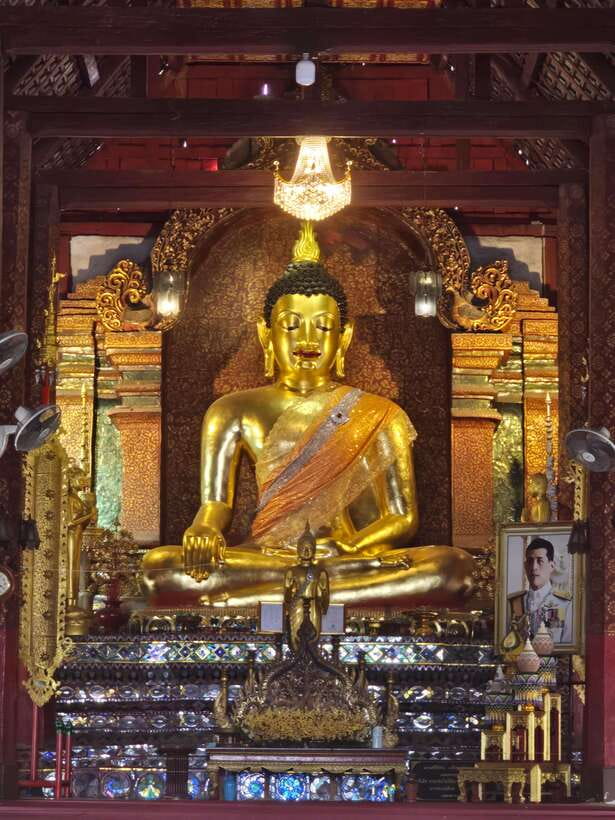
Wat Chiang Man is the first stop. King Mengrai built it in 1296, the same period associated with the founding of Chiang Mai. That makes the temple more than an attractive first stop. It gives you a physical connection to the city’s earliest royal and religious center.
The temple is also associated with a crystal Buddha statue. Your guide can help you look beyond the object itself and understand why particular Buddha images matter to a temple’s identity. This is where a good explanation is worth more than a quick photograph.
You can expect an introduction to temple conduct here, including how to enter respectfully, how to pray, and how to behave around monks and sacred images. One guide has also shown basic meditation and explained Buddhist ideas through stories about the Buddha’s previous lives. These details give the visit a practical side. You are not just learning dates. You are learning how to act in the space.
Wat Chiang Man is an important anchor for the whole walk, but do not expect the tour to end there. The value comes from comparing this old Lanna site with the later Shan and Burmese influences that follow.
Wat Chiang Yuen and the Shan connection
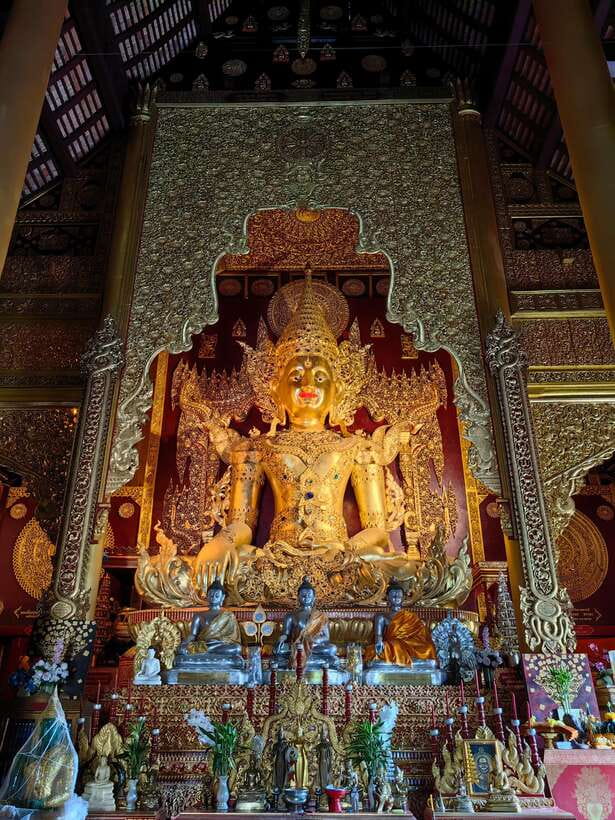
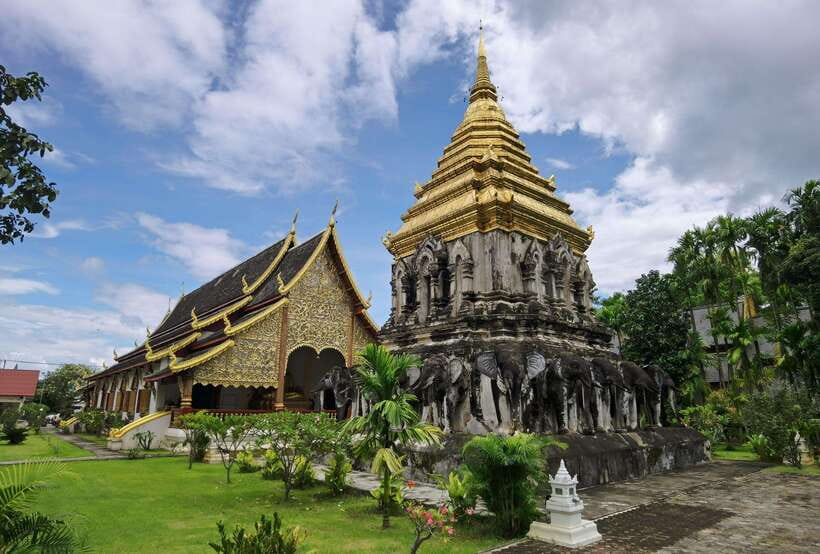
The next stop, Wat Chiang Yuen, is described as a distinctive 16th-century temple in an area that once served as a residential district for Shan people. This adds a social layer to the walk. You are not simply moving from one religious building to another. You are tracing the communities that shaped northern Thailand.
The Shan are an ethnic group with cultural ties across parts of Myanmar and northern Thailand. At Wat Chiang Yuen, the guide can place the temple in that wider setting and explain why Chiang Mai’s religious architecture does not fit one neat national category.
This is also the sort of stop that benefits from a local guide. You might pass a modest temple on your own and see only a quiet courtyard or a decorated hall. With context, you can connect the site to migration, settlement, and changing power in the region.
The tour’s pace is one of its strengths here. Several people have valued the time to ask questions instead of being hurried through each temple. If you are interested in Buddhism, Thai customs, or the life of monks, use this opportunity to ask direct questions. Guides have discussed beliefs, daily practice, meditation, and monastic food, not just architectural details.
Wat Pa Pao brings Burmese style to the walk
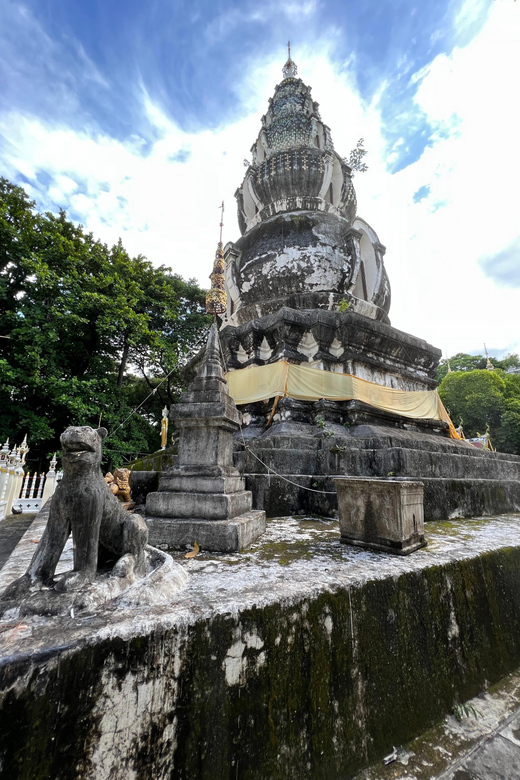
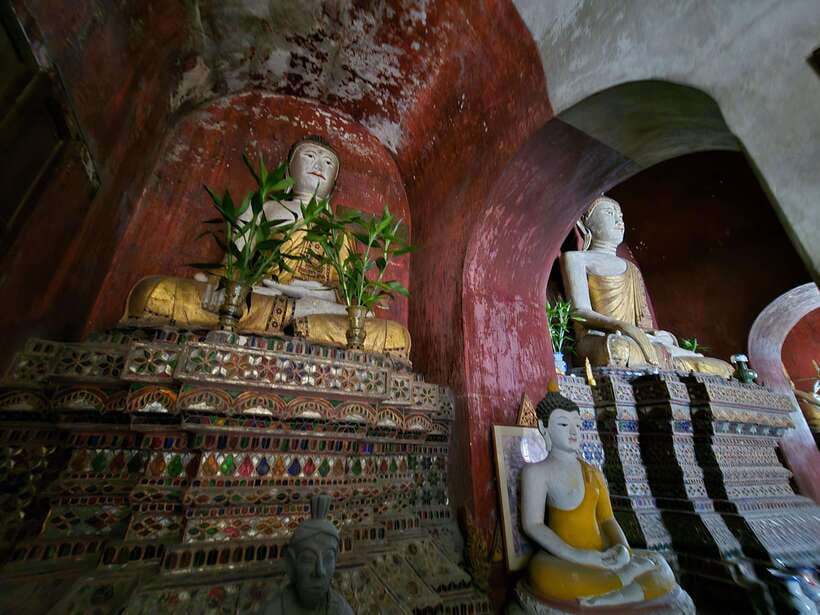
Wat Pa Pao sits outside Chiang Mai’s old city walls and moats. It is a Shan Burmese-style temple, so it gives you another visual and cultural contrast after Wat Chiang Man and Wat Chiang Yuen.
The location matters. The old walls help define Chiang Mai in the popular imagination, but the city’s religious life does not stop at the moat. Moving outside that boundary shows how communities and traditions extended into the surrounding city.
Wat Pa Pao is a good place to pay attention to design. I would ask your guide to point out the features that make the temple Shan Burmese rather than simply calling it an old temple. The point is not to memorize architectural labels. It is to notice how regional traditions travel and change.
This stop may also feel quieter than the headline sights. That can be a real advantage. One of the best features of the tour is the chance to visit peaceful temple spaces where you can ask questions without the pressure of a large crowd. In some cases, guides have helped participants see areas they would not have found or entered by themselves, including a temple opened for a small group by a monk.
That kind of access should not be treated as guaranteed. Still, it shows why a guide with local temple relationships can add something a self-guided walk cannot.
More Temple Tours in Chiang Mai
- Chiang Mai: Chiang Rai Temples, Karen Tribe and Hot Springs
★ 4.7 · 5,401 reviews - Chiang Rai White Temple and Blue Temple Day Tour
★ 4.6 · 3,366 reviews - Chiang Mai: White, Red/Black & Blue Temples Tour with Lunch
★ 4.2 · 2,017 reviews - Chiang Mai: Doi Suthep and Wat Umong Enchanting Evening Tour
★ 4.6 · 1,811 reviews
Wat Ku Tao and the story of Burmese rule
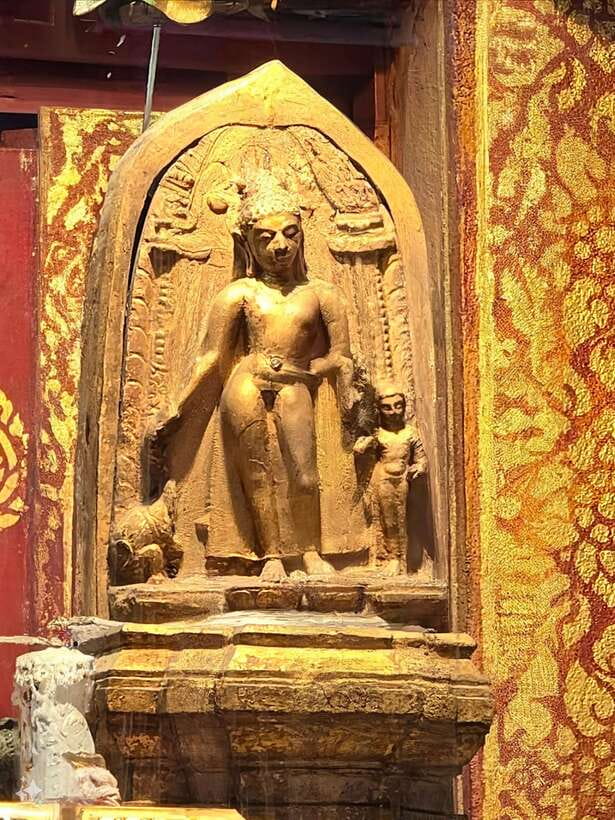
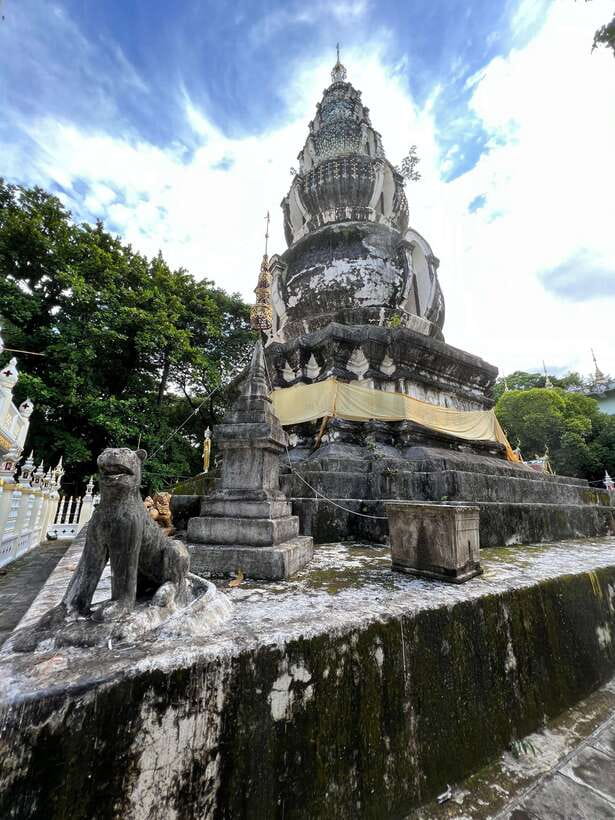
Wat Ku Tao is the final temple listed on this route. Its unusual chedi is thought to date from 1613 and to have held the ashes of Prince Saravadi, identified as the first Burmese overlord of Chiang Mai, who lived from 1578 to 1607.
The chedi is the visual centerpiece, but the political background gives the stop its weight. Chiang Mai’s past includes periods of Lanna, Shan, and Burmese influence. Wat Ku Tao helps you see that the city was shaped by shifting regional powers, not isolated from the rest of mainland Southeast Asia.
This is a good place to ask how religious buildings can serve several roles at once: places of worship, memorials, markers of authority, and records of cultural contact. The guide’s job is especially useful here because the monument’s unusual form may raise questions that a standard temple visit does not answer.
The four stops work well together. Wat Chiang Man looks back to the city’s foundation. Wat Chiang Yuen and Wat Pa Pao show Shan connections. Wat Ku Tao brings in Burmese political history. You finish with a wider understanding of Chiang Mai than you would get from visiting only the most famous central temples.
What the guide adds beyond temple facts
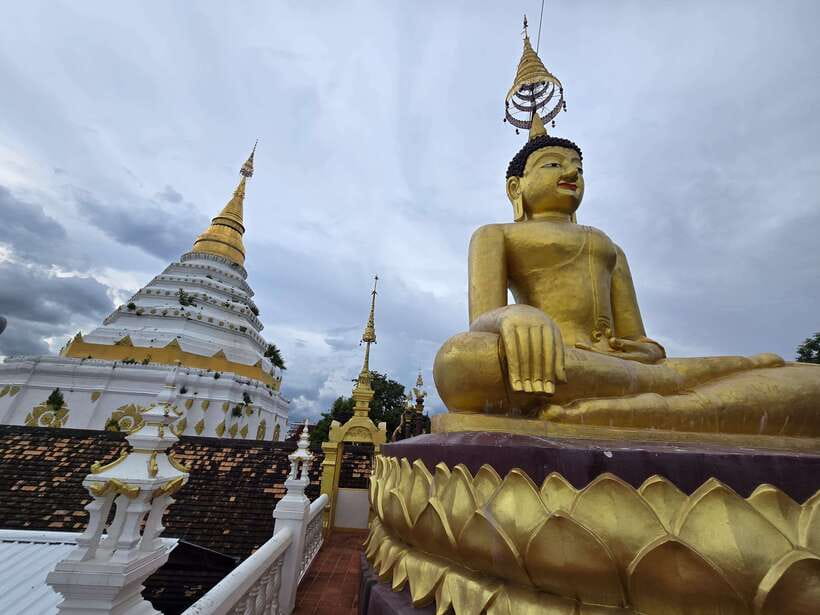
The highest praise for this experience centers on the guides, not simply the buildings. Katoon has been singled out for explaining Buddhist stories, meditation, monk life, and the meaning of temple art. His former monastic experience gives him a perspective you would not get from a guide reading a short script.
Big has also been praised for showing how to pray, explaining the life of monks, and looking after people throughout the visit. Eddy has been described as attentive with photographs, while Son has been praised for patient answers about Buddhism and Thai culture. The names matter because they suggest a personal, discussion-based tour rather than a fixed audio lesson.
You should expect the quality of the experience to depend partly on your assigned guide. English, Chinese, and Thai are offered, and the specific guide’s language ability may shape how detailed the conversation becomes. One participant found that Big was still working on his English, though they appreciated his enthusiasm and subject knowledge.
The best way to get value is to arrive with questions. Ask about Buddhist practice, temple etiquette, monks’ daily lives, meditation, the meaning of images, or the differences between Thai, Shan, and Burmese styles. This tour rewards curiosity.
Guides have also taken photographs for participants. That is a pleasant extra, especially if you are traveling alone or want pictures that show you in the temple setting. It should not be the main reason to book, but it adds a thoughtful touch.
Walking, heat, clothing, and comfort
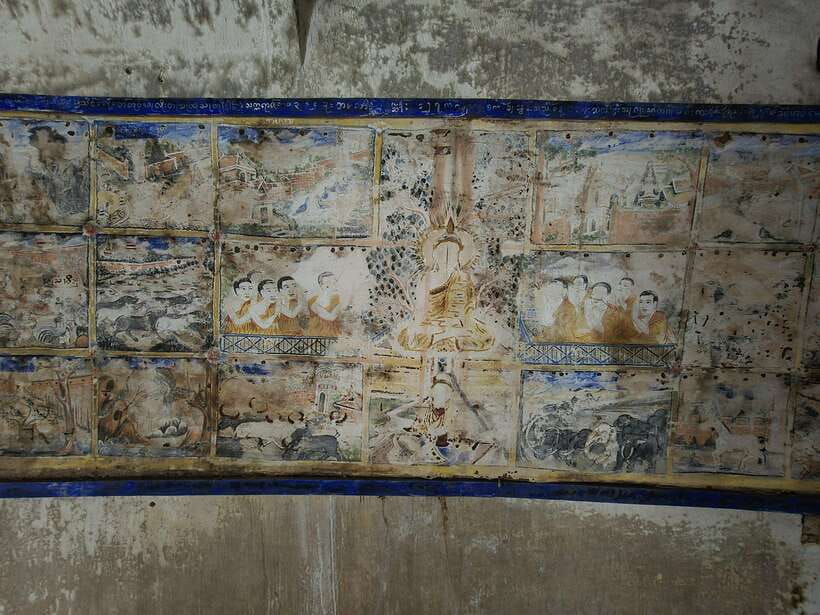
The walk is described as relatively easy, but easy does not mean effortless. You are visiting four temples over several hours, and the route involves standing, moving between sites, and spending time outdoors. A participant specifically advised anyone unused to the heat to prepare for hours of walking.
Bring drinking water, an umbrella, and cash. The umbrella is useful for both sun and sudden rain. Food and extra drinks are not included, so plan accordingly, especially if your departure or finish time changes.
Wear clothing suitable for temples. Short skirts are not allowed, and respectful dress is essential around Buddhist religious sites. The rules also exclude smoking indoors, alcohol and drugs, intoxication, drones, pets, weapons, sharp objects, and excessive noise.
The tour is not suitable for children under two, babies under one, pregnant women, wheelchair users, or people using electric wheelchairs. Baby strollers are also not allowed. If anyone in your group has mobility concerns, this walking format is probably the wrong choice.
Comfortable shoes matter more than stylish shoes here. You do not need hiking equipment, but sandals with secure straps or well-broken-in walking shoes will make the day easier. If you are booking Part I and Part II on the same day, build in the stated lunch and rest break, then ask yourself honestly if you want another long walk.
The $31 price and what you receive
At $31 per person, this is a sensible price for a full-day walking tour with a guide. You are paying for interpretation, route planning, cultural context, and the chance to ask questions at four temples. You are not paying for meals or a vehicle-based sightseeing loop.
The value is strongest for solo visitors and first-time visitors who might otherwise see the temples as a string of similar buildings. A guide can explain why each site matters and help you notice differences between Lanna, Shan, Burmese, and Thai traditions.
A small group should offer a good balance between cost and conversation. A private tour costs more in many cases, though the exact amount is not provided here. The private option includes hotel pickup and drop-off, which can make the day easier if you are carrying bags, staying outside the central area, or prefer not to deal with the meeting point.
The meeting instructions deserve attention. One participant had trouble with the plus-code style address, which was difficult for a hotel staff member and taxi driver to understand. The meeting location should be clarified in plain language, ideally with a nearby landmark such as the Three Kings Monument if that is the designated point. Leave extra time. Arriving five minutes late caused avoidable stress for one group.
Free cancellation is available up to 24 hours before the activity for a full refund. You can also reserve now and pay later, which helps if your Chiang Mai plans are still shifting. The activity is valid for one day, with departure times shown according to availability.
Who should book this Chiang Mai walk
I would recommend it to you if you want more than temple photography. It suits people interested in Buddhism, local customs, northern Thai history, Shan culture, and the details of monastic life.
It is also a strong choice for solo visitors. The tour has continued even when only one person booked, giving that participant extended time with the guide. Private and small-group formats can make the conversation even more personal.
You may prefer another kind of sightseeing if you dislike walking in heat, need step-free access, or want a relaxed half-day with plenty of sitting. The full route can be tiring, and the tour does not include food or drinks.
Book it as a stand-alone experience if you have one day for temples. Add Part I if you want a fuller program, but do not underestimate the combined walking time. The most rewarding part is not ticking off four sites. It is leaving with a clearer sense of how belief, community, politics, and daily life meet in Chiang Mai.
Should you book it?
Book this tour if you want patient explanations and less obvious temples, especially if a former monk’s perspective appeals to you. The $31 price is good for a full day of guided cultural sightseeing, and the 4.9 rating from 70 reviews reflects very strong satisfaction with the guides and the depth of the experience.
Skip it if you want transport between sights, a short outing, or a fully accessible route. Confirm the meeting point, bring water and an umbrella, dress respectfully, and prepare for heat. If you do that, this is one of the better ways to turn Chiang Mai’s temples from beautiful places into understandable ones.
FAQ
What temples are included in the tour?
The route includes Wat Chiang Man, Wat Chiang Yuen, Wat Pa Pao, and Wat Ku Tao.
What time does the tour start?
The stated start time is 8:20 am. Availability may show different starting times, so confirm the departure time when booking.
How long does the tour last?
It is a one-day experience. The walking portion can last for hours, so plan for a full day on your feet.
Is hotel pickup included?
Hotel pickup and drop-off are included if you select the private option. The walking tour itself does not automatically include hotel transportation.
Which languages are available?
Live guides are available in English, Chinese, and Thai.
What should I bring?
Bring an umbrella, drinks, and cash. Food and additional drinks are not included.
Can I cancel the booking?
You can cancel up to 24 hours in advance for a full refund. The reserve-now, pay-later option is also available.
Just added in Chiang Mai
- Full Day Doi Saket Hiking Tour★ 5.0 · 14 reviews
- Pha Dok Siew Nature Trail & Doi Inthanon National Park From Chiang Mai★ 4.0 · 23 reviews
- One day Elephants in Nature Experience & Grand Canyon Jumping★ 5.0 · 31 reviews
- Chiang Mai to White & Blue Temple, Black Museum & Golden Triangle★ 4.0 · 52 reviews
- One day Doi Inthanon National Park & Trekking on Kew Mae Pan★ 5.0 · 12 reviews
- Private Tour 2 Difference Trails Trekking at Doi Inthanon National Park★ 5.0 · 19 reviews
- Half day Long Neck hill tribe and Hmong hill tribe village★ 5.0 · 21 reviews
- One Day Tour Chiang Rai(White Temple , Blue Temple, Black House) Private Tour★ 5.0 · 63 reviews
Temple Tours, compared.
Chiang Rai Temples, Karen Tribe and Hot Springs
Read our review →
City Highlights Temple and Market Walking Tour
Read our review →
Bangkok by Night: Temples, Markets and Food Tuk-Tuk Tour
Read our review →
Grand Palace, Wat Pho, and Wat Arun Guided Tour
Read our review →
Tiger Cave Temple, Emerald Pool and Hot Springs Tour
Read our review →
Chiang Rai White Temple and Blue Temple Day Tour
Read our review →Browse the lists this tour appears in