
Reviewed · CYCLING AND E-BIKE TOURS
Chiang Mai: Historic Old City Bike Tour – Morning or Night
Trade temple crowds for quiet lanes. This four-hour bike tour gives you a useful first look at Chiang Mai, combining major sights with back streets, local markets, and small food tastings. I like the mostly flat route and the chance to cover about 12 to 14 kilometers without spending the day in a vehicle.
I also like the human touch. Guides such as Kitty, Farm, James, Gun, Boy, and Nene have been praised for clear explanations, safe riding, good humor, and practical local tips. The main consideration is that the tour can feel stop-start, with more time at temples than some people expect and limited market time on certain departures.
In This Review
- Key Points Before You Book
- Why a Bike Works So Well in Chiang Mai
- Starting Near Chang Puak Gate
- Tha Phae Gate and Chiang Mai’s Old Entrances
- Wat Chedi Luang and the Temple Stops
- Wat Inthakhin and the Three Kings Monument
- Back Alleys, Canals, and Everyday Chiang Mai
- The Market Stop and Local Snacks
- Morning or Night: Which Departure Fits You?
- What the $39 Price Really Buys
- Who Will Enjoy This Ride Most?
- Practical Details Before You Reserve
- Should You Book It?
- FAQ
- How long does the Chiang Mai bike tour last?
- How far do you cycle?
- Where does the tour start and finish?
- What sights are included?
- Are food and drinks included?
- Is the route suitable for children?
- What is the maximum group size?
- Can I cancel for a refund?
Key Points Before You Book
- Mostly flat 12 to 14-kilometer route: The riding is relaxed rather than athletic, making it suitable for many casual cyclists.
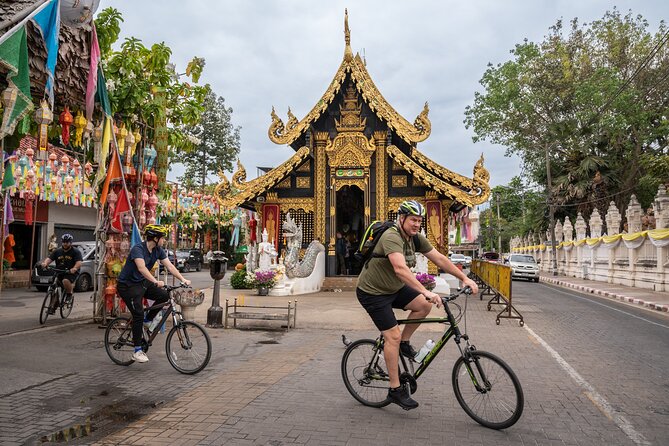
- Quiet lanes are the real treat: You pass through narrow back streets, alleys, and less familiar parts of the Old City instead of sticking only to major roads.
- Temples lead the itinerary: Wat Chedi Luang, Wat Inthakhin, and other religious sites form much of the cultural focus.
- Morning and night versions differ: Expect a fresh produce market in the morning or a street-food market on the night departure.
- Food and drinks are included: Water, light snacks, and simple market tastings help make the ride feel generous for the price.
- Small-group comfort varies: The maximum is 20 people, but many departures are much smaller. Ask about group size if personal attention matters to you.
Why a Bike Works So Well in Chiang Mai
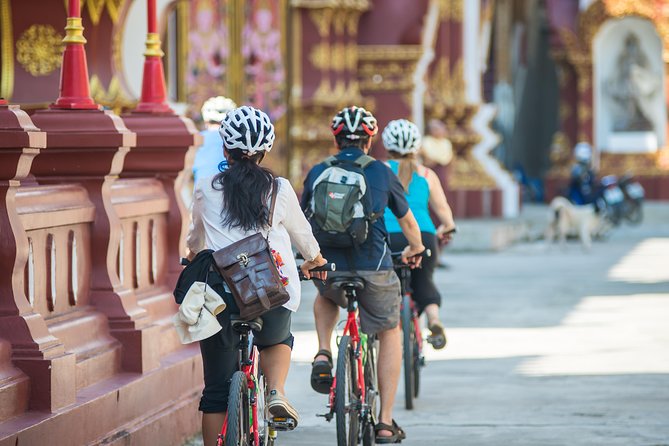
Chiang Mai’s Old City is compact on a map, but walking between its temples, gates, squares, markets, and side streets takes time. A bicycle lets you connect these places quickly while still moving slowly enough to notice daily life.
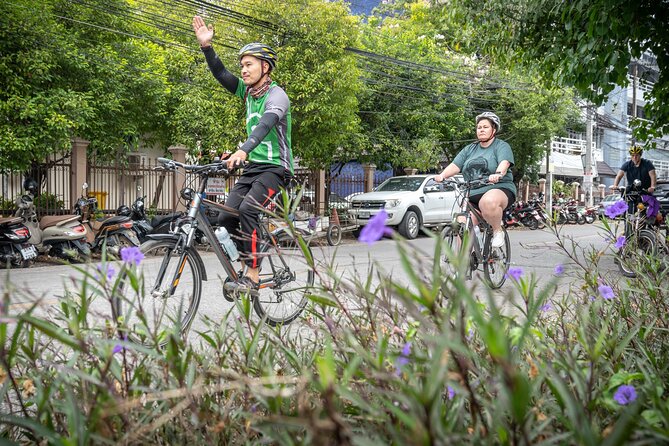
That balance is the tour’s main strength. You are not sealed inside a minibus, and you are not rushing through town on a motorbike. You pedal behind your guide, stop often, listen to stories, and then continue through lanes where cars are less of a nuisance.
The route is described as relaxed and mostly flat. Several riders found the bikes easy to use and the roads comfortable, though one departure felt more like a series of short rides between stops than a long cycling adventure. Set your expectations correctly: this is a sightseeing tour by bicycle, not a serious workout.
I would book it early in a Chiang Mai stay. You get a sense of the Old City layout, learn which temples and markets interest you, and pick up ideas for later meals, massages, or independent walks. Farm, one of the guides praised for local suggestions, even pointed one group toward a good lunch and massage after the ride.
More Bike Tours in Chiang Mai
- Chiang Mai: Historic Old City Bike Tour – Morning or Night
★ 4.7 · 263 reviews - Chiang Mai Countryside Guided Bike Tour
★ 5.0 · 153 reviews - Chiang Mai: Private Historic Old City Bike Tour – Night
★ 4.7 · 143 reviews
Starting Near Chang Puak Gate
The meeting point is the Discova Day Tour Shop at 10/3 Wiang Kaew Road, near Chang Puak Gate, the Old City’s north gate. Your guide waits there, handles the initial arrangements, and provides the mountain bike and helmet.
Allow a little time to arrive without rushing. One guide was especially accommodating when a group arrived late, but that should not be treated as a policy. The tour ends at the same shop, which makes the start and finish simple.
Before riding, you should expect the practical details to be covered, including the bike, helmet, route, and safety. Children need an adult with them. A child seat can be requested, but the stated limit is 14 kilograms, so families should check that carefully before booking.
The tour allows up to 20 participants. That is not especially intimate at full capacity, although many outings appear to run with smaller groups. Groups of three, five, eight, and ten have all been described, with the smaller departures receiving more direct attention.
Tha Phae Gate and Chiang Mai’s Old Entrances
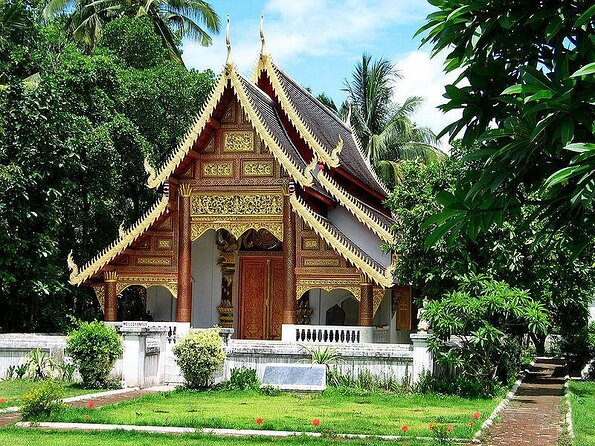
The first major stop is Tha Phae Gate, one of the best-known entrances to the Old City. The ride from the shop takes you toward the former trading gateway, giving your guide a natural place to explain how Chiang Mai developed around its defensive walls and commercial routes.
You spend about 30 minutes here. That is enough time for an explanation and photographs, though it is not a long historical lecture. The value comes from seeing the gate as part of the city’s old structure rather than as an isolated photo stop.
This is also where the bicycle begins to earn its keep. Instead of walking directly along the most obvious route, you move through connecting streets and lanes. Several guides have been praised for keeping riders together and choosing quieter roads when possible.
Traffic awareness still matters. This is an urban cycling tour, not a closed-road ride. James, also called 007 by one group, and Boy were specifically praised for guiding people safely through traffic and lanes. You should follow instructions closely, keep your eyes up, and avoid treating the ride as a free-form exploration.
Wat Chedi Luang and the Temple Stops
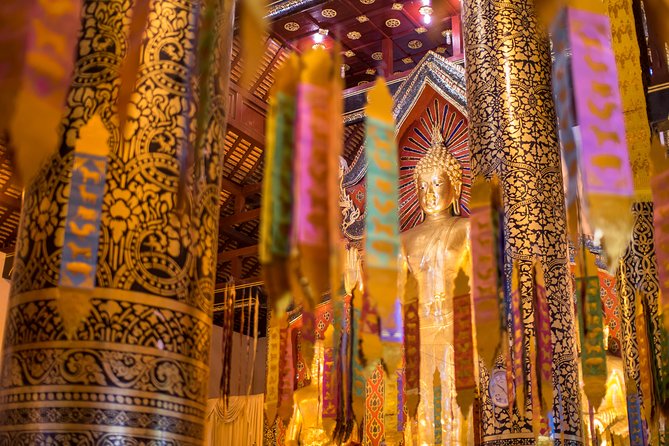
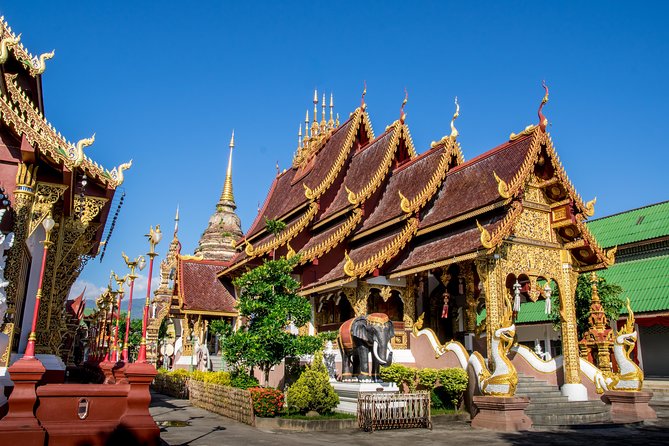
Wat Chedi Luang is the tour’s major temple visit. Its huge ruined chedi gives the site a strong visual impact, even before your guide explains its place in Chiang Mai’s past. The grounds also include the ancient City Pillar, adding another layer of religious and civic meaning.
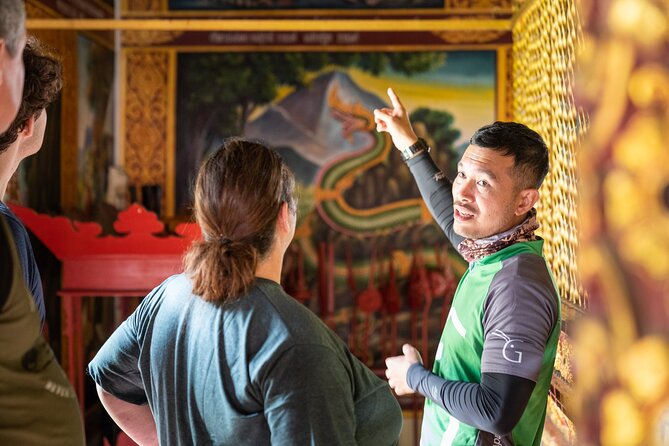
You spend roughly 30 minutes here, though the actual experience can vary with the pace of the group and the amount of explanation. Guides often add context about Buddhism, local beliefs, and temple customs. Kitty was praised for explaining Chiang Mai’s past, while other guides helped people take part in small activities available at the temples.
Dress and behavior matter. You are entering active religious spaces, not merely visiting monuments. Wear clothing that is respectful for temple visits, and listen when your guide explains what you may photograph or how to behave.
One important caution comes from the tour’s own feedback. A particular departure did not visit every temple listed in the advertised plan, and one religious area had access restrictions for women. The exact temple sequence may change, so do not book this expecting a fixed checklist of every site named in the schedule.
The temple section is best for you if you want cultural explanation along with the buildings. If you prefer neighborhood life, long market visits, or extended cycling, you may find this part too dominant.
More Sightseeing Tours in Chiang Mai
- Chiang Mai: 3 Hour Old City and Temples Guided Walking Tour
★ 4.6 · 1,568 reviews - The Best City Tour View Points Wat Doi Suthep, Wat Chedi Luang and Wat Pha Lat
★ 5.0 · 184 reviews - Private Chiang Mai Old City Half Day Tuk Tuk Tour
★ 4.5 · 157 reviews - Chiang Mai: Exploration of Old City by Private Tuk-Tuk
★ 4.3 · 127 reviews
Wat Inthakhin and the Three Kings Monument
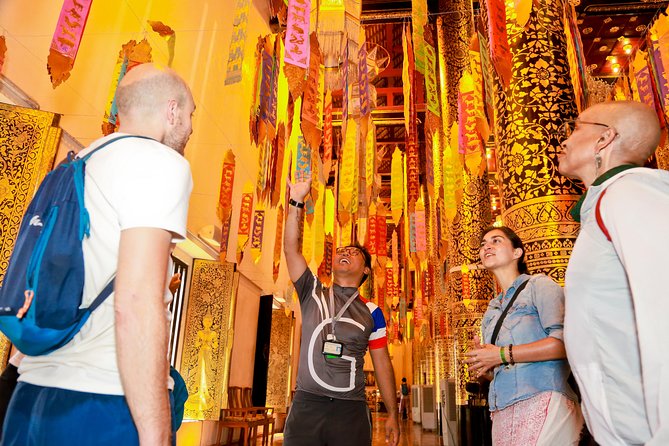
The route continues to Wat Inthakhin Sadue Muang, also known as the City Navel Temple. It marks the symbolic center of the old kingdom and gives your guide another chance to explain the relationship between Chiang Mai’s religious life and civic identity.
The next stop is the Three Kings Monument, located in a historic square. The monument is a useful visual anchor for understanding Chiang Mai’s founding traditions and the way the Old City’s public spaces fit together.
Each stop is listed at around 30 minutes. That sounds generous, but some of this time includes parking bikes, gathering the group, walking into temple grounds, listening to explanations, and taking photos. If you want lengthy independent exploration, ask your guide how much free time is available.
The benefit is variety. You are not simply pedaling past temples and trying to remember their names. You pause, receive context, and then see how the different sites relate to one another. The drawback is rhythm: ride, stop, listen, photograph, ride again. One person found the ride itself shorter than expected because the tour kept breaking into these short segments.
Back Alleys, Canals, and Everyday Chiang Mai
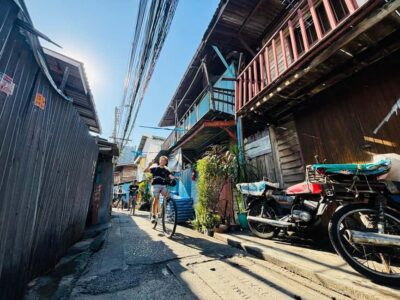
For many people, the quiet lanes are the best part. The route uses back streets and small alleys where you can get closer to ordinary city life. One group also passed along a canal and did a little off-road riding, although that should be viewed as a possible feature rather than a guaranteed section of every departure.
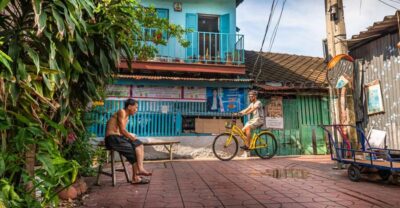
You may see local homes, small businesses, food preparation, and streets that are easy to miss when walking the main routes. The tour does not promise a full neighborhood study, but it gives you glimpses that a standard temple circuit often skips.
This is where the guide makes the biggest difference. A good leader keeps the pace comfortable, points out details you might miss, and explains what you are seeing without turning every stop into a lecture. Amy was praised for speaking clear English, riding at a manageable speed, and staying friendly and attentive.
The route is suitable for people who can manage ordinary cycling for several hours, with regular stops. Most participants can take part, but the information does not provide a detailed fitness or mobility assessment. If you have concerns about cycling in city traffic, ask before booking.
The Market Stop and Local Snacks
Every departure includes a local market, but the type depends on the time of day. The morning version uses a fresh market with produce. The night version heads toward a market with more street-food energy.
This is not presented as a full food tour. Your guide helps you try a few simple snacks, fruit, or local produce, and water and light refreshments are included. Past tastings have included fresh coconut, fruit, local foods, and a fruit smoothie at a nearby business.
I like this part because food gives the cultural talk a practical edge. You are not only hearing about northern Thai cuisine. You are looking at ingredients, smelling food being cooked, and trying small portions with someone who can explain what they are.
The market is also the clearest weakness for people who want time to browse. One family wished they could stay longer to learn about fruits, spices, and vegetables and to shop. Another person felt the market and smoothie stop were less rushed than the earlier sections.
If you are already booking a dedicated food tour, there may be some overlap. In that case, you might prefer to treat this as a short tasting break and focus on the temples and lanes. If you are not taking a food tour, the market adds welcome local flavor.
Morning or Night: Which Departure Fits You?
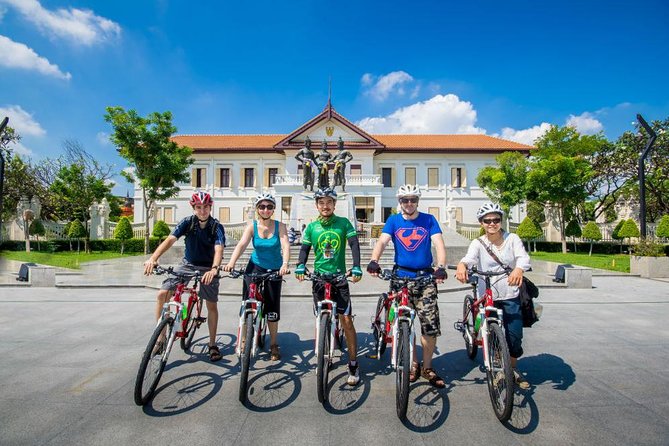
The morning departure is the safer pick if you want cooler riding conditions and a fresh market with produce. It also works well as your first activity in Chiang Mai because you can spend the afternoon using the landmarks and street layout you have just learned.
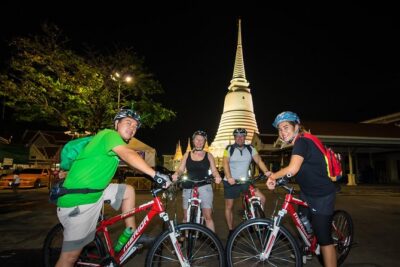
The night departure offers a different mood. The market should be livelier, with street food rather than the quieter produce-market feel. The provided details do not promise a specific night market name or exact food selection, so think of it as a market-focused evening ride rather than a formal dinner experience.
Both options last about four hours. Snacks and drinks are included, but you should not assume they replace a full meal. Wear comfortable clothing, bring sun protection for daytime, and choose temple-appropriate clothing for either departure.
What the $39 Price Really Buys
At $39 per person, the price is reasonable if you value guidance and cultural context. You are getting a quality mountain bike, helmet, English-speaking guide, water, light snacks, temple donation allowance, accident insurance, and a four-hour route through several key parts of the Old City.
The strongest value is not the bicycle alone. You are paying for route planning, safe movement through town, access to local food experiences, and explanations that would be difficult to assemble during an independent ride. The small-group format can make that especially worthwhile.
The value drops if you want a private itinerary or a long uninterrupted ride. At full capacity, the group may reach 20 people, and one larger group lost time after riders missed a turn. If you want to stop longer at markets, skip some temples, or tailor the route, a private booking would better match your needs, if available.
Gratuities are not included and are optional. Personal purchases at the market are also your responsibility.
Who Will Enjoy This Ride Most?
I would recommend this tour to first-time visitors, casual cyclists, families with older children, and anyone who wants an active introduction without committing to a strenuous day. Three teenagers reportedly handled it well, and parents appreciated the calm pace and safety attention.
It is also a good fit for solo visitors. One person ended up with what was effectively a private experience and received more personal discussion about Buddhism, food, and local history.
You may want something else if your priority is a serious cycling route, long time in markets, or a precise list of every temple. A dedicated food tour may also suit you better if tasting and shopping matter more than monuments.
English ability appears to be a strong point across the guide team. Names praised for clear communication and friendly service include Kitty, Tom, Farm, James, Gun, Boy, Nene, Amy, Kiki, and Aei. Your exact guide is not guaranteed, but the range of positive comments suggests that guide quality is central to the experience.
Practical Details Before You Reserve
Confirmation is provided at booking, and mobile tickets are supported. The operator requests the lead passenger’s contact details and passport name, number, expiry date, and country for every participant.
The tour includes free cancellation up to 24 hours before the local start time. Cancellations or changes made inside that window are not refunded or accepted.
The meeting point is near public transportation, and the activity returns to the same Discova shop. The maximum group size is 20. Children must be accompanied by an adult, and the available child seat supports a child weighing up to 14 kilograms.
Should You Book It?
Book this bike tour if you want a friendly, low-pressure way to get oriented in Chiang Mai. The combination of flat riding, famous temples, quiet lanes, local snacks, and good guide support gives you much more than a simple sightseeing ride.
Choose the morning for produce markets and a useful first-day introduction. Choose the night option for a food-market atmosphere. If you want a private route, extended shopping time, or fewer temple stops, check the group arrangement before paying.
For most visitors, $39 is a fair price for four hours of movement and local explanation. Just remember that the bike is the transport, not the main event. The real reward is seeing how Chiang Mai’s temples, lanes, markets, and everyday streets fit together.
FAQ
How long does the Chiang Mai bike tour last?
The tour lasts approximately four hours.
How far do you cycle?
The route covers approximately 12 to 14 kilometers, or about 7.5 miles, at a relaxed pace.
Where does the tour start and finish?
It starts and ends at the Discova Day Tour Shop Chiang Mai, located at 10/3 Wiang Kaew Road near Chang Puak Gate.
What sights are included?
The route includes Tha Phae Gate, Wat Chedi Luang, Wat Inthakhin Sadue Muang, the Three Kings Monument, a local market, and back streets of the Old City. The exact temple sequence may vary.
Are food and drinks included?
Yes. Drinking water, light snacks, and simple food tastings are included. Personal expenses are not included.
Is the route suitable for children?
Children must be accompanied by an adult. A child seat is available on request for a child weighing up to 14 kilograms.
What is the maximum group size?
The tour can have a maximum of 20 participants.
Can I cancel for a refund?
Yes, you can cancel up to 24 hours before the experience start time for a full refund. Cancellations made less than 24 hours in advance are not refunded.
More Historical Tours in Chiang Mai
- Chiang Mai: Historic Temples and City Guided Walking Tour
★ 4.7 · 650 reviews - Chiang Mai: Historical and Culture Exploration Walking Tour
★ 4.6 · 40 reviews - 1 Day Sukhothai Historical Park from Chiang Mai Private Tour
★ 5.0 · 29 reviews - Old Town History and Culture Walking Tour at Chiang Mai
★ 5.0 · 13 reviews
Just added in Chiang Mai
- Full Day Doi Saket Hiking Tour★ 5.0 · 14 reviews
- Pha Dok Siew Nature Trail & Doi Inthanon National Park From Chiang Mai★ 4.0 · 23 reviews
- One day Elephants in Nature Experience & Grand Canyon Jumping★ 5.0 · 31 reviews
- Chiang Mai to White & Blue Temple, Black Museum & Golden Triangle★ 4.0 · 52 reviews
- One day Doi Inthanon National Park & Trekking on Kew Mae Pan★ 5.0 · 12 reviews
- Private Tour 2 Difference Trails Trekking at Doi Inthanon National Park★ 5.0 · 19 reviews
- Half day Long Neck hill tribe and Hmong hill tribe village★ 5.0 · 21 reviews
- One Day Tour Chiang Rai(White Temple , Blue Temple, Black House) Private Tour★ 5.0 · 63 reviews
Cycling and E-Bike Tours, compared.
Night Bike Tour with Temples & Flower Market Visit
Read our review →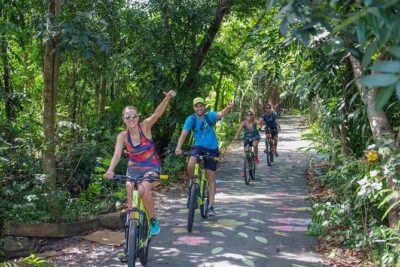
Bangkok Jungle Bike Tour – Hotel-pickup & Lunch
Read our review →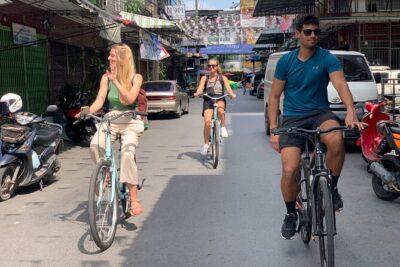
Bangkok Experiences Bike Tours-Backstreets and Hidden Gems
Read our review →
Sukhothai: Historical Park & Countryside Cycling Tour
Read our review →
Browse the lists this tour appears in