
Reviewed · THAI COOKING CLASSES
Chiang Mai: Morning Cooking Class with Market Visit
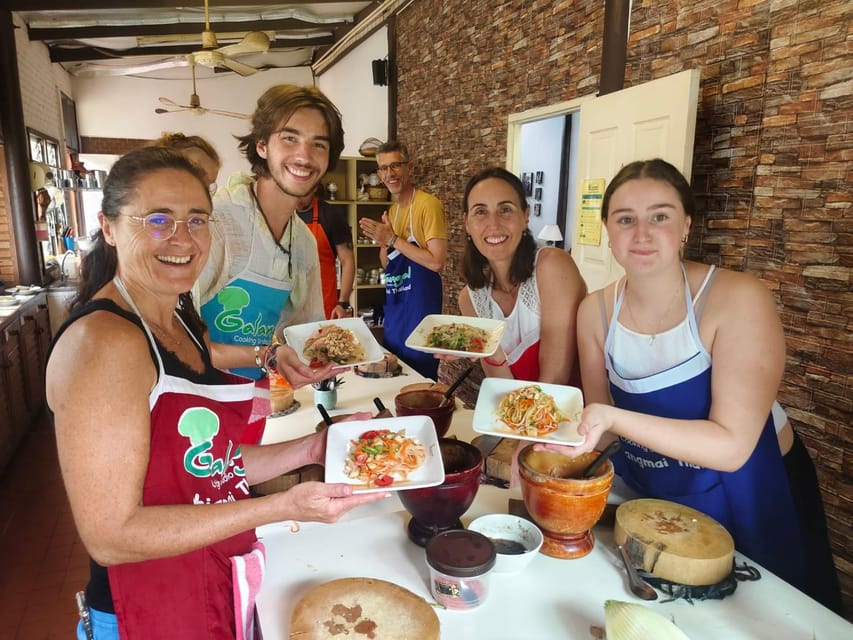
Thai food begins at the market. This five-hour Chiang Mai class combines a local ingredient stop, an organic garden, and hands-on cooking in an air-conditioned studio. I like the chance to choose your own dishes, and I like that you finish with six recipes, dessert, and a PDF cookbook for use at home. The main consideration is the early pickup and the possibly slow hotel transfer, especially if several people are being collected.
The class costs $41 per person, which is strong value for a morning that includes transport, ingredients, instruction, drinks, and a full meal. You should arrive hungry, but not so hungry that you cannot concentrate through the market visit and cooking lesson.
In This Review
- Key points to know before booking
- Why this Chiang Mai class is worth your morning
- Hotel pickup and the early start
- Seeing ingredients at a local Chiang Mai market
- Picking herbs in the organic garden
- Six dishes, chosen by you
- Starters
- Main courses
- Soup
- Curry and curry paste
- Dessert
- What the teaching is like
- Food choices for special diets
- Eating your work and taking the recipes home
- Is $41 good value?
- Who should book this class?
- Should you book the Galangal Cooking Studio class?
- FAQ
- How long does the Chiang Mai cooking class last?
- What time does hotel pickup take place?
- Is hotel pickup available everywhere in Chiang Mai?
- Can I go directly to the cooking studio?
- How many dishes do I cook?
- Can I choose vegetarian or vegan dishes?
- What is included in the $41 price?
Key points to know before booking
- A real local market comes first: You can see Thai herbs, vegetables, noodles, seafood, and other ingredients before using them in class.
- You choose your menu: Options include Pad Thai, green curry, Tom Yum Kung, spring rolls, papaya salad, mango sticky rice, and several vegetarian and vegan dishes.
- You cook six dishes: The class covers a starter, main course, soup, curry paste, curry, and dessert.
- The garden adds useful context: You pick herbs and learn how Thai vegetables are grown using organic methods.
- The teaching gets high marks: New is praised for clear English, practical advice, and a friendly way of teaching beginners.
- Transfers cover much of central Chiang Mai: Pickup is offered from many hotels in the Old City and nearby areas, but you need to confirm your address.
Why this Chiang Mai class is worth your morning
Many Thai cooking classes rush straight to the stove. This one begins with the ingredients, which is the right order. At the market, you can see the raw materials before they have been chopped, fried, pounded, or buried under curry paste.
I especially like this for first-time visitors to Thailand. Thai recipes often call for ingredients that look alike at first glance, such as different types of basil, small eggplants, chilies, ginger relatives, and leafy herbs. Seeing them in their natural setting helps you understand the food instead of treating each ingredient as a mystery packet.
The market visit depends partly on your interest, so it may not be a long guided tour for every group. That is not a bad thing. If you already know Thai produce, you can keep it short. If you are curious, ask questions and take your time. One practical warning: the pickup schedule is shared, and traffic or several hotel stops can make the morning run late.
After the market, you visit an organic garden and learn how local vegetables and herbs are grown. You can pick ingredients for the cooking session. This is a small part of the day, but it gives the food a useful connection to the soil and the people who grow it.
More Markets and Floating Markets in Chiang Mai
- Chiang Mai: Cooking Class, Market & Thai Herbs Garden Tour
★ 4.9 · 4,824 reviews - Chiang Mai: Authentic Cooking Class with Market & Farm Visit
★ 4.9 · 4,546 reviews - Chiang Mai: Cooking Class with Market and Pickup
★ 4.9 · 1,365 reviews
Hotel pickup and the early start
Pickup is scheduled between 8:30 and 9:00 in the morning. You should wait in your hotel lobby 5 to 10 minutes before the agreed time. The driver will wait no more than five minutes after pickup, so this is not the morning to linger over a second coffee.
Transport is offered to hotels in Chiang Mai’s Old City, Santitham, and much of Huay Keaw Road from Kad Suan Kaew toward Maya Shopping Mall. Some addresses around Nimmanhaemin Road, Sirimongkrajan Road, Wat Ket Road, Chang Phueak, Chang Khlan, and Chang Moi are also covered.
The important word is some. Areas can vary by street, and the provider checks your accommodation address. If your hotel is outside the service area, you may need to arrange transport to the cooking school or market yourself. You can also go directly to the studio if you prefer.
One past booking had a communication problem about transportation, and the customer had to get help confirming the cooking school address. I would not let that stop me from booking, but I would make sure the pickup location or direct-arrival instructions are clear before the class date. If you are responsible for arriving independently, leave enough time to reach the meeting point.
Seeing ingredients at a local Chiang Mai market
The market stop is one of the most valuable parts of the experience. You are not simply handed a basket of premeasured ingredients. You get to see where many of them are sold and learn how they fit into Thai cooking.
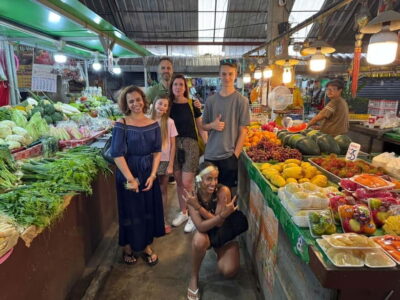
The market is described as genuinely local, with relatively few foreign visitors. That gives you a better look at everyday food shopping than a display made only for tour groups. You might see fresh vegetables, herbs, noodles, seafood, spices, and curry ingredients arranged for local buyers.
Your guide explains what each item is and how it is used. This matters when you later try to recreate the recipes at home. A cookbook can tell you to use Thai basil or a particular chili, but a market explanation helps you recognize the ingredient and understand what can replace it if you live elsewhere.
The market can also be warm, crowded, or strongly scented. That is part of the experience, not a fault, but you should wear comfortable clothing and shoes. If you are sensitive to food smells or heat, the market may be less relaxing than the cooking studio.
Picking herbs in the organic garden
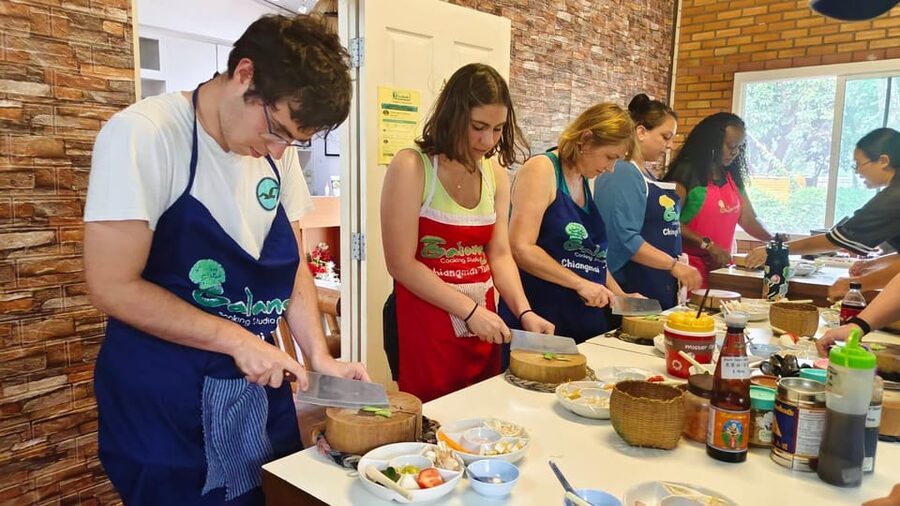
The organic garden gives the class a change of pace. You learn how vegetables and herbs are grown in Thailand, then pick some ingredients to use in your dishes.
I like this hands-on step because it makes the recipes feel less like a restaurant performance. You are not only learning how to stir a curry. You are seeing the plants that supply the flavors and handling some of the ingredients before they reach the chopping board.
The garden is also useful for families. A four-year-old was welcomed into one class and cooked alongside the adults, making this a more practical family activity than a long cultural lecture. Young children still need supervision around knives, hot pans, and cooking equipment, but the staff appear willing to include them.
Do not expect a farm visit lasting half the morning. The garden is one stage in a busy five-hour schedule. Its value comes from the explanation and the chance to pick ingredients, not from a long agricultural tour.
More Thai Cooking Classes in Chiang Mai
- Half-Day Thai Cooking Class at Organic Farm in Chiang Mai
★ 5.0 · 19,087 reviews - Thai and Akha Cooking Class in Chiang Mai
★ 5.0 · 4,358 reviews - Chiang Mai: Cooking Class with Organic Farm at Mama Noi
★ 4.9 · 1,151 reviews - Full Day Thai Cooking at Farm (Chiang Mai)
★ 5.0 · 1,127 reviews
Six dishes, chosen by you
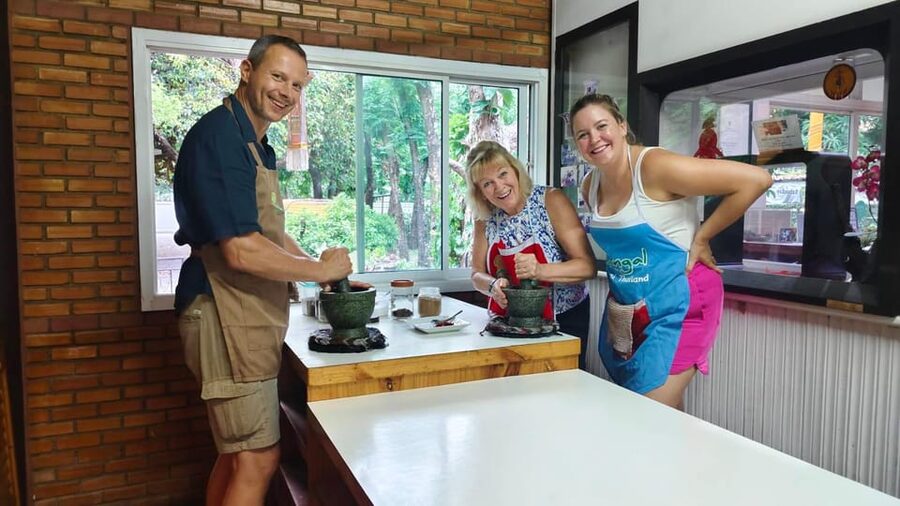
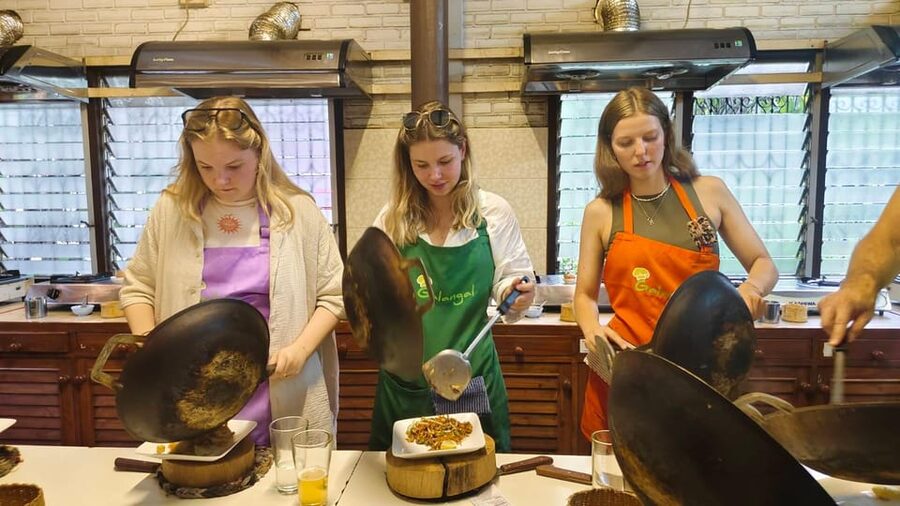
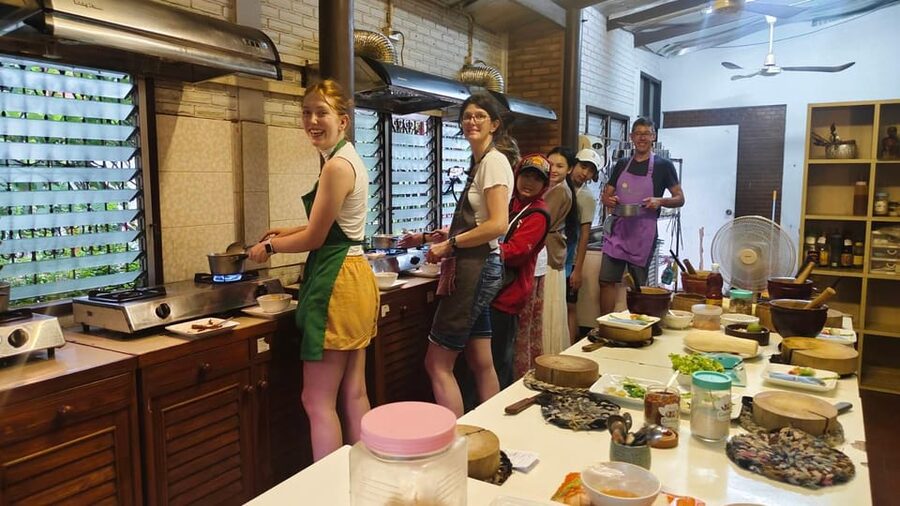
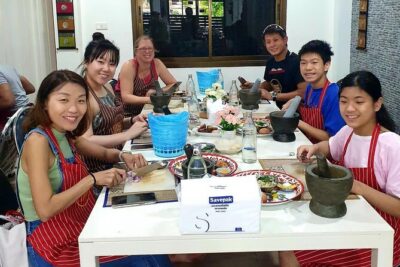
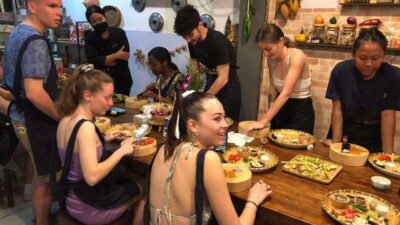
The cooking lesson takes place in an indoor kitchen and air-conditioned dining room. That is a real advantage in Chiang Mai’s heat. You can focus on knife work, seasoning, pounding, and frying without spending the entire session sweating over a hot stove.
The menu is broad. You choose one dish from each category, allowing you to build a meal around your interests and dietary needs.
Starters
Your starter choices include:
- Som Tam, green papaya salad
- Por Pia Thod, fried spring rolls
- Larb Kai, chicken salad
- Yam Woon Sen, glass noodle salad
This is a good spread of Thai styles. Som Tam teaches you how raw ingredients, chilies, acidity, sweetness, and salty seasoning work together. Spring rolls are a friendlier choice if you want a familiar format and a satisfying bit of frying. Larb Kai and glass noodle salad offer lighter options with fresh herbs and sharp flavors.
If you are new to Thai cooking, ask the instructor how spicy your dish should be. You can usually control the heat more easily when cooking for yourself than when ordering in a restaurant.
Main courses
For the main dish, you can choose Pad Thai, Pad See Ew, chicken with cashew nuts, or minced chicken with holy basil.
Pad Thai is the obvious choice if you want Thailand’s best-known noodle dish, but Pad See Ew gives you a different lesson in stir-frying with fresh noodles. Chicken with cashew nuts is a useful option for cooks who prefer a milder, savory dish. Minced chicken with holy basil introduces one of Thailand’s most popular quick meals.
The instructor explains the cooking skills behind these dishes, rather than simply telling you when to add each ingredient. That is important because heat control and timing are often harder to reproduce at home than the ingredient list itself.
Soup
The soup choices are Tom Yum Kung, Tom Kha Kai, Tom Kha Je, or Tom Zap Kai.
Tom Yum Kung gives you the hot, sour prawn soup many people associate with Thai food. Tom Kha Kai uses chicken and coconut milk for a softer, creamy flavor. Tom Kha Je is the vegan coconut milk soup, while Tom Zap Kai offers another hot and sour profile with chicken.
You can compare two important Thai flavor approaches here: bright acidity and chili heat in Tom Yum, or coconut milk and fragrant herbs in Tom Kha. The class lets you choose rather than forcing everyone into the same menu, which is helpful when a group has mixed tastes.
Curry and curry paste
You also make curry paste and choose a curry style: green, red, yellow, Massaman, or Panang.
This may be the most useful lesson of the day. Thai curry paste is not one single product. Different chilies, spices, aromatics, and seasonings create very different results. Green curry is often fresh and hot, red curry brings a deeper chili flavor, yellow curry uses a warmer spice profile, Massaman is fuller and gentler, and Panang is thick and rich.
The class gives you a chance to see how the paste is built before it becomes sauce. That is much more useful than buying a jar and assuming every Thai curry works the same way.
Dessert
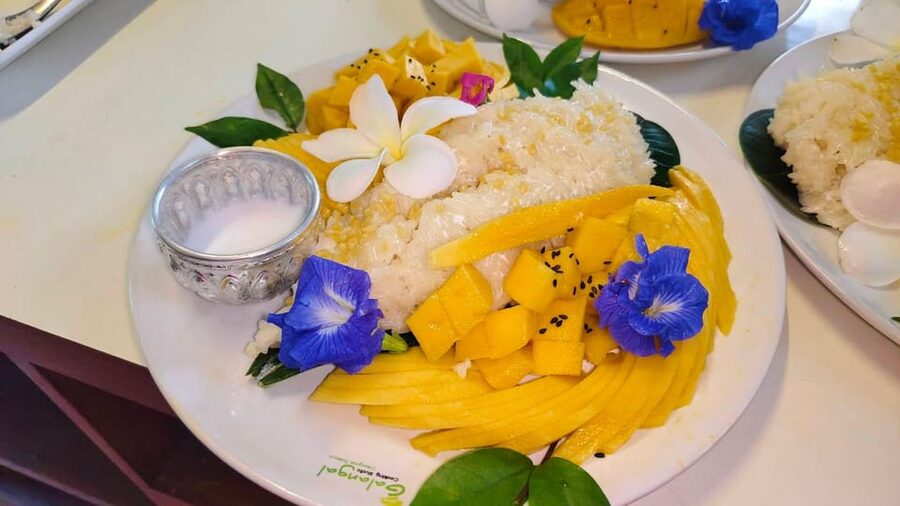
For dessert, you choose mango sticky rice with ice cream or deep-fried banana.
Mango sticky rice is the better pick if you want a classic Thai dessert to repeat at home. It shows how sticky rice, coconut milk, fruit, and sweetness fit together. Fried banana is simpler and gives the meal a warm, crisp finish.
The dessert comes after the savory dishes, so the class feels like a complete meal rather than a set of disconnected demonstrations.
What the teaching is like
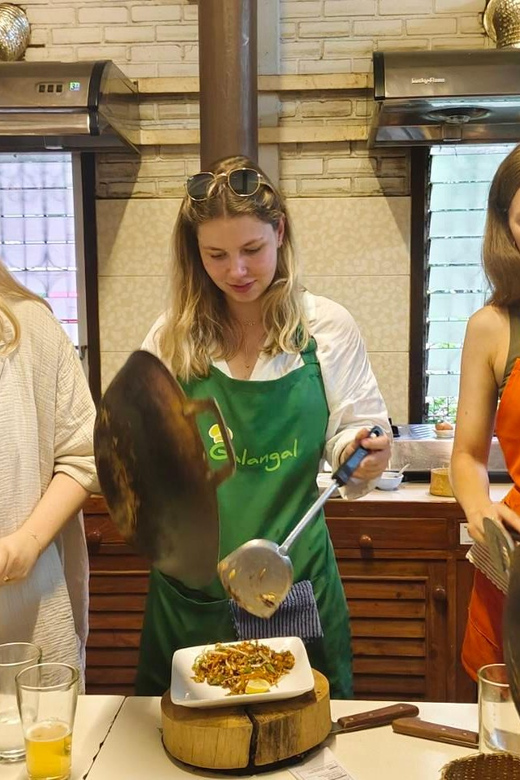
The instructor teaches in English, and New has received particular praise for clear explanations and useful advice about ingredients available outside Thailand. That point matters. A recipe is only worth taking home if you can understand the method and adapt it to your own supermarket.
The classes suit complete beginners as well as people who already cook. The pace is described as comfortable for both groups. You practice basic Thai cooking skills, follow the instructor through each recipe, and then eat what you make.
The staff also appear patient with families and mixed-experience groups. If you are a serious home cook, you can ask about substitutions and technique. If you rarely cook, you can follow the steps without needing advanced knife skills.
The teaching quality seems to be the strongest part of the experience. New is described as friendly, passionate, and easy to understand. That combination is more useful than a fancy kitchen or a huge menu. The best cooking class leaves you confident enough to try again, not just full for an hour.
Food choices for special diets
The class is available for vegan, vegetarian, Halal, and gluten-free participants, and it can accommodate allergies. You should still state your needs clearly when booking and remind the staff at the start of the class.
The menu already includes vegan soup and several dishes that can be adjusted. Still, Thai cooking uses fish sauce, shrimp paste, soy sauce, wheat-based sauces, and shared cooking equipment, so clear communication matters.
Do not assume that removing meat automatically makes a dish vegetarian. Ask which ingredients are being used in the curry paste, soup, and stir-fry. The staff can guide your choices, but you need to provide accurate information about allergies and dietary restrictions.
Eating your work and taking the recipes home
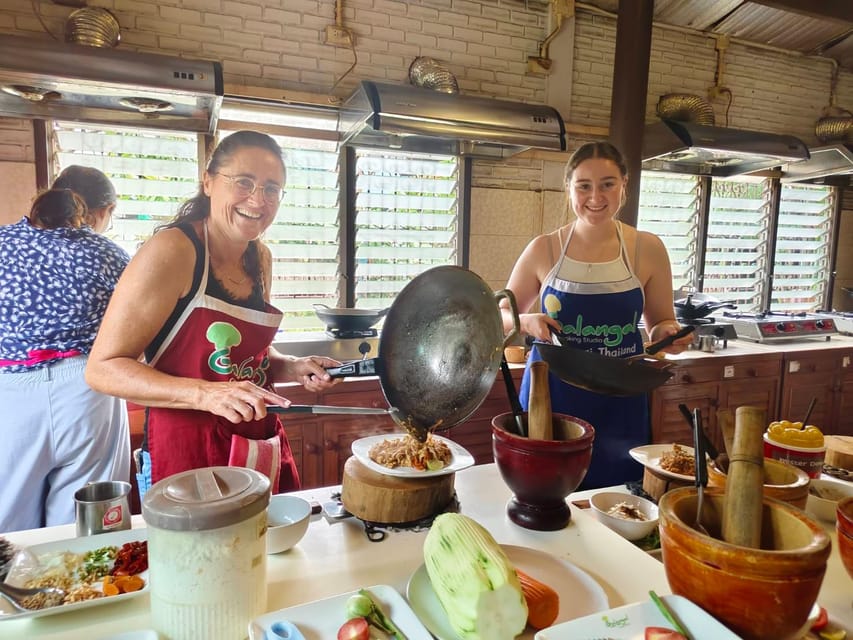
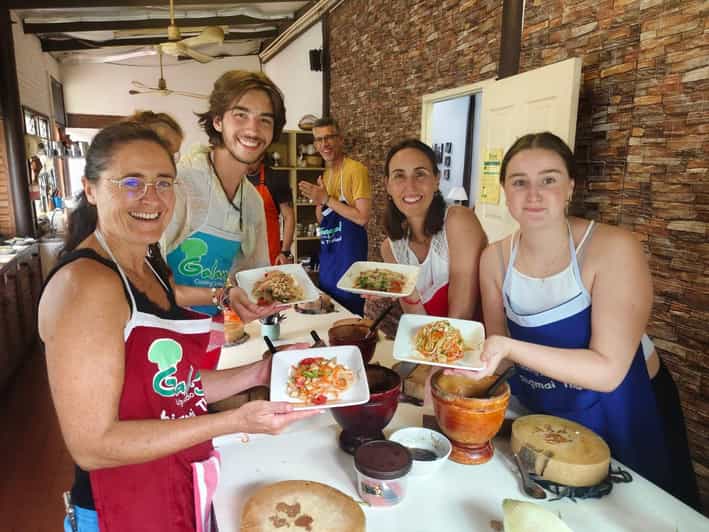
At the end, you sit down and eat the dishes you prepared. This is where the six-dish format pays off. You get a proper meal, not a tiny tasting portion.
The cooking class provides water, tea, and coffee, along with all ingredients and equipment. Since the morning includes a market and garden visit before cooking, the advice to arrive with an empty stomach makes sense. You will be eating several dishes by the end.
You also receive PDF versions of the recipes. One particularly useful feature is that the recipes include guidance on ingredients that may be available in other countries. Save the file before leaving Thailand so you can find it later, then use it as a practical reminder of the techniques from class.
Is $41 good value?
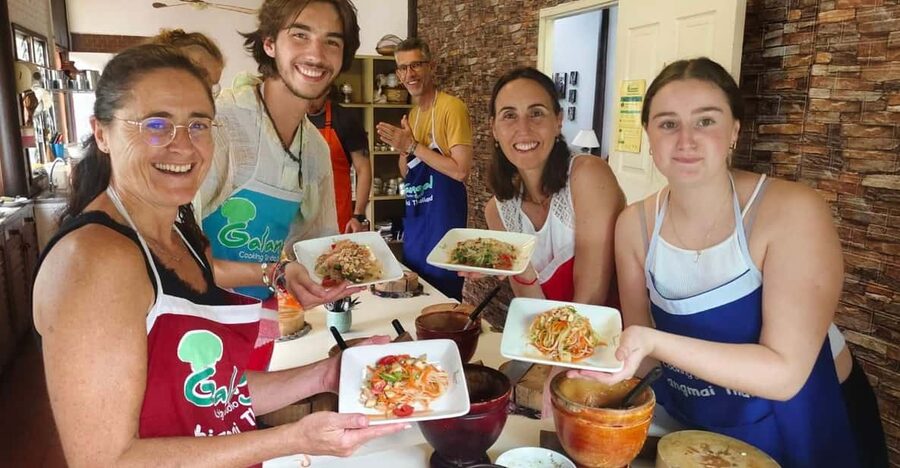
At $41 per person, the price is reasonable for a five-hour activity that includes hotel pickup and drop-off in many central areas, the market visit, garden stop, instruction, ingredients, equipment, drinks, six dishes, and a digital recipe book.
A restaurant meal alone would cost less, but it would not teach you how to make the food. A shorter cooking class might also cost less, but this one gives you a market visit, farm context, a starter, main course, soup, curry, curry paste, and dessert.
The value is best for people who want participation rather than a quick demonstration. If you only want to eat Thai food, spend the morning at a market and restaurant instead. If you want to understand how the dishes are made and repeat them at home, the price is easy to justify.
There is a separate listed fee of 500 baht per adult and 350 baht per child aged 6 to 12 for a visitor. The wording does not clearly explain whether this applies to a non-cooking companion, so ask for clarification before booking if someone is joining without taking the class.
Who should book this class?
I would recommend it to first-time visitors who want a practical introduction to Thai food. It also suits couples, families, and small groups with different tastes because you can choose dishes and dietary versions.
It is a good match for you if you want:
- A local market rather than only a studio demonstration
- Clear English instruction
- A full meal and several recipes in one morning
- A cooking space with air-conditioning
- Vegetarian, vegan, Halal, gluten-free, or allergy adjustments
- A flexible menu with familiar and more traditional options
I would think twice if you dislike early starts, have a hotel outside the pickup zone, or want a quiet, slow morning. The schedule includes several stops, and shared transport may run late because of traffic and multiple pickups.
The 4.9 rating from 81 reviews fits the experience described by the individual feedback: the instructors, food quality, friendly atmosphere, and practical recipes receive the most praise. The only clear warning is transport communication, so confirm that detail rather than leaving it to chance.
Should you book the Galangal Cooking Studio class?
Yes, if you want to cook rather than simply watch. The market and garden make the morning more useful, while the choice of six dishes keeps it personal. New’s clear teaching and the recipe PDF add value after the class ends.
Book it especially if you are visiting Chiang Mai with children, a vegetarian in the group, or someone who wants to recreate Thai food at home. Just confirm hotel pickup, arrive early, and come hungry. For $41, this is a friendly and practical way to spend a morning learning why Thai food tastes the way it does.
FAQ
How long does the Chiang Mai cooking class last?
The activity lasts five hours, including hotel pickup, the market visit, the organic garden, cooking, eating, and return transport.
What time does hotel pickup take place?
Pickup takes place between 8:30 and 9:00 in the morning. You should wait in the hotel lobby 5 to 10 minutes before your scheduled time.
Is hotel pickup available everywhere in Chiang Mai?
Pickup is offered in the Old City, Santitham, Huay Keaw Road near Kad Suan Kaew and Maya Shopping Mall, and some parts of several nearby roads and districts. The provider checks your address and will tell you if it is outside the service area.
Can I go directly to the cooking studio?
Yes. You can come directly to the cooking studio if you do not want hotel transportation. The provider will give you the arrival time and address.
How many dishes do I cook?
You cook six dishes, including a starter, main course, soup, curry paste, curry, and dessert.
Can I choose vegetarian or vegan dishes?
Yes. Vegetarian and vegan options are available, including Tom Kha Je, a vegan coconut milk soup. The class also accommodates Halal, gluten-free, and allergy requirements if you provide the information clearly.
What is included in the $41 price?
The price includes hotel pickup and drop-off where available, the market tour, ingredients, cooking equipment, English instruction, water, tea, coffee, and PDF recipe books. A separate listed fee applies to visiting adults and children who do not take the class.
Just added in Chiang Mai
- Full Day Doi Saket Hiking Tour★ 5.0 · 14 reviews
- Pha Dok Siew Nature Trail & Doi Inthanon National Park From Chiang Mai★ 4.0 · 23 reviews
- One day Elephants in Nature Experience & Grand Canyon Jumping★ 5.0 · 31 reviews
- Chiang Mai to White & Blue Temple, Black Museum & Golden Triangle★ 4.0 · 52 reviews
- One day Doi Inthanon National Park & Trekking on Kew Mae Pan★ 5.0 · 12 reviews
- Private Tour 2 Difference Trails Trekking at Doi Inthanon National Park★ 5.0 · 19 reviews
- Half day Long Neck hill tribe and Hmong hill tribe village★ 5.0 · 21 reviews
- One Day Tour Chiang Rai(White Temple , Blue Temple, Black House) Private Tour★ 5.0 · 63 reviews
Thai Cooking Classes, compared.
Half-Day Thai Cooking Class at Organic Farm in Chiang Mai
Read our review →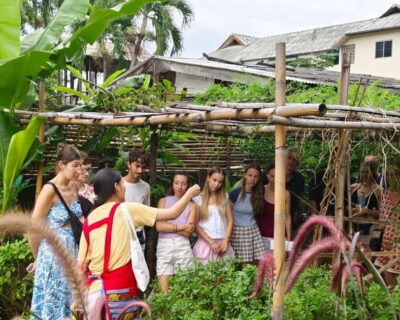
Cooking Class, Market & Thai Herbs Garden Tour
Read our review →Authentic Cooking Class with Market & Farm Visit
Read our review →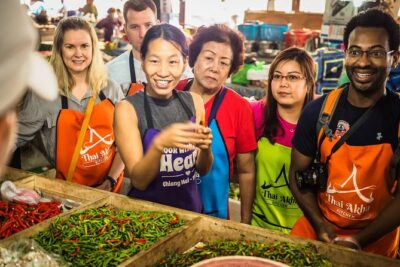
Phuket Thai Cooking Class with Market Tour Option
Read our review →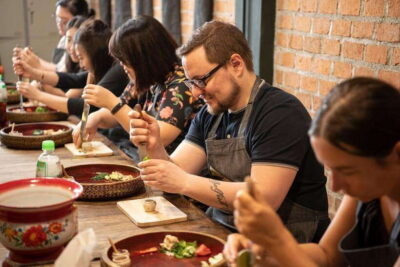
Tingly Thai Cooking School Half-Day Cooking Class
Read our review →Browse the lists this tour appears in