
Reviewed · THAI COOKING CLASSES
Bangkok: Hands-on Thai Cooking Class & Market Tour in Sathon
Fresh food starts one minute away. This Sathon cooking class pairs a short visit to Suan Phlu fresh market with hands-on Thai cooking, so you learn what goes into the food before you cook it. I like the fresh coconut milk and curry paste made from scratch, and I like that you eat each dish while it is hot. The main consideration is the fixed daily menu, since you cannot simply choose any four dishes you want.
The class is also a good fit for beginners. Past instructors including Pitch, Pitcher, Jay, and April have been praised for clear teaching and a friendly pace. At $45 per person for 210 minutes, the four-course meal, market visit, ingredients, equipment, water, and recipes make this a solid value, especially if you want skills rather than just another Bangkok meal.
In This Review
- Key points to know before booking
- Why this Sathon class feels more useful than a standard food tour
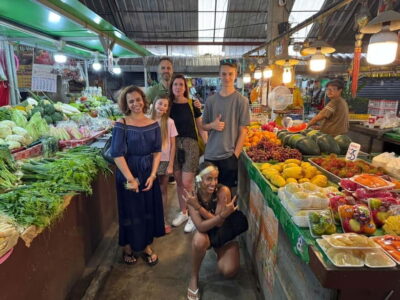
- Starting at Suan Phlu fresh market
- Making coconut milk and curry paste from scratch
- Four dishes, eaten one at a time
- Understanding the weekly menus
- A class that works for beginners and families
- What you actually take home
- Is $45 a fair price?
- Timing, meeting point, and useful planning tips
- Who should book this Thai cooking class?
- Should you book it?
- FAQ
- How long does the Bangkok Thai cooking class last?
- Where does the class meet?
- Is the market tour included?
- How many dishes will I cook?
- Can dietary restrictions be accommodated?
- What is included in the price?
Key points to know before booking
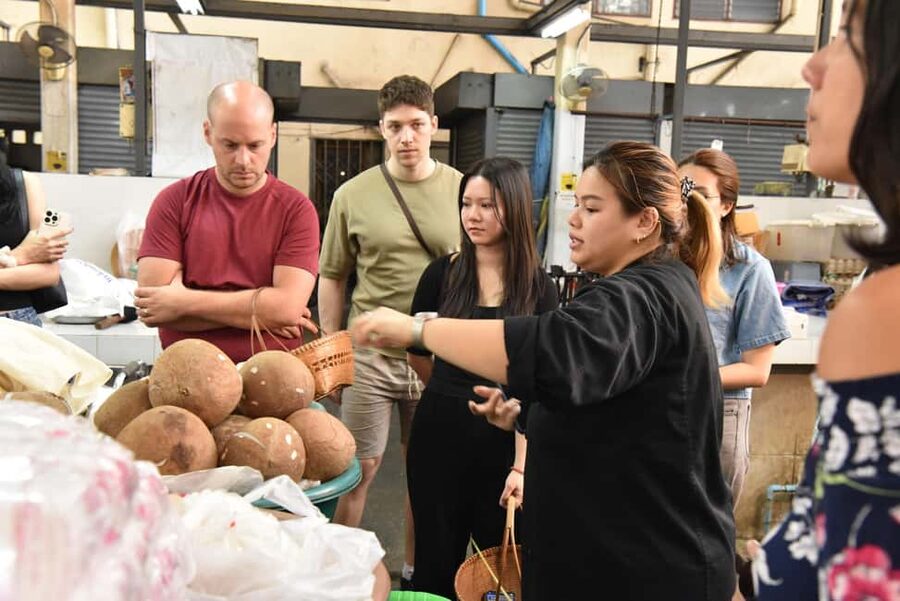
- The market is only a one-minute walk away: Suan Phlu fresh market supplies the ingredients and gives the class a local starting point.
- You make curry paste and coconut milk yourself: This adds real technique, not just a quick demonstration.
- Four dishes are cooked and eaten during the class: You do not wait until the end for a crowded tasting plate.
- The menu changes by day: Check the schedule before booking if pad Thai, tom yum, green curry, or another favorite matters to you.
- Dietary substitutions are available: Vegetarian, halal, kosher, and allergy-sensitive needs can be accommodated.
- You leave with the recipes: The useful souvenir is something you can cook again at home.
Why this Sathon class feels more useful than a standard food tour
Bangkok offers endless ways to eat Thai food. This class gives you a better look at how the food is built. You start at a fresh market, see the ingredients in their everyday setting, then carry that knowledge into the kitchen.
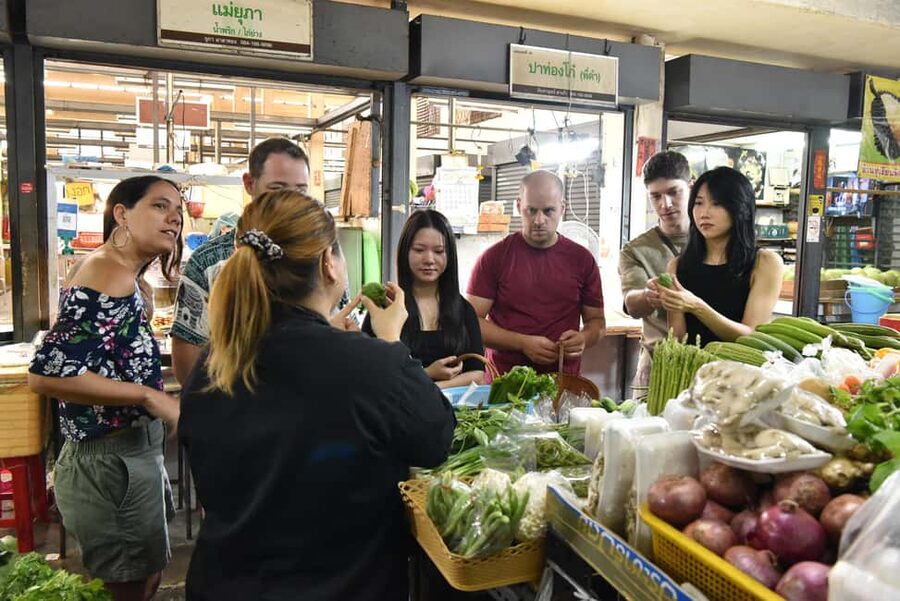
That order matters. A list of unfamiliar herbs and vegetables can feel abstract in a classroom. Seeing the produce first helps connect the ingredient to the finished dish. You can ask about rice, spices, vegetables, herbs, coconut, and curry ingredients before they reach the chopping board.
The market is at Suan Phlu, behind the meeting point at 33 Thanon Suan Phlu, Thung Maha Mek, Sathon, Bangkok 10120. It is not a long transport-heavy outing. The school and market are about a one-minute walk apart, so the experience keeps its attention on food instead of spending half the morning in traffic.
I also like the scale of the outing. The listed format is a private group, which should appeal to families, couples, and small parties who want a more personal class. The available language is English and Thai, and the instruction is designed for people who may not have much cooking experience.
More Markets and Floating Markets in Bangkok
- Bangkok: Damnoen Saduak Market and Maeklong Railway Market
★ 4.5 · 26,723 reviews - The Old Siam: Damnoen Saduak and Maeklong Railway Market
★ 4.5 · 10,992 reviews - Bangkok: Train Market & Floating Market with Boat Ride
★ 4.7 · 9,547 reviews
Starting at Suan Phlu fresh market
The market visit is the first practical lesson. You select the ingredients for the day’s dishes and learn how Thai cooking uses a wide range of fresh produce, rice, herbs, and spices.
The appeal here is not sightseeing for its own sake. You are looking at the actual building blocks of the meal you are about to prepare. That makes the stop worthwhile even if you already know Bangkok markets. If this is your first Thai cooking class, it gives you useful context before the recipes begin.
The market can also help you understand why Thai food has such varied flavors. Curry paste, coconut, herbs, chilies, and fresh vegetables each play a different role. The class includes exotic Thai ingredients, but the point is not to memorize every name. You learn what they do and how they fit into a dish.
Because the market is just behind the school, the tour is easy to manage in morning, afternoon, or evening sessions. You do not need to plan a separate market excursion around it. The short walk is also helpful in Bangkok’s heat, though you should still wear comfortable clothes and shoes for the full 210 minutes.
Making coconut milk and curry paste from scratch
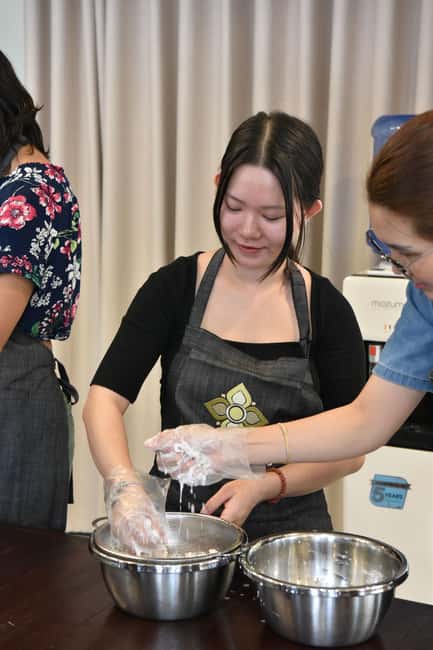
The most hands-on part of the class is the preparation of fresh coconut milk and curry paste. These are not minor details. They show you why Thai curry tastes different from a dish made with a jar of prepared sauce.
Making curry paste gives you a chance to work with the fragrant ingredients directly. You get your hands dirty, then use the paste in one of the curry dishes on the menu. That makes the lesson easy to remember because you see the process, cook with the result, and eat it soon afterward.
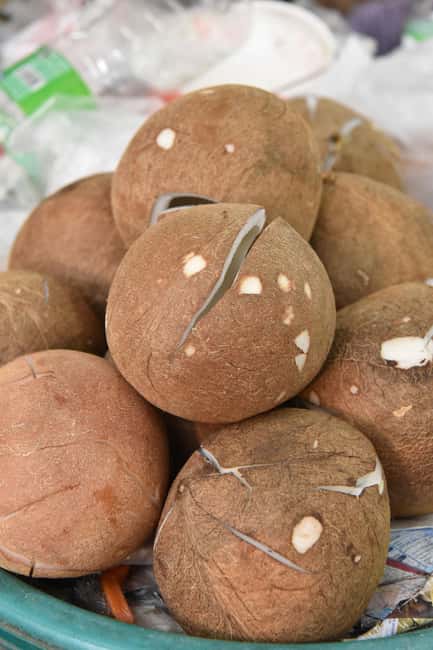
Fresh coconut milk offers another useful skill. Many home cooks outside Thailand rely on canned coconut milk, so learning the traditional preparation adds something you are unlikely to pick up from a basic recipe card alone. The class does not just tell you that coconut is important. It shows you how it becomes part of the dish.
The instructors receive repeated praise for clear instructions. That matters here, since curry paste involves several ingredients and steps. An experienced cook may enjoy the technique, while a novice can follow along without needing advanced knife skills or restaurant experience.
Four dishes, eaten one at a time
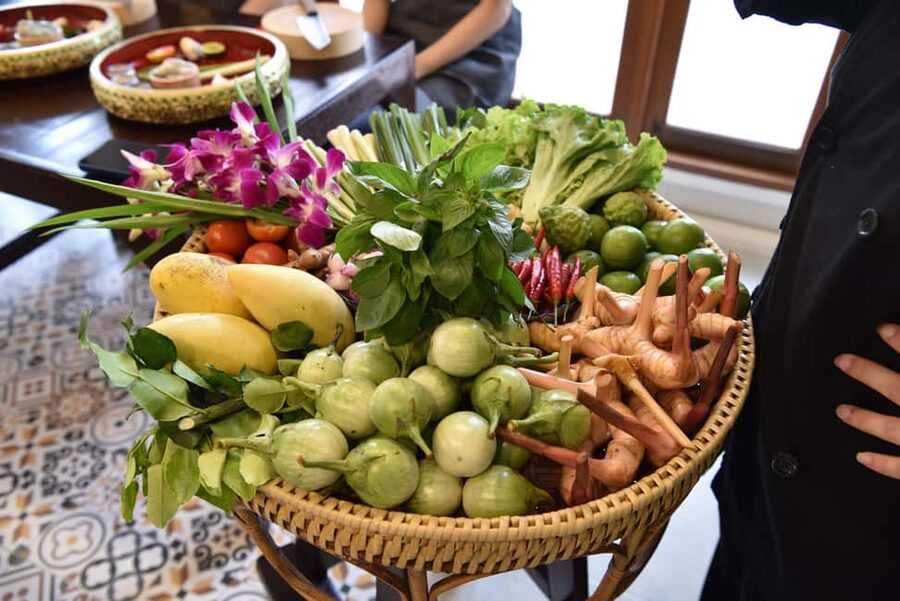
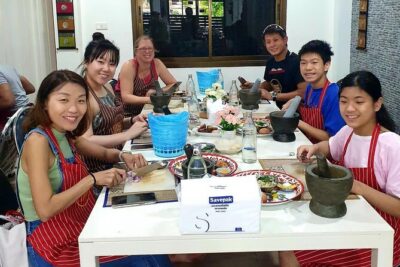
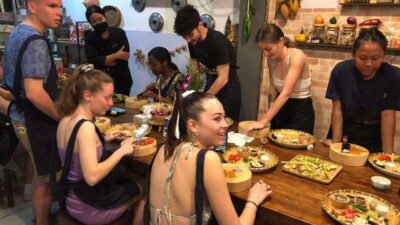
You spend about two hours cooking four dishes. Each one is prepared, served, and eaten while hot before you move on to the next. I consider this one of the strongest parts of the format.
A cooking class can become tiring when every dish is finished at once and you face a large plate of food that has gone lukewarm. Here, the staggered pace gives you a proper tasting break. You can notice the flavor, ask a question, and then return to the next recipe.
The menu changes each day:
- Monday: Som tum, pad Thai with shrimp, green curry with chicken, and mango sticky rice
- Tuesday: Tom kha gai, pad krapow gai, red curry with chicken, and mango sticky rice
- Wednesday: Tom yum goong, pad see ew with chicken, green curry with chicken, and mango sticky rice
- Thursday: Larb gai, pad Thai with shrimp, panang curry with chicken, and mango sticky rice
- Friday: Som tum, pad krapow gai, red curry with chicken, and mango sticky rice
- Saturday: Tom kha gai, pad Thai with shrimp, green curry with chicken, and mango sticky rice
- Sunday: Tom yum goong, pad see ew with chicken, panang curry with chicken, and mango sticky rice
This schedule gives you a good spread of Thai cooking styles. You may make a spicy salad, stir-fried noodles, soup, curry, and dessert in one session. Mango sticky rice appears every day, so dessert is the one reliable part of the menu.
The fixed schedule is both a strength and a limitation. It keeps shopping and preparation organized, but you should check the day before booking. If your priority is tom yum, panang curry, or pad see ew, the calendar matters.
More Thai Cooking Classes in Bangkok
- Bangkok: Hands-on Thai Cooking Class and Market Tour
★ 4.9 · 1,614 reviews - Bangkok: Tingly Thai Cooking School Half-Day Cooking Class
★ 4.9 · 1,191 reviews - Bangkok: Maliwan Thai Cooking Class with Market Tour
★ 4.9 · 1,133 reviews - Hands on Thai Cooking Class and Market Tour
★ 5.0 · 660 reviews
Understanding the weekly menus
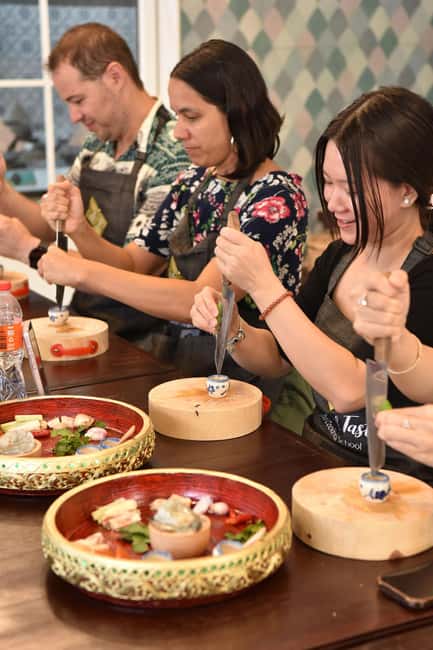
Monday offers a classic introduction to Thai food. Som tum brings a fresh, spicy salad, while pad Thai gives you a familiar noodle dish. Green curry and mango sticky rice round out the meal with a creamy main course and a sweet finish.
Tuesday focuses on aromatic comfort food. Tom kha gai brings coconut and spice, pad krapow gai offers stir-fried basil chicken, and red curry adds another coconut-based dish. It is a good day for anyone who wants to compare two different curry profiles.
Wednesday gives you tom yum goong, one of Thailand’s best-known hot and sour soups. Pad see ew is a useful contrast to pad Thai because the noodles and flavor balance differ. Green curry and mango sticky rice complete the set.
Thursday adds larb gai, a spicy minced chicken salad, with pad Thai and panang curry. This menu has plenty of bold flavor and works well if you want a taste of Thai food beyond the dishes most commonly found abroad.
Friday pairs som tum with pad krapow gai and red curry. Saturday returns to tom kha gai, pad Thai, and green curry. Sunday brings tom yum goong, pad see ew, and panang curry.
Every menu includes chicken or shrimp in its standard form. If you eat vegetarian, follow halal or kosher requirements, or have allergies, suitable substitute ingredients can be provided. Tell the school about your needs in advance so the class can prepare properly.
A class that works for beginners and families
You do not need to be an experienced cook to enjoy this activity. The instruction is designed to be easy to follow, and the class moves dish by dish rather than asking you to manage the entire meal at once.
That structure is helpful for families, too. A class lasting three and a half hours can be a long stretch for very young children, but the mix of market shopping, preparation, cooking, and eating gives the session several changes of pace. A family booking can also benefit from the private-group format.
The instructors named in past sessions include Pitch, Pitcher, Jay, and April. The strongest pattern in the teaching is clarity. Pitcher has been praised for making the cooking fun and approachable, while April has been associated with a relaxed atmosphere. Jay and Pitch have also been singled out for friendly, clear instruction.
Those details matter because a cooking class succeeds or fails on the teacher. Fresh ingredients and good recipes are not enough if the instructor rushes or explains poorly. Here, the teaching style appears to be a major reason the class works for novices.
What you actually take home
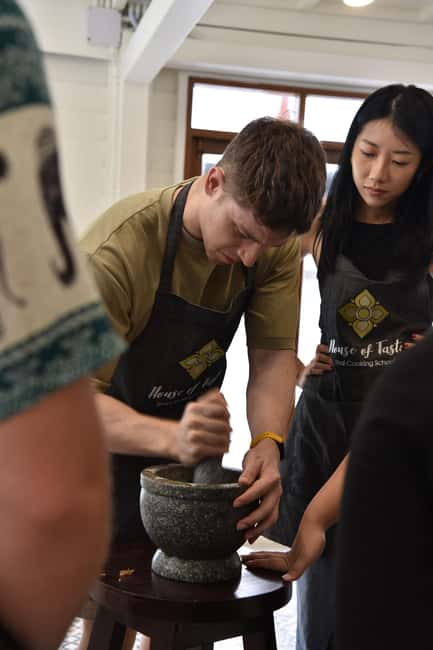
The recipes are included at no extra charge. That may sound routine, but it changes the value of the class. You are not only paying for a meal you eat in Bangkok. You are collecting instructions for dishes you can make again.
The recipes are especially useful after you have prepared the food yourself. You will remember the texture of the noodles, the strength of the curry, and the order of the steps. Notes on ingredients can help you adapt the dishes if the exact Thai produce is hard to find at home.
You also gain a better sense of which flavors matter. Thai food is not simply hot. It balances spice, sourness, sweetness, salt, herbs, coconut, and fresh produce. A hands-on class gives you a practical way to adjust those elements later instead of following a recipe mechanically.
The personal locker is another small but useful inclusion. You can store belongings while working with food, which keeps the kitchen area less cluttered. Drinking water is included, while alcoholic drinks are available for purchase if you want one with the meal.
Is $45 a fair price?
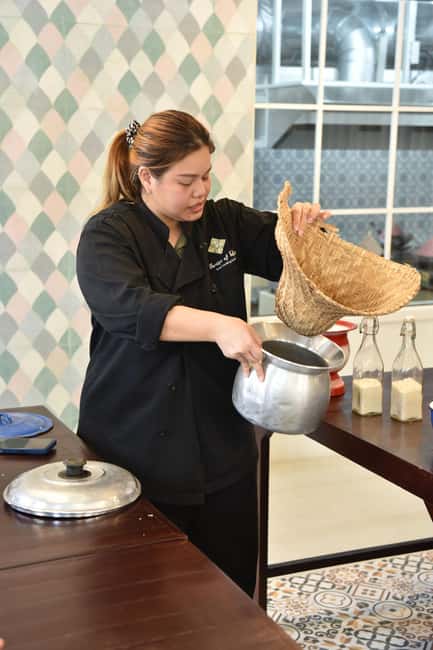
At $45 per person, this is not the cheapest way to eat in Bangkok. Street food and local restaurants can feed you for far less. But that is not the right comparison.
For the price, you receive a market visit, all ingredients, cooking equipment, a four-course meal, drinking water, instruction, recipes, and a 210-minute activity. You are also paying for the teaching and the chance to make the food yourself. If you want a one-time meal, a restaurant offers better value. If you want an activity with a skill to take home, the class is reasonably priced.
The private-group format may make the cost more attractive for a small party. It can also make the experience feel more personal than a large demonstration class. Since the class includes both cooking and eating, you do not need to arrange a separate lunch or dinner afterward.
The main value depends on your interest. Someone who dislikes cooking may find three and a half hours too long. Someone who enjoys Thai food and wants to understand it will likely find the time well spent.
Timing, meeting point, and useful planning tips
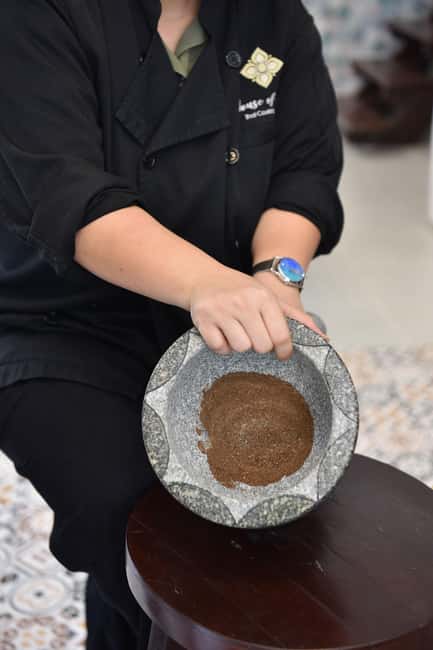
The meeting point needs careful attention. Search for 33, Thanon Suan Phlu, behind Suan Phlu Market, Thung Maha Mek, Sathon Bangkok 10120 on your map. The wording behind Suan Phlu Market is important, since a general search for the cooking school may not guide you to the exact entrance.
The class runs in morning, afternoon, and evening sessions, with starting times depending on availability. A morning class can fit neatly before an afternoon sightseeing plan, while an evening class can replace dinner. Allow the full 210 minutes rather than assuming the cooking itself is the only time required.
Wear clothes that are comfortable for cooking and easy walking. You will visit the market, handle ingredients, cook for about two hours, and sit down to eat several times. No alcohol is included, although it can be purchased.
Wheelchair access is listed, and dietary preferences or restrictions can be accommodated. The available teaching languages are English and Thai. Free cancellation is available up to 24 hours before the activity, and you can reserve now and pay later if you want to keep your Bangkok schedule flexible.
Who should book this Thai cooking class?
I would choose this for first-time visitors who want an activity with local food at its center. It suits couples, families, small private groups, and solo cooks who prefer instruction over a simple tasting tour.
It is also a good choice if you already enjoy Thai food but want to understand the process behind it. The fresh curry paste, coconut milk, market ingredients, and changing menu give the class more substance than a quick pad Thai lesson.
You should think twice if you need a completely open menu or dislike spicy food. The dishes are set by the day, and several include chilies, curry, or hot and sour flavors. Substitutions are available for dietary needs, but personal taste preferences are not the same as an allergy or religious restriction.
Should you book it?
Book this Sathon class if you want to cook four Thai dishes, eat them fresh, visit a nearby local market, and leave with recipes you can use. Its strongest points are the clear teaching, the practical market connection, and the chance to make curry paste and coconut milk rather than watching someone else do it.
Check the daily menu first, then tell the school about dietary needs. At $45, it offers good value for a three-and-a-half-hour food experience, especially for beginners and families who want a memorable Bangkok activity with something useful at the end.
FAQ
How long does the Bangkok Thai cooking class last?
The experience lasts 210 minutes, including the market visit and approximately two hours of cooking.
Where does the class meet?
Meet at 33, Thanon Suan Phlu, behind Suan Phlu Market, Thung Maha Mek, Sathon, Bangkok 10120. Search this exact address on a map.
Is the market tour included?
Yes. The Suan Phlu fresh market tour is included in every morning, afternoon, and evening class.
How many dishes will I cook?
You will prepare four authentic Thai dishes and eat each one while it is hot. The exact menu depends on the day of the week.
Can dietary restrictions be accommodated?
Yes. Suitable substitute ingredients can be provided for vegetarian, halal, kosher, and allergy-sensitive requirements.
What is included in the price?
The $45 price includes the four-course meal, drinking water, ingredients, cooking equipment, a personal locker, and standard recipes. Alcoholic drinks are not included, but they are available for purchase.
Just added in Bangkok
- Wonderful Pearl Dinner Cruise★ 3.5 · 27 reviews
- re:leaf spa and massage★ 4.0 · 10 reviews
- White Orchid Sunset Dinner Cruise Calypso Ladyboy Cabaret Show★ 4.0 · 10 reviews
- Yoga in the Park Thailand★ 5.0 · 12 reviews
- Visit Wat Pho and Wat Arun with Local Expert★ 4.0 · 14 reviews
- Visit temples in and around Bangkok with a former monk of 10 years★ 5.0 · 30 reviews
- 3-Hour Bangkok Walking Tour: Wat Pho and Wat Arun★ 5.0 · 102 reviews
- Miracle Bangkok Airport Lounges – Relax Before You Fly★ 3.0 · 32 reviews
Thai Cooking Classes, compared.
Half-Day Thai Cooking Class at Organic Farm in Chiang Mai
Read our review →
Cooking Class, Market & Thai Herbs Garden Tour
Read our review →Authentic Cooking Class with Market & Farm Visit
Read our review →
Phuket Thai Cooking Class with Market Tour Option
Read our review →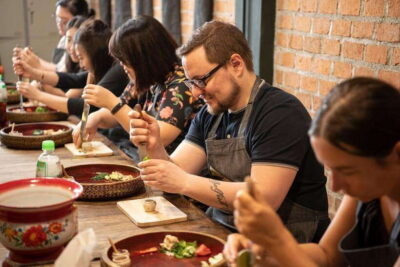
Tingly Thai Cooking School Half-Day Cooking Class
Read our review →Browse the lists this tour appears in