
Reviewed · THAI COOKING CLASSES
Baipai Thai Cooking School Class in Bangkok
Good food makes Bangkok even better. Baipai Thai Cooking School gives you a hands-on introduction to Thai cuisine, with four dishes prepared and eaten during a roughly four-hour morning class. I especially like the peaceful garden setting and the fact that you cook at your own station instead of merely watching a chef work.
The included hotel pickup is another strong point, especially in a city where getting across town can take planning. You also receive lunch and recipe cards, so the $88.99 price buys more than a meal and a demonstration. The main consideration is the location: pickup is limited to listed hotels and selected areas, and the open-air cooking space may feel warm.
In This Review
- Key points to know before booking
- Entering Baipai’s quiet garden kitchen
- Meeting the teachers and learning Thai ingredients
- Four dishes, four different Thai cooking lessons
- Papaya salad and fresh Thai balance
- Chicken in pandanus leaves
- Red curry and curry paste
- Mango sticky rice for dessert
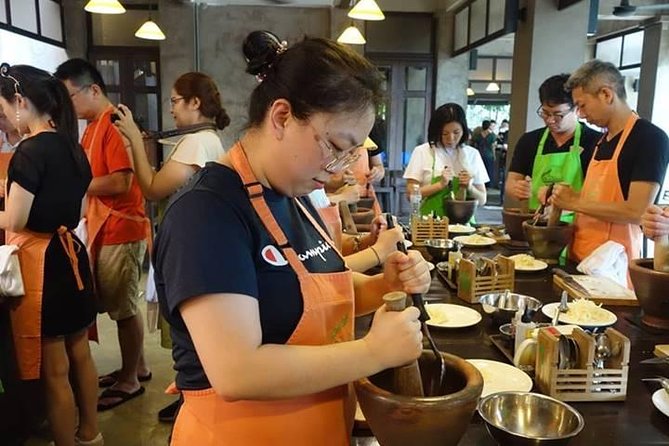
- Your own station makes the lesson useful
- Eating your own lunch in the garden
- Recipes and useful take-home value
- Price, transport, and group size
- Who will enjoy Baipai most
- What to know before you go
- FAQ
- How long does the Baipai Thai Cooking School class last?
- Is hotel pickup included?
- How many dishes will I cook?
- Is lunch included?
- Is the class taught in English?
- What is the minimum age and group size?
- Should you book Baipai Thai Cooking School?
Key points to know before booking
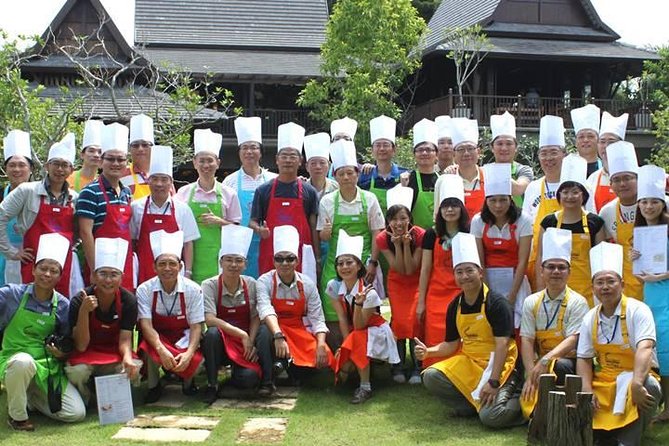
- Four dishes in one morning: You prepare a full Thai meal, with examples including papaya salad, chicken in pandanus leaves, red curry, and mango sticky rice.
- A calm setting away from city traffic: The school sits behind a gate in a leafy property with a pond, plants, and a small waterfall.
- You do the cooking yourself: Ingredients are prepared with instruction, then you work at individual preparation and cooking stations.
- Pickup saves time: Hotel pickup and drop-off are included for selected Bangkok areas, though you must provide accurate hotel details.
- English instruction is standard: Teachers such as Toon, Charles, Pae, and Chef Eye have been praised for clear, patient instruction.
- Best for adult beginners: The minimum age is 18, and the class requires at least two participants.
Entering Baipai’s quiet garden kitchen
The trip begins with pickup from a qualifying Bangkok hotel. The exact timing depends on your location, traffic, and the other pickups, but one published experience describes an 8:30 a.m. departure and about 30 minutes on the road. That gives you a useful sense of the morning rhythm: this is not a quick drop-in class squeezed between temple visits.
The drive matters because Baipai is designed as a break from Bangkok’s concrete and traffic. From the street, the neighborhood may look ordinary. Inside the gate, the mood changes quickly. The school property includes greenery, a pond with fish, and a small waterfall. The open-air cooking areas give the class a relaxed feel, though you should be ready for Bangkok heat.
That setting is one of the strongest reasons to choose Baipai. The food is the main event, but the surroundings help the morning feel like an outing rather than a standard indoor lesson. You can settle in, have a drink, and look over the menu before the chopping begins.
The school provides an air-conditioned vehicle for the transfers, while the cooking itself takes place in open-air areas. Cold water is available, and drinks such as coffee, tea, and water have been offered at the start of class. If you are sensitive to heat, wear light clothing and take advantage of the breaks between dishes.
More Thai Cooking Classes in Bangkok
- Bangkok: Hands-on Thai Cooking Class and Market Tour
★ 4.9 · 1,614 reviews - Bangkok: Tingly Thai Cooking School Half-Day Cooking Class
★ 4.9 · 1,191 reviews - Bangkok: Maliwan Thai Cooking Class with Market Tour
★ 4.9 · 1,133 reviews
Meeting the teachers and learning Thai ingredients
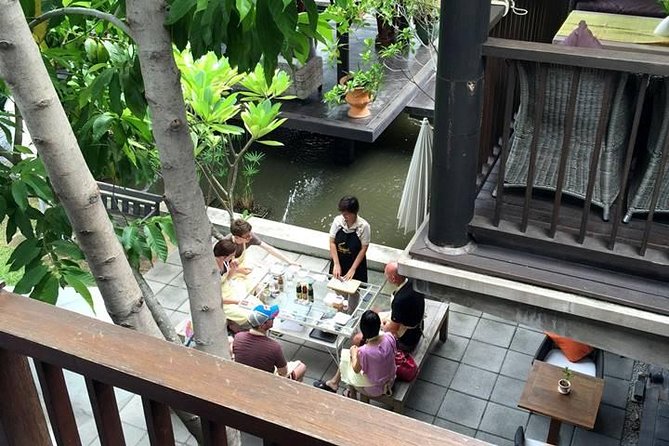
Classes are taught in English by local instructors. The teaching team includes professional staff with years of experience, and individual teachers named in the supplied experiences include Toon, Charles, Pae, and Chef Eye. The most useful quality here is not showmanship. It is the ability to slow down, repeat a step, and explain what to do when a technique feels unfamiliar.
Pae, in particular, has been praised for clear English, patience, and a cheerful teaching style. One class included help with wrapping chicken in pandanus leaves, a task that can be awkward the first time. That sort of personal help makes a difference. You are not left to guess whether your curry paste is the right texture or your parcel is wrapped tightly enough.
The class starts with a multi-sensory introduction to Thai ingredients and flavors. You may handle herbs, smell aromatics, and taste unfamiliar fruits or vegetables. Some schedules also include a short market visit, where ingredients are explained and sampled. This is a useful addition because Thai recipes often depend on ingredients that look similar but taste quite different.
The school garden can also form part of the introduction. Plants and herbs grown on the property help connect the finished dish with the ingredients in front of you. It is a small detail, but it makes the food lessons more memorable than simply reading names from a printed recipe.
You should not expect a formal culinary-school course. The class is designed for ordinary home cooks, including complete beginners. The recipes are presented in a practical way, and alternatives may be discussed for ingredients that are hard to find outside Thailand. That makes the lesson more useful after you return home.
Four dishes, four different Thai cooking lessons
The central part of the morning is preparation and cooking. You normally work through four Thai dishes, then eat what you have made. The exact menu can vary, but the examples provided include an appetizer or salad, a curry or soup, a main dish, and dessert.
One reported menu included papaya salad, chicken in pandanus leaves, red curry with pork, chicken, or tofu and bamboo, and coconut sticky rice with mango. Another description refers to a complete meal of appetizer, soup, curry, and dessert. The important point is that you are not cooking only one dish while the teacher handles the rest.
Papaya salad and fresh Thai balance
Papaya salad introduces the sharp, fresh side of Thai food. You learn how sour, sweet, salty, and spicy flavors work together. This is a good first lesson because the dish shows that Thai cooking is not just about adding chilies.
The preparation also gives you a chance to work with ingredients that may be less familiar at home. You can ask about substitutions if green papaya or another item is difficult to find. The goal is not to turn the recipe into something generic, but to show you which elements matter most.
A completely different kind of day out:
- Bangkok: Damnoen Saduak Market and Maeklong Railway Market
★ 4.5 · 26,723 reviews - The Old Siam: Damnoen Saduak and Maeklong Railway Market
★ 4.5 · 10,992 reviews - From Bangkok: Ayutthaya Temples Guided Tour with Lunch
★ 4.7 · 10,535 reviews - Bangkok: Train Market & Floating Market with Boat Ride
★ 4.7 · 9,547 reviews
Chicken in pandanus leaves
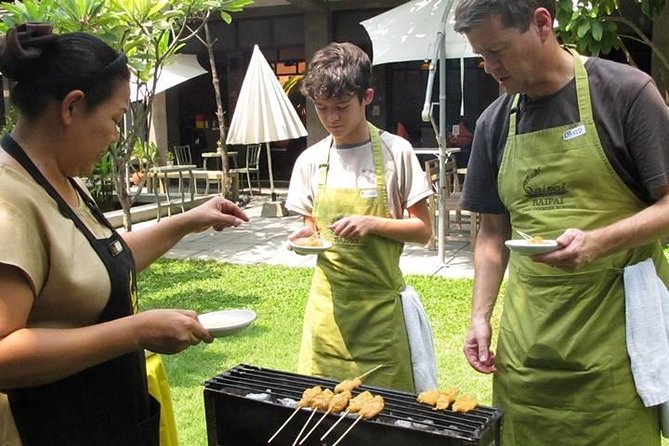
Wrapping chicken in pandanus leaves adds a hands-on technique that feels distinctly Thai. The folding can take practice, and this is where individual instruction is especially helpful. You learn how to shape and secure the parcel before cooking it.
This dish also highlights the school’s practical approach. The teacher demonstrates the method, then you repeat it at your station. You do not need advanced knife skills, and one description specifically notes that the preparation is manageable for beginners.
Red curry and curry paste
Red curry gives you the clearest look at the foundation of Thai cooking. You may prepare the curry paste before combining it with the other ingredients, then cook the curry with a choice such as pork, chicken, or tofu, along with bamboo.
The lesson is valuable because curry paste is where aroma and heat begin. You can see how herbs and spices are handled before they disappear into the finished sauce. If you like Thai food but have always relied on packaged paste, this is the part most likely to change how you cook at home.
The class is not built around punishing heat. Instruction and recipe choices make the dishes approachable, and the teacher can guide you through the balance of flavors. You still get the character of Thai food without needing to prove anything to the chili gods.
Mango sticky rice for dessert
Coconut sticky rice with mango provides a sweet finish and a clear contrast to the savory dishes. It is also a relatively friendly recipe to recreate at home, provided you can find the right rice and ripe mangoes.
Ending with dessert helps the class feel like a full meal rather than a series of unrelated demonstrations. You prepare the dishes, eat between courses, and have time to relax. By the end, you have tasted how the ingredients work together across a complete menu.
Your own station makes the lesson useful
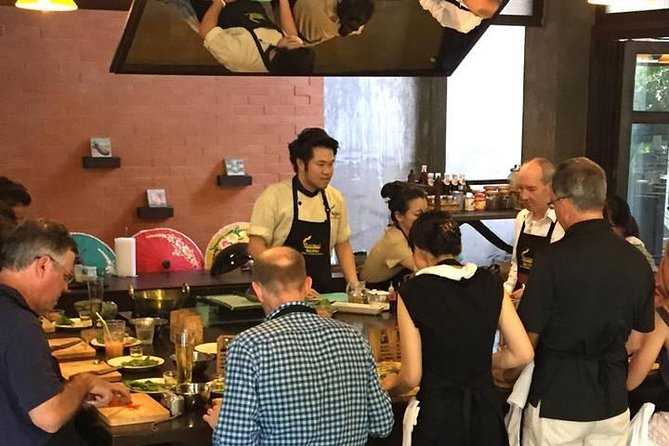
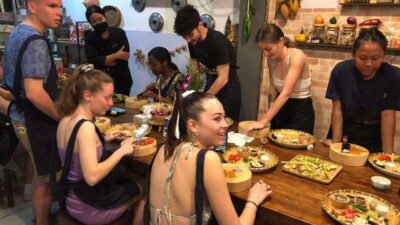
Baipai’s strongest practical feature is the individual workstation. You may have both a preparation station and a cooking station, with ingredients laid out in an orderly way. That setup lets you follow the recipe from beginning to end instead of taking part in only one shared task.
The instructors handle demonstrations and explain traditional techniques, ingredient use, and presentation. Then you repeat the process. The staff can correct a folding technique, answer questions, or suggest an alternative ingredient.
This is especially helpful if you are new to cooking. The class has been described as easy to follow even for someone with little or no cooking experience. At the same time, experienced home cooks can pick up useful details about curry paste, herbs, seasoning, and presentation.
The pace is active but not described as overwhelming. You cook, sit down, eat, and then continue with the next part of the meal. That rhythm gives you time to enjoy the food while the lesson remains the focus.
Eating your own lunch in the garden
Lunch is included, and you eat the food prepared during the class. That sounds simple, but it changes the experience. You can taste the result immediately and connect each dish with the technique used to make it.
The meal is also a good time to compare flavors and ask follow-up questions. If your curry seems too mild, your salad too sour, or your pandanus wrapping a little loose, the teacher can explain what happened. That feedback is harder to get from a recipe book alone.
The setting helps here too. Eating in a calm, open-air space with greenery around you gives the morning a slower pace. You may find the heat more noticeable by lunchtime, but cold water and breaks help.
Come hungry. Four dishes can make for a substantial meal, and the class is not merely a tasting session. You prepare the food and then eat it.
Recipes and useful take-home value
You receive a cookbook or recipe cards after class. The materials are described as detailed, colorful, and easy to keep, with some participants receiving a handy holder for the recipes. This is an important part of the value because Thai cooking is much easier to repeat when you have the ingredient list and method in front of you.
The recipes focus on dishes that can be adapted to home kitchens. Instructors may point out alternatives for ingredients that are difficult to find in the United States or elsewhere. You should still expect to visit an Asian grocery store for some items, but you are not sent home with recipes that depend entirely on ingredients unavailable outside Thailand.
The lesson also gives you techniques rather than just formulas. You learn how ingredients are handled, how flavors are balanced, and how dishes are presented. That makes the class more worthwhile than a meal followed by a souvenir card.
Price, transport, and group size
At $88.99 per person, Baipai is not a budget meal. It is priced as a half-day activity that includes instruction, four dishes, lunch, recipes, a local guide, and hotel transfers in an air-conditioned vehicle.
I consider that a fair price if you value the hands-on element and the convenience of pickup. A cooking class with transport can remove a large amount of Bangkok planning, especially if you are unfamiliar with the city or staying far from the school. You also save the cost of buying a similar meal elsewhere, though the real value comes from learning to make it yourself.
The maximum group size is 30, so the experience is not guaranteed to be intimate. Some class descriptions report much smaller groups, but you should not assume that will always be the case. The school promises individualized attention, and the strongest experiences depend on how well that attention works on your date.
The activity operates with a minimum of two participants. Solo visitors should confirm availability before booking rather than assume a single-person reservation will run.
Pickup is offered from listed hotels and selected areas, including Bang Na, Viphavadee, Laksi, Chatuchak, Ramkamheng, Ekkamai, Yannawa, Rama 9, Huang Kwang, Thonburi, and Suttisan. Outer suburbs may also qualify. You must provide your hotel details when booking, since missing information can lead to cancellation.
The school can sometimes drop you at a different destination instead of returning you to your hotel, but this should be requested directly and should not be treated as guaranteed.
Who will enjoy Baipai most
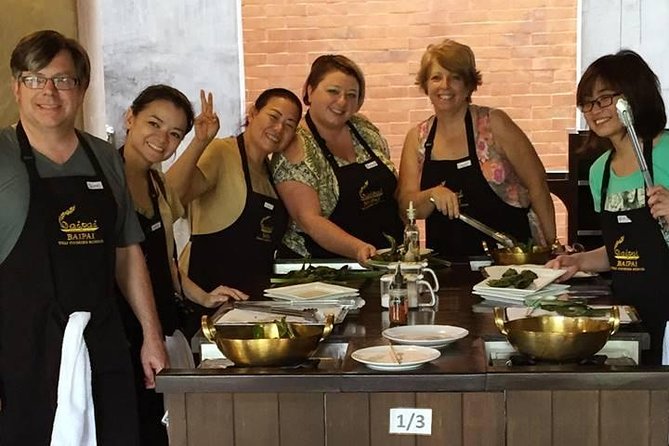
I would choose this class for an adult who wants more than another Bangkok sightseeing stop. It suits beginners particularly well because the cooking is explained step by step and the menu is designed to be manageable.
It also works for couples, friends, and families with adult participants. The minimum age is 18, so this is not a child-focused cooking activity. One account describes a young child present with family, but the official rule remains 18, and you should follow that when booking.
You will get the most from Baipai if you enjoy eating what you make, asking questions, and trying the recipes later. If you only want a quick demonstration, the hands-on format may feel like more work than you want.
The class is less suited to someone with a tight Bangkok schedule. Pickup, traffic, cooking, lunch, and return travel can occupy much of the morning and early afternoon. Give yourself room afterward rather than booking an important timed attraction immediately after class.
What to know before you go
Book ahead if your Bangkok dates are fixed. The experience is often reserved about 24 days in advance, which suggests that popular dates can fill before arrival.
Wear comfortable clothing suitable for cooking and warm weather. The cooking areas are open-air, and the morning may become hot even with drinks and breaks available.
Provide complete hotel information at the time of booking. Pickup is not a citywide promise, and hotels in outlying areas may need separate confirmation. Also note that the experience is non-refundable and cannot be changed after booking, so choose your date carefully.
The menu may differ from the examples listed here. If one particular dish matters to you, ask what is scheduled for your date before paying.
FAQ
How long does the Baipai Thai Cooking School class last?
The class lasts approximately four hours, including cooking and lunch.
Is hotel pickup included?
Yes. Hotel pickup and drop-off are included for selected Bangkok hotels and areas. You must provide your hotel details when booking.
How many dishes will I cook?
You will prepare four authentic Thai dishes. The menu may vary, with examples including papaya salad, chicken in pandanus leaves, red curry, and mango sticky rice.
Is lunch included?
Yes. Lunch is included, and you eat the dishes prepared during the class.
Is the class taught in English?
Yes. All classes are taught in English by local instructors.
What is the minimum age and group size?
The minimum age is 18, and the activity requires at least two participants. The maximum group size is 30.
Should you book Baipai Thai Cooking School?
Book this experience if you want a practical introduction to Thai food, a full meal, and the convenience of hotel transport. The individual cooking stations, patient English-speaking teachers, peaceful garden setting, and take-home recipes make it more useful than a simple chef demonstration.
Skip it if you dislike warm open-air spaces, have only a few free hours, or want a small private class guaranteed from the start. For most adults who enjoy food and want a Bangkok activity they can repeat at home, Baipai offers solid value at $88.99, especially when pickup and lunch are included.
Just added in Bangkok
- Wonderful Pearl Dinner Cruise★ 3.5 · 27 reviews
- re:leaf spa and massage★ 4.0 · 10 reviews
- White Orchid Sunset Dinner Cruise Calypso Ladyboy Cabaret Show★ 4.0 · 10 reviews
- Yoga in the Park Thailand★ 5.0 · 12 reviews
- Visit Wat Pho and Wat Arun with Local Expert★ 4.0 · 14 reviews
- Visit temples in and around Bangkok with a former monk of 10 years★ 5.0 · 30 reviews
- 3-Hour Bangkok Walking Tour: Wat Pho and Wat Arun★ 5.0 · 102 reviews
- Miracle Bangkok Airport Lounges – Relax Before You Fly★ 3.0 · 32 reviews
Thai Cooking Classes, compared.
Half-Day Thai Cooking Class at Organic Farm in Chiang Mai
Read our review →
Cooking Class, Market & Thai Herbs Garden Tour
Read our review →Authentic Cooking Class with Market & Farm Visit
Read our review →
Phuket Thai Cooking Class with Market Tour Option
Read our review →
Tingly Thai Cooking School Half-Day Cooking Class
Read our review →Browse the lists this tour appears in