
Reviewed · THAI COOKING CLASSES
Backstreet Bangkok Exploring the Cradle of Thai Cooking
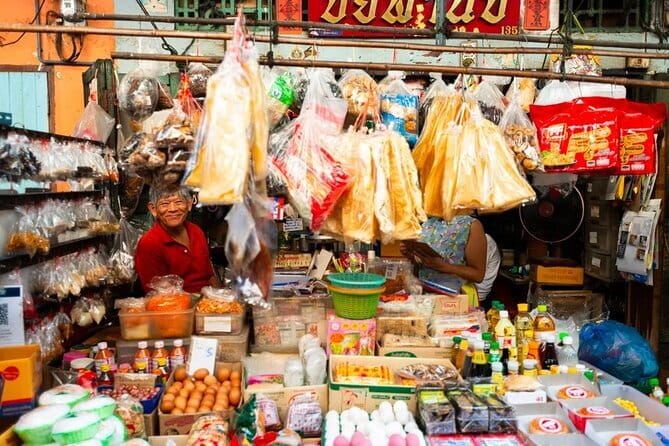
Bangkok’s best stories often arrive on a small plate. This five-hour food and culture walk takes you through the city’s oldest quarters, linking Thai cooking to Chinese, Indian, and local traditions along the way. You visit markets, food stalls, restaurants, factories, a mall, temples, and old neighborhoods rather than simply sitting down for one large meal.
I especially like the way the tour connects food with Bangkok’s past, and I like the small maximum group size of seven. Guides such as Lek and Anna add a personal touch, with Lek praised for his long connection to Bangkok and Anna remembered for making sure nobody left hungry. The main consideration is the price, $125 per person, plus the unclear timing: the tour is described as afternoon into evening, yet the meeting time is listed as 9:00 a.m.
In This Review
- Key points to know before you book
- Why this Bangkok food tour is different
- Starting near Wat Ratchaburana and Wang Burapha
- Rattanakosin Island and Bangkok’s royal center
- Phahurat Market and Bangkok’s Indian quarter
- Sampeng Market and the narrow lanes of Chinatown
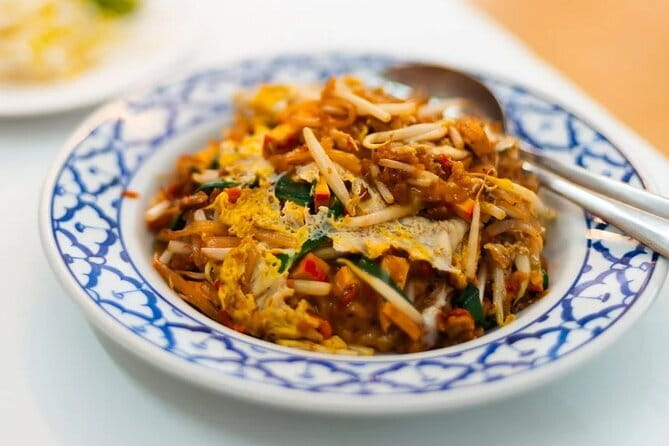
- What you actually eat and drink
- The guides make the difference
- Is $125 a fair price?
- Timing, meeting point, and group size
- Who should book Backstreet Bangkok?
- FAQ
- How long is the Backstreet Bangkok tour?
- How much does the tour cost?
- Where does the tour begin?
- Where does the tour end?
- What time does the tour start?
- Is transportation included?
- What is included in the price?
- Are entrance tickets included?
- How many people can join the tour?
- Can I cancel for a full refund?
- Should you book it?
Key points to know before you book
- A food tour with a history lesson: Temples, old districts, markets, and food stops help explain how Bangkok’s cooking developed.
- Small groups matter: The maximum is seven people, and some departures may become private tours.
- Lek and Anna are notable guides: Their warmth, personal care, and local knowledge receive especially strong praise.
- Expect lots of food: Dinner, snacks, bottled water, and alcoholic drinks are included, so arrive ready to pace yourself.
- You walk through several distinct districts: Wang Burapha, Rattanakosin Island, Phahurat, and Sampeng each offer a different side of central Bangkok.
- The meeting point is easy to reach: Start at Sam Yot MRT station Exit 3, at Thanon Unakan.
Why this Bangkok food tour is different
Many Bangkok food tours focus on tasting as much as possible in one market. This one takes a broader view. You are not only sampling Thai dishes. You are looking at how the city’s cooking grew from trade, migration, religion, commerce, and neighborhood life.
That makes the experience useful if you want more than a list of dishes. A guide can explain why a particular area matters, how ingredients moved through Bangkok, or why certain communities shaped local food. The stops include places that support those stories, including temples, markets, factories, restaurants, and shopping areas.
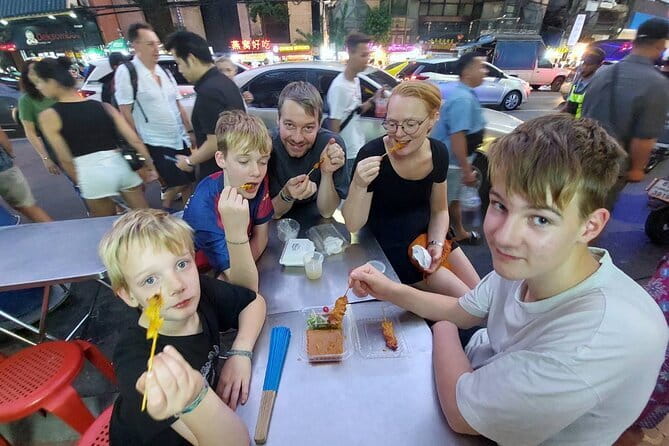
I also like the scale. With no more than seven people, you should have a better chance to hear the guide, ask questions, and keep the group together in narrow lanes. On some departures, the group may be even smaller. One pair ended up with a private walk led by Lek, while another tour included both Lek and Annie.
The format is active. You should expect walking between food stops rather than riding in private transport. That is good news if you want to see the streets at ground level, but it may not suit you if you prefer a seated meal or a slower sightseeing day.
More Thai Cooking Classes in Bangkok
- Bangkok: Hands-on Thai Cooking Class and Market Tour
★ 4.9 · 1,614 reviews - Bangkok: Tingly Thai Cooking School Half-Day Cooking Class
★ 4.9 · 1,191 reviews - Bangkok: Maliwan Thai Cooking Class with Market Tour
★ 4.9 · 1,133 reviews
Starting near Wat Ratchaburana and Wang Burapha
The meeting point is Sam Yot MRT station Exit 3, near Thanon Unakan in Wang Burapha Phirom. This is a practical central location, and the tour begins near Wat Ratchaburana Ratchaworawihan.
Wat Ratchaburana dates to the 15th century and is known for its architecture and historical importance. The temple gives the tour a useful opening: before you start eating, you get a sense of the old Bangkok neighborhoods where the day’s food stories unfold.
The temple stop is listed at about one hour, with no admission charge. That helps keep the focus on the setting rather than turning the morning into a formal museum visit. You can expect the guide to use the temple and nearby Wang Burapha area as a way to explain the older layers of Bangkok.
This part also gives you a chance to get your bearings. The area is not presented as a detached tourist attraction. It is part of a working city district, and the food stops later make more sense once you understand where you are.
Dress respectfully for the temple portion. The supplied details do not specify a formal dress code, but temple visits generally call for sensible clothing that covers shoulders and knees. Since the same tour includes markets and street food, comfortable clothes and walking shoes are the practical choice.
Rattanakosin Island and Bangkok’s royal center
The tour then includes about an hour around Rattanakosin Island, the historic core of Bangkok. This area includes major sights such as the Grand Palace, Wat Phra Kaew, and Wat Pho.
The tour does not list admission to those attractions, and the itinerary identifies the area as a free stop. You should not assume that entrance to the Grand Palace or the temples is part of this experience. The value here is the setting and the explanation provided by the guide, not a bundled palace visit.
This is an important distinction. If you already plan to visit Bangkok’s major temples separately, the walk can add context without repeating a full sightseeing program. If you hoped to enter every landmark named in the description, you will want to clarify the plan before booking.
I like this part because food in Bangkok is easier to understand when you see the city’s old center. Rattanakosin connects government, religion, trade, and daily life. The food stops are not floating in isolation. They belong to neighborhoods shaped by centuries of movement and exchange.
The pacing may feel full here. A temple area, a food stop, and a market can each take time, and Bangkok streets can be crowded. The small group limit should help, but you still need to stay close to the guide.
Phahurat Market and Bangkok’s Indian quarter
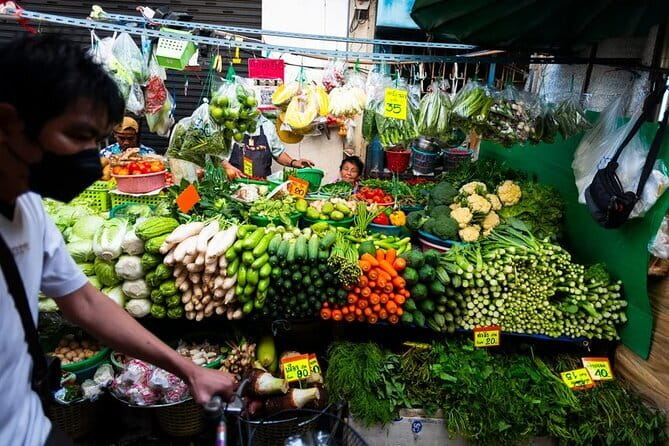
Phahurat Market is often called Little India. The scheduled stop lasts about one hour and gives you a look at Indian culture through textiles, jewelry, and food.
This is one of the tour’s most useful choices because it widens the definition of Thai food. Bangkok cooking is not a single, sealed tradition. It has been shaped by communities who settled, traded, cooked, and worked in the city.
At Phahurat, you can expect a market atmosphere rather than a polished food hall. The stop may include shopping displays and food-related sights as well as tasting. The supplied details do not name specific dishes or vendors, so you should not book this expecting a fixed menu.
That uncertainty is not necessarily a weakness. A food walk through working districts can feel more connected to everyday Bangkok than a restaurant-only itinerary. It also means the exact sequence may depend on what is open and available that day.
The market is listed as free admission. Food and drinks included in the tour price are separate from any personal shopping. If you see textiles or jewelry you want, bring a payment method and remember that purchases are not part of the $125 fee.
A completely different kind of day out:
- Bangkok: Damnoen Saduak Market and Maeklong Railway Market
★ 4.5 · 26,723 reviews - The Old Siam: Damnoen Saduak and Maeklong Railway Market
★ 4.5 · 10,992 reviews - From Bangkok: Ayutthaya Temples Guided Tour with Lunch
★ 4.7 · 10,535 reviews - Bangkok: Train Market & Floating Market with Boat Ride
★ 4.7 · 9,547 reviews
Sampeng Market and the narrow lanes of Chinatown
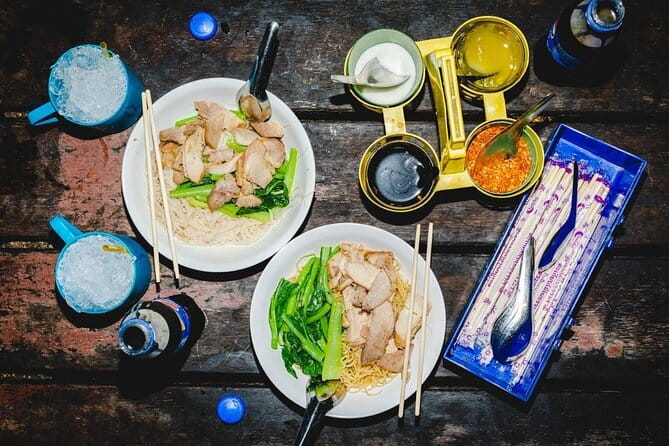
Sampeng Market receives about 30 minutes of the schedule. It is a narrow alleyway within the Chinatown market area, with goods ranging from textiles to electronics.
The short time here makes sense. Sampeng is a place to experience rather than slowly browse from one end to the other. Its tight lanes and dense displays offer a sharp contrast with the temple grounds and broader streets elsewhere on the walk.
The market also adds another piece to the food story. Chinatown is close to the starting neighborhoods and is one of Bangkok’s busiest areas for street food, markets, and cultural sights. Although the listed stop focuses on Sampeng, the wider Yaowarat area is part of the tour’s geographic setting.
You should keep your belongings secure in crowded market lanes and listen carefully for meeting instructions. The tour includes bottled water, which is welcome in Bangkok’s heat, but you should still dress for a warm walk and pace yourself with the tasting.
The itinerary lists Sampeng as a free stop. That means you are paying for the guide, food, drinks, and access to the route, not for admission tickets at each location.
What you actually eat and drink
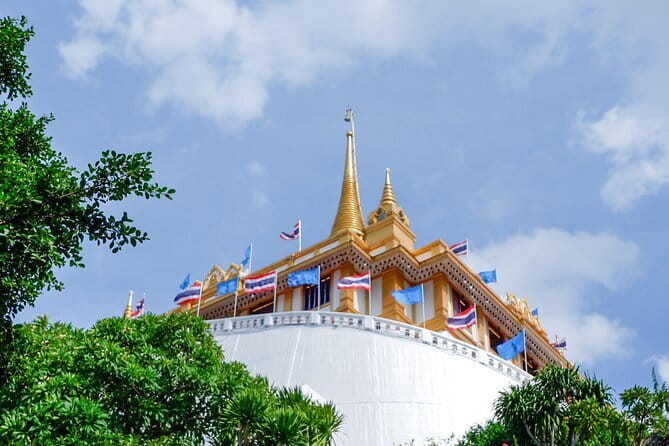
Dinner and snacks are included, along with alcoholic beverages and bottled water. The food is clearly a central part of the experience, but the details do not promise a specific menu, number of dishes, or named restaurants.
That is worth noting before you pay. The tour appears designed around a range of tastings at different kinds of places, including food stalls and restaurants. You may try foods you would not think to order alone, but the precise selection can change.
The strongest practical advice is to arrive hungry but not starved. One guide, Anna, was especially good at encouraging people to keep eating, and one participant described the quantity as generous. That sounds like a compliment, but it also means you should pace yourself.
Alcohol is included, so you can enjoy a drink if you choose. The supplied information does not say how many alcoholic drinks are provided, so do not treat the tour as an open bar. Bottled water is included, which is useful during a long food walk.
Food allergies and dietary restrictions are not addressed in the supplied details. If you have an important restriction, contact the operator before booking rather than assuming the guide can adjust every stop.
The guides make the difference
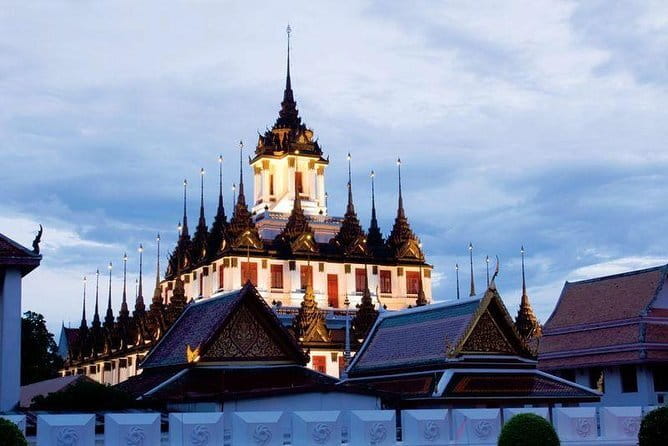
The guide is a major reason to consider this tour. Lek receives repeated praise for his warmth, personal care, and ability to explain Bangkok’s food and culture. He has lived in Bangkok for 30 years and is of Thai descent, details that help explain his strong connection to the city.
That does not mean every departure will be led by Lek. Anna is also specifically praised, with a reputation for generosity and enthusiasm. One departure included both Lek and Annie, and the small group made it possible for the guides to give the participants close attention.
I would book this tour for the guide-led interpretation as much as for the food. You can find street food on your own, but a good guide helps you understand what you are seeing and gives you the confidence to try unfamiliar places.
The tone also seems friendly rather than formal. You are likely to spend much of the walk asking questions, tasting, and moving through ordinary streets. If you prefer a tightly scripted sightseeing tour with dates, measurements, and a fixed lecture, this may feel loose. If you want a human connection to Bangkok, that looseness can be a strength.
Is $125 a fair price?
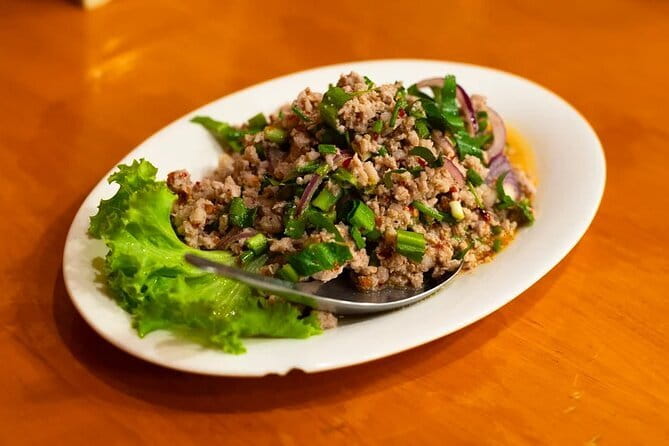
At $125 per person, this is not a cheap Bangkok food crawl. You are paying more than you would for buying street food independently, and public transportation is not included.
The value depends on what you want from the day. The price includes a licensed guide, dinner, snacks, alcoholic beverages, and bottled water. It also covers a five-hour route through several historic districts, with the guide providing the cultural link between the stops.
A do-it-yourself version could cost far less. You could reach the neighborhoods by MRT, browse Phahurat and Sampeng, and buy small portions along the way. But you would need to choose the places, manage directions, understand the context, and decide what is safe or worth trying.
For a first visit to Bangkok, that guidance may justify the cost. It is also useful if you have visited Bangkok before but want a new angle. One person who had been to the city many times still found new places and foods on this route.
The price is easier to accept if you treat it as a small-group cultural walk with a substantial meal, not just a series of snacks. It is less appealing if you mainly want the cheapest way to eat.
Timing, meeting point, and group size
The listed duration is about five hours, and the start time is 9:00 a.m. The description also calls it an afternoon-into-evening tour, which is inconsistent. Confirm the actual departure time with Culinary Backstreets Walks before setting your day around it.
The tour begins and ends at the same meeting point, Sam Yot MRT station Exit 3. Private transportation is not included, so plan your own route to the station and back. The location is near public transportation, making the MRT the sensible option.
The maximum group size is seven. That is one of the best practical features because markets such as Sampeng can be difficult with a large crowd. A smaller group also gives you more time with the guide.
Most people can participate, according to the supplied information. Still, you should be comfortable walking for much of five hours and standing in markets and food venues. The route includes narrow market lanes, and no private vehicle is provided.
Confirmation arrives at booking. Free cancellation is available up to 24 hours before the start time for a full refund. Changes or cancellations inside that window are not accepted, and the operator may cancel if the minimum number is not reached.
Who should book Backstreet Bangkok?
I would recommend this experience if you want Bangkok food tied to place and culture. It suits first-time visitors who want a guided introduction, as well as repeat visitors looking for neighborhoods and foods they missed before.
It is especially good for people who enjoy small groups, walking, and trying unfamiliar dishes. The guides seem to be at their best when they can talk with participants rather than deliver a fixed script to a large crowd.
You may want another option if you need a precise menu, private transport, guaranteed access to major temples, or a fully confirmed afternoon departure. The lack of specific food details also makes it less suitable if you need to plan every meal around strict dietary requirements.
FAQ
How long is the Backstreet Bangkok tour?
The experience lasts approximately five hours.
How much does the tour cost?
The listed price is $125 per person.
Where does the tour begin?
It begins at Sam Yot MRT station Exit 3, at Thanon Unakan in Wang Burapha Phirom, Bangkok.
Where does the tour end?
The tour ends back at the meeting point.
What time does the tour start?
The listed start time is 9:00 a.m. The description also refers to an afternoon-into-evening schedule, so confirm the timing with the operator before booking.
Is transportation included?
No. Private transportation is not included, though the meeting point is near public transportation.
What is included in the price?
A licensed guide, alcoholic beverages, bottled water, dinner, and snacks are included.
Are entrance tickets included?
The listed stops at Wat Ratchaburana, Rattanakosin Island, Phahurat Market, and Sampeng Market show no admission ticket charge. The information does not include admission to separate attractions such as the Grand Palace, Wat Phra Kaew, or Wat Pho.
How many people can join the tour?
The maximum group size is seven people.
Can I cancel for a full refund?
Yes. You can cancel at least 24 hours before the experience start time for a full refund. Cancellations or changes made less than 24 hours before the start are not accepted for a refund.
Should you book it?
Book this tour if you want to understand Bangkok through its food, neighborhoods, and communities rather than simply collect dishes. The combination of Wat Ratchaburana, Rattanakosin Island, Phahurat, Sampeng, and guided tastings gives you a fuller picture of the city than a standard restaurant meal.
The strongest reasons to go are the small group, the generous food, and guides such as Lek and Anna. Confirm the start time, arrive ready to walk and eat, and keep your expectations flexible about the exact menu. For an engaging introduction to Bangkok’s old quarters, the $125 price can be fair value.
Just added in Bangkok
- Wonderful Pearl Dinner Cruise★ 3.5 · 27 reviews
- re:leaf spa and massage★ 4.0 · 10 reviews
- White Orchid Sunset Dinner Cruise Calypso Ladyboy Cabaret Show★ 4.0 · 10 reviews
- Yoga in the Park Thailand★ 5.0 · 12 reviews
- Visit Wat Pho and Wat Arun with Local Expert★ 4.0 · 14 reviews
- Visit temples in and around Bangkok with a former monk of 10 years★ 5.0 · 30 reviews
- 3-Hour Bangkok Walking Tour: Wat Pho and Wat Arun★ 5.0 · 102 reviews
- Miracle Bangkok Airport Lounges – Relax Before You Fly★ 3.0 · 32 reviews
Thai Cooking Classes, compared.
Half-Day Thai Cooking Class at Organic Farm in Chiang Mai
Read our review →
Cooking Class, Market & Thai Herbs Garden Tour
Read our review →Authentic Cooking Class with Market & Farm Visit
Read our review →
Phuket Thai Cooking Class with Market Tour Option
Read our review →
Tingly Thai Cooking School Half-Day Cooking Class
Read our review →Browse the lists this tour appears in