
Reviewed · FARMS
Old Phuket Farm Ticket – Countryside Local Life Culture
Trade tourist streets for working farmland. Old Phuket Farm gives you a hands-on look at rural Thai life, with rice farming and rubber tapping explained in plain, practical terms. I like the mix of watching and doing, especially tin panning, pineapple tasting, and the chance to see how rice is milled and winnowed.
I also like the compact two-hour format, which fits neatly into a Phuket day. The main consideration is that this is a staged cultural attraction rather than a visit to an untouched farm. One honest concern raised by the experience is the use of nose piercings on the buffaloes, which some visitors may find uncomfortable.
In This Review
- Key details before you book
- A farm visit that changes your view of Phuket
- Meeting the buffaloes and facing a difficult question
- Rubber tapping from tree to sheet
- Rice fields, planting, and harvesting
- Tin panning and Phuket’s mining past
- Pineapple tasting and the taste of the countryside
- Rice milling and winnowing in action
- Inside the classic Thai house
- Why the guide can make or break the experience
- Is $38.88 a fair price for two hours?
- Who should book this farm experience?
- Timing, group size, and practical planning
- My recommendation: book it for context, not polish
- FAQ
- How long does the Old Phuket Farm experience last?
- How much does the experience cost?
- What age qualifies for a child ticket?
- How many people can join the tour?
- Is a mobile ticket available?
- Can I cancel for a full refund?
- What happens if bad weather cancels the experience?
Key details before you book
- Buffaloes still shape the story: You learn how these animals supported Thai farming and see them up close.
- Rubber production is shown step by step: The visit explains how latex moves from tree to rubber sheet.
- You get to handle the past: Tin panning, rice work, coconut grating, and curry paste-making add useful hands-on moments.
- Food is part of the lesson: Fresh Phuket pineapple offers a simple taste of local agriculture.
- The group is kept small: A maximum of 10 people should make the demonstrations easier to follow.
- It suits a short Phuket itinerary: The visit lasts about two hours and uses a mobile ticket.
A farm visit that changes your view of Phuket
Phuket is often sold through beaches, nightlife, and resort life. Old Phuket Farm points you toward another side of the island, one built around crops, animals, household work, and small-scale industry.
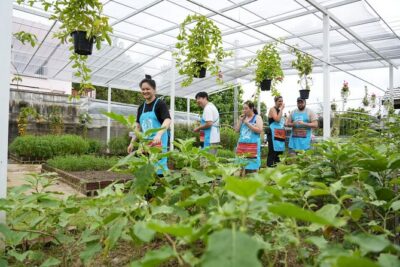
I like this change of pace. You are not simply shown a display and sent onward. The visit asks you to take part in several activities, so the experience has more texture than a basic outdoor museum.
The tour is designed for families, couples, solo visitors, and groups. Children have a clear role in many of the activities, while adults get a useful introduction to the work that once shaped daily life in Phuket.
It is worth setting expectations correctly. The site is made for cultural tourism, and parts of it feel arranged for demonstration. That does not make the lessons worthless. It means you should come for an accessible introduction to rural traditions, not for a quiet day on a private working farm.
The experience has a rating of 4.8 from 13 reviews, with 92 percent recommending it. The strongest praise centers on the guide quality, the practical activities, and the way the tour works for families.
A few more options to weigh up in Phuket
- Phang Nga Bay Sea Cave Canoeing & James Bond Island by Big Boat
★ 5.0 · 4,666 reviews - Phuket: Elephant Jungle Sanctuary Ethical Feeding Experience
★ 4.8 · 4,359 reviews - From Phuket: Phang Nga Bay and Canoeing Tour by Big Boat
★ 4.7 · 3,528 reviews
Meeting the buffaloes and facing a difficult question
The visit begins with buffaloes, animals that played a major role in Thai agriculture. Before modern machinery, buffaloes helped farmers prepare fields and carry out demanding farm work. Seeing them here gives you a direct link to that older system.
For children, this is often the first moment that makes the tour feel real. A rice field is easier to understand when you can connect it with the animal power once used to work it.
I appreciate that the buffaloes are not treated as a random photo stop. Their place in Thai farming is part of the explanation. At the same time, the animal presentation deserves a clear note. One visitor felt upset by the buffaloes’ nose piercings. If animal welfare is a major concern for you, this may be the part of the experience you find hardest to accept.
That concern does not erase the cultural value of the lesson, but it is something I would keep in mind before booking. You can enjoy the farming context while still asking yourself how comfortable you are with the way the animals are presented.
Rubber tapping from tree to sheet
Phuket’s countryside is closely tied to rubber production, and the farm shows how the process works. You see the rubber tree and learn about tapping, the method used to collect latex.
The useful part is the connection between the living tree and the finished material. Rubber can seem like an anonymous product in daily life, but here you follow its path from the trunk to a rubber sheet.
This is a good example of what the farm does best. It takes an everyday local industry and puts it in front of you in a form that is easy to understand. You do not need specialist knowledge. The point is to see the labor and process behind a familiar material.
The demonstration also gives you a better sense of how farming in Phuket involves more than rice. The island’s rural economy has depended on several crops and industries, and rubber adds an important layer to the visit.
Rice fields, planting, and harvesting
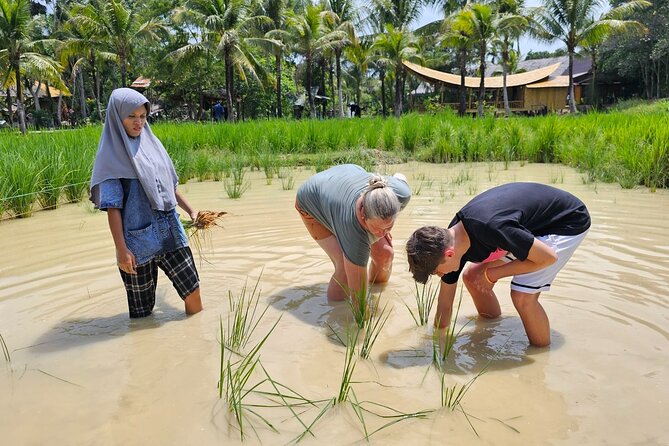
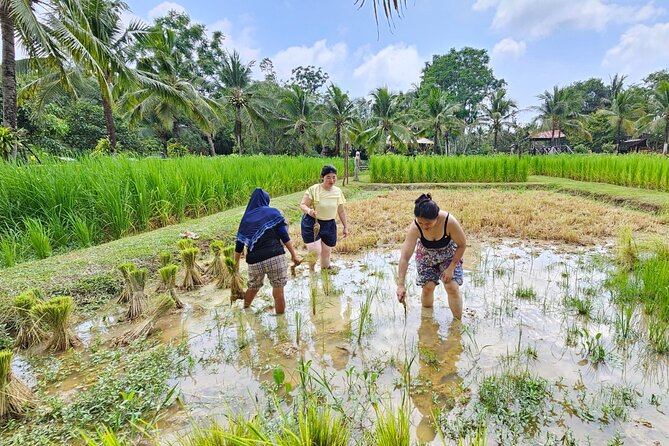
Rice farming is the central cultural lesson here. You get to see how rice is planted and harvested, using older methods that shaped village life for generations.
The activity matters because rice is not just another crop in Thailand. It is tied to food, work, family routines, and the seasonal rhythm of rural communities. A short demonstration cannot recreate the full labor of a rice harvest, but it can help you understand why the work demanded so much time and cooperation.
The hands-on format is especially useful for families. A child may not remember every explanation, but planting rice or seeing the tools in action gives the subject a physical meaning.
I would not expect a full agricultural workday. The visit is about demonstration and participation within a timed cultural program. Still, the rice fields provide one of the strongest links between the farm and ordinary local life.
A completely different kind of day out:
- Phi Phi Islands Adventure Day Trip w/ Seaview Lunch by V. Marine
★ 5.0 · 3,295 reviews - Phuket: Paradise Trip ATV Jungle Adventure
★ 4.8 · 3,250 reviews - Phuket: Phi Phi Islands and Maya Bay Day Trip with Lunch
★ 4.4 · 3,204 reviews - Phuket: Full Day City Tour with Night Market
★ 4.5 · 2,888 reviews
Tin panning and Phuket’s mining past
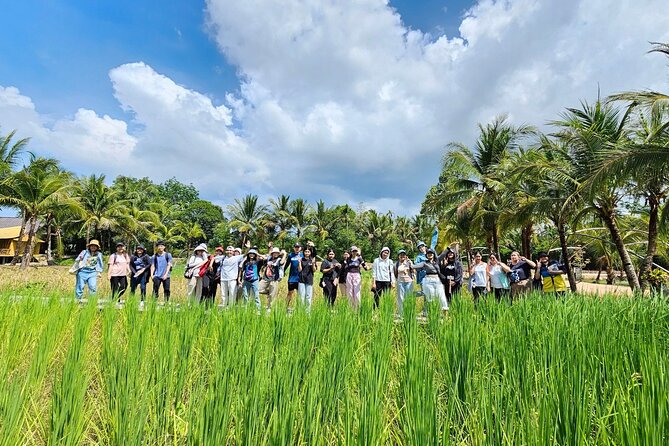
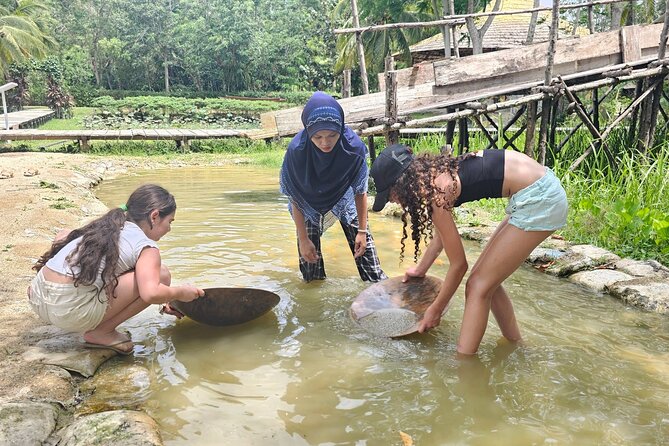
Tin panning adds a surprising turn to the tour. Phuket is known today for resorts and beaches, but tin mining was once an important part of the island’s economy. At the farm, you can try panning and get a small sense of how people searched for the metal.
This activity gives the tour a welcome break from farming. It also shows why Phuket’s past cannot be reduced to plantations and rice fields. The island developed through several forms of work, and tin was one of them.
The activity is simple, but that is part of its appeal. You do not need to know anything about mining before you begin. The physical act of sifting and searching helps you grasp the patience such work required.
If you are choosing the experience for a child, tin panning may be one of the most memorable sections. Adults may value it for the historical context. Either way, it adds variety to the two-hour visit.
Pineapple tasting and the taste of the countryside

The farm includes a chance to taste freshly grown Phuket pineapples. This is a small part of the program, but it works well because it links the farm’s work to something you can immediately understand.
Food offers a fast way into local culture. Instead of only hearing about crops, you get to taste one. The pineapple also gives you a break between the demonstrations and keeps the experience from feeling like a series of explanations.
I would not book this tour solely for the food. The tasting is a supporting detail, not a full meal or culinary class. But it is a pleasant addition, especially if you enjoy knowing where local produce comes from.
The wider lesson is that countryside life is built around useful things: food, materials, animals, and household skills. The farm keeps returning to that practical theme.
Rice milling and winnowing in action
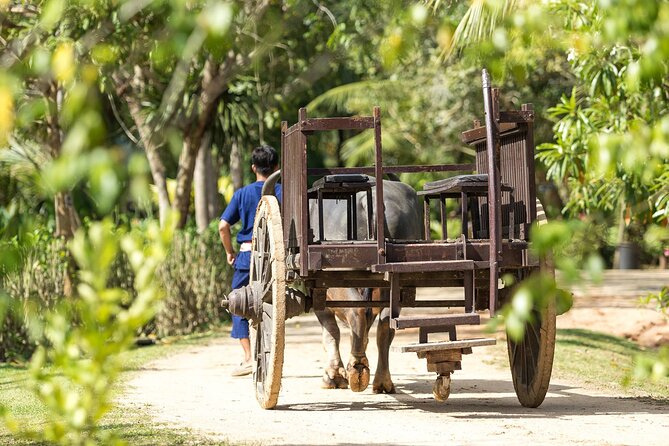
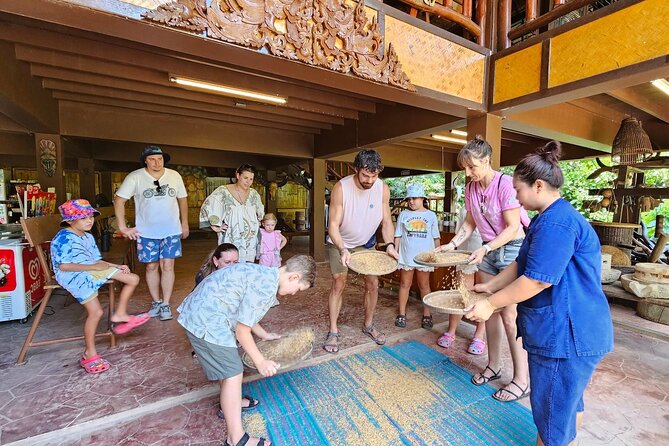
After the field work, you see traditional rice milling and winnowing. These steps are easy to overlook when rice arrives in a clean package at a shop, but they were once essential household and agricultural tasks.
Milling removes the outer layers of the grain. Winnowing separates the lighter husk from the heavier rice. Watching the process helps you understand how much work sits between harvesting a crop and preparing it for cooking.
This is another section where a guide can make a big difference. A strong explanation turns a simple tool into a story about labor, food preparation, and village routines. The experience has received especially warm praise for its guides, and that matters here because the equipment alone may not explain itself.
The demonstrations are also useful for comparing modern convenience with older methods. You do not have to romanticize the past to appreciate the skill and effort involved.
Inside the classic Thai house
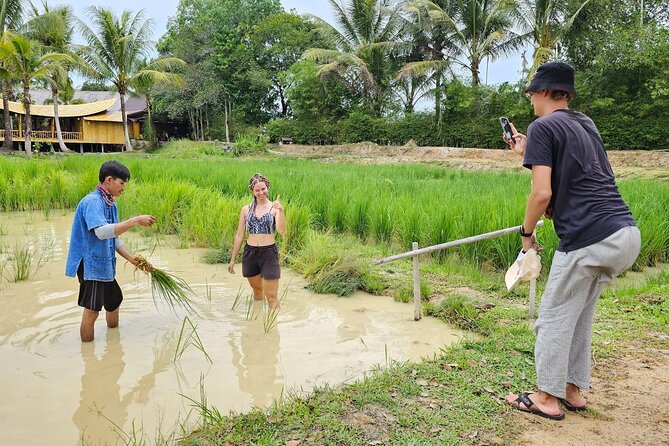
The classic Thai house offers a look at domestic life rather than farm production. This change of setting helps you see how agricultural work connected with the home.
You can expect demonstrations of coconut grating and curry paste-making. Both tasks show how much preparation once went into ordinary Thai cooking. Coconut is not simply an ingredient pulled from a packet, and curry paste is not just a store-bought flavoring. The work begins with raw materials and hand tools.
I like this section because it gives the tour a human scale. The buffaloes, fields, and rubber trees show the public side of rural work. The house shows the repeated household jobs that kept meals and family life going.
Curry paste-making also gives you a practical look at Thai food culture without turning the tour into a formal cooking class. You are seeing the tools and methods, not signing up for a long recipe session.
Why the guide can make or break the experience
The strongest praise for this farm centers on the guide. One particularly positive family experience singled out the guide’s ability to make the program both fun for a child and informative for an adult. That is exactly the balance this tour needs.
There are many separate stops in two hours. Without clear explanations, the program could feel like a quick walk past unrelated objects. With a good guide, the buffaloes, rubber trees, rice fields, tin pans, and kitchen tools become parts of one story about local life.
A second highly praised experience called the tour enriching and gave special credit to the guide. I would treat that as a major reason to consider booking. The farm provides the setting, but the guide provides the meaning.
Guide quality can vary from one departure to another, so I would keep your expectations practical. The program is not a university lecture. It is a friendly, active introduction designed to keep different ages interested.
Is $38.88 a fair price for two hours?
At $38.88 per person, this is not the cheapest short activity in Phuket. The value depends on what you want from your time and how much you use the hands-on parts.
If you only want to look at a farm, the price may feel high for two hours. The value improves if you take part in the activities, listen closely to the cultural explanations, and treat the visit as a compact introduction to several parts of Phuket’s past.
You are paying for more than entry to the grounds. The price includes guided demonstrations and admission to the farm’s activities, including the rice work and tin panning. The small maximum group size of 10 also helps make the experience more personal than a large coach tour.
For a family, the price can be easier to justify because the program offers several different tasks in one place. A child who loses interest in rice may enjoy the buffaloes or tin panning. A couple or solo visitor may prefer the farm if they want a cultural break from beaches and shopping.
I would compare it with the cost of assembling several separate cultural stops yourself. The farm brings farming, mining, food preparation, and household life into one short visit. That convenience is the main value.
Who should book this farm experience?
I think the tour is best for you if you want a simple, active introduction to Thai countryside traditions. It is especially suitable for:
- Families with children aged 4 to 11, who can take part in practical activities
- Couples wanting a break from Phuket’s beach and nightlife routine
- Solo visitors who prefer a guided cultural setting
- Small groups that want a short activity with several themes
- First-time visitors who want context for Thai food and farming
It may be less suitable if you want a quiet, unstructured visit or a completely uncommercial farm setting. The program is arranged for visitors, and one family described it honestly as touristy while still finding it fun and informative.
That is a fair description. You get access to activities that may be difficult to encounter on your own, but the experience is packaged and timed.
Timing, group size, and practical planning
The visit lasts approximately two hours, so you can fit it around other Phuket plans. That short length is useful if you are staying near the island’s main sights and want a cultural activity without committing to a full-day excursion.
A mobile ticket makes entry simple. Confirmation is provided when you book, and the experience is near public transportation. The supplied information does not give exact pickup details, so you should not assume hotel transfer is included.
The maximum group size is 10 people. That is a helpful limit for demonstrations because you should have a better chance of seeing what is happening and following the guide’s explanation.
Most people can take part, and child tickets apply to ages 4 through 11. The activity depends on good weather. If poor conditions or an unmet minimum number of participants causes cancellation, you are offered another date, another experience, or a full refund.
You can cancel for a full refund up to 24 hours before the start time. Inside that 24-hour window, the payment is not refunded, and changes are not accepted. Cut-off times use local Phuket time, so check the timing carefully before making last-minute plans.
My recommendation: book it for context, not polish
I would book Old Phuket Farm if you want to understand Phuket beyond its resort identity. The combination of buffaloes, rubber tapping, rice work, tin panning, pineapple, rice milling, and household cooking creates a useful picture of how rural life works.
The best reason to go is the hands-on format and the guide-led storytelling. You are given things to see, touch, taste, and try, which makes the two hours pass quickly.
I would pause if you are uneasy about animal presentation or if you want a completely unplanned farm visit. The buffalo nose piercings are a real consideration, and the setting has a visitor-focused feel.
For families, first-time visitors, and anyone seeking a short cultural outing, the $38.88 price can be reasonable. Book it as an accessible introduction to local life, and you are likely to get much more from it than if you arrive expecting an untouched slice of rural Phuket.
FAQ
How long does the Old Phuket Farm experience last?
The experience lasts approximately two hours.
How much does the experience cost?
The listed price is $38.88 per person.
What age qualifies for a child ticket?
Child tickets are available for children from 4 through 11 years old.
How many people can join the tour?
The experience has a maximum group size of 10 travelers.
Is a mobile ticket available?
Yes. The experience provides a mobile ticket.
Can I cancel for a full refund?
Yes. You can cancel at least 24 hours before the start time for a full refund. Cancellations made less than 24 hours before the start time are not refunded.
What happens if bad weather cancels the experience?
If poor weather causes cancellation, you are offered a different date or a full refund. If the minimum number of participants is not reached, you are offered a different date, an alternative experience, or a full refund.
Just added in Phuket
- Travstore Original Phuket Discovery Tour★ 3.9 · 39 reviews
- Zipline and ATV Skyline Adventure Phuket Include Pickup Transfer★ 5.0 · 11 reviews
- Zipline 18 Platforms and ATV Adventure Tour From Phuket★ 4.5 · 20 reviews
- Unique Thai Cooking Experience in Patong with Chef Care★ 5.0 · 87 reviews
- Phuket: Wow Andaman Snorkeling Trip to Phi Phi & Bamboo Islands★ 4.5 · 15 reviews
- Holiday travel photoshoot in Phuket★ 5.0 · 25 reviews
- Wonders of Khao Sok Discovery with Guaranteed Departure★ 4.5 · 31 reviews
- VIP Private Boat to Phi Phi Island: Snorkeling + Land Tour★ 5.0 · 9 reviews
Farms, compared.
Half-Day Thai Cooking Class at Organic Farm in Chiang Mai
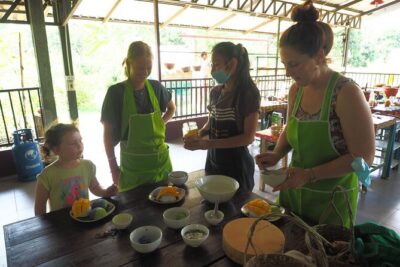
Read our review →Authentic Cooking Class with Market & Farm Visit
Read our review →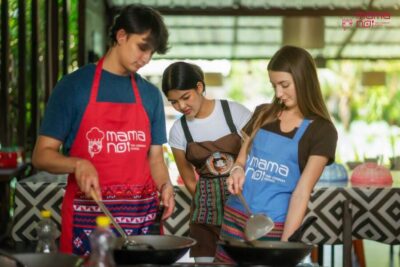
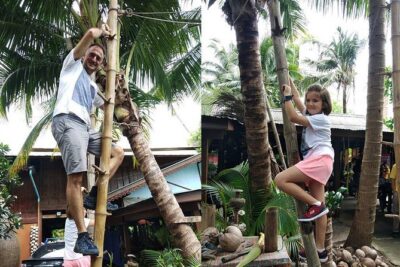
Floating & Railway Market and Coconut Farm Tour [Optional Luxury]
Read our review →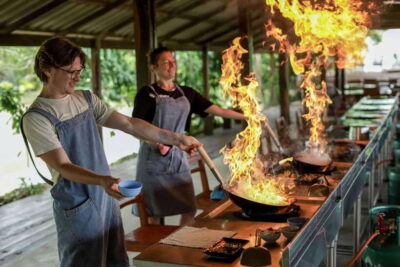
Cooking Class with Organic Farm in Chiang Mai at Mama Noi
Read our review →
Evening Cooking Class in Organic Farm with Local Market Tour
Read our review →Browse the lists this tour appears in