
Reviewed · FOOD TOURS
Bangkok: Talad Noi Hidden Gems & Street Food Adventure
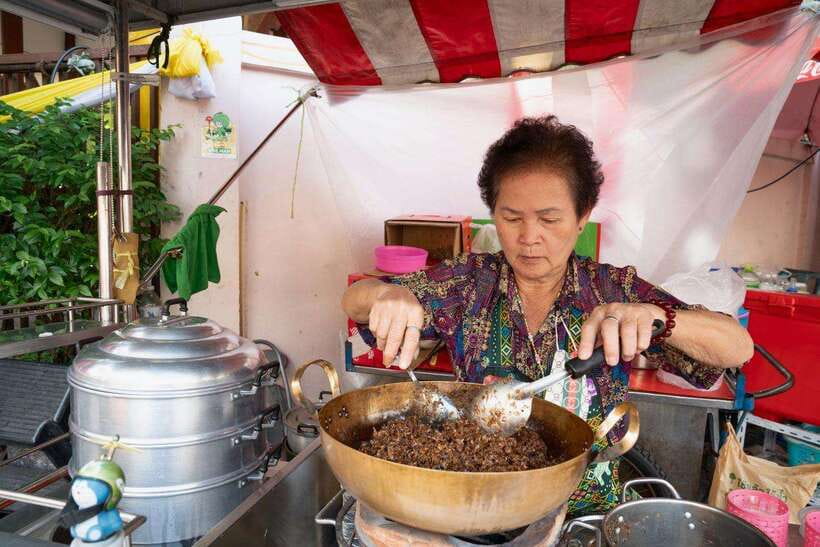
Talad Noi rewards curious eaters. This 2 km walk brings you through one of Bangkok’s most characterful old neighborhoods, pairing Thai and Chinese street food with churches, shrines, murals, and river views. I especially like the small group limit of 12 and the unusual food stops, including turnip cake, chwee kueh, duck noodles, and pad Thai.
The visit to the 1787 Holy Rosary Church is another strong point, as is the 200-year-old Chow Sue Kong Shrine. The main consideration is that the food is the star. If you expect a long, detailed tour of old Chinatown with several temple visits, the cultural side may feel a little light.
In This Review
- Key things to know before you book
- Why Talad Noi makes a good food walk
- Meeting at River City Bangkok
- Holy Rosary Church and Talad Noi’s mixed past
- Street art, narrow lanes, and riverside cafés
- The food stops: come hungry, but ask questions
- Chow Sue Kong Shrine and Chinese architecture
- Hong Sieng Kong and the route toward Chinatown
- How much value do you get for $41?
- Who should book this Talad Noi walk?
- Practical tips for a better afternoon
- Should you book it?
- FAQ
- Where does the Talad Noi tour start?
- Where does the tour finish?
- How long is the walking route?
- What food and drinks are included?
- Can the tour accommodate vegetarians?
- Can I book a private group?
Key things to know before you book
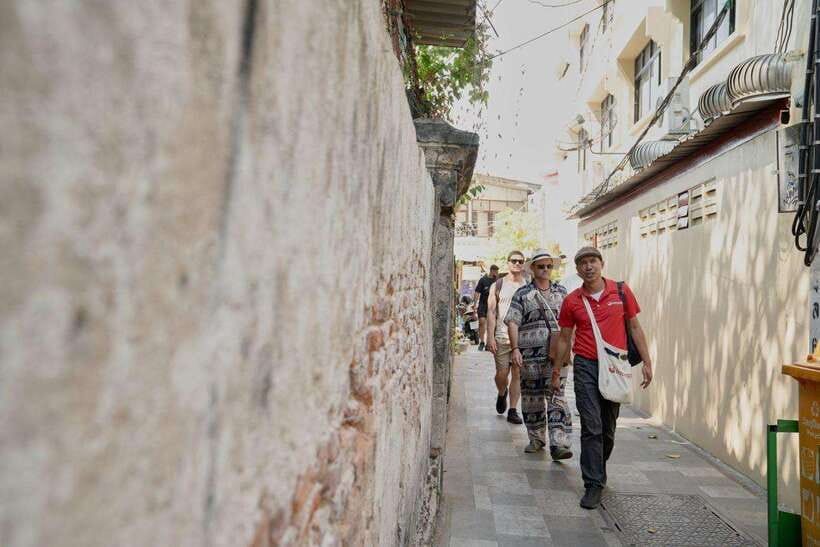
- The food goes beyond standard pad Thai: You may try turnip cake, chwee kueh, duck noodle soup, pad Thai, and drinks such as coffee, tea, or boba tea.
- It is a compact walking tour: The route covers about 2 km, but the total experience lasts between 150 and 270 minutes depending on the departure and pace.
- Holy Rosary Church adds a quiet change of mood: This 1787 church offers a look at Talad Noi’s long-standing international character.
- Chow Sue Kong Shrine is a visual highlight: Expect intricate Chinese religious architecture at this roughly 200-year-old shrine.
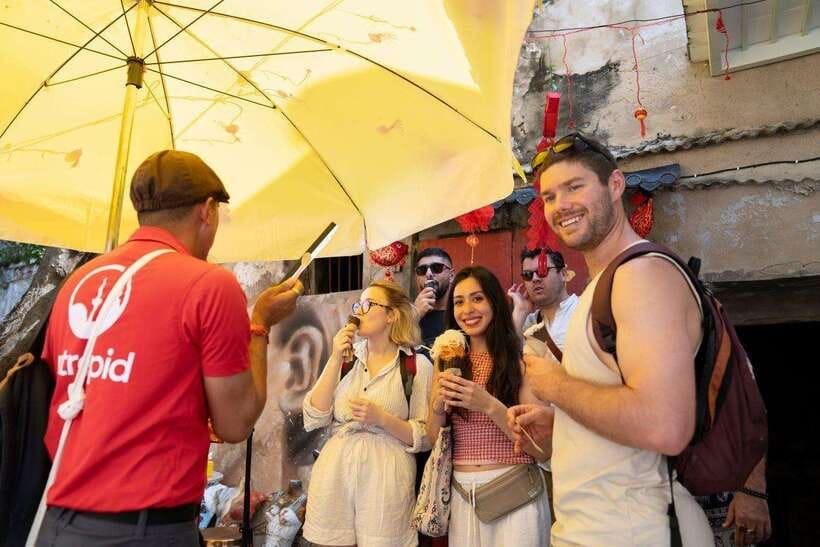
- Small groups make the food easier to manage: With no more than 12 people, your guide can answer questions and respond to food preferences more easily.
- The tour ends near Chinatown: You finish at Si Phraya after passing through Talad Noi, Hong Sieng Kong, and Bangkok’s Chinatown.
Why Talad Noi makes a good food walk
Talad Noi sits near the Chao Phraya River, close to Bangkok’s better-known Chinatown but with a different feel. Its narrow lanes, old religious buildings, family-run food shops, and riverside cafés give the neighborhood a more local rhythm.
I like this tour because it does not treat food as an afterthought. You are not simply walking past restaurants while a guide talks. The tastings are built into the route, and the mix reflects the area itself: Chinese dishes, Thai favorites, and snacks shaped by generations of cultural exchange.
That makes the food useful as well as enjoyable. Turnip cake and chwee kueh are not the usual first choices for a visitor ordering in Bangkok. Trying them with a guide gives you a chance to understand how Chinese food traditions remain part of daily eating in the neighborhood.
The route is only about 2 km, so this is not a punishing walk. Still, the narrow lanes and food stops mean the tour can take anywhere from two and a half to four and a half hours. You should arrive hungry, but not starving, since the samples come at different points along the way.
More Food Tours in Bangkok
- Bangkok: Backstreets Food Tour with 15+ Tastings
★ 4.9 · 2,880 reviews - Bangkok Backstreets Food Tour with 15+ Tastings
★ 5.0 · 1,926 reviews - Bangkok: Michelin Guide Street Food Tour by Tuk Tuk
★ 4.4 · 1,274 reviews
Meeting at River City Bangkok
The tour begins at River City Bangkok, at Gate 1 in front of Starbucks on the first floor. This is a practical meeting point near the river and gives you a clear place to find your guide before setting off.
From there, you move into Talad Noi on foot. No transport is included as part of the experience, so wear shoes that feel good on uneven city streets and allow enough time to reach the meeting point.
A small-group format matters here. Twelve people is still large enough for a social outing, but small enough that your guide should be able to hear your questions and manage food stops without turning the walk into a procession. A private group is also available if you want a more personal pace.
Holy Rosary Church and Talad Noi’s mixed past
Holy Rosary Church, built in 1787, is the first major cultural stop. Its presence helps explain why Talad Noi feels different from a standard market district. The neighborhood has long been shaped by Chinese settlement, river trade, and contact with communities from beyond Thailand.
The church provides a quiet pause early in the walk. After passing through tight lanes and food areas, stepping into a religious site with a much older Christian connection changes your view of the neighborhood. It is a reminder that Bangkok’s past is not neatly divided into Thai, Chinese, and foreign sections.
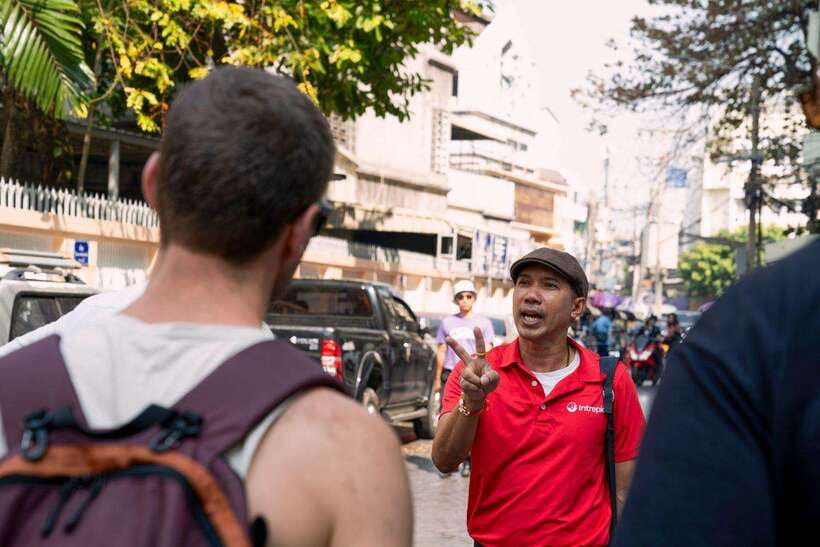
Your guide leads the visit and adds context, though the depth may depend on the individual guide. Several guide names have received particularly warm praise, including PK, Bebe, and Nana. PK is noted for combining cultural explanation with food, while Bebe is praised for patient conversation and answering questions. Nana is described as friendly, with excellent English.
That personal element is one of the tour’s strengths. You can ask why a building matters, how a dish is prepared, or where the neighborhood’s cultural influences meet. The experience works best when you treat it as a conversation rather than a formal lecture.
Street art, narrow lanes, and riverside cafés
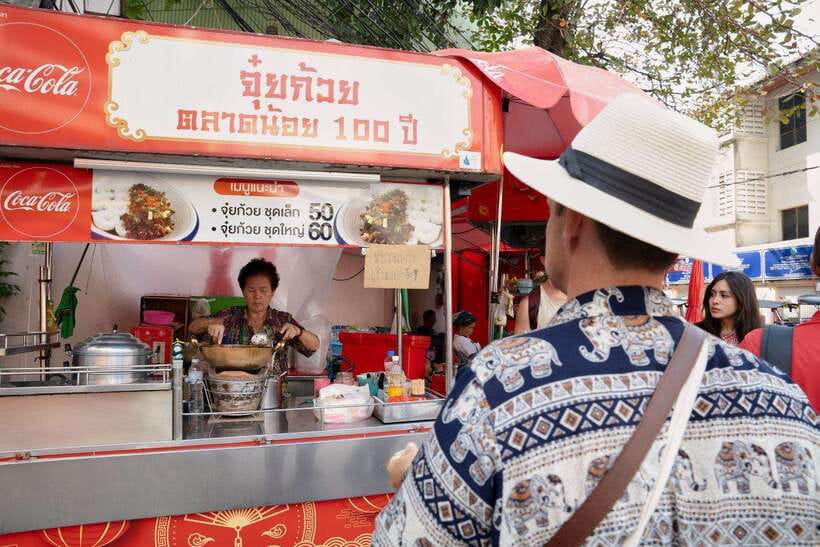
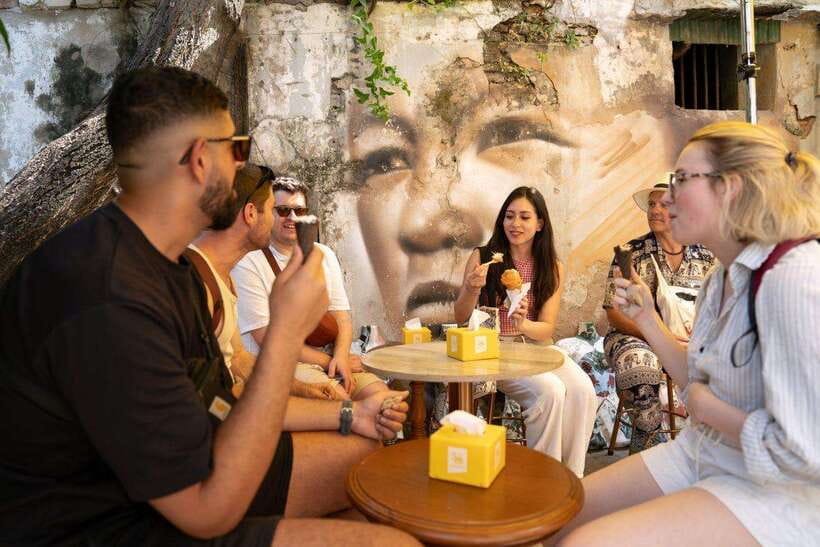
After the church, the walk continues through Talad Noi’s smaller lanes. Street art adds color to old walls and working streets, giving you plenty to look at between tastings.
This is not a polished sightseeing district. That is part of its appeal. You see a neighborhood where daily life continues around the route, with small businesses, food stalls, old houses, and religious sites sharing limited space.
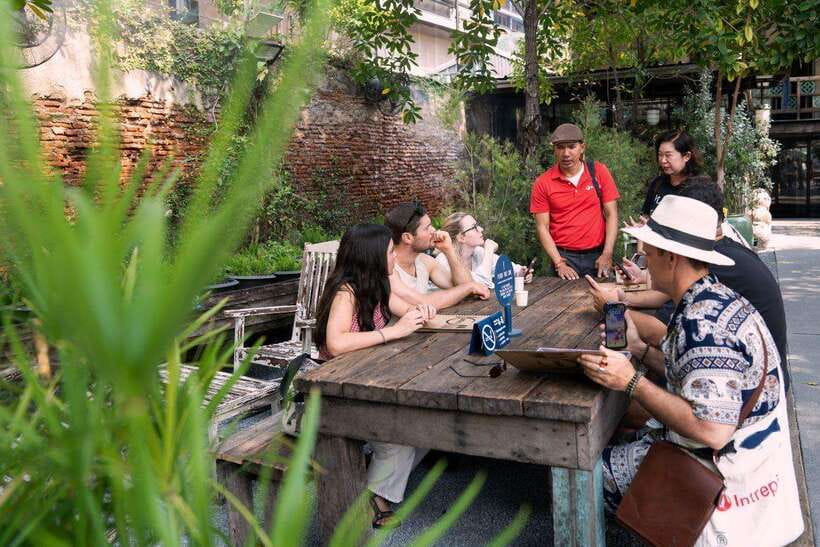
The tour also includes time at a riverside café, Hong Sieng Kong. The café stop gives you a chance to sit down, enjoy a drink, and take a break from walking. Included drinks can include coffee, tea, or boba tea, depending on what is available during your visit.
I appreciate this pause because food walks can become tiring when every stop involves standing in the heat. The café also slows the pace and gives you time to discuss what you have seen. Do not expect the café to replace a full meal, but it is a welcome part of a long afternoon.
A completely different kind of day out:
- Bangkok: Damnoen Saduak Market and Maeklong Railway Market
★ 4.5 · 26,723 reviews - The Old Siam: Damnoen Saduak and Maeklong Railway Market
★ 4.5 · 10,992 reviews - From Bangkok: Ayutthaya Temples Guided Tour with Lunch
★ 4.7 · 10,535 reviews - Bangkok: Train Market & Floating Market with Boat Ride
★ 4.7 · 9,547 reviews
The food stops: come hungry, but ask questions
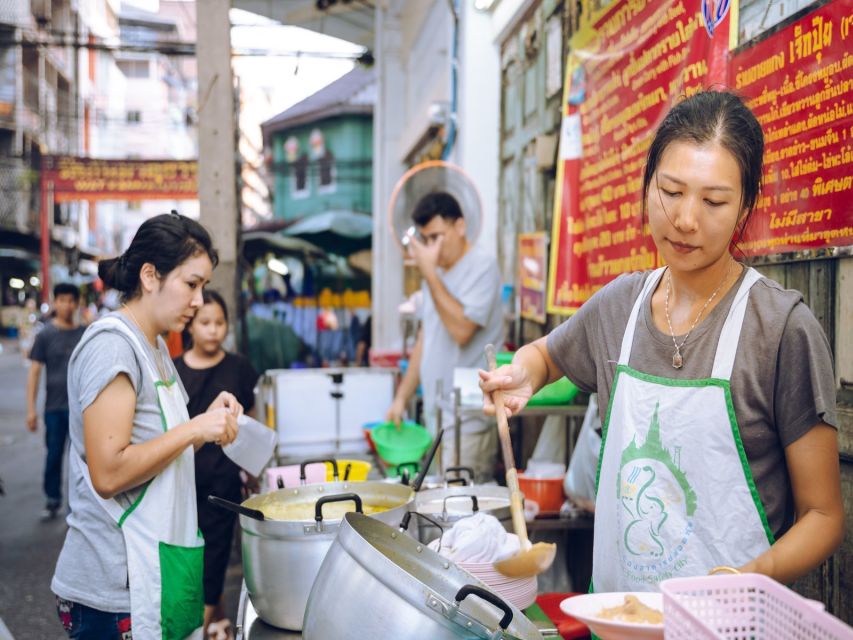
The included tastings are the heart of the experience. The exact selection can vary, but the advertised food includes Chinese and Thai favorites such as:
- Turnip cake, a Chinese dim sum dish
- Chwee kueh, steamed rice cakes served with preserved radish
- Chao Tha, a duck noodle soup
- Pad Thai from Uncle Pom
- Coffee, tea, or boba tea
Turnip cake and chwee kueh are especially useful additions because they show a side of Chinese street food that many first-time visitors miss. Chwee kueh is soft and steamed, with preserved radish adding a salty contrast. Turnip cake has a firmer texture and works well as a savory snack rather than a sweet treat.
Duck noodle soup gives the walk a more filling stop. Pad Thai from Uncle Pom brings the Thai side of the neighborhood into focus. Together, the dishes make the food experience broader than a standard checklist of spring rolls, mango sticky rice, and curry.
You should not assume the included samples equal a full lunch or dinner. The tour is best viewed as a progressive tasting, with additional food and drinks available at your own cost if you want more.
This is also where the small group earns its keep. One past couple had the guide Nana almost to themselves and found that she could respond to their questions and food wishes. A group of 12 should still allow some flexibility, though a private departure gives you the best chance of setting the pace around your interests.
Vegetarian visitors can be accommodated if you give at least 24 hours’ notice. No other dietary requirements are confirmed, so people with allergies or strict dietary needs should contact the operator before booking rather than rely on substitutions at the food stalls.
Chow Sue Kong Shrine and Chinese architecture
The Chow Sue Kong Shrine, also known as 順興宮清水祖師爺, is one of the most striking cultural stops. At roughly 200 years old, it offers a close look at Chinese religious architecture and decoration within Talad Noi.
The shrine is more than a quick photo stop. Its details help connect the food to the neighborhood’s Chinese roots. After tasting Chinese-influenced dishes, you see the religious and architectural side of the same cultural story.
Your guide explains the shrine during the visit, so this is a good moment to ask about the figures, design, and local customs. As with the church, the amount of detail depends on the guide and the questions you bring.
The stop will appeal most to you if you enjoy seeing working religious places rather than only grand monuments. It is a neighborhood shrine, not a vast palace complex. That means the experience feels more intimate, but it also may not satisfy someone looking for a long temple circuit.
Hong Sieng Kong and the route toward Chinatown
Hong Sieng Kong brings together several of the tour’s themes: old buildings, river views, art, food, and a place to rest. The café stop is also a useful bridge between Talad Noi and the final Chinatown section.
The route then heads toward Bangkok’s Chinatown, where old streets meet newer cafés, shops, and food businesses. This part gives you a taste of the larger district without turning the experience into a full Chinatown tour.
That distinction matters. One food-focused departure left participants expecting more temple visits and a longer exploration of old Chinatown. The cultural material was enjoyable, but the Chinatown section felt shorter and less detailed than anticipated.
I would book this walk for Talad Noi first, with Chinatown as a final extension. If your main goal is to spend hours in Yaowarat examining temples, markets, and alleyways, choose a tour built specifically around Chinatown instead.
How much value do you get for $41?
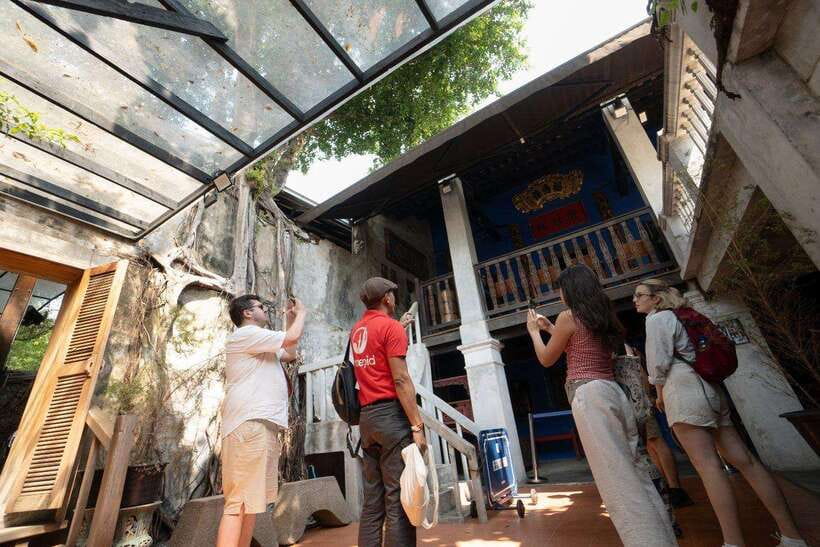
At $41 per person, the price is reasonable if you plan to eat most of the included samples and value having a guide connect the stops. You are paying for several hours of local guidance, multiple tastings, drinks, access to cultural sites, and the convenience of a prepared walking route.
The value is strongest for first-time visitors who might otherwise pass through Talad Noi without understanding what they are seeing. A guide helps you find the food, interpret the church and shrine, and make sense of the Chinese and Thai influences in the area.
The value is weaker if you mainly want a cheap meal. You could spend less by eating independently, but you would lose the guided route and the background around the buildings and dishes.
The small group also helps justify the cost. You are not paying for a large bus excursion with a distant guide. You are walking, tasting, asking questions, and moving through lanes where personal attention makes a practical difference.
Free cancellation up to 24 hours before the start and the option to reserve now and pay later add useful flexibility. The tour is operated by a B Corp certified company and is described as carbon neutral, which may matter to you if responsible tourism affects your buying decisions.
Who should book this Talad Noi walk?
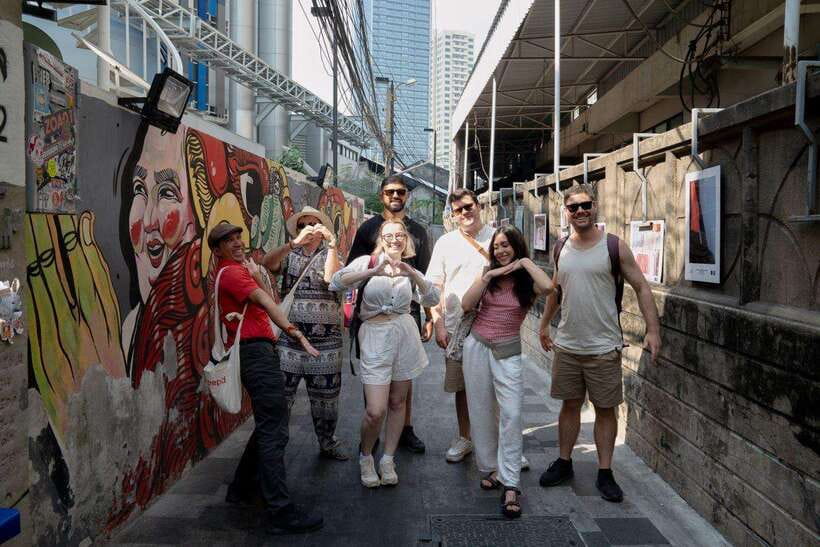
I would recommend it to you if you enjoy food, modest walking, and neighborhoods with several cultural layers. It suits first-time visitors who want an introduction to Talad Noi without having to plan every lane and food stop themselves.
It is also a good choice for couples or small groups who want conversation with a guide. The private option makes sense if you have strong food preferences, want to set your own pace, or prefer not to share the experience with other people.
You should think twice if you are looking for a major temple tour. The church and shrine are valuable stops, but there are only two principal religious visits. The food receives more attention than the formal sightseeing.
Children under 8 cannot join, and the walking route may not appeal to anyone who dislikes narrow urban streets or frequent food stops. The total distance is moderate, but the tour can last well over three hours.
Practical tips for a better afternoon
Arrive hungry enough to sample several dishes, but leave room for extra food if you want a full meal. The included tastings are varied, yet they should not be treated as a guaranteed restaurant-sized lunch.
Tell the operator about vegetarian needs at least 24 hours ahead. Since other dietary requirements are not listed as supported, you should not assume that allergies, vegan diets, or medical restrictions can be handled.
Bring water and wear comfortable shoes. The route is only 2 km, but Bangkok’s heat and the time spent walking, standing, and stopping can make a short distance feel longer.
Keep your expectations focused. Think of this as a Talad Noi food and culture walk with a short Chinatown finish, not as an all-day Chinatown archaeology lesson. That simple adjustment will make the experience feel much more satisfying.
Should you book it?
Book this tour if you want unusual local food, a small group, and a compact introduction to Talad Noi. The strongest parts are the tastings, the personal guide interaction, Holy Rosary Church, and the detailed Chinese architecture at Chow Sue Kong Shrine.
Skip it if your priority is a long Chinatown tour with many temples or a guaranteed full meal. For most food-minded visitors, though, $41 is fair for several hours of walking, tasting, and neighborhood context, especially when you arrive ready to eat.
FAQ
Where does the Talad Noi tour start?
It starts at River City Bangkok, Gate 1, in front of Starbucks on the first floor.
Where does the tour finish?
The tour finishes at Si Phraya after passing through Talad Noi and Bangkok’s Chinatown.
How long is the walking route?
The route covers about 2 km, or 1.2 miles. The full tour lasts between 150 and 270 minutes, depending on the available start time and pace.
What food and drinks are included?
Included samples can include turnip cake, chwee kueh, duck noodle soup, pad Thai from Uncle Pom, and drinks such as coffee, tea, or boba tea.
Can the tour accommodate vegetarians?
Yes. Vegetarian requirements can be accommodated if you provide the information at least 24 hours before the tour. Other dietary requirements are not listed as supported.
Can I book a private group?
Yes. A private group option is available, and the shared tour has a maximum group size of 12 people.
Just added in Bangkok
- Wonderful Pearl Dinner Cruise★ 3.5 · 27 reviews
- re:leaf spa and massage★ 4.0 · 10 reviews
- White Orchid Sunset Dinner Cruise Calypso Ladyboy Cabaret Show★ 4.0 · 10 reviews
- Yoga in the Park Thailand★ 5.0 · 12 reviews
- Visit Wat Pho and Wat Arun with Local Expert★ 4.0 · 14 reviews
- Visit temples in and around Bangkok with a former monk of 10 years★ 5.0 · 30 reviews
- 3-Hour Bangkok Walking Tour: Wat Pho and Wat Arun★ 5.0 · 102 reviews
- Miracle Bangkok Airport Lounges – Relax Before You Fly★ 3.0 · 32 reviews
Food Tours, compared.
Southern Flavors Phuket Food Tour with 15+ Tastings
Read our review →Bangkok Backstreets Food Tour with 15+ Tastings
Read our review →
Bangkok Authentic Tasting Thai-Chinatown Walking Food Tour
Read our review →
Small-Group Chiang Mai Evening Street Food Tour
Read our review →
Tuk Tuk Adventure Chinatown Michelin Food & Temples
Read our review →Browse the lists this tour appears in