
Reviewed · FOOD TOURS
Bangkok: Backstreets Food Tour with 15+ Tastings
Come hungry, leave happily confused. This four-hour walk through Yaowarat pairs 15 or more tastings with the narrow lanes where local cooks work beyond the reach of tuk-tuks. I like the sheer range of food, from crispy chive dumplings and satay to pork, seafood soup, and an unexpected soy sauce ice cream. I also like the tiny group size, capped at eight, plus a guide and assistant who keep the feast moving.
The main thing to consider is the food itself. This is not a tour for strict vegetarians or vegans, and severe allergies make it unsuitable. Chinatown can also be loud and crowded, so a soft-spoken guide may be hard to hear at times, while a very talkative guide can slow the pace.
In This Review
- Key Details Before You Book
- Starting Outside Shanghai Mansion Bangkok
- Why Chinatown Is the Right Place for This Tour
- The First Tastings: Dumplings, Satay, and Small Plates
- Braised Pork and the Slow-Cooked Side of Chinatown
- Dumplings, Seafood, and the Big Flavor Finish
- Michelin-Listed Street Food Without the Long Wait
- The Surprise Dessert: Soy Sauce Ice Cream
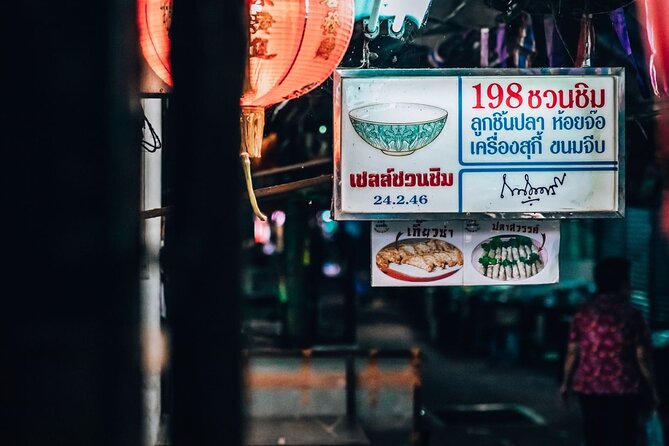
- Finishing Beneath Yaowarat’s Neon Signs
- Is $62 a Fair Price?
- Who Will Enjoy This Four-Hour Food Walk?
- Should You Book the Yaowarat Backstreets Tour?
- FAQ
- Where does the Bangkok food tour begin and end?
- How long does the tour last?
- How many people can join the group?
- What food is included?
- Can vegetarians, vegans, or people with allergies join?
- What should I bring?
Key Details Before You Book
- 15 or more tastings in 3.5 to 4 hours: This is a full meal spread, not a sample of two or three snacks.
- Eight or nine food stops: The route includes two or three Michelin-listed street food venues, depending on the departure.
- Small groups of up to eight: A second staff member can move ahead, arrange tables, and help the group avoid long waits.
- Chinese and Thai flavors meet: The walk explains how centuries of Chinese influence shaped noodles, stir fries, dumplings, pork dishes, and more.
- The route begins and ends at Shanghai Mansion Bangkok: You finish on neon-lit Yaowarat Road, with Chinatown already familiar enough to revisit.
- Pescatarians can join with limits: Expect to miss two or three tastings, while strict vegetarians and vegans should choose another food tour.
Starting Outside Shanghai Mansion Bangkok
The meeting point is outside Shanghai Mansion Bangkok in Chinatown. Look for a staff member in a black A Chef’s Tour polo shirt. Before the food begins, the group walks to a nearby café or bar on a side street, where you can use the restroom and get organized.
That small pre-tour pause matters. Yaowarat Road can feel like a wall of signs, traffic, cooking smoke, and people. Meeting at a clear landmark keeps the start simple, and gathering nearby gives the guide a chance to explain the plan before the group enters the lanes.
The tour is conducted in English and is limited to eight people. That is a useful number for a walking food tour. You can hear explanations more easily than you would in a large group, and the guide can answer questions about ingredients, cooking methods, and Thai food customs without turning every stop into a public announcement.
The second staff member is one of the cleverest parts of the setup. While the guide talks and leads, the assistant may go ahead to secure seats or prepare the next stop. This is especially helpful at busy food stalls and small restaurants, where a group of eight could otherwise split up or wait on the pavement.
More Food Tours in Bangkok
- Bangkok Backstreets Food Tour with 15+ Tastings
★ 5.0 · 1,926 reviews - Bangkok: Michelin Guide Street Food Tour by Tuk Tuk
★ 4.4 · 1,274 reviews - Old Siam Bangkok Food Tour with 15+ Tastings
★ 5.0 · 867 reviews
Why Chinatown Is the Right Place for This Tour
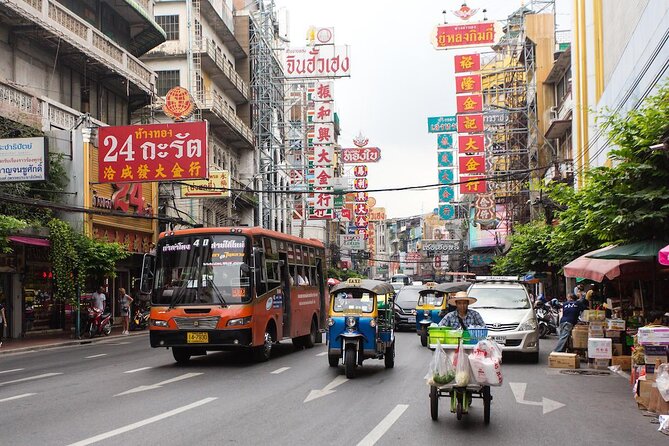
Yaowarat is not simply Bangkok’s Chinese quarter in a decorative sense. Chinese migration has shaped the city’s food for centuries, and that influence appears in dishes built around noodles, soy sauce, dumplings, braised pork, seafood, and quick wok cooking.
You get more from this route than a list of things to eat. The guide connects the dishes to the neighborhood and points out how Thai and Chinese cooking traditions overlap. That context helps you order with more confidence later in your trip. Instead of seeing an unfamiliar bowl or tray of dumplings as a gamble, you begin to recognize the ingredients and cooking styles.
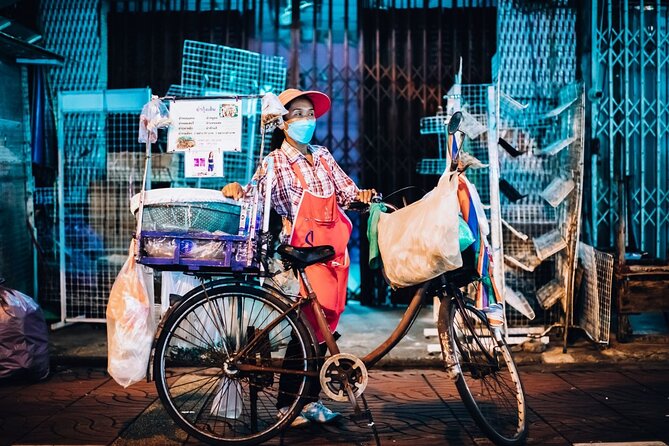
The route also leaves the main tourist flow. You still experience Yaowarat’s famous neon and street food energy, but you spend much of the walk in backstreets and alleys where tuk-tuks cannot go. Some of the best stops may be easy to miss if you are walking alone, especially when the entrance is just a small opening beside a crowded street.
Do not expect a quiet neighborhood stroll. Chinatown is busy, and the tour includes street crossings, narrow paths, and plenty of noise. Wear comfortable shoes, keep your belongings close, and bring an umbrella and clothing suited to the weather.
The First Tastings: Dumplings, Satay, and Small Plates
The food arrives in a steady rhythm. One early highlight is a crispy chive dumpling served with nam jim jaew, a Thai dipping sauce with a sharp, savory character. It is a good introduction to the tour’s larger theme: familiar Chinese-style food adjusted by Thai flavors.
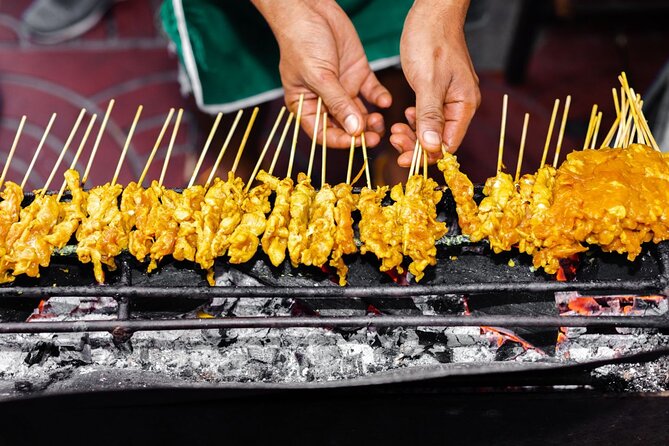
Satay follows with charcoal-grilled meat and a deep, savory sauce. The smoky cooking method gives the dish a direct, comforting flavor, while the accompanying sauce adds sweetness and spice. The portions are designed for sampling, but they are not always tiny. Pace yourself from the first stop.
That advice comes up again and again for a good reason. Fifteen tastings can sound like a collection of nibbles, but this is enough food to replace lunch or dinner. Some portions may be large enough that you need to make choices rather than politely finish everything.
A useful habit is to taste the dish before adding extra chili, vinegar, sugar, or sauce. One guide, Anya, was praised for encouraging the group to try each item in its original form first. That simple approach lets you notice how the cook intended the dish to taste, then adjust it afterward if you wish.
Braised Pork and the Slow-Cooked Side of Chinatown
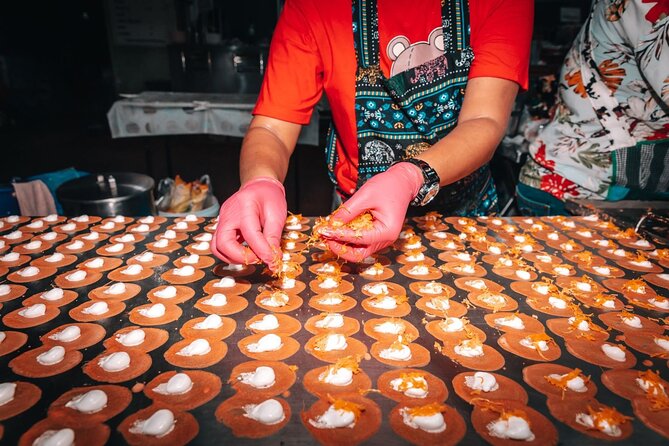
The tour shifts from quick snacks to more substantial food with slow-braised pork served with chopsticks. Braising gives the meat a softer texture and a darker, fuller flavor than the grilled dishes that come earlier.
This is the sort of stop that shows why a guided route can be useful. You may recognize pork, rice, and soy sauce, but the guide explains what you are tasting and how the dish fits into the local food scene. You also learn to spot dishes you may want to order again at another market or restaurant.
The combination of food and instruction was a major strength for guides such as Som, who also taught basic Thai phrases and shared local history. Ploy was praised for explaining the meaning of each dish and pointing out historic buildings along the way. The exact guide changes, but the best version of this tour feels like a conversation rather than a lecture.
That distinction matters in a crowded neighborhood. A guide who talks nonstop can hold up the group, and one recent participant felt the commentary sometimes stretched the tour. On the other hand, a quiet guide can be difficult to hear near busy streets. If you have trouble catching a detail, ask the guide to repeat it. With only eight people, there is room for that.
A completely different kind of day out:
- Bangkok: Damnoen Saduak Market and Maeklong Railway Market
★ 4.5 · 26,723 reviews - The Old Siam: Damnoen Saduak and Maeklong Railway Market
★ 4.5 · 10,992 reviews - From Bangkok: Ayutthaya Temples Guided Tour with Lunch
★ 4.7 · 10,535 reviews - Bangkok: Train Market & Floating Market with Boat Ride
★ 4.7 · 9,547 reviews
Dumplings, Seafood, and the Big Flavor Finish
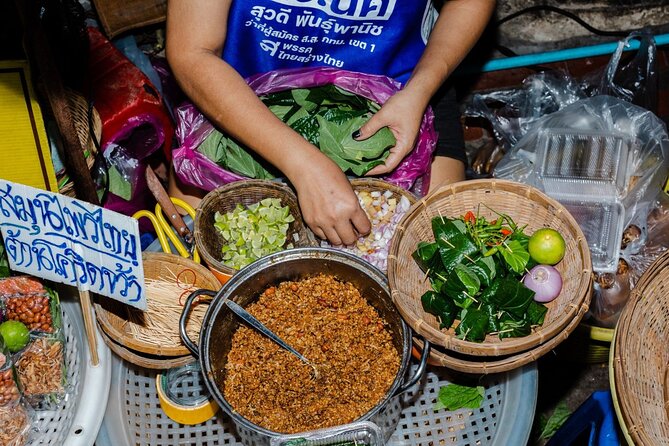
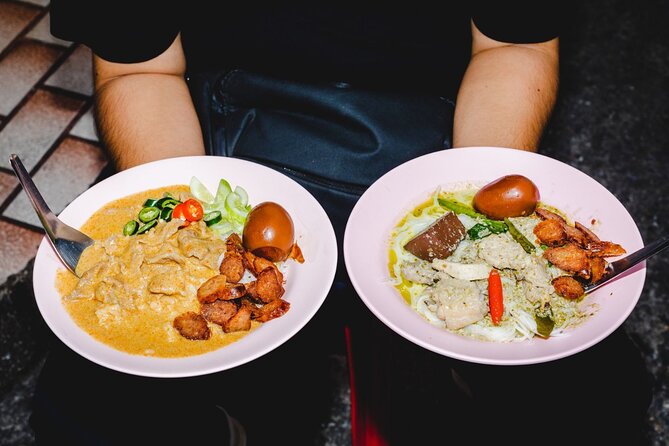
Later stops bring steamed shrimp dumplings and poh taek, a fragrant seafood soup. The soup provides a stronger, more aromatic change of pace after the grilled and braised dishes. Seafood lovers will find plenty to enjoy, and pescatarians can still eat well, though they will miss two or three meat-based tastings.
This is also where dietary planning becomes important. Thai food often relies on meat or seafood stock, fish sauce, shrimp paste, or sauces that are difficult to separate from the dish. Pescatarians are accommodated, but strict vegetarians and vegans are not suitable for this experience.
Mild gluten intolerance can be supported, but the tour is not recommended for celiac disease. Soy sauce appears in unavoidable places, and there is a risk of traces and cross-contamination. Severe allergies are also a concern because the group eats from working street food kitchens rather than controlled allergy-free facilities.
Tell the operator about dietary needs when booking. The team can adjust some tastings and will make sure you have enough to eat, but you should not expect every dish to have an alternative.
Michelin-Listed Street Food Without the Long Wait
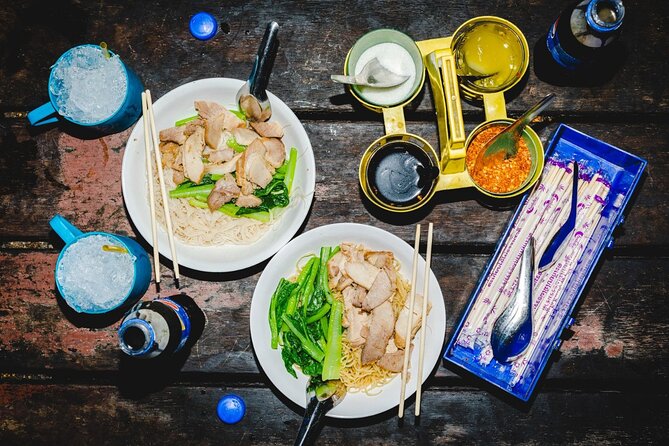
Two or three stops on the route are Michelin-listed street food venues. That label may attract attention, but the bigger value is the practical access. These are working food businesses, not formal restaurants built around tourism, and they can be difficult places for a group to enter without planning.
The assistant often goes ahead to secure space and prepare the order. That small bit of organization can save you from standing around while hungry, especially when the group reaches a popular venue at a busy time.
The Michelin mention should not lead you to expect a fine-dining experience. You will be sitting at casual venues, eating food made for speed and repeat local demand. The reward is seeing how street food can earn serious recognition while remaining informal and affordable.
The route uses eight or nine stops, so not every venue receives equal time. Some tastings are quick, while others allow more room for stories and conversation. The pace is generally efficient, though the guide’s speaking style can affect the timing.
Morning departures use the same general plan and many of the same stops as evening tours. A few places change because vendors have different operating hours during the day. If you want the full neon glow of Yaowarat, choose an evening departure. If you prefer a cooler start or need the rest of your evening free, the morning version still provides the main food experience.
The Surprise Dessert: Soy Sauce Ice Cream
The final sweet course may be the most memorable because it sounds so odd. Soy sauce ice cream is salty, creamy, and unusual without being a novelty for novelty’s sake. It gives the meal a playful finish and leaves you with a flavor combination you are unlikely to forget.
Do not save room only for dessert. The tour does not follow the usual pattern of a light appetizer, one main dish, and a planned sweet. Food arrives throughout the walk, and you need to keep enough appetite for the final stop.
That is one reason I would schedule this near the start of your Bangkok stay. The route gives you a map of Chinatown food, introduces dishes you might otherwise skip, and helps you recognize market areas that may be closed at night. Afterward, you can return to the vendors you liked or use the same ideas elsewhere in Thailand.
Several guides also share practical ordering tips, ingredient details, and Thai phrases. The best guides, including JT, Pukpik, Annie, and Paninee, were praised for making the food easy to understand while keeping the mood relaxed. Assistants such as Ninja, Butter, Pai, and Rainbow handled the quiet work that lets the tour feel smooth.
Finishing Beneath Yaowarat’s Neon Signs
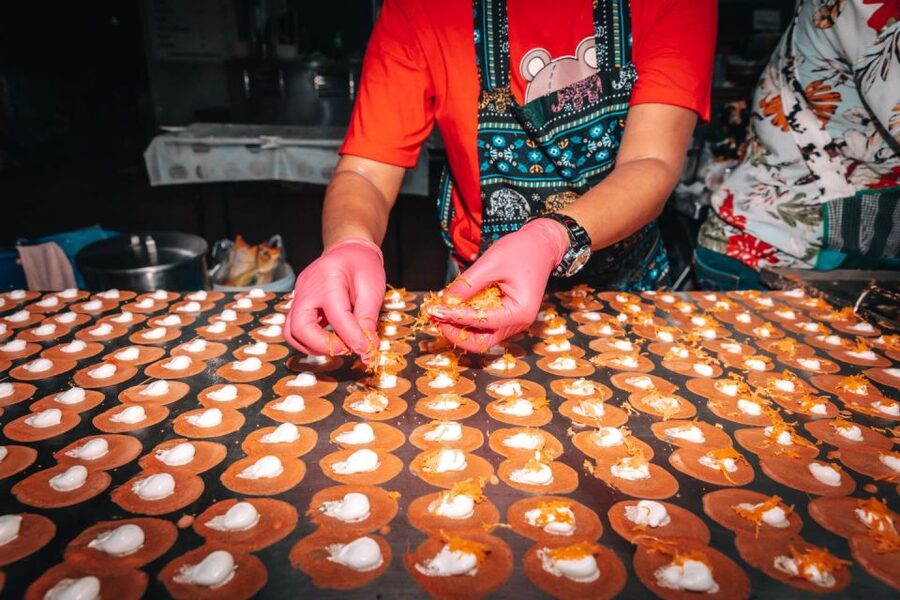
The walking loop ends back at Shanghai Mansion Bangkok, along Yaowarat Road. You finish with a full stomach and a better sense of how the side streets connect to the main road.
The ending is well chosen. You are not dropped in an unfamiliar neighborhood after the last tasting. Instead, you return to the same landmark where you started, now with enough orientation to continue exploring on your own.
Bring water, though bottled water is included. Wear shoes that can handle four hours of walking and standing. An umbrella is sensible in Bangkok, where weather can change quickly and shade is not guaranteed on the route.
The group size also affects the social side of the experience. Eight people is small enough for proper conversation but large enough to meet others. Several people enjoyed the chance to share dishes and compare reactions, while the compact group made it easier to stay together in crowded lanes.
Is $62 a Fair Price?
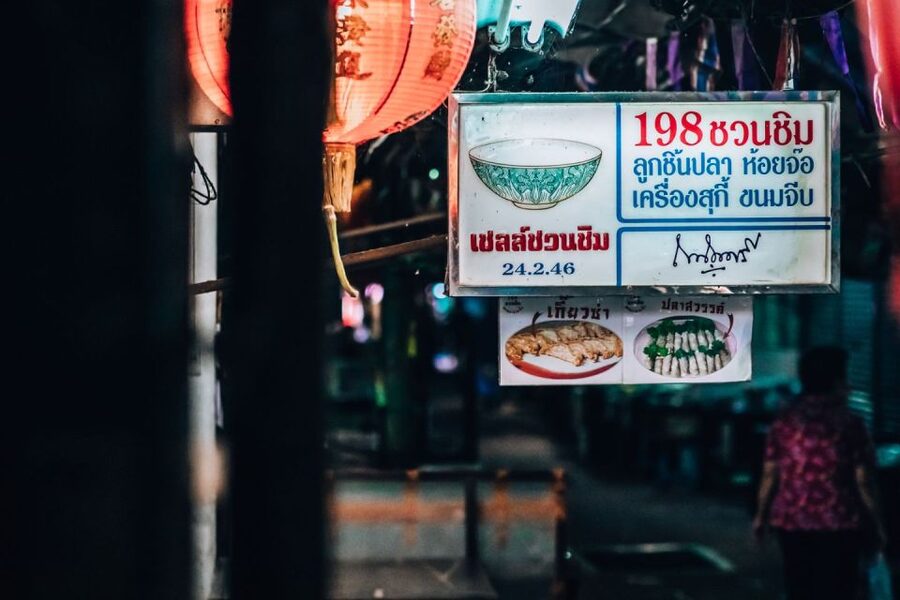
At $62 per person, this is not the cheapest way to eat in Bangkok. You can buy individual street food dishes for very little money, and independent eaters who already know Chinatown may prefer to choose their own stops.
The price makes more sense when you count what is included: at least 15 tastings, three and a half to four hours of guiding, bottled water, eight or nine stops, access to Michelin-listed venues, and a second staff member. You are also paying for selection and organization. Finding one good stall is easy enough. Finding a well-paced route with this many varied dishes and enough seating is harder.
I consider it strong value if you want to try widely, dislike food guesswork, or have only a short time in Bangkok. It is less attractive if you eat very little, want a relaxed sit-down dinner, or prefer to spend your money on full portions of just a few dishes.
Portion size is the main value trap. You may be full before the final tastings, so the tour works best when you treat it as your main meal and adjust your breakfast or lunch accordingly.
Who Will Enjoy This Four-Hour Food Walk?
I would recommend it most strongly to first-time Bangkok visitors, curious eaters, and anyone staying near Chinatown. It is especially useful on your first or second day because the guide helps you understand what to look for during the rest of your trip.
It also suits people who want local food without taking a gamble on every order. The guide explains ingredients before you eat, and the assistant helps the group reach busy venues without unnecessary delays.
You should think twice if you are vegan, vegetarian, or managing a serious allergy. The tour can support pescatarians, though they will have fewer tastings. It may also be a poor fit if you dislike walking in dense city traffic, loud streets, or food served in casual settings.
The 4.9 rating from 2,880 reviews reflects a clear pattern: the food selection, guide quality, and small-group organization earn the strongest praise. The most useful practical criticism is just as clear: pace yourself, stand close enough to hear, and allow a little flexibility if your guide enjoys telling long stories.
Should You Book the Yaowarat Backstreets Tour?
Book it if you want a guided introduction to Bangkok’s Chinese-Thai food culture and you are willing to let the route choose your meal. The 15-plus tastings make this more than a standard street food walk, while the small group and two-person team solve many of the problems that come with eating at crowded Chinatown venues.
I would choose an evening departure for the atmosphere, or a morning departure if you want the same broad food focus with a few daytime substitutions. Schedule it early in your stay, arrive hungry, and do not plan another substantial meal afterward.
Skip it if dietary restrictions make Thai meat and seafood dishes unsafe, or if you prefer slow dining and full control over every order. For everyone else, $62 buys a very full introduction to Yaowarat, including several places you would likely miss on your own.
FAQ
Where does the Bangkok food tour begin and end?
The tour begins outside Shanghai Mansion Bangkok in Chinatown and returns there after the walking route along Yaowarat Road.
How long does the tour last?
The experience lasts about four hours, with food tastings taking place over roughly three and a half to four hours.
How many people can join the group?
The group is limited to eight participants. A licensed guide and an assistant lead the experience.
What food is included?
You receive 15 or more tastings at eight or nine stops. Possible dishes include crispy chive dumplings, satay, slow-braised pork, shrimp dumplings, poh taek seafood soup, and soy sauce ice cream. The route also includes two or three Michelin-listed street food venues.
Can vegetarians, vegans, or people with allergies join?
The tour is unsuitable for strict vegetarians and vegans, as well as people with severe food allergies. Pescatarians can be accommodated but will miss two or three tastings. Mild gluten intolerance may be supported, but the tour is not advised for people with celiac disease.
What should I bring?
Bring comfortable shoes, an umbrella, and clothing suited to the weather. Bottled water is included, but hotel pickup, hotel drop-off, and alcoholic drinks are not.
Just added in Bangkok
- Wonderful Pearl Dinner Cruise★ 3.5 · 27 reviews
- re:leaf spa and massage★ 4.0 · 10 reviews
- White Orchid Sunset Dinner Cruise Calypso Ladyboy Cabaret Show★ 4.0 · 10 reviews
- Yoga in the Park Thailand★ 5.0 · 12 reviews
- Visit Wat Pho and Wat Arun with Local Expert★ 4.0 · 14 reviews
- Visit temples in and around Bangkok with a former monk of 10 years★ 5.0 · 30 reviews
- 3-Hour Bangkok Walking Tour: Wat Pho and Wat Arun★ 5.0 · 102 reviews
- Miracle Bangkok Airport Lounges – Relax Before You Fly★ 3.0 · 32 reviews
Food Tours, compared.
Southern Flavors Phuket Food Tour with 15+ Tastings
Read our review →
Bangkok Backstreets Food Tour with 15+ Tastings
Read our review →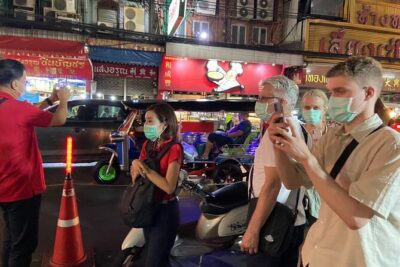
Bangkok Authentic Tasting Thai-Chinatown Walking Food Tour
Read our review →
Small-Group Chiang Mai Evening Street Food Tour
Read our review →
Tuk Tuk Adventure Chinatown Michelin Food & Temples
Read our review →
Bangkok Tuk-Tuk Tour by Night with Chinatown Street Food Meal
Read our review →Browse the lists this tour appears in