
Reviewed · WALKING TOURS
Bangkok: Chinatown & Taladnoi Street Art Guided Walking Tour
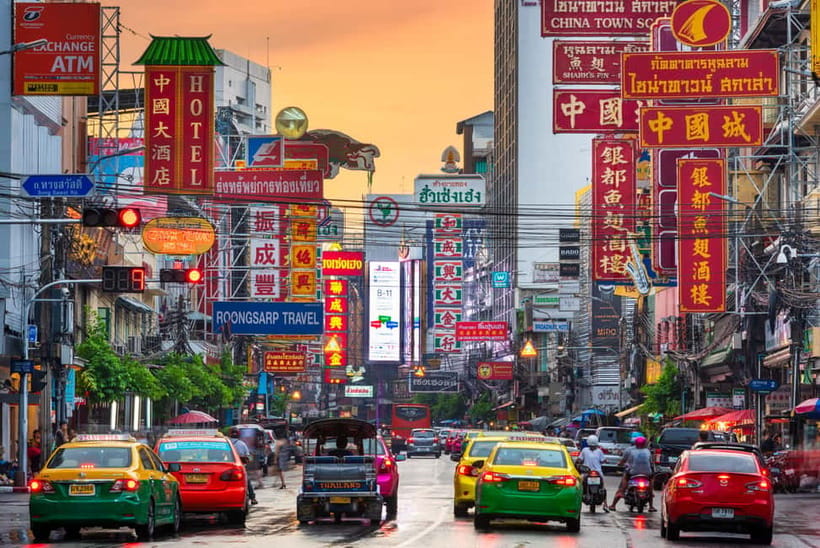
Chinatown rewards curious walkers. I like the way this four-hour tour moves beyond Yaowarat’s food stalls into temples, old alleys, shrines, and Talad Noi’s street art. I also like the finish at River City Bangkok, where you can continue beside the Chao Phraya River instead of being dropped back at the starting point. The main consideration is the walking: Bangkok’s heat, uneven lanes, and busy markets can make this tiring.
Guides such as Jenny, Nok, Mai, Jib, and Mariyah have earned especially warm praise for clear explanations, patience, and flexibility. The optional hotel pickup adds convenience, but the MRT Wat Mangkon meeting point is simple and usually the better-value choice. At $19 per person, this is a strong deal if you want local context rather than a quick parade of famous sights.
In This Review
- Key points at a glance
- Why this $19 Chinatown walk earns its keep
- Starting at MRT Wat Mangkon Exit 3
- Wat Mangkon and the spiritual side of Chinatown
- Markets, incense, and daily commerce
- Tian Fah Foundation Hospital and the Golden Buddha story
- Wat Pathum Khongkha and quieter streets
- Talad Noi’s ironwork alleys and old craft traditions
- Community museum, street art, and small shrines
- Ending at River City Bangkok
- What the guides add to the walk
- Practical drawbacks and who should book
- Should you book the Chinatown and Talad Noi walk?
- FAQ
- How long does the Bangkok Chinatown and Talad Noi tour last?
- Where does the tour begin?
- Where does the tour finish?
- Is food included?
- What should I wear and bring?
- Is the tour suitable for wheelchair users or pregnant women?
Key points at a glance
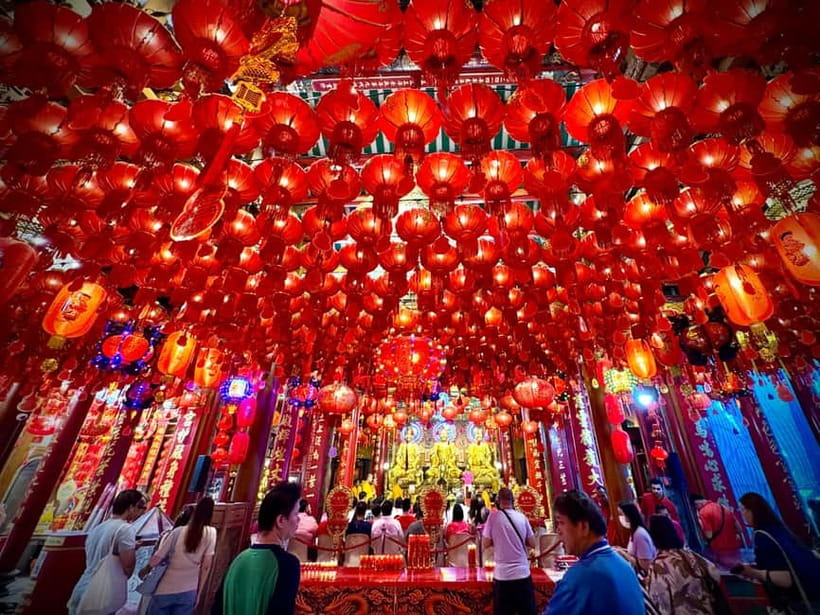
- Wat Mangkon Kamalawat: Begin at Bangkok’s major Chinese Buddhist temple and get an introduction to the spiritual life of Chinatown.
- Morning market route: Walk among food, incense, shops, and everyday commerce rather than seeing Chinatown only from the main road.
- Golden Buddha story: Learn why Wat Traimit and its famous solid-gold image matter to the city’s Thai-Chinese story.
- Talad Noi ironwork lanes: See the old neighborhood where Chinese craftsmen once made metal tools.
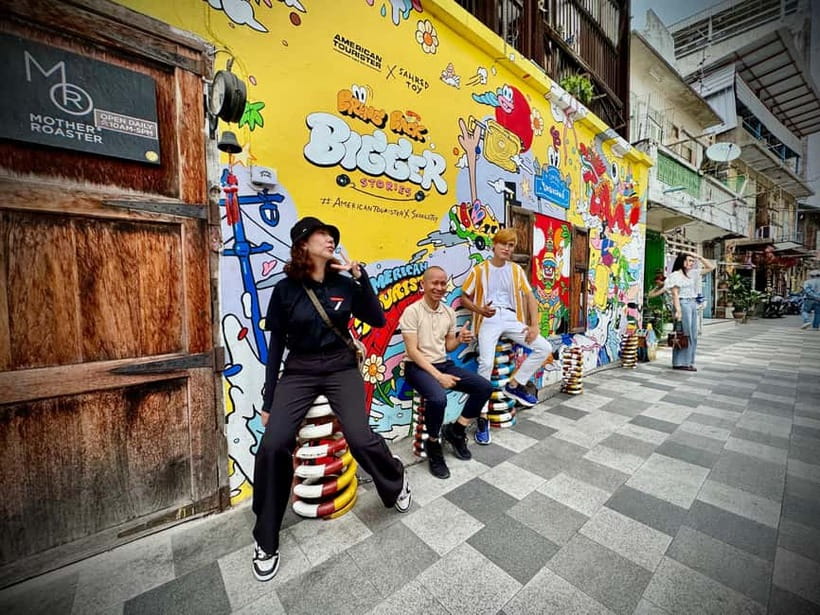
- Street art and small shrines: Talad Noi’s painted walls and tucked-away religious sites give the walk its visual spark.
- River City finish: End by the Chao Phraya with choices for lunch, art, shopping, or a boat ride.
Why this $19 Chinatown walk earns its keep
At $19, this is not a grand sightseeing package with meals, transport, or entry fees bundled in. It is a guided neighborhood walk, and that is exactly where the value lies. You pay for a licensed English-speaking guide, four hours of local interpretation, and a route that connects well-known places with corners you could easily pass without understanding.
I consider that a fair price for Bangkok, especially because Chinatown can feel confusing on a first visit. Streets change character quickly. A temple entrance may sit beside a hardware shop, a market lane may lead to an old shrine, and an apparently ordinary building may carry an important piece of Chinese community history.
The score is 4.7 from 36 ratings, with the strongest praise focused on the guides. Jenny is repeatedly described as friendly, clear, and patient. Nok receives credit for explaining Thai-Chinese culture, trade, migration, and commerce. Mai is praised for adapting the route to personal interests, while Jib made a private hotel-pickup tour feel smooth and well organized.
That pattern matters more than the number alone. This tour depends heavily on the person leading it. A good guide can turn a wall, shrine, or market stall into part of a much larger story. The available feedback suggests that the company’s guides are its main strength.
More Walking Tours in Bangkok
- Bangkok: City Highlights Temple and Market Walking Tour
★ 4.5 · 3,990 reviews - Bangkok: Grand Palace and Wat Phra Kaew Guided Walking Tour
★ 4.4 · 2,417 reviews - Bangkok: Wat Pho and Wat Arun Guided Walking Tour
★ 4.6 · 1,720 reviews
Starting at MRT Wat Mangkon Exit 3
The standard meeting point is MRT Wat Mangkon Exit 3. This is a practical starting place because you begin right in the Chinatown area rather than spending the first part of the morning in a vehicle.
If you choose the meeting-point option, arrive ready to walk. The tour does not include meals, and the route lasts about four hours. A bottle of water is included, but I would still carry extra water, especially during Bangkok’s hotter months.
Hotel pickup is available for an extra charge. You are asked to wait in your hotel lobby at least five minutes before the scheduled time, and the guide will hold a sign with your name. One booking included a private pickup in a clean car with a driver, while another experienced a one-hour delay caused by a failed pickup. That tells you two things: the service can be convenient, but the MRT option gives you more control over the morning.
Wear light clothing, comfortable walking shoes, a hat, and sunscreen. This is not a polished indoor sightseeing route. You will be outside, moving through working neighborhoods, and some surfaces may be less even than a normal pavement.
Wat Mangkon and the spiritual side of Chinatown
The first major stop is Wat Mangkon Kamalawat, one of the key centers of Chinese spiritual life in Bangkok. This gives the tour a strong opening because it places Chinatown in a religious setting before you get swept into markets and traffic.
You can expect the guide to explain the temple’s role and the Chinese traditions connected with it. The value here is not only the architecture. It is learning why this part of Bangkok feels different from the city’s Thai royal temples and how Chinese religious practice became part of Bangkok life.
The temple can be busy, and the experience is not designed as a silent, private visit. You are walking with a guide and moving through a living place of worship. Dress with basic temple respect and be prepared to follow any instructions about where to walk or when photography is suitable.
From here, the route heads toward a morning market. This transition is one of the tour’s best features. Instead of treating the temple as an isolated monument, the walk shows how religion, food, trade, and neighborhood life sit close together.
Markets, incense, and daily commerce
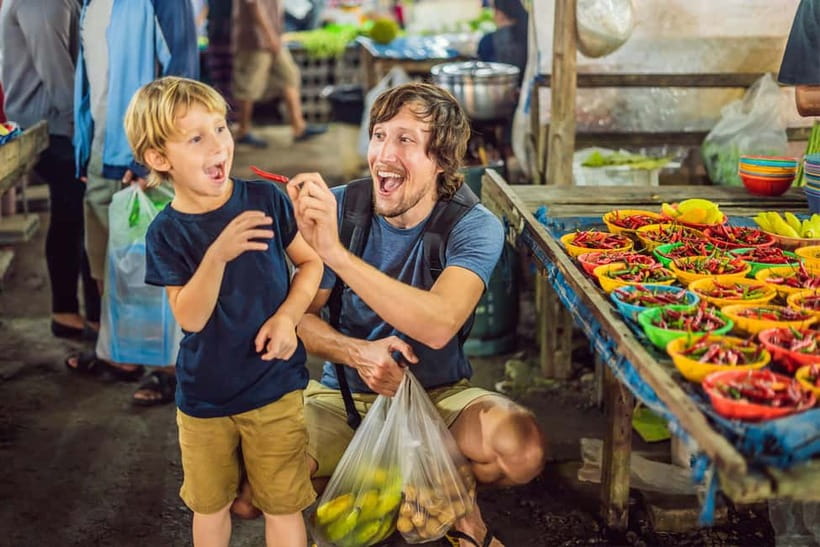
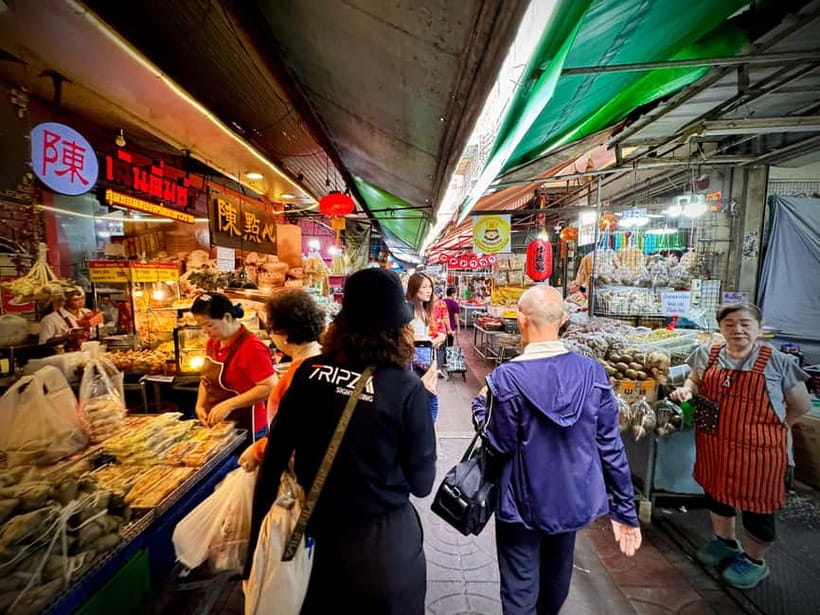
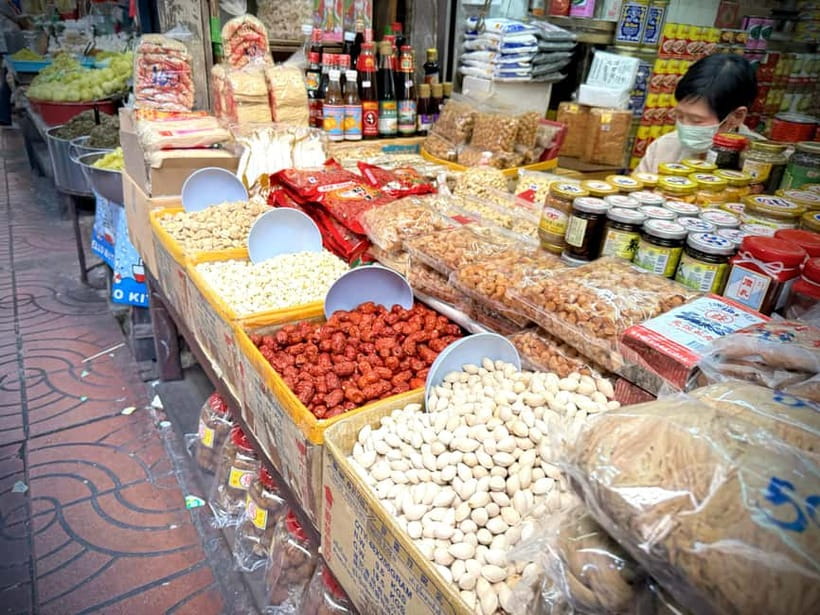
The market section brings a different kind of energy. You will see food, incense, shops, and residents going about ordinary business. The aim is not simply to sample a long list of dishes, since meals are not included. It is to understand how Chinatown works as a local district.
Your guide can help you read the scene, explain products, and point out details that are easy to miss when you walk alone. One visitor specifically praised a guide for helping in the market, while another enjoyed receiving traditional snacks along the way. Those touches are not guaranteed, so do not book this expecting a food tour, but they show how a flexible guide can make the route feel personal.
Market lanes can be crowded and narrow. Keep your belongings close, stay aware of scooters and carts, and do not expect to move at a fast sightseeing pace. The reward is a closer look at the neighborhood’s working side, not a tidy procession between monuments.
A completely different kind of day out:
- Bangkok: Damnoen Saduak Market and Maeklong Railway Market
★ 4.5 · 26,723 reviews - The Old Siam: Damnoen Saduak and Maeklong Railway Market
★ 4.5 · 10,992 reviews - From Bangkok: Ayutthaya Temples Guided Tour with Lunch
★ 4.7 · 10,535 reviews - Bangkok: Train Market & Floating Market with Boat Ride
★ 4.7 · 9,547 reviews
Tian Fah Foundation Hospital and the Golden Buddha story
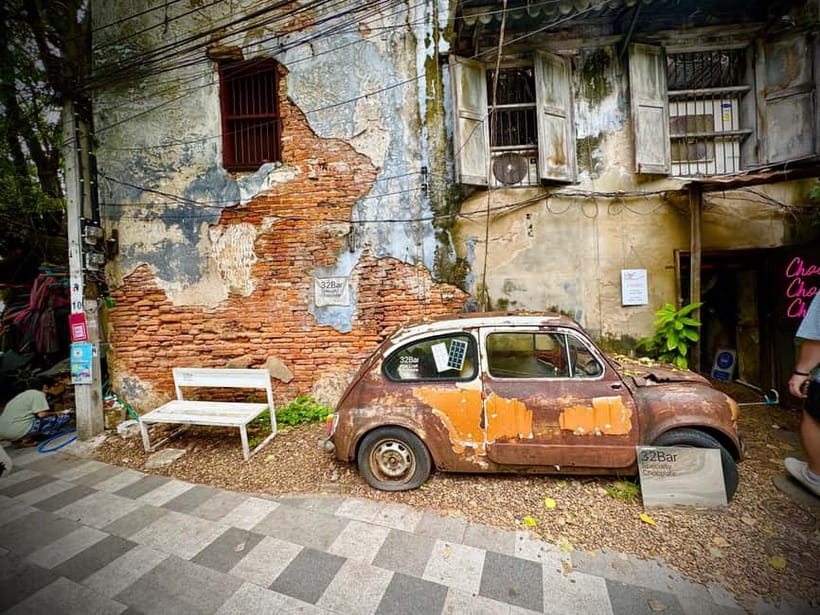
The Tian Fah Foundation Hospital adds an important social chapter to the walk. It was Thailand’s first Chinese charitable hospital, and its presence helps explain the community networks that supported Chinese immigrants and local residents.
This is the sort of stop that makes a guided walk more useful than a photo tour. You may not remember every date, but you will come away with a clearer sense of how Chinatown was built through mutual aid, commerce, faith, and migration.
The story of the Golden Buddha at Wat Traimit follows naturally. The temple is famous for its solid-gold Buddha image, and the guide explains the unusual story connected with its discovery. The point is not just to admire a valuable object. The tale shows how historical events, changing neighborhoods, and religious objects can intersect in surprising ways.
The exact balance of time at Wat Traimit may depend on the group and the guide. The Chinatown section is described as about two and a half hours, with walking, sightseeing, photo stops, and visits along the way. You should expect a broad introduction rather than a long, specialist museum lecture.
Wat Pathum Khongkha and quieter streets
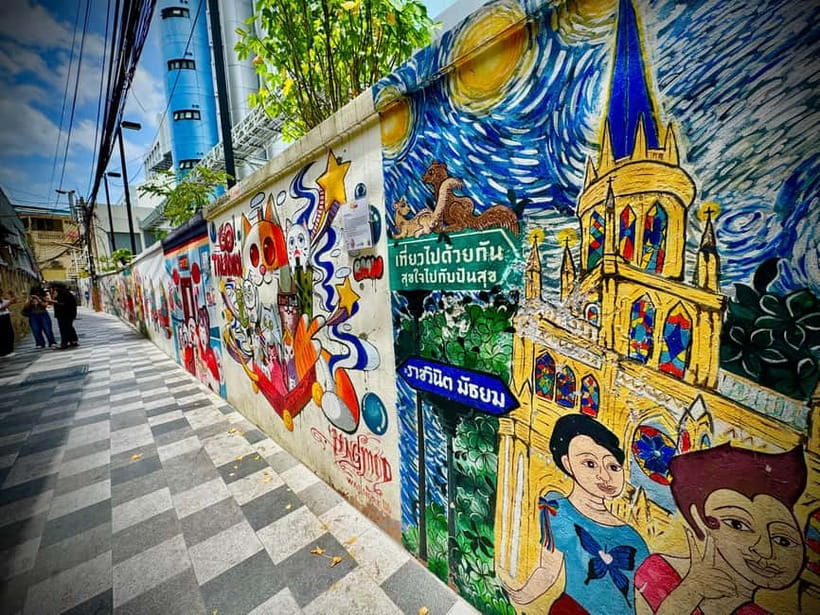
Wat Pathum Khongkha provides a pause from Chinatown’s tighter lanes. It is described as peaceful and connected with royal history, offering a calmer setting before the walk moves into Talad Noi.
I like this change of pace. Four hours in markets and busy streets could become tiring, so a quieter temple gives you room to look around and listen. It also prevents the tour from becoming a single-note food-and-shopping walk.
The tour is strongest when it contrasts places like this with the commercial streets. Bangkok is not one continuous mood. A few turns can take you from incense and shop signs to a quiet temple courtyard, then into old industrial lanes. The guide’s commentary helps connect those changes.
Talad Noi’s ironwork alleys and old craft traditions
Talad Noi is where the experience becomes more unusual. The neighborhood is linked with Chinese craftsmen who once forged metal tools, and the route passes through historic ironworks alleys.
This is not a restored theme park. The appeal comes from seeing an old working district as part of present-day Bangkok. You might find aging buildings, small workshops, narrow passages, and signs of newer creative life layered over older trade routes.
The guide’s explanation is especially useful here. Without context, an alley can look like a random shortcut. With the story of Chinese migration, skilled labor, and commerce, it becomes a clue to how Talad Noi developed.
The walk through Talad Noi is also listed as about two and a half hours, including a break, photo stops, free time, and guided sightseeing. That does not mean the tour lasts five hours. Chinatown and Talad Noi are the two main portions of the four-hour experience, with the exact timing adjusted as the group moves.
Community museum, street art, and small shrines
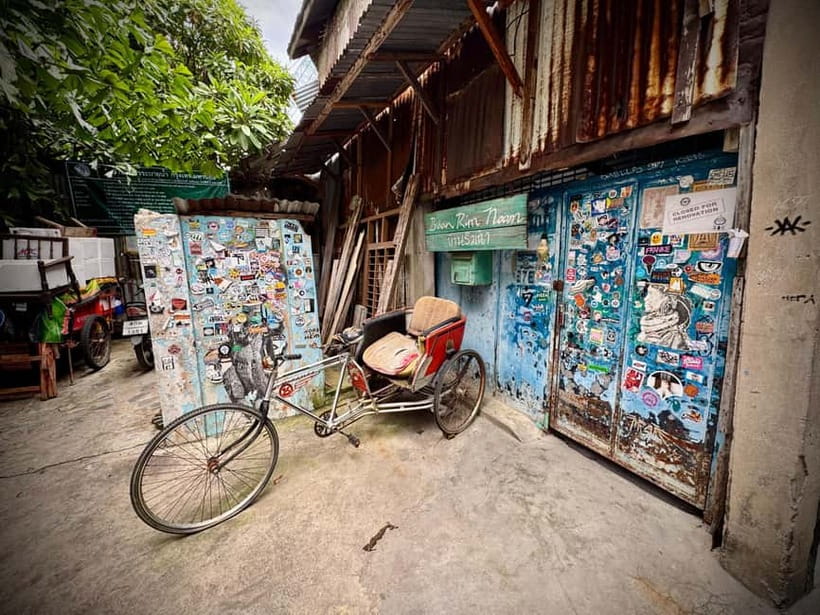
The Talad Noi Community Museum offers a more direct way to understand the neighborhood. It gives the guide a place to explain local families, work, community life, and the changes that have shaped the area.
Then come the painted walls and artistic backstreets. Street art gives the walk plenty of visual interest, but the best part is how it sits beside older buildings and shrines. You are not simply collecting colorful photographs. You are seeing a neighborhood where old religious customs, family businesses, and newer creative projects share the same lanes.
The small shrines are easy to overlook. Some are tucked between older buildings, and their modest scale makes them more rewarding to find with a local guide. Ask questions as you go. The guides most praised for this tour are not only good at reciting facts. They are also described as attentive, sociable, and willing to adapt.
The route can work well for families if children are comfortable walking. One family praised Jenny for explaining things clearly, staying patient, and keeping the mood light. Still, young children may tire in the heat, and the tour is not suitable for pregnant women or wheelchair users.
Ending at River City Bangkok
The final stop is River City Bangkok on the Chao Phraya River. This is a smart finish because the tour ends with choices rather than sending you back to the starting point.
You can stop for a riverside lunch, continue exploring the area, look around River City, or arrange a scenic boat ride. The tour itself does not include meals or personal expenses, so plan to pay separately for anything you do after the walk.
The riverside ending also helps you shape the rest of the day. If Chinatown has used up your energy, sit down for lunch. If you still want more sightseeing, the river gives you an easy next direction. Ask your guide for advice before parting, as several people specifically valued practical suggestions for continuing their Bangkok visit.
What the guides add to the walk
This experience rises or falls on the guide. The strongest comments focus on clear English, warmth, patience, and the ability to adjust the route.
Jenny is praised for explaining culture and history clearly, including during family visits. Nok is singled out for giving a strong view of Thai-Chinese culture and the history of trade, commerce, and immigration. Mai adapted the walk to a visitor’s preferences, while Mariyah was praised for being friendly and helpful even while training.
Jib’s private pickup experience included four hours of explanations about temples and the surrounding area. Another booking with Toto and an additional guide was described as smooth and reassuring. You may not receive the same guide, and a private group is not guaranteed, but these examples show what the best version of the experience offers.
A good tactic is to tell your guide early what interests you most. Ask for more temple detail, family history, markets, street art, or local trade. The route already has variety, and a flexible guide can give more attention to the parts you care about.
Practical drawbacks and who should book
This is a walking tour in Bangkok’s heat. You will not have air conditioning between stops, and the market and alley sections may feel cramped. Comfortable shoes matter more than stylish ones.
It is also not a food-inclusive experience. You will see plenty of food and may have chances to buy snacks, but you should bring money if you want to eat along the way. Personal spending is not included.
I would recommend it most strongly to first-time Bangkok visitors who want context, photographers who enjoy old lanes and wall art, and anyone interested in Chinese migration and neighborhood life. It also suits people who prefer a small-area walking route instead of spending half a day in a car.
You may want something else if you dislike walking, need step-free access, want a formal museum tour, or expect a full meal program. The experience is also less suitable if your priority is only Bangkok’s biggest landmarks. It includes famous places, but its real purpose is to show how the spaces between those landmarks fit together.
Should you book the Chinatown and Talad Noi walk?
Book it if you want Bangkok to make more sense. For $19, you receive four hours of guided context, a bottle of water, temple visits, market streets, a community museum, Talad Noi art, old craft lanes, and a useful riverside finish.
Choose the MRT meeting point for the clearest value and most reliable start. Pay extra for hotel pickup only if convenience matters more than cost. Bring water, sunscreen, a hat, and shoes you can trust.
The biggest reason to book is the guide-led interpretation. Jenny, Nok, Mai, Jib, Mariyah, and others have been praised for making the walk friendly, clear, and flexible. If you are ready for heat and steady walking, this is an affordable way to see Chinatown as a living neighborhood rather than a string of postcard stops.
FAQ
How long does the Bangkok Chinatown and Talad Noi tour last?
The tour lasts four hours. The Chinatown and Talad Noi portions each cover roughly two and a half hours of visits, walking, sightseeing, and related stops, with the overall schedule organized across the full experience.
Where does the tour begin?
The standard meeting point is MRT Wat Mangkon Exit 3. Hotel pickup is also available as an optional paid service.
Where does the tour finish?
The walk ends at River City Bangkok on the banks of the Chao Phraya River.
Is food included?
No. Meals and personal expenses are not included. A bottle of water is included.
What should I wear and bring?
Wear comfortable shoes and light clothing. Bring a hat, sunscreen, and a water bottle to help you stay comfortable in Bangkok’s heat.
Is the tour suitable for wheelchair users or pregnant women?
No. The experience is listed as unsuitable for pregnant women and wheelchair users.
Just added in Bangkok
- re:leaf spa and massage★ 4.0 · 10 reviews
- Wonderful Pearl Dinner Cruise★ 3.5 · 27 reviews
- White Orchid Sunset Dinner Cruise Calypso Ladyboy Cabaret Show★ 4.0 · 10 reviews
- Yoga in the Park Thailand★ 5.0 · 12 reviews
- Visit Wat Pho and Wat Arun with Local Expert★ 4.0 · 14 reviews
- Visit temples in and around Bangkok with a former monk of 10 years★ 5.0 · 30 reviews
- 3-Hour Bangkok Walking Tour: Wat Pho and Wat Arun★ 5.0 · 102 reviews
- Miracle Bangkok Airport Lounges – Relax Before You Fly★ 3.0 · 32 reviews
Walking Tours, compared.
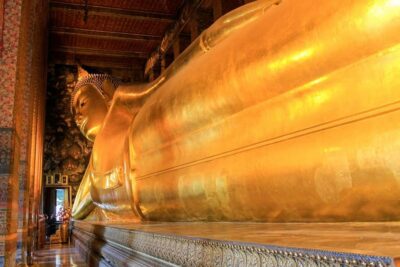
City Highlights Temple and Market Walking Tour
Read our review →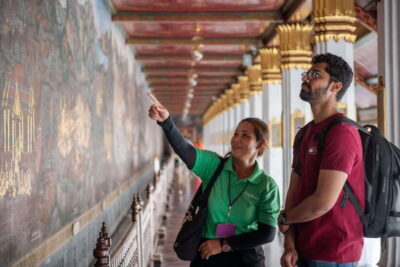
Grand Palace and Wat Phra Kaew Guided Walking Tour
Read our review →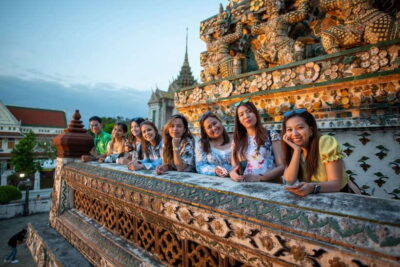
3 Hour Old City and Temples Guided Walking Tour
Read our review →
Discover a Taste of Chinatown – 2 Hr Walking Tour
Read our review →Browse the lists this tour appears in