
Reviewed · FOOD TOURS
Bangkok: Chinatown Food Tour with Michelin Food Stalls
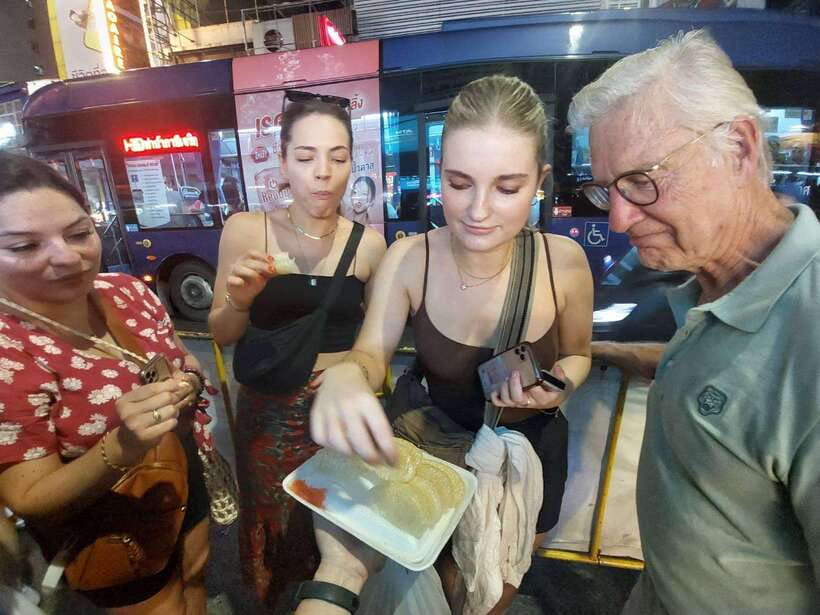
Come hungry, leave happily full. This three-hour evening walk through Yaowarat turns Bangkok Chinatown into a moving dinner table, with more than 10 tastings, local food stalls, and a Michelin-recognized stop along the way. I especially like the small group of no more than eight people, which makes crossing crowded streets and hearing the guide much easier. I also like that the tour adds food history, not just food samples, so you learn how Chinese immigration shaped Bangkok’s eating culture.
The main caution is simple: there is a lot of walking, and the food is not designed for vegans or vegetarians. Children under 10 and wheelchair users are not suited to this outing, either. Dietary needs may be accommodated with advance notice, but you should explain them clearly before booking.
In This Review
- Key points at a glance
- Why Yaowarat is such a good setting for a food tour
- Starting at Wat Mangkon Kamalawat
- Thai-Chinese street food, one stop at a time
- The Michelin-recognized stop
- The stories behind Bangkok’s Chinatown food
- Evening crowds and the walking pace
- How the guides shape the experience
- Dietary limits and who should book
- Is $36 good value?
- Who will enjoy this most?
- Should you book the Yaowarat food tour?
- FAQ
- How long does the Bangkok Chinatown food tour last?
- Where does the tour begin?
- Where does the tour finish?
- How many food tastings are included?
- Does the tour include a Michelin-recognized food stall?
- Is the tour conducted in English?
- How large is the group?
- Can dietary restrictions be accommodated?
- Is hotel pickup included?
- Is the tour suitable for children and wheelchair users?
Key points at a glance
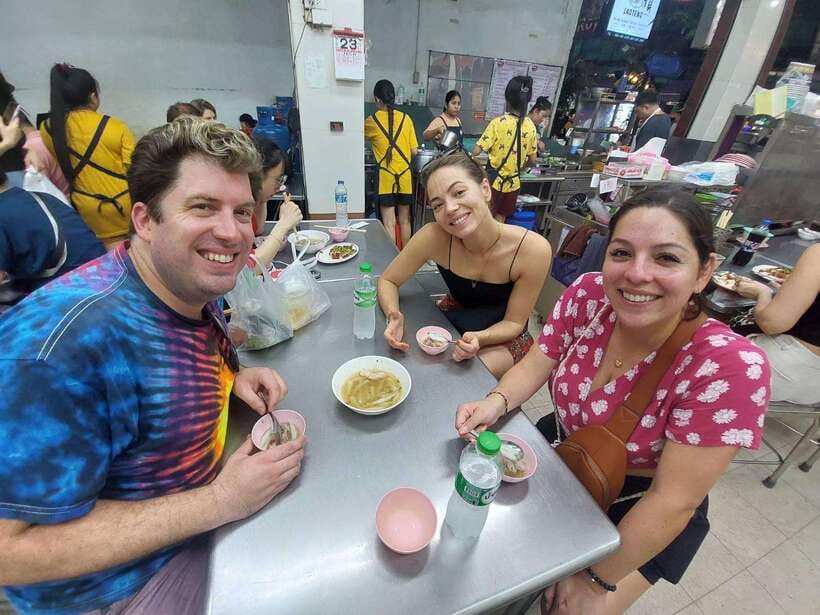
- More than 10 tastings: Expect a substantial evening meal rather than a few token bites.
- Michelin-recognized food stops: The route includes at least one celebrated stall, and some outings include two Michelin-recognized vendors.
- A genuinely small group: With a maximum of eight participants, the guide can keep the pace personal.
- Excellent guides: Peak, Eve, Na, Sunday, K, and other guides are praised for warmth, humor, food explanations, and careful group management.
- A Chinatown introduction: The walk begins at Wat Mangkon Kamalawat and finishes at the Chinatown Gate, adding a useful sense of place.
- Bring an appetite: Portions can be generous, and several people finished completely full.
Why Yaowarat is such a good setting for a food tour
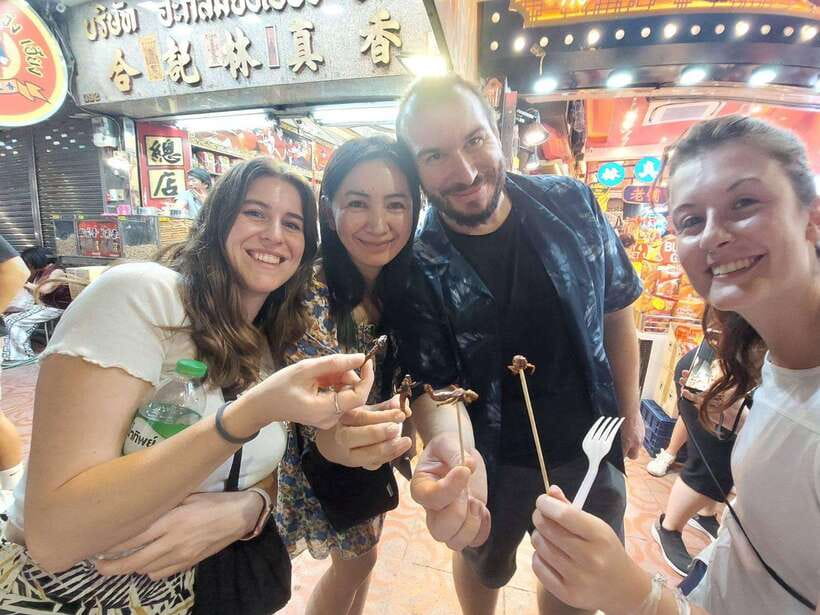
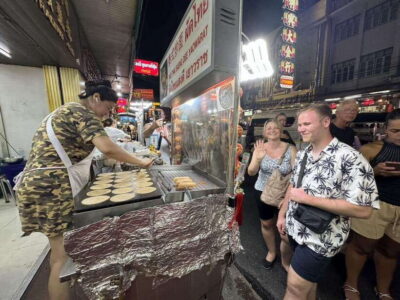
Bangkok’s Chinatown is not a quiet museum quarter. Yaowarat works at full volume in the evening, with glowing signs, narrow lanes, food carts, small restaurants, pedestrians, and the steady hiss of cooking. The setting can feel confusing at first, especially when you are trying to decide which stall deserves your attention.
That is where a guided tour earns its keep. You do not have to study menus, guess at unfamiliar dishes, or wonder if you have walked past the best stand. The guide chooses the stops and explains what you are eating. For a first evening in Chinatown, that can save both time and stomach space.
The meeting point is Wat Mangkon Kamalawat, also known as Wat Leng Noei Yi. This gives the tour a useful cultural opening rather than dropping you straight beside a random food cart. From there, the route works through Chinatown for about three hours and ends at the Chinatown Gate.
You should think of this as a walking meal with a neighborhood lesson attached. The food is the star, but the streets provide the setting and the guide supplies the connections between dishes, families, Chinese influence, and Bangkok’s changing food culture.
More Food Tours in Bangkok
- Bangkok: Backstreets Food Tour with 15+ Tastings
★ 4.9 · 2,880 reviews - Bangkok Backstreets Food Tour with 15+ Tastings
★ 5.0 · 1,926 reviews - Bangkok: Michelin Guide Street Food Tour by Tuk Tuk
★ 4.4 · 1,274 reviews
Starting at Wat Mangkon Kamalawat
Meeting at Wat Mangkon Kamalawat helps you get your bearings before the food begins. The temple is one of Chinatown’s important landmarks, and starting here makes sense because Chinese religious and cultural traditions remain part of Yaowarat’s identity.
Your guide will then lead the group into the surrounding streets. The supplied details do not name every stall or dish on every departure, so you should not expect a fixed menu with identical stops each night. The overall pattern is clear, though: a series of small food businesses, street vendors, and recognized stops linked by an evening walk.
This first section is useful for orientation. Chinatown is easy to enjoy once you understand its basic layout, but less easy when you are hungry, surrounded by signs you cannot read, and faced with dozens of choices. The guide removes that first layer of guesswork.
Guides such as Eve and Na are praised for explaining recipes and food traditions in detail. Peak is repeatedly described as funny, attentive, and good at building a relaxed mood. K has been praised for keeping a group together on a very busy night, while Ne is noted for explaining dishes patiently and answering questions without rushing.
Those details matter. A food tour can quickly become a queue from one stall to another. Here, the guide’s personality and pacing help turn it into a social evening rather than a checklist.
Thai-Chinese street food, one stop at a time
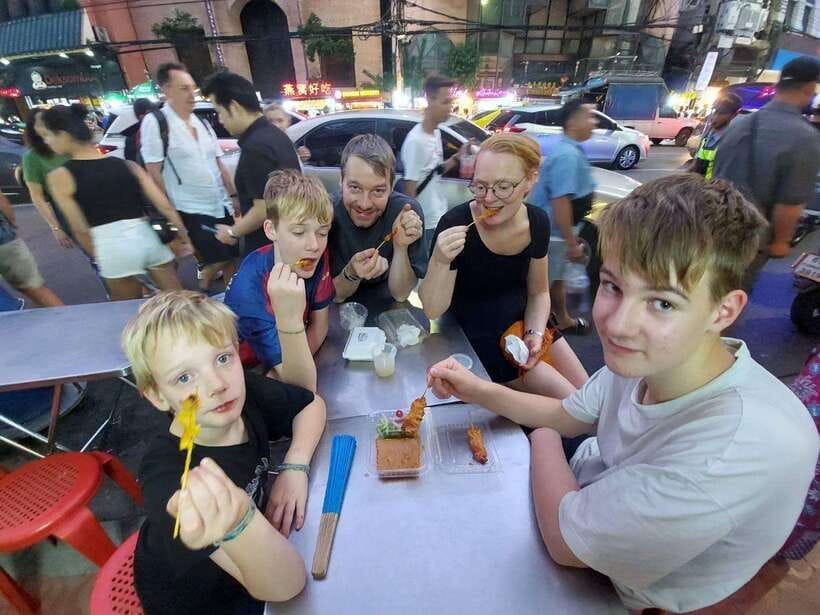
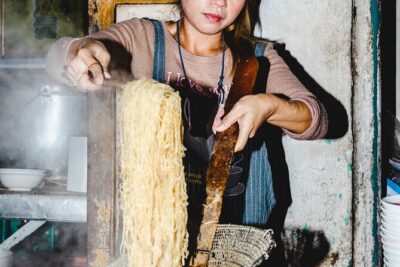
The tastings cover a broad range of Thai-Chinese food. You may try crispy spring rolls, barbecued meats, steamed dumplings, stir-fried dishes, noodle soups, seafood, sweet buns, local-style pancakes, Chinese desserts, and drinks from a tea stall.
The exact order can vary, but the variety is the point. You are not eating ten versions of the same noodle dish. You are getting a quick tour of different textures and cooking methods, from crisp and fried to soft, steamed, soupy, sweet, and spicy.
The quantity is one of the tour’s strongest features. Several people counted 13 or even more than 15 dishes, while the advertised minimum is 10 tastings. Portions may be larger than you expect, too. One practical rule applies: do not arrive after a large dinner. You will enjoy the route much more with room left for the later stops.
The tour also makes unfamiliar food less intimidating. The guide can identify dishes, explain ingredients, and help you decide how to try them. That is valuable if you are not used to Thai spice, Chinese-influenced recipes, or eating from crowded roadside stalls.
Still, do not expect every bite to be daring or unusual. One person specifically found the food delicious but fairly familiar. The strength here is range, access, and guidance, not a promise that every tasting will challenge your idea of food.
The shared nature of the experience is worth noting. You may eat from common plates or use your hands for some dishes, so bringing hand sanitizer or wipes is sensible. Bottled water is included, but extra drinks and personal purchases are not.
The Michelin-recognized stop
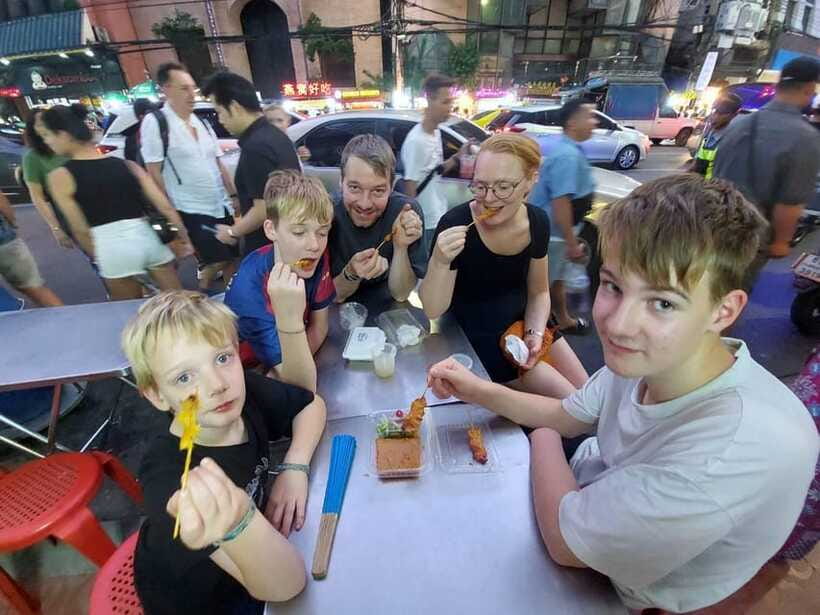
A Michelin-recognized food stall gives the evening a clear highlight. This is not a formal restaurant meal with table service. It is a chance to taste a specialty from a modest food business that has received serious attention for its cooking.
That contrast is part of the appeal. Yaowarat’s food culture is built around small operators and long-running family methods, not polished dining rooms alone. A Michelin mention can help point you toward a stall you might otherwise walk past, but the surroundings remain firmly street-level.
The experience may include two Michelin-recognized vendors or restaurants, depending on the route. The supplied information consistently describes at least one such stop, while several outings included two. It is best to view the Michelin element as one part of the food walk, not the entire reason to book.
You should also keep the wording in perspective. Not every location on the route is Michelin-rated. The tour combines recognized stalls with places selected for local appeal and food quality. That balance is better than spending three hours chasing a single award-winning dish.
The value comes from the combination: the guide gets you to the right places, explains what makes the dish special, and lets you sample several styles in one evening. At $36 per person, that is a fair deal if you would otherwise need several separate purchases and a lot of trial and error.
A completely different kind of day out:
- Bangkok: Damnoen Saduak Market and Maeklong Railway Market
★ 4.5 · 26,723 reviews - The Old Siam: Damnoen Saduak and Maeklong Railway Market
★ 4.5 · 10,992 reviews - From Bangkok: Ayutthaya Temples Guided Tour with Lunch
★ 4.7 · 10,535 reviews - Bangkok: Train Market & Floating Market with Boat Ride
★ 4.7 · 9,547 reviews
The stories behind Bangkok’s Chinatown food
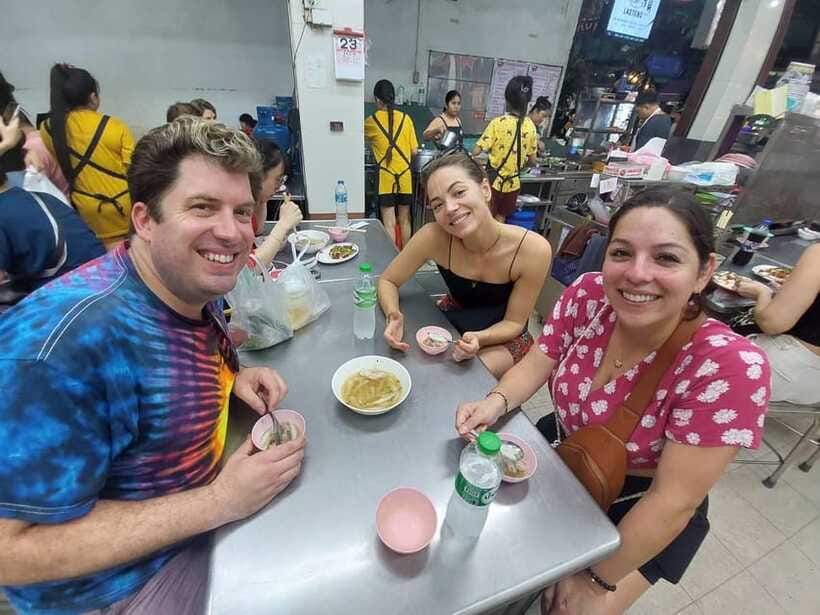
The food stops are paired with background on Chinese immigration and its influence on Bangkok’s cuisine. You learn how Thai and Chinese cooking traditions have mixed over time, and how those traditions continue in Yaowarat’s stalls, restaurants, desserts, and drinks.
This context keeps the tour from becoming a simple eating contest. A steamed dumpling, noodle soup, or barbecued meat dish becomes part of a larger story about migration, adaptation, and the way a neighborhood holds onto older customs while changing with the city.
The guides appear to be particularly strong at this part of the experience. Na is praised for covering both food and history, while Eve is noted for explaining recipes and the Chinatown food scene. Peak is often described as combining cultural information with humor, which is useful when the streets are crowded and the group needs a little energy.
You should not expect an academic lecture. The history is delivered in short explanations between stops, while standing near vendors or walking through alleys. That format suits the setting. You get enough context to understand what you are seeing without losing the main purpose of the evening.
Evening crowds and the walking pace
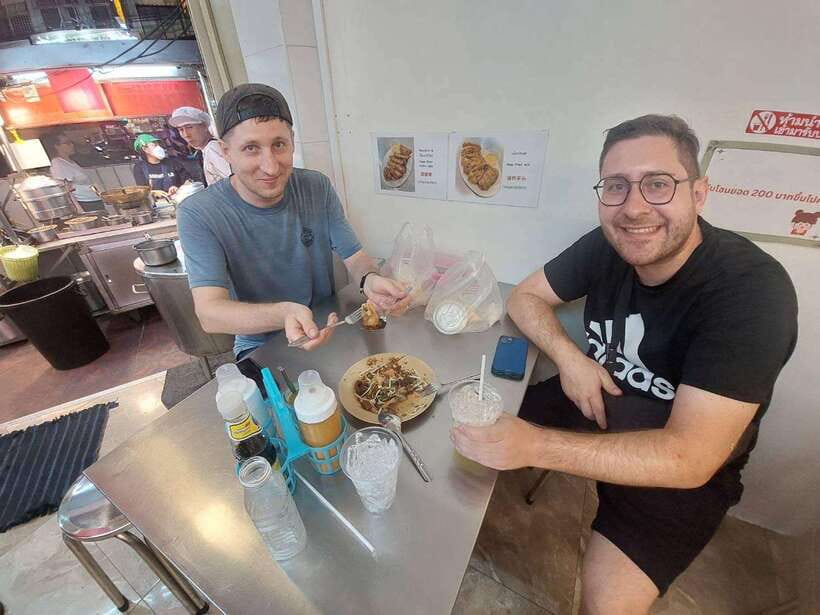
Yaowarat is exciting, but it is not effortless. The walking distance is described as moderate, and you should wear comfortable shoes. Crowds can be intense, with traffic, narrow passages, and people stopping to eat or shop.
A small group makes a real difference here. Eight people is still enough for a social experience, but it is far easier to keep together than a large coach group. Guides have been praised for watching the group carefully, keeping everyone together, and handling busy streets calmly.
The pace seems designed to leave time for eating rather than rushing from one stop to the next. One outing ran a little beyond three hours, and the food was still described as comfortably paced. That is a good sign for anyone who prefers time to listen, taste, and ask questions.
The route finishes at the Chinatown Gate. This is a useful endpoint because you are not left at an unnamed alley after the last tasting. Hotel pickup and drop-off are not included, so you will need to arrange your own way to the meeting point and onward from the gate.
One guide, Peak, even helped with transport arrangements after the tour for one group. That kind of personal help is welcome, but it should be treated as a pleasant extra rather than a promised service.
How the guides shape the experience
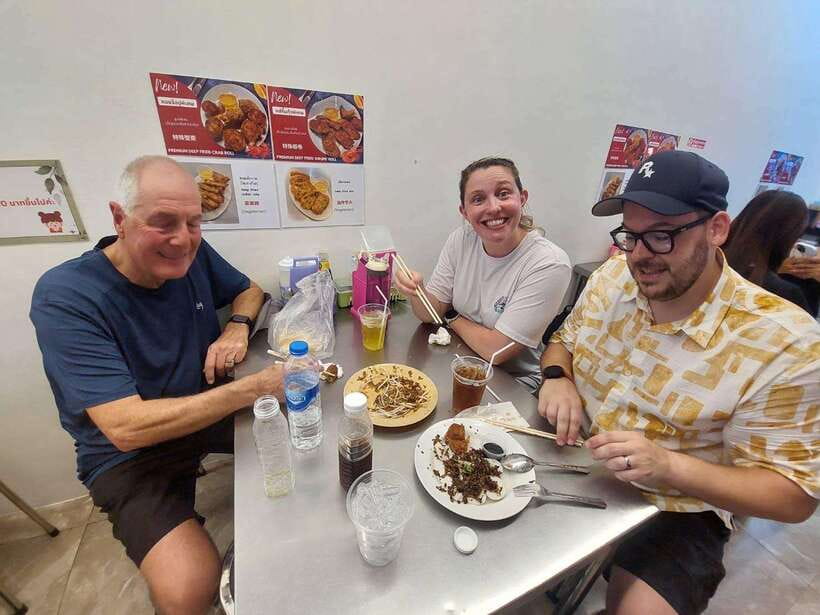
The strongest praise is reserved for the guides. Peak appears often in the feedback, with descriptions of her humor, enthusiasm, attentiveness, and ability to make strangers feel comfortable together. Eve is praised for being friendly and clear when explaining dishes. Na is described as caring, patient, and alert to the needs of the entire group.
Other named guides include Sunday, K, Ne, Biga, and Kriag. The specific guide may depend on your departure, but the pattern is consistent: the guide is expected to do more than lead the way. You get explanations, food suggestions, crowd management, and help deciding how much to eat at each stop.
That last point is important. A tour with ten or more tastings needs someone who notices when the group is getting full. One guide checked in often to make sure nobody went home hungry, while another adapted the experience to individual tastes.
The social side also works well for solo visitors. One solo participant noted that a guided group made it possible to try many foods that would have been difficult to order alone. The maximum of eight people is small enough for conversation without making the evening feel like a private tour.
Dietary limits and who should book
This tour is best for people who eat meat, seafood, and mixed Thai-Chinese food. Vegans and vegetarians are specifically not considered suitable, so you should not book expecting a plant-based route.
Some flexibility is possible with advance notice. A pescatarian participant still enjoyed the experience but could not eat everything, while a gluten-free guest received help from the guide in choosing suitable food. These examples suggest that limited adjustments may work, but you should contact the operator before booking rather than trying to negotiate at the first stop.
The tour is also not suitable for children under 10 or wheelchair users. The moderate walk, crowded streets, and food-stall setting require a reasonable level of mobility.
Bring comfortable shoes and a camera. Avoid bringing pets. Bottled water is included, but budget for personal expenses if you want extra drinks, souvenirs, or additional food after the tour.
Is $36 good value?
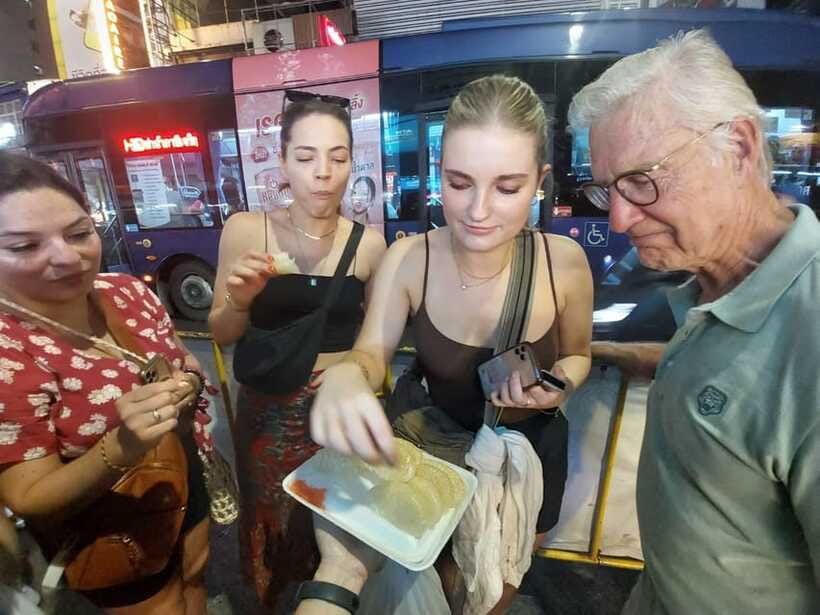
At $36, the tour sits in a sensible range for a three-hour Bangkok food experience. The price includes the guide, a small group, bottled water, and at least 10 food tastings. If you tried to recreate that evening by ordering one item at each place, you could easily spend much of your time and money simply figuring out what to choose.
The real value is the access and structure. You are paying to be shown where to go, to taste many dishes without committing to full portions at every stall, and to receive explanations in English. The Michelin-recognized stop adds interest, but the wider range of ordinary local vendors is just as important.
It is less worthwhile if you want a quiet sit-down dinner, a private guide, or a highly formal culinary class. It is also not a good fit if you eat very little, avoid shared food, or dislike crowded walking routes.
The cancellation terms help reduce the risk: you can cancel up to 24 hours ahead for a full refund, and reserve now while paying later. Starting times vary, so check availability before making evening plans.
Who will enjoy this most?
I would recommend this tour to first-time Bangkok visitors who want a guided introduction to Chinatown. It is also a strong choice for solo visitors, couples, and small groups who want to try many dishes without ordering ten separate meals.
Food-focused visitors will appreciate the range, while history-minded visitors will value the explanations about Chinese influence in Bangkok. The lively evening setting adds plenty of atmosphere, but you need to be comfortable with noise, crowds, moderate walking, and informal food stalls.
You may want to skip it if you are vegan, vegetarian, under 10, or using a wheelchair. People with strict allergies or dietary rules should ask about possible accommodations before booking. If you are simply cautious about street food, the guide’s presence and the vetted selection can make the experience feel much easier.
Should you book the Yaowarat food tour?
Yes, if you want a filling, social, well-organized introduction to Bangkok Chinatown. The combination of 10 or more tastings, Michelin-recognized food, local stalls, Chinese-Thai history, and a maximum group size of eight makes $36 a strong value.
Book it early in your Bangkok stay if you want ideas for later meals. You will leave with a better sense of Yaowarat’s streets and plenty of food memories. Just arrive hungry, wear good shoes, bring wipes, and be honest about dietary restrictions before you go.
FAQ
How long does the Bangkok Chinatown food tour last?
The tour lasts three hours, though one reported outing ran slightly longer.
Where does the tour begin?
The meeting point is Wat Mangkon Kamalawat, also called Wat Leng Noei Yi.
Where does the tour finish?
The tour finishes at the Chinatown Gate.
How many food tastings are included?
More than 10 food tastings are included. Some outings have featured around 13 dishes, and others more than 15.
Does the tour include a Michelin-recognized food stall?
Yes. The tour includes a stop at a Michelin-recognized food stall, and some departures have included two Michelin-recognized vendors or restaurants.
Is the tour conducted in English?
Yes. An English-speaking live guide leads the tour.
How large is the group?
The tour is limited to a maximum of eight participants.
Can dietary restrictions be accommodated?
Some dietary restrictions can be accommodated with advance notice. Vegans and vegetarians are specifically not considered suitable for this tour.
Is hotel pickup included?
No. Hotel pickup and drop-off are not included, so you must make your own way to Wat Mangkon Kamalawat and arrange onward transport from the Chinatown Gate.
Is the tour suitable for children and wheelchair users?
The tour is not suitable for children under 10 or wheelchair users. The walk is moderate, and comfortable walking shoes are recommended.
Just added in Bangkok
- Wonderful Pearl Dinner Cruise★ 3.5 · 27 reviews
- re:leaf spa and massage★ 4.0 · 10 reviews
- White Orchid Sunset Dinner Cruise Calypso Ladyboy Cabaret Show★ 4.0 · 10 reviews
- Yoga in the Park Thailand★ 5.0 · 12 reviews
- Visit Wat Pho and Wat Arun with Local Expert★ 4.0 · 14 reviews
- Visit temples in and around Bangkok with a former monk of 10 years★ 5.0 · 30 reviews
- 3-Hour Bangkok Walking Tour: Wat Pho and Wat Arun★ 5.0 · 102 reviews
- Miracle Bangkok Airport Lounges – Relax Before You Fly★ 3.0 · 32 reviews
Food Tours, compared.
Southern Flavors Phuket Food Tour with 15+ Tastings
Read our review →Bangkok Backstreets Food Tour with 15+ Tastings
Read our review →
Bangkok Authentic Tasting Thai-Chinatown Walking Food Tour
Read our review →
Small-Group Chiang Mai Evening Street Food Tour
Read our review →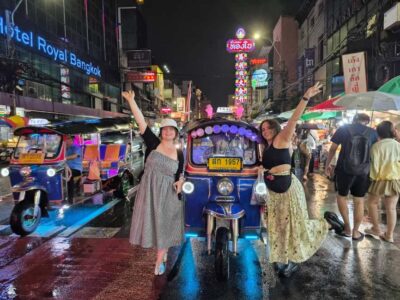
Tuk Tuk Adventure Chinatown Michelin Food & Temples
Read our review →Browse the lists this tour appears in