
Reviewed · WALKING TOURS
Bangkok: Chinatown By Night Walking Tour
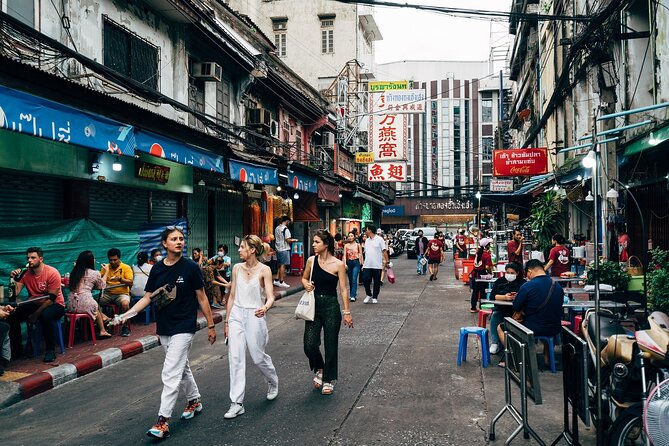
Chinatown changes after sunset. This two-hour walk takes you through neon-lit Yaowarat, old Chinese neighborhoods, small temples, traditional shops, and street-food stalls with a local guide explaining what you are seeing. I like the way the tour connects Bangkok’s gold trade and Chinese-Thai culture with ordinary places such as markets, shrines, and family-run food spots.
I also like the price. At $15 per person, you get a guide, local stories, food guidance, and three self-guided tours in the Vox City app. The main consideration is that the tour can be crowded, and food purchases or attraction admissions are not clearly included in the published price.
In This Review
- Key points to know before booking
- Starting at Hua Lamphong at 6:30 pm
- Chareon Chai Community Museum and everyday Chinatown
- A European-style mosque in a Chinese quarter
- Talat Kao, the old market off Yaowarat Road
- The small riverside temple near the Marine Department
- So Heng Tai Mansion in Talat Noi
- An Ayutthaya-era royal monastery
- Zhou Si Kong Shrine beside the Chao Phraya
- Street food, herbal drinks, and how to budget
- What the guide adds to the evening
- Is $15 a fair price?
- Who should book this Chinatown walk?
- Should you book it?
- FAQ
- How much does the Bangkok Chinatown night tour cost?
- How long does the walking tour last?
- What time does the tour start?
- Where does the tour begin?
- Where does the tour end?
- Is food included in the tour price?
- Are attraction entrance fees included?
- Are headphones provided?
- Can I cancel for a full refund?
- How many people can join the tour?
Key points to know before booking
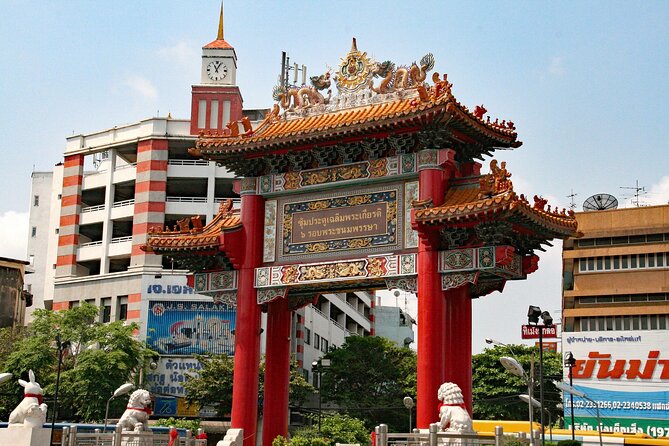
- Nighttime Yaowarat atmosphere: See Chinatown when its signs, food stalls, and shopfronts are at their most lively.
- More than a food walk: The route includes a community museum, old market, mosque, temples, a Chinese courtyard house, and riverside shrine.
- Strong guide-led experience: Guides including Nam, Jimmy, Tony, Bobby, Bass, Den, Dan, and Kim are praised for clear stories and personal care.
- Food is part of the experience, but budget extra: Guides point out dishes, drinks, and stalls, with chances to try food, but the listed inclusions do not promise meals.
- A manageable two-hour outing: The walk offers a useful introduction without taking up an entire evening.
- Best for curious first-time visitors: You get context and direction in an area that can feel confusing on your own.
Starting at Hua Lamphong at 6:30 pm
The meeting point is in the Hua Lamphong and Rong Muang area of Bangkok, with public transportation nearby. The tour starts at 6:30 pm and returns to the same meeting point, so you do not need to arrange a second pickup across town.
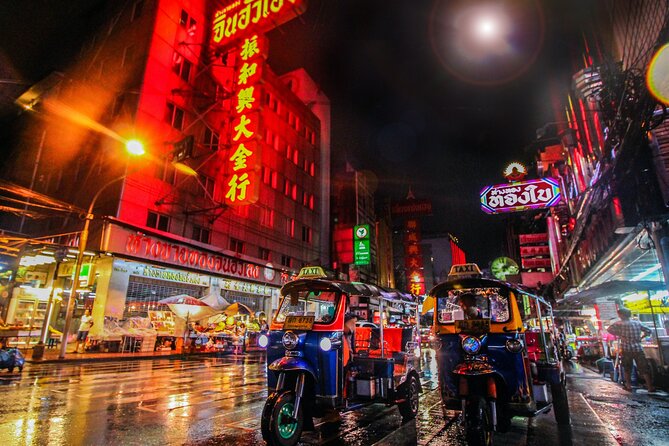
That timing makes good sense. Chinatown is a different place at night than it is during the day. Shop signs glow, food stalls draw queues, and the narrow lanes become full of movement. You will want to arrive with comfortable shoes and enough room in your schedule to walk at an easy pace without rushing between stops.
The group may include as many as 99 people. That is a generous maximum for a walking tour, and the actual experience may feel smaller depending on the booking date. Still, you should be prepared for some group movement, especially in narrow lanes and crowded sections of Yaowarat Road.
The guide is the key variable. This tour has received especially strong praise for guides who bring energy and care to the walk. Nam was described as passionate and engaging, while Jimmy was praised for making food and Chinatown easy to understand. Tony was noted for watching out for a young visitor who was struggling with the heat. Those details matter more than a polished script. A good guide can turn a simple walk into a lively lesson.
More Walking Tours in Bangkok
- Bangkok: City Highlights Temple and Market Walking Tour
★ 4.5 · 3,990 reviews - Bangkok: Grand Palace and Wat Phra Kaew Guided Walking Tour
★ 4.4 · 2,417 reviews - Bangkok: Wat Pho and Wat Arun Guided Walking Tour
★ 4.6 · 1,720 reviews
Chareon Chai Community Museum and everyday Chinatown
One of the first meaningful stops is an old house converted into a community museum. Its purpose is to preserve the history, culture, and way of life of the Chareon Chai Community.
This is the sort of stop I value on a city walk. Neon signs and food stalls grab your attention, but a small community museum helps explain the people behind the neighborhood. Rather than seeing Chinatown as only a dining district, you get a glimpse of how local families and communities have maintained their identity.
The museum is housed in an old building, so do not expect a large modern institution. Its appeal comes from the setting and the connection to the neighborhood. Entry to attractions is not included, so confirm with your guide if the group is entering or viewing the museum from outside. The published tour details do not specify an admission fee.
A European-style mosque in a Chinese quarter
The route also visits an old mosque built unusually in the style of a European villa. This is one of the walk’s more unexpected details.
Bangkok’s Chinatown is often presented through Chinese shrines, gold shops, and food traditions. A mosque with European architectural features adds another layer to the district’s story. It is a reminder that commercial neighborhoods are rarely as simple as their labels suggest.
Your guide can provide the meaning behind the building and its place in the area. This is where local storytelling earns its keep. On your own, you might pass the mosque without noticing its unusual design or asking why it appears here.
As with the other religious sites, behave respectfully. The information supplied for the tour does not promise interior access, so treat this as an architectural and cultural stop unless your guide tells you otherwise.
Talat Kao, the old market off Yaowarat Road
Chinatown’s old market, known as Talat Kao, occupies a long, narrow alley off Yaowarat Road. This is a more intimate setting than the main street, where the scale tightens and the details come closer.
A guide is useful here because the market can look like a jumble of stalls and shopfronts when you first arrive. You can learn what the vendors sell, how the lane fits into Chinatown’s trading life, and which foods or products are worth a closer look.
The market stop also helps balance the grander sights. You are not just being led to famous photo points. You are walking through a working part of the district, where commerce remains central to the feel of the neighborhood.
The drawback is crowding. Narrow alleys do not offer much room, and a large group can be difficult to keep together. Stay close to the guide, watch your footing, and avoid stopping in the middle of the lane for photos.
A completely different kind of day out:
- Bangkok: Damnoen Saduak Market and Maeklong Railway Market
★ 4.5 · 26,723 reviews - The Old Siam: Damnoen Saduak and Maeklong Railway Market
★ 4.5 · 10,992 reviews - From Bangkok: Ayutthaya Temples Guided Tour with Lunch
★ 4.7 · 10,535 reviews - Bangkok: Train Market & Floating Market with Boat Ride
★ 4.7 · 9,547 reviews
The small riverside temple near the Marine Department
Near the Marine Department station on the Chao Phraya orange express line, the route includes a small temple visible from the riverside. Its location gives the walk a change of pace after the tighter market lanes.
This temple is not presented as a major monument, and that is part of its appeal. You get a look at a quieter religious site that can be missed when you focus only on Bangkok’s large, famous temples. The connection to the river and nearby transport station also places the neighborhood in a wider city setting.
The tour description does not provide the temple’s name or specify interior access. Expect your guide to explain its role and point out what makes it worth noticing. Admission is not included in the tour price.
So Heng Tai Mansion in Talat Noi
So Heng Tai Mansion is a nineteenth-century Chinese courtyard house in Talat Noi, a historic neighborhood of Bangkok. This is one of the strongest architectural stops on the route.
A courtyard house gives you a different view of Chinese settlement than a row of storefronts. The design suggests a family home built around shared space, rather than a commercial street built for passing trade. Its age and location help connect Talat Noi with the older Chinese communities along the river.
This is also a good example of why a walking tour can be more useful than a standard sightseeing loop. You are not only looking at a building. You are being shown how architecture, community, trade, and family life fit together.
Do not assume the tour fee includes entry. The listed inclusions cover the walking tour, guide commentary, and Vox City app access, while attraction tickets are excluded.
An Ayutthaya-era royal monastery
The itinerary includes an old royal monastery established during the Ayutthaya era in Bangkok. The stop adds historical depth, linking the modern city with an earlier period of Thai history.
The supplied information does not identify the monastery by name, so you should ask the guide to clarify its name and main features when you arrive. That is not a flaw in the walk itself, but it is a useful reminder that the exact route may depend on the guide and evening conditions.
A temple stop can also provide a calmer pause during the walk. After busy roads and food stalls, religious buildings offer a chance to slow down and look at details that are easy to miss when you are focused on traffic and crowds.
Dress and act respectfully around all temples and shrines. The tour information does not state a formal dress code, so modest clothing is the sensible choice.
Zhou Si Kong Shrine beside the Chao Phraya
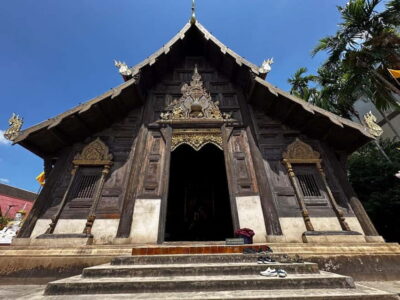
Zhou Si Kong Shrine is an old riverside shrine in Talat Noi, said to be about 200 years old. It is used for worship and prayer for good luck, good health, freedom from illness, and strength through the year.
This stop gives the tour a personal side. You are not just seeing a historic structure. You are learning how a shrine continues to matter in everyday life. The location beside the Chao Phraya also reinforces the connection between river trade, Chinese settlement, and local religious practice.
The shrine is especially useful for understanding the Chinese side of Bangkok’s cultural mix. A guide can explain customs and symbols in a way that a quick visit alone may not. Keep in mind that the tour is not advertised as a private religious visit or formal prayer service.
Street food, herbal drinks, and how to budget
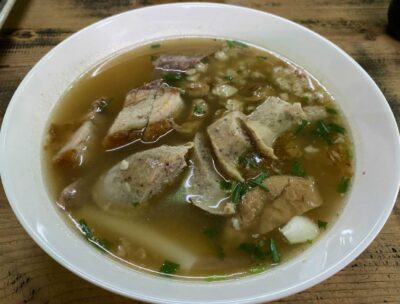
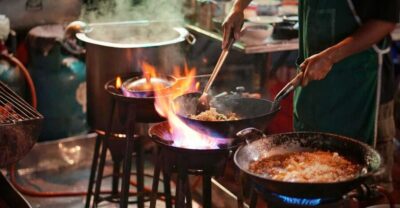
Food is one of the tour’s biggest attractions. Guides show popular Thai and Chinese foods, explain what different dishes are, and point out places to eat. Several guide-led outings included opportunities to try street food, and one guide introduced traditional Chinese herbal drinks.
You should budget extra money for anything you want to purchase. The listed inclusions do not clearly state that food is covered, even though the tour description and guide experiences emphasize tasting opportunities. It is best to think of the $15 as paying for the walk and guide, not as an all-you-can-eat food tour.
This setup has an advantage. You choose what you want to eat, how much you want to spend, and how adventurous you want to be. It also avoids forcing everyone into the same dishes. If you have dietary concerns, tell the guide at the start, then ask what is suitable before buying.
Jimmy received praise for explaining Chinatown’s food, while Den was noted for offering useful street-food suggestions and showing traditional herbal drinks. Bobby was praised for taking people to enjoyable food places and connecting the meal with Thai culture. Those details suggest that the food value depends heavily on the guide’s choices and your willingness to try things.
Do not arrive expecting a seated restaurant dinner. The experience is a walking tour through food areas, with chances to buy and sample items along the route.
What the guide adds to the evening
The strongest part of this experience is the human element. A map can lead you to Yaowarat Road, but it cannot easily explain why a mosque looks like a European villa, what makes Talat Kao important, or how Chinese-Thai customs appear in food and worship.
The guide names associated with particularly positive experiences include Nam, Jimmy, Tony, Bobby, Bass, Den, Dan, and Kim. Their individual styles differ, but the praise centers on the same qualities: clear explanations, warmth, strong local knowledge, and attention to the people in the group.
Bass was especially praised for making a solo participant feel safe and well looked after. Dan was credited with pointing out small lanes and signs that could otherwise be missed. Kim was appreciated for explaining Thai history and Chinese-Thai culture. These are practical benefits, especially if this is your first evening in Bangkok.
Because guides may vary, I would avoid booking this tour solely for one particular person. Book it for the route and format, then see the guide’s personality as an important bonus.
Is $15 a fair price?
Yes, if you want orientation and context more than a full meal. Two hours of guided walking in Chinatown for $15 is a sensible price, especially when you add the three self-guided tours in the Vox City app.
The value is highest for first-time visitors who want someone to handle the route and explain what they are seeing. You can then return to favorite food stalls or streets on another night with more confidence.
The value is lower if you already know Chinatown well or prefer to wander alone. You may also spend more once you begin buying food, drinks, or attraction tickets. That is not necessarily a problem, but include it in your evening budget.
The tour is mobile-ticket based, and confirmation is provided at booking. Free cancellation is available up to 24 hours before the 6:30 pm start time. Cancellations within 24 hours are not refunded, and late changes are not accepted.
Who should book this Chinatown walk?
I would choose this tour if you want a short introduction to Bangkok’s Chinese neighborhoods, enjoy street food, and like history explained in plain language. It suits solo visitors, couples, and families, including families with teenagers. Tony’s care toward a teenager having trouble with the heat suggests that attentive guiding can make a difference for younger participants.
It is also a good pick if you are nervous about navigating Chinatown at night. The guide leads you through markets, lanes, temples, shrines, and food areas, while the group provides a basic sense of structure.
I would hesitate if you dislike crowds, walking in tight spaces, or deciding what to eat from street stalls. The route can feel packed, and a group of up to 99 people is not ideal for someone seeking a quiet private tour.
Should you book it?
Book it if you want local explanation, varied sights, and a low-cost evening introduction to Chinatown. The mix of Talat Kao, So Heng Tai Mansion, temples, the Zhou Si Kong Shrine, community history, and street food gives you more range than a simple neon-sign photo walk.
Go with realistic expectations. Food is not clearly included, attraction entry is extra, and the walk may be crowded. Arrive ready to walk, keep cash available for snacks, and stay open to trying a drink or dish that your guide recommends. At $15, this is a practical way to get your bearings and understand why Bangkok’s Chinatown is more than a place to eat.
FAQ
How much does the Bangkok Chinatown night tour cost?
The tour costs $15 per person.
How long does the walking tour last?
The advertised duration is approximately two hours. Some guide-led outings may run closer to one and a half hours.
What time does the tour start?
The tour starts at 6:30 pm.
Where does the tour begin?
The meeting point is in the Hua Lamphong and Rong Muang area, at Hua Lamphong, Rong Muang, Pathum Wan, Bangkok 10330, Thailand.
Where does the tour end?
The activity ends back at the meeting point.
Is food included in the tour price?
The listed inclusions do not specify that food is included. Guides offer food explanations and opportunities to purchase and try street food, so you should budget extra for anything you eat or drink.
Are attraction entrance fees included?
No. Entry to attractions is not included.
Are headphones provided?
No. Headphones are not included.
Can I cancel for a full refund?
Yes. You can cancel at least 24 hours before the local start time for a full refund. Cancellations or changes made within 24 hours are not accepted for a refund.
How many people can join the tour?
The maximum group size is 99 people.
Just added in Bangkok
- Wonderful Pearl Dinner Cruise★ 3.5 · 27 reviews
- re:leaf spa and massage★ 4.0 · 10 reviews
- White Orchid Sunset Dinner Cruise Calypso Ladyboy Cabaret Show★ 4.0 · 10 reviews
- Yoga in the Park Thailand★ 5.0 · 12 reviews
- Visit Wat Pho and Wat Arun with Local Expert★ 4.0 · 14 reviews
- Visit temples in and around Bangkok with a former monk of 10 years★ 5.0 · 30 reviews
- 3-Hour Bangkok Walking Tour: Wat Pho and Wat Arun★ 5.0 · 102 reviews
- Miracle Bangkok Airport Lounges – Relax Before You Fly★ 3.0 · 32 reviews
Walking Tours, compared.
City Highlights Temple and Market Walking Tour
Read our review →
Grand Palace and Wat Phra Kaew Guided Walking Tour
Read our review →
3 Hour Old City and Temples Guided Walking Tour
Read our review →
Discover a Taste of Chinatown – 2 Hr Walking Tour
Read our review →Browse the lists this tour appears in