
Reviewed · ENTRY TICKETS
Samut Prakan: The Erawan Museum Admission Ticket (NON THAI)
Look up, and meet Thailand’s giant guardian. The Erawan Museum makes an immediate impression with its massive three-headed bronze elephant, then rewards a slower visit with three symbolic realms: Underworld, Earth, and Heaven. I like the powerful design and the chance to see antique and sacred objects in an unusual setting. I also like that your $12 admission includes flowers, incense, and a lotus flower for a respectful visit. The main consideration is that the ticket does not include transfers, and the museum requires modest clothing.
This is not a conventional guided sightseeing tour. You visit at your booked date and time, with up to eight hours of validity, and explore the museum and its surrounding areas at your own pace. The BTS Green Line makes the trip manageable, though you still need to arrange your way to Chang Erawan Station and use the free shuttle tuk-tuk from Exit 2.
In This Review
- Key details before you go
- Why the three-headed elephant matters
- Arriving from Bangkok by BTS and shuttle tuk-tuk
- First sight: the bronze elephant outside
- Underworld: beginning the museum’s symbolic journey
- Earth: the museum’s protective center
- Heaven: looking upward beneath the elephant
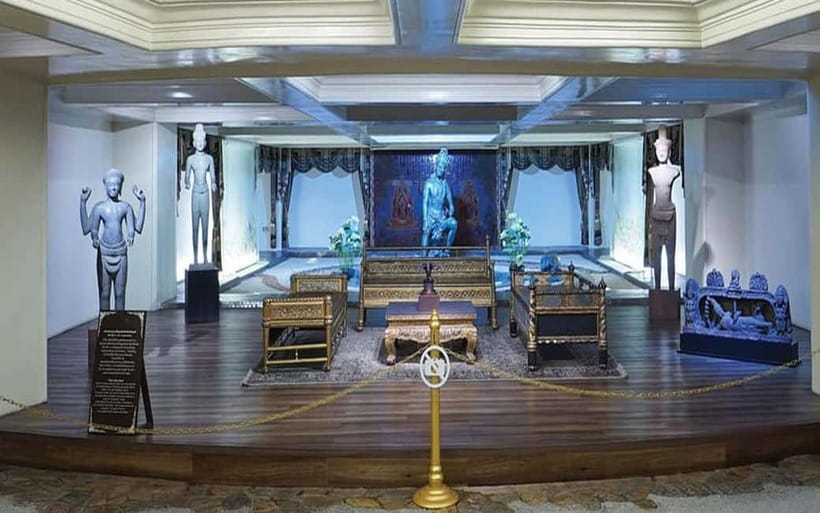
- The antique collection and sacred objects
- How much time should you allow?
- Is the $12 ticket good value?
- Dress, behavior, and photography rules
- Who will enjoy the Erawan Museum most?
- Should you book the Erawan Museum ticket?
- FAQ
- Where is the Erawan Museum?
- How much does admission cost?
- How long is the ticket valid?
- Does the ticket include transportation?
- Which BTS station should I use?
- What does the ticket include?
- What are the three sections of the museum?
- Can I take photos inside?
- What clothing is required?
- Can I bring food, drinks, or pets?
Key details before you go
- The elephant is the main event: Three enormous heads represent the mythological Airavata, the vehicle of the Hindu god Indra.
- The museum has three symbolic levels: Underworld, Earth, and Heaven form the structure’s spiritual and visual plan.
- Your ticket costs $12: It includes museum admission, flowers, incense, a lotus flower, taxes, and access to the surrounding areas.
- Chang Erawan Station is the easiest approach: Exit at BTS Green Line station E17, Exit 2, then use the free shuttle tuk-tuk.
- Dress rules are strict: Shorts, short skirts, sleeveless shirts, food, drinks, pets, alcohol, and drugs are not allowed.
- Photography is for personal use: Interior and exterior photos are welcome, but commercial photography and video are not permitted inside.
Why the three-headed elephant matters
The Erawan Museum was created by Lek Viriyapant, a well-known Thai antique collector who wanted to protect his collection for future generations. Rather than build a plain display hall, he chose a form with national, religious, and symbolic meaning.
The elephant is based on Airavata, the mythological three-headed elephant connected with Indra. In Hindu tradition, Airavata serves as Indra’s vehicle. Here, the elephant also represents Thailand and acts as a guardian over the objects held inside.
Look closely at the structure’s unusual base. The elephant appears to stand on a globe-like sphere, suggesting that it protects the earth and the sacred objects within it. This turns the building into more than a container for antiques. The architecture itself tells you how to read the museum.
Lek Viriyapant passed the construction plan to his son, Pagpean Viriyapant. Neither father nor son lived to see the project fully completed, but the family continued the work. That gives the museum a personal purpose as well as a cultural one: it preserves objects, beliefs, and the memory of a family determined to pass them forward.
The site drew people even before construction was finished. The elephant and sacred objects became symbols worthy of worship, not simply decoration. You do not need to share those beliefs to appreciate the care given to the design. A quiet, respectful approach will help you understand the place better.
More Entry Tickets in Bangkok
- Bangkok: Mahanakhon SkyWalk Entry Ticket with Options
★ 4.6 · 4,094 reviews - Bangkok: Grand Palace Skip-the-Line Entry Ticket
★ 4.2 · 720 reviews - Bangkok: Tuk Tuk Day Pass App & Boat Chao Phraya River
★ 4.2 · 593 reviews
Arriving from Bangkok by BTS and shuttle tuk-tuk
The clearest transport plan is to take the BTS Skytrain Green Line to Chang Erawan Station, identified as E17. At Exit 2, a free shuttle tuk-tuk operates daily to the museum.
That arrangement is a real benefit because transfers are not included in the $12 ticket. You avoid having to arrange a separate museum transfer, but you still need to reach the BTS station and allow time for the shuttle connection.
The experience is valid for eight hours, but that does not mean you are joining an eight-hour guided program. Think of it as a flexible admission window. Check the available starting time before booking, then visit on the exact date and time assigned to you.
The ticket lets you skip the ticket line, which is useful when you want to spend your time looking at the building rather than handling admission details. Keep your booking information ready when you arrive.
First sight: the bronze elephant outside
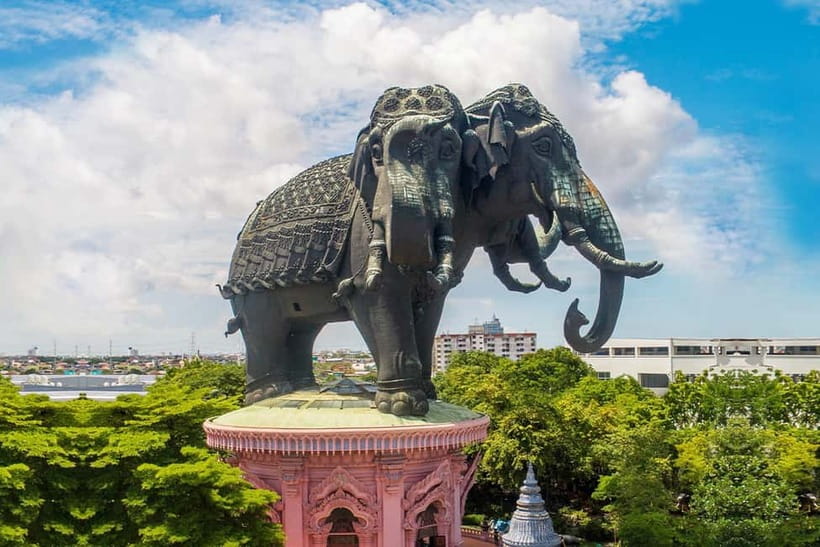
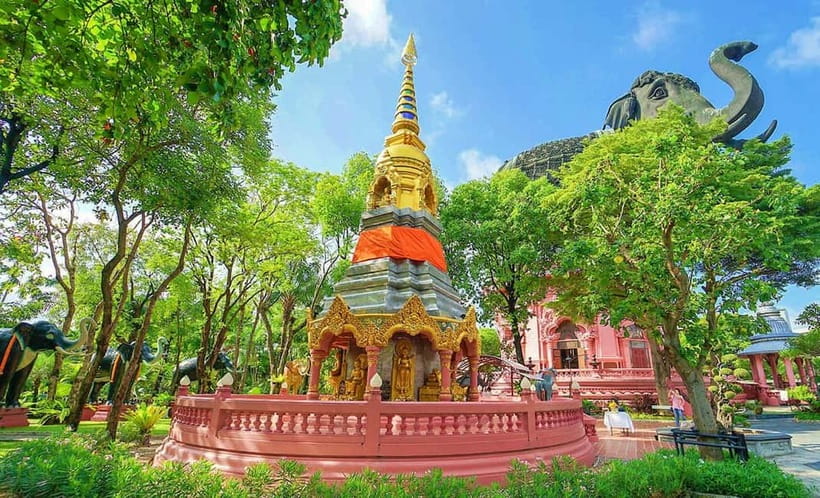
Your first view is likely to be the museum’s greatest visual shock. The three-headed bronze elephant rises above the building, large enough to make nearby people and structures seem small.
The exterior is the best place to understand the full design. From outside, you can see the elephant’s scale, the rounded globe-like base, and the way the museum is built as a complete symbolic object. Take a little time here before heading indoors. Photos from the exterior can show the whole elephant more clearly than interior views.
This area also gives you many of the experience’s strongest photo opportunities. You can photograph the structure and the surrounding museum grounds, though commercial use is not permitted inside the museum. If you are taking pictures for personal memories, the exterior gives you room to work without rushing.
The elephant is not just a large statue placed above a museum. It is the museum’s central idea. Its three heads, connection to Airavata, and position over the globe all point toward protection, faith, and the preservation of cultural objects.
Underworld: beginning the museum’s symbolic journey
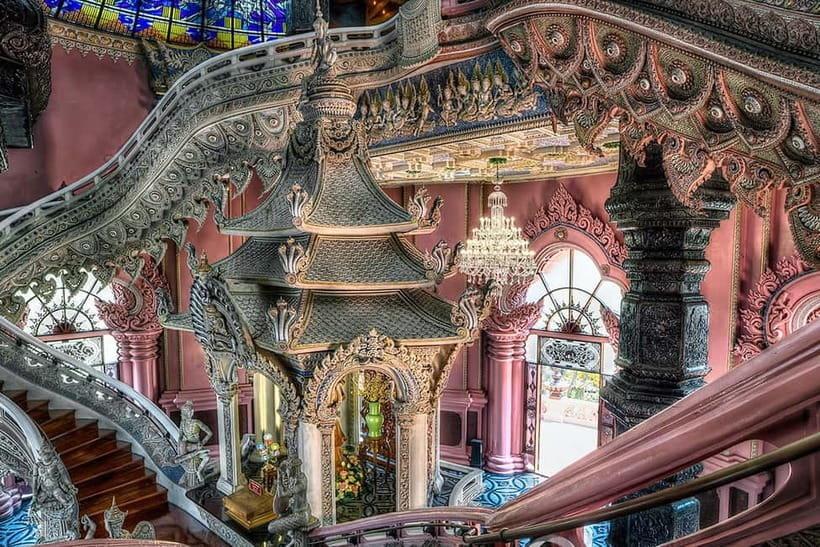
The museum is divided into three sections named Underworld, Earth, and Heaven. These names give you a simple route through the building and a way to think about how the collection has been arranged.
Underworld forms the first part of the journey. The title suggests a realm below the everyday world, and the placement helps create a gradual movement upward through the museum.
The supplied information does not provide a full item-by-item list for each section, so you should not arrive expecting a fixed guided script or a particular sequence of named displays. Instead, pay attention to how the architecture, sacred objects, and antique collection work together.
The value of this section is its role in the overall design. You begin below ground level in symbolic terms, then move toward Earth and Heaven. It gives the visit a sense of direction that a standard gallery with unrelated rooms might not have.
Keep your voice low and your behavior respectful. The museum asks visitors to be quiet, and the presence of sacred objects makes this more than a casual photo stop.
A completely different kind of day out:
- Bangkok: Damnoen Saduak Market and Maeklong Railway Market
★ 4.5 · 26,723 reviews - The Old Siam: Damnoen Saduak and Maeklong Railway Market
★ 4.5 · 10,992 reviews - From Bangkok: Ayutthaya Temples Guided Tour with Lunch
★ 4.7 · 10,535 reviews - Bangkok: Train Market & Floating Market with Boat Ride
★ 4.7 · 9,547 reviews
Earth: the museum’s protective center
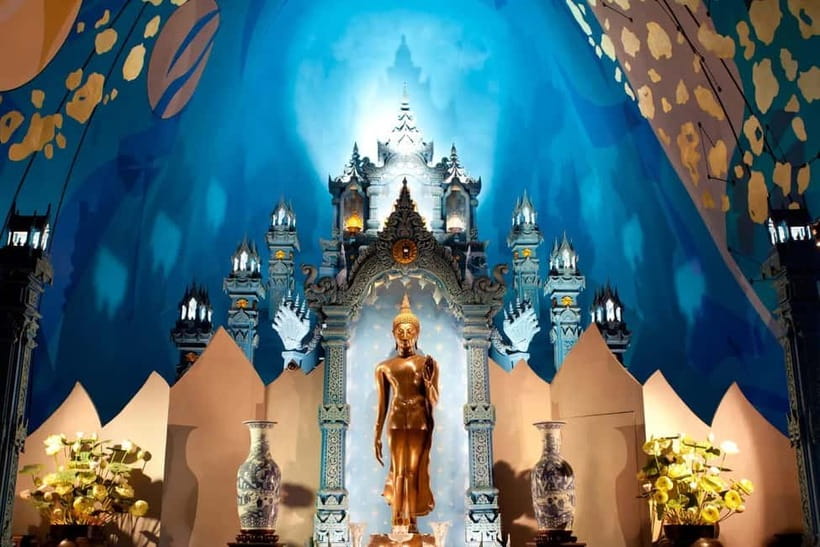
Earth is the middle section and the part that connects the lower and upper realms. It also relates directly to the globe-like form beneath the elephant, which symbolizes the world being protected.
This is where the museum’s practical purpose and its spiritual purpose meet. Lek Viriyapant wanted to preserve antique and sacred objects for the next generation, while the elephant’s design presents those objects as things worthy of protection.
You may find the Earth section especially useful for understanding the museum as a whole. The building is not simply celebrating one enormous sculpture outside. The collection, the globe, and the elephant all support the same idea: cultural objects carry meaning, and preserving them keeps that meaning available to future generations.
Take time to look beyond the most obvious photo angles. The museum offers plenty of attractive details inside and outside, but the strongest visit comes from balancing photographs with quiet observation.
Heaven: looking upward beneath the elephant
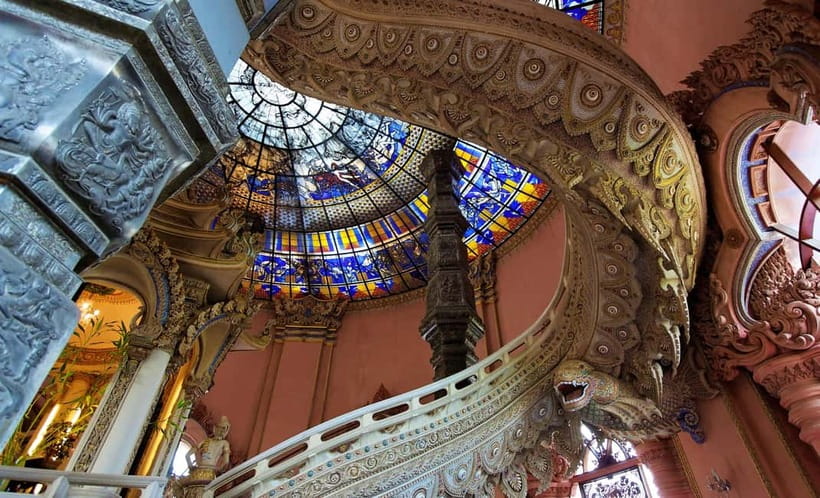
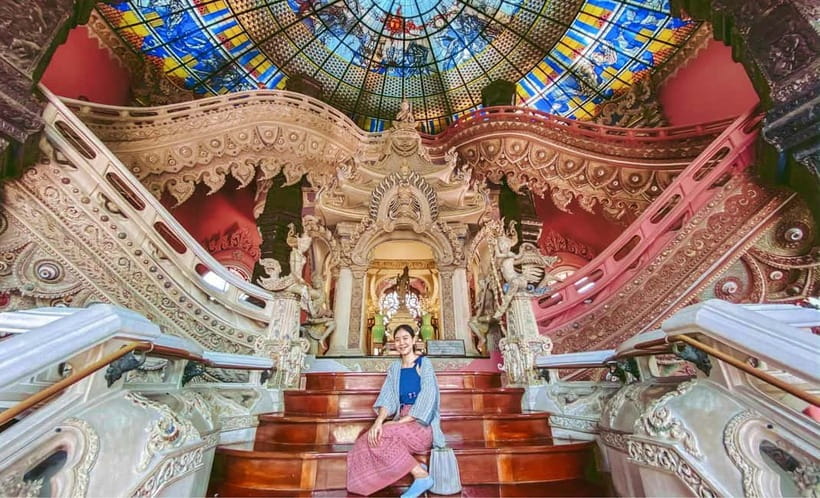
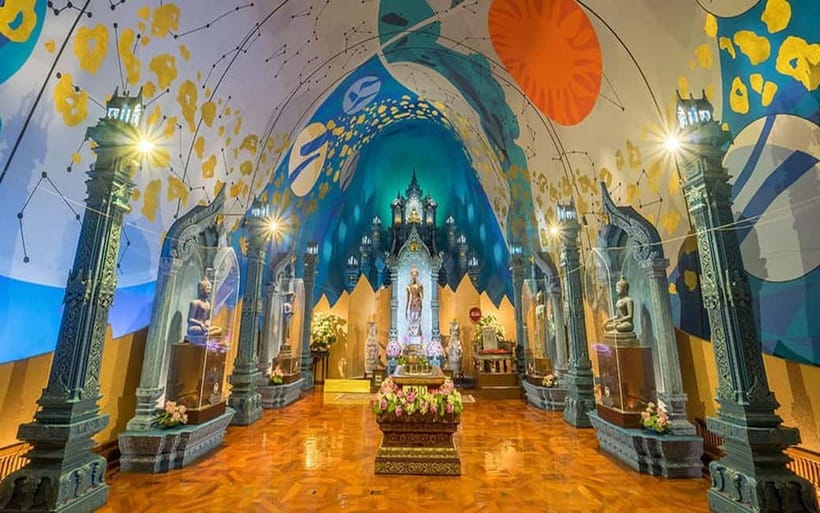
Heaven completes the three-part arrangement. It is the upper realm and gives the visit its final symbolic movement toward the space beneath the elephant.
The upward design is one of the museum’s most memorable features. You are not only walking through rooms. You are moving through a carefully planned story about the world below, the human world, and the divine realm above.
The three-headed elephant becomes even more meaningful after you have seen all three sections. It is not just an impressive landmark for a quick photograph. It crowns the museum’s religious and cultural message.
The interior also gives you some of the best photo opportunities, although personal photography must remain respectful. Commercial photos and videos are not allowed inside, and food and drinks are prohibited throughout the visit.
The antique collection and sacred objects
Lek Viriyapant’s original aim was to protect a valuable antique collection. Many of the artworks and sacred objects date to earlier periods, when people believed such objects could bring blessings and prosperity to their land.
That belief is important context. You are looking at objects that were valued for more than age or craftsmanship. They were connected to protection, good fortune, devotion, and the wellbeing of a community.
The museum’s collection is therefore best approached with patience. You might find the most rewarding details are not the biggest ones. The elephant will grab your attention, but the objects inside explain why the museum was built in the first place.
The admission ticket includes flowers, incense, and a lotus flower. These items connect your visit with the museum’s religious setting and give you a way to participate respectfully. You do not need to treat them as a formal ceremony, but their inclusion helps distinguish this from an ordinary cultural attraction.
How much time should you allow?
The ticket is valid for eight hours, which gives you a generous window. No fixed sightseeing duration is provided, and no transfer or guided schedule is included, so you can set the pace yourself within the booked period.
If you mainly want the iconic photograph and a quick look inside, you might not need the full validity window. If you want to study the architecture, move through all three sections, use the surrounding areas, and take personal photographs, the flexible timing is more useful.
Do not read the eight-hour validity as proof that the museum requires a full day. It simply gives you room to fit the visit around other plans. You should still confirm the available starting time when booking because access is tied to the specified date and time.
Is the $12 ticket good value?
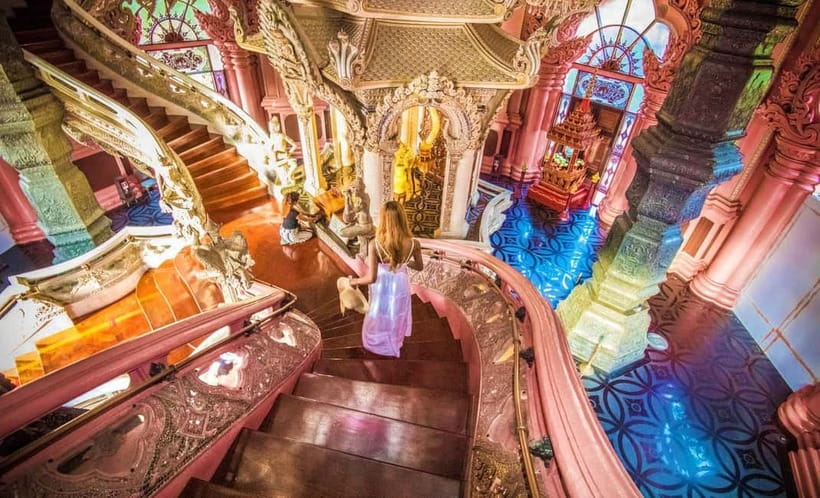
At $12 per person, the ticket is reasonably priced for a distinctive museum visit. You are paying for admission to a building that is itself the main attraction, along with access to the Underworld, Earth, and Heaven sections and the surrounding areas.
The included flowers, incense, and lotus flower add a small but meaningful benefit. Taxes and fees are also included, so the advertised price is a clearer measure of the cost.
The value depends on what you want from a museum. If you prefer long explanations, a named guide, or a conventional collection arranged by date and region, this may feel less useful because no guided service is described. If you enjoy unusual architecture, religious symbolism, large-scale art, and photo-friendly settings, the price is easier to justify.
Remember to budget separately for transport to Chang Erawan Station. The shuttle tuk-tuk from Exit 2 is free, but transfers beyond that are not part of the ticket.
Dress, behavior, and photography rules
The museum requires modest clothing. Shorts, short skirts, and sleeveless shirts are not permitted, so choose an outfit that covers your shoulders and legs before leaving.
Food and drinks are not allowed, and pets cannot enter. Alcohol and drugs are also prohibited. These rules are straightforward, but they matter because you may be visiting a place with sacred objects and worshippers.
Keep your voice down while inside. The museum specifically asks for quiet and respectful behavior. You can still take personal photographs and enjoy the visual details, but avoid treating the interior like a loud photo studio.
Commercial photography and video are not allowed inside. Personal photos are fine, while professional or promotional use requires a different arrangement that is not included with this admission.
Who will enjoy the Erawan Museum most?
I would recommend this experience to you if you like unusual buildings, mythology, antiques, sacred art, and places with a strong visual identity. It also suits anyone looking for a cultural stop outside central Bangkok that can be reached by BTS.
Families may appreciate the enormous elephant and the clear three-level concept, though adults should help children follow the quiet and modest-dress rules. Photography enthusiasts will find plenty to frame, especially around the exterior.
This is less suitable if you want a guided historical lecture, a food experience, or a full transport package. It is also not a good choice if you prefer attractions where casual clothing and snacks are acceptable.
The high rating of 4.8 from 89 reviews fits the attraction’s strongest quality: it delivers a memorable sight for a modest admission price. The enthusiastic French-language comment from Duval, describing it as a highly recommendable experience, also matches the museum’s appeal as a short, unusual cultural outing.
Should you book the Erawan Museum ticket?
Book it if you want to see one of Thailand’s most unusual museum buildings and you are happy to explore independently. The three-headed elephant, symbolic three-section design, and personal worship items give the visit more substance than a simple landmark photo.
Before booking, check three things: your selected date and time, your route to Chang Erawan Station, and your clothing. If those details work for you, $12 is fair value for an experience that combines architecture, mythology, antiques, sacred objects, and generous photo opportunities.
Skip it if you need transfers included or expect a guided tour with detailed explanations at every stop. For the right visitor, though, the Erawan Museum is an easy-to-reach and visually memorable addition to a Bangkok-area itinerary.
FAQ
Where is the Erawan Museum?
The Erawan Museum is in Samut Prakan, in Central Thailand.
How much does admission cost?
The admission ticket costs $12 per person.
How long is the ticket valid?
The ticket is valid for eight hours. You must visit on the specified date and time selected when booking.
Does the ticket include transportation?
No. Transfers are not included. However, a free shuttle tuk-tuk operates daily from Chang Erawan BTS Station Exit 2.
Which BTS station should I use?
Use the BTS Skytrain Green Line and exit at Chang Erawan Station, identified as E17. Go to Exit 2 for the free shuttle tuk-tuk.
What does the ticket include?
It includes admission to the Erawan Museum, flowers, incense, a lotus flower, access to the areas surrounding the museum, and all taxes and fees.
What are the three sections of the museum?
The three sections are Underworld, Earth, and Heaven.
Can I take photos inside?
Personal photography is allowed, but photography and video for commercial purposes are not permitted inside the museum.
What clothing is required?
You must dress modestly. Shorts, short skirts, and sleeveless shirts are not permitted.
Can I bring food, drinks, or pets?
No. Food, drinks, and pets are not allowed. Alcohol and drugs are also prohibited.
More Museums in Bangkok
- Skip the Line: Patpong Museum Guided Tour
★ 5.0 · 80 reviews - Private Guided Day Tour to Erawan Museum & Ancient City
★ 4.5 · 25 reviews - Samut Prakan: Erawan Museum Discounted Admission Ticket
★ 4.8 · 20 reviews - Jim Thompson House Museum Entrance Ticket & Hotel Pick up
★ 4.0 · 9 reviews
Just added in Bangkok
- Wonderful Pearl Dinner Cruise★ 3.5 · 27 reviews
- re:leaf spa and massage★ 4.0 · 10 reviews
- White Orchid Sunset Dinner Cruise Calypso Ladyboy Cabaret Show★ 4.0 · 10 reviews
- Yoga in the Park Thailand★ 5.0 · 12 reviews
- Visit Wat Pho and Wat Arun with Local Expert★ 4.0 · 14 reviews
- Visit temples in and around Bangkok with a former monk of 10 years★ 5.0 · 30 reviews
- 3-Hour Bangkok Walking Tour: Wat Pho and Wat Arun★ 5.0 · 102 reviews
- Morning Buddhist Almsgiving, Grand Palace and Flower Market Tour in Bangkok★ 3.5 · 9 reviews
Entry Tickets, compared.


Tiffany’s Show Pattaya: Cabaret Show Entry Ticket
Read our review →
Browse the lists this tour appears in