
Reviewed · PALACES AND HISTORIC SITES
Private Historic River Kwai Death Railway, War Cemetery and Hellfire Pass Tour
History here is impossible to keep at arm’s length. This long day from Bangkok brings you to Hellfire Pass and the River Kwai, where a private guide can explain the human cost behind the famous railway. I like the personal format, with your own air-conditioned vehicle and room to ask questions. I also like that lunch, bottled water, and entrance fees are included. The main drawback is the schedule: ten hours is a serious commitment, and Bangkok traffic can make an already full day feel even longer.
The tour begins at 6:30 am and covers several World War II sites around Kanchanaburi. Guide Nan earned praise for making the subject clear and moving, while Peter was noted for tailoring the day to the group and helping keep the timing on track. A moderate level of fitness is needed, especially for the Hellfire Pass trail and the walking sections of the railway.
In This Review
- Key points at a glance
- Why the River Kwai story matters
- Leaving Bangkok at 6:30 am
- Kanchanaburi War Cemetery: a quiet first stop
- Hellfire Pass: the emotional centre of the day
- The Death Railway Museum and the railway walk
- Tham Kra Sae Bridge and its cave
- The Bridge over the River Kwai
- What the private format adds
- Lunch, comfort, and the ten-hour schedule
- Is $162.40 per person good value?
- Who should book this experience?
- Final verdict: book it for context, not just the bridge
- FAQ
- How long does the River Kwai Death Railway tour last?
- Is hotel pickup included?
- Is this a private tour?
- What is included in the tour price?
- How much walking is involved?
- Which sites are visited?
- Can the tour be canceled for a refund?
Key points at a glance
- Nearly 7,000 Allied prisoners are buried at Kanchanaburi War Cemetery, giving the day a quiet and solemn beginning.
- Hellfire Pass includes both an interpretive centre and a memorial trail, so you get context before walking through the railway cutting.
- The private format allows a more flexible day, with a guide available for questions and a vehicle reserved for your group.
- Lunch, water, transport, and entrance fees are included, which makes the price easier to judge than a simple driver hire.
- The Bridge over the River Kwai is only one part of the story, with the cemetery and Hellfire Pass providing the strongest historical weight.
- The tour covers a lot of ground in about ten hours, so it suits people who prefer one full day to an overnight stay.
Why the River Kwai story matters
The Thai-Burma Death Railway was built during World War II under brutal conditions. Allied prisoners of war and Asian laborers were forced to work on the railway, and the project cost thousands of lives.
The tour does not treat the railway as just a famous photo stop. Its strongest feature is the way several places fit together. The cemetery shows the human cost. Hellfire Pass helps you understand the labor and suffering. The railway and bridges show the physical work itself.
That progression matters. If you only visit the Bridge over the River Kwai, you may leave with a striking image but little sense of the wider story. This route gives you several points of reference, although the short visits at some stops mean you will not explore every site in great depth.
I would approach the day with a respectful frame of mind. This is not light sightseeing, and some sections can feel sobering. The guide’s role matters here. A good explanation can connect names, dates, places, and events without turning the visit into a dry lecture.
More Palaces and Historic Sites in Bangkok:
- From Bangkok: Ayutthaya Temples Guided Tour with Lunch
★ 4.7 · 10,535 reviews - Bangkok: Grand Palace, Wat Pho, and Wat Arun Guided Tour
★ 4.8 · 3,632 reviews - From Bangkok: Ayutthaya Historical Park Guided Day Trip
★ 4.6 · 3,020 reviews
Leaving Bangkok at 6:30 am
The early start is practical rather than glamorous. Kanchanaburi is outside Bangkok, and the tour lasts around ten hours, so leaving at 6:30 am gives you time to reach the sites and return within one day.
Your group receives hotel transfer in an air-conditioned vehicle, with private transportation throughout the experience. That is a real comfort advantage in Thailand, especially when the day includes several separate stops. You avoid arranging taxis between distant locations and can keep your belongings with you.
The trade-off is the road time. One review described the day as roughly three hours each way, and also noted that Thai traffic can turn the journey into a very long day. A private driver helps, but it cannot remove congestion. I would not schedule a demanding evening activity after this tour.
The private setup is best for couples, families, and small groups with different interests. You can ask for clarification, spend more time on a point that matters to you, and avoid being tied to the pace of a large coach group. Group discounts may also help if you are booking for several people, though the quoted price is $162.40 per person.
Kanchanaburi War Cemetery: a quiet first stop
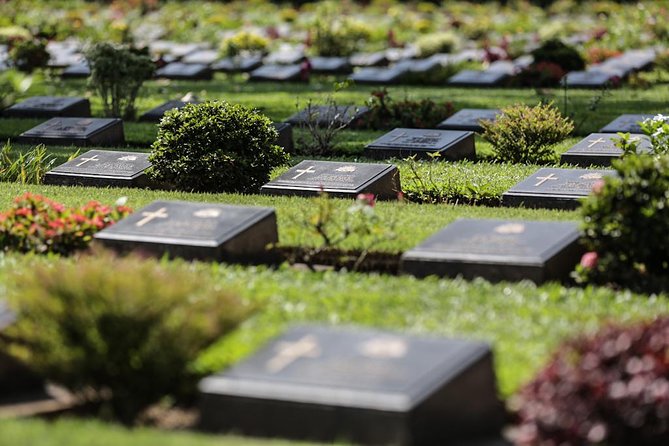
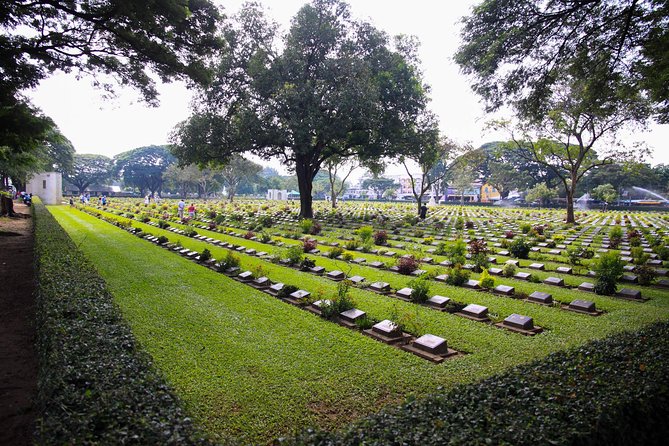
The Kanchanaburi War Cemetery is a restrained place, with rows of graves commemorating 6,982 Allied prisoners who died during construction of the Thai-Burma Death Railway.
You have about 30 minutes here, and admission is free. That is enough time to walk through the grounds, read the inscriptions, and take in the scale of the cemetery. It is not a stop that needs a busy presentation. The setting itself asks you to slow down.
I like beginning the tour here because it puts names and individual lives before machinery, bridges, and photographs. The later railway stops make more sense after you have seen the number of people who never returned.
The short time is also the main limitation. If you want a long, reflective visit, 30 minutes may feel tight. Use the time well by walking quietly and listening to the guide’s explanation before moving on.
Hellfire Pass: the emotional centre of the day
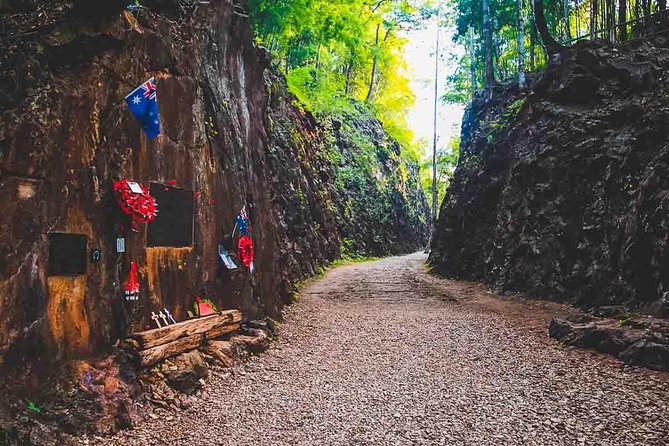
Hellfire Pass is likely to be the most affecting stop. The railway cutting cost the lives of more than 16,000 Allied prisoners, along with countless Asian laborers during the war.
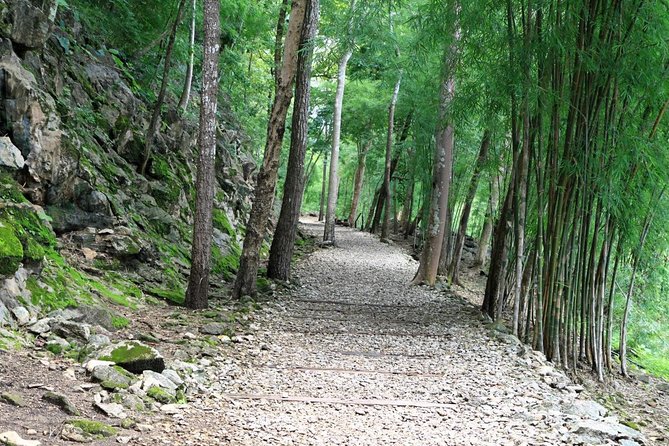
You spend around two hours at the Hellfire Pass Interpretive Centre and Memorial Walking Trail. This is the longest stop, and rightly so. You can first learn about the railway at the museum, then walk along the trail to the cutting itself.
That order is useful. The museum gives the walking section meaning, while the trail gives physical scale to the work. You can see why the cutting is remembered as a place of exceptional hardship, rather than simply another railway feature.
The walk requires a moderate level of fitness. The tour data does not give a precise trail length or surface description, so I would avoid assuming it will be effortless. Wear practical shoes and be ready for time on your feet. You should also allow emotional space. This is not merely a scenic walk.
Guide Nan was praised for making the experience informative and eye-opening, with particular care given to how prisoners were treated. That sort of explanation is valuable at Hellfire Pass, where a sign or museum display alone may not answer your questions.
A few more options to weigh up in Bangkok
- UNESCO’s Ayutthaya Historical Park: Full-Day Tour from Bangkok
★ 4.5 · 1,559 reviews - From Bangkok: Historical Day Tour to River Kwai
★ 4.6 · 868 reviews - Historical City of Ayutthaya – Unesco Full Day Tour From Bangkok
★ 5.0 · 847 reviews - Private Excursion to Floating Market and Ayutthaya World Heritage
★ 5.0 · 515 reviews
The Death Railway Museum and the railway walk
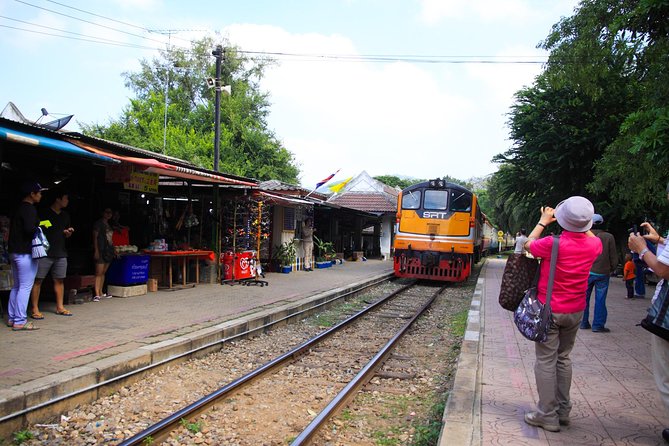
The Death Railway Museum and Research Centre is allocated about 30 minutes, with admission listed as free. The stop adds another layer of context before you see more of the actual railway.
The itinerary also describes a walk along the notorious Death Railway beside the river. That physical contact is important. You are not only looking at an exhibit behind glass. You get a sense of the railway as a working route built through difficult terrain.
The stop is brief, so think of it as a focused visit rather than a full museum session. If you enjoy reading every panel or spending time with archival material, you may want more time than the schedule allows. The advantage is that the tour keeps moving and still fits the major sites into one day.
The river setting provides a change of mood after Hellfire Pass, but it should not make the history feel picturesque or easy. The guide’s comments can help keep the focus on the people who built the line and the conditions they endured.
Tham Kra Sae Bridge and its cave
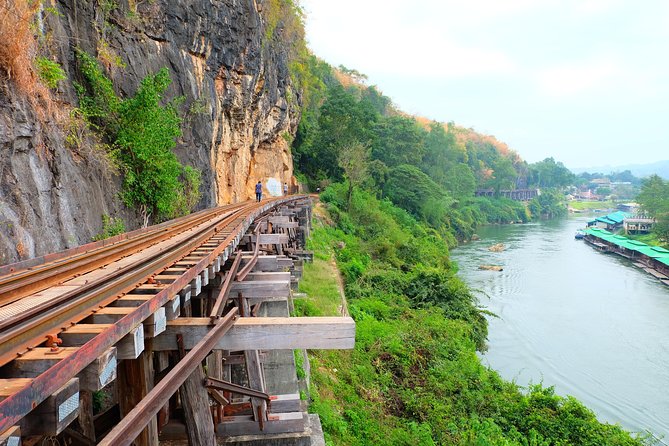
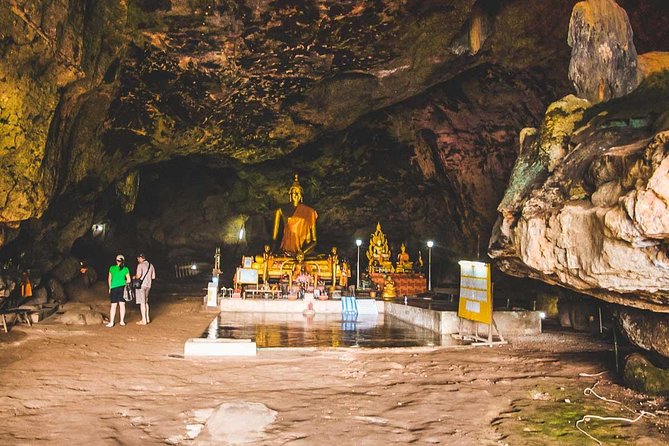
Tham Kra Sae Bridge is a short 15-minute stop. You visit a cave containing a Buddha image, a place described as a former POW camp during railway construction.
This is one of the quickest visits, so expectations matter. You will not have a long period for quiet study or extensive exploration. Instead, you get a brief look at a site that connects the railway route with the camps where prisoners were held.
The cave gives the stop a different character from the cemetery and museum. It is a religious place as well as a wartime site, and the combination may help you see how the railway passes through communities and sacred spaces.
Because the stop is short, listen closely to the guide’s explanation and stay aware of the meeting time. The day contains several moving parts, and a few extra minutes at one stop can put pressure on the later visits.
The Bridge over the River Kwai
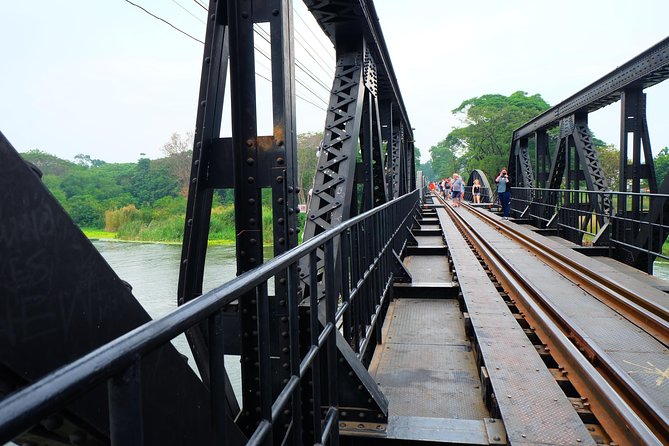
The final major stop is the famous River Khwae Bridge, often called the Bridge over the River Kwai. You have about an hour to walk along the iron bridge and take in its connection to World War II.
The bridge is the most recognizable image on the route, but it is not necessarily the most powerful stop. Its fame can make it feel like a standard sightseeing attraction, especially compared with the cemetery or Hellfire Pass.
I would still value the visit. After the earlier stops, the bridge becomes a physical reminder of the railway project rather than an isolated landmark. Walking along it gives you a direct sense of the route and allows time for photographs without reducing the whole day to a photo opportunity.
An hour is more generous than the 15-minute cave visit, though the exact pace will depend on traffic and the rest of the schedule. This is also a useful place to ask final questions before the drive back to Bangkok.
What the private format adds
The private arrangement is the main reason to choose this experience instead of hiring a driver. You receive a professional guide, private transport, hotel transfers, lunch, bottled water, and entrance fees.
A driver-only option can cost less. Several of the listed sites have free admission, and you could arrange transport independently. That is a fair point, particularly if you are comfortable reading displays on your own and do not need historical interpretation.
The guide gives the tour its added value. You are paying for explanations, timing, navigation, and the chance to ask questions as the day develops. The value depends heavily on the guide you receive. Nan was singled out for clear and moving information, while Peter was praised for making the day fit the group and working well with the driver.
I would choose the private tour if the history is your main reason for going, if you have limited time in Bangkok, or if you are traveling with family members who need a slower and more personal pace. I would choose a driver-only day if saving money matters more than guided context.
Lunch, comfort, and the ten-hour schedule
Lunch is included, along with bottled water. That removes one small task from a long day and means you do not need to pack a meal before leaving Bangkok.
The information provided does not specify the restaurant, menu, or lunch timing, so I would not book this expecting a particular dining experience. Treat lunch as useful fuel between historic sites rather than a central feature.
The air-conditioned vehicle is more important than it might sound. You will be on the road for a large part of the day, moving between stops in a warm climate. Having a private vehicle gives you a more comfortable base than arranging separate transport at each location.
Still, comfort does not change the basic fact that this is a long excursion. You leave early, cover a broad area, walk at Hellfire Pass, and return to Bangkok after a full schedule. The tour suits an active day of sightseeing, not a relaxed holiday morning.
Is $162.40 per person good value?
At $162.40 per person, this is not the cheapest way to reach Kanchanaburi. The price becomes easier to justify when you count the private vehicle, hotel transfers, professional guide, lunch, bottled water, and entrance fees.
The free admission at several stops makes the comparison with a self-arranged driver especially important. If you can find a reliable private driver at a much lower total cost, you may prefer to visit the sites independently. You would save money, but you would also give up the built-in historical commentary and the convenience of a planned route.
For a small group, the value improves because the private service is shared among your companions. Group discounts may also apply. I would compare the total cost of a driver, fuel, meals, and your own arrangements rather than comparing only the tour price with a single free entry ticket.
The strongest value is not speed or luxury. It is having the history explained while you move through the places where it happened.
Who should book this experience?
I would recommend it to:
- First-time visitors to Bangkok who want a serious day trip outside the city
- People with a strong interest in World War II history
- Couples, families, or friends who prefer a private vehicle
- Anyone who values having a guide available for questions
- Groups willing to accept an early start and a ten-hour day
- Visitors with moderate physical fitness who can manage the Hellfire Pass walk
I would think twice if you dislike long road journeys, want a slow holiday pace, or mainly want a quick photograph at the bridge. I would also consider a driver-only option if your budget is tight and you are comfortable exploring museums and memorials without a guide.
The experience is not designed as a light cultural outing. It asks you to pay attention, walk, and spend time with difficult wartime history.
Final verdict: book it for context, not just the bridge
I would book this private tour if I wanted to understand the River Kwai area in one well-organized day. The cemetery, Hellfire Pass, railway, cave, and bridge create a fuller picture than the bridge alone, and the private guide makes it easier to ask questions and adjust the pace.
The strongest parts are the two-hour Hellfire Pass visit, the quiet War Cemetery, and the chance to have the story explained by a guide such as Nan or Peter. The main caution is the long drive and the price compared with hiring a driver independently.
Book it if historical context and convenience are worth paying for. Skip it, or arrange your own transport, if your priority is the lowest possible cost and you are happy to explore at your own pace.
FAQ
How long does the River Kwai Death Railway tour last?
The tour lasts approximately 10 hours, beginning at 6:30 am.
Is hotel pickup included?
Yes. Hotel transfers are provided in an air-conditioned vehicle.
Is this a private tour?
Yes. Only your group participates in the private tour or activity.
What is included in the tour price?
The price includes an air-conditioned vehicle, private transportation, a professional guide, lunch, entrance fees, and bottled water.
How much walking is involved?
You should have a moderate level of physical fitness. The itinerary includes a walking trail at Hellfire Pass and walks along sections of the Death Railway and the River Kwai Bridge.
Which sites are visited?
The tour visits Kanchanaburi War Cemetery, Hellfire Pass Interpretive Centre and Memorial Walking Trail, the Death Railway Museum and Research Centre, Tham Kra Sae Bridge and cave, and the River Khwae Bridge.
Can the tour be canceled for a refund?
Yes. You can cancel at least 24 hours before the experience starts for a full refund. Cancellations or changes made less than 24 hours before the start time are not accepted for a refund.
More Train Experiences in Bangkok
- Bangkok: Damnoen Saduak Market and Maeklong Railway Market
★ 4.5 · 26,723 reviews - The Old Siam: Damnoen Saduak and Maeklong Railway Market
★ 4.5 · 10,992 reviews - Bangkok: Train Market & Floating Market with Boat Ride
★ 4.7 · 9,547 reviews - Half-Day Railway Market and Floating Market Tour in Thailand
★ 4.5 · 3,924 reviews
Just added in Bangkok
- Wonderful Pearl Dinner Cruise★ 3.5 · 27 reviews
- re:leaf spa and massage★ 4.0 · 10 reviews
- White Orchid Sunset Dinner Cruise Calypso Ladyboy Cabaret Show★ 4.0 · 10 reviews
- Yoga in the Park Thailand★ 5.0 · 12 reviews
- Visit Wat Pho and Wat Arun with Local Expert★ 4.0 · 14 reviews
- Visit temples in and around Bangkok with a former monk of 10 years★ 5.0 · 30 reviews
- 3-Hour Bangkok Walking Tour: Wat Pho and Wat Arun★ 5.0 · 102 reviews
- Miracle Bangkok Airport Lounges – Relax Before You Fly★ 3.0 · 32 reviews
Palaces and Historic Sites, compared.
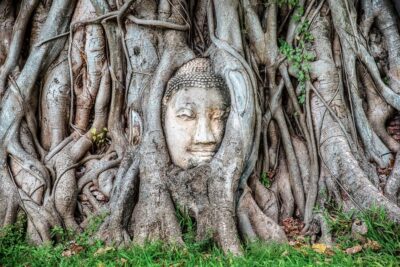
Ayutthaya & Ayothaya Floating Market Day Trip
Read our review →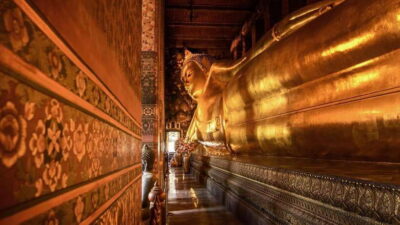
Grand Palace, Wat Pho, and Wat Arun Guided Tour
Read our review →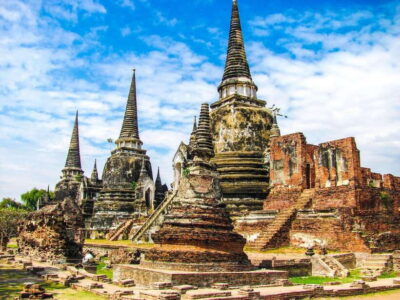
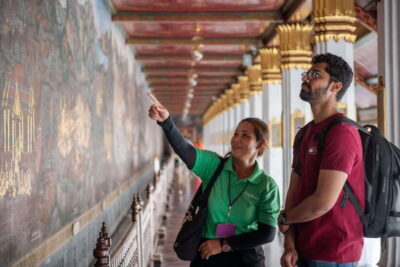
Grand Palace and Wat Phra Kaew Guided Walking Tour
Read our review →
Grand Palace, Wat Pho, Wat Arun Sacred & Local Tour
Read our review →
Ayutthaya Temples and River Cruise from Bangkok
Read our review →
UNESCO’s Ayutthaya Historical Park: Full-Day Tour from Bangkok
Read our review →Browse the lists this tour appears in