
Reviewed · MARKETS AND FLOATING MARKETS
Floating and Railway Markets and Erawan Waterfall (Group Tour)
One long day, four very different Thailand experiences. I like the included long-tail boat ride through Damnoen Saduak and the rare chance to pair the markets with Erawan’s seven waterfall tiers, coconut sugar production, and the River Kwai Bridge. The main drawback is the distance: about four of the 11 hours are spent on the road, so this is a sightseeing marathon rather than a relaxed day out.
The early 6:00 a.m. start helps you reach the markets before the day gets too hot, and the maximum group size of 15 keeps the outing smaller than a typical large coach tour. I also like that lunch, drinks, park admission, shared transport, an English-speaking guide, and accident insurance are included. Still, you should be ready for a full schedule, a three-hour waterfall visit, and a drop-off at MBK Center rather than your hotel.
In This Review
- Key points to know before booking
- Why this day appeals to me
- The 6:00 a.m. start and the long road west
- Damnoen Saduak by motorboat
- Mae Klong Railway Market and the train approach
- Coconut nectar and the work behind local sugar
- Samut Sakhon’s salt fields
- Three hours at Erawan National Park
- Walking the River Kwai Bridge at day’s end
- Is $161.31 good value?
- Who should book this experience?
- Should you book the markets and Erawan in one day?
- FAQ
- What time does the tour start?
- Where is the meeting point?
- Where does the tour end?
- How long does the experience last?
- Is the floating-market boat ride included?
- Is lunch included?
- Is admission to Erawan Waterfall included?
- How large is the group?
- Can I cancel for a full refund?
Key points to know before booking
- Damnoen Saduak includes a motorboat ride, so you see the market from the canals rather than only from the shore.
- Mae Klong Railway Market includes a local train experience, bringing you toward Mae Klong station as the market operates close to the tracks.
- The coconut sugar stop explains a working farm process, including cutting coconut flowers and collecting nectar.
- Erawan Waterfall gives you three hours, enough time to walk through the rainforest and try to reach all seven tiers.
- The day ends at the River Kwai Bridge, with time for a walk and sunset photographs.
- The tour begins at Centerpoint Siam Square and ends at MBK Center, near BTS National Stadium, with no hotel drop-off.
Why this day appeals to me
Thailand gives you plenty of easy day trips from Bangkok, but few combine such different settings in one run. Here, you move from canal markets to railway tracks, then to a small agricultural stop, open salt fields, a forest waterfall, and a wartime landmark. The variety is the main reason to consider it.
I especially like the way the day includes more than photo stops. At the coconut sugar farm, you can see how coconut nectar is collected and processed. At Samut Sakhon, you look across a salt field and learn about a local method that depends on sea salt production rather than rice farming. These small stops give the day some connection to daily work in Thailand.
The trade-off is clear. Damnoen Saduak and Erawan National Park are not close together, and the River Kwai area adds more distance. If you dislike long rides, you may prefer to visit one region properly over two days. If you have only one free day and want to see a lot, the road time may feel worthwhile.
More Markets and Floating Markets in Bangkok
- Bangkok: Damnoen Saduak Market and Maeklong Railway Market
★ 4.5 · 26,723 reviews - The Old Siam: Damnoen Saduak and Maeklong Railway Market
★ 4.5 · 10,992 reviews - Bangkok: Train Market & Floating Market with Boat Ride
★ 4.7 · 9,547 reviews
The 6:00 a.m. start and the long road west
Your morning begins at Centerpoint Siam Square on Rama I Road. The meeting point is central, and the tour ends at MBK Center, close to BTS National Stadium, which makes the finish practical if you are heading back across Bangkok by Skytrain.
The vehicle is shared and air-conditioned. That matters in Thailand, especially on a day that moves between open-air markets and a hot national park. The group limit is 15 people, which should feel more manageable than a full-size bus, though it does not make the driving distances disappear.
I would treat the day as an 11-hour commitment from the start. The schedule includes roughly four hours of road travel, so bring water, sun protection, and something to occupy you during the transfers. Lunch and a drink are included, which removes one planning task, but you should still expect an active day with several changes of pace.
Damnoen Saduak by motorboat
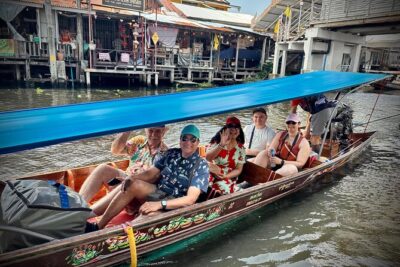
The first major stop is Damnoen Saduak Floating Market, one of Thailand’s best-known canal markets. The included motorboat ride is an important part of the visit. Rather than simply walking along a market edge, you travel through the waterways and see how stalls and boats share the narrow canals.
You have about 90 minutes here. That is enough time to enjoy the boat ride, take photographs, and look around, but not enough for a slow, unplanned exploration of every corner. Keep your camera ready, but do not spend the whole stop looking through a screen. The canal setting is the point.
The market is popular with both Thai and foreign visitors, so this is not a quiet glimpse of an untouched village. It is a famous attraction with plenty of activity around it. I would still call the boat ride worthwhile because it gives you a clear sense of why floating markets developed as a way of buying and selling along waterways.
Expect an early start to pay off here. The morning timing places this stop near the beginning of the day, before the rest of the schedule becomes more demanding. You will also want comfortable clothing, since the market is an outdoor experience and Thailand’s heat can build quickly.
Mae Klong Railway Market and the train approach
The next stop changes the mood completely. Mae Klong Railway Market, also called Hoop Rom Market, is arranged directly around an active railway line. The unusual sight is the close relationship between the market stalls and the tracks.
This visit includes a ride on a local train toward Mae Klong station. That gives you a moving view of the market and the surrounding area, rather than only a quick look from a platform. The train portion is the part that makes this stop more than a standard market walk.
The market is sometimes called the life-risking market, a playful name that points to its tight layout beside the railway. You should pay attention to your guide and follow directions around the tracks. The attraction comes from seeing how the market operates in a very confined space, not from treating the railway as a backdrop for careless photographs.
You have another 90 minutes here. That gives the stop room for the train experience and time to look around Mae Klong station. Since this is a scheduled group tour, you will not have unlimited time to browse. I would focus on the railway activity first, then use any remaining time to explore.
A completely different kind of day out:
- From Bangkok: Ayutthaya Temples Guided Tour with Lunch
★ 4.7 · 10,535 reviews - Bangkok Canal Tour: 2-Hour Longtail Boat Ride
★ 4.5 · 5,909 reviews - Bangkok: Muay Thai Boxing Tickets at Rajadamnern Stadium
★ 4.9 · 4,740 reviews - Bangkok: White Orchid Chao Phraya Dinner Cruise free Beer
★ 4.4 · 4,573 reviews
Coconut nectar and the work behind local sugar

The coconut sugar farm is a short 20-minute stop near Damnoen Saduak. It is brief, but it adds useful context to the market visit. You learn how Thai farmers make coconut nectar, including a demonstration of cutting coconut flowers and collecting the liquid.
This is a good example of a small stop doing real work in the itinerary. The floating market can seem like a display made for sightseeing. Seeing the farm process reminds you that local food products begin with repetitive, practical labor long before they reach a stall or shop.
Twenty minutes will not turn you into an expert in coconut sugar production. It is enough for a demonstration and a basic explanation. If you enjoy food traditions and rural industries, you will likely appreciate the stop. If you prefer more time at the waterfall, this is one of the shorter visits that may feel easy to rush through.
Samut Sakhon’s salt fields
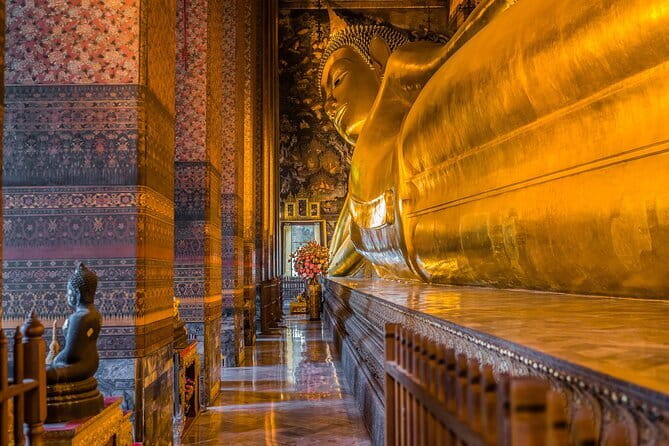
The Samut Sakhon stop is another 20-minute visit, and the view changes again. Instead of rice paddies, you see whitish salt fields. Salt production here reflects local knowledge and farming methods connected to the sea.
The description of the work is simple but useful: salt farmers rotate and manage the fields so the salt can form and be collected. You do not need a long lecture to understand the contrast between this place and the green agricultural images many people associate with Thailand.
This is a bonus-style stop, not the central reason to book the day. Its value is in breaking up the drive and adding a detail you would probably miss on a direct trip to Erawan. Keep your expectations measured. You are getting a short look at the fields, not a full working-day experience with a salt farmer.
Three hours at Erawan National Park
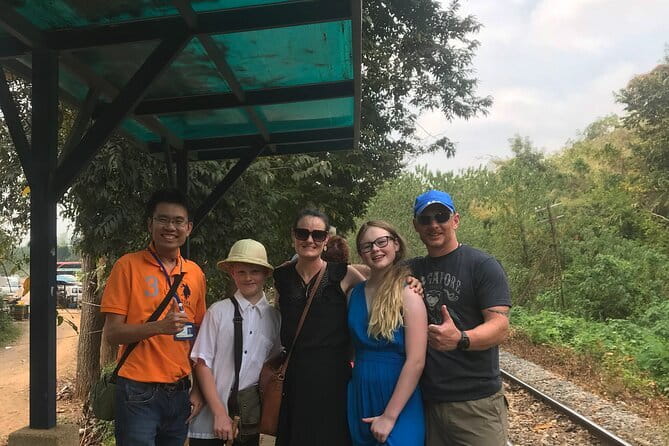
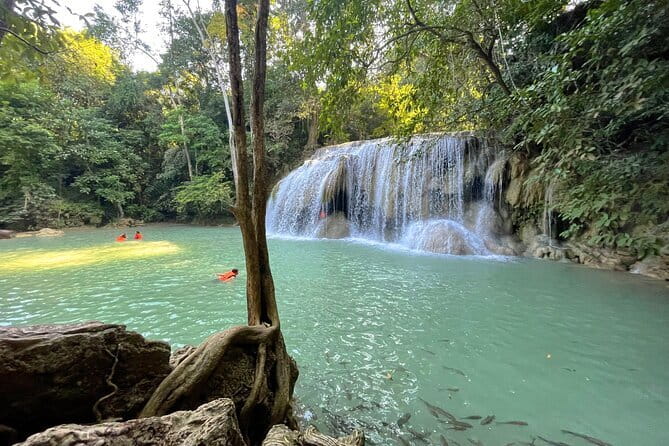
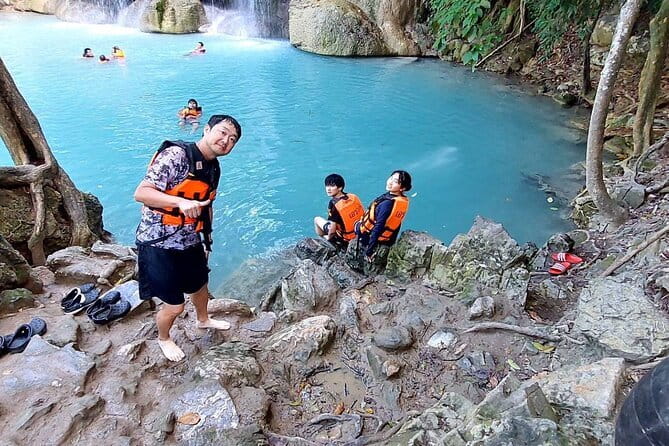
Erawan National Park is the heart of the second half of the tour. The park’s main attraction is Erawan Waterfall, a series of seven tiers with emerald-green pools. You have about three hours here, which is far more useful than a quick roadside photograph.
The route takes you into rainforest scenery and upward through the waterfall system. You can walk, stop at the pools, and swim in the water where permitted. The seven levels give you a clear choice: spend more time relaxing near the lower pools, or use your energy to continue higher.
That choice is important. Reaching all seven tiers requires stamina, and the tour description openly frames the climb as an endurance test. You should not assume the entire visit will be an easy stroll. Three hours gives you time to set your own pace, but it does not remove the physical effort involved.
I like this part because it gives the day room to breathe after the markets and road transfers. You are no longer moving from stall to stall or waiting for a train. You are walking through a forest, hearing water, and deciding how far you want to go.
Bring suitable footwear and swimwear if you plan to enter the pools. The supplied information confirms that swimming is part of the experience, but it does not specify changing facilities or what you should carry inside the park. Pack conservatively and keep valuables secure.
The park admission fee is included. That makes the $161.31 price easier to judge, since the day combines transport, a guide, lunch, drinks, the boat ride, park entry, and several guided stops. You are paying not only for admission, but also for the convenience of linking places that would be difficult to combine independently in one day.
Still, Erawan is where the schedule can test you. After the morning markets and the long drive, you may have less energy for the higher tiers. If the waterfall is your top priority, save your strength, drink water, and decide early whether you want a swim or the full climb.
Walking the River Kwai Bridge at day’s end
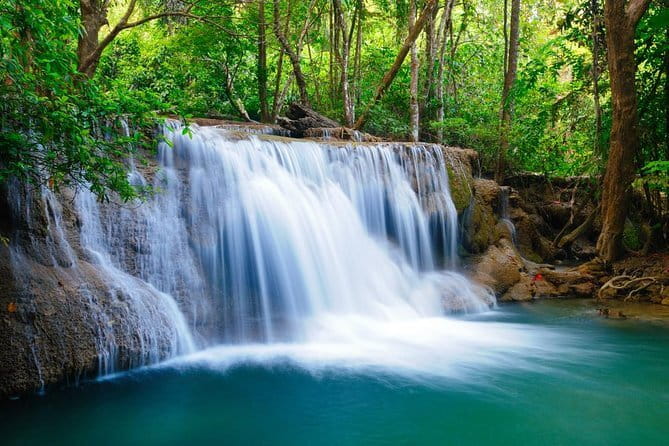
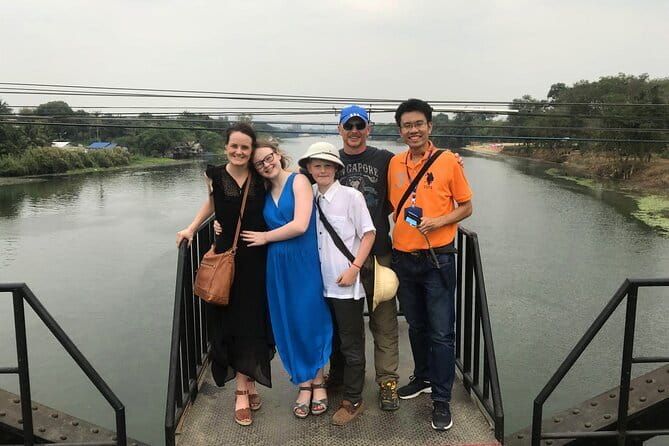
The final main stop is the Bridge over the River Kwai, known locally as the River Khwae Bridge. Books and films made the bridge famous, but the site itself is more than a film reference. It is connected to the Death Railway, a wartime railway project remembered for the suffering and deaths associated with its construction.
You have about 20 minutes for a walk along the bridge and photographs. The timing is designed around late-day light, with sunset views mentioned as a highlight. This is a short stop, so you should not expect a museum visit or a long historical talk. The guide can provide context, but the schedule leaves you mainly with time to walk, look, and take in the setting.
The bridge is an effective ending because it shifts the day from nature and commerce to remembrance. I would take a moment to treat it as a place of history, not only a scenic photo location. The black iron structure is simple, but the story attached to it is heavy.
Afterward, the group is dropped at MBK Center rather than returned to individual hotels. This is convenient for shopping, food, or a BTS ride, but it can be awkward if your accommodation is far from central Bangkok. Plan your return route before the day begins.
Is $161.31 good value?
At $161.31 per person, this is not the cheapest way to visit one Bangkok-area attraction. It becomes more reasonable when you count what is bundled together: a shared air-conditioned vehicle, professional English-speaking guide, floating-market motorboat ride, local lunch and drink, Erawan admission, and travel accident insurance.
The real value is transport and coordination. Damnoen Saduak, Mae Klong, Samut Sakhon, Erawan National Park, and the River Kwai Bridge form a wide loop from Bangkok. Organizing all of that alone would require several transport arrangements, careful timing, and a willingness to manage the return journey after a tiring day.
The price is less attractive if you want a slow visit. You are buying access to many places, not long stretches of free time. Group discounts may improve the cost for more than one person, but the supplied details do not specify the discount amount, so check the current booking price for your party.
The 5 out of 5 rating attached to the experience fits its strongest feature: it delivers a very full day with clear variety. I would not use that score to ignore the driving time. The best decision comes down to your priorities, not just the rating.
Who should book this experience?
I would recommend this tour to you if you have one free day, want to see several major sights west of Bangkok, and are comfortable with a packed schedule. It suits first-time visitors who want a broad introduction to markets, local production, nature, and wartime history without arranging separate trips.
It is also a good match if Erawan Waterfall is high on your list but you do not want to lose the chance to see Damnoen Saduak or Mae Klong. The included guide and shared transport make the day simple to follow.
I would hesitate if you want a peaceful waterfall day, dislike four hours in a vehicle, or need a hotel return. The 6:00 a.m. start, active three-hour park visit, and MBK Center drop-off all matter. A parent and adult child can enjoy the mix, but anyone with limited stamina should plan to stop at lower waterfall tiers rather than chase all seven.
Book at least 24 hours before the start if you want the option of a full refund under the stated cancellation terms. Confirmation is received at booking, and most people can participate, but the day’s physical demands still deserve honest consideration.
Should you book the markets and Erawan in one day?
Book it if you want variety and convenience more than a leisurely pace. I like the included boat ride, the coconut nectar demonstration, the salt fields, and the generous three hours at Erawan. Together, they create a day that feels broader than a standard market excursion.
Skip it if you would rather give Erawan or the River Kwai area a full day of its own. The long road transfers are the unavoidable cost of fitting western Thailand into one outing.
For the right person, $161.31 is a fair price for a carefully connected day with lunch, admissions, a guide, and transport handled for you. Just arrive early, wear practical clothes and shoes, protect yourself from the sun, and accept that this is an energetic tour with a lot of Thailand packed into 11 hours.
FAQ
What time does the tour start?
The tour starts at 6:00 a.m.
Where is the meeting point?
The meeting point is Centerpoint Siam Square, 292 Rama I Road, Pathum Wan, Bangkok.
Where does the tour end?
The group tour ends at MBK Center, near BTS National Stadium. Hotel drop-off is not included.
How long does the experience last?
The total duration is approximately 11 hours, including about four hours of road travel.
Is the floating-market boat ride included?
Yes. A shared motorboat ride at Damnoen Saduak Floating Market is included.
Is lunch included?
Yes. A local lunch and a drink are included.
Is admission to Erawan Waterfall included?
Yes. Admission to Erawan Waterfall is included in the tour price.
How large is the group?
The tour has a maximum of 15 participants.
Can I cancel for a full refund?
Yes, you can cancel up to 24 hours before the experience start time for a full refund. Changes or cancellations made less than 24 hours before the start are not accepted for a refund.
More Train Experiences in Bangkok
- Half-Day Railway Market and Floating Market Tour in Thailand
★ 4.5 · 3,924 reviews - Bangkok: Damnoen Saduak, Train Market & Mahanakhon Day Trip
★ 4.7 · 2,162 reviews - Damnoen Saduak Floating Market and Maeklong Railway Market Tour
★ 4.5 · 1,588 reviews - Day Trip to Bangkok Floating Market & Maeklong Railway
★ 5.0 · 1,528 reviews
Just added in Bangkok
- Wonderful Pearl Dinner Cruise★ 3.5 · 27 reviews
- re:leaf spa and massage★ 4.0 · 10 reviews
- White Orchid Sunset Dinner Cruise Calypso Ladyboy Cabaret Show★ 4.0 · 10 reviews
- Yoga in the Park Thailand★ 5.0 · 12 reviews
- Visit Wat Pho and Wat Arun with Local Expert★ 4.0 · 14 reviews
- Visit temples in and around Bangkok with a former monk of 10 years★ 5.0 · 30 reviews
- 3-Hour Bangkok Walking Tour: Wat Pho and Wat Arun★ 5.0 · 102 reviews
- Miracle Bangkok Airport Lounges – Relax Before You Fly★ 3.0 · 32 reviews
Markets and Floating Markets, compared.
Damnoen Saduak Market and Maeklong Railway Market
Read our review →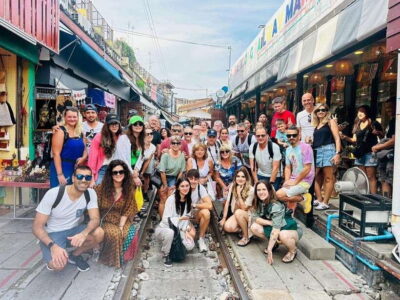
The Old Siam: Damnoen Saduak and Maeklong Railway Market
Read our review →Train Market & Floating Market with Boat Ride
Read our review →
Ayutthaya & Ayothaya Floating Market Day Trip
Read our review →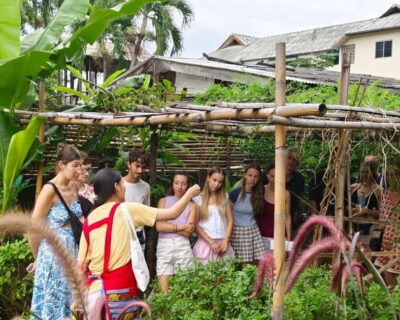
Cooking Class, Market & Thai Herbs Garden Tour
Read our review →
Authentic Cooking Class with Market & Farm Visit
Read our review →
City Highlights Temple and Market Walking Tour
Read our review →Browse the lists this tour appears in